You have heard me talk about the “Sunny Sixteen” rule before. This is a rule of thumb that says:
If your shutter speed is set to 1/ISO (e.g. 125 ISO at 1/125th sec, or 400 ISO at 1/400th sec), then on a fully sunny day at noon, f/16 will give you the right exposure.
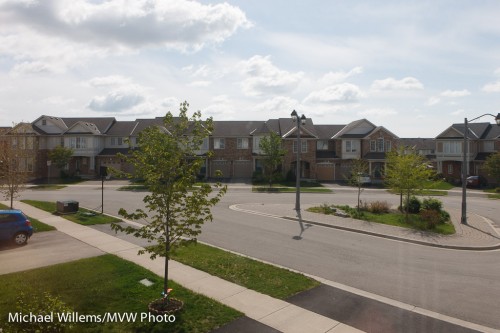
Like this, at f/16:
And if it is not sunny?
| f/16 | Sunny | Distinct |
| f/11 | Slight Overcast | Soft around edges |
| f/8 | Overcast | Barely visible |
| f/5.6 | Heavy Overcast | No shadows |
| f/4 | Open Shade/Sunset | No shadows |
(Source: Wikipedia)
This rule is a rule of thumb, so feel fre to vary – I often expose two thirds of a stop higher – but since the sun is always the same brightness, it holds well. And it is nice to be able to expose without light meters, if only in order to be able to check your camera.
Bonus question: how do you expose the moon?
Answer: f/16. The moon at noon is as bright as the earth at noon- they are the same distance from the sun!
Michael – I am assuming that this rule works too if I use an on-camera speedlight, provided that it is within the sync speed.
Yup.
f/16 for the moon, at noon, sure. What about the moon at night?
I mean noon there. The moon at night is f/16: if you can see the moon, it is noon there!
re. Sunny 16: Since difraction, and thereby poorer resolution, for many lens usually starts over f/11, is there any point in shooting at f/16 when you don’t HAVE to (ie. when it’s really bright and sunny)?
F/16 is usually OK; beyond that, indeed, only when you have to.