Flash tip

Quick tips are often the best. So this one is quick.

When you are using TTL flash, and you want to know if you have enough power to do the shot, do this:

Put your flash into MANUAL mode (Press MODE until TTL is replaced by M) and ensure you are set to full power (100% or 1/1). Then take the photo. You should see an overexposed flash photo.

  • If so, go back to TTL and carry on.
  • But if not, you have to increase your ISO or decrease your aperture number. Then repeat.

And that’s all. Just one of those quick tips that can make all the difference over the holiday season.
TIP: A GREAT Christmas present: my checklists book, the printed version. Shipped worldwide, and there’s time before Christmas. Act now: http://learning.photography.


A trick, revisited

With the holidays approaching, it is time for a refresher on an “event shooting” flash trick I have mentioned here before.

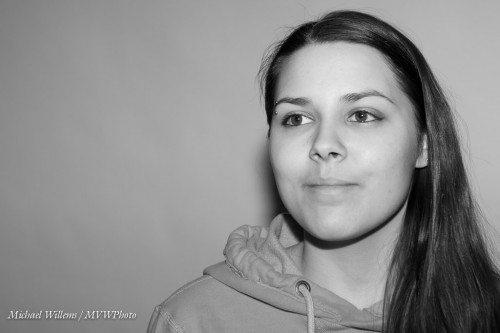
You all know how important it is to avoid, at least when the flash is on your camera, direct flash light reaching your subject. Both in order to avoid “flat” light, and especially to avoid those hard drop shadows, like this:
But you have also heard me talk (and those who come to my upcoming flash courses will learn hands-on) that you should “look for the virtual umbrella”. For most lighting, this means 45 degrees above, and in front of, the subject.

So when you are close to that subject, you aim your flash behind you to get to that point. Good.

But what when you are far, as when using a telephoto lens? In this situation, which happens at events, like receptions, the “virtual umbrella” may be in front of you. And aiming your flash straight, or even angled, forward is a no-no, since the subject will be lit in part by direct light, which will give you harsh shadows, and even worse, shadows from thesubject on the wall behind him or her.

A-ha. Unless you block the direct part of that light!

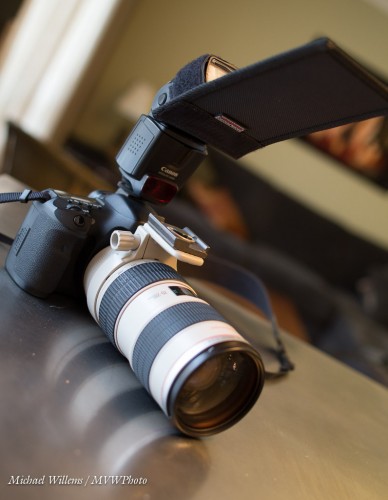
Like this:
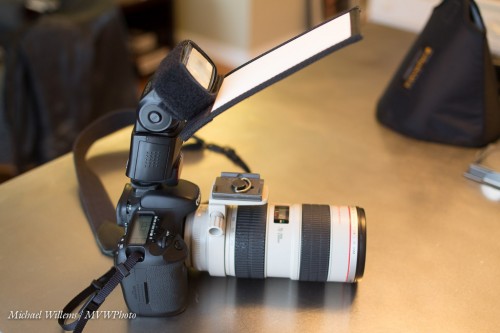
As you see, I use a Honl Photo bounce card/gobo to block the direct light. Simple, affordable, and very effective. I use either the white bounce side, or the black flag side, depending on the ceiling and position.

Simple, effective – done!

And one more thing. Direct flash is not bad per sé. Not at all. As long as it is not coming from where your lens is, it can be very effective, like in this “funny face” shot of a student a couple pf years ago (you know who you are):
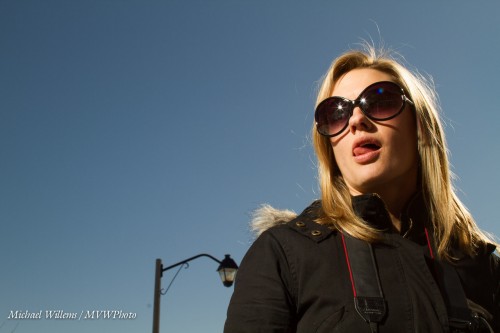
Lit by a direct, unmodified flash. And the hair light, the shampooey goodness? Yeah. The sun. Just saying.

So, you now have yet another trick in your basket. Go try it out!

 

Filters for correction

You can use some gels (colour filters) for correction, Here’s an example.

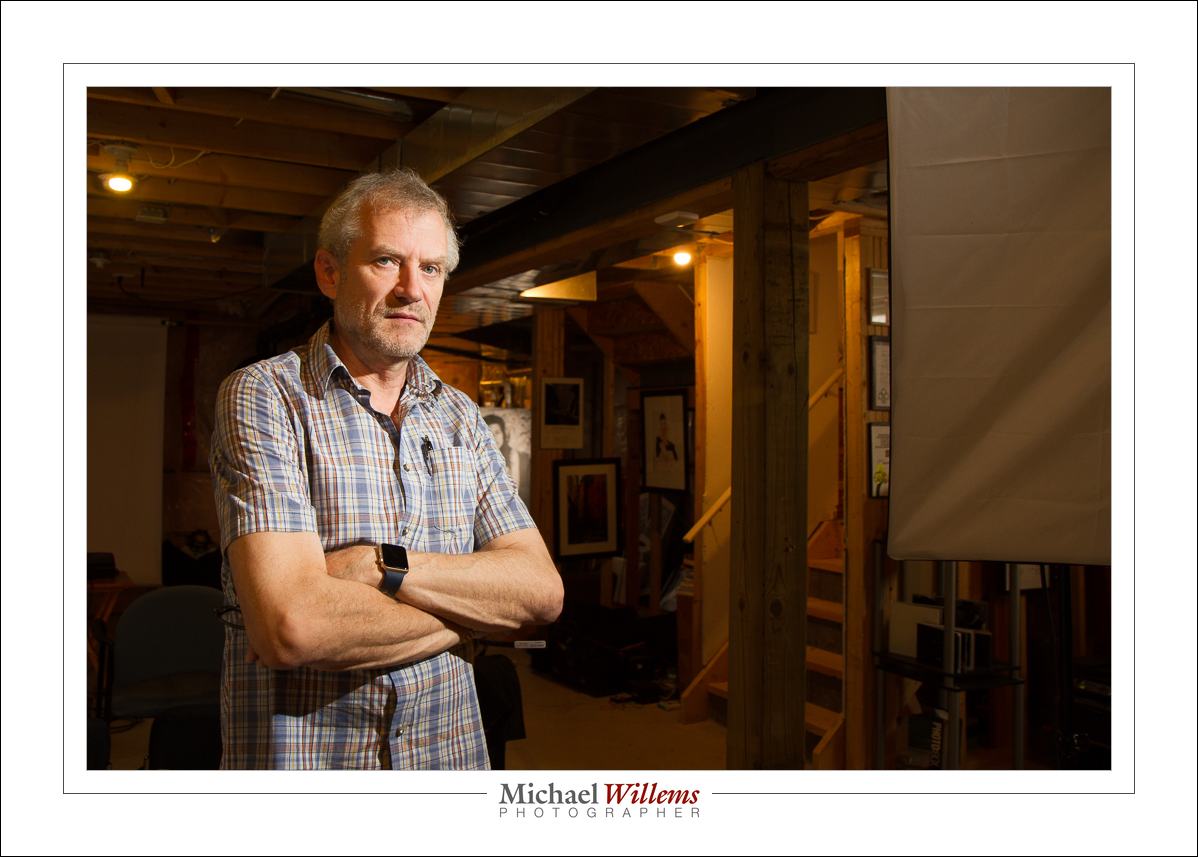
Take this: I am lit pretty much OK by my flash, and with the camera set to FLASH white balance,, but the background is a tungsten light, so it looks red. I happen to like that, but what if I want that background to look normal, white, the way it looks to me?

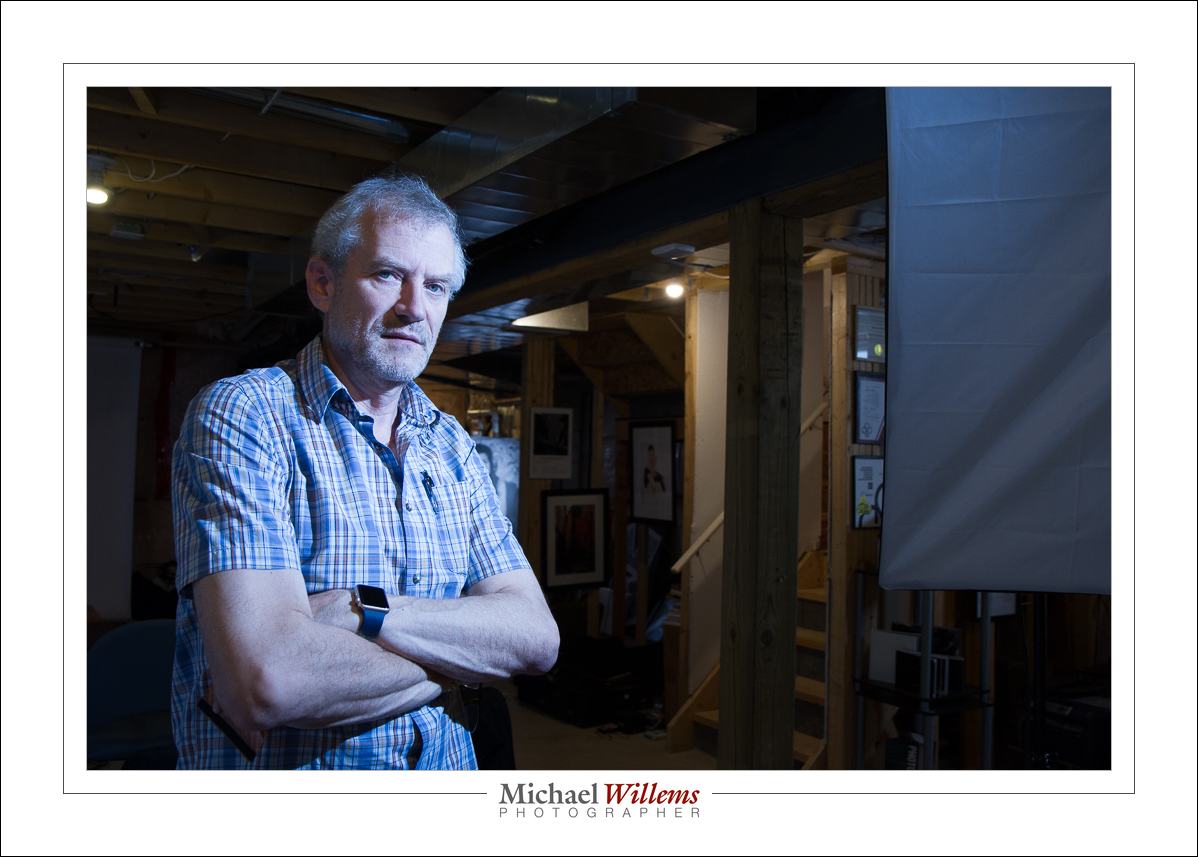
Well…  can I not just set the white balance to Tungsten?

No, because then, while the background would look good, the parts lit by the flash would look all blue, like this:

Part 1 of the solution: make the light on me come from a tungsten light source too, so we both look red. We do this by adding a CTO (colour Temperature Orange) to the flash.

Part 2 of the solution: Now you can set the white balance on your camera to “Tungsten”, and both I and the background will look neutral:

Done. Now we both look normal.

So, in summary:  when you are dealing with a colour-cast ambient light, gel your flash to that same colour cast, and then adjust your white balance setting to that colour cast.


You can learn all about this, and much, much more, from my e-books. Now available from http://learning.photography — the checklist book even as a printed manual now,

Lighting Ratios

When you use more than one flash, you can adjust each light individually. If you use speedlights and your camera maker’s wireless TTL functionality, you can do that in two ways:

  • Canon: relative, using ratios. As in “A:B = 4:1” meaning A is 4x (two stops) lighter than B
  • Nikon: absolute, by adjusting individually. E.g. “A = No adjustment; B = -2 stops adjustment”.

An example of this using two Canon flashes.

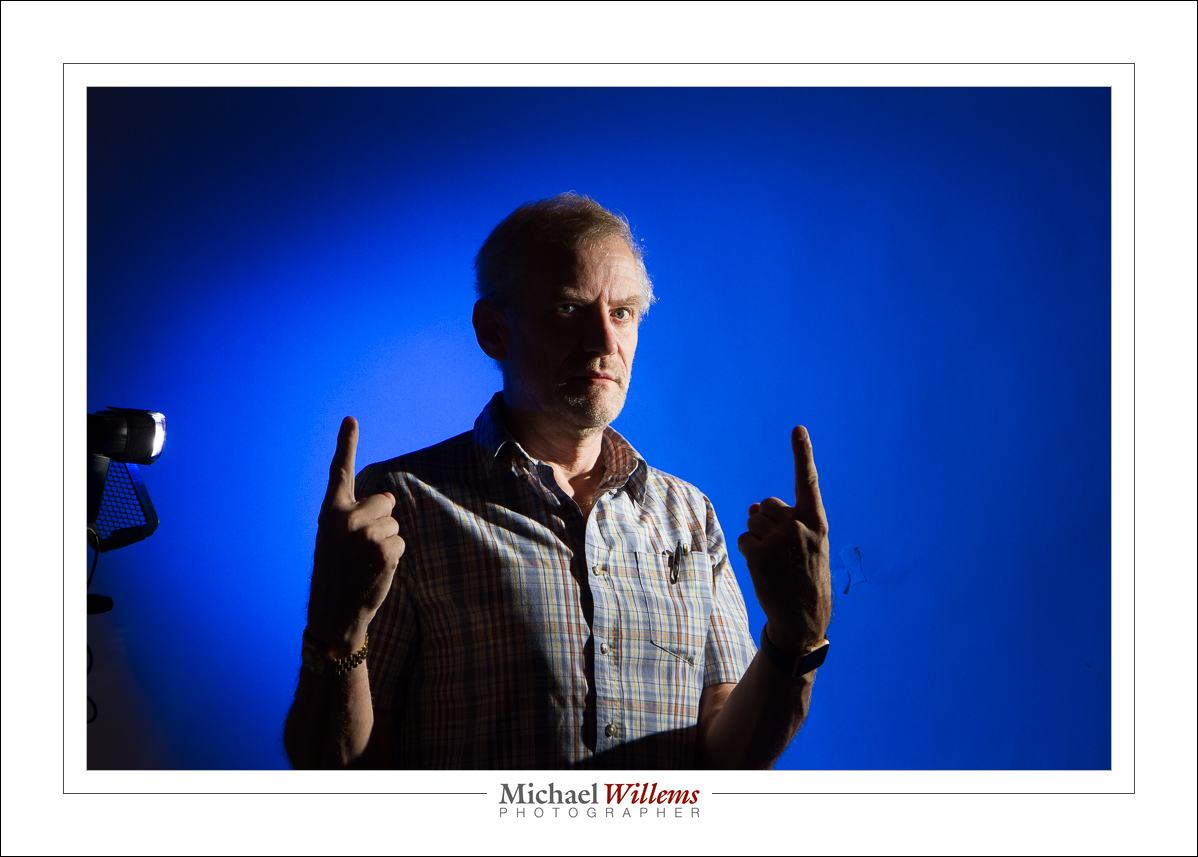
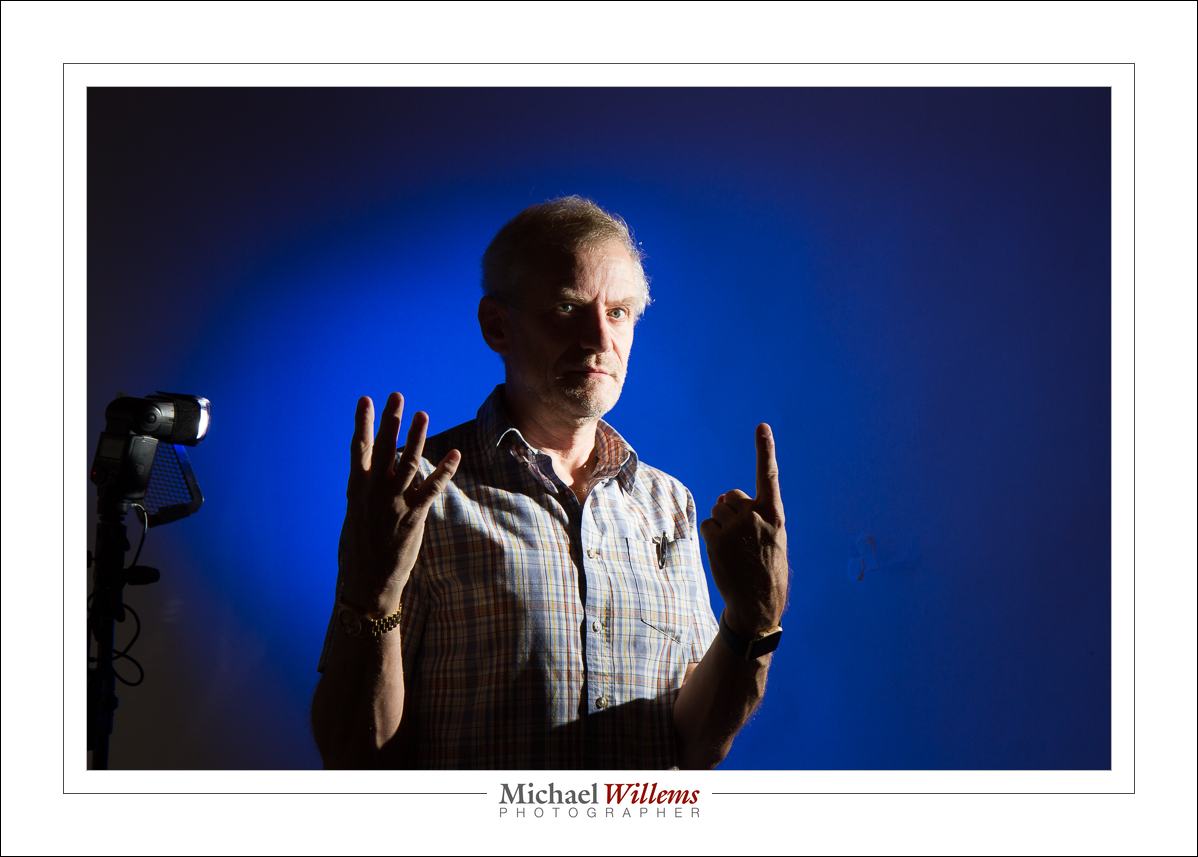
Ratio between key light (face) and background light: 1:2

1:1:

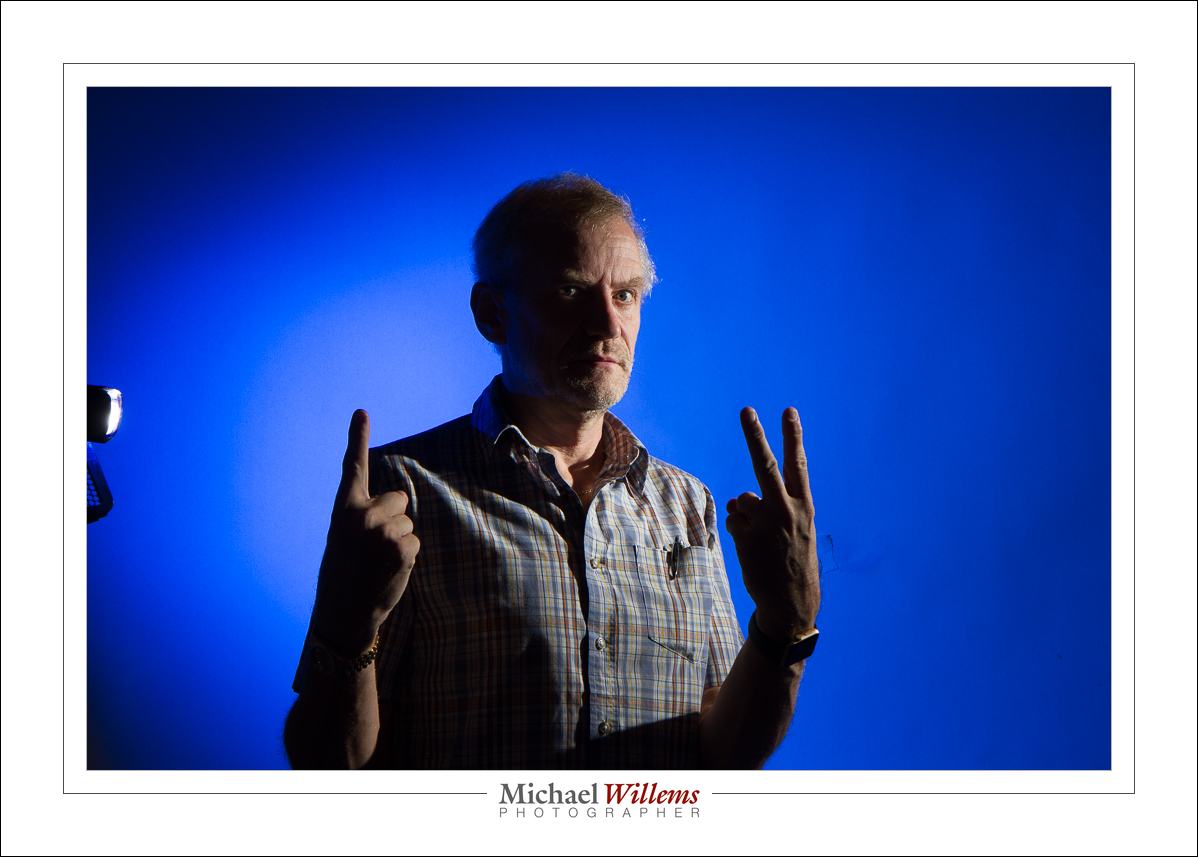
2:1 (you are getting the hand signals by now I presume):

4:1:

The preference is yours: mine is 2:1. But that is largely a matter of taste.

If you use manual flash and radio triggers, it is conceptually easier, since you set up each flash by itself, independent of other flashes. Ratios are a little bit trickier to get your head around, because it is not immediately clear which flash will get darker and which flash lighter, and to what extent. So trial and error will be required. Either way, key point is that you should think carefully about how bright each flash is, in a multi-flash setup.


Kill Ambient, Kill, Kill, Kill.

In studio photography, you want to kill ambient light completely. The light bulbs in your studio, or the light falling in through the window, should not affect the picture at all.

This is easy when using flash. 100 ISO, 1/125 second, f/8 and you’re all good. Ambient light: gone.

But when you are using hotlights, it’s not so simple—especially if you are using small, light, and affordable compact fluorescent lights. These are (by definition!) exactly as bright as a lightbulb. So now you need higher ISO, longer shutter, lower f-number… and now your lightbulbs do suddenly show up in the photos.

And that’s why most photographers use flashes.


Make that seven

Cyber Monday DEAL of the year!

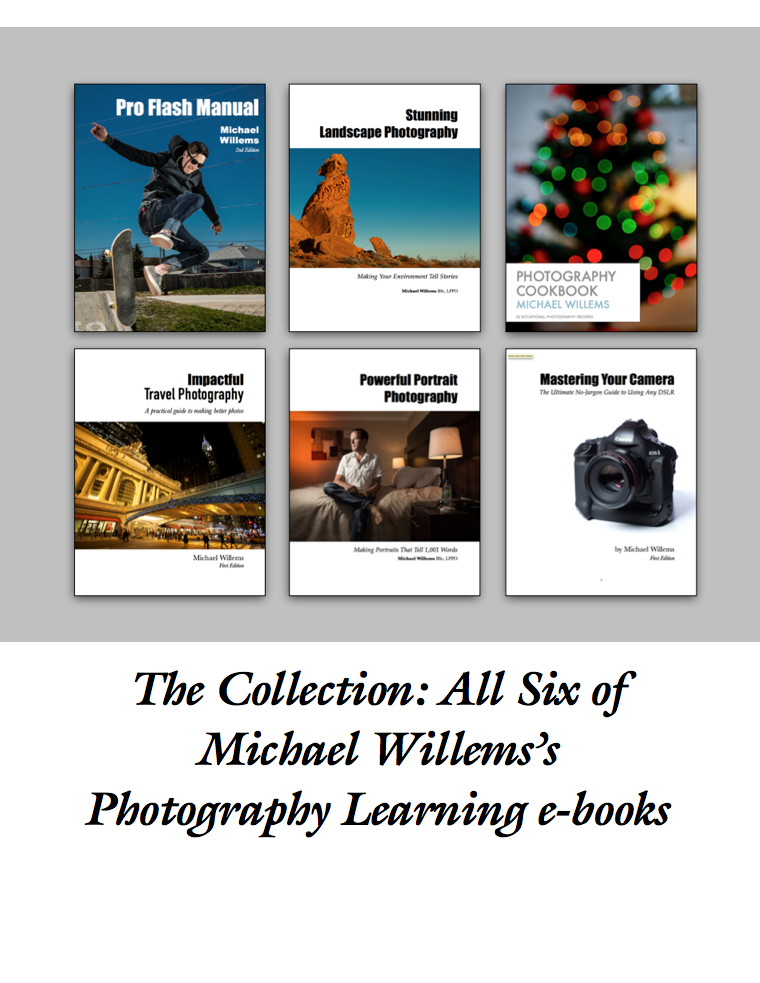
All seven – not six. All seven ebooks, when you add them up, cost $155. On this site, as a set, just $89.95. Get them by clicking here.

But it gets even better. today – ONLY TODAY, Cyber Monday, use discount code CYBERMONDAY when checking out, and you get an additional $40 off, making it just $49.95 plus applicable taxes.

Download full chapter previews:

This amazing deal will not be repeated, and it is valid only until midnight tonight, Eastern US time. Take advantage: get this amazing full photography course for under $50. Seven extensive e-books for one incredible price.


Smoke. Mirrors.

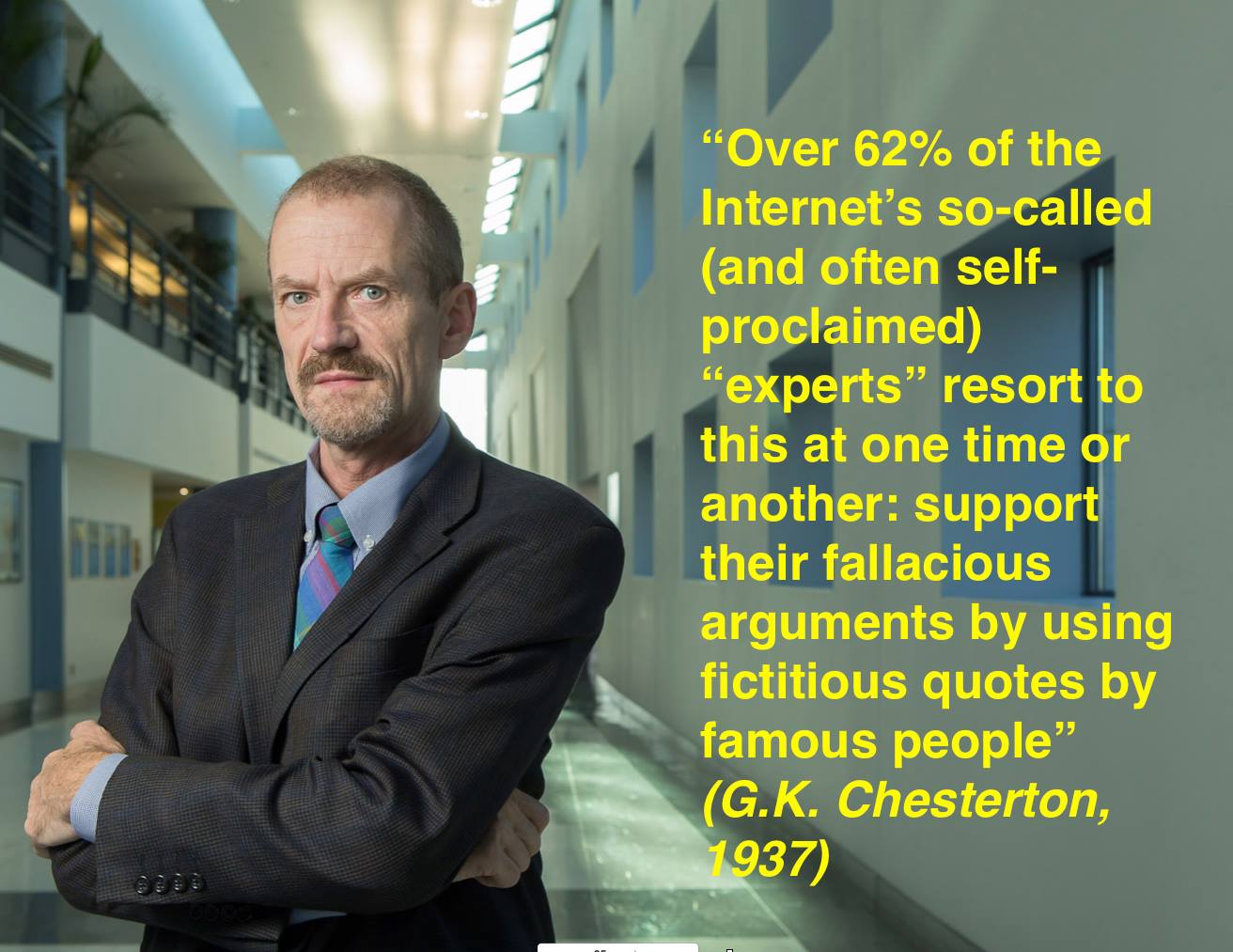
The Internet is a funny place. There’s so mamy opinions,. And everyone is an expert.

The problem is that you need no qualifications, so most of these opinions are just plain wrong. I have heard things like “the rear curtain setting gives you softer flash pictures”, “you need to use the zone system”, “you should never format a memory card”—and many other absurd statements.

So, my advice is, “beware”. Especially if it costs money. Do not buy “exposure courses”. Exposure is simple: if it is too dark, make it brighter; if it’s too bright, make it darker. And do not buy Lightroom presets, unless they are things you truly cannot do yourself. And so on. Buy courses only if you get a 100% money-back happiness guarantee.

And especially: when you read something on the Internet, research a little. Who is telling you? Research them. Are they are real photographer? Are they an expert in their field? Or are they Uncle Fred, or a teenager in his mother’s basement? Judge their answer based on this—then run it by another few people.

Or just take courses from reputable, proven speakers. That is also a time tested way of doing it.

Perhaps I can recommend my ebooks and my courses—but you be the judge. Caveat emptor, whatever you do.


Remember these?

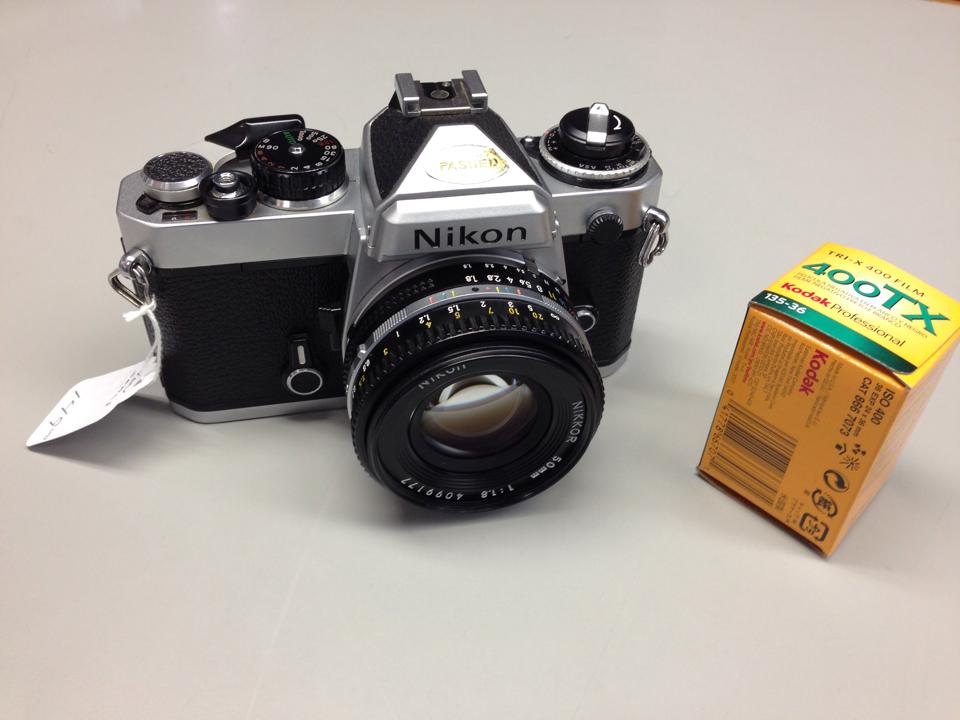
That’s my Nikon FE. A film camera.

I shoot film every now and then.

Why?

Because it disciplines me and keep my skills sharp. When you shoot a roll of film you get no instant replay of the photo you’re taking. You also know you are spending a dollar every time you click. This means both that you have to get the pictures right and that you have to pay attention.

You end up taking 36 photos, not 360. And you will have carefully considered each one. You will spend perhaps a minute focusing carefully, composing carefully, and exposing carefully. No room for mistakes. You are, in other words, being a real photographer.

If the shoot is really important, I carry a little digital camera to try out my exposure settings every now and then. Just like in the past I would have used a Polaroid camera to try out the settings. There is no shame in that.

This is why I recommend everything should shoot fill up every now and then. Go buy a used, good condition film camera. This will cost you perhaps $150. Use C – 41 color film. This is the easiest to get developed. And then, scanned so you get digital files to edit, too.

Try it and feel the satisfaction that comes from having done a good job. Go on, give it a try. If you can shoot a roll of film flawlessly, you are a real photographer.

If you cannot do this, then at least turn off the review function on your digital camera. Pretend you’re digital SLR is in fact a film SLR, and do not look at the pictures until after the shoot. That way you will still grow the same set of skills.

A difficult shoot

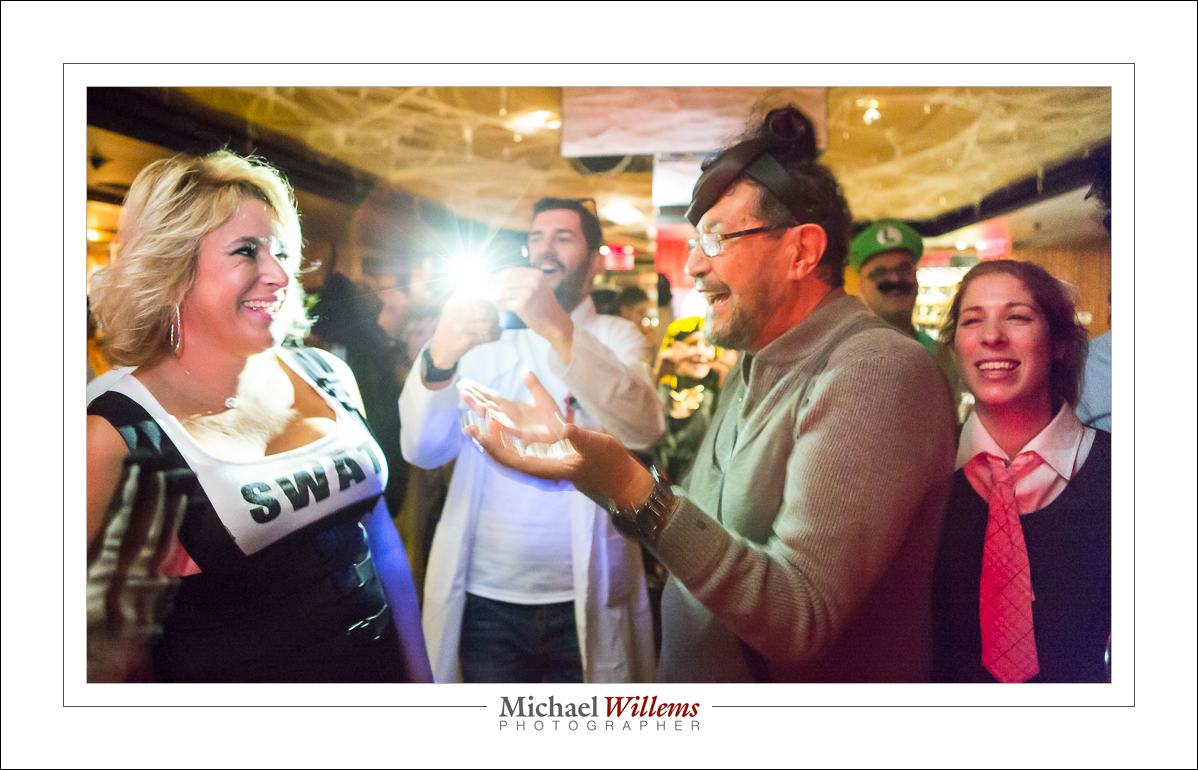
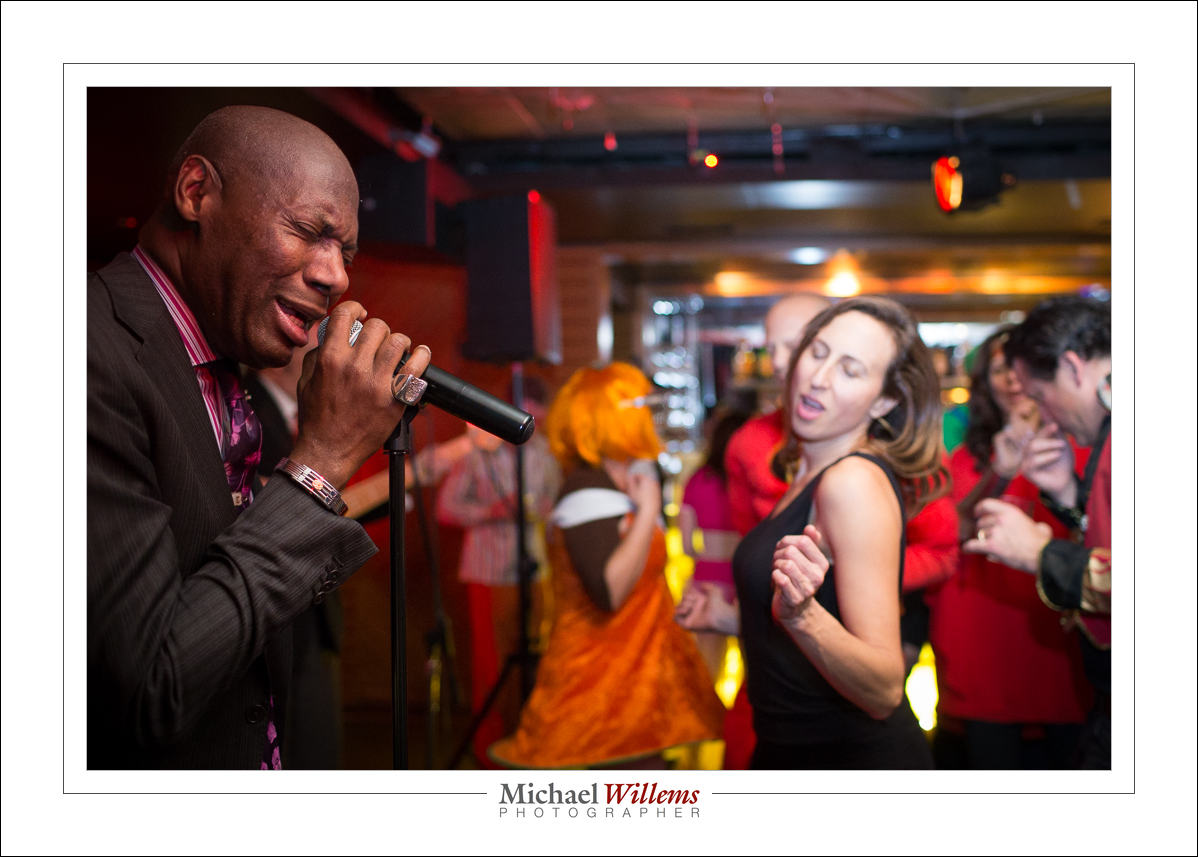
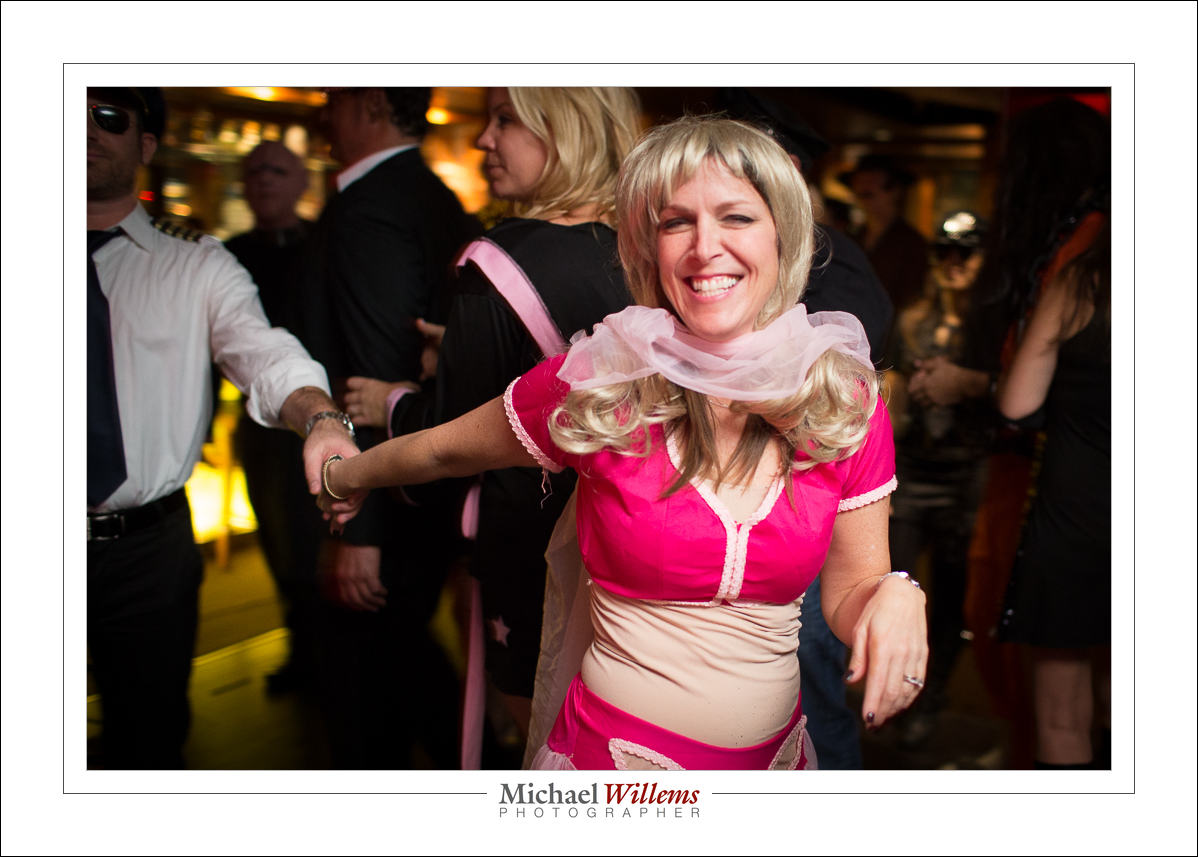
A shoot Saturday. A club, with no good ceiling or wall to bounce from. And no light to focus. And an audience that did not stand still for a moment, meaning focus was even more difficult. Those were the three main problems.

And yet:

Wow, eh. 325 photos like that.

So what’s the secret?

Boiled down to a few bullets, it is:

  • Expose for a “–2 stops” background, as you know from my Flash courses.
  • Feel free to use high, or very high, ISO values. Use noise reduction in post-processing (e.g. in Lightroom).
  • Use prime lenses, or at least have them available.
  • Shoot a lot: as much as twice as much as you need.
  • Be within about two stops of perfect, and shoot RAW.
  • Take any portraits at least twice, in case focus is off, etc.
  • Look for “moments“, not just steady “grip and grin” images.
  • (Hence): do not be afraid to throw out half your pictures.
  • Be willing to do post work on many pictures.

In Saturday’s shoot I had over 700 pictures, and that boiled down to about 600 usable ones, of which I used 325 (Why? Well, if you have five pictures of a specific moment, you may want to use just one).

I shot the majority of my images at 6400 ISO, 1/25 sec, f/2, using a 35mm f/1,4 lens). And even then I had to push many of the images. 

But with a modern camera, it is doable, and even an impossible venue like Saturday’s can lead to a great shoot.


Brantford, listen up

Live in Brantford, Ontario, or nearby? And like photography? Then I am organizing a free learning meetup for you! See www.meetup.com/Brantford-Photography-School-Meetup/events/225583551/ and I hope to see you there. Limited space, just 10 people can be accommodated, and it is already half full as we speak. 🙂

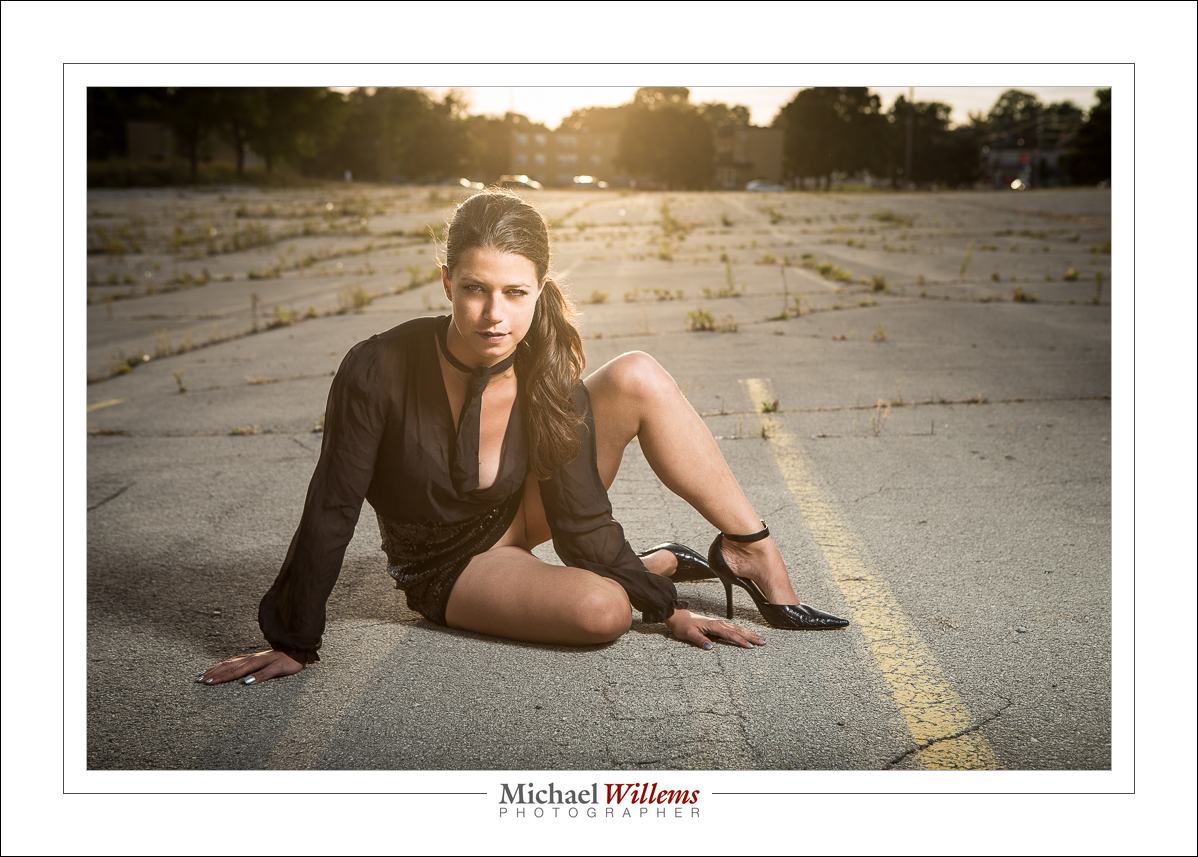
I will brief all my readers on what I do in such meetups.  So that even those of you not in Brantford get benefit out of it.  And so that you can all, before long, make photos like this, that combine manual exposure, manual off-camera flash, using the sun as back light, good composition, and deliberate use of flare:

Hope to see y’all Sunday, 11AM. Right here, 48 Wilkes Street:

Logistics: There is street parking available. I will have water; perhaps if you like, bring a bottle of pop or something (of course at paid events, I will always have snacks and drinks available).