The inverse square law

As you all know, the inverse square law states that light gets weaker in proportion to the square of the distance.

So at twice the distance I get one fourth of the light. At three times the distance, one ninth of the light. And so on.

Good. So if I aim a flash at an object at one metre and get good exposure at f/5.6, then at two metres distance I expect two stops less light, i.e. f/2.8, two stops more open (i.e. 4x more light).

Let’s see. First, let’s use an LED flash light. At f/5.6:
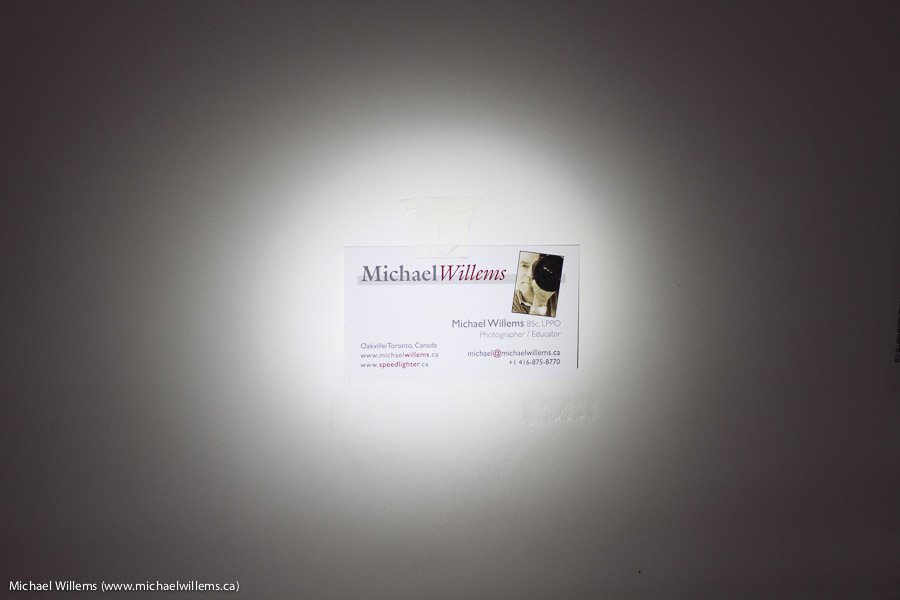
Now when I move from 1m to 2m and make the aperture f/2.8, it should be equally bright:

What gives? It’s brighter! Only by reducing the exposure 0.5 stops do I get to the same brightness (as verified with the histogram, and looking only at the lit part):
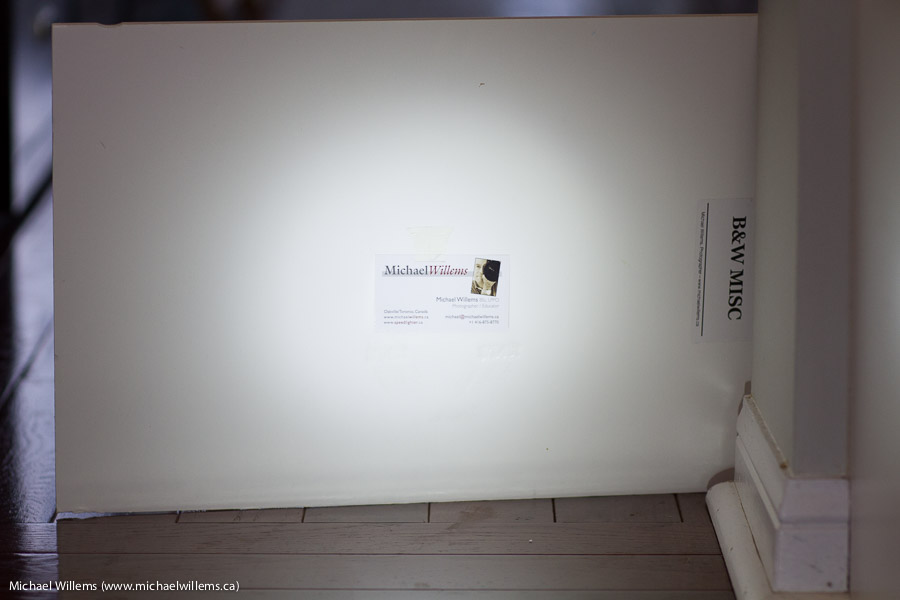
So it seems that the inverse square law does not hold!

Here’s another example. I will shoot at 1m, 1.4m, and 2m. If the first shot is at f/8, the second one should be at f/5.6 (half the light, because 1.4 squared is 2), and the third f/4 (a quarter of the light, because 2 squared is 4). When I do that, I get:
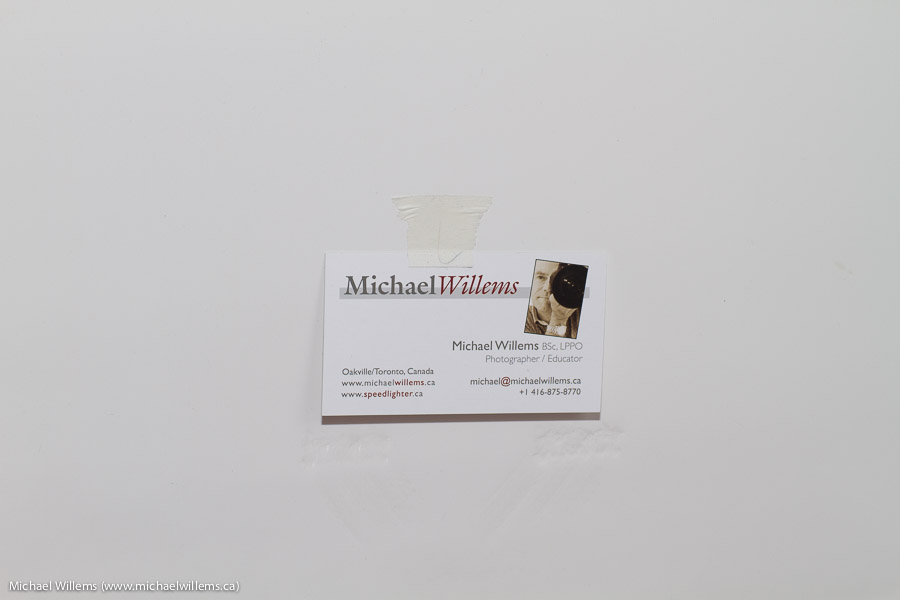
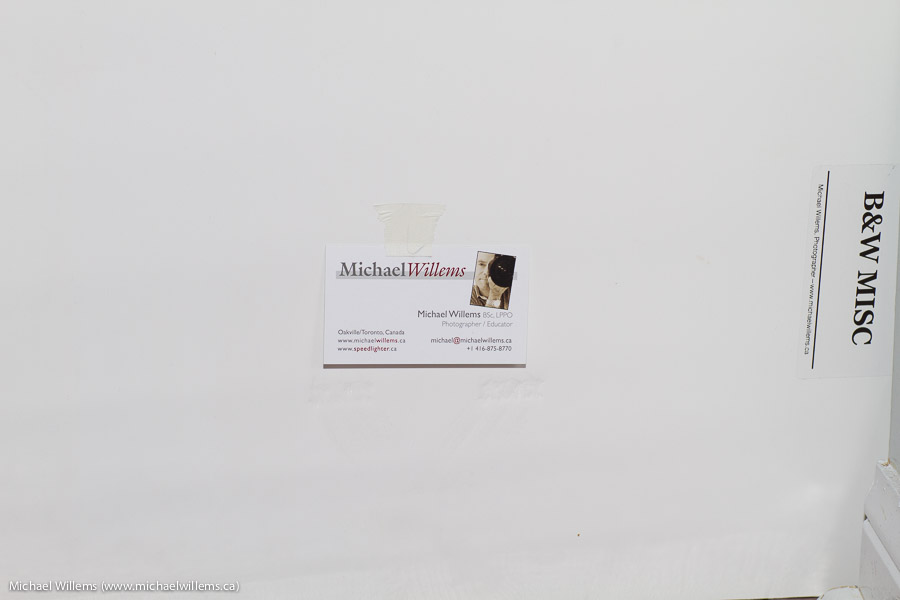
Hard to see here, but they get brighter each time, while theory says they should stay the same.

Only by reducing the second picture by 0.25 stops, and the third picture by 0.5 stops, do I get the same exposure. So my flash apparently needs to be corrected by -0.25 stops per stop.

Wait. Is this crazy Mr Willems saying the Inverse Square Law is incorrect?

Yes. Yes, he is. I am. I am saying exactly that. The Inverse Square Law does not apply. Not to concentrated beams. The Inverse Square Law applies only to point sources of light that radiate that light evenly in all directions. When we move the light away from the subject, the angle loses us photons, but the moment we “catch” some of these lost photons and send them to the object we are lighting anyway—and that is exactly what we are doing with a concentrated beam—that moment, the law no longer holds. Yes, the light gets weaker, but by a smaller amount. That smaller amount, the “escaping photon recapture rate”, or “EPR rate” if you like silly acronyms, is +0.25 stop per stop lost, in the case of my Canon flash.

So what would affect the numbers?

Clearly, at the extreme end, with a laser beam, the correction is virtually +1 stop per stop lost (think about it: how else could we do moonbounce, where we bounce a laser off the surface of the moon). Meaning, the light does not go down at all with distance.  With a flash light, it is, as you see, a little less extreme: there is dropoff; just a little less than you would expect. With a large softbox that radiates in all directions, you will get something closer to the inverse Square Law. With an umbrella, you get closer to it still.

But this is not a theoretical discussion, of interest only to geeks. This is important in practice to us photographers. If I move a snooted hair light twice as far away from the subjects it is lighting I should get two stops less light (2 squared = 4). But the light reduces less than that. So instead of going, say, from f/8 to f/4, I might need to go from f/8 to, say, f/5.

My advice: Learn how the light sources you use (straight flash, bounced flash, umbrella, softbox, etc) behave when you double the distance. Do this in the dark, so ambient light plays no role. Easy enough, and then you have an idea that will be valuable in real-life practice.


Check out my e-books on http://learning.photography/collections/books and learn everything I know. Taught in a logical fashion, these extensive e-books (PDFs with 100-200 pages each) will help you get up to scratch quickly with all the latest techniques. And when combined with a few hours’ private coaching, in person or via Google Hangouts, you have no idea of the places you’ll go. You’ll be a pro!
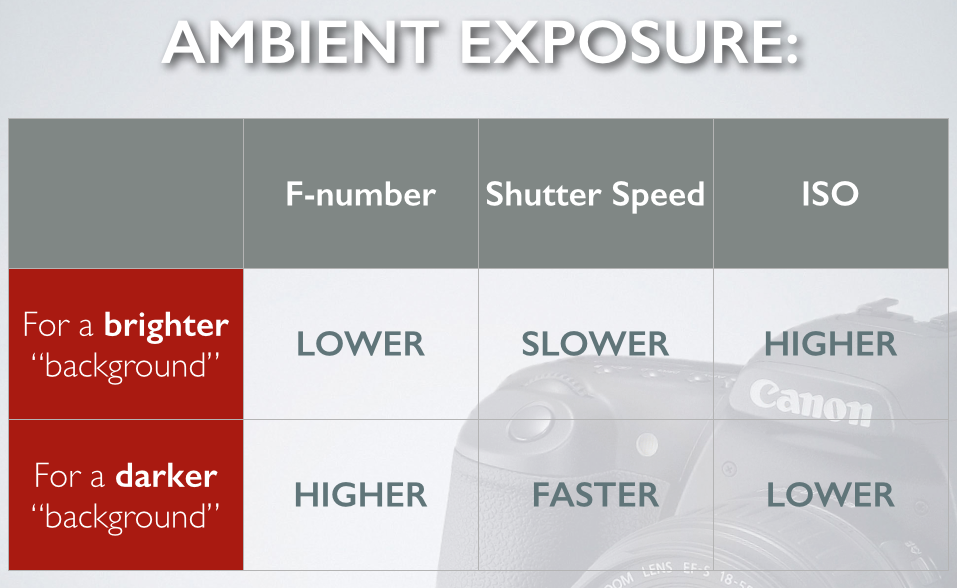
Stop!

Today, a word about stops.

First of all, they are called “stops” because the rotating wheels, like the one for aperture, used to click at certain settings (in the case of aperture, settings like 2.8, 4.0, 5.6, 8, etc).

These “stops” are chosen so that in all quantities, a stop is half, or double, the light. Here’s the options:

  • ISO: 100, 200, 400, 800, 1600, 3200, 6400  –> brighter as you increase
  • Aperture: f/1.4, 2.0, 2.8, 4, 5.6, 8, 11, 16, 22, 32, 45   —> darker as you increase
  • Shutter speed: 1 sec, 1/2, 1/4, 1/8, 1/15, 1/30, 1/60, 1/125, 1/250, 1/500, 1/1000   –> darker as you go faster (to the right).

To keep a picture at the same brightness, you need to increase and decrease by equal amounts. The three are related, in other words, like this:

So these would all be the same brightness:

  • 400 ISO, f/4, 1/125
  • 800 ISO, f/5.6, 1/125
  • 200 ISO, f/8, 1/15
  • 100 ISO, f/1.4, 1/250
  • 1600 ISO, f/16, 1/30
  • 100 ISO, f/1.4, 1/250
  • 1600 ISO, f/5.6, 1/250
  • 100 ISO, f/5.6, 1/15

So as you see, there is not “one setting” that suits a situation.

Look at the last three. The first one is what I can do in the room I am sitting in right now, with my fast prime 85mm lens. Now if you have an f/5.6 consumer lens, you need to either go to 1600 ISO (grain!), or to 1/15 sec (motion blur!). Just saying.

If you want to be a pro, you need to get a feel for this and for the numbers. So today, set your camera to manual and go take pictures. get a feel for “normal settings”. You should know, without trying, that a dark room at night will not work at 100 ISO, 1/500 sec and f/11. Or that a sunny day will look all white at f/1.4, 400 ISO, 1/40 sec.

And it’s cool to know this stuff!


TWIP

NEWS: On March 2, I will co-host TWIP—This Week In Photo, the world’s best and most popular weekly photography podcast.

If you don’t follow TWIP yet, start now. http://thisweekinphoto.com/ – live that day, and online the week after. Don’t miss it.

And if you have not heard it, listen to my previous appearance on TWIP, a long 2012 interview with Frederick Van Johnson. This was taped while I was teaching my 5-day Flash course at Brock University for The Niagara School of Imaging. Frederick is a funny and engaging interviewer.

TWIP is a pleasure to listen to, and it will be a pleasure to co-host it.


Fringe.

Or rather, de-fringe.

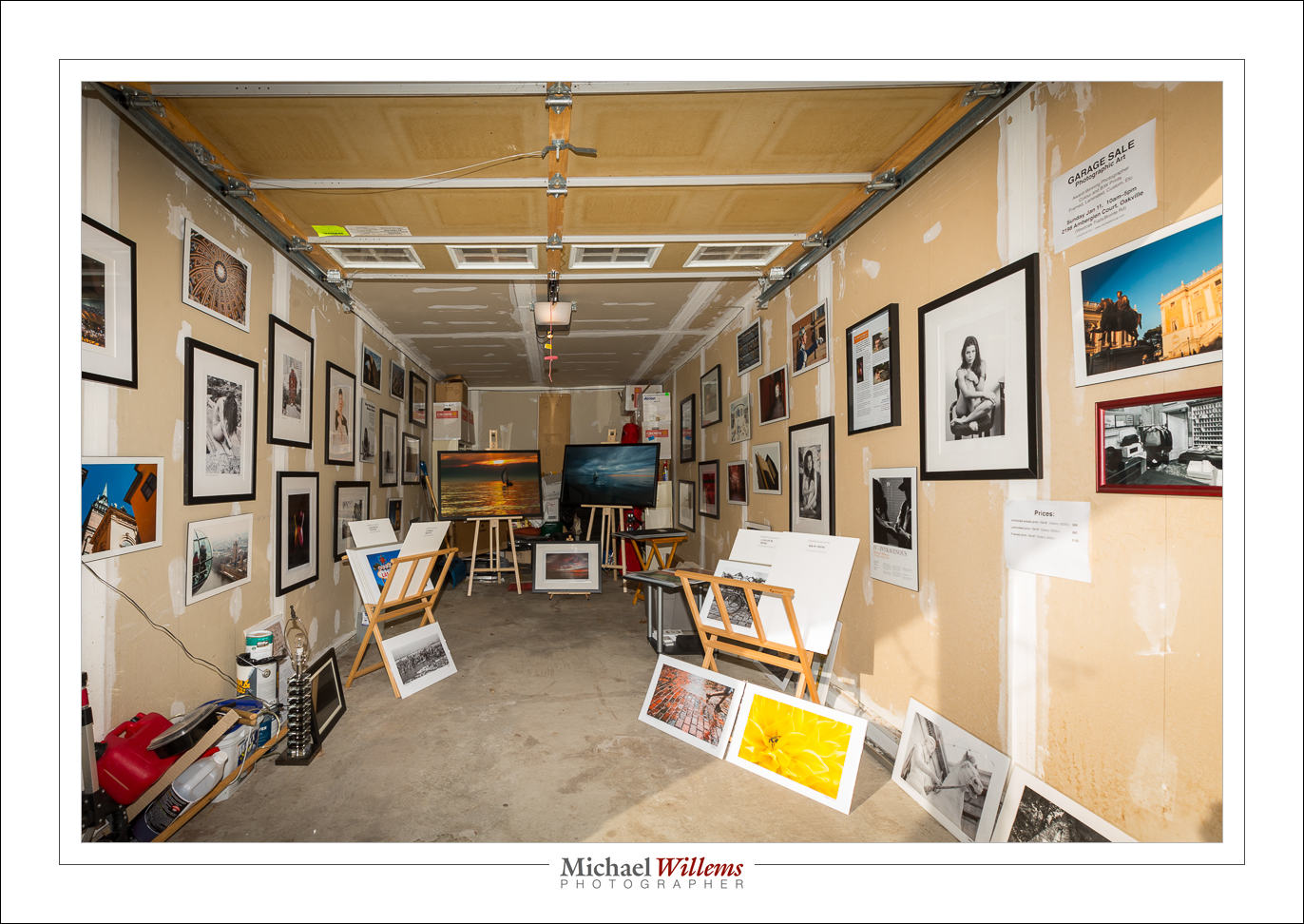
Look at this photo of my garage during last Sunday’s garage art sale:

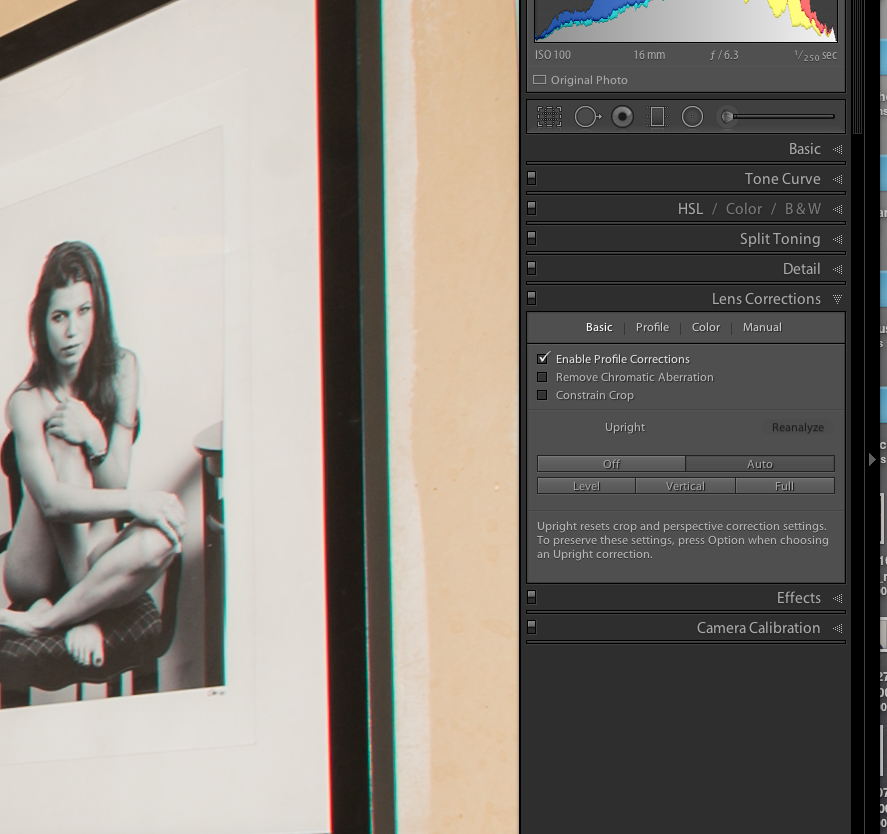
But look at original size and at the very edges, where there is back light (think: a tree against a sky), you will see some colour fringing (known as “chromatic aberration”). Look at the black picture frame, or perhaps even more clear, at the model’s head, and you will see purple/red on the left, blue/green on the right (it may help to look at the image full size):

Now, in the “Lens Corrections” panel, you see the option “Remove Chromatic Aberration”? Let’s click that on. Now we see:

Can you see how it is now gone? You can go into the “Color” tab within this panel and tune the settings, but you usually do not need to do that.

Now, back to the exhibit. Look at the full image at its original size. That was my Garage Wall Art Sale. Now “was”: it is my sale, since it is ongoing. I am selling framed prints and unframed prints, mainly at 13×19″ size, some larger, in categories including:

  • Colourful: images whose bright colour is the main feature
  • Travel and cities: images of iconic cities like New York, Hong Kong, Toronto, London, Jerusalem, and so on: I have worked in 40 countries.
  • Black and White: images that look great as artistic B/W prints on any wall.
  • Nudes: artistic nudes, of which I have hundreds, featuring my muses
  • Sailing: showing that even “Lake Onterrible” can look great.

These prints are handmade by me on permanent museum quality paper using permanent pigments (not dyes, which can fade after just a few decades). They are also autographed, and are made in limited editions or even as one-offs.

In other words: they can form the basis of your wall art collection. Collecting such wall art can be an amazing hobby. See www.michaelsmuse.com for more detail, and remember: if you buy out of the garage, Garage Sale prices apply, and these can be as low as one quarter of art gallery prices. So, come see what’s in the bins and display racks and decorate your home with originals today.


The Camera Puts On Ten Pounds

…or so it is said, in the case of TV, where the camera does really put on ten pounds. Why? Because TV is made with wide angle lenses.

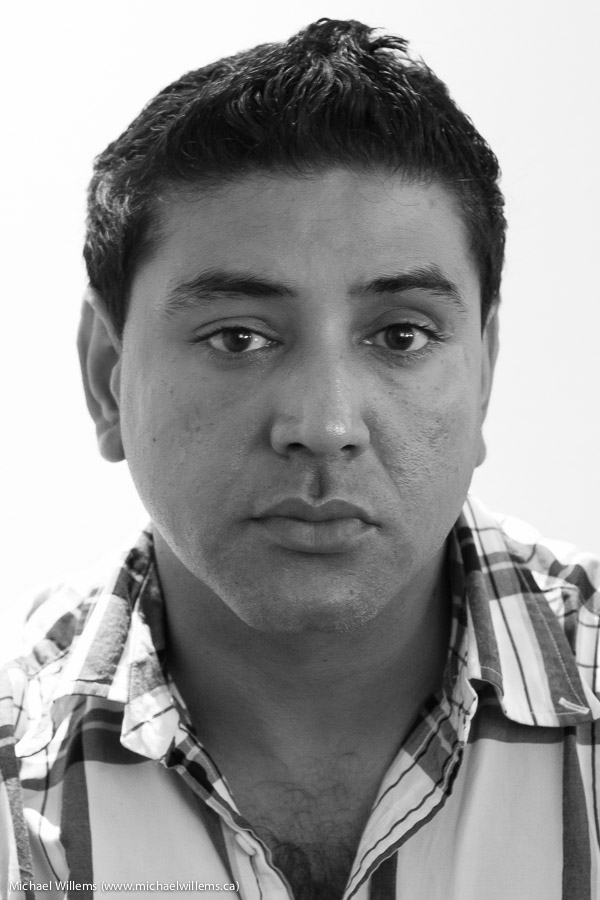
To illustrate this, let’s make a portrait using a 200mm lens:

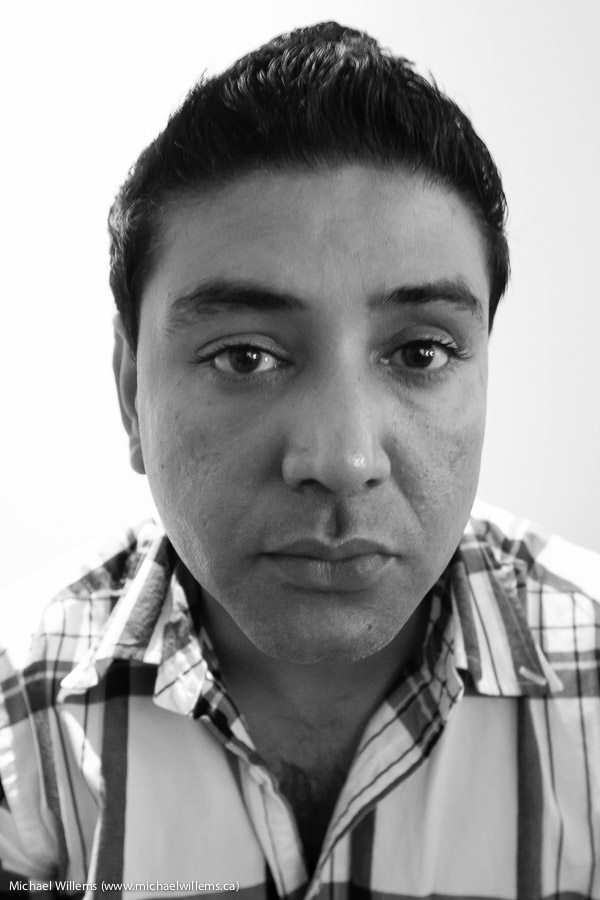
An undistorted view of the subject. Now let’s zoom out to 35mm. But then, wait….  the subject will be small, very small. So we will have to get closer to keep the subject the same size. It is that closeness that causes the subsequent distortion:

All distorted, and again, this is not because of the wide angle; it is because of the closeness that the wide angle necessitates. That is why we say:

“Do not use a wide angle lens for portraits”.

What we really mean is:

“Do not use a wide angle lens for portraits where the subject is large, because then you’ll have to be too close and you’ll get distortion as a result of that closeness.”

That does not sound quite so punchy though, does it?

Sometimes we can use that distortion for a deliberate comical effect:

I suppose the one thing you may want ti take away from all this is: know your lenses and when to use which one. Pay attention in particular to:

  1. Depth of field.
  2. Perspective distortion.
  3. Susceptibility to (or resistance to) motion blur.

All three of these have something to do with focal length. When you are learning photography, it is your job to figure out in which way.


Ring in 2015 with an amazing deal.

To celebrate 2015, TODAY ONLY, you get an additional $15 off the Portrait Pro Mini Collection of three of my e-books.

Three amazing e-books for not the usual $60, nor the $44.95 special price, but TODAY ONLY, for just $29.95. That’s 50% discount off the regular price.

Go here to order. Then use discount code PortraitProSpecial on the last page when ordering and you get $15 off the discounted price. Act now… TODAY only!

This discount is valid only for 24 hours. After that, price returns to the regular discount price of $44.95, which is still an amazing deal. Learn about camera and photography fundamentals, flash, and portraiture, all in one package.

My e-books are all between 100 and 200 pages, and they are PDF files without DRM. This means you can read them on any of your phones, tablets, pads, or computers without permission hassles.

If you already own one of these books, you may substitute another. Simply indicate that in the comments when ordering, and mention order number or date of original order.


f/4 and sharp

I often hear students say “but I had to go to f/16, because at f/4, it would not be all sharp from foreground to background”.

False. Or rather, “it depends”. Depth of field depends on lens focal length, and distance to close object, and aperture. So at f/4, if you are not close and use a 16mm (wide angle, on a full frame camera) lens, you get:

Yeah, at f/4 you can have everything sharp, from close to far. Check the tables, etc. All sharp.

But get close, and with the very same settings, now the background is blurry:

Now, at the same settings, the background is blurry.

So keep that in mind, And also, always distinguish focus blur (above) from motion blur:

That’s because I shook the camera, and that has nothing whatsoever to do with focus or with depth of field!

I wish all my readers a very happy 2015. Love, health, happiness: everything else is secondary or can be bought. And keep shooting. And reading. See http://learning.photography for the e-books: if you have a new camera or new gear, this is the time to start using it to its full potential. Go for it. You live only once.


Take direction.

I took a few photos today of talented photographer Lisa Mininni, to demonstrate flash direction to her when bouncing; and I thought I would share them with you here.

I often see people, even pros, walk into parties bouncing their flash straight up, at 180 degrees. Here:

Not good: dark eyes. Because of the straight-up bounce, the light comes from straight above. So the eye sockets fill with, well, with darkness.

Next, I see people all the time with their flashes aimed 45 degrees up, forward.

What’s happening here is that the light lights up the subject’s forehead, and the ceiling above and behind them. As we go down, it progressively lights less.

Now, we use a reflector. I have seen those in use many times before. I get:

Not bad. But.. a little harsh. The light could be better.

And when I see “better”, I mean bouncing 45 degrees behind me. Provided there is a roof, cekling, wall, somwethign to bounce back light, you can do this. Even with high ceilings, as in the studio I made these in, where I would estimate they were at least 13 ft high:

Perfect. To really see the difference, view them large and download to your computer.

Now, keep in mind:

  • 45 degrees behind is merely a starting point. And a good one. But the real way to do it is to start with the subject’s face. From there, mentally draw a dotted line to “where the umbrella would be” if you were in a studio. Now continue that line, and where it hits a wall or ceiling, that’s where you aim.
  • What I am talking about here works—usually. But each situation is unique, so “never say never”. Sometimes, “straight up” or “forward” are the way to go.
  • I am mixing with ambient light. A good starting point for that, as regular readers know, is the “Willems 400-40-4 rule”: 400 ISO, 1/40 sec, f/4.
  • Watch your power. If the ceilings are too high, or if you need to use a small aperture like f/8, you may have to go to higher ISO values.

Using a flash is easy once you know how. Learn, and see how amazing the options are that are now open to you.


TIP: My courses and books will help: see http://learning.photography—special Christmas pricing applies. Joining the Facebook Speedlighters Forum on https://www.facebook.com/groups/SpeedlightersForum/ will also help: many people will help you learn.


Evolution of a shot

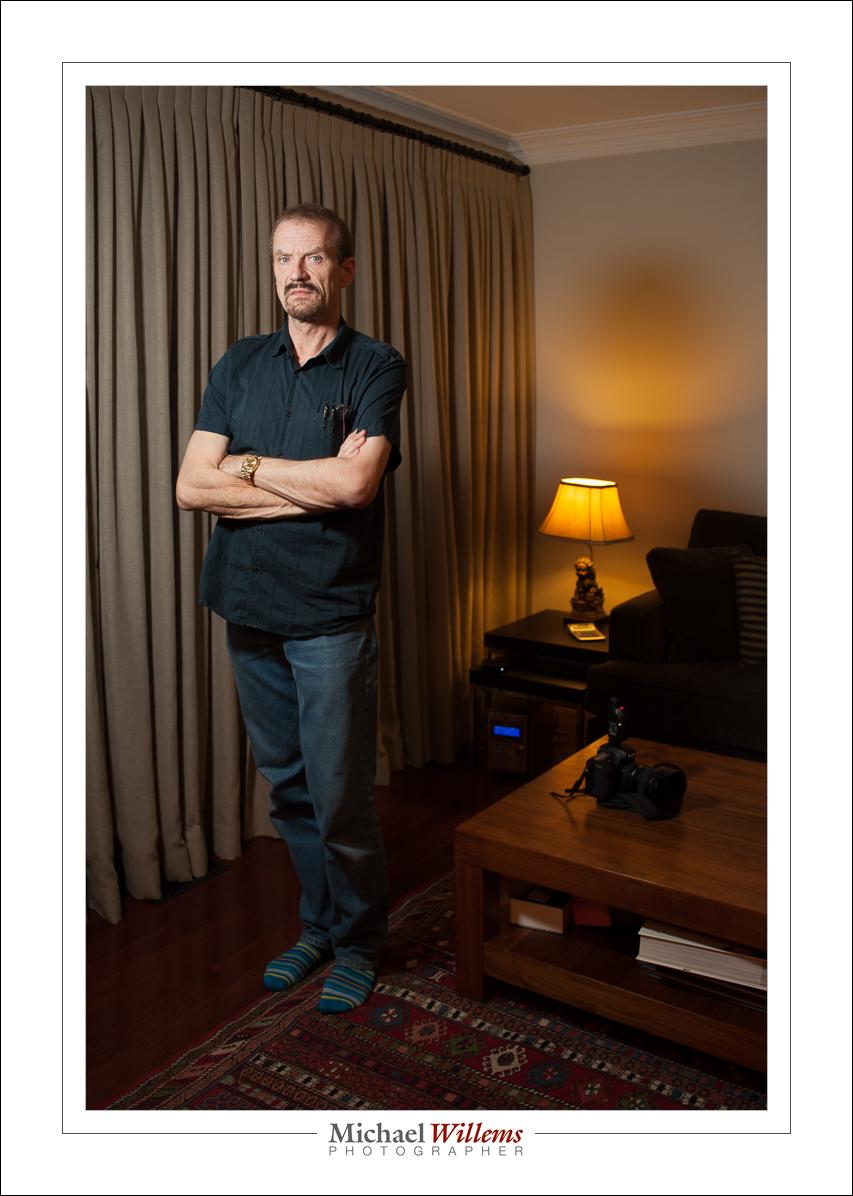
How do we set up a shot with both ambient and flash light? Let’s look at one.

Let’s start like this:

That’s the studio setting: 1/125 sec, f/8, 200 ISO. Ambient light plays no role. That is the definition of the studio settings.

Is that what we want here? I would say no. We want to see the lamp!

So now, let’s mix in ambient light, shall we? We aim for –2 stops on the light meter. Here’s 400-40-4, which gets me very close:

That’s 400-40-4 (i.e. 400 ISO, 1/40 sec, f/4): the “party setting”.

Much better, if we want that mix.

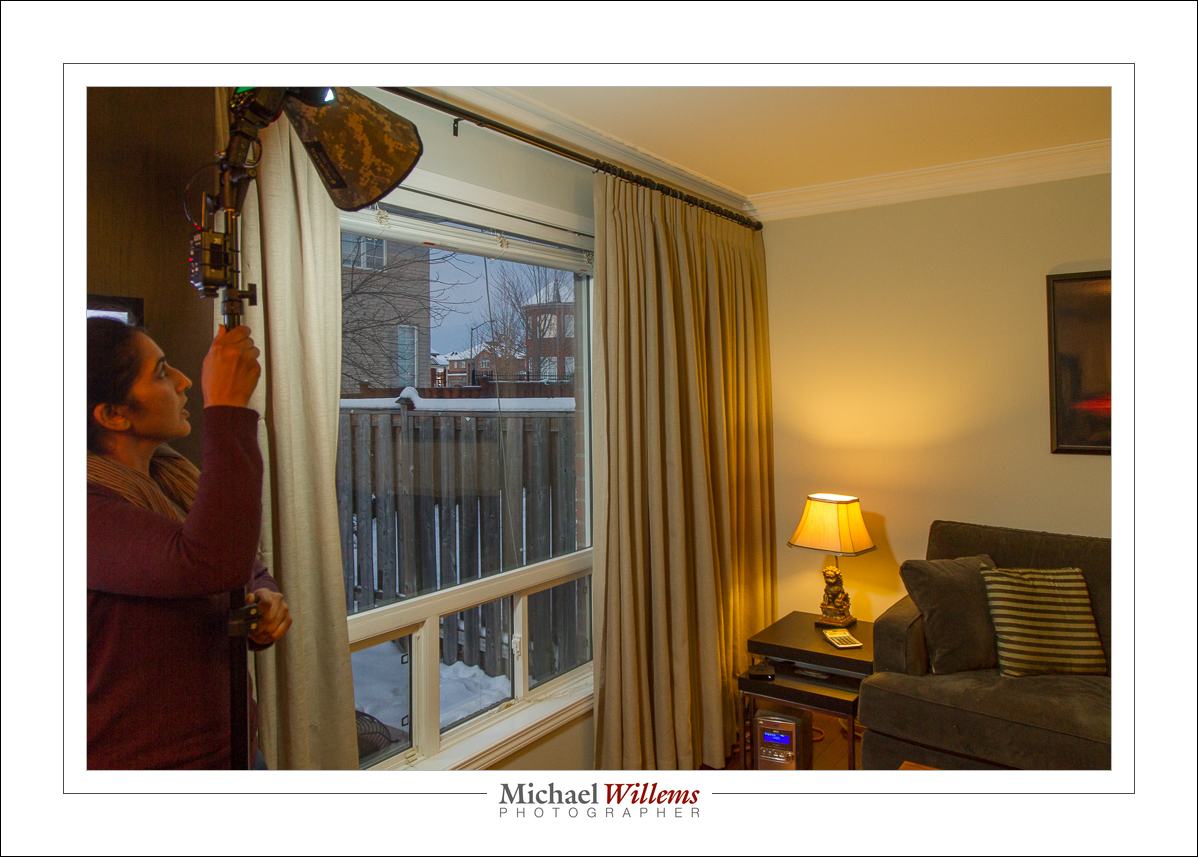
Now let’s open that curtain and take a look. Fortunately., the outside light and the lamp are in the same range, so I can set my camera for either of those. 400-40-4 will do it. If I had to choose, I would choose based on the lamp, the most important element.

Because I want no light spill from the flash into the rest of the room, I do not use an umbrella. Instead, I use a small Honl photo Traveller 8 softbox, held close to the subject. Here’s student Arsheen setting it up:

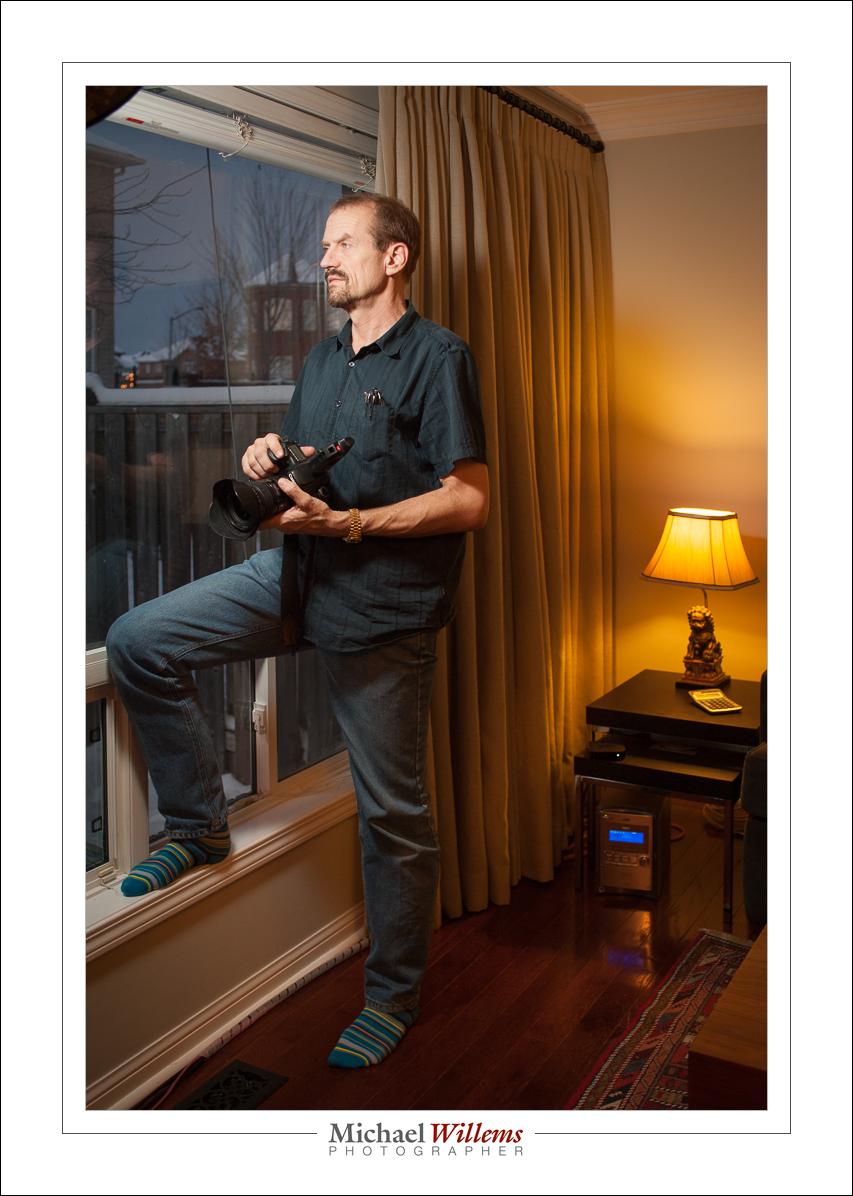
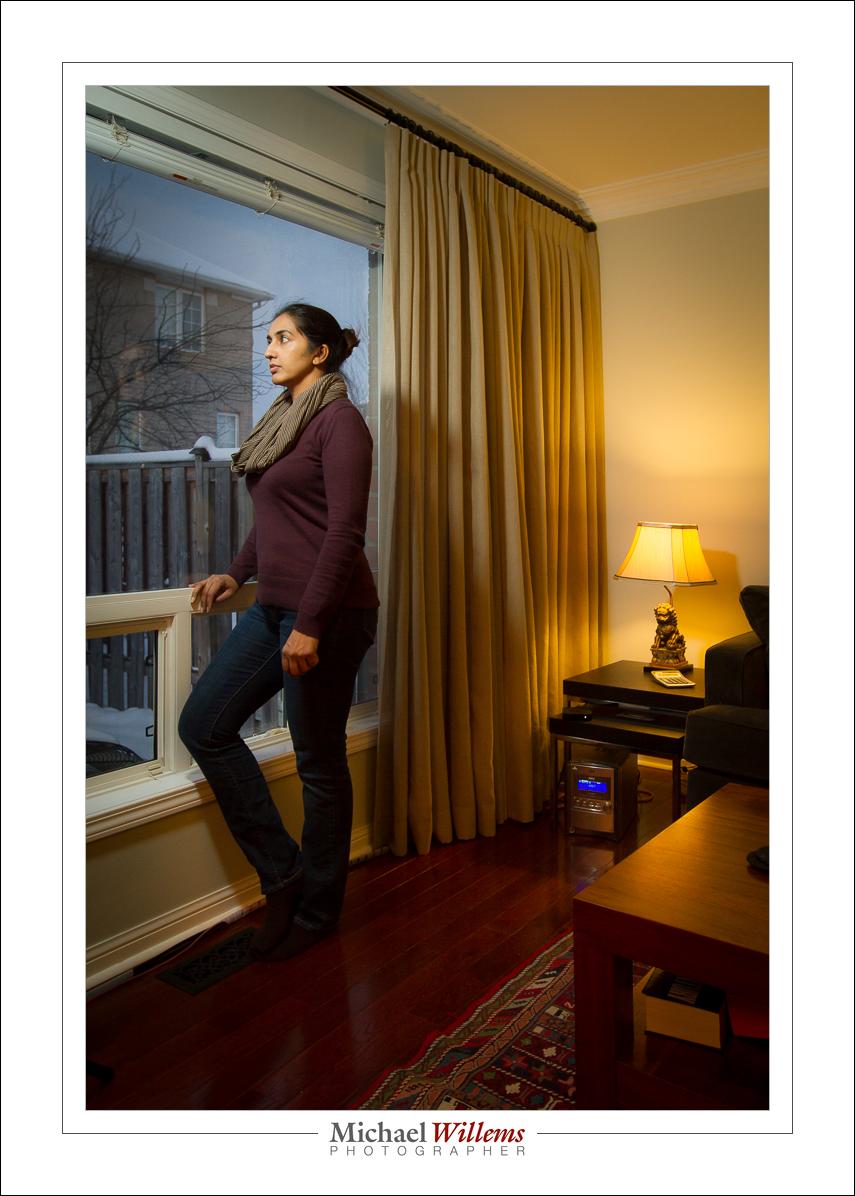
That gives me the final shots:

That mix of warm and flash light: beautiful. But that’s my taste: you can do your own, develop your own style. And that is what flash is all about.


Shoot

Last night I photographed a party. Let me take you through that: it is useful to see a real-life shoot as it unfolds.

This was a very quick, rushed shoot: hardly any time at all to set up.

I had two cameras:

  • 1Dx (full frame) with 16-35 lens;
  • 7D (crop camera)  with 24-70 lens.

That means effectively I had 16-35 and 35-105 mm available, i.e. 16-105 in one continuous range. So the lenses were taken care of.

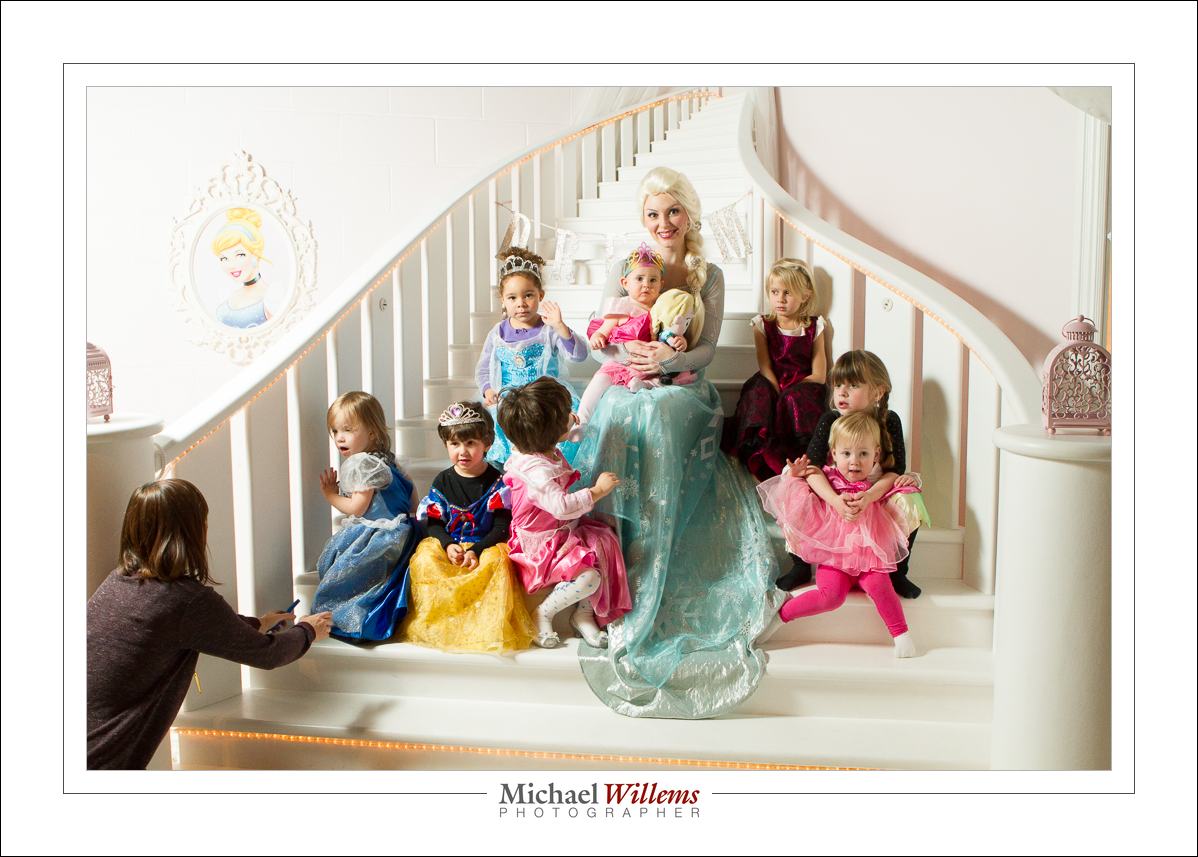
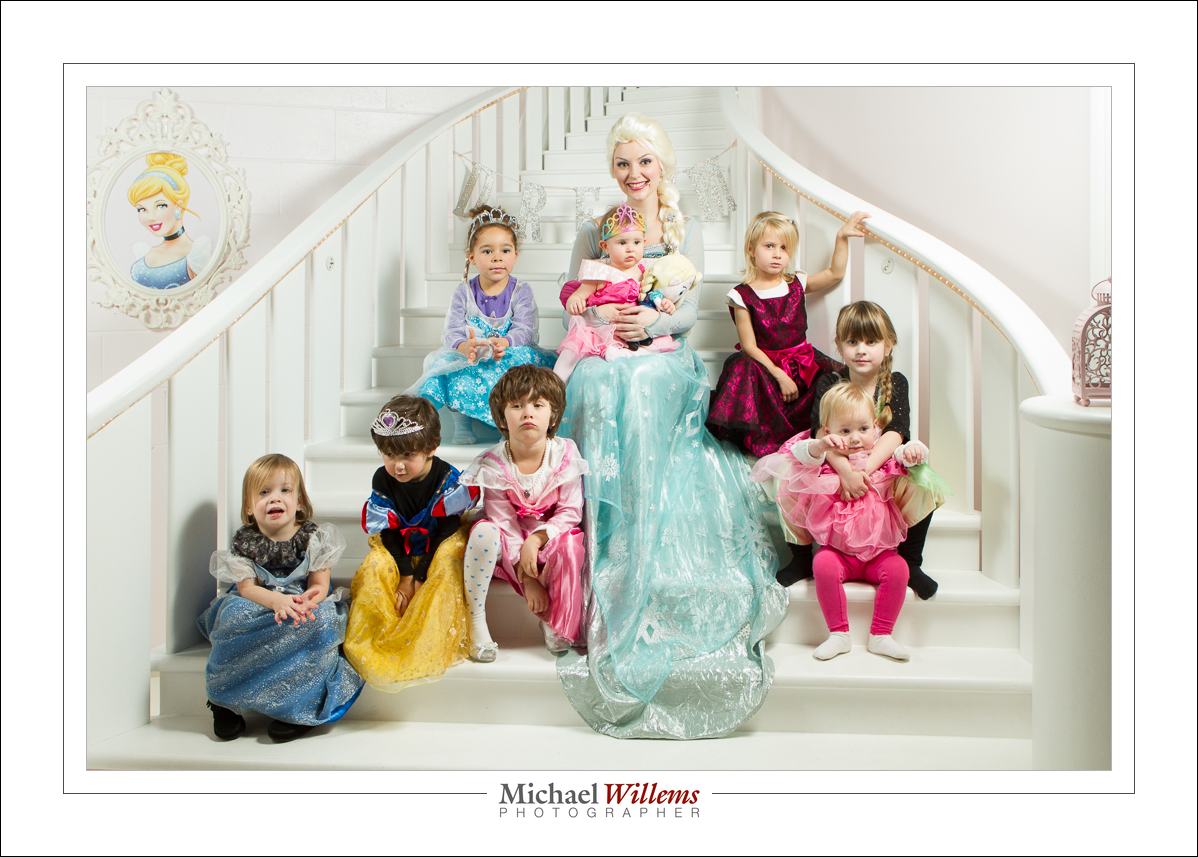
Now the lights. Seeing the need for speed, I quickly set up two speedlights in umbrellas, fired by Pocketwizards. In this example only the one on the left fired:

The final pics look like this:

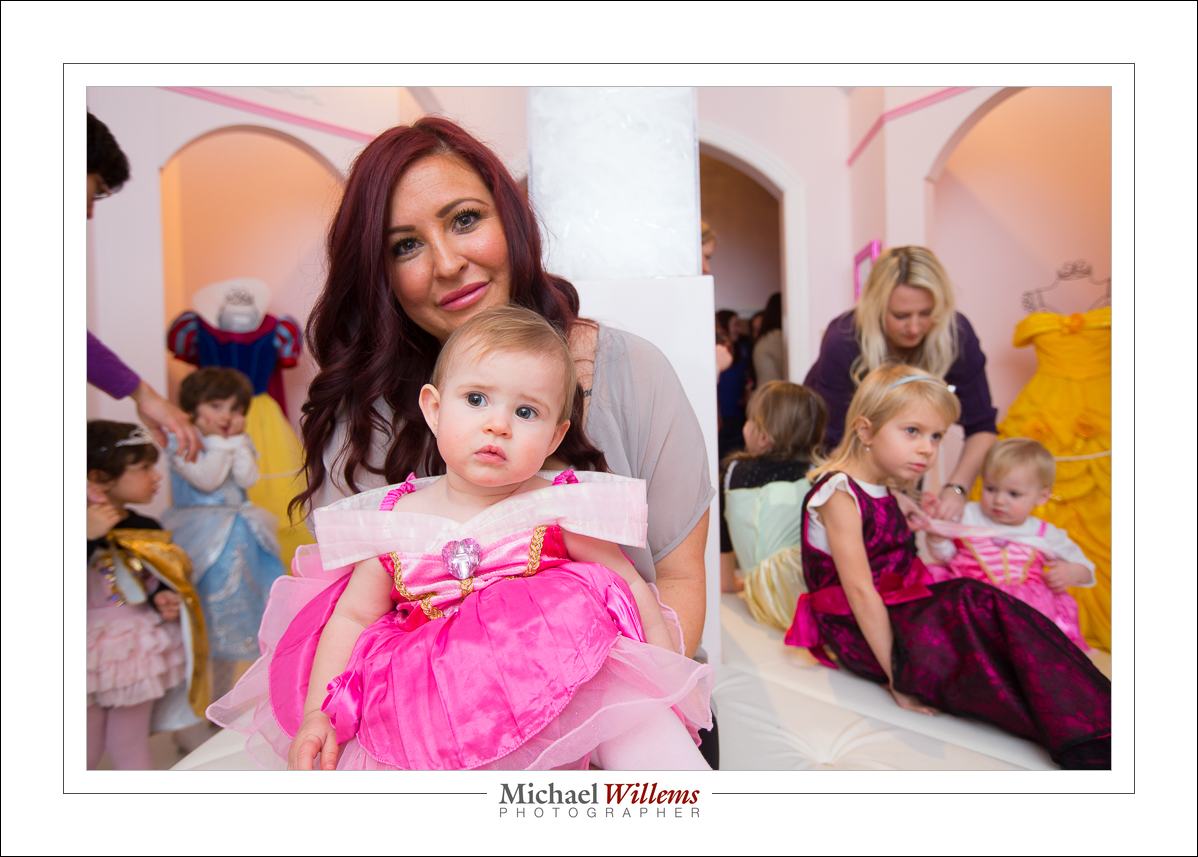
That’s simple: One umbrella left, one umbrella right. We are looking for competent lighting here, not art. I did not use a meter; just set the lights to 1/4 power and adjusted ny camera settings (ISO, aperture) to that.

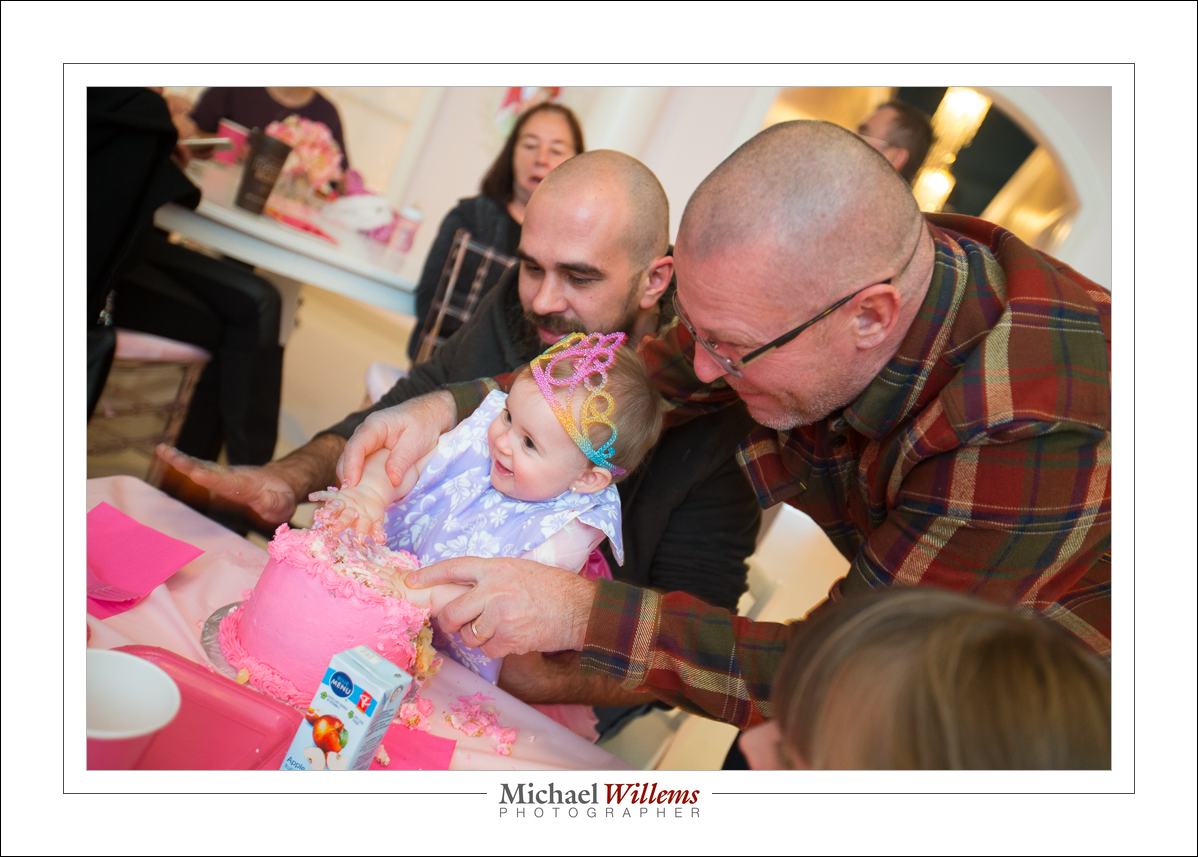
Note the mom in the first shot. My shoot was hindered big time by all the moms taking iPhone shots. A trend more than ever before.

Then the rest of the shoot: the 16-35 with one on camera flash bounced against what walls there were.

Easy in some rooms, harder in the ballroom since it had a high, black ceiling. So I started at 400-40-4 modified to 800-40-4: i.e. a camera setting of 800 ISO, 1/40 sec, f/4. That extra stop comes in handy when you are bouncing off high or dark ceilings. Like here, in the middle of the ballroom

Sometimes, I switched to mood lighting: simply increase the shutter speed to darken the ambient light, and the aperture smaller (or lower flash compensation, when on TTL) if you also want less flash:

All in all, a competent shoot.

With some fun too: A panning shot., 1/30 sec and I follow:

The ghosting lends it an interesting effect; and the subject is sharp first because I am panning; second because she is lit mainly by my flash, which is 1/1000 second or faster.

I had just enough time to produce prints for the parents, on my little Selphy printer. All good.

And then quick post work an on to the next assignment!

___

Want Michael to shoot your family event? He’ll quote a competitive price and deliver quality work quickly. See www.tolivetolove.com for details.