I am off to the Photography Show at the International Centre by Toronto Airport. Come see me speak – I’ll be there all three days.
Off to the show!
Reply
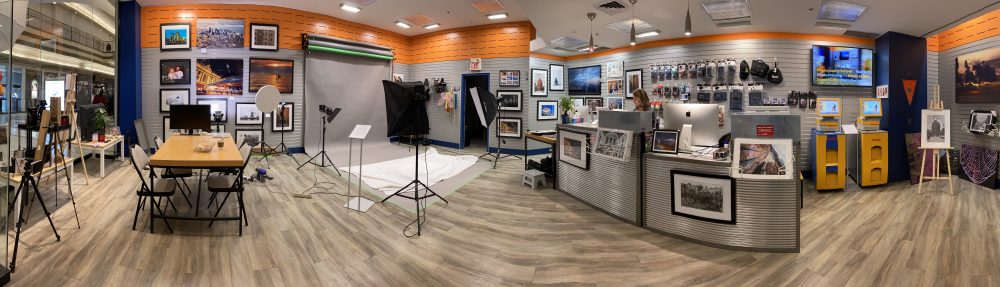
I am off to the Photography Show at the International Centre by Toronto Airport. Come see me speak – I’ll be there all three days.
I recently bought a Canon 7D camera.
The reason I bought another camera when I have two pro bodies already? Amongst many other reasons: The 7D focuses better, while my Canon 1Ds MkIII and 1D MkIII cameras do not focus consistently well when shooting “wide open”. When I use a “fast” lens, one with a large aperture/small “F-number”, set to, say, f/1.4 or f/2, focus is inconsistent.
And I shoot carefully. I use one focus point. The subject is contrasty and well lit. I am shooting at a shutter speed of ten times lens length (e.g. if using the 35mm lens, I am at least at 1/350th second). And yet – out of every five images shot like that, one or two are razor sharp, some are pretty good, and one will be blurry – focus blur, with the focus way out.
This appears to be well documented online. “Fake Chuck” writes about it regularly, like here. Another post here also mentions Canon’s sloppy soft focus versus Nikon’s razor sharp focus:
All the Canon’s, all the way back to the Canon D30 deliver that famous soft focus look. Is it because Nikon (and now Sony) use a CCD sensor for focus and Canon uses a CMOS for focus?? If so, change it. if not, get rid of the trademark Canon soft focus once and for all. Nikon is so sharp it bites. Why?
One other issue is that my cameras tend to pre-focus when the lens is wide open. But less when it is not wide open.
Clearly, we need critically accurate focus if we are to shoot at f/1.4 (and that is why we spend thousands of dollars on f/1.4 lenses). And it can be done.

I still shoot Canon, because I like the lens range and because I have over $25,000 invested in Canon equipment, such as my lenses:

If, like me, you like to shoot wide open, I would recommend you do the following, apart from the obvious “shoot fast, use one focus point, look for non-equivocal focus areas”:
So, does the 7D do better? So far I am happier. It is not perfect: a few out of focus pictures so far when I am shooting wide open. But so far my impression is: “significantly better”. The new focus modes help, of course (spot focus in particular).
So.. stay tuned. And have fun, and do not worry too much about sharp focus.
…just locked up again. Second time today.
I came back to it ten minutes after reinserting the CF card and reformatting it. And I noticed that the LCD on the top was still on. A quick check: sure enough: no response to any button or switch – not even to the “off” switch. So again, take out the battery.
Lemon? Or a pattern?
My inspiration comes from photographers like Annie Leibovitz; and like Robert Mapplethorpe’s photos of Patti Smith; and now like the recently discovered Chicago street photographer Vivian Mayer – look at this web site now. Incredibly inspiring street photography, from the 1950s to the 1970s. It’s great.. and it’s also depressing in some ways. That photography is so real you are there. And I would hate to be warped to the 1950s, having to go through half a century of turmoil all over again.
…just hung up again. Again, not long after live view. No response even to on-off switch: nothing happens and top LCD remains lit. And again, it needed the battery removed to start responding to anything. Worrying, and as a wedding shooter, this would stop me (a hang could theoretically very easily corrupt the disk).
I found a great fashion photography blog [link here] with tutorial movies.
That linked movie explains why a magazine photo costs money. A shoot means many weeks of preparation and a day with a cast of thousands.
And I found myself thinking: I wish I could do that, on those budgets. I did a beach shoot recently:

But it was me carrying all the gear, the cameras, and the lightstand with umbrella, and it was me setting up the fill light. It was me doing art direction, setup, and everything else. The models had to do their own wardrobe and make-up. No-one came and handed me pillows to lie on, either. The budget for the day was under $100.
The moral of this story is, I suppose, twofold. First, there is a reason a professional shoot costs professional money. Second, at a pinch you can produce on a shoestring, too. It’s just different work.
But, most importantly to me: as a professional photographer I want to do more bigger shoots. What I could do with that kind of budget! Recession, be over already!
So a crop camera has wider depth of field?
Depends how you look at it. The way I look at it: “only because you will use it differently. If you use it to take the same picture, you’ll get the same depth of field”. But of course for that “same picture” you’ll need a different lens.
OK, this is complicated. So let me just show you by example.
Picture one: full frame 1Ds MkIII camera, 50mm lens at f/1.4.

(You can click to see the large version).
Picture two: crop camera, a Canon 7D, with a 35mm lens also set to f/1.4. That 35mm lens on a crop camera is about the same as a 50mm lens on a full frame camera; i.e. enables me to be at the same point and yet get roughly the same picture. Now I see this:

As you see, this gives you roughly the same depth of field. If there is any difference, it is minor. SO:
A 35mm lens on a crop camera gives you roughly the same picture as a 50mm lens on a full frame camera, and roughly the same depth of field.
A few notes, by the way:
Point 2 explains a few things to me, by the way. That’s part of the Canon-effect, more on which in the next few days; it’s why I have to adjust extra when wide open.
Mofia, pronounced as in “more Fire”, who is himself a talented photographer, in a few typical poses – his poses:


All this in my basement studio. You can equip a studio very quickly and easily (I teach people how to do this). And guess what? That’s all shot using one strobe. One light, that’s right. And a reflector. Not four or five lights!

Like the other day when I shot a company event in the Hockey Hall of Fame in Toronto. Shooting the Stanley Cup was tough, and sometimes you just have to take what you can get.
This quick grab-shot of the Original Stanley cup is illustrative. The cup reflects and you have to get close in a small room (the vault). Little space for umbrellas. The Plexiglas around the object reflects. The Plexiglas behind the object reflects, too. The existing lights cannot be turned off. Oh and there is limited time.
So then, you get this – best I could do under the circumstances. And my hands give it charm. That’s my theory and I am sticking to it.
One thing to keep in mind: flash systems will be confused by strong reflections. Either switch to centre-weighted flash metering, or use FEC (Flash compensation) of up to +2 or +3 stops, as needed.
Namely, that the thing I miss most is a little one: the inability to save all your standard settings and recall them.
Yes I know, you have the “C1-C3” exposure modes on the dial. They do not do me any good. For a start they cannot be named, so if you set mode C1 for sports and mode C2 for babies and so on, you are likely to forget what you set. And you cannot see easily what you have set (“C1 is what – Aperture mode with spot metering? Or what?) And you cannot recall them easily (if you could move C1 back to Av mode, I’d be happy enough!).
No, what this camera needs is a mode where everything is reset to your standard settings to give you a good starting point. NOT Canon’s factory settings. Your settings – that would be the guy who paid $2,000 for the camera.
I am reminded of this by an event today where I shot with fill flash – and the person was blinking in every shot. Reason: I inadvertently had the popup set for wireless flash. That causes several flashes – hence a blink in young people. Groan. And to top it off, for some reason I was in JPG mode instead of RAW mode. Must’ve nudged something. Groan.Never happened before in any of my cameras – literally.
Canon just lost me a shoot, essentially. And to avoid this happening again, I will have to carry a checklist and before every shoot, check 53 sets of settings ( a total of hundreds of menu entries – literally) every time against that list. How dumb is that? This deliberate disabling of functions to make more money (“want a basic function like that? Pay $9,000 for a 1Ds”) is annoying.
As I have said before – Canon should make the expensive cameras better – not do their marketing by deliberately disabling the lower-end cameras. Nikon has many more of these settings – although their menus are not the easiest, they do not seem to engage in this type of “marketing by annoying”.