Split

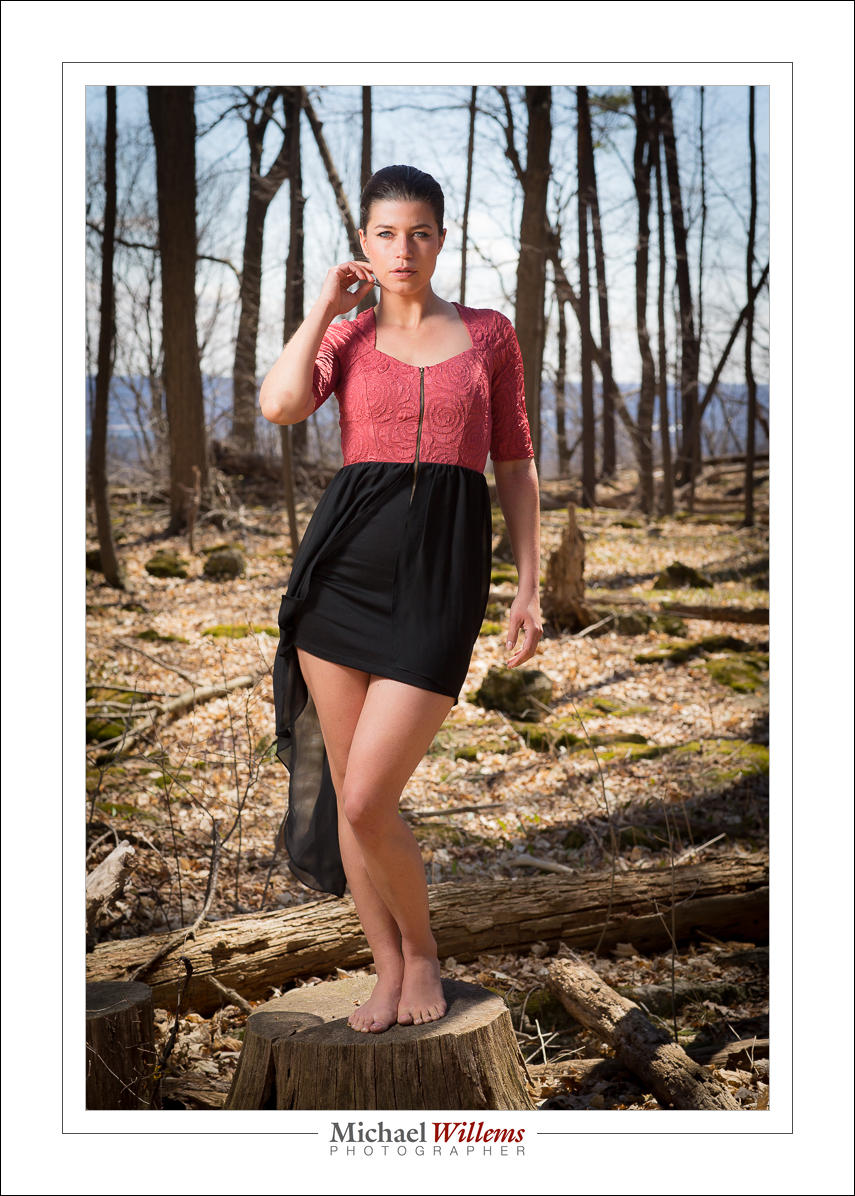
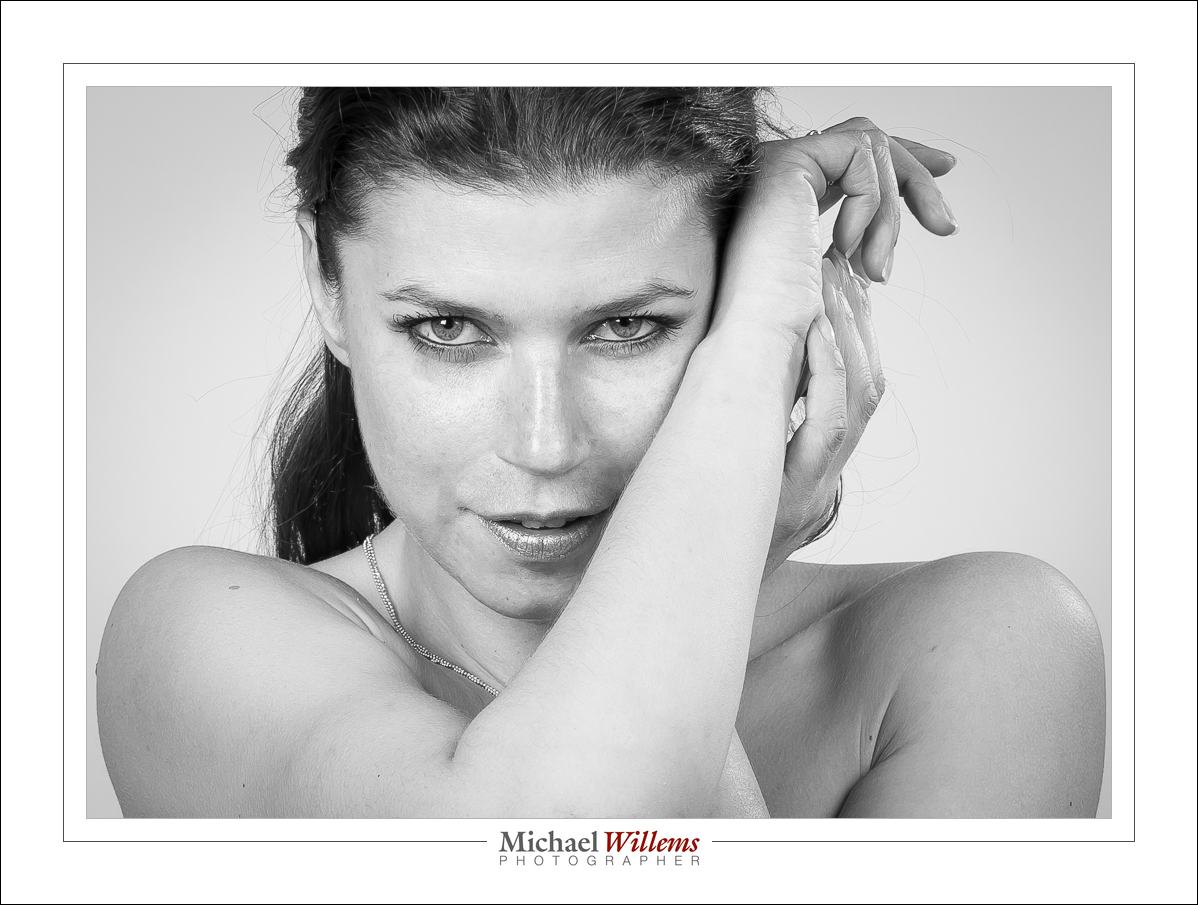
Today’s lesson is a simple “Split lighting” picture. This was one of my students in today’s Canon-sponsored class at Vistek Toronto. The danger of sitting in the front row is that you will be pictured:

Split lighting is a technique where exactly half a face is lit, and the other half is dark; the face is “split in two”, if you will.

I did this as follows:

  1. Camera on Manual
  2. Camera set to 100 ISO, 1/125 second, f/8.
  3. On–camera flash is a 600EX set as MASTER flash, and its actual flash function is OFF (i.e. it ONLY works as master flash, telling other flashes what to do).
  4. On our right, a 430EX flash set to TTL SLAVE mode. This flash needs a grid or snoot fitted in a small room; here, the room was large enough to do without (there were no close-by walls that the flash could light up).
  5. Flash Exposure Compensation set to -1.7 stops (on the camera)
  6. There is no 6: steps 1-5 were all.

Yes, this stuff is really quite simple once you know, and modern camera and flash equipment brings this in the reach of everyone. All you have to learn is some technique. And that is where I come in!

___

SPECIAL: For the next 7 days, until May 10, my readers get 15% off all orders on my new online store, http://learning.photography: use discount code speedlighter on checking out to claim your discount.

New opportunity…

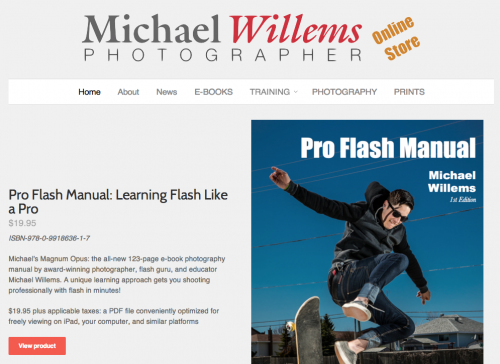
…namely, my new online store, learning.photography, which is now fully operational:

To celebrate this, I am giving my faithful readers here a very special discount code for a week: 15% off. On the last checkout screen, enter discount code newstore and you get 15% off. Only until 7 May, and only for faithful readers and followers!

Check out the store. Books, training and seminars; photo shoots, photos: an expanding range of services and products. Tell me what you think.


Credit! Yaay!

I get asked regularly to work “for credit” because the magazine or publication or event is “unable” to pay for photographers.

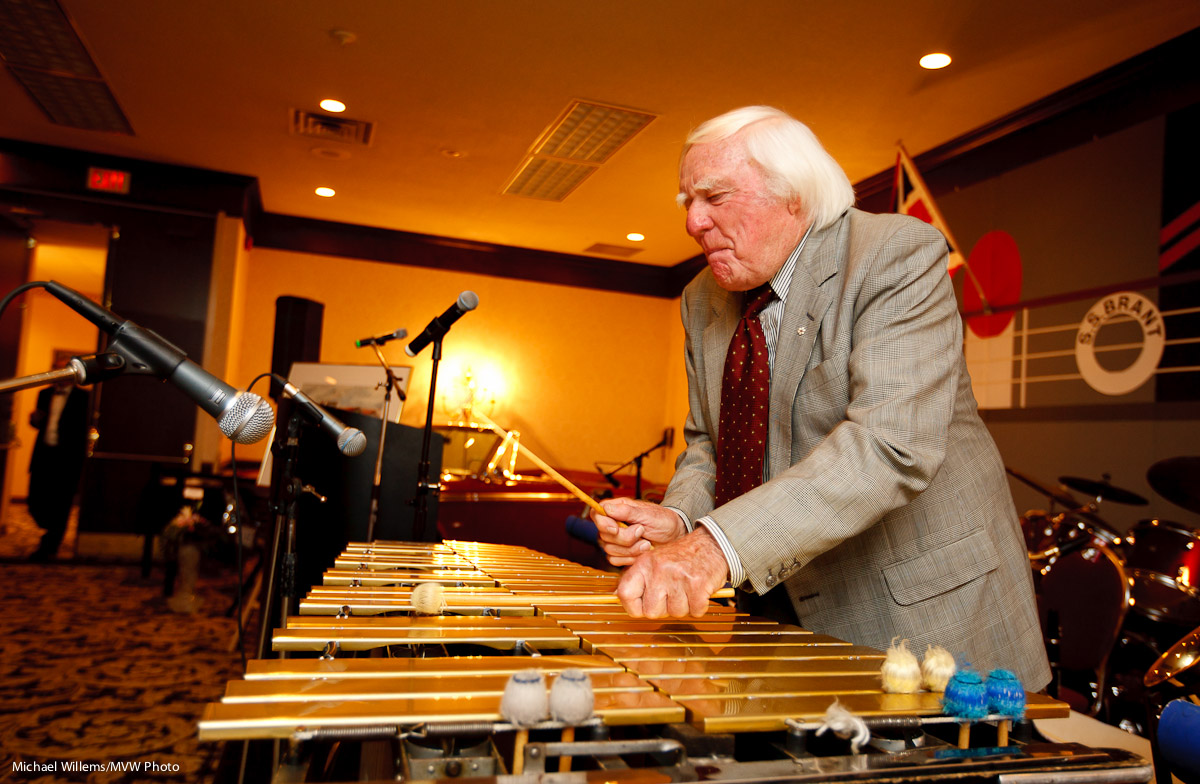
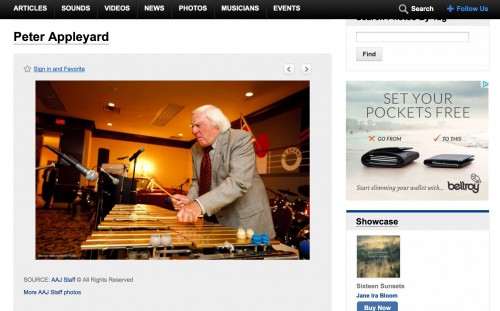
This image of Peter Appleyard, a large jazz festival wanted it. Large meaning hundreds of thousands of dollars in budget. Tickets cost $100 each. Supported by all levels of government. But when I asked for compensation, they said “oh no, we are unable to pay for photography”.. and they did not use it.

Here, that image again, this time stolen by a site called All About Jazz (click on the image to see it there):

Two things. First, “credit” has never led to any work by anyone for anyone. It’s nice to add to your portfolio, and I would not mind having a Guardian, NYT, or NatGeo byline, but it never actually leads to money.

And money is what I need to eat, and to learn, and to buy tens of thousands of dollars of equipment, and for gas to put in the car to get to shoots, and to buy memory cards, and to buy a new hard drive every few months, and to buy computers, and… you get it.

A post that puts it very well, so I do not have to repeat it, is here:

So This Just Happened

You should probably read that the next time you want to use a “free” photographer.


An interesting observation

I am wrapping up my 13-week winter “The Small Photography Business” course tonight, at Sheridan college. And one subject we discuss in this course at length is production and pricing of images, books, prints, and so on. For all purposes, weddings, graduations, events, fashion portfolios, etc.

But.

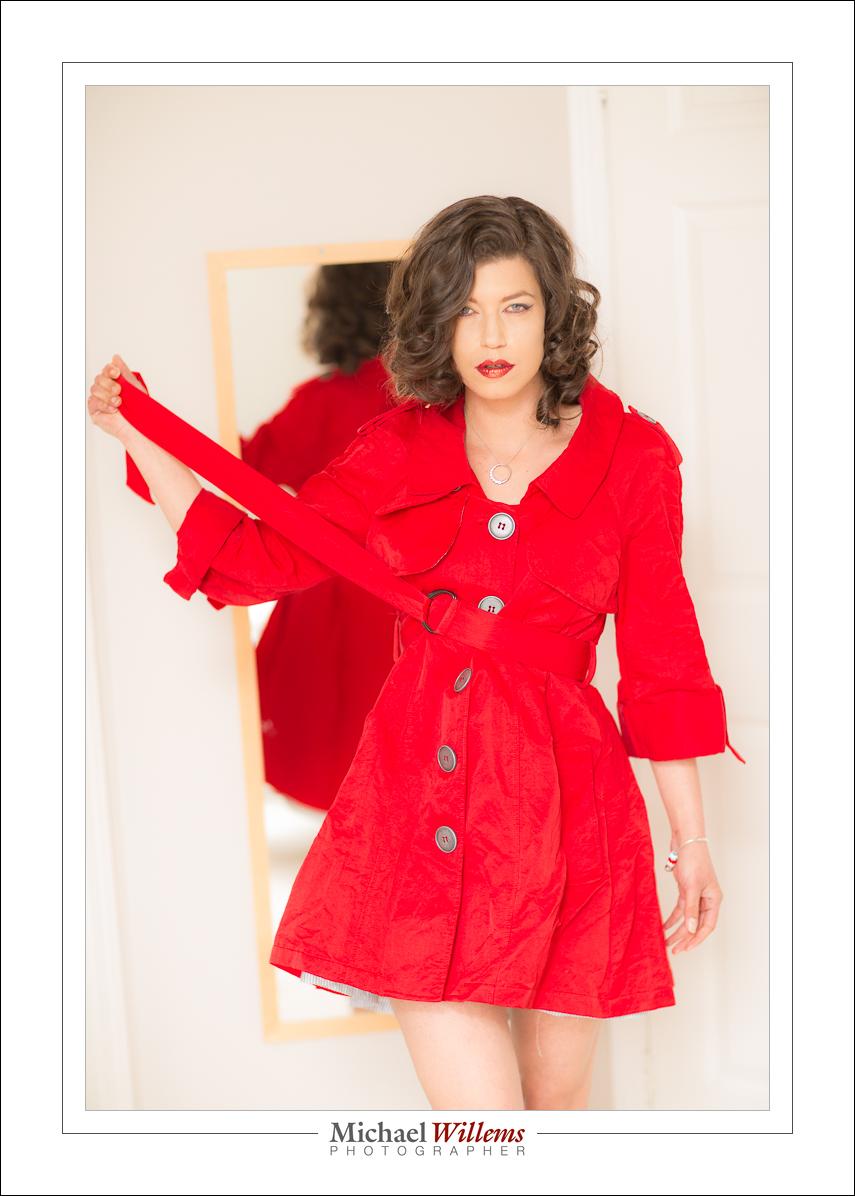
Modern people, like the young woman above, do not do what older people did. Each generation finds this out, to their consternation.

As an example, I love to make beautiful albums, like the ones I produce at artisanstate.com. Beautiful, metallic paper, hard pages, covered to make them invulnerable to spills and fingerprints, that fold fully flat, hand-bound: super stuff for little money.

But one young person, when shown this type of album, just told me “I hate that. It’s like a small kid’s picture book. Quality doesn’t matter, how many people will look at it anyway. I’d rather have more pictures and lower cost”. She would rather have a crappy book with horrible pixelated pictures, printed on the equivalent of toilet paper, because it’s more modern, cheaper, and less like what grandma had.

And the cost of an album is considerable. An album may only cost me $300 to buy, but by the time my time is included, which can be a day or two, it’s going to be $800-$1200. Which is good value, in my opinion. But I am not the market!

Kodak made the mistake of thinking they could dictate what the market should want. No, best not to make that mistake. Please do not undersell yourself, but also please do not engage in wishful thinking regarding market desires.

Makers of albums and wristwatches, watch out.


Closer

“If your pictures aren’t good enough, you’re not close enough” (Robert Capa)

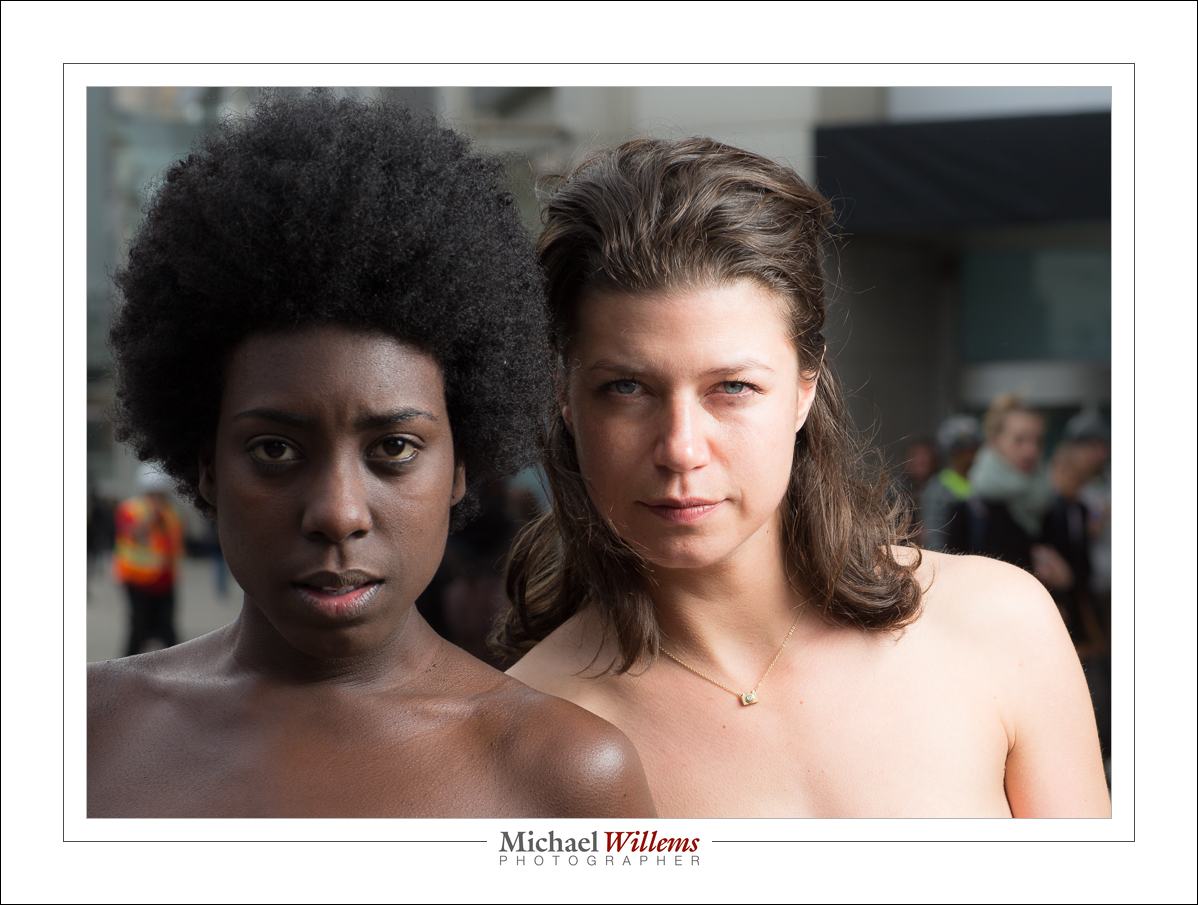
You have heard me on this theme many times. Getting close can often make your images better. You get close and intimate with the subject, your images have more impact. Like in these two, from that recent shoot:

Now of course you can do this by getting close. But be careful: closer than a couple of metres means you distort faces.

A better way is to use a longer lens. My favourite lens for this work is the 70-200, therefore. That has the additional benefit of not forcing you to be “in your subject’s face”. Yes, you have to have space, but that’s the entire point!

An alternate way is simply to use a somewhat long lens and then to crop for the rest. Those two were taken with the 85mm lens and cropped afterward. That is why you have all those megapixels, after all.

Next time you shoot anything, do yourself a favour and shoot the way you would normally shoot, but also shoot closer. Then when you look at the results, consider carefully which ones you like better. Where you like the close-up better: why? Where you like the wider view better: why? This is how you become a better photographer.

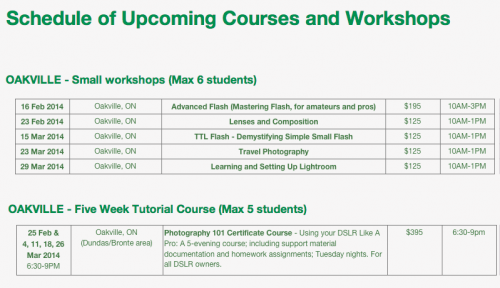
There’s still space on tomorrow’s Travel Photography session in Oakville, Ontario: 10AM-1PM, Sat 12 April 2014. $125 and it’s virtually private tuition!

Miscellany Musings

Learning opportunity: Tomorrow AM and Friday PM, you can see me talk at the Coast To Coast arts convention at Toronto airport. Come learn about camera basics (tomorrow) or Landscapes (Friday).

Cat Opportunity: always be ready to shoot your cats with a wide open lens in available light. And I never waste an opportunity to post a cat picture:

Theft opportunity: that is what you are giving thieves by leaving gear in your car. A good friend last night had her multiple cameras, multiple expensive lenses, and laptop stolen from her parked car. So sad, a terrible loss. The lesson can benefit us all: DO not leave cameras in cars. Even if you do not have a license plate like mine (NB: link is not suitable for work!).

But there may be light at the end of the tunnel: your home insurance, and if you do not have this your car insurance, may well cover part or all of this loss. Immediately make a police report, and then immediately contact your insurance company. Meanwhile collect serial numbers. in the EXIF data of each photo, things like camera serial number and often lens serial number are present. You can use a free utility called EXIFTOOL (Google it) to see the full EXIF data, if need be.


More Courses

You want to learn professional photography skills? Good!

And there are more opportunities than ever.  Apart from learning from me at Vistek Toronto and Sheridan College Oakville, and reading my four e-books, I now have more courses planned in Oakville:

Click to see the schedule, and to sign up. There’s half-day specialized courses, and there’s a five-week course. I hope to see yo on them: this is the time to learn the pro skills that will make you love your images.


I attended, for once.

For those of you who want to one day, or who already today, run photography as a business: today I have a few notes about running a photography business and about learning new tricks.

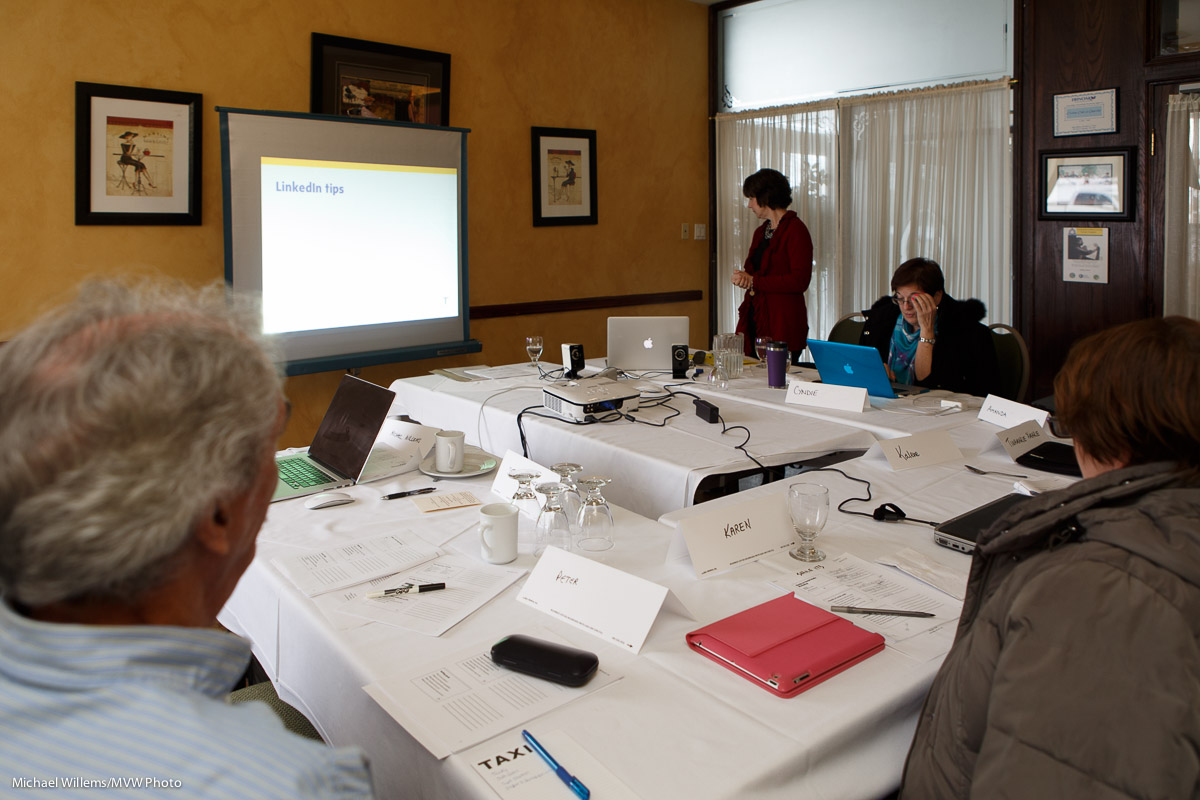
You always go on learning, of course. When you no longer learn, I advise you retire and watch geraniums grow, or something. So today I attended a very good workshop by Donna Papacosta, a communications expert, on Social Media. Such fun to be attending, not teaching, a seminar!
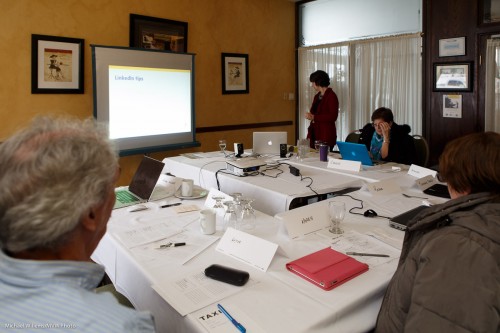
The photo: 24mm, 1/60th, f/4, 400 ISO). I focused one third of the way into the picture: I wanted Donna to be sharp – the foreground people server as a frame. I started at the famous “Willems 400-40-4” position (400 ISO, 1/40th sec, f/4) for indoors mixed flash, but since the room was bright, I had to go to 1/60th. The flash was bounced up behind me, but of course much of the light was ambient. As those of you who have my books know, balancing ambient and flash is the key to good flash photography. (Note: Special offer of $59 for all four books, a $20 discount, is still open).

Anyway – the course was great and I have a much better understanding of the role of social media in general, and twitter etc in particular. As you should too: it’s very important that you use Facebook, LinkedIn, your blog, Twitter, Pinterest, and more in a way that benefits your business. Photographers spend much time not shooting, but running their business. Social media are a great opportunity to get closer to your clients and to maximize the time you spend shooting.

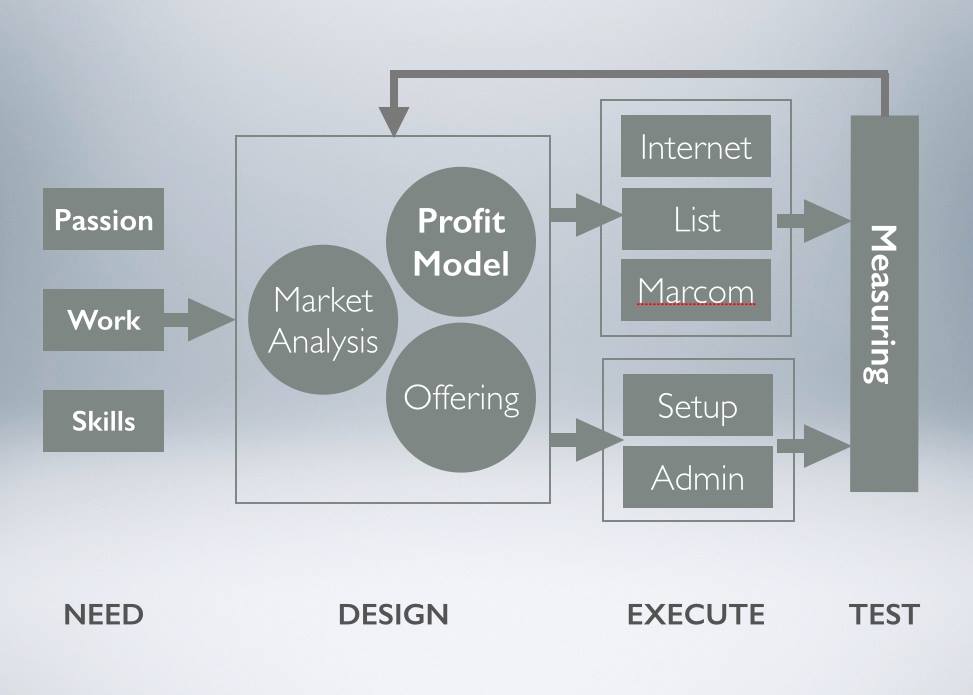
Also on the business note, my “The Small Photography Business” course just started at Sheridan College. One of my slides from Monday’s session:
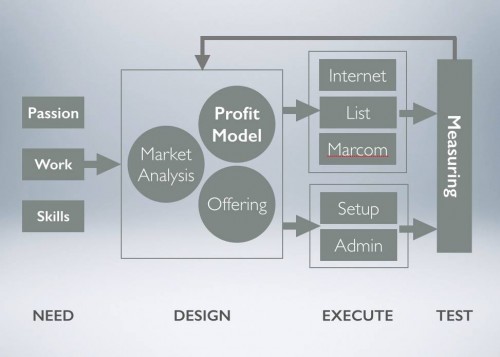
Meaning:

  • Make sure you have the needed requirements, or are willing to work to that goal (e.g. you do not yet have to be a great shooter, but you must be willing to learn).
  • Then look at the market and design an offering – one that actually makes you money.
  • Then set up the business… and execute.
  • And by having goals and regularly measuring performance against these, see how you do, and make changes when and where needed.

Of course this slide is a roadmap: the rest of the course is about making those squares and circles real; i.e. actually executing them. Slides are all very well, but as in all my courses, it’s about the detail rather then the abstractions, and above all, it is about actually doing it.

One “doing” is the web. I just did a web site review for a photographer friend. I looked in detail at her web site, and with my son the engineer also looked at the technical issues and possibilities for improvement, Result, a 25-page detailed document that she will use to materially improve her site. All done in just a few hours. Yes, that too is a service I offer. And whether you buy this service from me or from someone else: do it, and make sure your web presence actually helps your business, works well with all browsers, has no silly errors, is clear to your customers, and meets their needs.

Now off to do some tweeting.