And this is why…

I just bought a new Mac: the old one was five years old and beginning to be a little slow for comfort, for my heavy and intensive Lightroom use. The new one: 27″ 5k retina screen, fast processor, lots of RAM, fast graphics; fusion drive: a dream. It starts everything “instantly”. Amazing.

(By the way, the old one, a 27″ iMac, mid 2011, would also be great for most people. Interested? Ping me).

Fine. So I install Lightroom. But I cannot run it, because I need to deactivate it on another computer:
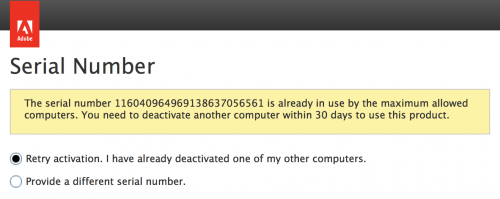
Screen Shot 2016-03-04 at 11.54.58 AM

And now we hit a few snags. One is that Adobe don’t tell me how to do that. And when you search it, all you see is links to the CC product: the “pay us every month so you will pay thousands and thousands” kind. Instead, I have the app. It’s mine (or at least the license is).

After much searching, I think the solution is to de-install from the old machine. But that will not work either: obviously, to properly transfer everything, including plugins and settings, I will need both to work for a week

Well, tough. Adobe will not let me.

And that is why people hate licensing, passwords, “call home” checks… and Adobe, one of the worst offenders in these areas.  That is why they pirate software. I don’t mind paying for products at all. Value deserves it. What I mind is Adobe trying to stop me from running my business the way I see fit. Adobe: charge me whatever the software costs, then get out of my way.

Fat chance.

Even the normal “30 day trial” option seems to be unavailable. So, other than Pirate Bay, what other options do I have?

I run Little Snitch, software that tells me what apps ask for access to the Internet, and allows me to allow or deny that access. And I must say, Adobe is a very bad offender: dozens of calls to dozens of sites when you as much as start up the software.

My advice: beware, because these corporations are obtaining more and more power to run your life, or to deny you the right to run it the way you like. One day this will bite back, hard.

I am glad Apple seems to have found its post-Jobs voice in the current FBI/encryption disagreement. We need more such critical thinking. 1984, anyone?
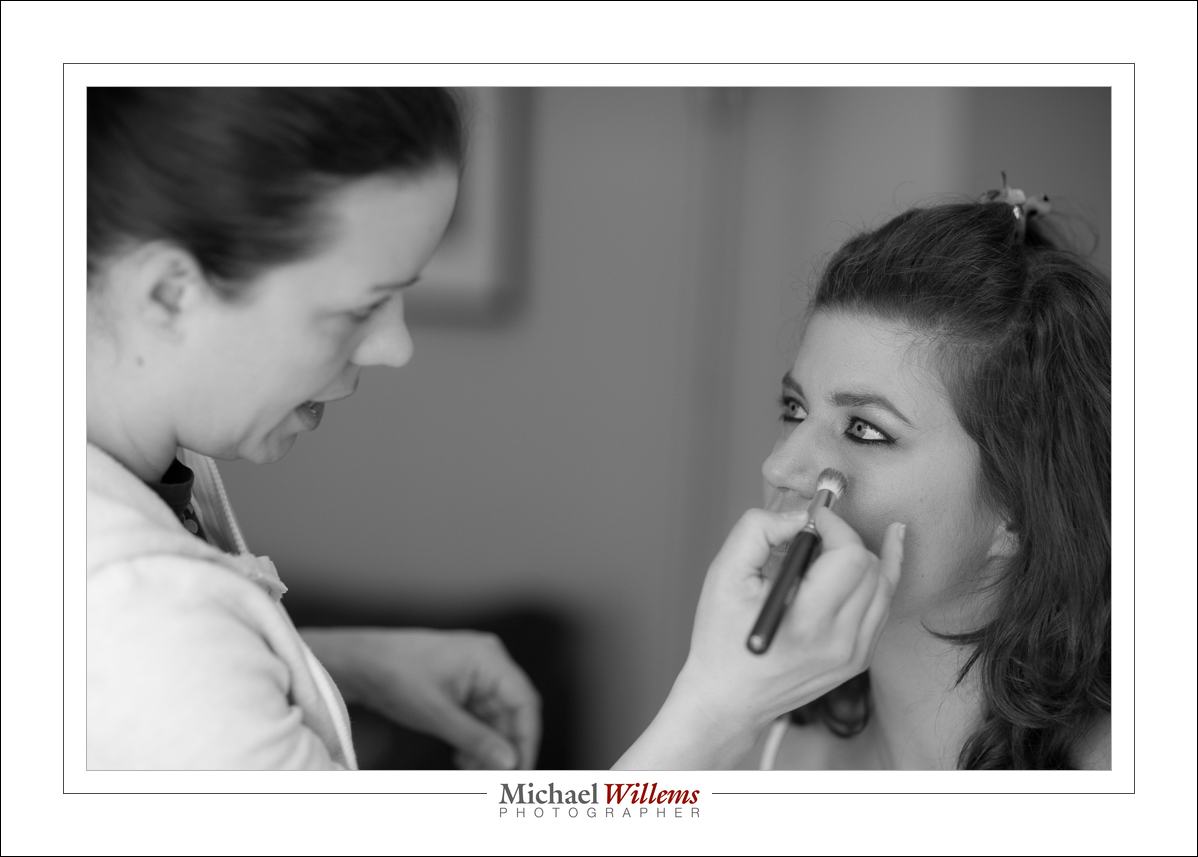


Why a MUA is needed.

[a repeat from 2014]:

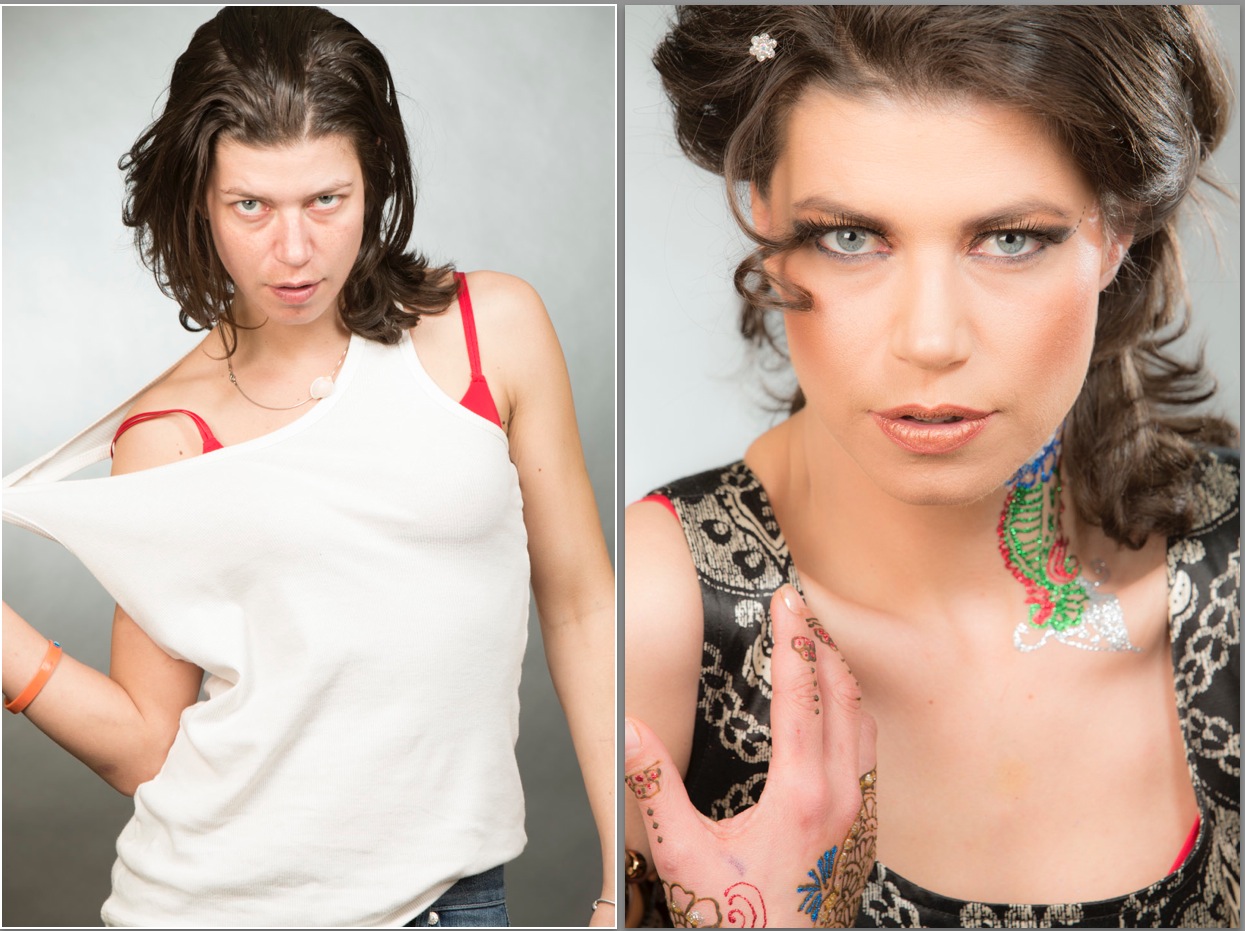
I generally recommend doing things only if they need to be done. And one of those things is a make-up artist (a “MUA”). You can be pretty sure that TV producers, for example, would not use make up artists if they were not necessary. But they are.

Witness this “before” and “after”:

Make up artists do not just fix blemishes. They also shape the face so it is suitable for the shoot. Here’s MUA Melissa Telisman doing her thing:

And here’s what that results in:

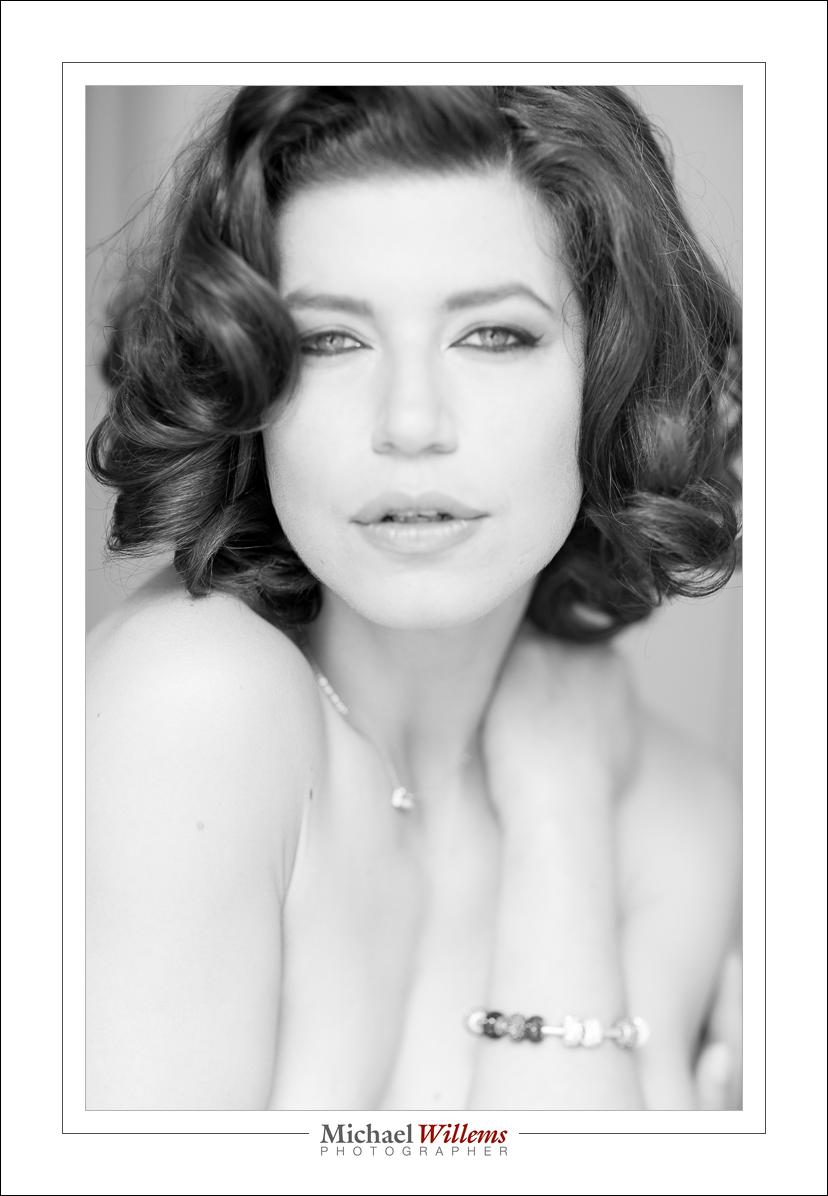
Glamour and perfection without “photoshopping”, which I am not a fan of. But make-up is not just for glamour; not at all. I recommend a MUA and a hair stylist for corporate shoots, too, especially—but not only—if women are involved. If TV shows do it, you can be sure it is necessary, and not a luxury.

Incidentally: do we need the entire person in every shot?

Decidedly no. You get a much more intimate feeling when you do an extreme close-up (an ECU, in movie terms). Try it; experiment in your next shoot and do some shots like the one above. You’ll love them.


A student asks.

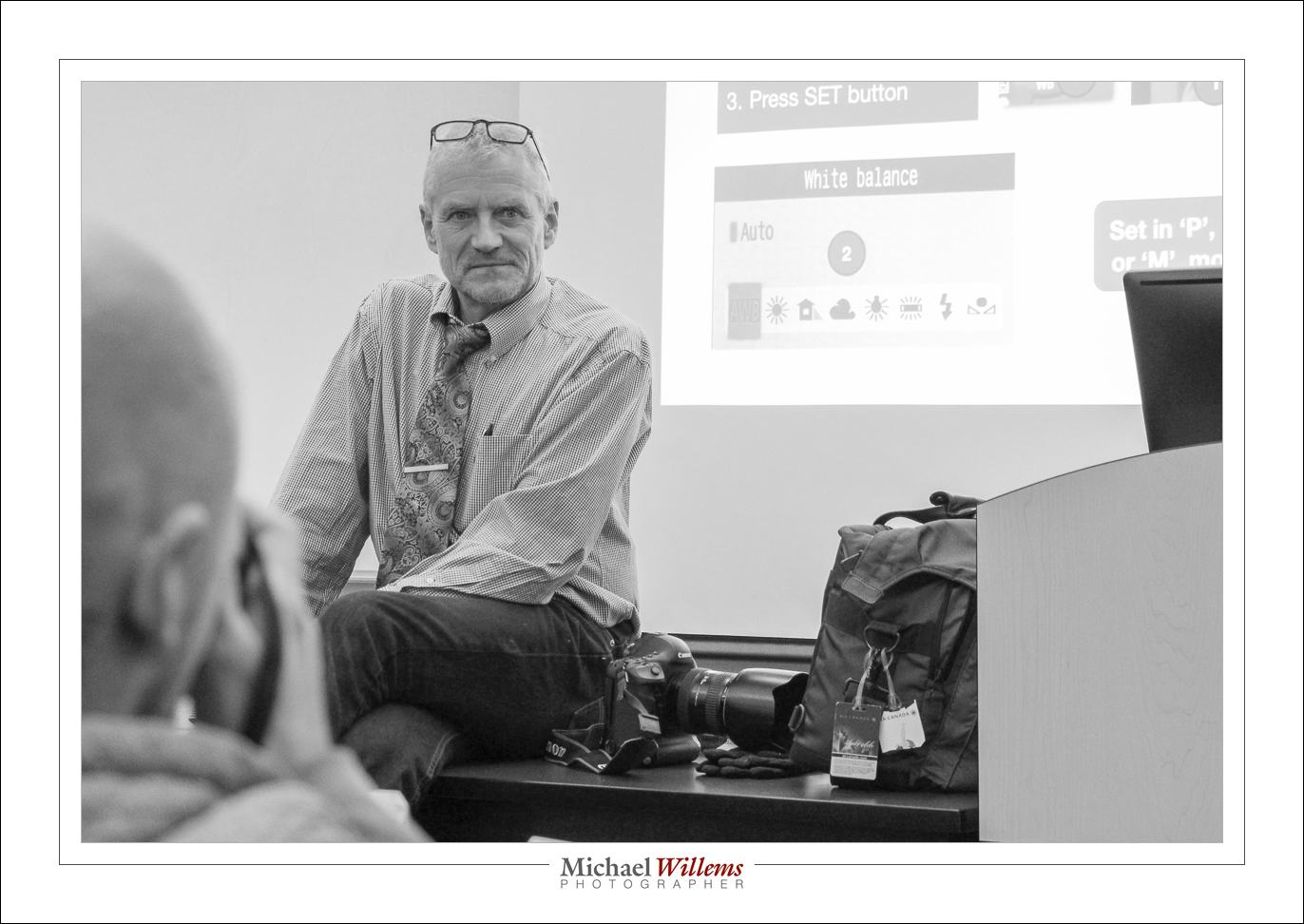
Here’s me, teaching a Sheridan College class just the other day:

20161107-IMG_6873-1200

My student asks:

How did you know you were ready/good enough to charge for your service?

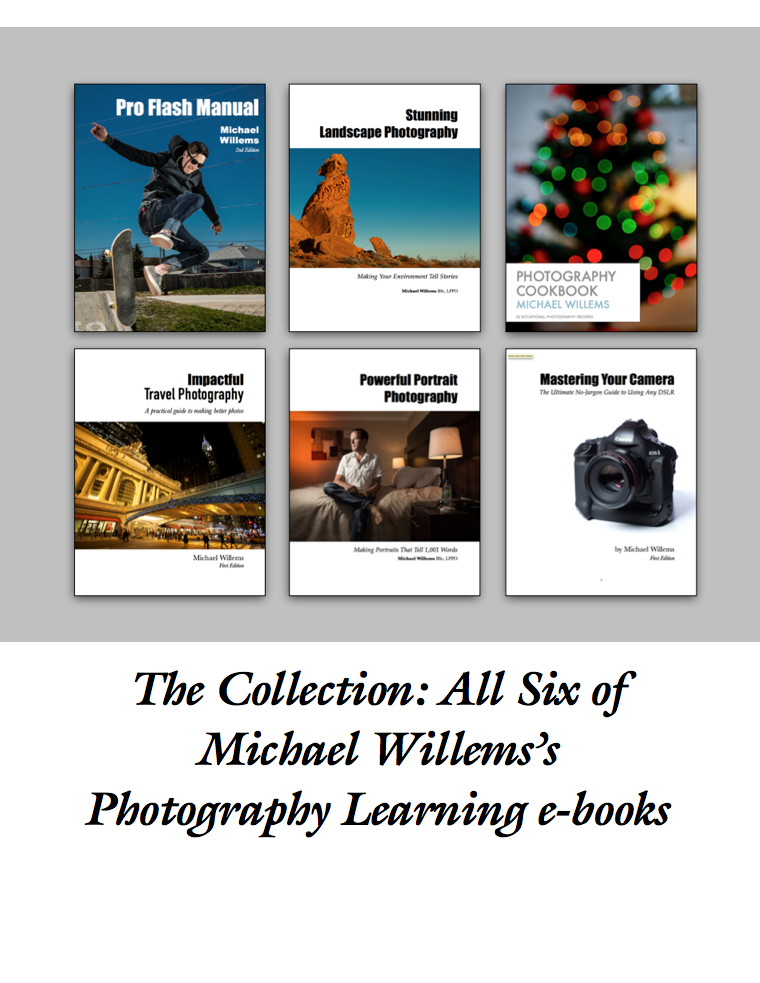
You are ready when people think it worth paying you. Period. Of course yes, you should have the standard technical skills: know about exposure, focus, colour, metering, all those basics. And the basic composition rules. But that is not indicative of a successful photographer; those are merely “hygiene factors”. Like saying an author needs to own a pen, and paper, and know the alphabet. Well, yeah, d’oh! If you are not 100% sure you have all those skills, get my camera books from www.michaelwillems.ca/BOOKS.html

But as said: you are good enough when you manage to make people part with their money. In other words, when people want to pay for your work, your work is good enough to be paid for. A truism, but a true one. 🙂

Would you say there is a specific set of equipment you need to be able to charge for, say, a wedding shoot?

Yes. redundant equipment.

Lots of lenses, several cameras, lots of flash gear: all that is good but not necessary. Depending on your style and your clients’ wishes, you COULD shoot a wedding with just one wide angle prime, for instance. Or a 35 or 50mm prime. The equipment expands your possible styles, that’s all.

But redundant (spare) equipment and at least some form of flash is necessary. It is irresponsible to shoot a wedding if you do not have backups for everything. Because anything that can fail, eventually will. Count on it. And it will be during the ceremony, in the middle of the most important part.

…Or for a portrait shoot?

No. A digital Rebel with a 50mm prime lens is enough if you will. Sure, the more the better, but by no means is that necessary. Sure. Headshots: nice to own a 70-200. Environmental portraits? a 16-35. Available light? a prime. But all those are just means to an end. If you do one type, have one style, then you need only one lens. And an affordable prime is enough. For studio, even a kit lens is fine.

Then you do need a range of flash gear and modifiers. See my flash book, and my portrait book, from www.michaelwillems.ca/BOOKS.html


Lowlife miscreants.

…have hacked this blog. Apologies to all. There’s always going to be criminals, I guess.

I may now need to simply take the blog down: many files appear corrupted and fixing that needs an expert WordPress programmer. This would be a shame: after 8 years of posts, taking down the blog would be horrible. If you see no blog here, apologies.

Also, getting the content back on a new blog may be impossible. Stay tuned and we will see.

If www.speedlighter is unreachable, please check out www.michaelwillems.ca for more news.

Michael

Make that seven

Cyber Monday DEAL of the year!

All seven – not six. All seven ebooks, when you add them up, cost $155. On this site, as a set, just $89.95. Get them by clicking here.

But it gets even better. today – ONLY TODAY, Cyber Monday, use discount code CYBERMONDAY when checking out, and you get an additional $40 off, making it just $49.95 plus applicable taxes.

Download full chapter previews:

This amazing deal will not be repeated, and it is valid only until midnight tonight, Eastern US time. Take advantage: get this amazing full photography course for under $50. Seven extensive e-books for one incredible price.


Smoke. Mirrors.

The Internet is a funny place. There’s so mamy opinions,. And everyone is an expert.

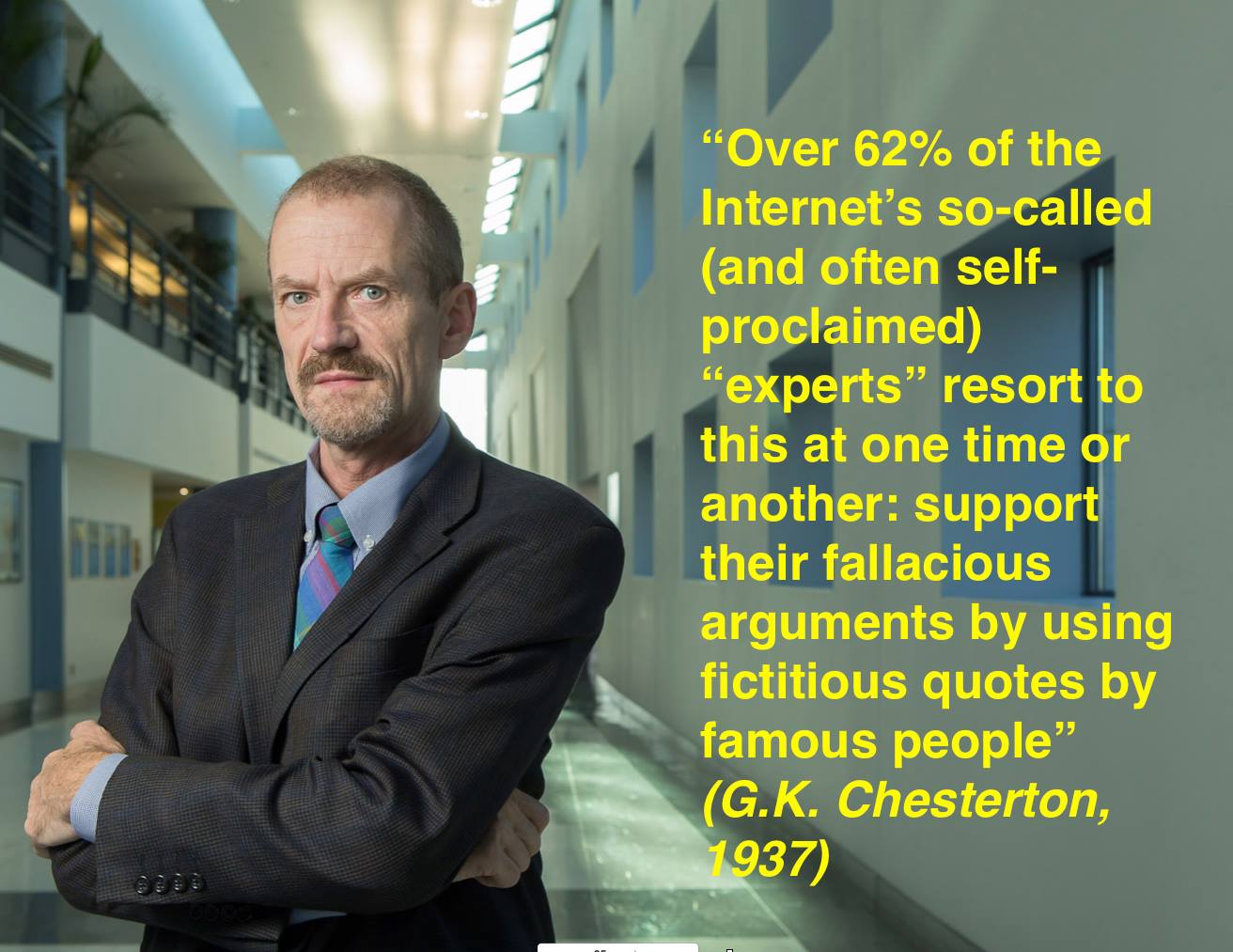
The problem is that you need no qualifications, so most of these opinions are just plain wrong. I have heard things like “the rear curtain setting gives you softer flash pictures”, “you need to use the zone system”, “you should never format a memory card”—and many other absurd statements.

So, my advice is, “beware”. Especially if it costs money. Do not buy “exposure courses”. Exposure is simple: if it is too dark, make it brighter; if it’s too bright, make it darker. And do not buy Lightroom presets, unless they are things you truly cannot do yourself. And so on. Buy courses only if you get a 100% money-back happiness guarantee.

And especially: when you read something on the Internet, research a little. Who is telling you? Research them. Are they are real photographer? Are they an expert in their field? Or are they Uncle Fred, or a teenager in his mother’s basement? Judge their answer based on this—then run it by another few people.

Or just take courses from reputable, proven speakers. That is also a time tested way of doing it.

Perhaps I can recommend my ebooks and my courses—but you be the judge. Caveat emptor, whatever you do.


“No RAW Please, We’re Reuters”

No RAW for Reuters freelancers anymore, we saw yesterday:

http://www.theverge.com/2015/11/19/9759620/reuters-raw-photos-ban-worldwide

The Verge gets it right in this article. The policy, while somewhat understandable, is shortsighted, because:

  • A JPG can also be manipulated, so mandating “JPG” is no guarantee of an unedited image.
  • Some cameras, like my 1Dx, even allow editing of RAW pictures in camera to produce an edited JPG.
  • Now journalists have to get exposure and white balance right in camera, when shooting. As well as colour space, sharpening, contrast, saturation. These are in fact all set in camera prior to the JPG being made, so every JPG is a “manipulated RAW”. Why does it make a difference whether you do this manipulation in camera or in Lightroom? If you have to do it all in camera, you waste valuable shooting time.
  • [edit:]Now, journalists cannot “expose to the right”: a technique designed to limit noise and hence to obtain maximum quality.
  • Size. Often, news editors have requirements like “a 1MB file”. You have control over this in Lightroom, but not in camera.

A much better policy would be: do whatever you like, but if the JPG you send us was edited in Lightroom, make sure you include all the EXIF data (i.e. do not restrict that when making an export).


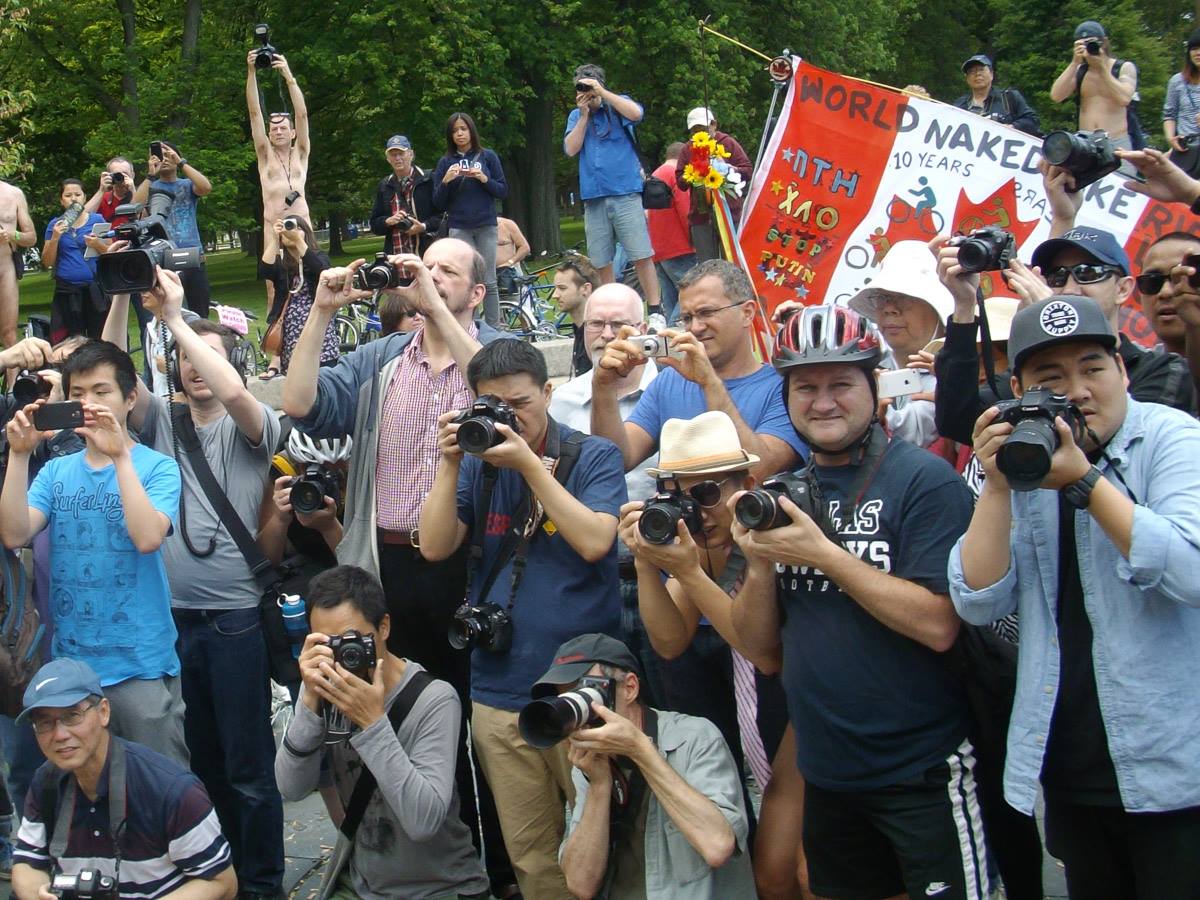
World Naked Bike Ride photographers: RAW, or In The Raw?


As for the ethics angle: sure. It is sensible to set limits to what you can do, namely:

  • Exposure, colour, colour space, and white balance adjustments are fine, but not to manipulate the truth.
  • Saturation, clarity, and vibrance adjustments are fine, but not to manipulate the truth.
  • Cropping is fine, but not to manipulate the truth.
  • Rotating is fine, but not to manipulate the truth.
  • Lens corrections (e.g. architectural corrections) are fine, but not to manipulate the truth.
  • Removing chromatic aberration is fine, but not to manipulate the truth.
  • Noise reduction is fine, but not to manipulate the truth.
  • B/W conversions are fine, but only with “standard” channel settings, and not to manipulate the truth.
  • Sharpening is fine, but not to manipulate the truth.
  • Not fine: vignetting, graduated fill, spot removal/the healing tool, adding grain, and any other change to the image, especially, of course, changes designed to manipulate the truth.

“Manipulating the truth” means changing anything that changes the facts. That can include removing or adding objects. Changing sizes and shapes to change positioning or distances. Making skies darker using graduated filters. Anything, in other words, that causes a photo to be interpreted in such a way that it does not reflect the actual truth, the whole truth, and nothing but the truth.

Above all, it is important to have a clearly stated policy. Nothing worse for a photojournalist than to have uncertainty over what is, or is not, allowed.

And that, for the record, is my $0.02.

What a mess!

Let’s talk for a moment about your studio.

A studio is a space where you make photos like this typical studio shot of Evangeline just days before she gave birth to her son:

That’s straight out of the camera, unfinished.

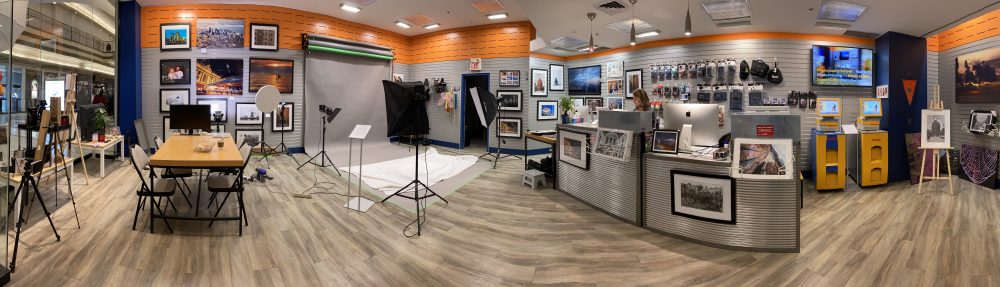
And where was that made? Right here:

Messy eh! But that does not show up in the photo!

Studio requirements:

  • Large enough
  • High enough (hence my unfinished ceilings)
  • Power everywhere
  • Ability to hang backdrops
  • Ability to have things easily at hand. Things like light stands, flashes, modifiers.

My studio meets all those requirements, and then some. It is one large space, which is what I like most about it.

Sunday, I am doing a Meetup here: a free workshop for would-be pro photographers who live in or around Brantford. Check it out if you like here and want to learn about photography!


Brantford, listen up

Live in Brantford, Ontario, or nearby? And like photography? Then I am organizing a free learning meetup for you! See www.meetup.com/Brantford-Photography-School-Meetup/events/225583551/ and I hope to see you there. Limited space, just 10 people can be accommodated, and it is already half full as we speak. 🙂

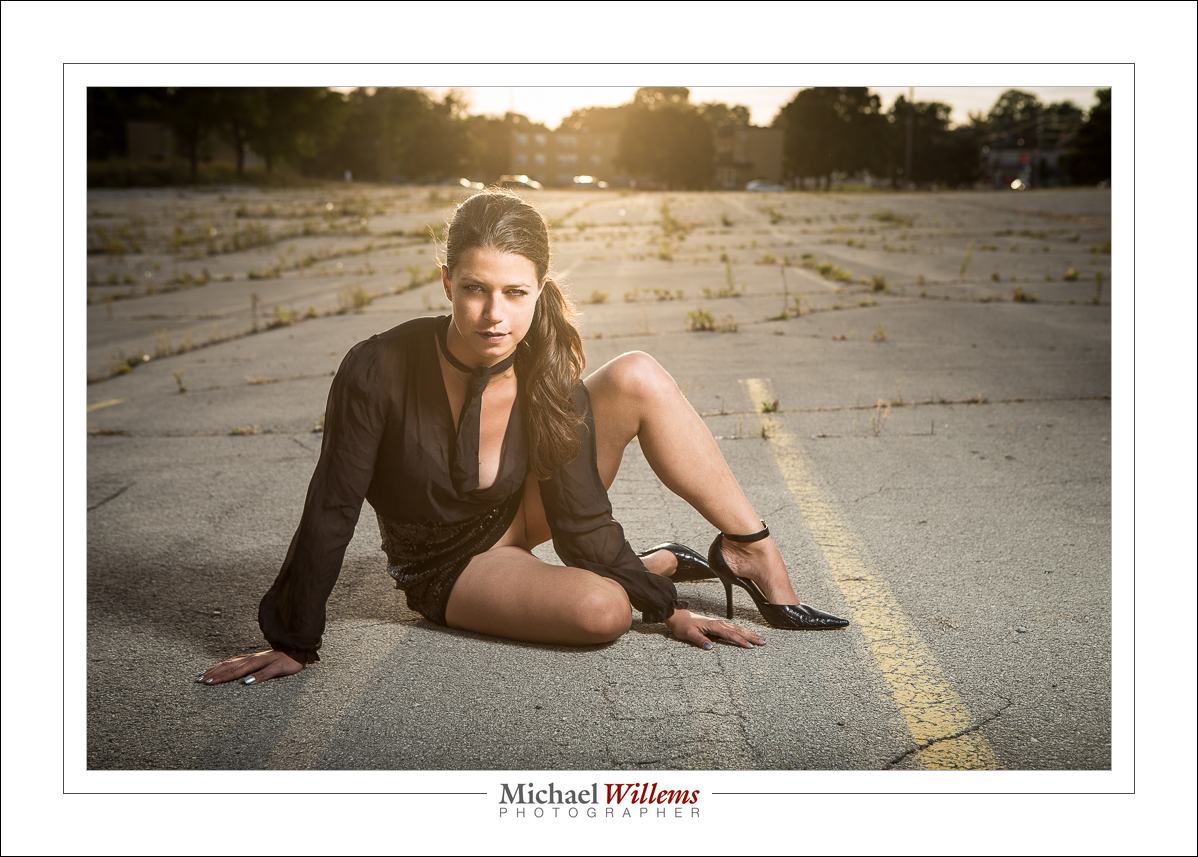
I will brief all my readers on what I do in such meetups.  So that even those of you not in Brantford get benefit out of it.  And so that you can all, before long, make photos like this, that combine manual exposure, manual off-camera flash, using the sun as back light, good composition, and deliberate use of flare:

Hope to see y’all Sunday, 11AM. Right here, 48 Wilkes Street:

Logistics: There is street parking available. I will have water; perhaps if you like, bring a bottle of pop or something (of course at paid events, I will always have snacks and drinks available).


Deal

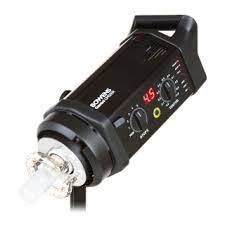
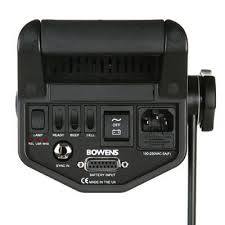
DEALS – DEALS – DEALS! A good friend is selling photo equipment. Here’s the next lot. If you are interested, let me know and I will forward your email/message to the seller immediately! (I love the Bowens lights, I use them too; and just for the record, I am not profiting from this sale in any way)

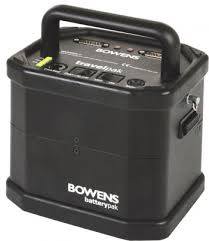
FOR SALE: Bowens Gemini 500/R TX UM/SB Kit with Battery – Lighting Kit

In mint condition. Used about 6 times. Bowens Gemini 500/R TX UM/SB Kit with large Bowens travel kit battery, 2 strobes and stands, softbox, bag, spare 3 meter cable, 3 year warranty and quick ring for softbox and upgraded to Westcott 45″ white satin w/black removable cover umbrella. Great for on location shoots – powerful. Paid $2600 in Sept/14. Asking $1900.

___

Email me at michael@michaelwillems.ca