Aha Me A Riddle I Day

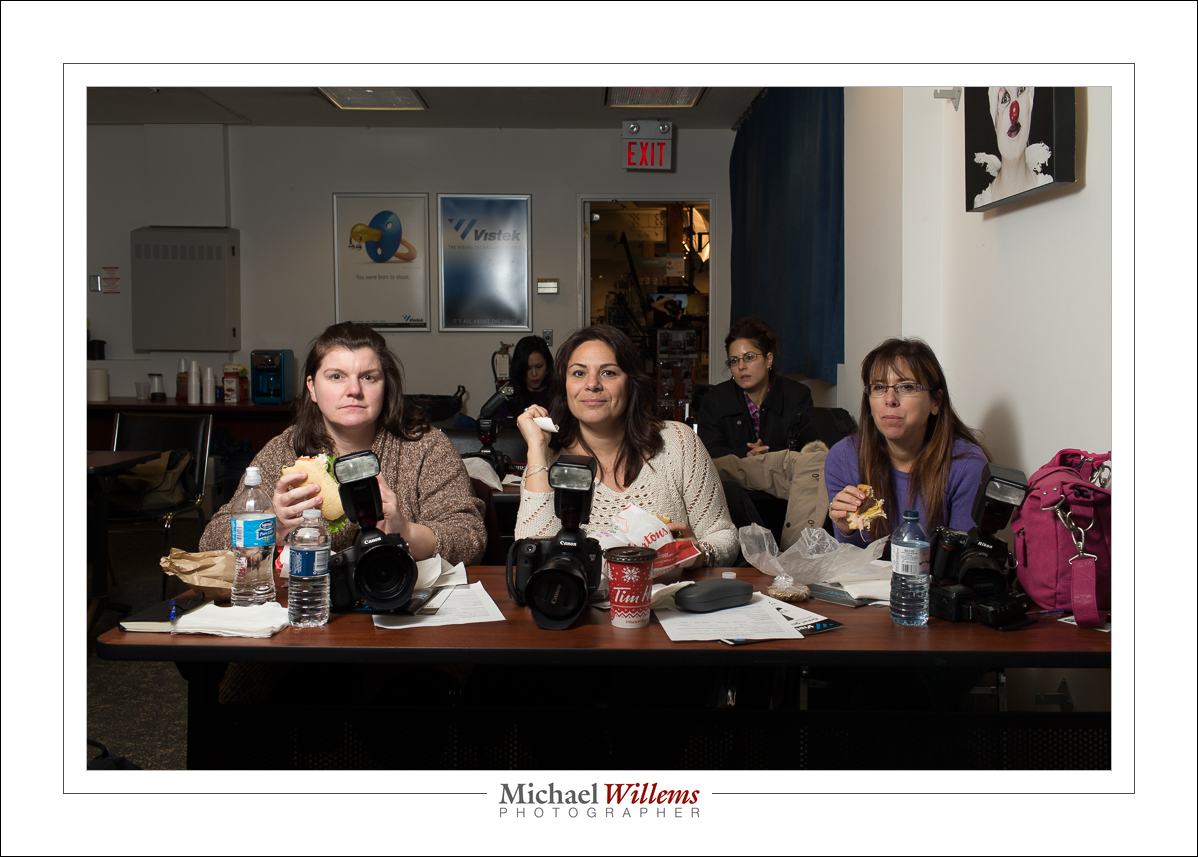
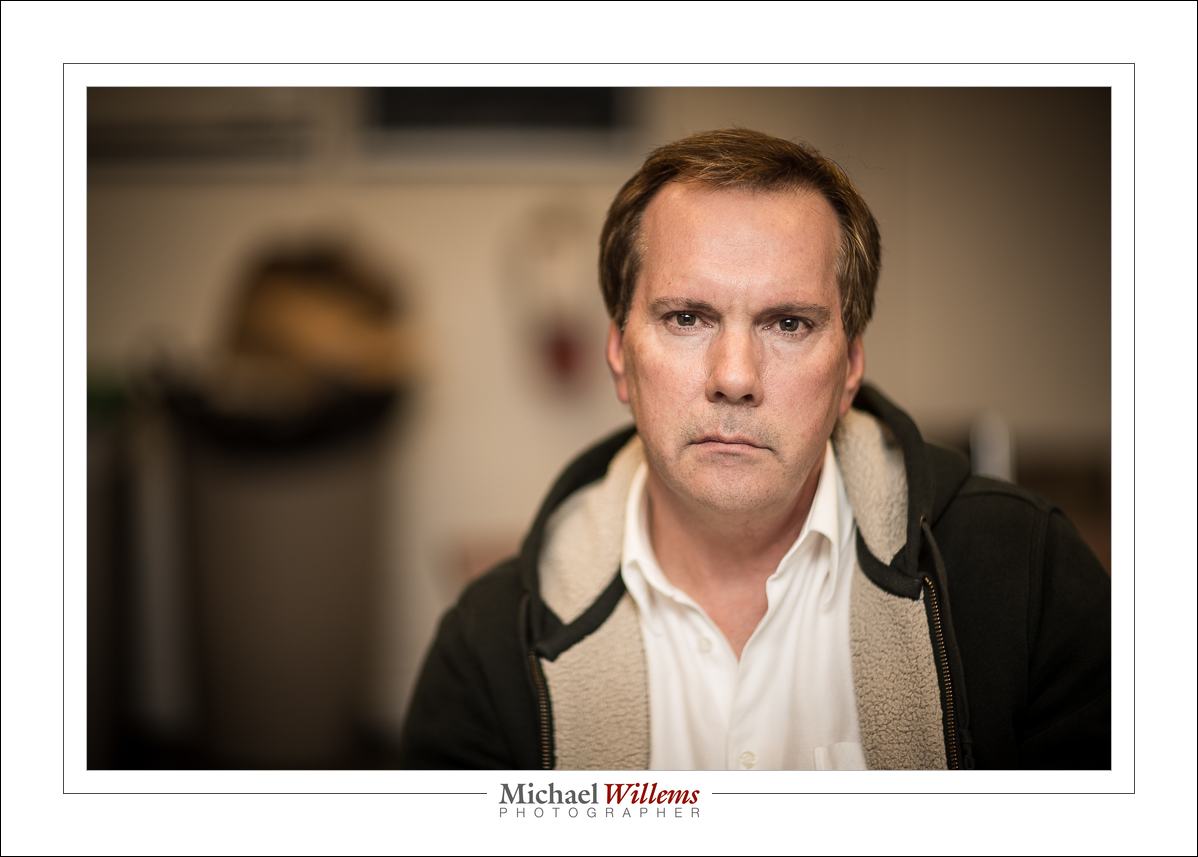
Not the Laura Love song, but a real riddle. What happened here?

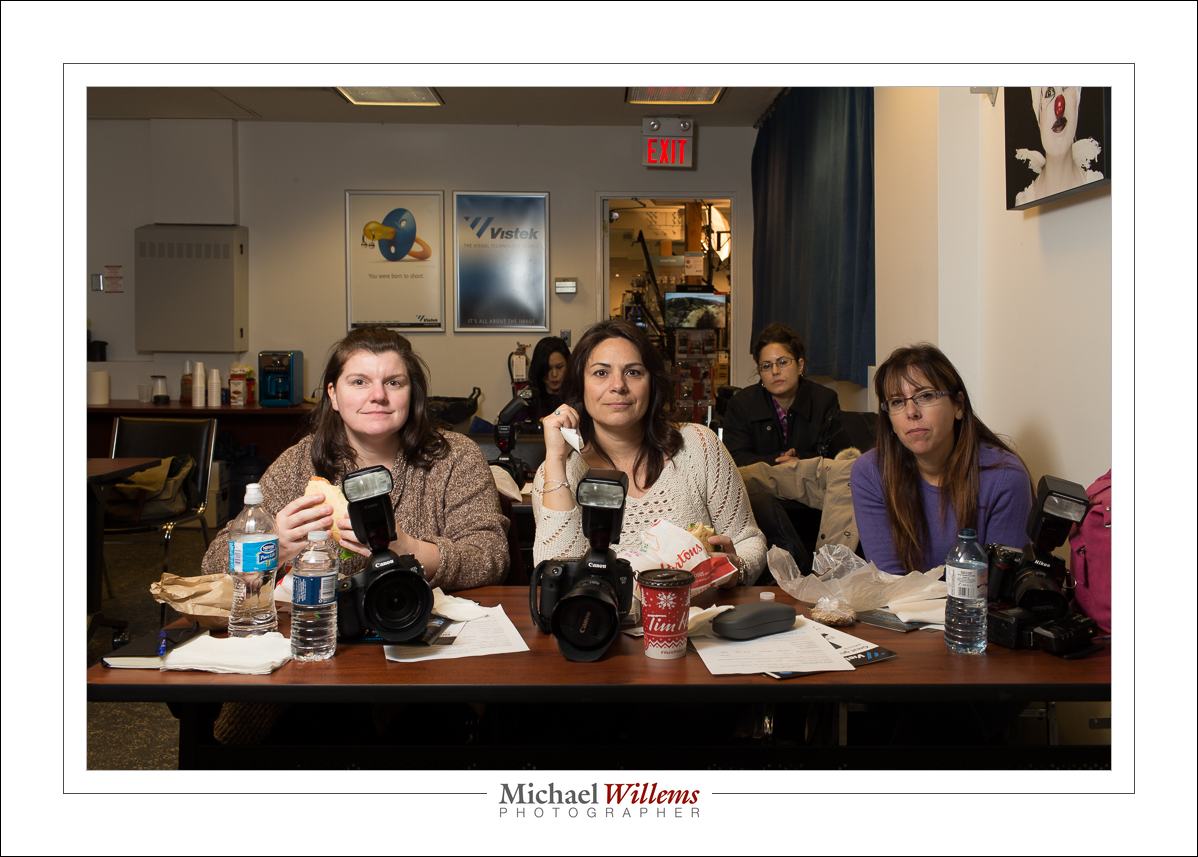
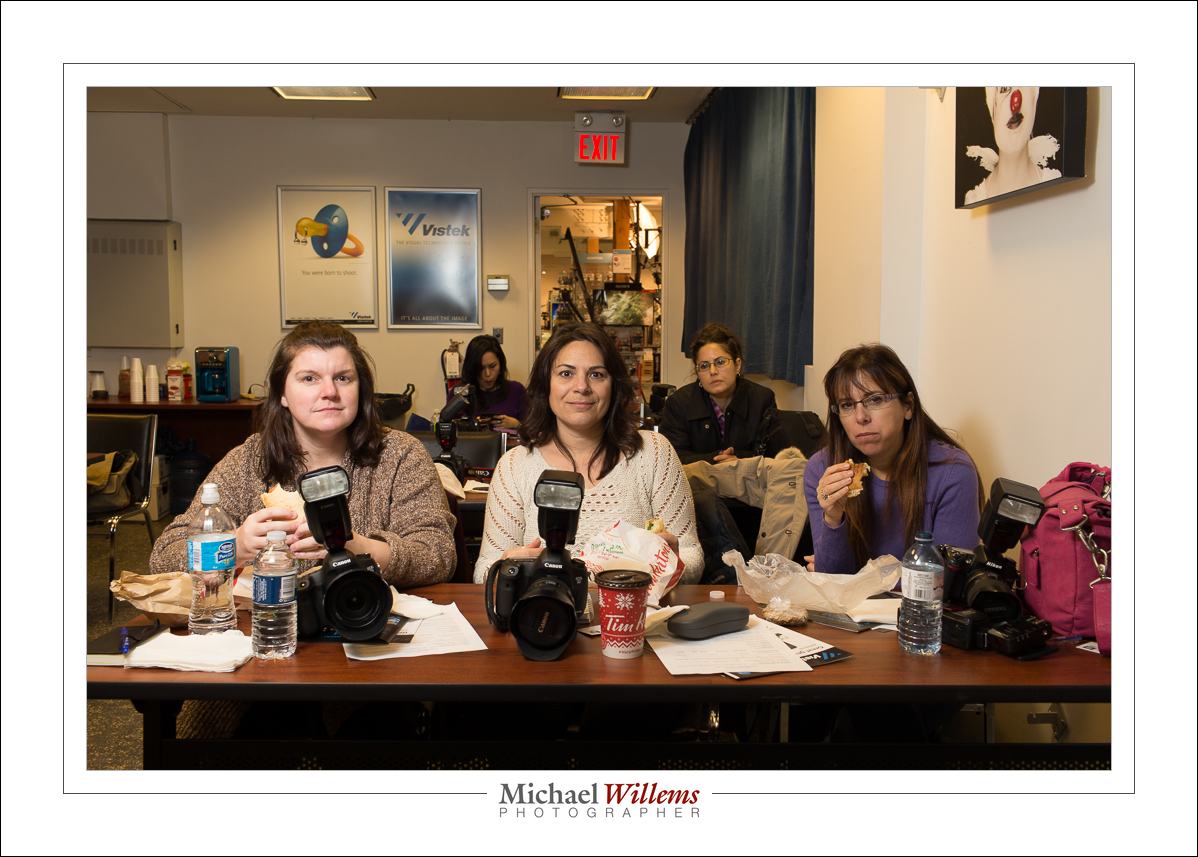
My face is underexposed totally compared to the rest of the shoot, which was like this:

So there the sides of my face are well exposed. But then the photographer zoomed out, and we got the shot at the top. What gives?

If you do not know, let me give you a hint: we were using TTL.

If you still do not know, allow me to explain:

TTL is like “auto for flash”.

  • Auto flash exposure normally uses evaluative (“Matrix”) metering.
  • I.e. the screen is divided into little squares, dozens or hundreds of them, and each one is metered individually.
  • As soon as any of these little squares are overexposed, even one of them, the camera tries to fix that.
  • It does that by lowering the exposure. But you obviously cannot change just one part of the photo, so the entire exposure is lowered.
  • That’s the reason the picture at the top is underexposed: the flashes are visible, meaning a hot spot or two, and the camera “fixes” that by lowering the entire exposure (by using a lower flash power setting).

The fix: You can go to average metering. Or you can avoid hotspots like reflections or flashes.

That’s one of the little facts you learn if you take my flash course.

Are you aware that virtually all my courses are offered online as well? Live, one-on-one courses, like the one I just did today with a long-time reader from Melbourne, Australia:
If you go to this page and check the pull-down menu, you will see that you can even save money by doing it online. So wherever you are in the world, I would be delighted to do a one-on-one with you.
 

Big News!

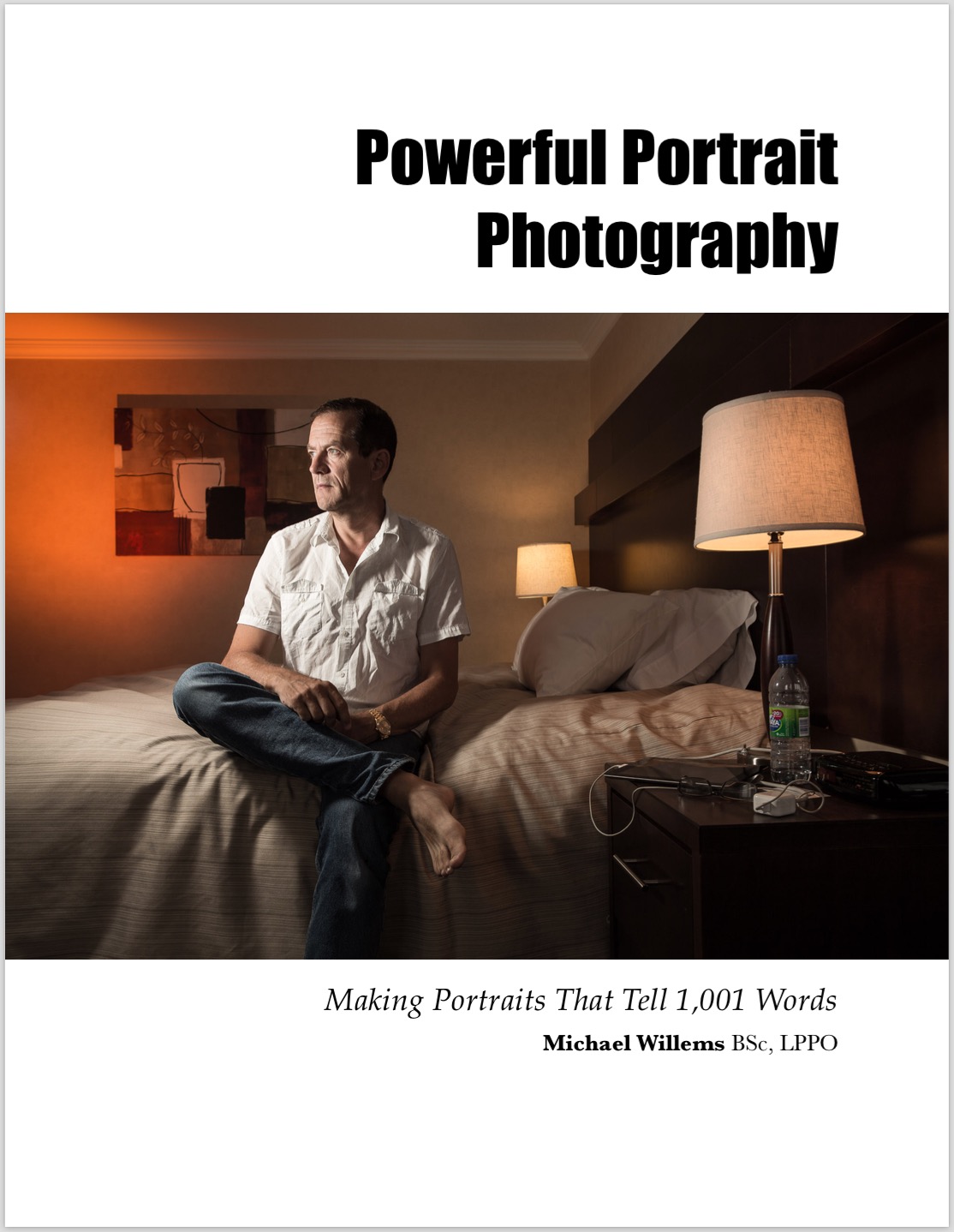
OAKVILLE, 24 November 2014—After many months of preparation, Michael Willems has tonight released his sixth and latest e-book, “Powerful Portrait Photography: Making Portraits That Tell 1001 Words”.

This book is available for immediate download now from http://learning.photography.

If you, like most of us, are attached to people, you will find enormous satisfaction in shooting their portraits. But only if you do it well. This all-new e-book takes you through the jungle of terms, shooting techniques, lighting schematics, posing techniques, and types of portrait and for each one, outlines in a logical fashion what it is you need to do to perfect your technique. From equipment to psychology, award-winning photographer and educator Michael Willems leads you through it one step at a time.

This extensive and richly illustrated e-book is $19.95 plus applicable taxes: it comes as a PDF file conveniently optimized for freely viewing on your iPad or other tablets, computer, small cell phones and similar platforms.

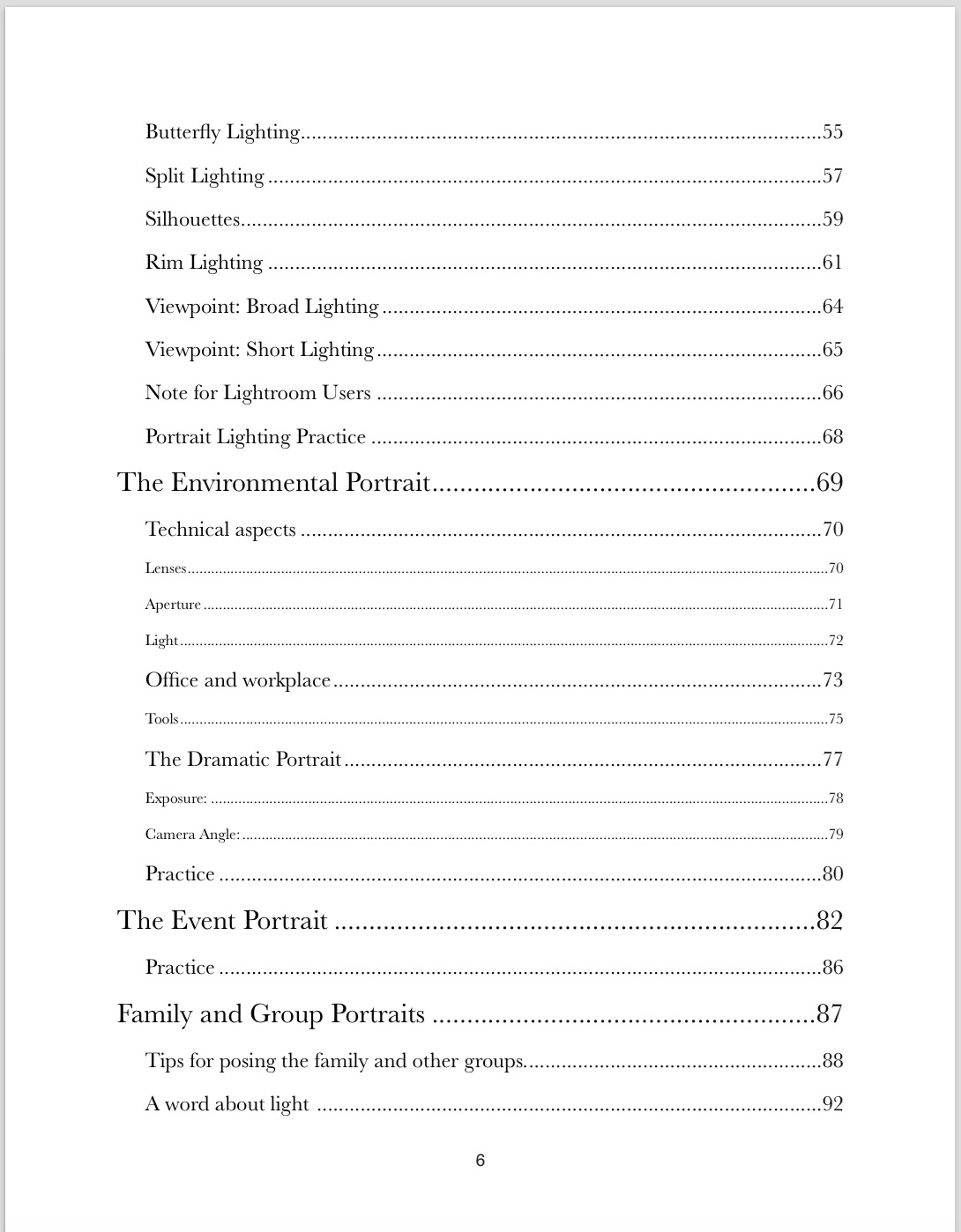
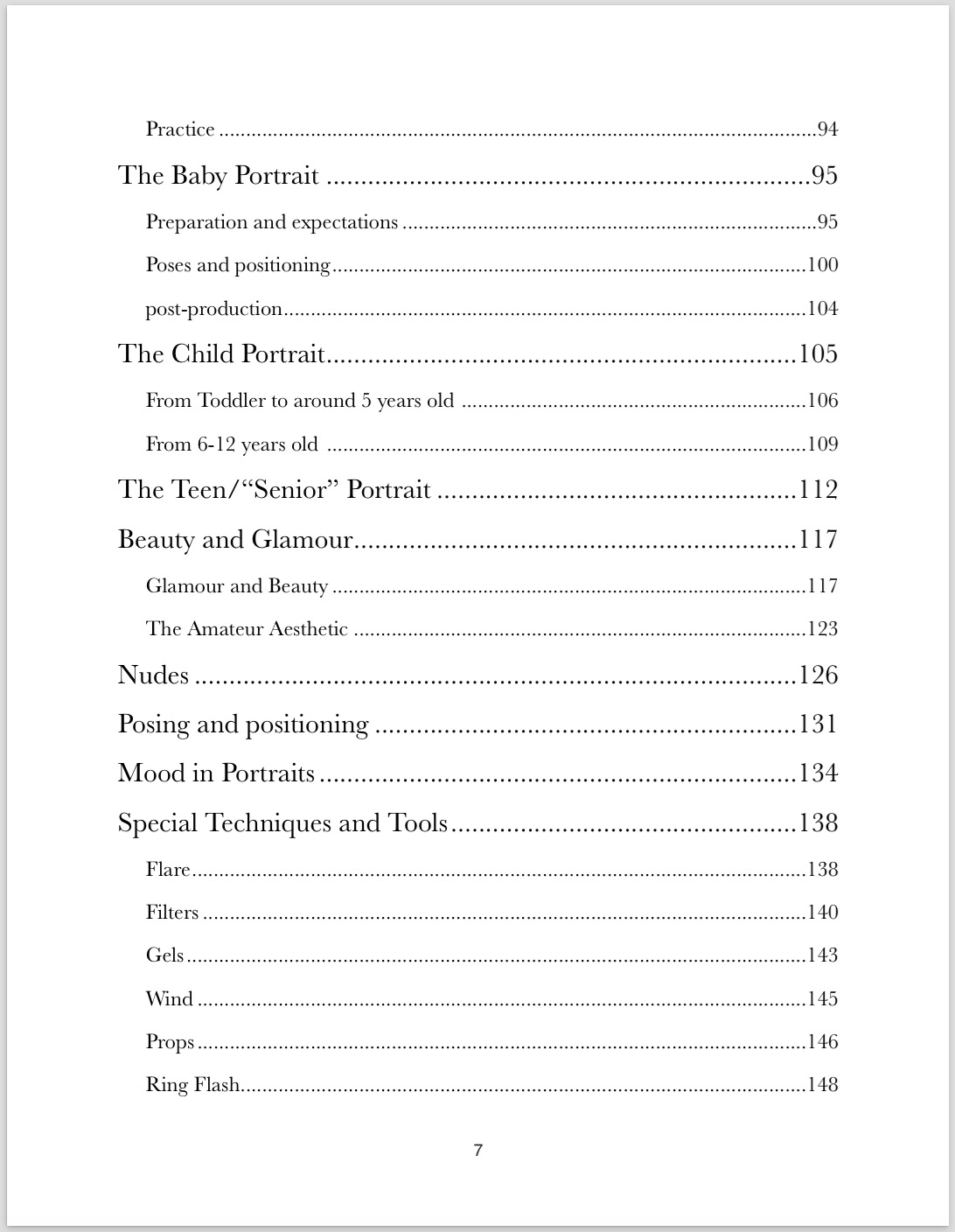
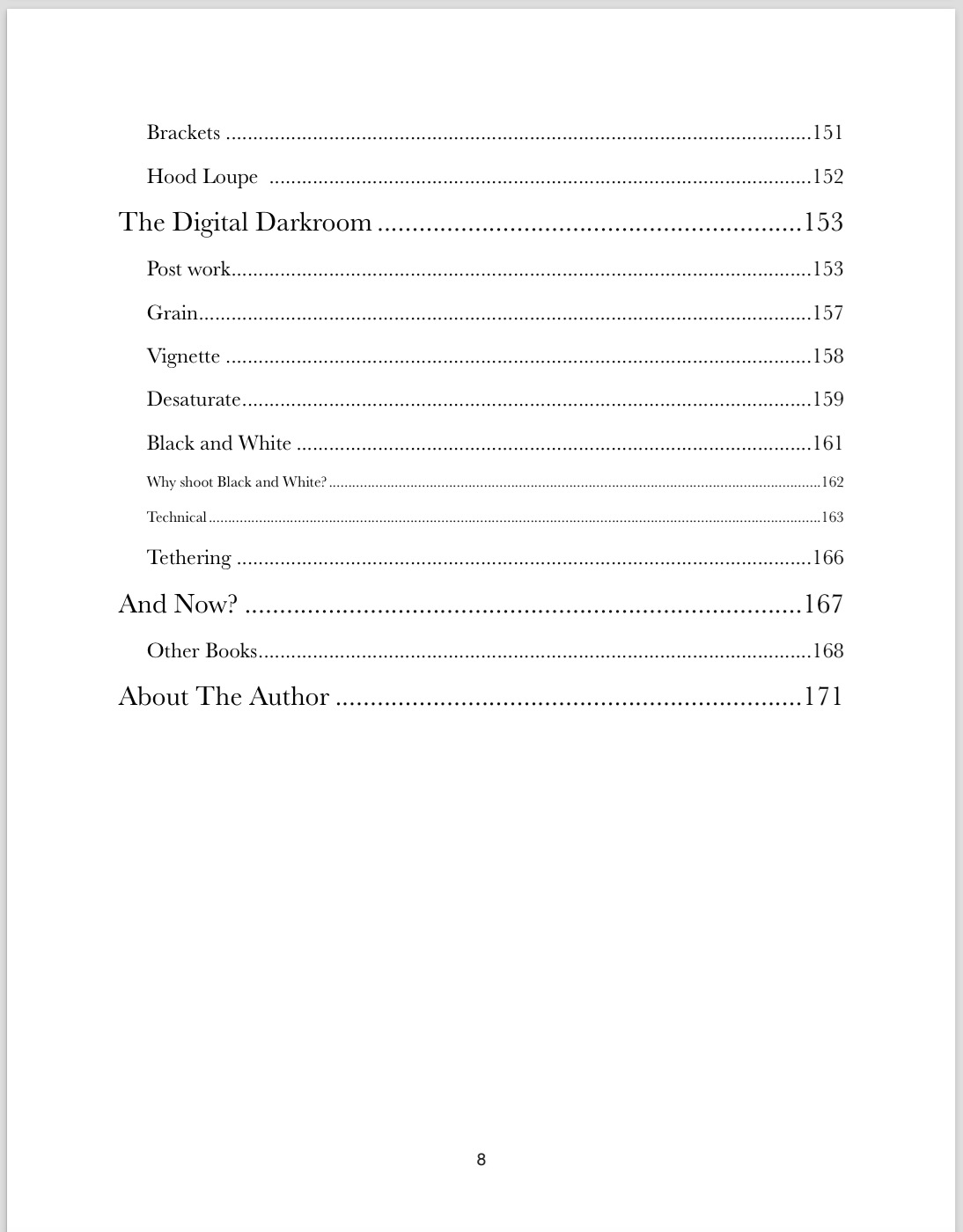
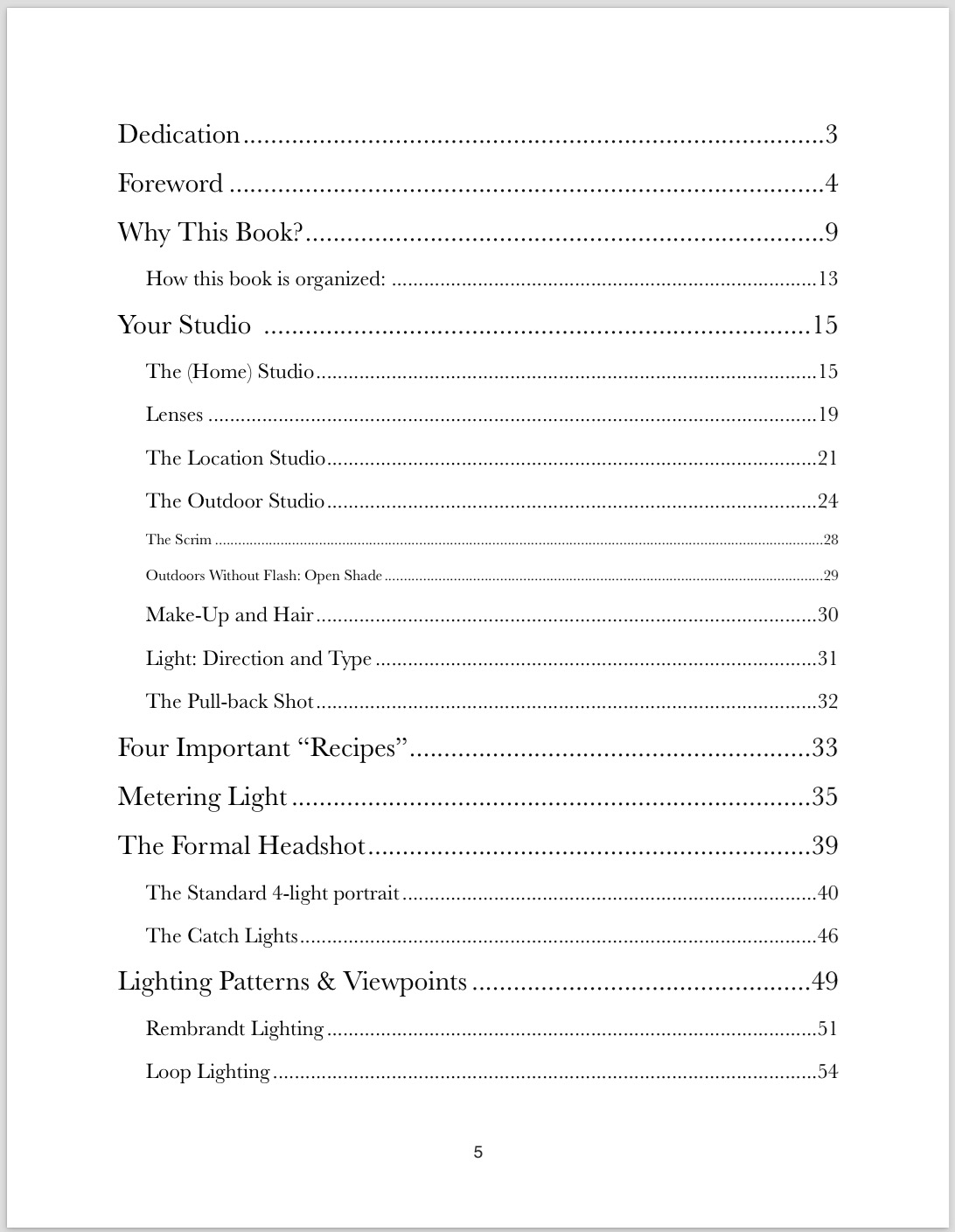
The Table of Contents shows that the subjects will teach you everything from technical needs and lighting schematics to psychology and special tools and techniques:

The book is available for immediate order and download.

But Wait! There’s More! The set of all six of Michael’s books is now also available at $79.95, a $40 discount over the regular price of $120. What better Christmas present for yourself or a loved one? Or even better: get them now so you can shoot great portraits during the upcoming festive season.  Head to http://learning.photography/ now to order your downloads or DVDs.


Lighting schemes

A short note today. About portrait lighting.

There are many lighting schemes photographers know. One of them, as you know, is split lighting:

Split lighting means that you light exactly half the face.

Let me take away a misconception: It has nothing to do with where you shoot it from: this is short lighting; if I shot the subject from his other side, it would be broad lighting.

More on all the lighting schemes in my upcoming book “Powerful Portrait Photography”… stand by for an announcement!


My must-have. My preciousssss….

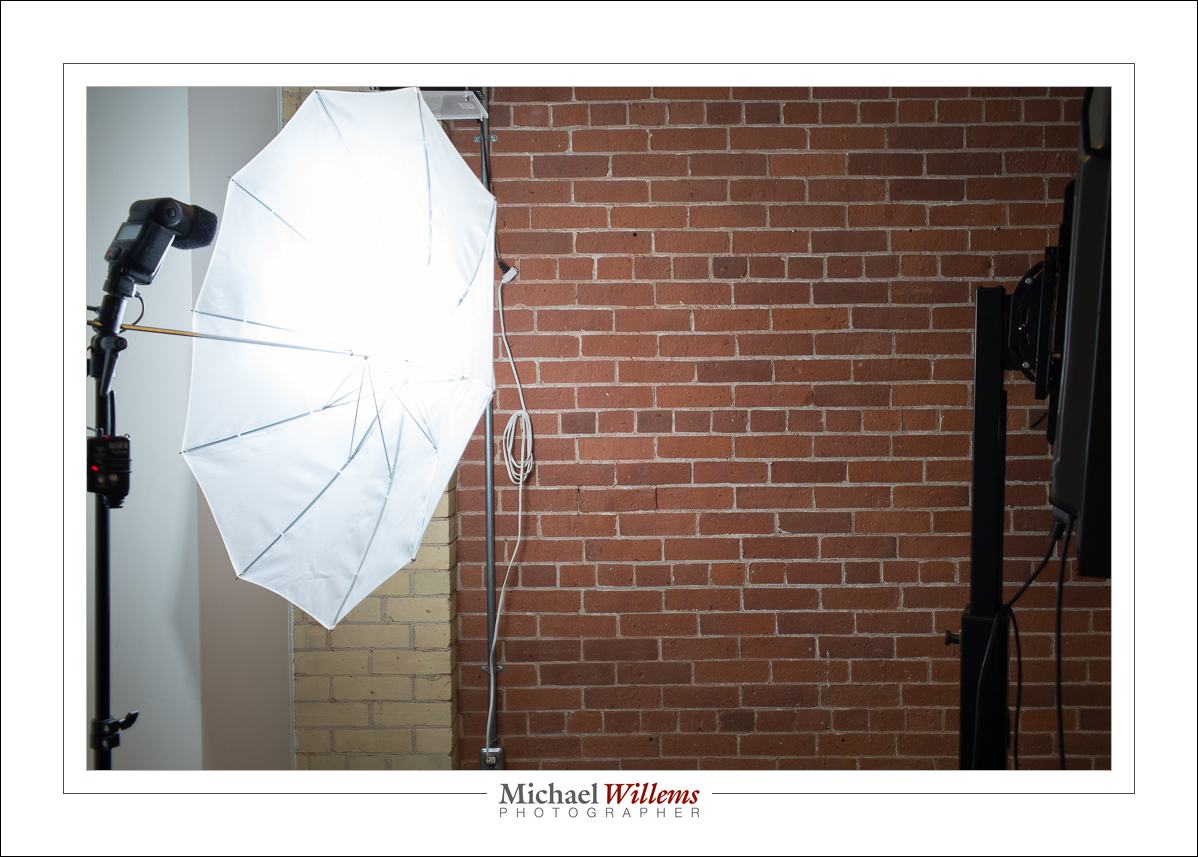
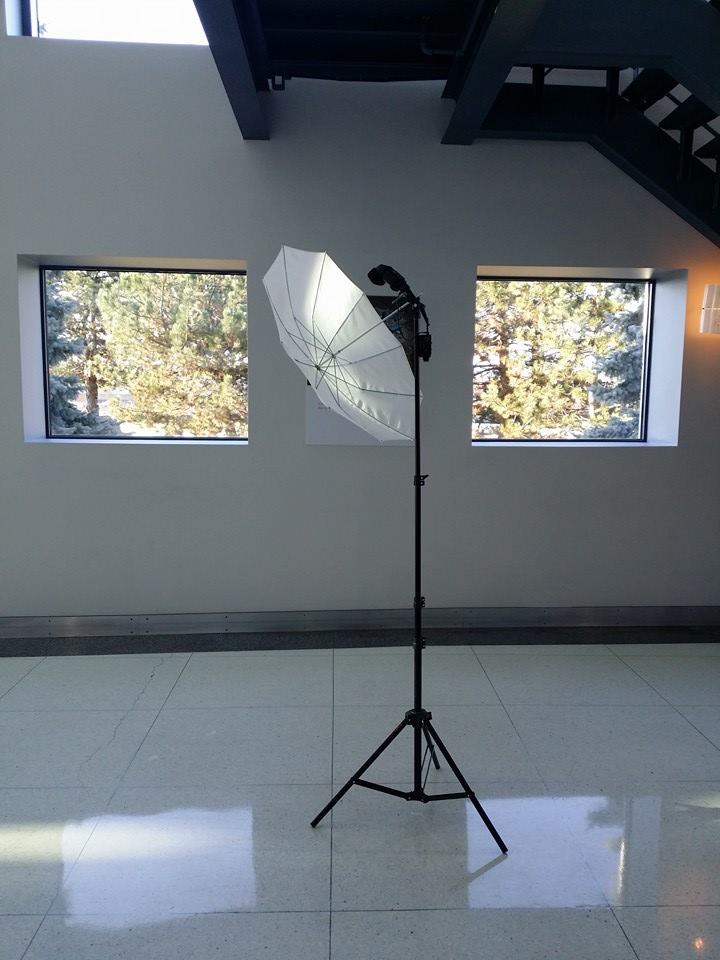
I actually have many “preciousssses”. But this one is among the most precious. My lightstand/bracket/umbrella combo. This here:

This kit, which is just about glued to me, consists of:

  • A light stand.
  • On it, a bracket for mounting flash and umbrella.
  • A pocketwizard. (Plus one on the camera).
  • Cable from pocketwizard to flash (from Pocketwizard or from flashzebra.com).
  • A small flash, e.g. a 430EX/SB710, or any other flash. Any brand will do if I use “manual”. As long as you cam disable the timeout and set the power level manually.
  • Umbrella. Shoot through as well as shoot into (i.e. removable cover).

It folds into a very small package, and often, it’s all I need. Since I know how to mix ambient and flash, that umbrella allows me to do so much. Including this:

Oh, and a student spotted me and took this photo, of the exact flash stand used for that shot:


___

Want to learn? I do remote training over the Internet, using Google Hangouts, so you can now do my courses wherever you are in the world. Better still, for a limited time, it’s cheaper than here, in person. See learning.photography to order now.


Dragging the shutter

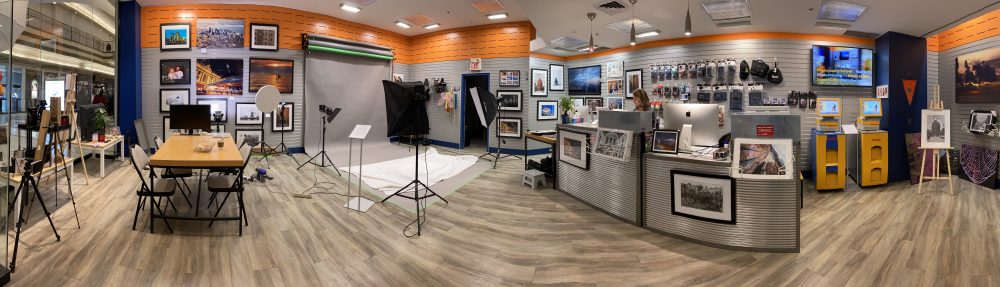
You have seen me talk about this many, many times. Flash pictures start with the background, And to get light into the background, often you will want to use slower shutter speeds. These affect ONLY the background, not the flash part of the photo. Look here; an example from the course I taught today at Vistek:

Like here. f/8, 200 ISO, 35mm prime lens, flash on manual on 1/4 power, fired through an umbrella. The only thing I will change is the shutter speed.

1/125 sec:

1/30 sec:

1/15 sec:

You see? The background gets brighter, the women in the front, who are lit primarily by the flash, do not change. Analyze that carefully.

  • The woman on the left: lit by flash, so does not change.
  • The store in the background: lit by ambient, so changes with every shutter speed change.

And that is how the cookie crumbles.

Why did I use manual flash power setting? Because it is consistent. The same for every shot. No variation. Once I have it right, it’s right for every shot.

___

See http://learning.photography/collections/books for my collection of e-books. These contain my collected knowledge, both of photography and of how to teach it. They are all 100-200 pages long and are simply PDFs, so you can put them on all your computers and tables and large-screen phones, for convenient reading and reference. Enjoy!

Aperture

Aperture (the “f-number”) controls several things in a photo. One is light (the lower the “f-number”, the more light), and the other is depth of field (“DOF”). Low f-numbers mean shallow DOF.

But DOF is also determined by proximity (the closer you are, the shallower); and lens focal length (the longer the lens, the shallower).

So this is f/1.4:

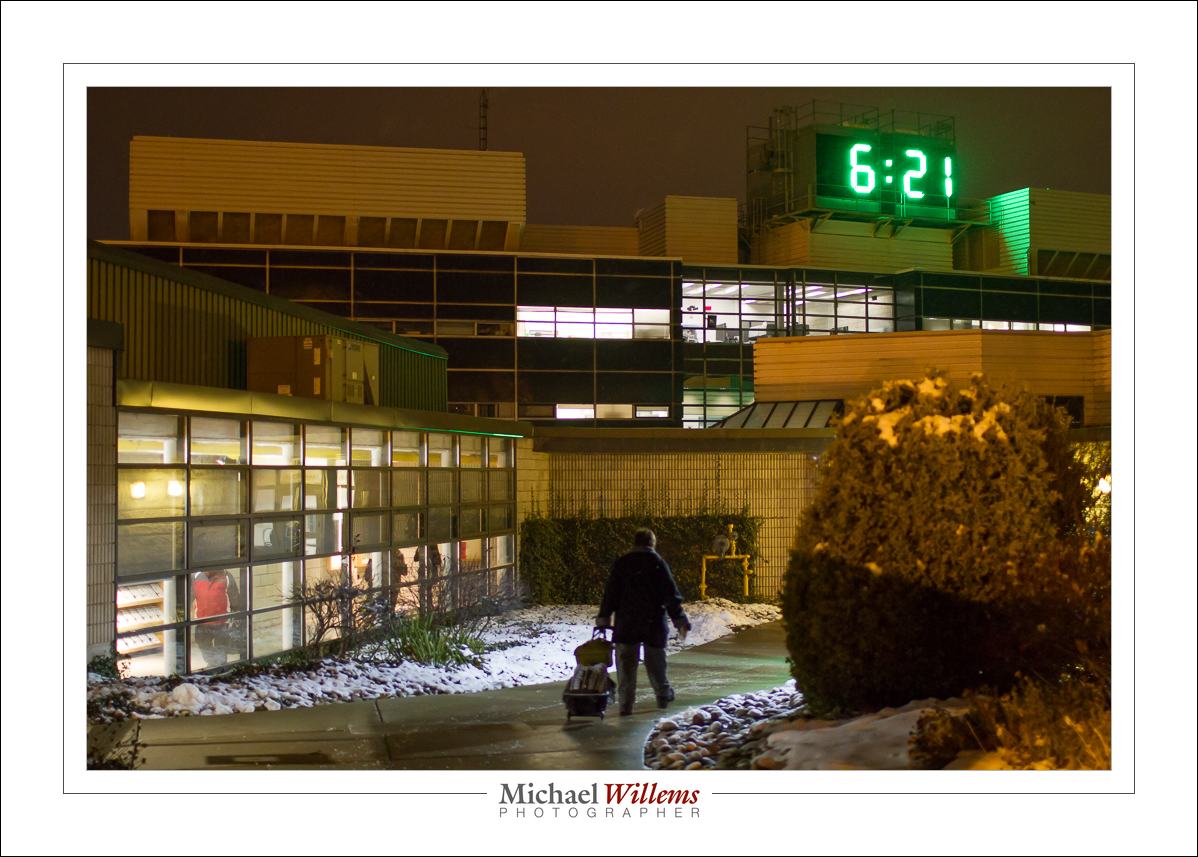
I was walking to my class last week at Sheridan College Oakville.

f/1.4 and sharp? Huh??

Well… read above. I am not close. I am using a 35mm lens. I am printing a small image, not a large image where every detail is visible. So while I have a low f-number, I am doing everything else to get enough DOF.

So yes, you can get enough DOF even at a large aperture (low f-number). Which I wanted to avoid high ISOs.  This was 1600 ISO at 1/60 sec. Handheld.


Fire!

I remember as a child I made drawings with red and yellow flames: red, surrounded by a yellow aura, and I was impressed by how much that looked like flames.

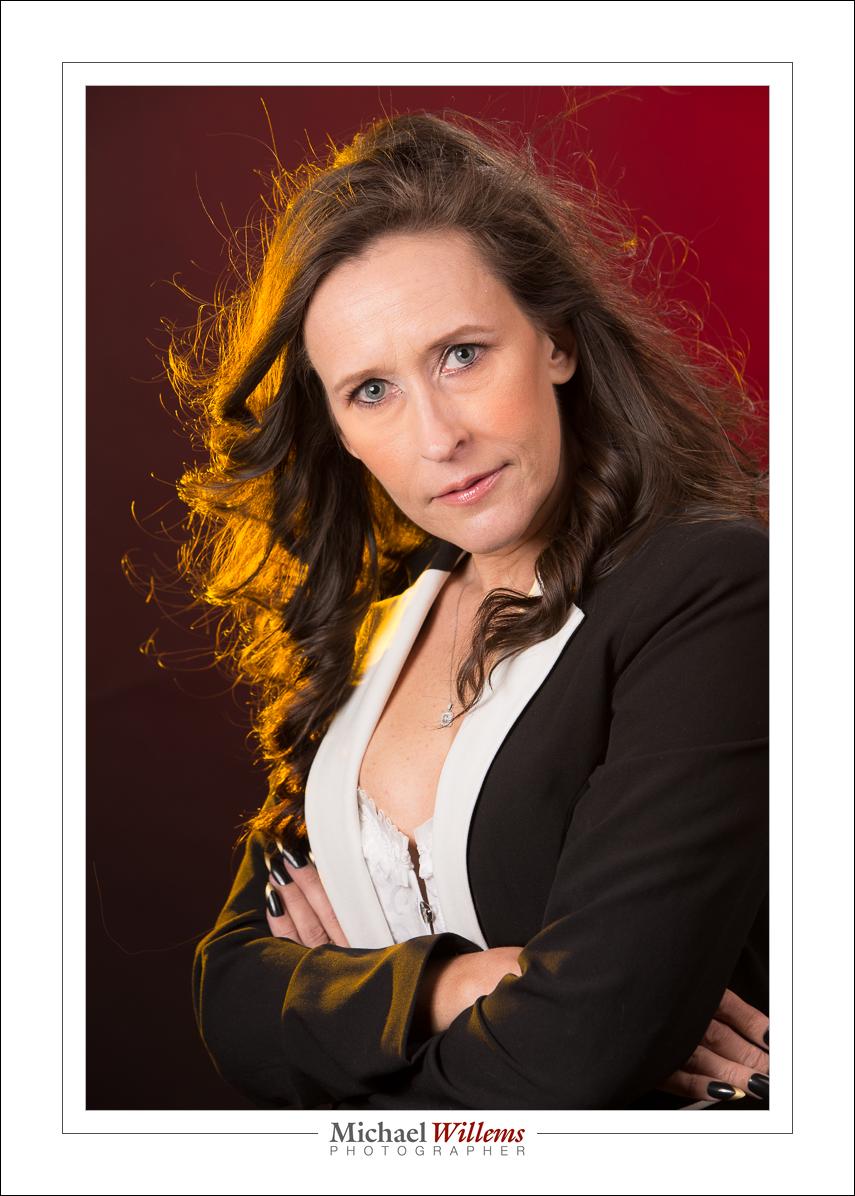
So tonight in the studio, remembering that, I decided to add yellow hair to a red background, like so:

…and I am happy to see that it works just as well as it did when I was a child.

A beauty dish lit the face; a softbox on the right provided a little fill; the background was lit with a speedlight with a red gel; and then the yellow was from a gridded speedlight with an egg yolk yellow gel. 100 ISO, 1/125 sec, f/8. I used Bowens studio strobes, and speedlights with Honl photo modifiers (gels, grids). I set off the lights with Pocketwizards (and the light cell, in the case of one of the studio flashes).

The moral of the story: you should play. Children know how to do that; adults forget. To get new ideas, to be creative, it is important that you play. Try new stuff. Try odd combinations of things. That helps you create: in big ways, but also in little ways like in today’s shoot.

Now, back to authoring my new e-book, “Powerful Portrait Photography”. ISBN 978-0-9918636-5-5. Almost done: watch this space and http://learning.photography.


Portraits

I taught two studio/portrait courses at Vistek Toronto today. Great students, lot of fun. The take-home message: it’s not as complicated as it seems; in fact, it’s easy. Especially with the right equipment, I used a mix of studio strobes (two Elinchrom monolights) and speedlights (my Canon 430 EXII and 600EX speedlights, set manually, i.e. used as studio lights).

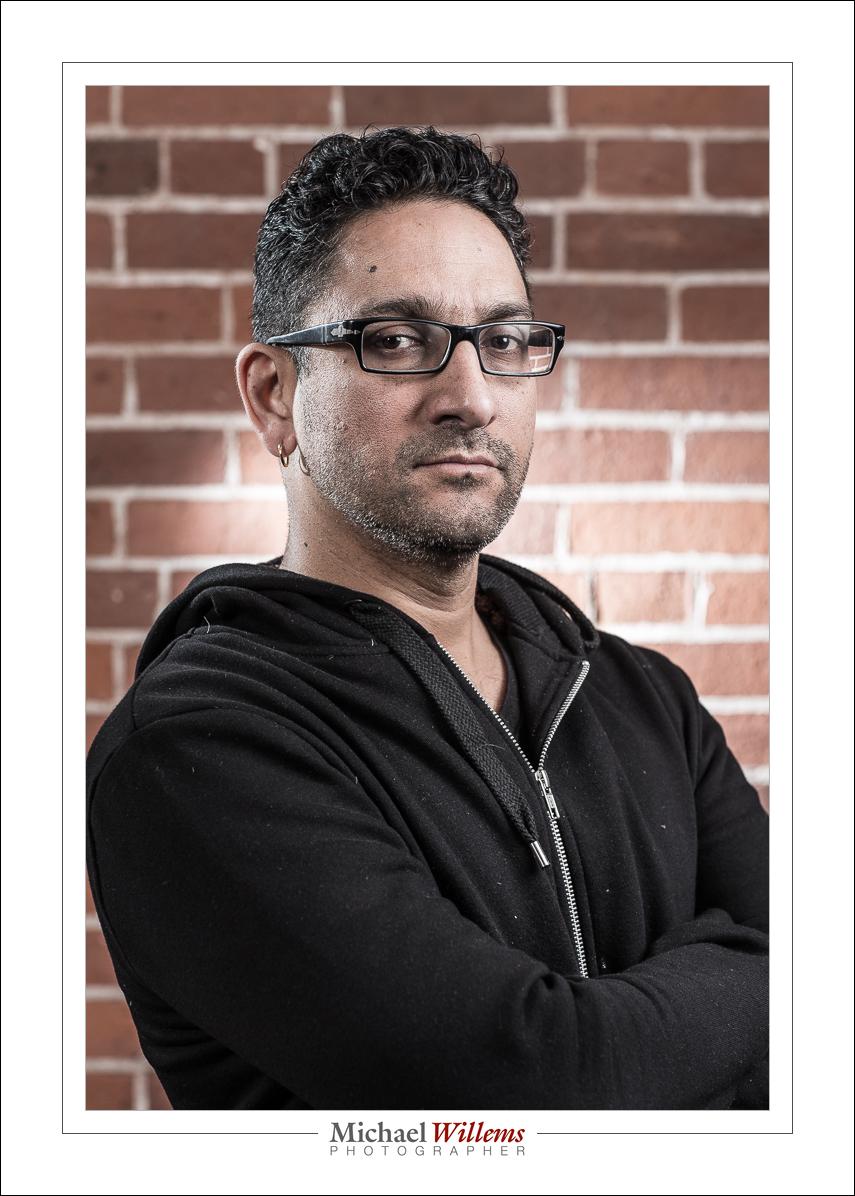
Here’s a couple of “standard” four light portraits (key light, fill light, edge light, background light), slightly desaturated in post:

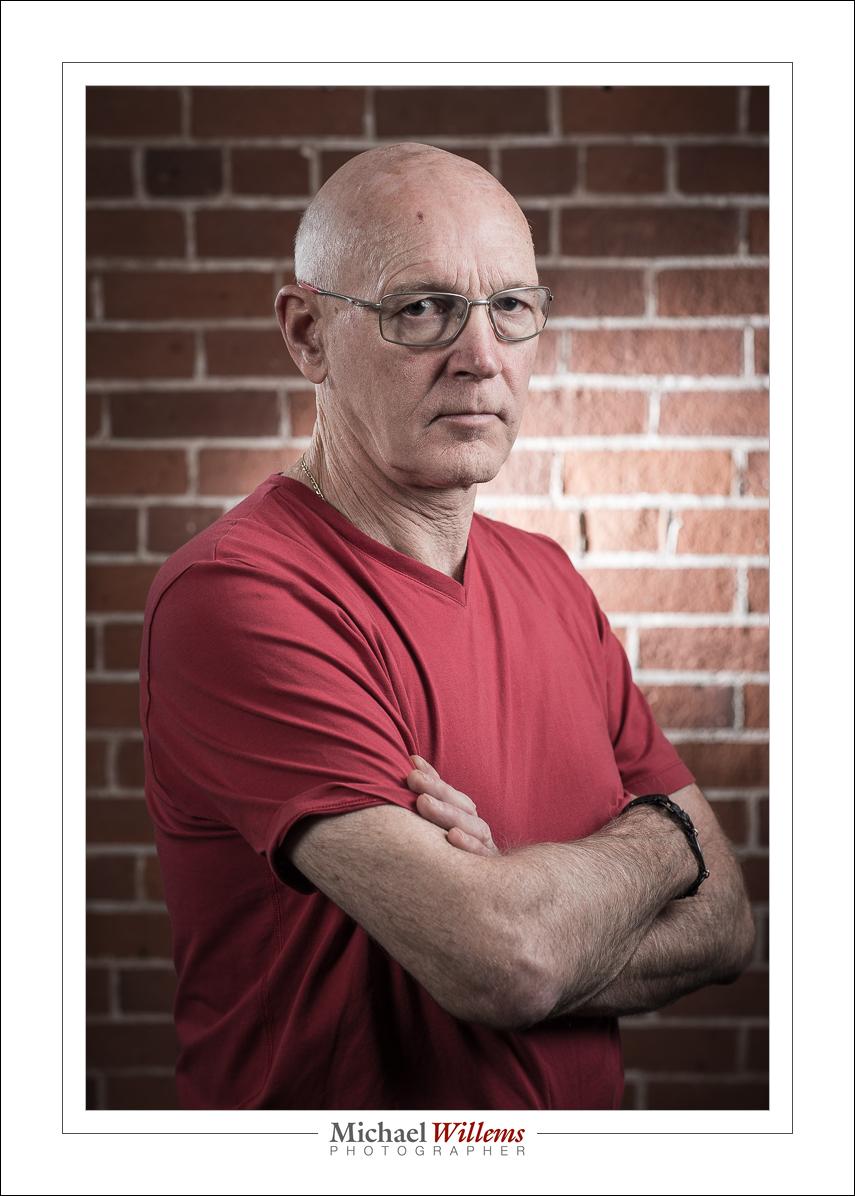
That’s the standard. But you can do with less. Like here:

I happen to like that kind of drama in portraits a lot; it shows character and mood— and that’s just one studio light with an umbrella. Really? One light can do a character portrait? Yup. It can. F/5.6, 1/125 sec, 100 ISO)

And here’s a one-flash bounced portrait, shot at f/1.2 to get a blurred background. Yes, f/1.2! and you can call me courageous or mad, whichever you prefer.

(f/1.2 at 1/160 sec at ISO 100)

Bounced off the ceiling behind me, and using TTL (i.e. automatic flash) with an on camera flash. Simpler isn’t possible, and yet you can do great portraits.

The message: make lots of portraits. Set yourself challenges, and one challenge should be: show mood and character. See how many flashes you need. Note the techniques that work best. Often, as one student today noted, “less is more”.

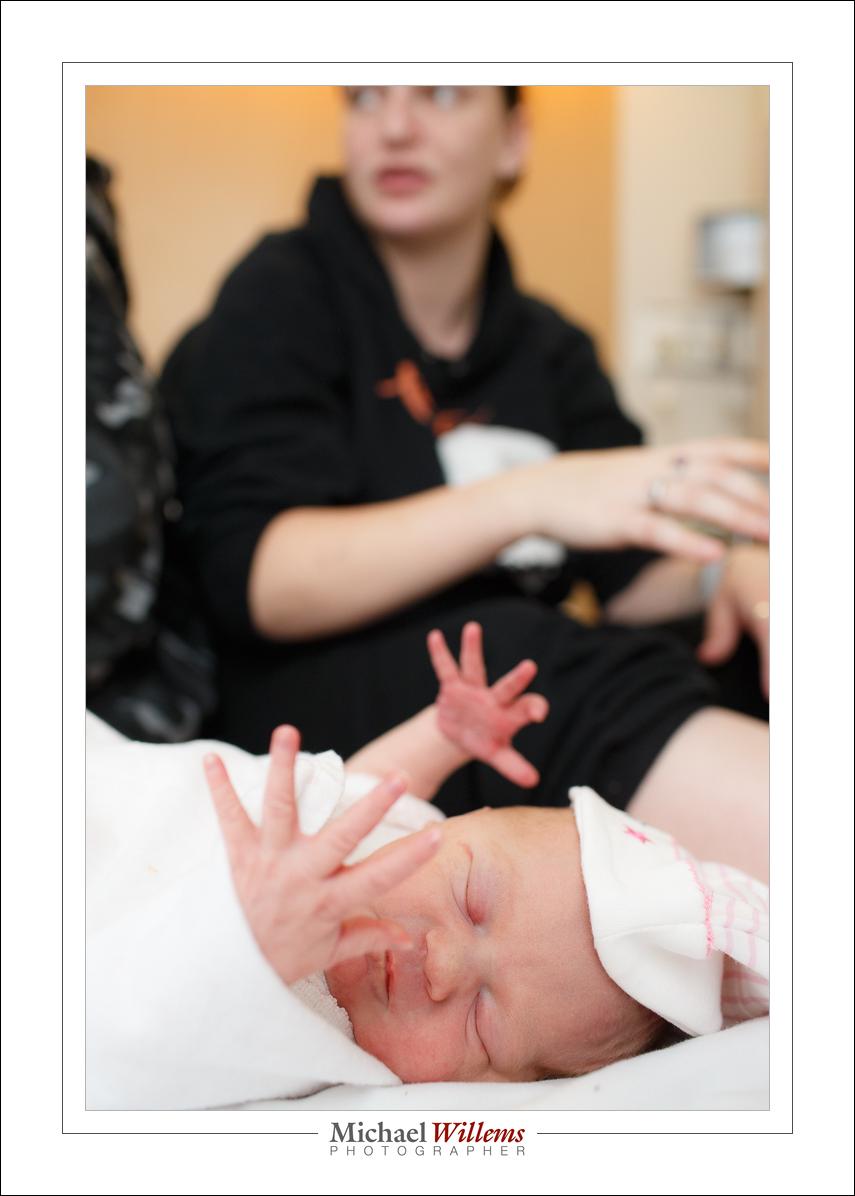
And on that subject, I finish this quick inspirational post with one more picture taken with jkust one flash; this time again of my granddaughter, just a few hours old:

(1/125, f/3.5 at ISO 1000).

That’s a storytelling photo. And a character photo, I suppose: Addison is showing character at only a few hours old.  Also one bounced-behind-me flash.


Tapetum lucidum

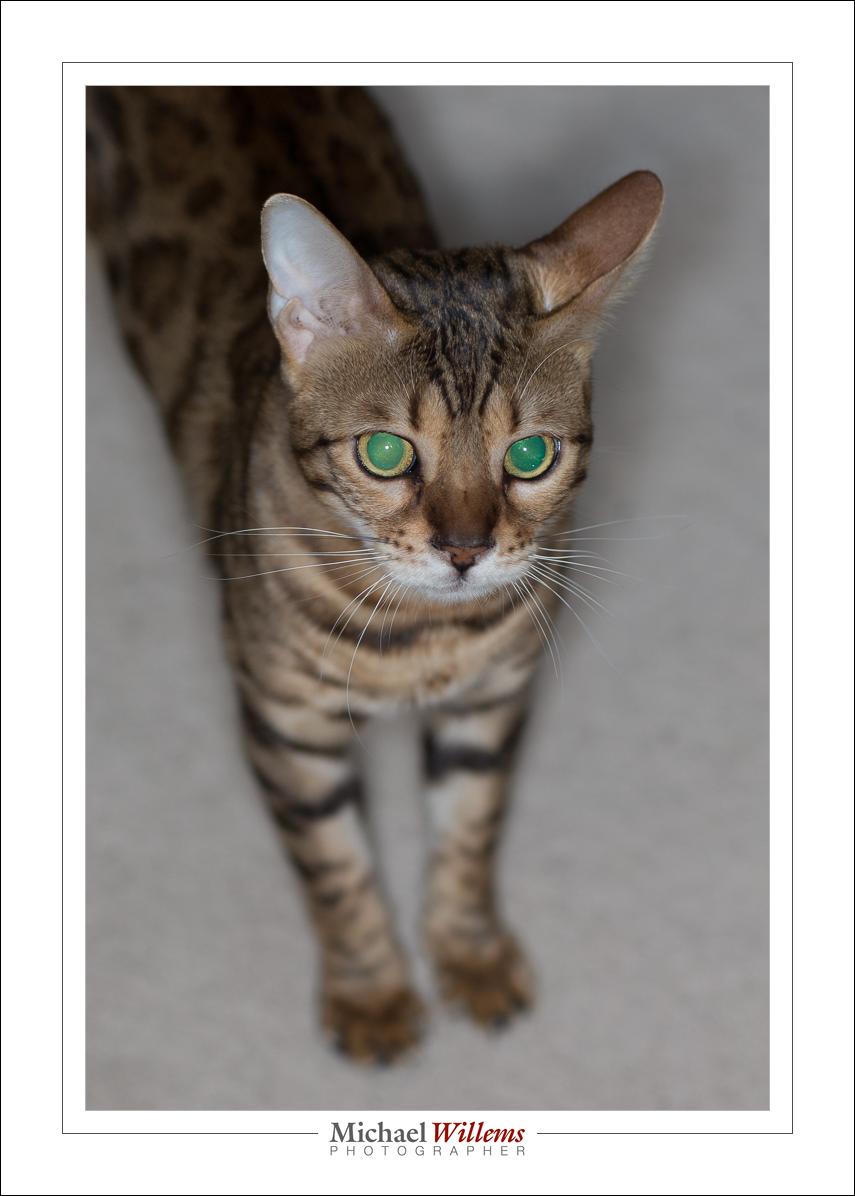
Cats do not usually have that annoying “red-eye” effect…

…but they do have green-eye (or white-eye, blue-eye: anything but red.) Why?

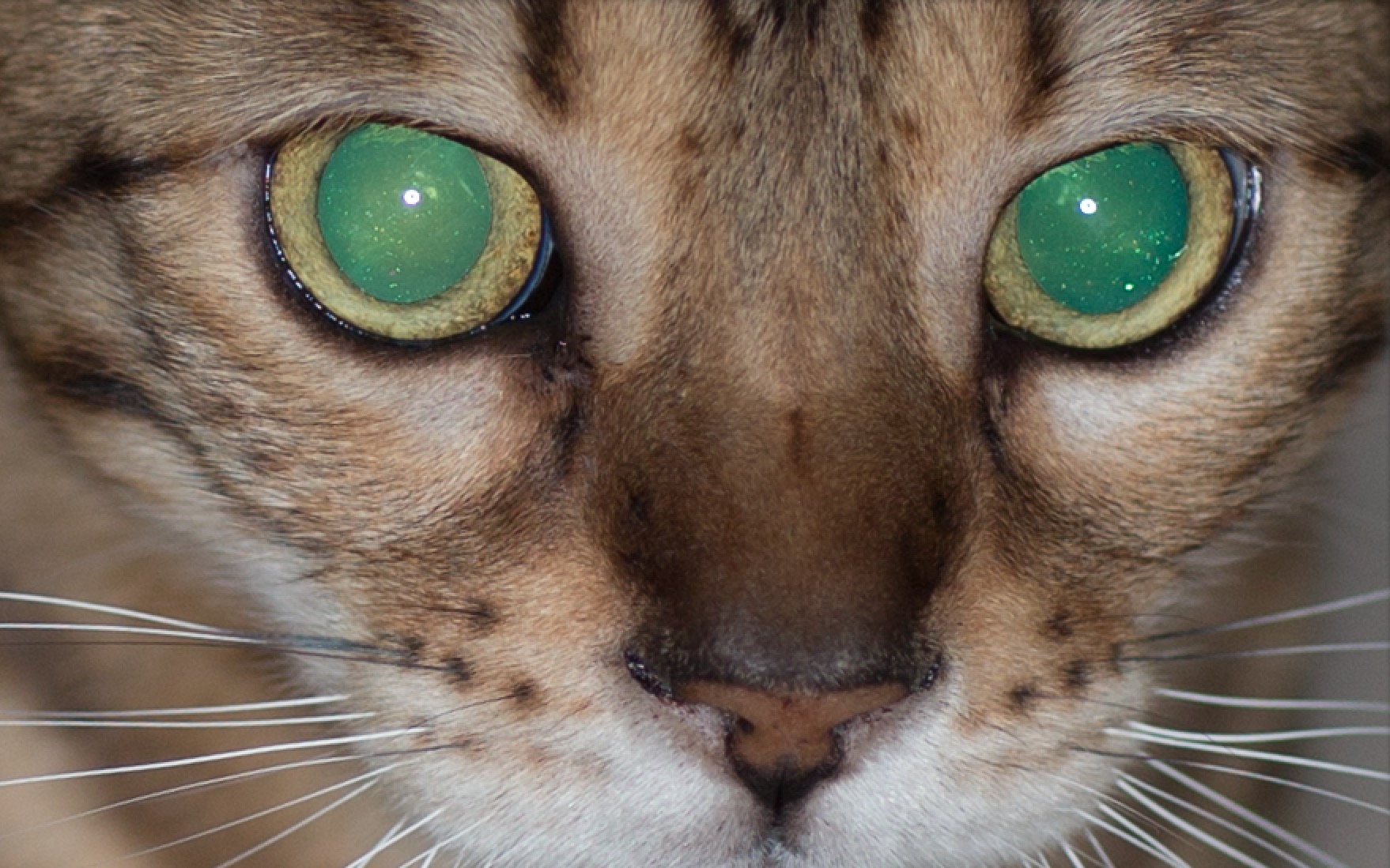
Because they have a layer of reflective cells, right behind the retina. The “tapetum lucidum” (bright carpet) helps them make the most of whatever little amount of light there may be, as they hunt for mice in the pitch dark desert. It is because of the tapetum lucidum that cats can see more than humans in the dark.

Here’s a close up:

So that’s why cats have “green-eye” instead of red-eye, when you shine a light (like a flash) into their eyes. And it is especially in the dark, when their eyes are open to the fullest extent (when, as you see, they have huge pupils), that this shows.

Note that Lightroom’s “red eye removal” tool does not work on green-eye. Best to avoid it in the first place, then; and the way to avoid it is to avoid shooting with the flash near the lens, especially in the dark. No pop-up flashes for kitty!


Sic transit gloria mundi

Thus passes worldly glory… we are here for a limited time. Hence, make the most of it while you can. And especially, make photos. Or better, have them made, by someone who does it for a living.

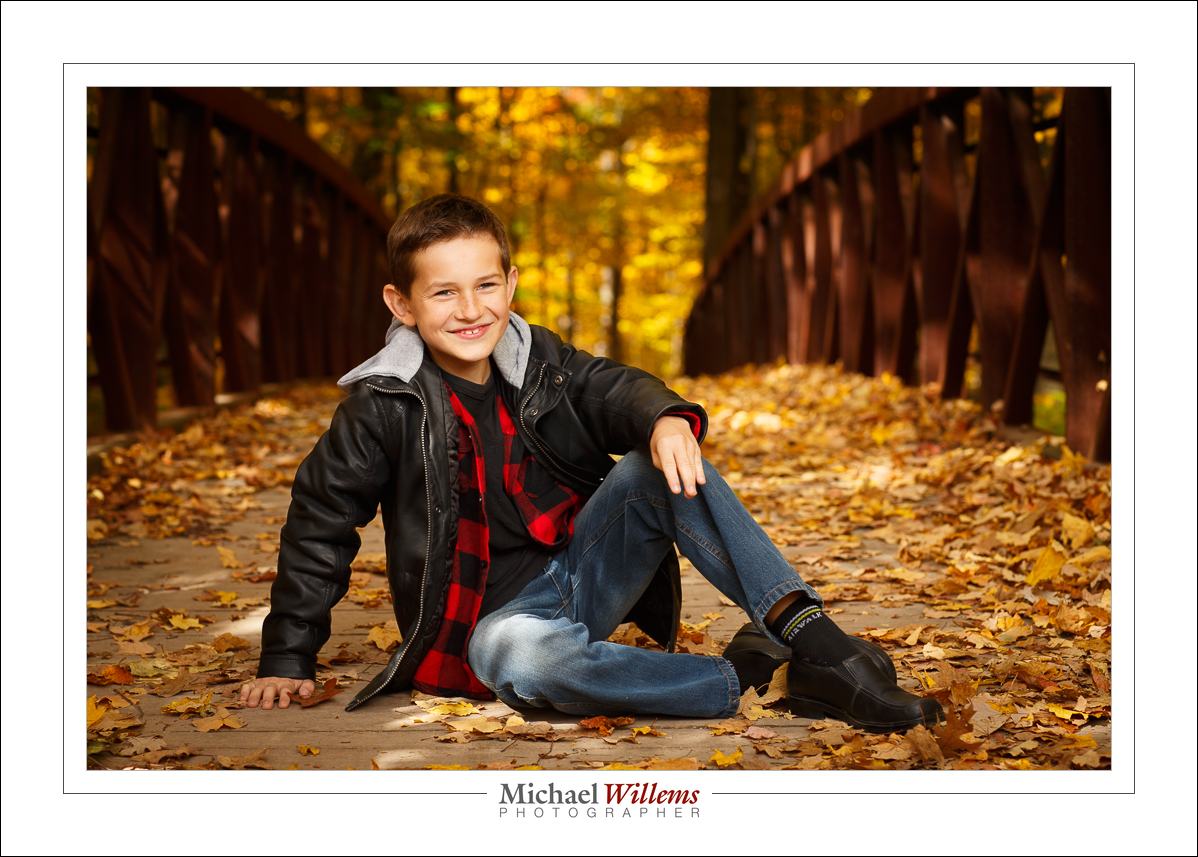
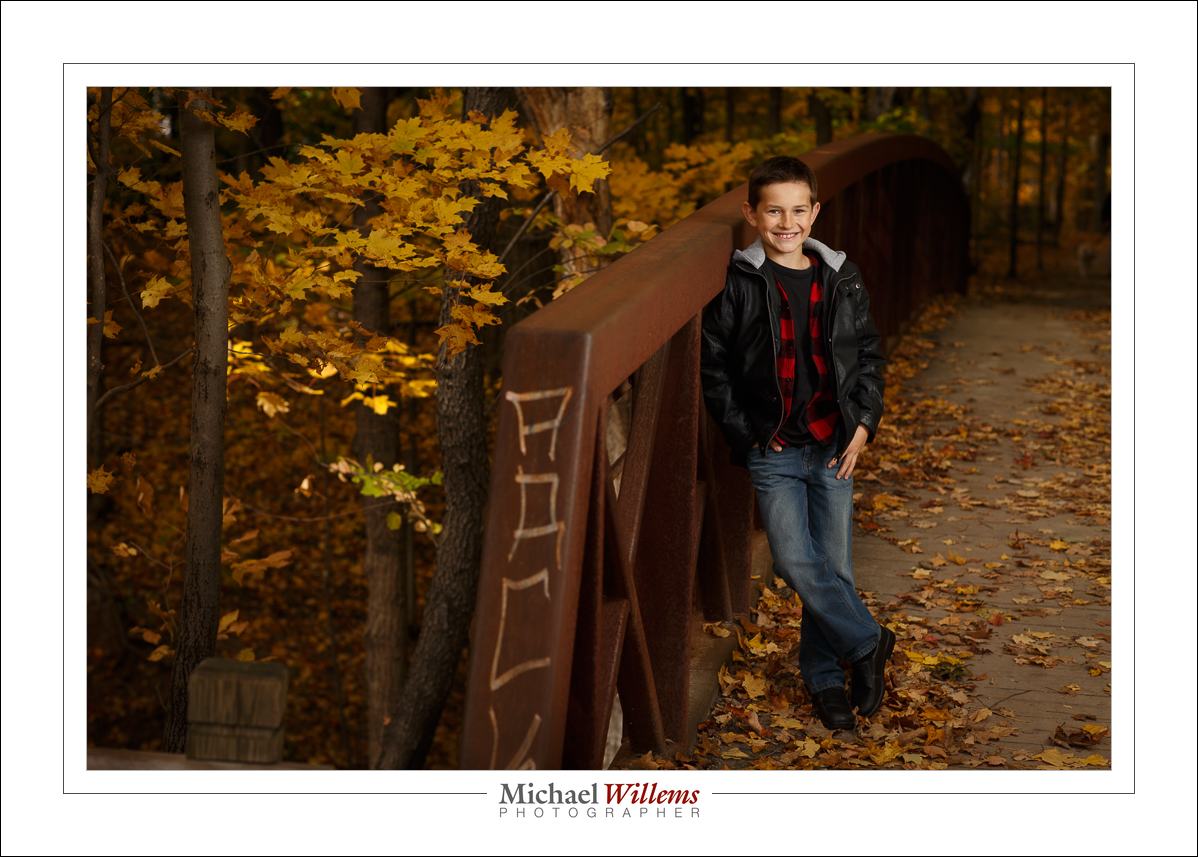
This kid’s mom is a very good photographer, and I shot her boy with her yesterday:

(As usual, I used an off camera flash, and the speed was the usual “outdoors starting point” of 1/250 sec at 100 ISO; the aperture needed to match this was f/4.5, which also gave me the blurred background I wanted.)

I often hear “photography is dead”, “from here on, we are all just doing iPhone snapshots”, and so on. But looking at these, do you believe that?

I am sure that there will always be a market for great photos, photos that this young man will treasure when he is my age. An iPhone cannot give you blurred backgrounds, sharp images, lens choices, or the use of flash.

For this image we want a dark background to get saturated colour. That is the 1/250 sec at 100 ISO and f/4.5.

Then for the subject we want a flash: after all, “bright pixels are sharp pixels”.

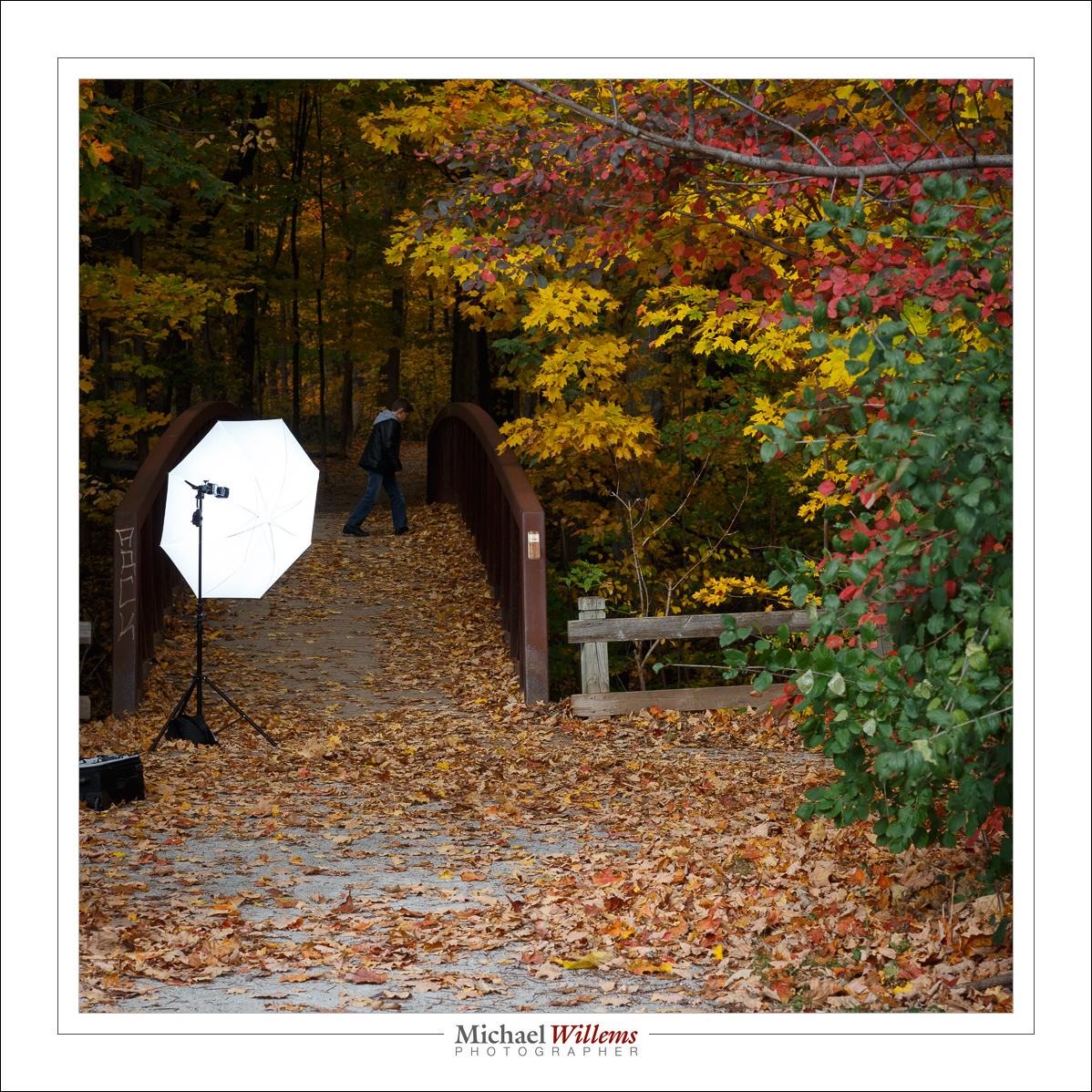
To be bright enough, the flash was set to half power shooting through an umbrella, so:

A single speedlight is enough in this kind of light. If we had been in the bright sun, the speedlight would have to be very close and/or unmodified.

In any case: please have images like this made, or learn how to make them. After all, you can never travel back in time to do it over again.

Tomorrow, a special technique you can use when you have to shoot a subject in the bright sun.