Good News!

First, the bad news: my eBook will not be available as an Apple iBook. I just found out that Apple requires all sellers of iBooks (even, say, Germans selling to Danes, or Canadians selling to Canadians) to file for a US tax ID:

This would mean a lot of work (forms running pages and pages; “certifying” my Canadian passport and having it approved by US authorities; and so on) and a long delay (months), as well as, wait for it, me then filing US tax returns. No way, José.

So… now the good news:

The book is finished, and is available now as a PDF file!

“Photography Cookbook”, an all-new 109-page photography manual, is available direct from me, the author, now.
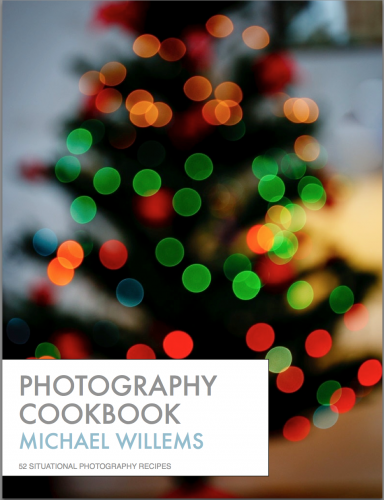
This PDF e-book is unique in that it gives you 52 actual “recipes” to use as good starting points for various situations. Outdoors and indoors; from Aerial Photography to Hockey to Travel scenes: how do quickly you set up your camera for these situations?

In addition, the book contains:

  • The photography basics you need to know to be a competent photographer.
  • All about exposure and how it works
  • Camera settings
  • Flash Basics

Much of my photo expertise and experience is captured in this one manual, optimized for viewing on iPad and similar platforms:

Unique about this book is that it gives you many common situations in a quick, one-page-per-recipe format:
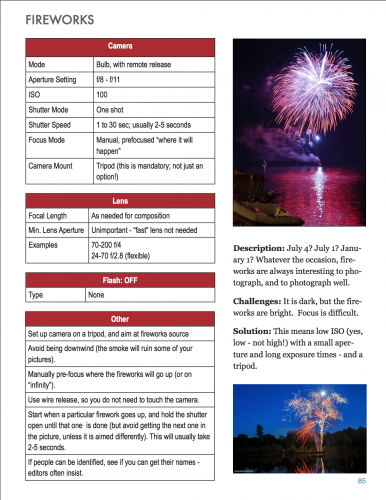
Refer to these any time, shoot the situations here or find situations similar to the one you are shooting, and you are good to go. This helps you actually achieve.

Combined with the basics section, this PDF provides the best photo start you could have! And it is available right now. Your personal copy is waiting for $19.95!

Click here to order your book. You can also send an e-mail bank transfer.

Your personalized copy will be shipped as soon as possible; usually within hours.

Enjoy!

 

Delays, delays… but for a reason

Ah, I hear you ask, where are your blog posts?

Coming! I am in the process of finally finishing my long-awaited “Photography Cookbook”. This is taking all my time.. also precipitated by a few new things I acquired:

New 15″ Retina Screen Macbook Pro – the old one had a harddisk failure during  Santa shooting, so I had no option but to buy a new one. First impression: I can never go back to an old screen.. all I see there is pixels. Use a retina screen computer, and never look back. Also, the solid state drive is nice – no disk warm up and slow things down (and make noise).  Quick judgment: recommended wholeheartedly.

iBooks Author – my iBook will be available as a PDF and as an Apple iBook. The latter choice means I am using Apple’s iBook Author. Not a bad app, but with a steep learning curve and with several annoying bugs. I am hoping for a version 3 soon. Quick judgment: recommended with some reservations.

Rest assured I will catch up and answer the outstanding questions (and: keep them coming).

And now.. my quick beginners’ lesson for the day:

If you are still having trouble understanding exposure, try this analogy:

Exposing correctly is like filling a bucket (=the sensor) of a given size (=its ISO) from a faucet (=the aperture), by holding it under the stream of water for a given time (=the shutter speed).

Think this through and try to understand how the three variables, duration, faucet size and bucket size, contribute to filling a bucket to the top, no more and no less. Just like shutter speed, aperture, and ISO.

Too little water and the bucket is too empty (“underexposed”); too much water and it spills over the top (“overexposed”). That should help you understand how these variables interact.

___

Today is dedicate to my late father, Eddy Willems, who would have been 83 today.


Happy New Year!

Happy New Year to all my readers!

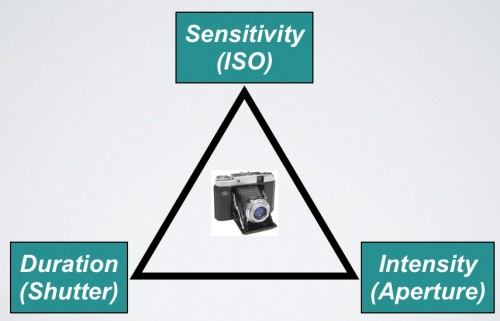
Let me start the new year with a very simple diagram; one that is at the basis of all exposure:

There are three, and only three, variables that define how light or dark your image is. ISO, shutter speed, and aperture. Get that straight and you can start using the camera, knowing what it is doing and why. Want brighter? Increase ISO, use slower shutter, or use larger aperture (lower “f-number”). Darker? The opposite.

In the  next year I will continue to mix basics like this with advanced techniques, often centered around flash and creative light. Keep reading and keep learning – and keep having fun!


New Camera?

Did you receive a new camera for Christmas?

In that case, I suggest you now learn to use it. Learn, first and foremost, to operate it in manual exposure mode – this is the same on all cameras. Learn all the menus – this is camera-specific. Also learn all the extra functions that make your camera great.

It’s what I teach (for all cameras), and as the new year approaches, if you would like to try coaching, portfolio review, or any other type of private training, give me a call or drop me a line. I have special offers for the start of the year.

Learn also to avoid common misconceptions. Misconceptions like “flash pictures get warmer backgrounds if you use second (or ‘rear’) curtain sync”. This is nonsense.

Normally, a flash picture, with your camera in its default setting of First Curtain Sync, works like this:

  1. The shutter opens
  2. The flash immediately fires
  3. The shutter stays open for the set time
  4. The shutter closes

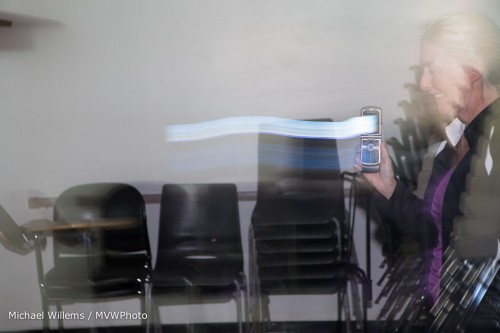
This is fine, but if your subject moves forward during a slow exposure, and that subject has light other then the flash this happens:

The subject appears to be moving backward!

If we select Second Curtain Sync (or Rear Curtain Sync), now the sequence becomes:

  1. The shutter opens
  2. The shutter stays open for the set time
  3. Just before the end of this time, the flash fires
  4. The shutter closes

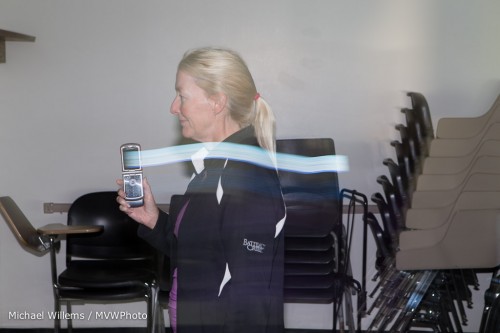
Now we get this:

…which at least looks like the phone leaves a natural light trail.

Other than that, “front/rear curtain” has no effects on anything else. Myth dispelled, I hope.


Learn, then learn more.

As a photographer, I am always learning. Always: the moment I give up, I might as well retire. Won’t happen for many decades, I assure you!

Here’s a few ways we can learn; a few different methods for learning:

Learning from others. I read widely, as should you. Do be careful, though: up to 80% of what you read is ill-informed and simply wrong. Watch forums for that. That said: the other 20% is very useful. My advice: Find someone who knows their stuff and who shoots well – the proof of the pudding is in the eating – and then follow them and listen to them (like you are listening to me!)

Learning from myself – I am very analytical, as you might want to be.  So I constantly ask myself : “what am I doing in this situation to be successful”. And I then analyze and boil it down to the success factors. I also shoot new situations all the time, and shake up the equipment, the locations, and so on: taking me out of my “comfort zone” creates learning, too.

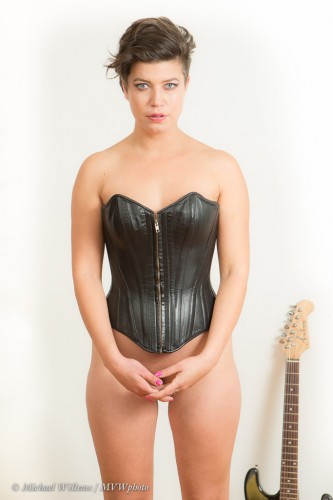
Learning from my subjects. I always try to learn from every subject I shoot. Whether it is a two year old, a family, Santa, or an experienced model. Here’s a new “non-nude nude” pose that the model came up with:


Either way, I always learn. Interact. Ask.

I teach. Teaching is a good way to learn. I teach at college, privately, and in international tours. Teaching forces you to get your thoughts straight: so try to teach your son, your daughter, your wide, your father, your husband: when you teach someone you’ll have to be very clear on what it is you are saying.

So my advice is:

  • Write down what you do and what you learn.
  • Check your images’ EXIF data.
  • Explain what you do to others.
  • Read magazines.
  • Join clubs.
  • And above all: shoot, shoot, and shoot; and analyze your results, and ask “how could I have done better?”, and “what could I have done differently and how would that have worked?”.

Do all these things and you will learn quickly.

Your assignment for the week: shoot all week with a prime lens. Like I shot the Santa month all with a prime lens also. And I am about to put a 35mm f/1.4 prime lens on my Canon 1Dx now for the next week. Remember, take yourself out of your comfort zone.


Share! Share!

As you all know, I share my knowledge and experience freely (and for free). Information wants to be liberated – keeping secrets helps no-one.

So a request to you, my thousands of readers: I am asking you to reblog, tell your friends, share my posts too if you like them. Simply click on the little “share” icons at the top of each post to share the post on Facebook, Twitter, etc… you would be doing me a favour. I want to educate the world: it is such a beautiful world, and photography is such a beautiful way of sharing it, and everyone can learn. Help me spread the word!

Thanks,

Michael

Let there be light.

When I pass away (hopefully not until a while from now), I want my epitaph to be Dylan Thomas’s words:

Do Not Go Gentle Into That Good Night.

Rage, Rage Against The Dying Of The Light.

Light is everything. But in a sense, where you do not light is even more important as a starting point.

In several ways. First, in establishing a starting point. For studio flash shots, the ambient light should be dark. So you start at 100 ISO, f/8, 1/125th second. Try it: whatever room you are in looks dark. So that only the flash will show.

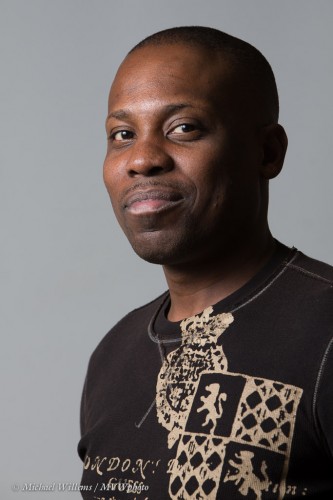
Then add that flash. In this image of Kingsley in last night’s Sheridan College class, one flash is used: umbrella on the left:

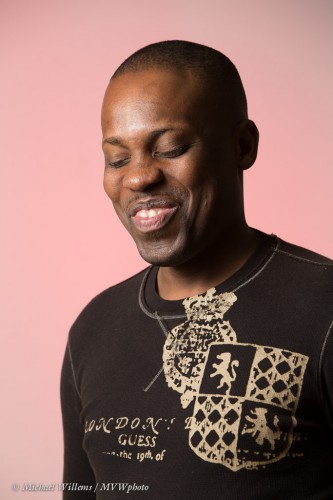
The background is not quite dark, is it? So that when we add color in the form of a back light with a bright red gel, we get some, but not a lot:

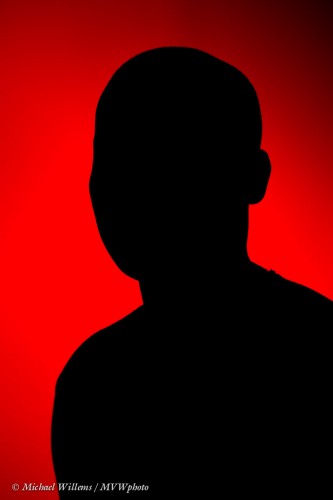
how do I know it’s not a lot? Let’s turn off the front flash and use only that back flash with the red gel, where all other settings remain the same:

Wow, so there was pure saturated red – it was just blown out by the white. “Saturated” means “not mixed with white”.

The solution? Move your subject and the umbrella back a few metres. Now we get less white, hence more red:

Even farther from that background would have helped even more. As would a softbox close to the subject.

But yes – you need a large studio. True say.


Partayyy!

Party time. You have read about it here before, many times, but let me reitereate something.

Consider these three good (if I say so) recent party shots (made during a Bat Mitzvah party):

What do they all have in common?

I’ll help.

  • ONE: they are flash shots.
  • TWO: They are not DIRECT flash shots – the flash is bounced off something, somewhere.
  • THREE: The background is well exposed for all three. A little darker than the foreground, but only a little (say, 1-2 stops).

And as regular readers know – we start with step three. Always start with the background. Indoors, start with the Willems 400-40-4 rule (400 ISO, 1/40th second, f/4) and then change ISO as needed for a good background.

Then – and on;y then – worry about the flash. Use flash exposure compensation if needed. Higher ISO if you need more flash range (e.g. for high ceilings). Move if needed to get a bounce surface.

OK, your challenge: go take a few shots like this. The festive season demands it!

Learn!

Those of you who wish to learn more about photography for the season:

You can engage me for portfolio reviews and private training any time. It is cost-effective, fun, and delivers guaranteed results.

More immediately: Saturday I am teaching at Vistek in Mississauga: Sign up now… (Flash in the morning; Lenses in the afternoon); and Sunday an all day flash workshop in Timmins, Ontario at the Porcupine Photo Club. I am flying out there in my winter clothes! Then I have many photo club speaking engagements in the next months. Stay tuned, and see you there!

Now back to finishing my recent shoots for the clients. Like many pros, I thank the heavens for Lightroom!