Student Help

This blog is for general readers who want to learn professional photography skills (hi, everyone) and pros who wants flash knowledge (hi, guys). But it is also for my students – previously at the School of Imaging; now for my Sheridan College and private students (and stand by for more news). So here I repeat things I have talked about in classes, to support the class.

Such as this: The difference between background and foreground in a mixed flash/ambient image.

Easy to learn with some practice!

You need to remember the basics:

  • The flash power determines the brightness of the foreground.
  • Your “Triangle” settings (Aperture-Shutter-ISO) determine the brightness of the background.

You also need to learn the main restrictions:

  • Flash power may not be enough. Aperture affects flash too, so for darker backgrounds, try to keep aperture low and shutter fast. Or get closer.
  • Note, shutter speed cannot exceed 1/250th second (roughly)

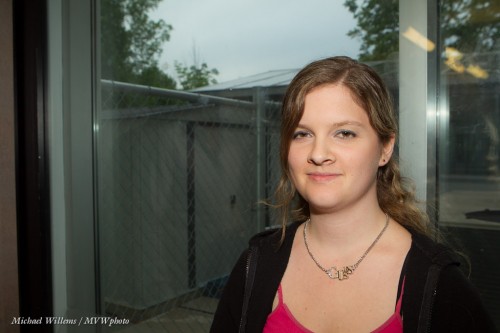
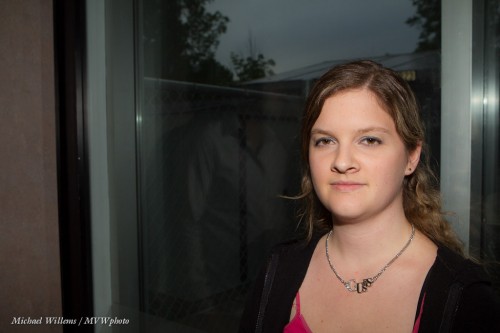
Look at these examples, of a student at Sheridan College yesterday:
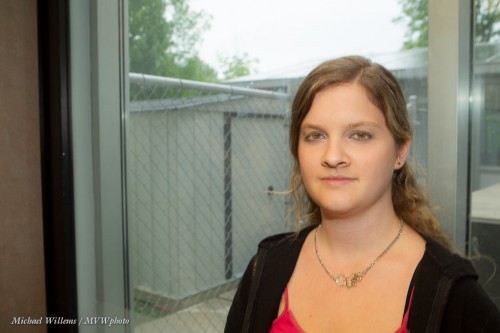
I changed the background by setting my shutter to 1/15th second, 1/50th second., and 1/250th second, respectively. The flash part is roughly the same, since the flash power remains the same – but the background is najorly affected by this.

So remember, in any flash picture, you always start by asking “what will the background without flash need to look like”? That could be totally dark (studio); middle (dramatic outdoors), or bright (a party). But it’s always your first question.

Clear? (Pun intended).

___

PS: I have a special on for private or small-group training June – just $75 plus HST an hour instead of the usual $95. Email me!
 

Dear Readers: you will forgive a little promotion in my second post today. Because it is promotion that can help you.

  • Brought on by our lovely weather the last week or so, I have a “Suspicion of Summer” special on for June. For June only, private coaching is available at my Oakville location for $75 per hour rather than the usual $95 per hour. Book soon, since availability is limited to the 24 hours each day has, and they do tend to all fill up. This is made-to-measure individual training, but see http://www.cameratraining.ca/ for some possible subjects.
  • There is still space on the The Art of Shooting Nudes workshop: see http://www.cameratraining.ca/Nudes.html (NSFW).

Whatever you shoot: in just a few hours I can make you a much better photographer.

  • My coaching and teaching are professional and made-to-measure to your needs.
  • All photos I show you are mine, so I can teach you how to take similar photos.
  • I am independent: I do not sell hardware, so what I think you need is what you need.
  • Whether it is weekends, week days or evenings, I teach exactly when it suits you.
  • You get to be hands-on – not just sit and listen.

Take advantage of the special to kick-start your photography today and I promise, you will be delighted. If you like this teaching blog, you will love my coaching and teaching.

Michael


From Prudes to Nudes?

Since I no longer work for Henry’s School of Imaging (see Peter West’s take on it), I shall now concentrate on marketing my own coaching and training. I look forward to teaching many of you in a private, independent, no-hardware-sales environment. I wrote Henry’s “Travel Photography”, “Outdoor Flash”, and various other workshops, but over the years I have also written, and constantly update, all my own courses, with my own materials: see www.cameratraining.ca for offerings. Private coaching, or coaching in small groups, is very efficient. Just a few hours stand between you and majorly  better photos!

Appropriately, since my end at Henry’s was precipitated by a person objecting to a picture of me nude: Kristof B and I are organizing our the art of photographing nudes workshop on June 17. Nude is not lewd: we shall teach you to shoot Art Nudes. Sign up by clicking on the link: space is limited.

On to the rest of my day. Have a great day, everyone!


Photography is Art, but not for Everyone

Odd, this. I have just been fired as an instructor by Henry’s School of Imaging!

Yup – fired! David Morrow, the head of the School of Imaging (dmorrow@henrys.com) writes:

“This week we received a letter from a Henry’s customer with an [sic] printed photo of you naked from your Tumblr site. This customer recently attended an SOI course taught by you and has promised to never shop at Henry’s again. I am grateful to this customer for taking the time to inform us, rather than just leaving silently.  This loss of a Henry’s customer is a direct result of your personal promotion of your speedlighter.ca site while teaching for Henry’s.”

This is regrettable, and surprising.

For the record, I do not promote competing courses at Henry’s, and I have met all the School’s requirements, including ones that I think unjust, like removing the link to www.cameratraining.ca from this site (that link comes back now). Speedlighter, if clients know about it, is for learning, not for promotion.

Good relationships are give and take. It seems to me that I have given Henrys and the School of Imaging much, much more than I have taken, but I wish them well.

I shall now concentrate on my independent courses: vendor- and sales-independent and up-to-date courses and coaching that teach you all about photography and especially creative light and flash.

Including nudes, if you are so inclined: the preposterous thing is that this was brought about by a client who “will never shop at Henry’s again” because they have seen a picture of me, nude. Really? This is, what, 1850? Almost all artists, including most photographers, do nudes and Henry’s, who cater to photographers, should understand this better than anyone else. Will this client never go to Italy again after seeing Michelangelo’s David?

Regrettable and surprising.

Meanwhile, the good news: You can learn from me..

  1. In my private courses (see http://www.cameratraining.ca)
  2. At Sheridan College’s Continuing Education, where I teach several courses I wrote.
  3. At the Niagara School in August, for a week-long course.
  4. In my article in every second issue of Photo Life magazine.
  5. At tours and private teaching events
  6. And of course here on www.speedlighter.ca!

Photography is art and craft, a mix you can all learn to find your way in, and I am here to help.


Sunny Sixteen

You have heard me talk about the “Sunny Sixteen” rule before. This is a rule of thumb that says:

If your shutter speed is set to 1/ISO (e.g. 125 ISO at 1/125th sec, or 400 ISO at 1/400th sec), then on a fully sunny day at noon, f/16 will give you the right exposure.

Like this, at f/16:

And if it is not sunny?

f/16 Sunny Distinct
f/11 Slight Overcast Soft around edges
f/8 Overcast Barely visible
f/5.6 Heavy Overcast No shadows
f/4 Open Shade/Sunset No shadows

(Source: Wikipedia)

This rule is a rule of thumb, so feel fre to vary – I often expose two thirds of a stop higher – but since the sun is always the same brightness, it holds well. And it is nice to be able to expose without light meters, if only in order to be able to check your camera.

Bonus question: how do you expose the moon?

Answer: f/16. The moon at noon is as bright as the earth at noon- they are the same distance from the sun!


Creative light

Here for you are a few simple steps to a dramatic light portrait.

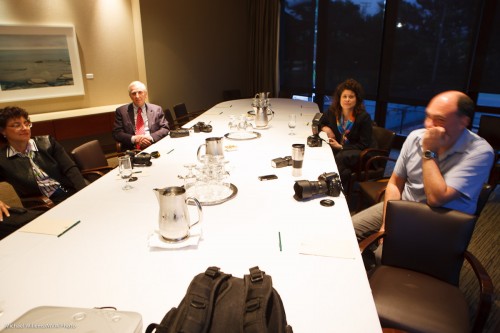
Step One: Start with a room. Like this one, with some of my students last night:

But for creative lighting we do not want to see the ambient light – it would just interfere.

Hence… Step two: make the ambient light disappear. You do this by selecting a setting for ISO-Aperture-Shutter that makes the room look dark. Like 200 ISO, 1/125th second., 200 ISO:

Yes, the room now looks dark, and no, I did not turn off the room lights. Your camera is a light-shifter.

Now we add the light that we do want to see. Step three: use an off-camera flash. All makes of camera support this: remote TTL works very well once you learn the ins and outs.

  • Nikons and some Canons can use the pop-up to drive the remote (“slave”) flash.
  • Others need a high-end flash on the camera to do this.
  • Ensure that the on-camera flash only issues “commands” to remote flashes but that its actual flash-during-picture function is disabled.
  • Use a modifier, like a grid (I use the Honl Photo modifiers) to ensure that light does not go “everywhere”.
  • You can soften the light with a softbox or fire direct at the subject. Yes, you can fire direct at a subject, as long as the light is not where the camera is.

Now we get what we wanted:

This technique is also good to learn lighting scenarios (like broad, short, butterfly, or Rembrandt lighting).


Weddings

Apart from being busy driving (I picked up my son in Montreal yesterday: 1300km, 13 hours in the car, in one day).

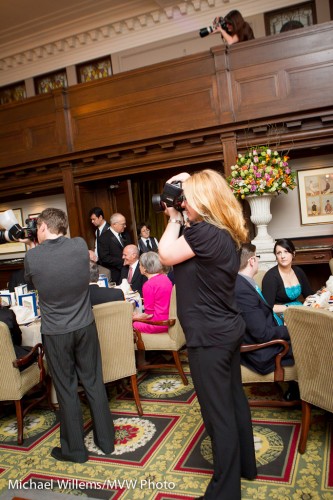
But I have also shot a few weddings in the last days. And when I say “I” I mean “we”: look at this image: three photographers plus myself shooting the bride arriving at the reception:

That is Kristof, who shot the wedding with me, and our assistants Ola and Merav.

To do a wedding justice, you need several shooters:

  • You get the moments.
  • You get several points of view.
  • You have “equipment and CF card insurance”
  • You have “personal mishap insurance”
  • You avoid losing time due to constant lens changes.

A wedding is our mark in history, and it is worth doing well. If you are tempted to shoot one for a friend: engage a pro, or at least engage other shooters also.

TIP: wedding photography is in part fashion photography. Join Kristof and myself for a workshop on 19 May: http://cameratraining.ca/Fashion.html – you only have three days left to sign up! (The same urgency applies to the Africa workshop: click here)


Africa….

You have heard me mention the Africa trip in August? Great news: info and a detailed itinerary are now available here (click) and there are still spaces available.

For the photo trip of a lifetime, click now and come to one of the two info evenings in Oakville May 14 or May 18. Reserve your spot on the presentation evenings quickly: RSVP now. First come, first served!

Now I go back to deciding which lenses to bring (hint: one of them will be loooong).

On the shoulders of giants

When people ask me “how do I learn portraiture and composition”, I always have a simple answer. Study what others have done. In particular, study classical painters. Go to an art museum!

Look at the work of Rembrandt and Vermeer. Velasquez. Or more recently, John Singer Sargent, a genius of portraiture. Or the impressionists. These people knew portraiture, they knew light, they knew composition.

And learn from photographers whose work you like. Avedon, maybe, or any of the other greats. This is the way to learn. Try to figure out exactly why you like certain works.

Another tip: ask yourself “what feeling does my photo represent”. If you do not know, chances are that the image is not optimal.

Using these learning opportunities, chances are that you will improve your work soon.