…because students learn. From earlier this week:

Wherever you do it, get some training: the term “leverage”, although an ugly word, does apply here. A few hours teaches you more than years opf reading books will do.
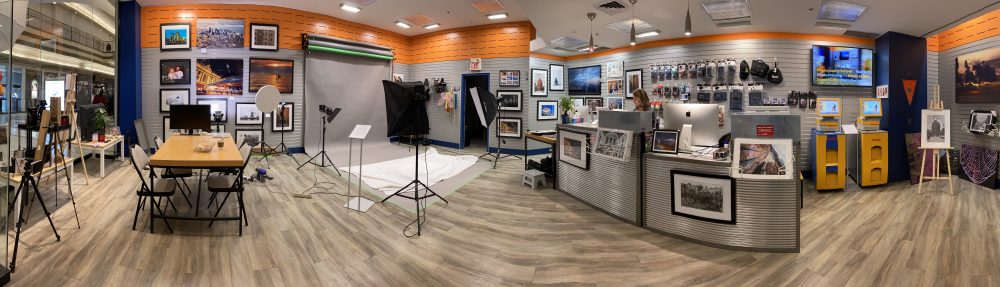
…because students learn. From earlier this week:
Wherever you do it, get some training: the term “leverage”, although an ugly word, does apply here. A few hours teaches you more than years opf reading books will do.
Why do we use wide or long lenses?
One reason is to change perspective, as you all know if you read this site.
Here’s another illustration. I took a happy shot of a student yesterday, with the lens set to 24mm (apparently my courses can be fun):
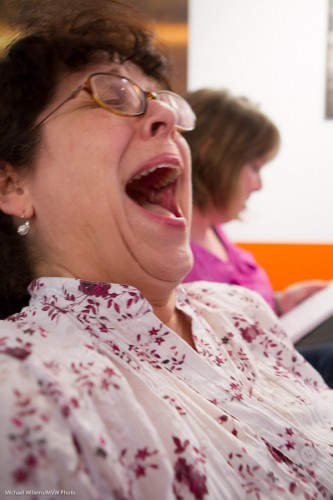
When I pull back and zoom in, to use a 70mm lens focal length, look at the student in the background:
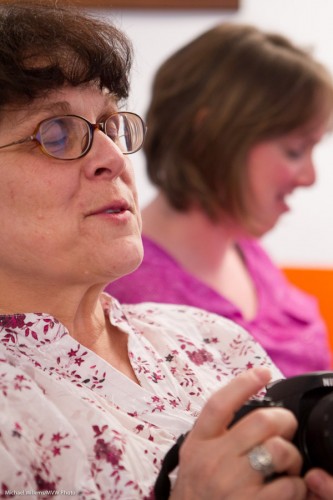
Much larger. Because the relative distrance between foreground and background is greater.
It is the vantage point that creates the different look, not the lens length per se. The wider the lens, the closer you get, and hence, the smaller the background will look.
Check out this page.
In August 2012, international photog Kristof is doing photo training during an Africa Safari trip. And great news: I will join too, if we get enough signups!
This is the trip of a lifetime, both as a trip and as photo coaching. Check out the page and contact me or Touch de l’Afrique if you are interested: come and I’ll be there too, so Kristof and I can help you with two teachers present through the trip.
Bett still: Monday evening, in downtown Oakville, an information evening about the trip. Follow the link above and RSVP to Kristof to ensu your place!
Kristof and I will teach Travel Photography, wildlife, lenses, light: everything you need for a perfect memory of the trip, plus a great boost in your pro skills!
Now that I am not doing the Imaging Show in May, let me tell you about other opportunities for you to see me.
I trust that is enough to give those of you who want tpo learn Photography topics in person some opportunities other than the usal show, where I meet thousands. I shall still be there, walking around – come se me there if you like, too.
Alas, for the first time in years I will not be speaking at the Exposure imaging show, May 25-27 at The International Centre. You may still want to go, but alas, you will not be seeing me.
Plenty of other opportunities, at Sheridan College, at The School of Imaging, at Niagara School in August, and in my private coaching, but that weekend has just freed up for me!
When learning photography, remember to treat each problem separately. I.e. take away variables, just like in high school math. Don’t say “yes I see that aperture does this or that, but why is the colour wrong?” – different problem.
So aperture gives you narrow depth of field. Lower F-numbers give you blurrier backgrounds. Tue. But so does getting closer. The following images -of a kind student volunteer- were all taken with the same lens focal length and the same aperture and shutter. All I changed is to get closer.
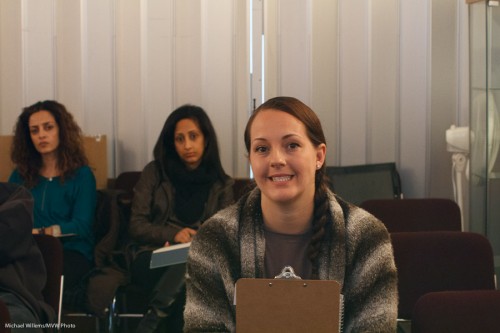
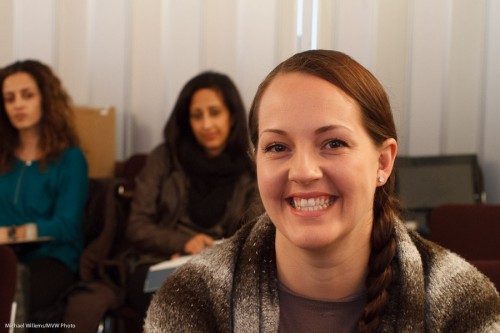
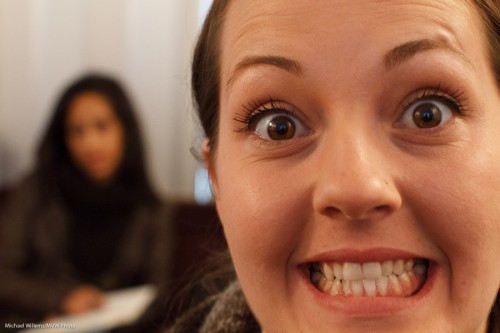
See how the background gets blurrier?
(The reason: in percentage terms it is getting farther away, i.e. related to the foreground, as a ratio).
So the lesson? When learning, change only one thing at a time and see what that does. (That is why a prime lens is better than a zoom lens).
Every photographer needs to learn the “exposure triangle” of ISO – Aperture – Shutter.
For a brighter picture you can do any of three things:
For a darker picture you can do the opposites:
Those are the only ways. Whatever mode you use, whatever compensation you use: these only use the mechanisms above.
So it is best to start off in manual mode, with auto ISO disabled. If you are not familiar with the above, start today: manual, auto ISO disabled, and go crazy. Try – and do not confuse exposure (“how bright an image is”) with colour, focus, or blur.
Note to students who lives close to the Niagara area: this year I am teaching a five-day class at Niagara School of Imaging: August 19-23. Details here:
http://niagaraschool.com/2012-courses/michael-willems-the-speedlighter/
There is still space, so sign up soon.
This I frequently repeat: your camera’s light meter assumes you are pointing it at a grey subject – grey in terms of brightness. The moment you point at a predominantly light or dark subject, you need to tell the camera that. By using “exposure compensation” (the +/1 control) if you are in an automatic mode, or by setting the meter to “not zero” when shooting manual.
Like in this shot of a car I bought for my son:
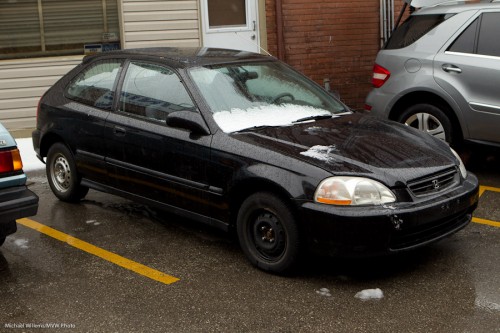
To get the black car I needed to set exposure to minus 1 stop (-1). Else the car would have looked grey, not black.
Beginner’s tip: you should want a blurred background to get rid of distractions.
To do this, go to aperture mode (A/Av) and select a low “f-number”). Here, I used f/2.8:
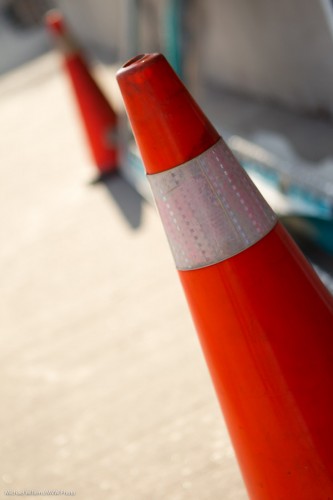
And just to show you what not to do, here I used f/8:
Can you see how much less the subject stands out in picture 2? A whole different picture.
To achieve the look in picture 1, you can also get closer and zoom in more. But you knew that, since you have been reading here for quite a while. Right?