A reader asks

A reader asks:

I need your device on buying a secondary speed light . I currently have the canon 430 Ex 3 RT  speedlite. I wish to purchase a second speedlite.  Should  I purchase the Canon flagship or should I buy a secondary 430 ? Are the 430’s more than enough for off camera work? Does it make sense to purchase a speedlite with more power? Any advice would be helpful ?

Well. “It depends”.

If your camera cannot use its pop-up flash to drive other flashes, then buy a 580/600, the flash that can be a “master”. The 430 can only be a “slave”.

Also, the 580/600 are more powerful. And they can rotate a full 360º, which is important when bouncing.

Or… you could do it all in manual mode with all remote flashes. using radio triggers like Pocketwizards. In that case, buy cheap flashes, like 430s or the even cheaper Yongnuo clones.

The choice is yours.

____

The Pro Flash Manual gives you more information: see http://learning.photography

Summer Savings…

Summer. Time to get your camera out and start becoming the pro you always wanted to be.

And if you have not done so, now is the time to purchase my e-books and start practicing your pro skills. Or to get some personal training, one-on-one, either in the same room or via the Internet, worldwide.

And there’s great news. To encourage you to do that, I have just created a temporary summer savings discount code. ANY purchase over $100 is 30% off. Only until the end of May, so hurry and order now. Go to http://learning.photography and upon checkout, enter discount code SUMMERSALE.

Enjoy!

Michael


You are your own worst enemy

I have said it many times.

  • Brides are their own worst enemy if they hire a $300 photographer.
  • Photogs are their own worst enemy if they include awful photos with the good.

Here’s an illustration of both points at once:

http://nextshark.com/singapore-worst-wedding-photos/

This is a meme now; google “singapore bad wedding photos” and recoil in horror…

Needles to say., a good wedding photographer a) does not take a significant number of bad photos like that, and b) does not share them if s/he does. (And c) does not do such an awful job editing). Bad flash! Bad composition! Bad moments! And Bad editing. Ouch, ouch, ouch.

You are as good as your worst photos.

___

Michael teaches photography to both beginners and pros. Flash and events are his specialties. See www.michaelwillems.ca and http://learning.photography


Drama.

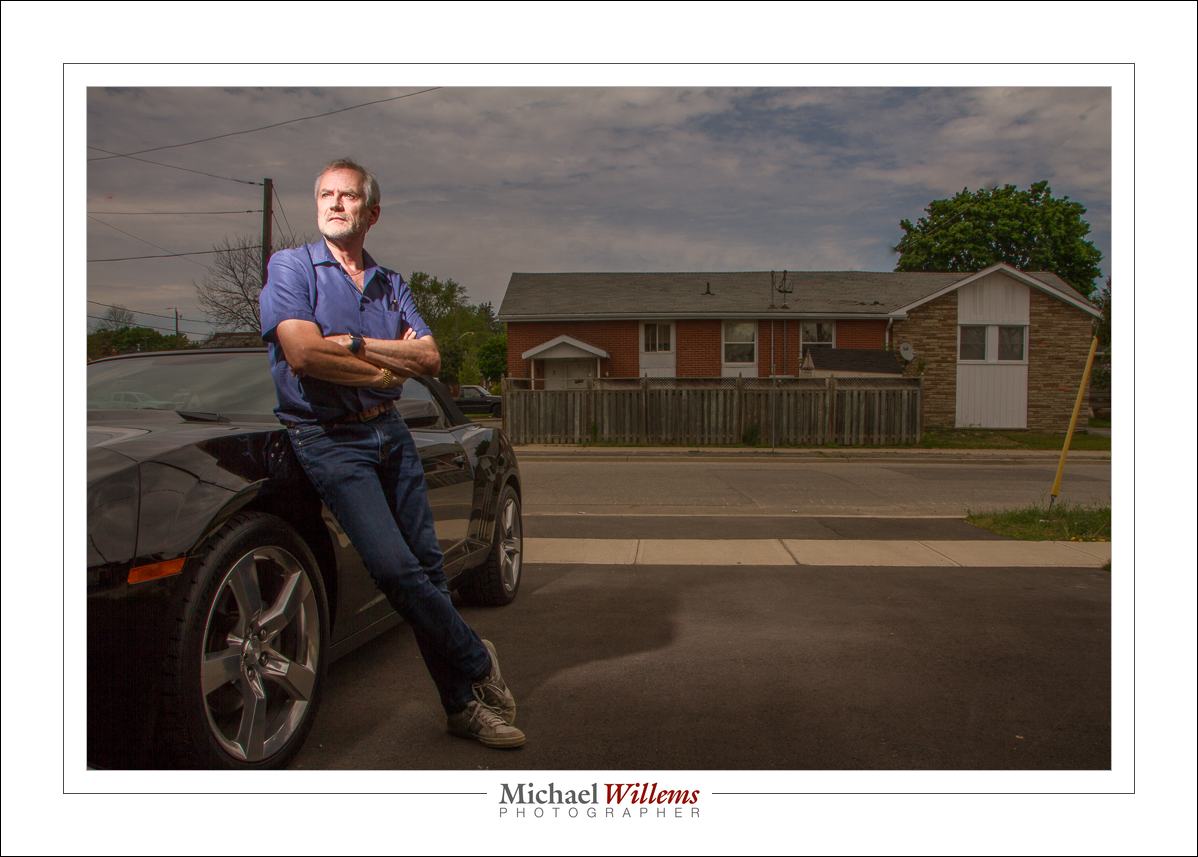
On a bright cloudy day today, I looked like this:

20160521-_MG_4795-1024

Wait. A bright day?

Yes, and that is the point of dramatic flash photos. I taught a workshop today, a hands on workshop, on the three basic modes of flash: “party”, “studio” and “outdoors”. This takes time, and “doing it” is the only way to learn. Today’s two students really learned.

Yes, in a few hours you can master flash. You still, of course, have to practice and refine, but you will do that yourself after the course. Contact me if you are interested in a private “Dutch Masters” course. A few hours and you are master: see http://learning.photography for more details.

In the mean time: one tip to my readers. If you want to be extra dramatic as in the image above, and it is bright, you need a lot of flash to “nuke the sun”. To achieve that, remove the modifiers (e.g. the softbox or umbrella) and use direct flash.

Just one of  the things you learn from me, my books, and my courses.


Workshop and then some

So tonight I did a great workshop in North Toronto. Great because the six participants were very enthusiastic and they really, really got it.  That’s how it goes when you:

  1. Hear it a second or third time
  2. Practice it yourself rather than just listen.

And that is what tonight was about.

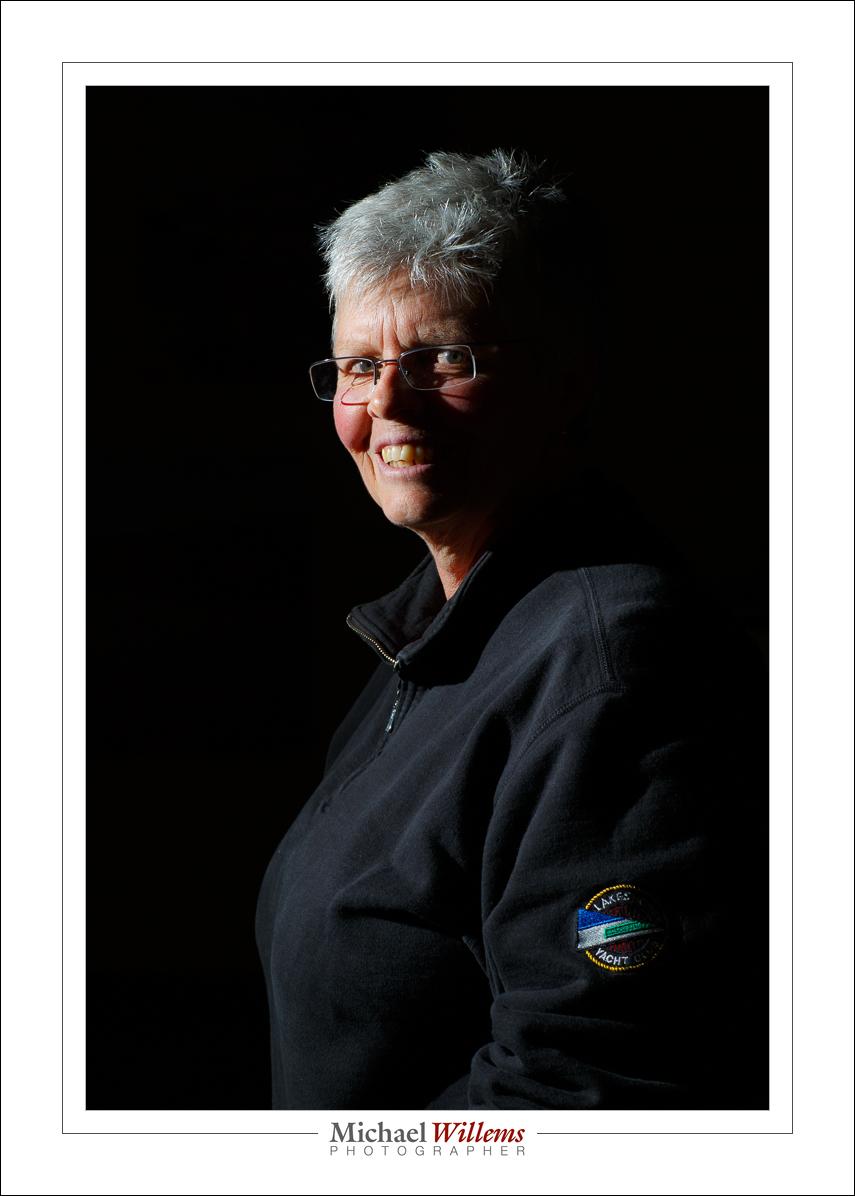
You can have a lot of fun with one flash. In this case, one flash with a grid. Off-camera and fired with Pocketwizards.

20160505-1DX_8142-1024

Two flashes, one with an umbrella on me, and one with a chocolate Honlphoto gel on the background, gives us yours sincerely:20160505-1DX_8145-1024

You like that? Then learn some flash techniques from me, any time. It’s all just technique, as Peter West once told me. True say!


Learning Flash: Two New Opportunities

A good knowledge of flash lighting is the key to artistic and other professional photography. Good news: I have two new opportunities for Flash learning!

image
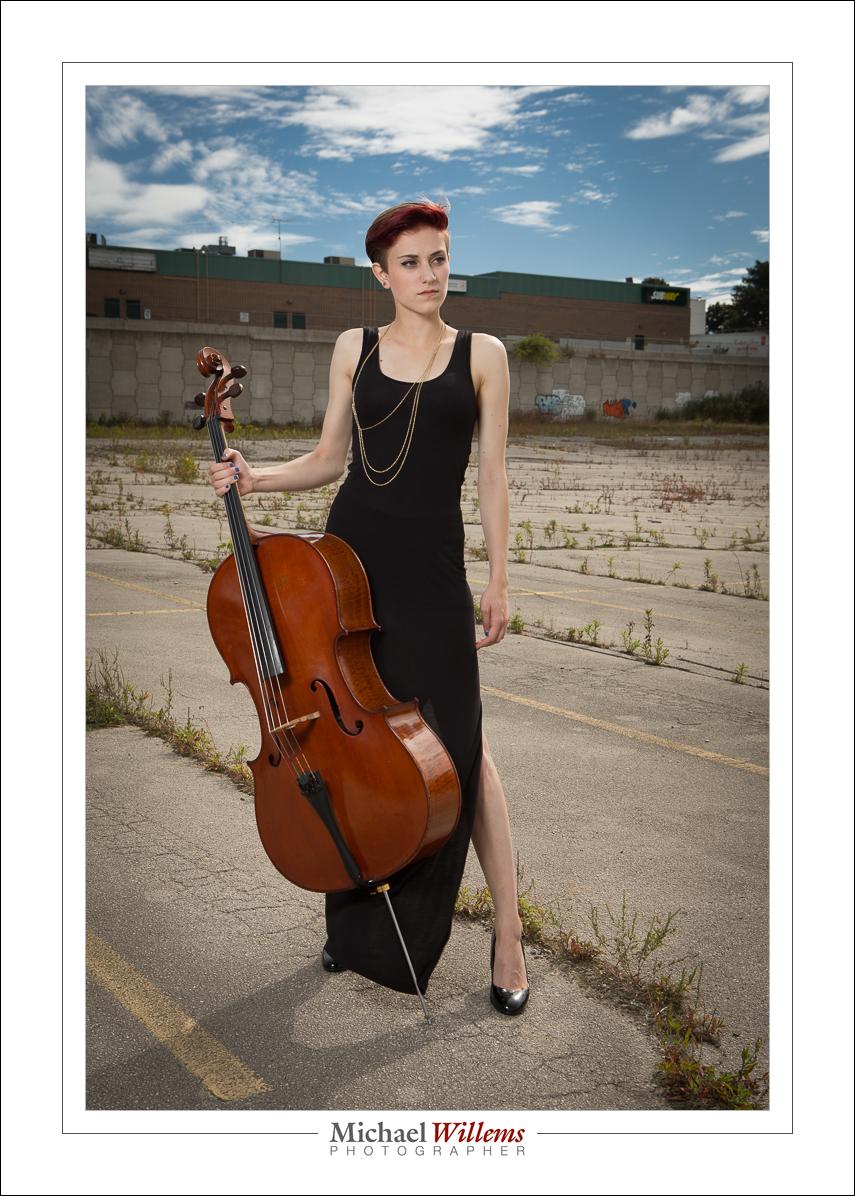
Outdoors flash: essential for artistic photos
 

Both of these hands-on courses will be held in (or as the case may be, outside of) my Brantford studio.

Sunday May 1, 11AM: Studio Shooting

Sunday May 22, 11AM: Mastering Outdoors Flash

Both have limited availability: 4 and 7 students maximum, respectively. So sign up, and meet you in Brantford, 20 minutes west of Hamilton.

RAW has space. Lightroom has attitude.

…and together, those two mean you need to do something sometimes.

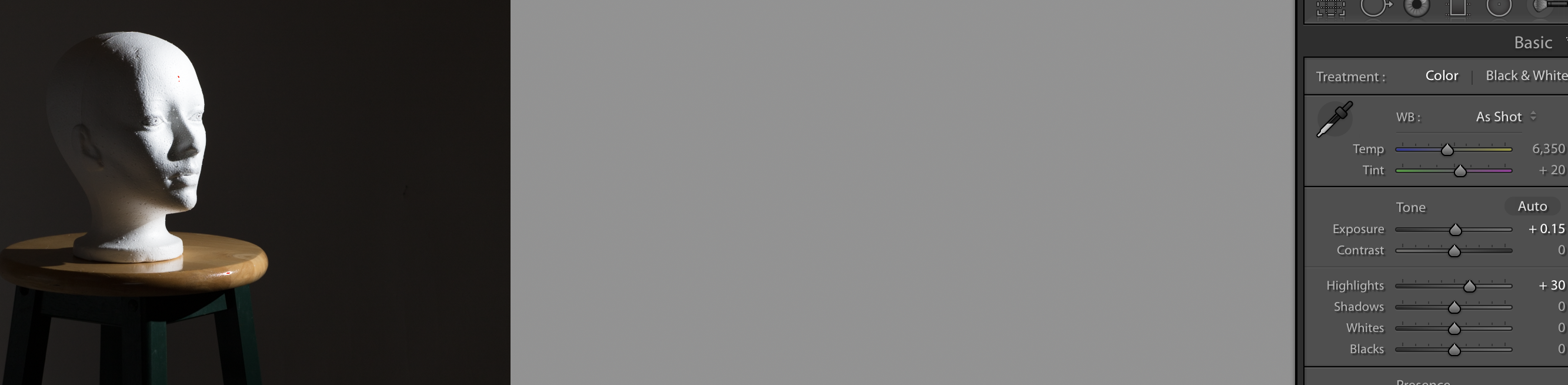
Here’s a studio shot from just now:
20160316-1DX_7009-1024

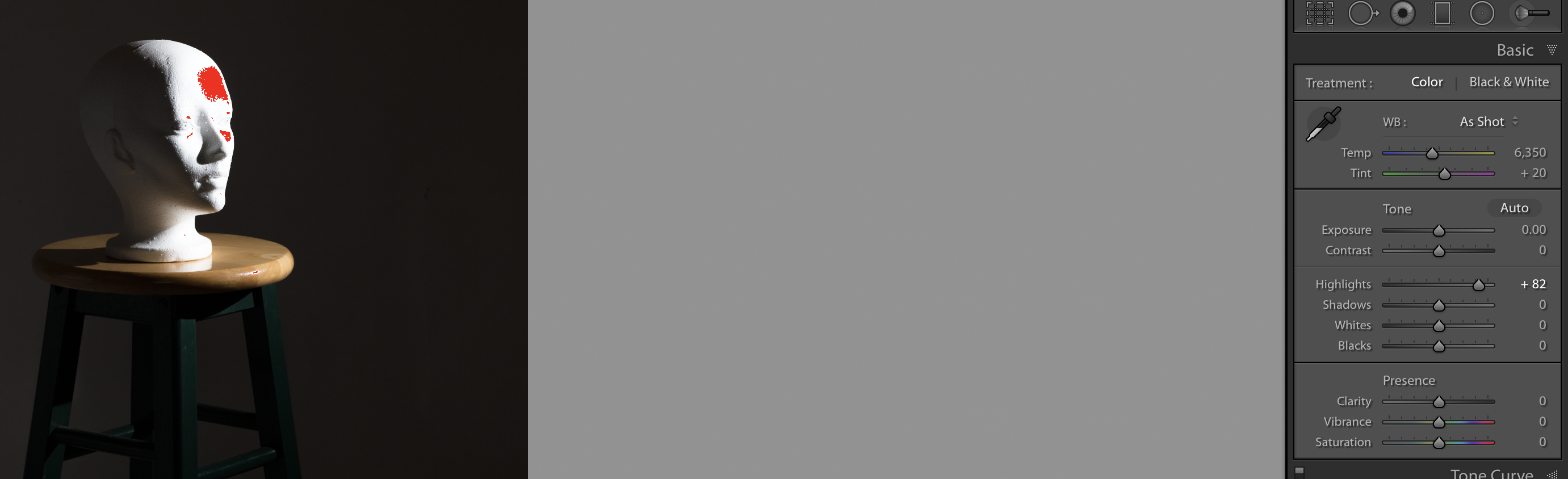
That’s fine. But it appears in Lightroom like this:

Screen Shot 2016-03-16 at 13.23.52

…it only begins to look overexposed when I move “Highlights” to +30! While on the back of the camera it looks much more overexposed.

In fact, I have to push “Highlights” to +80 (almost all the way to the right) in order to see what I am seeing on the back of the camera:

Screen Shot 2016-03-16 at 13.23.18

Why is this? Because of two phenomena that combine, in a sort of perfect storm:

  • A RAW image has a lot more space than a JPG. And what you see on the back of the camera is the built-in JPG preview that every RAW file contains.
  • In addition to this, Lightroom “protects” us. If you blow out a background, for example, Lightroom pulls back the brightness to make that background NOT overexposed, as long is there is any room at all in the RAW file.
  • So combining these: unless you make it really extreme, when you see blinking on your camera, you will get an image without overexposure on your computer. If you are “overexposing” by a stop on the camera, you will not even notice that on the computer.

That is all very well, unless you want to overexpose. Like in the case of a background that you want to have pure white. Lightroom thinks it knows bette rthan you do, and that, in my opinion, is not a good thing.

Fortunately you can fix it by the method I describe above, or by using the earlier 2010 Camera Calibration process (bottom right panel in the DEVELOP module). Just so you know.


This is one of the things we will talk about at my Lightroom/Computer seminar this Saturday.  There is still space: Sign up soon if you are interested: space is strictly limited.

e-books on Amazon/kindle now as well

NEW: My e-books are now all available from Amazon as Kindle e-books.

They are also still available direct from my e-store. So your convenience is what drives the decision as to whether you want Amazon/Kindle or Direct/PDF.  Direct is fine for computer literate people, while Kindle e-books are a very convenient way of “one click” ordering the books, as well as seeing previews and reading the books on a kindle or on an iPad or similar tablet using the free Kindle app.


PHOTOGRAPHY “COOKBOOK”, 2nd edition:

AVAILABLE EXCLUSIVELY FROM YOUR LOCAL AMAZON KINDLE STORE!

DIGITAL_BOOK_THUMBNAIL-3


PRO FLASH MANUAL, 3rd edition:

DIGITAL_BOOK_THUMBNAIL-1


MASTERING YOUR CAMERA, 2nd edition:

DIGITAL_BOOK_THUMBNAIL-2


IMPACTFUL TRAVEL PHOTOGRAPHY, 2nd edition:

DIGITAL_BOOK_THUMBNAIL-6


STUNNING LANDSCAPE PHOTOGRAPHY, 2nd edition:

DIGITAL_BOOK_THUMBNAIL-5


POWERFUL PORTRAIT PHOTOGRAPHY:

DIGITAL_BOOK_THUMBNAIL


PHOTOGRAPHY CHECKLISTS:

DIGITAL_BOOK_THUMBNAIL-4


There you have it. Your convenience drives the decision as to where you buy.


Truth—a beginner’s tip

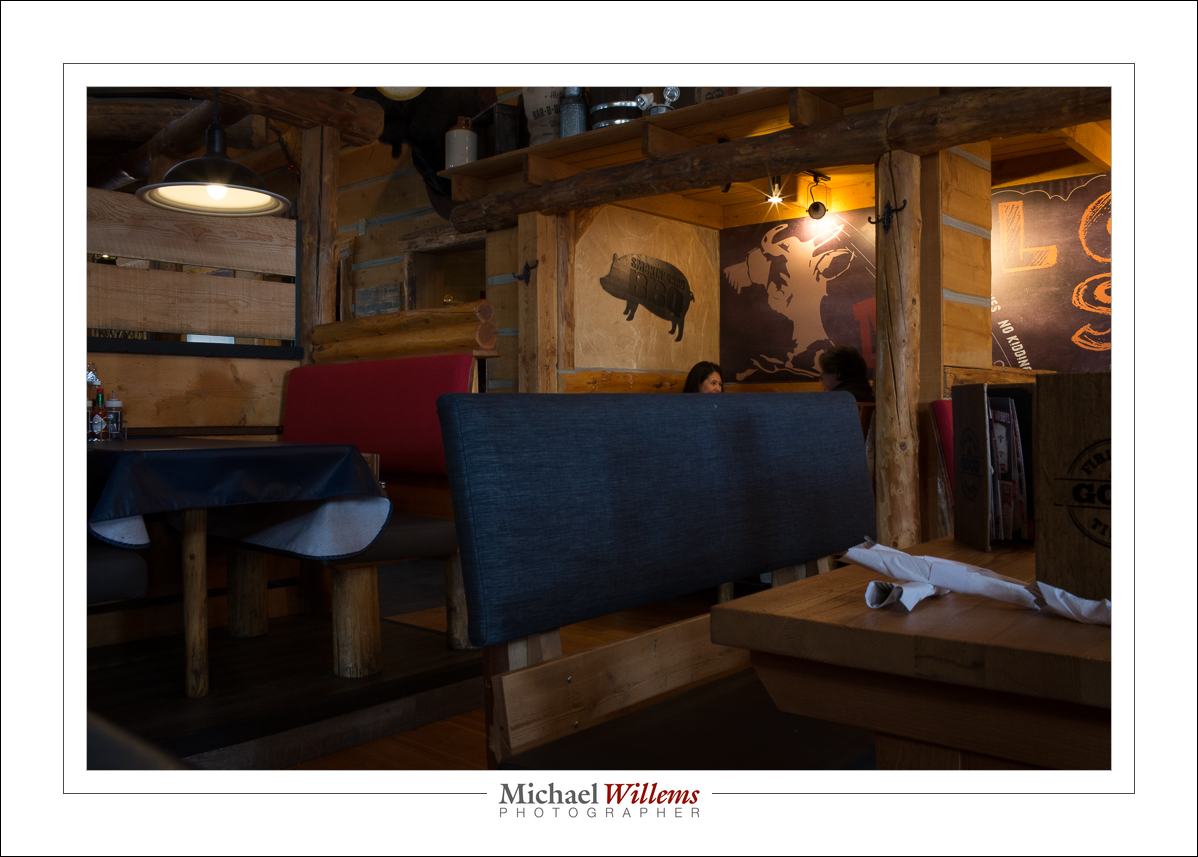
Theories are best tested. Like the theory of exposure. Which, as it turns out, actually works. Let me show you.

Think: You are filling a bucket. Your aperture is like a faucet. Your shutter speed is “how long do you told the bucket under the tap”. Together, the time and the stream of water fill the bucket.

So here’s f/22 at 1/4 second. A triple of water, so filling the bucket is a slow process:

20160223-1DX_6957-1024

That should be equivalent to:

  • f/16 at 1/8. We open the faucet, but reduce the time.
  • f/11 at 1/15. We open the faucet more, but reduce the time more as well.
  • f/8 at 1/30… and so on:
  • f/5.6 at 1/60
  • f/4 at 1/125
  • f/2.8 at 1/250
  • f/2 at 1/500
  • f/1.4 at 1/1000

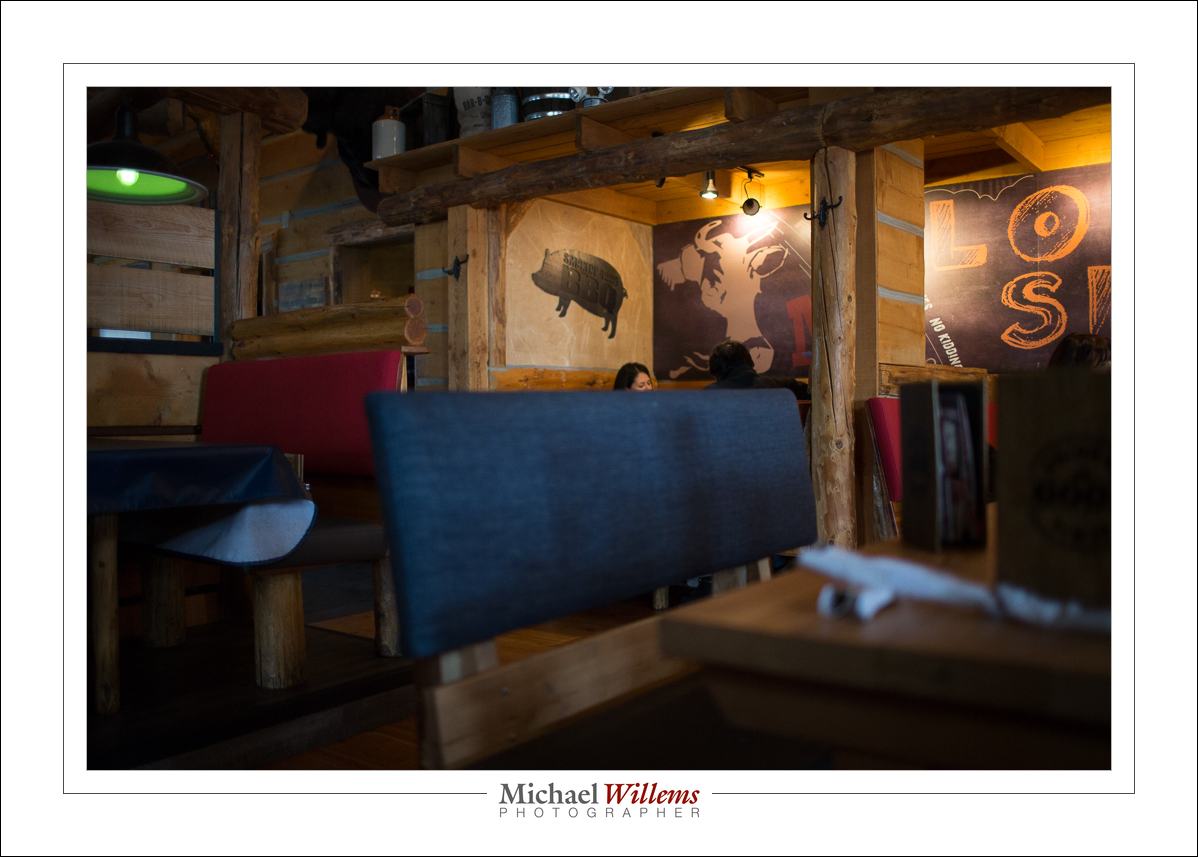
And indeed it is. Here’s f/1.4 at 1/1000:

20160223-1DX_6967-1024

You should be trying this stuff, not just reading this. We lean by doing. Muscle memory!

Bonus points:

How do I know the first one is f/22? Look at the star from the lamp top right. Star means small aperture (high f-number).

Why is the other lamp green in the fast shutter picture? Because it is a fluorescent light. It goes on and off, and changes colour, 60 times a second or more. A fast shutter speed will catch that. Your shots are all going to be a different colour/brightness.


Tip: Get my books at http://learning.photography. Amazing books which will have you actually understanding your camera and what to do with it, in record time. 
Flash…

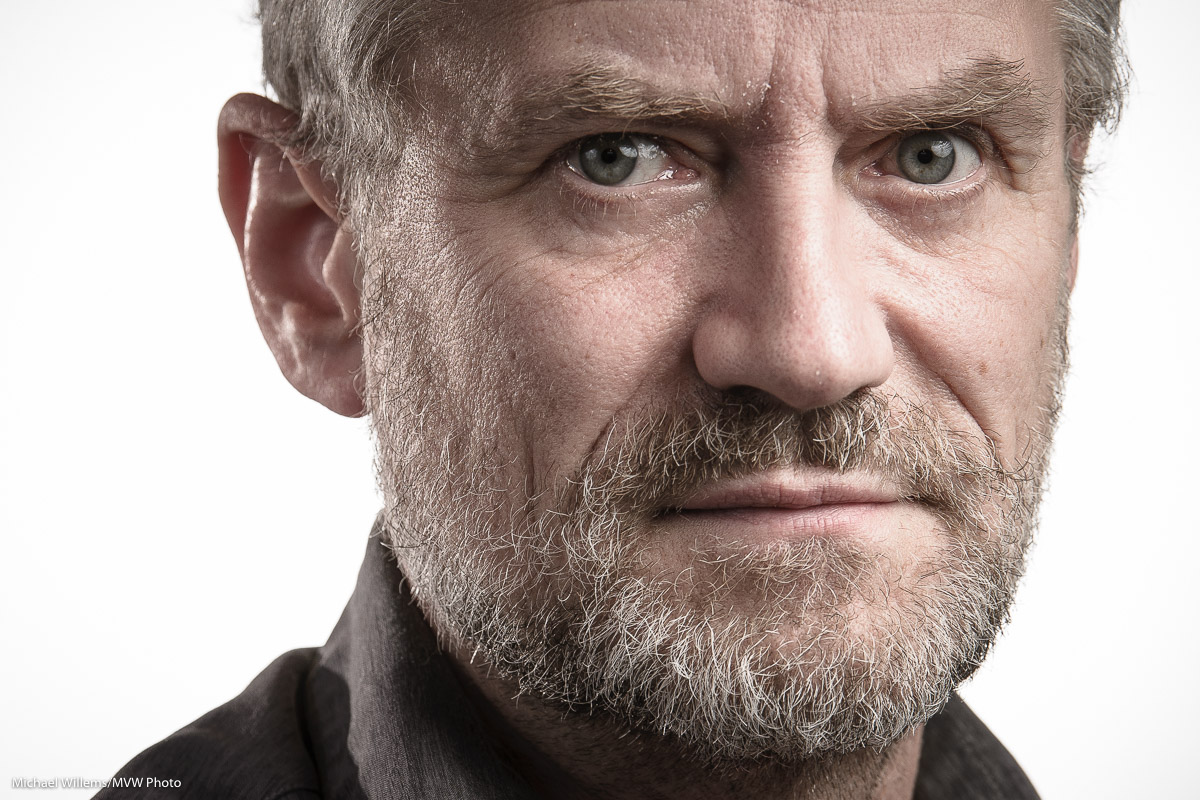
…I ran a Flash workshop today. All seven participants had a good time, and more, they all learned how to make a professional headshot like this:

20160305-1DX_7001-1200

That’s a standard headshot. Join me in my studio any time to learn how to do this, and much more!

And after you learn a standard portrait, you do more. And that includes things like this:

20160228-DSC_3947-1200-2

A portrait does not always have to include the subject’s entire head.

Zoom in (click on the picture) and see how much more personal that looks. See?

And the desaturated sharp look? A modern look that goes well for men. My “checklists” book (see http://learning.photography) contains the details of this Lightroom preset.