All you need is a little…

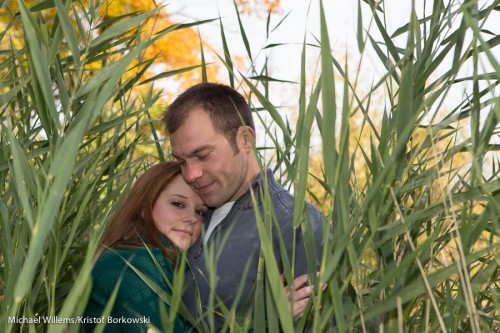
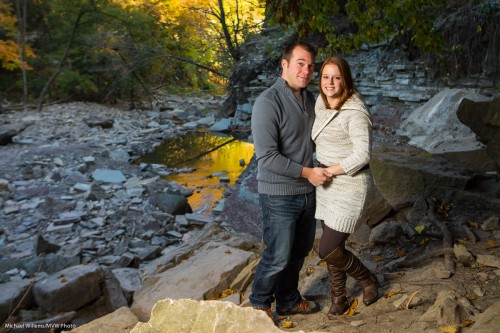
…a little flash, that is. Often, at least for the photo, that is enough, like in the image above. Here, colleague Kristof positioned the couple in the tall grass. But to get the shot, I needed a little flash to light up the couple – if I had used just ambient, the yellow fall colours behind them would have been lost. Direct flash is OK for this if you have to.

For this, since the flash is just adding a little fill light, you can use a Flash Exposure Compensation (Flash Exp Comp) setting of -1 to -2 stops.

Careful though:

  • Canon cameras using TTL will do this by themselves if they detect enough ambient light to “guess” that you are using fill flash.
  • On Nikon cameras, if you use Exp Comp, that also sets Flash Exp Comp.

Often, those small engineering decisions, largely undocumented, can make your life difficult.

Oh – and you also need a little love in life. Ask the happy couple above!


Portraits can be.. simple.

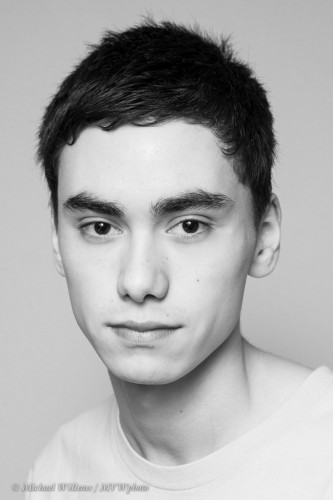
Take a studio portrait like this, of my son Daniel last night:

A studio shot.. but taken without a studio in, oh, one minute. Here’s how:

  1. Camera on manual; 1/125th sec, f/8.0, 400 ISO. (These settings are to ensure that the ambient light does nothing: it’s all flash. I could easily have used the usual 100 ISO, but I am using a speedlight, and want to ensure it has enough power).
  2. Speedlight on the camera, on TTL.
  3. Speedlight aimed 45 degrees up, 45 degrees behind me, to bounce off the ceiling.
  4. Subject positioned against an even light-coloured wall.
  5. Flash Exp. Comp. set to +1 stop.
  6. Tried various poses: right, left; shooting from above; from below.  Took several shots in each position. Watched for shadows and catchlights as well as for expression and shape of face.
  7. Picked one.
  8. Converted it to B/W in Lightroom.
  9. Increased orange a little in the conversion to smooth and lighten skin.
  10. Done! Exported as JPG.

That is how you use studio techniques even without a studio. It’s not the gear: it’s the knowledge.

___

This is what I teach – and teaching photography is what I do at least as well as doing photography. Contact me (michael@michaelwillems.ca) to hear more. To those of you in or around Mississauga: Basic and Advanced DSLR courses at Vistek tomorrow: sign up right now!


No direct flash

You have heard me say it many times: do not use direct flash (like your popup flash), especially when that direct flash is right on top of your camera (like your popup flash).

But what if you have no choice? Can you do it if you have to? Of course you can. The better the camera, the better. The better your control of that flash, the better. The farther the flash from the camera. And the better-looking the subject, the better.

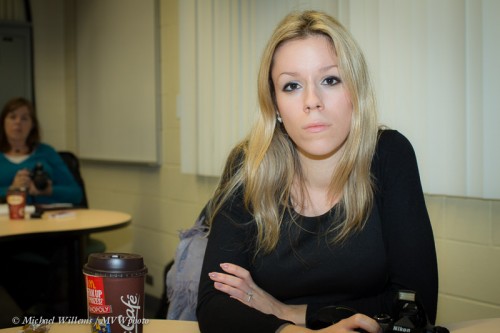
Here’s an example from my class on Monday at Sheridan College. An example of what I would normally not do: unmodified straight-on flash.

I would normally not do this. Shadows. Reflections. Catchlights in the centre of the eye instead of high, where they belong.

Now to be fair, I did have to slightly lower the reflections on her face, especially on the nose. But other than that slight adjusting, not much done, and so you see – if you must do it, you can. In fact for young women, straight light can work well – it makes skin look very smooth. So remember to take everything I say as a guideline. A serious guideline – but one you can break if you must.

One caution. TTL flash will often (depending on your flash, your camera and your lens) take into account where you focus, and will expose for that. So if you focus wrong, your picture will be exposed wrong. As in this example of what not to do:

See? I focused on the background, so the TTL system exposed for that background. Keep this in mind. (And with this in mind, can you work out why you should keep recomposing to a minimum also?)

It’s all very logical, really.


A Couple Of Composition Tips

A few things work very well in composing images. I shall reiterate a few of them here, using recent photos:

First, framing. It is often a good idea to frame the object you are shooting. Use overhanging trees. A window frame. Or get even more creative, like here:

Not that every frame leads to a good picture – but some do, so learn to spot them.

Another technique that we often like: use reflections. Like here, since water is often a good source.

What did I use in the picture above? Yes, my speedlight. On camera, and zoomed in to 125mm, even though the lens is wide. And as you see, I did not use the rule of thirds in the vertical sense: because I wanted to get the reflection in.

There there’s “close-far”. Use a wide lens and get close to something in order to show depth:

And one more picture just for fun:

That images uses the above, plus it uses the background in order to tell a story.

There’s more – like the use of colour, and simplifying. A bit of thinking goes a long way in composing your shots!


Engagement

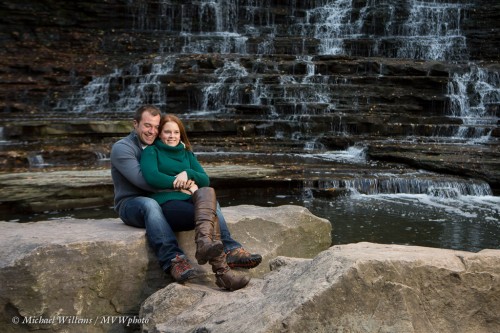
An engagement shoot, this morning. It was cold, but the young lovers, Kristen and Dan, aren’t showing it:

In a shoot like this, you may want to keep in mind a few things.

  • There is bright stuff – the sky and directly sunlit areas – and dark stuff – the rest. It is impossible to get both in a shot well exposed (unless, of course, you use flash to light up whatever darker areas are important to you. Like your subjects.).
  • The White Balance of both areas are different. Shady areas look very blue if you white balance for the sunny areas (or for your flash, which is equivalent).
  • You need to simplify. Take out annoying branches, cigarette butts, and so on.
  • Do not pose. Position, instead.
  • Spontaneity is good. But sometimes you need to direct. Take a detached view.
  • Use the Rule of Thirds.
  • You can shoot a little wide and then crop later, if you wish.
  • However nice the wide angle shots are, also shoot some close-ups. Or vice versa.

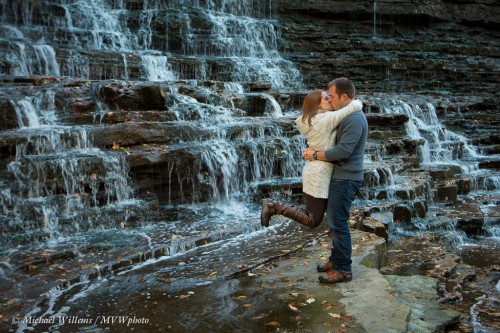
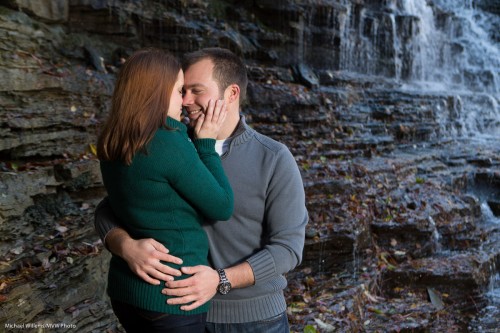
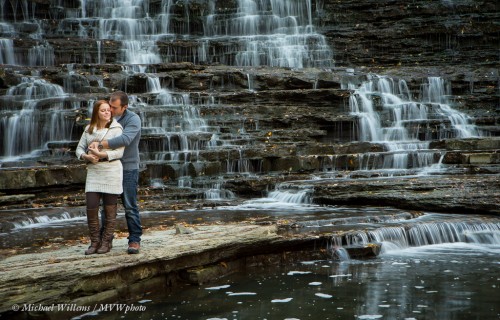
Here’s a couple more samples of this wonderful couple – with minimal adjustments made in post. It is good to shoot it in camera if you can.

Technical details: I shot with the camera on manual, set for the right background. For light, I used an off-camera flash on TTL (using light-driven remote TTL).

So what do I do for a shot like this, which needs slow shutter?

Tricky. To get the slow shutter, I need a small aperture. But that kills my flash power. So I compromise:

  • I use the flash with no modifier (which also steals light).
  • I manually zoom the flash in to 200mm. This concentrates the beam, leading to higher available power.
  • Then go to the smallest aperture that gives me acceptable flash output.

Note that “just use an ND filter” is the wrong answer. Unless you have lots and lots of flash power to get through that filter. Which brings me to my last suggestion: use multiple flashes. Each doubling of the number of flashes gives you an extra stop of flash power!

___

Michael teaches these techniques and many others. Contact him to see how he can help you through a course, some coaching, or through a number of other methods all designed to increase your state-of-the-art speedlighting knowledge quickly.


Challenging Shots

Some shots can be a little tricky. Like this one, from Sunday’s shoot:

Tricky why? Because the model is jumping, making it hard to focus.

The solution? You could try AF-C/AI-Servo, i.e. continuous focus. But often in these cases a better solution is this (and that is what I did): pre-focus, then hold that focus while he jumps. So I had the model stand where he would be when I take the shot; then focused there and held that focus while he moved back and jumped; then I shot when he was once again in the same place.

Why is he not blurry? Because he is substantially lit by the flash, which fires faster than 1/1000th second.

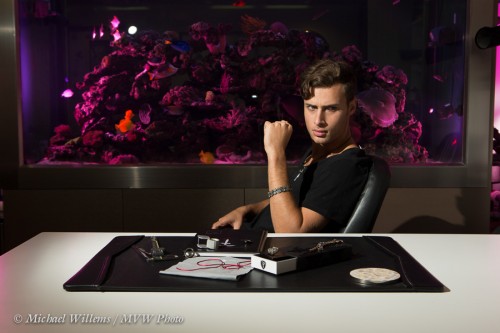
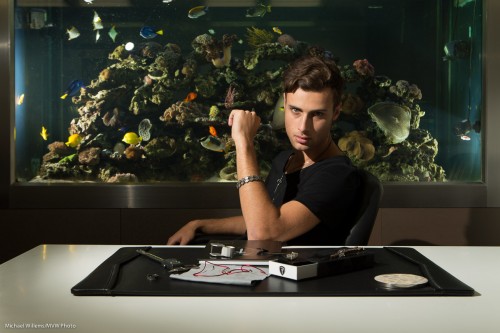
Another, different challenge was presented by this shot:

Why? Because the original plan was to light the aquarium in part from behind. But I was shooting TTL, and guess what? I found out on Sunday that the light-driven TTL does not work through an aquarium. Fancy that. You learn something new every day, even when you have been doing it forever.

The solution was to light it from the sides instead, after removing the aquarium side doors. Sometimes you just have to change your plans a little bit!

Enjoy your speedlighting, everyone. I am off to sleep – finally, at 3AM.

More from Sunday

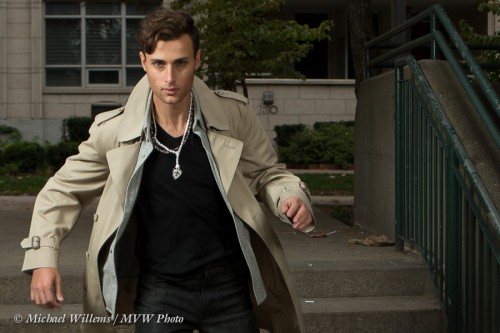
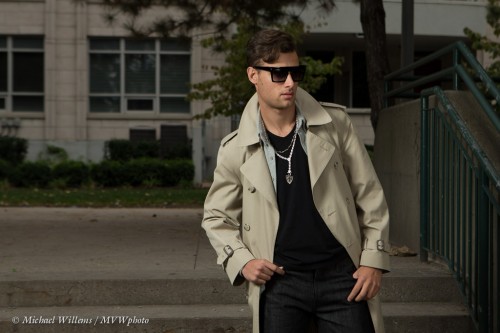
From Sunday’s shoot, here is another shot:

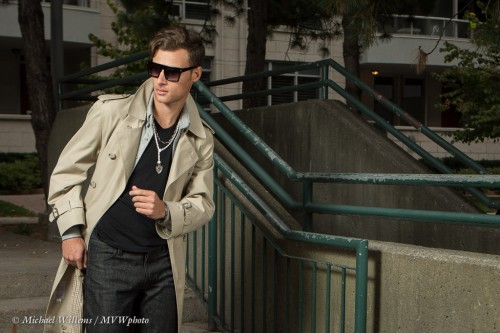
The scene was to be urban, so after we walked into the park I settled quickly on the concrete wall and stairs. Stairs are good; concrete is good; leading lines are good.

Now, a shot like this needs the same care and attention as the previously discussed shots. The same people – jewellery people, hair stylist, make-up artist, wardrobe people, model, assistant, and so on.

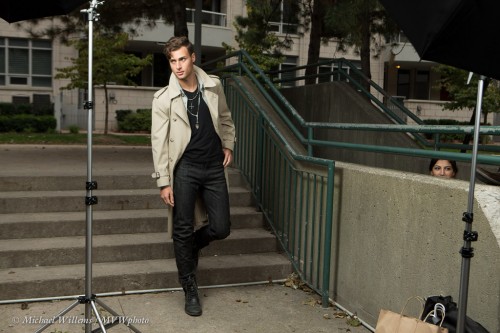
It was cold – very cold. So, fortunately, a shot like this can be done with relatively simple equipment. You can see some of it here:

Two umbrellas with speedlights, driven by one speedlight on my camera.

Of course that means line-of-sight is necessary (unless you can afford all radio-driven flashes). This needs some athletic moves on the part of the photographers.

Also, if you are using umbrellas, use sandbags or get someone to hold on to them: they will be blown over constantly.

The light, you say? Why flash outside?

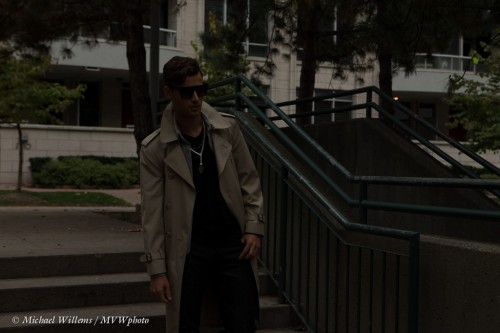
Here’s why. I want the background darker. The camera is on manual, of course: I used 200 ISO, 1/125th second. f/5.0. Look what happened when the flash did not fire:

Nice – for the background. And with flash that becomes:

So my subject is now the “bright pixels”. Remember Willems’s Dictum: Bright Pixels are Sharp Pixels. I lit with two flashes: one from the left at higher power, and one on our right at lower power (to get modelling in the face).

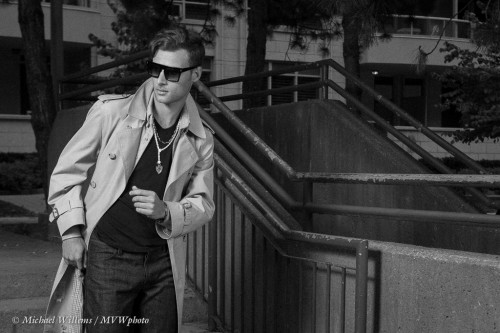
I like colour for these, but a black and white version with grain added can also work well. Compare these two versions:

Which one do you prefer?

The lesson here? Light is good. Speedlights rock. And photos take some thought. The final click is just the culmination of experience, people, preparation and thought.

And the good news: there is virtually no post work on these pictures. If you prepare well, you can often get results in the camera, not on the computer.


About A Shoot

Often, people who do not know photography think it is simple. Just press the button.

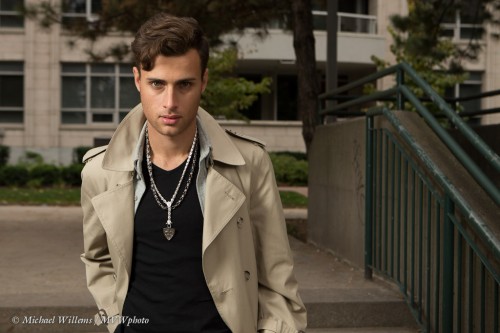
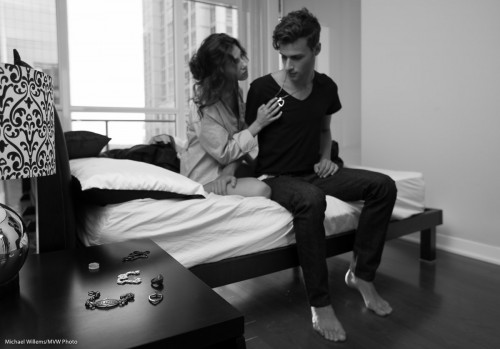
Alas, not so. Yesterday, I did a lifestyle/male jewellery shoot:

Not so. I didn’t – not alone. I was helped by another excellent photographer, my colleague and friend Kristof, but also by, among others:

  • Business owner and stand-in creative director.
  • His assistant
  • Male model
  • Female model
  • Clothing providers and coordinators (3)
  • Jewellery coordinator
  • Make-Up Artist
  • Hair Stylist
  • General assistant

In all, about 15 people were involved. And we took about eight hours to get what amounts to something like eight shots at three locations. Make-up and clothing can easily take as long as the shooting. And this was an awesome shoot: fun, and everyone worked exceedingly well together. Not always the case: here, it easily was.

As for the work: that is a lot – but it is not all. Those chosen shots are then finished meticulously. The post work takes as long as the shoot. Cropping, fixing, simplifying, adjusting perspective – all this takes time.

In technical terms of course it is not just the camera. It is the camera and lenses and lights – two off-camera speedlights in the shot above, and four, fitted with modifiers such as snoots and grids, in this shot:

So while the final click may only take 1/200th second, the preparing, packing, carrying many things from site to site, setting up, make-up, clothing, coordination, creative, post work, logistics, and so on take much work from many people. That is why photography takes time and costs money.

For these shots I used off-camera flash; manual flash with Pocketwizards for the first shot above. and TTL flash for the second shot. The camera was in manual. In the first shot, to give pretty good exposure – almost enough – using ambient; in the second, to give a totally dark room.


Welcome to new readers

Welcome to all my new readers. As you will see here, I am a Toronto-based full time photographer and teacher of photography – I teach my signature “Advanced Flash” and “Event Photography” seminars and courses worldwide and I do private coaching as well.

This site is free. All I ask is that you tell all your friends. I write an article here every day (yes, I must be a masochist) with a photography tip, a technique explained, or a technology clarified. Often about speedlighting -flash rocks once you know intimately how it works – but can be about everything. Aimed at every level from beginners to pros.

Speedlighting is my forte, and has been for years; but I engage in every type of photography. I shoot everything from news to art nudes to weddings to family pictures to food and product to corporate headshots. That keeps me as fresh as an amateur. “Amateur” is not a bad word by the way – it means someone who loves something. Amateurs have the best of all worlds in that there is no pressure and they can shoot what they like. As a photographer, I always try the same: to shoot what I like, and to keep it varied.

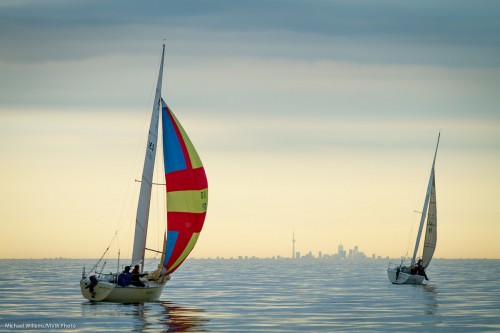
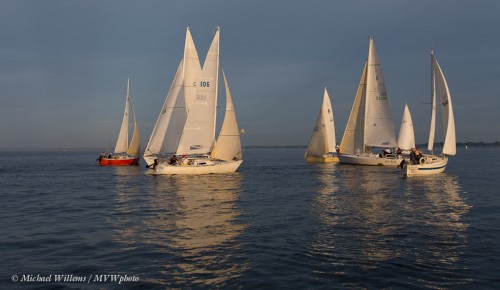
So today, then, a quick word or two about my recent Lake Ontario sailing pictures. Shot during the last three Wednesdays.

Pictures like this one:
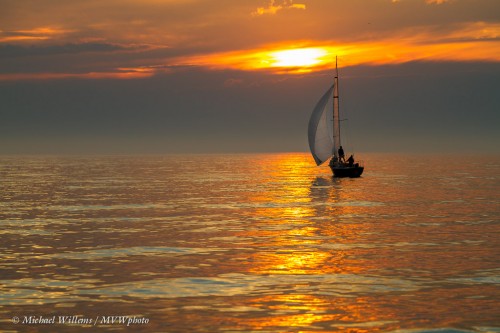
That used – unusually for me – a long (70-200mm) lens. And on a 1.6 crop camera, to make it 110-320mm.

Why? For two reasons:

  1. The obvious: boats can be far!l
  2. The less obvious: lake sunsets are often small, and the long lens ensures that I get “all of it”.
  3. The reflections are essential-  they too would be too small without the long lens.

Key is to keep the exposure time fast enough, even with a stabilized lens. Boats move!

Of course sometimes the sunset throws its light wider – then, the 16-35mm lens is called for:
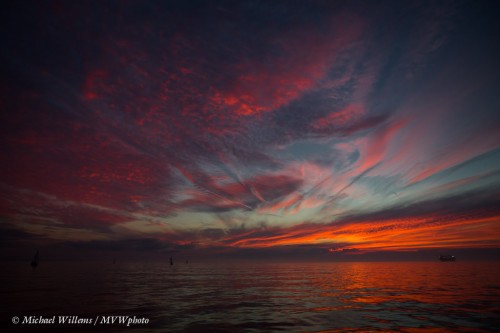
Now it’s not about the barely-visible boats, but all about the sky and reflection.

The key element in this image? Time. I had literally two minutes to capture that sky before it turned dull again. I was using two cameras: there was insufficient time for lens changes – plus, who wants to change lenses on the water?

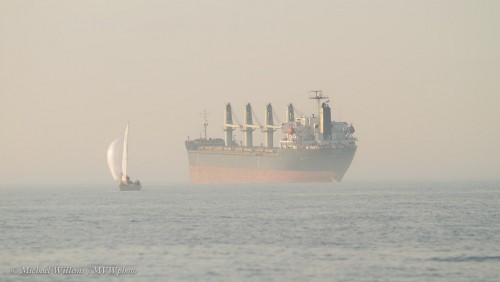
Fog is always good. Not every picture needs to be high contrast:
For crew pictures on a sail boat, a super wide lens is a must. The 16-35mm (on the full-frame 1Dx again) gives me this:
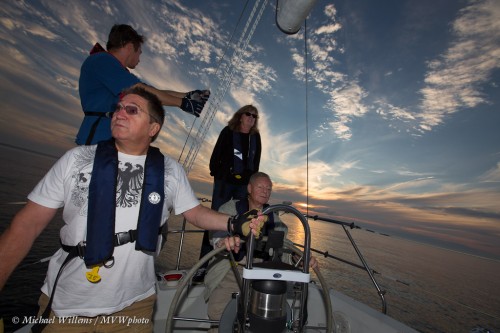
I tilted phe picture to give it a dynamic look, as well as to get everyone in. And you see the fill flash, of course? My flash is always on the camera when shooting, and is often used.

Do not forget to use the flash wide angle adapter when using the 16mm lens (that is the clear flap that pulls out of the front of the flash. As readers here know, that is not a “softening adapter” – it is merely a wide angle adapter!)

Going back to sunsets: sometimes, for a minute or so, they get spectacular like this:
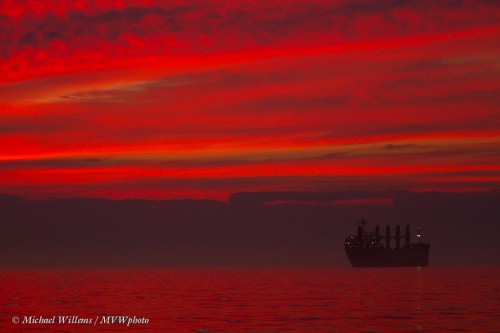
Important in that image is the long lens and good exposure. Making the image too bright makes it less saturated.

With a wide lens, skies and lakes can be great even when not lit up in red: the super wide lens (16mm on the full-frame camera) makes this all about the shape; the world bending in, wrapping around the centre.
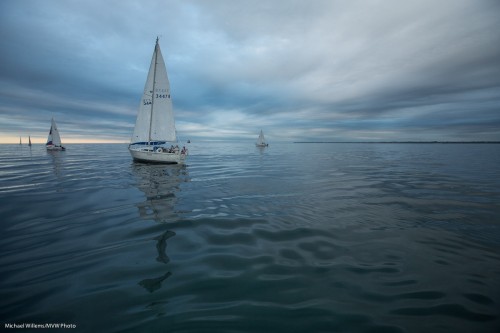
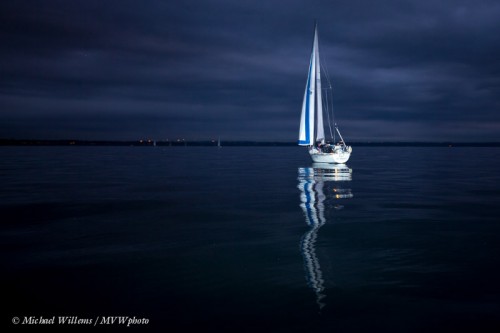
Finally, one more to show the effect of flash.
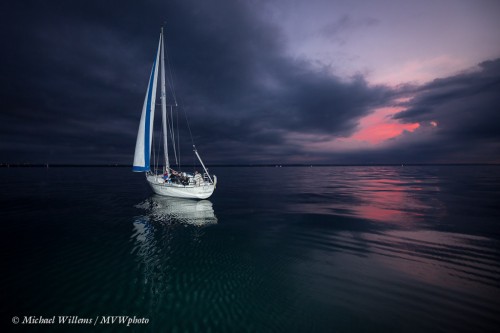
With tow notes:

  1. I exposed for a dark background.
  2. I then used the flash (a 600EX) to light the boat.
  3. I zoomed the flash in manually to 100mm to get the range I needed – if the flash had been sending its light as wide as the lens was looking (ca 24mm), most of its light would have been wasted and not enough would have been left to light the boat, even at f/4.0 at 400 ISO.
  4. I turned the flash slightly to the left, since my subject is not in the centre!

Now go enjoy sunsets and lakes while you can – on the Northern Hemisphere there’s little time left.