Portrait note

Two notes for you today.

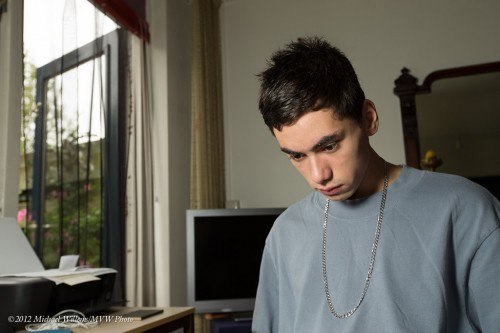
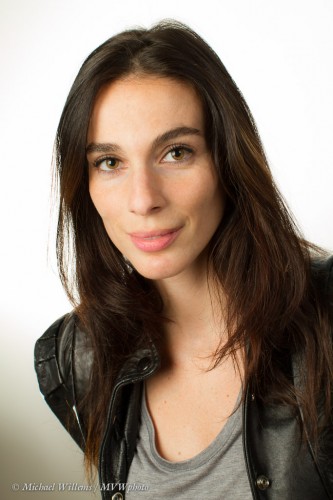
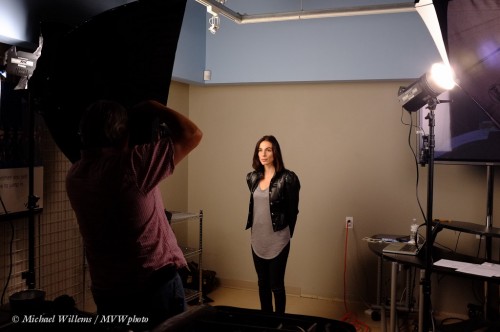
When you are doing a portrait, first, always at some stage take a pull-back shot. So when you shoot something like this (of a very beautiful student, as shot in the course I taught at Vistek last Saturday afternoon):
Shoot this also, so you remember how you did it:
Then the second note. The background. Think about what you want.

  • If you want a full white background, start white and blast it with light.
  • If however you want a saturated colour, do not overexpose: first ensure that little or no no light from the other flashes falls onto the background, then shoot it not too bright with gels.
  • Or if you want a nice falloff, like I often use, and as I used in the picture above, then merge the two. Start dark, light up in a selected area, perhaps using a close-by flash, if necessary with a grid. Sideways lighting gets you a parabola (remember your cone cuts in math).

We often forget to think about the background, concentrating instead on the foreground only. The background is a very important part of the image… think about what you want, then try to get that.
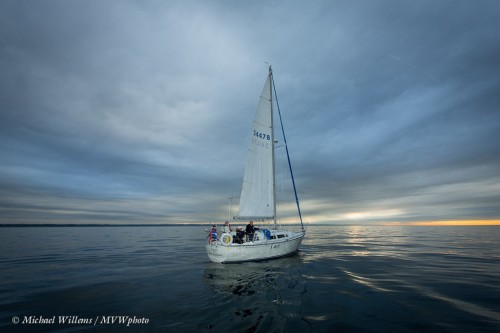


A-sailing….

The Dutch are a seafaring nation and I spent many days sailing, as a kid.

The last few weeks I have been lucky enough to go sailing with some very nice new friends. I am going to share a few of the photos I made last night.

First, for shots in the boat, and for shots showing “wide” landscapes use a wide angle lens. You get that “world wrapped around your subject” feeling, as in this shot of Lucy:

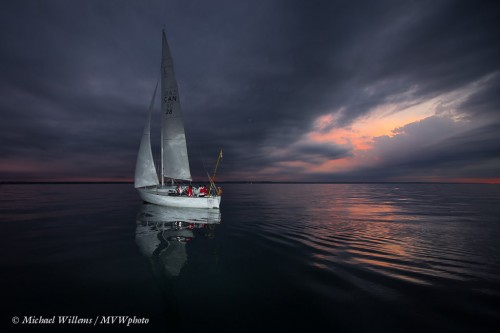
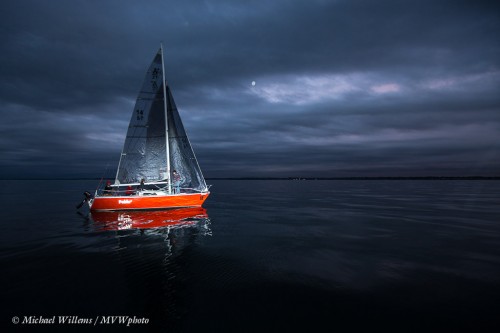
Can you see in the image above that The Speedlighter Strikes Again? if not, here is an even more clear example: I made the boat stand out like an almost ghostly apparition:

For that, I exposed the background dark, and use my flash, zoomed manually to 135mm, to light the boat.

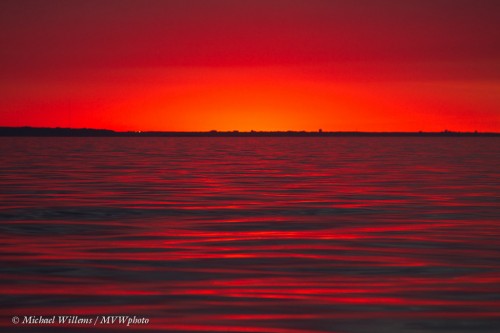
I also made sure I got enough setting sun:

As well as background objects of interest:

And the sunset itself. Sailing is great for photography becuase there is no foreground clutter!

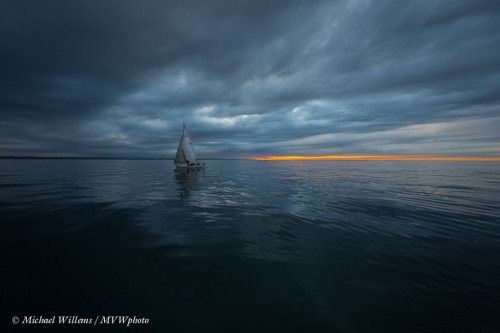
The skies were cloudy. I love clouds with wide angles.

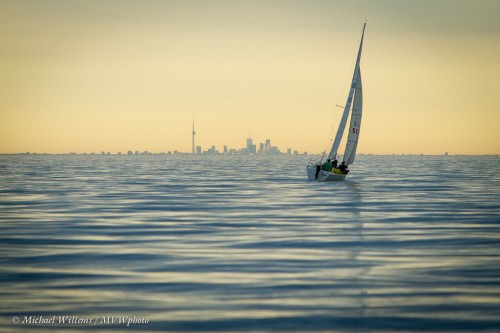
And as you saw in picture three, I also like the long view. Here’s Toronto again:

Lessons from the shott:

Hope for interesting skies. Expose the background well. I used manual mode for everything. Light up close objects with flash. Use wide angles but also bring a long telephoto lens.

I’ll share one more:

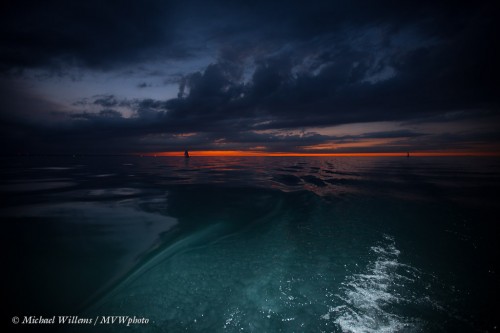
Tropics? Nope, Lake Ontario. Speedlighting rocks.


Scenes

Sometimes you tell a story by not making things clear.

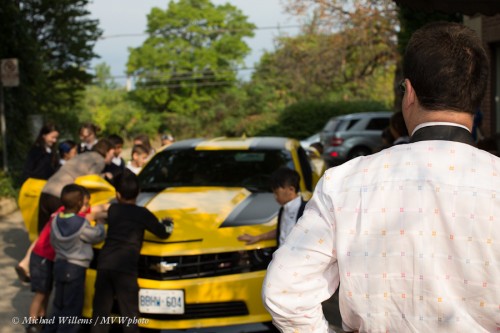
Like here, from yesterday morning, and what is happening:

Transformer Bumblebee visited Mississauga for three days, courtesy of GM and Dan Bodanis of the Dan Bodanis Band.

The kids lovingly admiring the car are emphasized not by them being sharp, but by the onlooker (that’s Dan) being large and sharp. Your eye goes where his are looking. Then you see the story.

I used a 50mm prime lens on the 1Dx – my 24-70 is in for repair (the moving lens element is loose). Manual mode, 200 ISO, 1/500th second at f/5.6, meaning I used high-speed flash for the fill flash.

Here’s Bumblebee again, still using the 50mm lens:

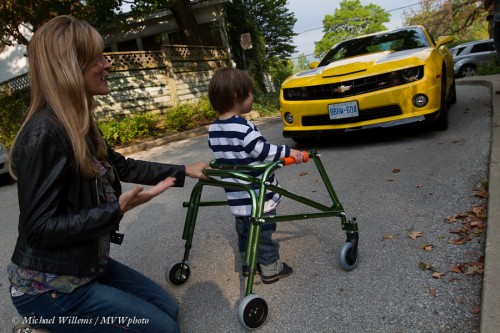
Wide angles give much more depth of field: f/5.6 again, showing Dan’s wife and son, and using the same storytelling technique:

So today’s lesson: ask what story you are telling, then decide how to tell that using foreground subject and background, and the interaction between them.


Exhibit still on

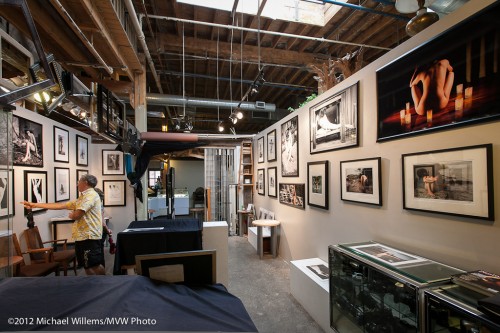
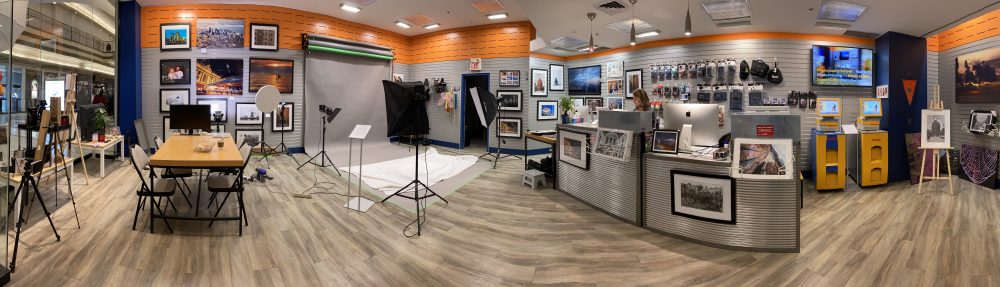
My exhibit “To Find A Muse” is still on at The Kodiak Gallery in the Distillery District in Toronto – Thursday will be the closing day.

Prints will be available via http://www.michaelsmuse.com as well. If you have not yet stopped by – do it in the next days, or especially on Thursday, between noon and 6pm.

Every photographer has subjects they like to shoot for art. For me these include black and white as well as colour art nudes. These are timeless, a pure artform, and yet they still look new in every era.

If you want to shoot nudes, I advise that:

  1. First you learn camera technique thoroughly.
  2. Then you learn flash.
  3. Then you learn to use colour and black and white.
  4. You learn how to print reliably and well.
  5. Then you learn how to shoot normal portraits of models. You learn both to direct and to take advice in posing.
  6. Then you get more creative at that.
  7. Then look at what other artists you like do. Are there things you would emulate? But perhaps in your own way? Can you? Look at paintings in museums: what do they do? Which do you like?
  8. Then you try some nudes – hire a model and see how you do. Do not expect great results yet: you are trying to see what works for you.
  9. Then you reiterate – do it again and again, constantly trying to be your own worst critic.
  10. This eventually leads to expertise and to you developing your own style. But you never stop developing.

It takes time to learn all the required skills: for nudes you need to be a good photographer with a lot of energy (it’s hard work), and then you need to develop a rapport with your model or models. And then – only then – you will develop your own style.

And of course this list applies to pretty much every type of photography. The only way you develop a style is by doing, again and again. So rather than read more here: go shoot something!

And – tomorrow I shall be back home from the Netherlands, where I taught a Flash course, and I will continue writing longer posts to help you in that.


September Weather

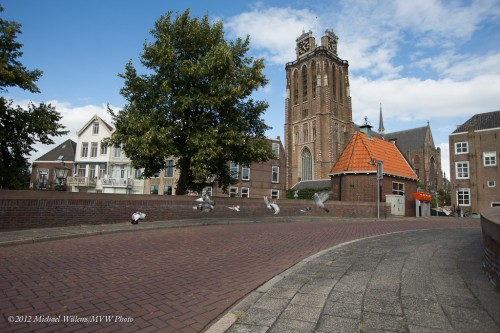
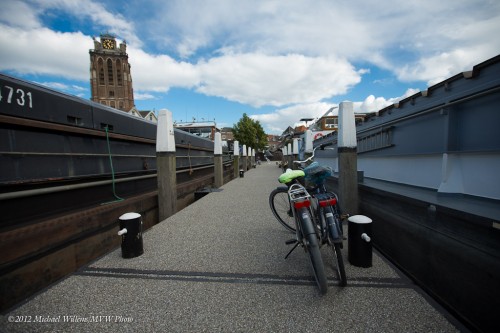
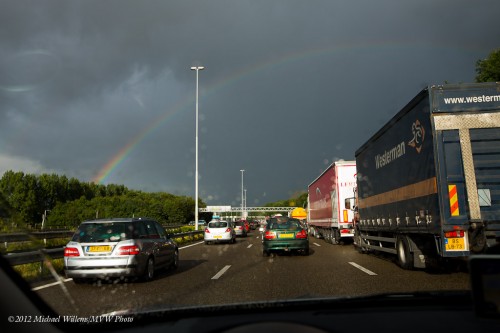
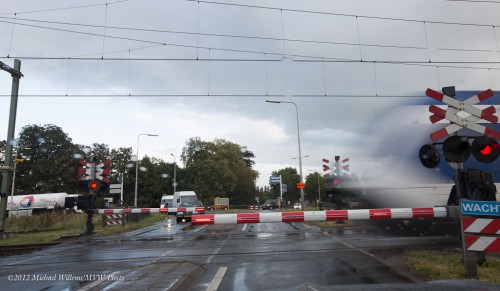
In The Netherlands the other day, I did a little walking around. Travel snaps. And in these, apart from good exposure, composition and stories, personally important stuff, and plenty of local flavour, I look at:

The right moment: Pigeons Take Flight:

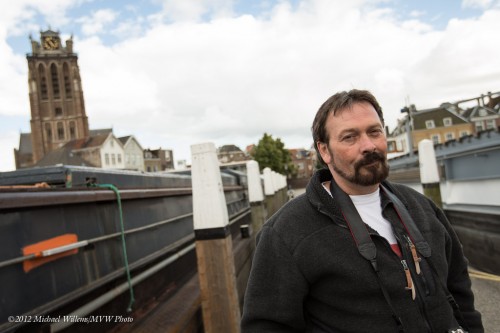
Symbols: Transport and church:

Colours: Rainbow and Traffic Jam:

Motion: The Intercity passes by:

People in their environment, like a friend on a short walk (tilted for composition and energy):

If you think of these themes, you will probably produce better work.

The shots above were all taken on a very short walk, as snapshots. This doesn’t have to be very complicated!


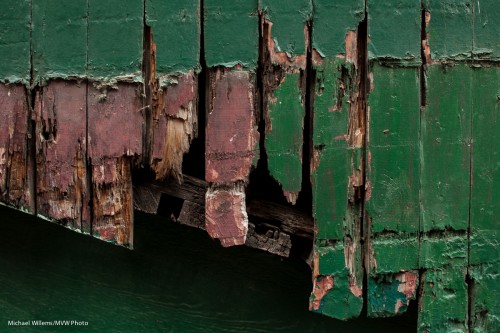
Looking for Textures

A shot from a shoot I did the other day for a magazine shows how important textures and patterns are:

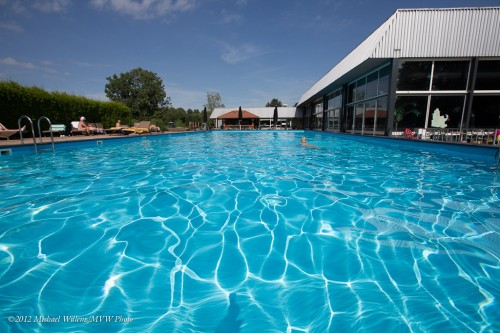
Without the wonderful sun/wave texture, the picture of such an uncharacteristically nice day for the Netherlands would have been rather boring.

We find textures and repeating patterns everywhere – when I am a travel photographer, I make a point of looking for them.

In this case:

  • I used the wide angle lens
  • I pointed it down to give me that feeling of being surrounded by the water.
  • I exposed carefully, down a little to get the saturated colours.
  • Using a wide lens allowed the entire picture to be in focus even at f/5.6.

The lens also served to make the people in the shot small and hence unrecognizable, which given that they are nude is probably a good thing.

You see that even for a picture like this, some thought goes into it. Ask yourself questions and you will come up with the answers!

Flash!

Here’s a flash with a small 8″ Honl softbox:

Sometimes, bouncing is not the solution. For a snap like this, you would:

  1. Decide on the desired brightness for the background
  2. Set your aperture, shutter and ISO accordingly
  3. Turn on your off-camera TTL flash
  4. Hold it “where the umbrella would be”
  5. Click.

The key here is to use an off-camera flash – even in a simple snap of your child, this would lead to a better simple snap.

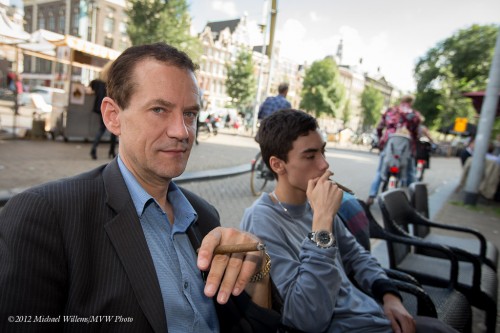
Here’s one with direct unmodified on-camera flash, of me and the same son smoking a cigar in Amsterdam (better than the alternative):

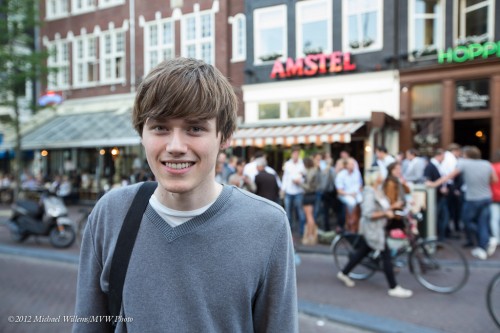
And sometimes you just use open shade only, as in this image of my other son in front of Café Hoppe in Amsterdam:

The important thing is to always think of light – “what do I need”.


Moment

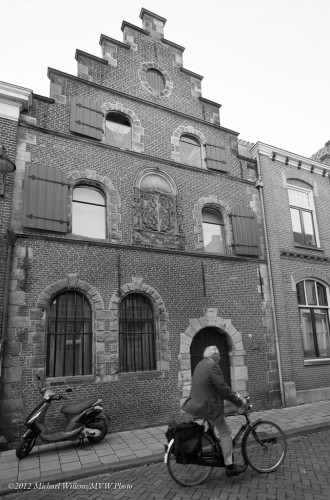
Can you see the decisive moment, in this shot of Schoonhoven’s corn storage house, designed hundreds of years ago to stop famines due to freezing corn?

Right. The man’s head in the arch. You need to pay attention to these details: moment is important.

Back to my expensive bandwidth.


Distillery

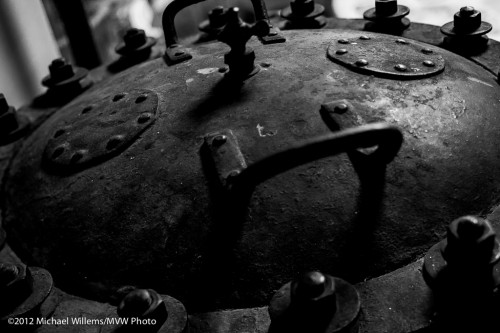
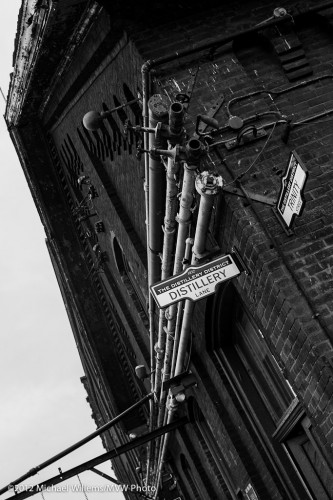
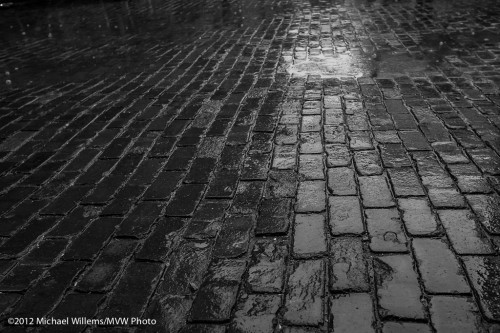
Today, a few more shots from The Distillery Historic District in Toronto. This time, decay, remnants.

I often find to helps me to think “what is my theme”, when I do urban photography. And as you can see, the theme for today’s pictures was “remnants”. The passing of time, if you will. This fits well with

  • Rain
  • Sombre black and white images.
  • Contrast (the shot with the pipes uses a blue filter effect).
  • Detail shots.
  • Lone items, no people.

When you have decided your theme, see what kind of photography would suit that theme: and things fall into place by themselves. Pretty much.