Colour

As you have seen in recent posts, I often do portraits in black and white. It’s just better that way in portraits: distractions (like colourful clothing) are removed.

But sometimes you have to recognize that colour is called for. Like in this shot of the same model:

Model Kim Gorenko (Photo: Michael Willems)

I mean, that screams colour, doesn’t it? When a shot has prominent colour like that, use that colour.

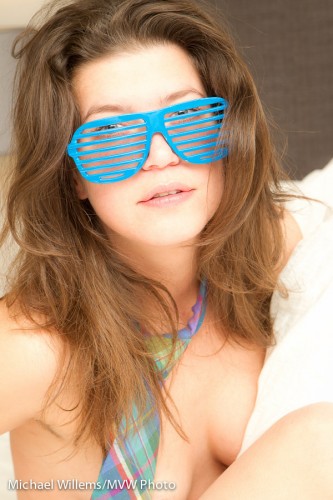
As does the following shot, because of the matching cool glasses and Ralph Lauren tie. If we did not use colour here, that match would be lost.

Model Kim Gorenko (Photo: Michael Willems)

That reminds me: Props are important.


Angle

A word about a very important aspect of people photography: angle.

When I make a portrait, one of my main tasks is to find the right angle. People have flattering angles, and less flattering angles. Angles that make them larger and angles that make them ssmaller. Angles that make them friendly, and angles that make them intimidating. My job is to find the very best angles.

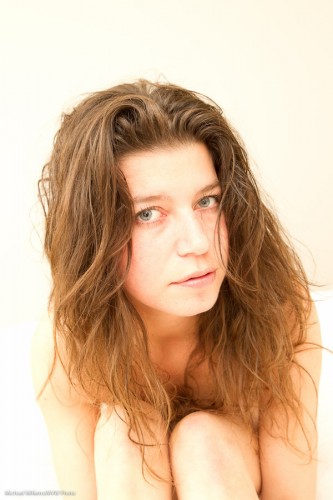
Like this angle, in a shoot a few days ago of model Kim:
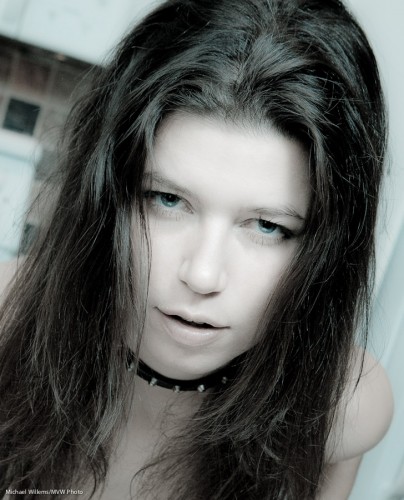
Kim Gorenko (Photo: Michael Willems)

And look at me, photographed on Wednesday by David Forster. Less beautiful, of course… but that makes it more of a challenge. First a neutral angle:
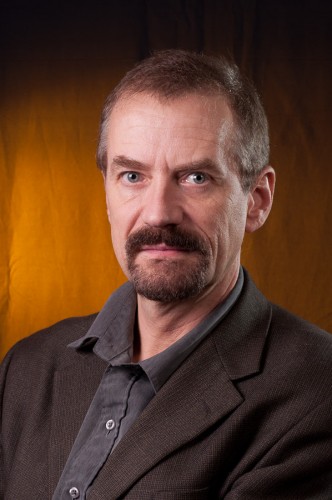
Michael Willems Portrait

Now, an angle from above, with the camera tilted a little:
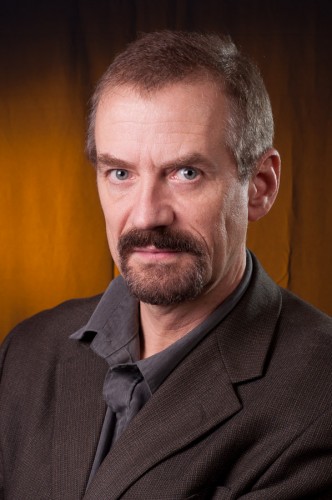
Michael Willems Portrait

See how different that looks? I like it much better – I look better when seen from a slightly higher viewpoint, it appears.

And finally, the first one of those two, but now tilted a little to the left in post-production:
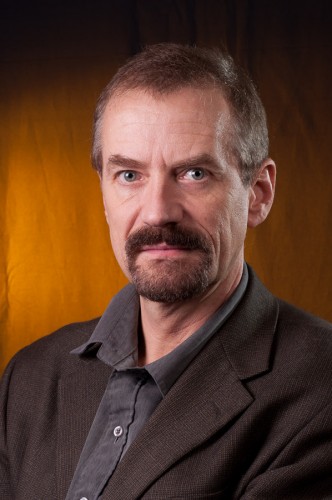
Michael Willems Portrait

Much better than the first one, no? Not like the second one, but better than the first one.

A little angle adjustment can make a huge difference and cause a huge improvement in your images. So – experiment with viewpoint, with person angle, and with camera angle.
 

Forbidden word

A forbidden word when doing portraits, especially of men: “SMILE!”.

I say that for two reasons. First, you do not necessarily need a smile in every portrait. Art portraits, glamour: fashion, personality: there are many categories that do not need (that actively should not have) smiles.

Secondly, people, especially men from age two upward, are usually not good at smiling on command.

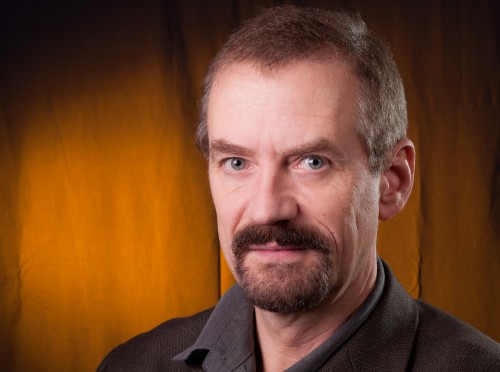
Here’s me, photographed the other day by student David Forster in his studio, using his D90:

Michael Willems

That is kind of a wry smile – and it certainly works, for me. If David had called out “smile” I would have looked much more awkward.

The lesson:

If you want smiles, make your subjects smile – do not tell them to smile.

The shot was lit with speedlights with Honl Photo modifiers: a grid for the background light, and a snoot for the hairlight. A softbox was used for the mainlight and an umbrella for the fill light.


Snaps with thought

It is important, when taking a snap of, say, a tourist destination, to think for a few seconds.

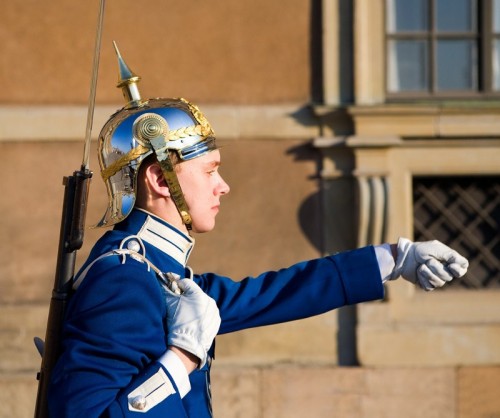
Take this image, of a guard at Stockholm’s Royal Palace:

Stockholm Palace Guard (Photo: Michael Willems)

A snapshot, but one I thought about for a bit.

  • I got close enough to fill the frame.
  • I ensured that I shot when the sun was lighting his face, not the back of his head.
  • I placed the palace he is guarding behind him, not the parking lot.
  • I blurred out that palace.
  • I used the “rule of thirds” in the composition.
  • I shot at the right moment, when his arm was outstretched.
  • I had started by looking for a guard who looked not unfriendly.
  • And I ensured the blue sky reflected in his helmet.

A little thinking makes your shot from a snapshot into a photograph. Just think of subject, context, background, light, and composition.


Post work or no post work?

A shoot from a shoot yesterday will help illustrate a point I am ambivalent about: whether to do post work that materially changes an image, or not.

The original shot is rough: lit with two speedlights, on one camera and one off camera:

So we do some minor skin adjustments (including a minor “clarity” decrease) and a somewhat major crop:

That crop is essential: simplify, simplify, simplify!

That is all the post work I normally do. It does not materially change the image. My rule of thumb: could I have done this with light? If so, no problem doing it in post.

Beautiful.

But in this rare case I want a very different look – so now I do a post action in Lightroom to make it look the way I want. Rare for me, but here it is:

Kim Gorenko (Photo: Michael Willems)

What do you think? Allowed in this rare case? Of course by definition you are allowed to do whatever you like – you are the creative artist – but I would counsel against doing too much.


Flare…..

….is bad.

Or is it?

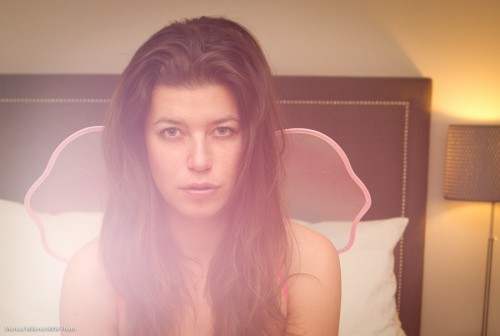
“Flare” is what happens when an incoming light source throws light into your lens – you are perhaps not using a lens hood, or you are using a filter (which can increase flare) and you have a close light source.  The picture loses contrast. Which is usually to be avoided.

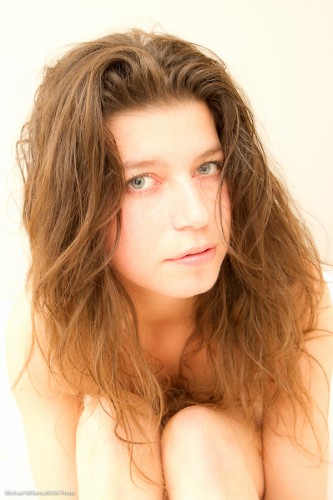
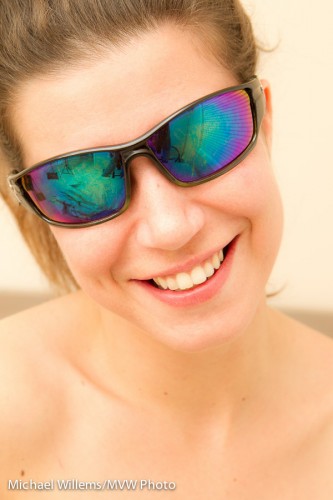
But sometimes you use deliberate flare for effect. Like in this image – the favourite of my model in today’s shoot (and that shoot explains why this post is so late):

Kim - Photo: Michael Willems

I like the flare in that – my model loves it.

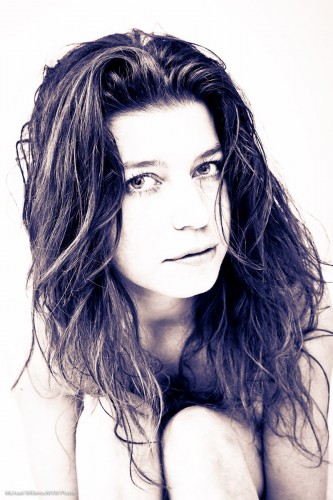
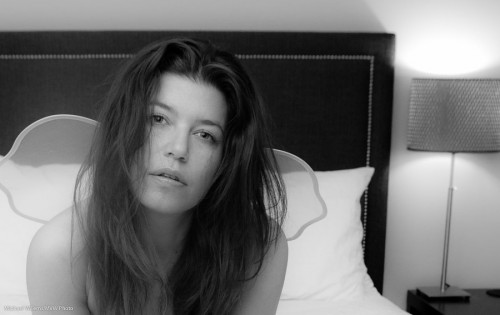
How would this look without flare? Maybe in B/W? Like this:

 Kim - Photo: Michael Willems

So – try to add a little flare in some pictures every now and then for effect. Just aim next to a strong light source.

(Incidentally, that light source here was an off-camera speedlight – I aimed it towards me.)


Travel Picture

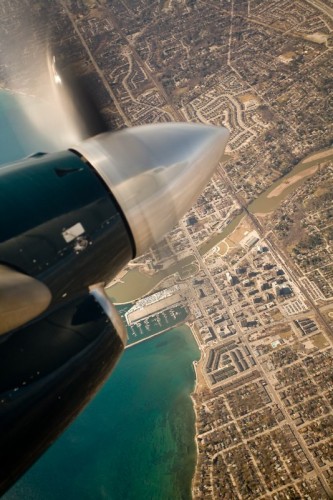
An oldie here. This is the marina at Port Credit, shot from an Air Canada aircraft about to land at YYZ (Toronto’s Lester B. Pearson airport):

Port Credit (Photo: Michael Willems)

How do you take such a picture?

Mainly by being ready.

  • My camera does not live in a bag – it lives underneath the seat in front of me.
  • I do not have a lens cap on the lens – but I do have a lens hood.
  • I do not turn the camera off, I just let it time out.

So when the aircraft turns, I grab my camera, set it to a wider angle in order to be immune from shake and to get extended depth of field. I do not want it too extended (window imperfections should be out of focus), and I do not want a very small aperture since that would lead to a slow shutter.

Then I get as close to the window as I can without actually touching it, and shoot. I check my work regularly, and if exposure needs adjustment, I adjust.

When the nice cabin attendant lady says “put that away, sir”, I put it away. Until she is gone. A camera will not endanger a plane (but I will put it away just before landing in case of a hard landing).

This image shows that it’s not over til it’s over. Keep your camera at hand at all times, and you will get some surprising shots.


Famous Favourites

Someone recently asked: Who is your favourite famous photographer?

That is a tough question – in fact one that is impossible to answer, a bit like asking “what is your favourite piece of music”. You are likely to have many. But I will mention just three of my many inspirations here.

Richard Avedon – fashion and portrait photographer who photographed everything from celebrities to ordinary people with a style that is recognizable and great.

Helmut Newton – German Australian fashion photographer, who shot a lot beautiful black and white (of course) of art nudes. Page here.

Nan Goldin – famous for “the ballad of sexual dependency” and other work, her work is in more museums than I have visited. Rough. New York. Not technical – she ois the least technical of all photographers here, shooting simple, in automatic mode much of the time I suspect. No matter: the images are great.

In deference to those of you in the USA and other places where the human body is considered bad and NSFW, it is after you click that I will show you a few sample images made by these greats.

Continue reading

Shadows

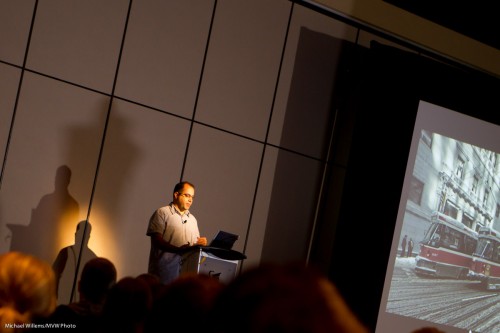
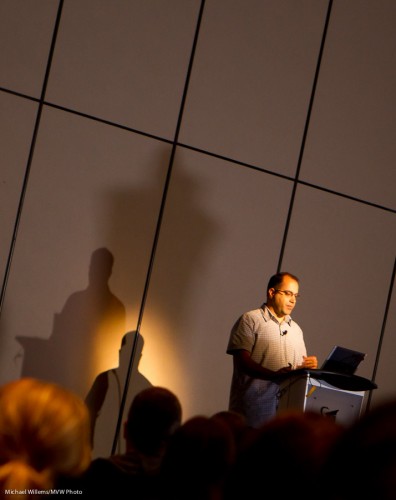
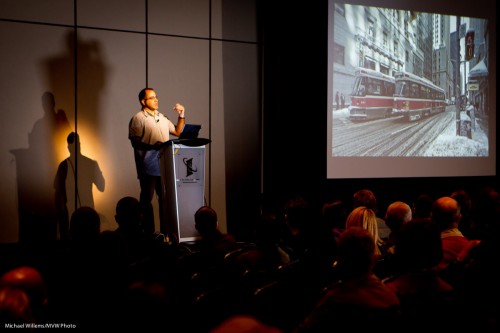
Love the shadows in the snap I took of fellow blogger Sam Javanrouh of topleftpixel:

Sam Javanrouh (Photo: Michael Willems)

We could have cropped this differently:

And we could shoot more. My favourite (and you need to click through several times to see it at large size):

Sam Javanrouh (Photo: Michael Willems)

My point: when you see great light and shadows, use them and shoot.

(Manual, 800 ISO, 1/50th second, f/2,8 with the 24-70mm lens in the 1D Mk4)


Happy New Year!

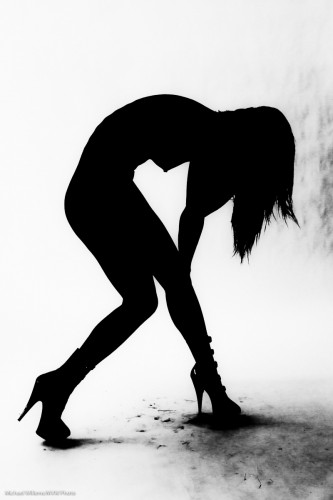
And may all your parties this year look like this, in silhouette:

Kassandra Love (Photo: Michael Willems)

A little teaching… to make an image like that, light the background well – then expose for it, while at the same time ensuring that little light falls on the model. Then do the rest in post – Lightroom will do fine. “Exposure, contrast, “blacks”, are the adjustments to play with.

Happy 2012!