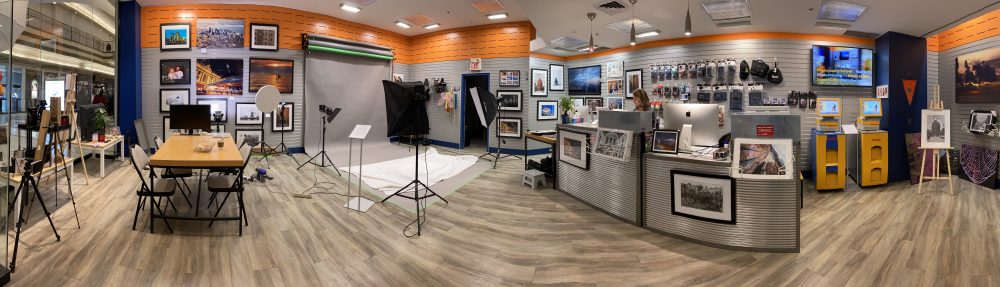
My shoot tonight

The second of two shoots: first I shot a politician,and then I shot lawyers. (No – with a camera).

I love shooting corporate events.

Glasses, ready for wine

Glasses, ready for wine

Food

Food.. aahh. excellent food

Veuve Cliquot

Veuve Cliquot

I get to shoot happy people and I even get to eat a snack or two. What’s not to like?

Tech: I used my 35mm prime lens on the 1Ds Mark II, and the 70-200 on the 1D Mark IV. Both cameras had a flash – aimed, of course, behind me.

Wide angles, and why?

I like wide angle lenses, as this shot, taken the other night at an event I was shooting, shows:

A wide angle shot

A wide angle shot

I used a bounced flash and set the camera to manual mode and opened up the aperture, slowed down the shutter, and increased ISO enough to allow the available light to d some work as well.

And wide angle means:

  1. I can focus easily on “everything”
  2. I can use a slow shutter speed without blur
  3. I can get close to someone or something, zoom out, and thus introduce depth.

And that is what I did there.

Regrets, I've had a few…

…but then again, too few to mention. Except one, at the show: namely, that I don’t get to see the actual exhibition. I’m always presenting!

Michael Willems presenting, shot by Ray of RPW Photo

That said: I love the work.What could be better than educating thousands of people in a hobby (or profession) that is exciting, creative, fun, and extremely rewarding in almost every sense?

Those of you new to the blog: a few important tips.

  • Sign up for emails (on the right) so that you get an email every time I post. I write at least one learning post every day.
  • Search, using the search field
  • Go back – this blog is almost like a book: a post of a year ago is still entirely valid today!
  • Use the category cloud to search for key words.
  • Ask me questions – I’ll answer them on the blog!

And above all.. go shoot some nice pictures.. shoot a lot. And never stop learning.

Pic of the day

And how would you like to take pics like this, shot about an hour or two ago on my way back home from day one of the excellent Henry’s Digital Imaging Show:

Oakville.com party in Oakville

Oakville.com party in Oakville

How did I shoot this:

  • A Canon 1D Mark IV camera with a 16-35mm f/2.8 lens
  • The lens set to 16m (equals a “real” 22mm)
  • A flash on the camera set to -1 stop flash compensation
  • The camera set to -2 stops on the meter in manual (1/30th sec at f/4 if I recall correctly)
  • A Honl Photo half CTO gel on the flash
  • White balance set to “flash”

That’s how it’s done. Come to my courses and I’ll explain more!

Manual redux

When do you shoot manual – remember that question?

One example of a case: when the light is constant (cloudy day), and when you need to shoot things that vary in brightness, and some of which are dark or bright, like monument and people in black uniforms.

Navy Commemoration

A solemn moment at a Burlington, Ont. Navy Commemoration Service

In other words, like in the shoot I did for The Burlington Post Sunday.

See  yesterday: you would have to change exposure all the time by varying exposure compensation constantly. “manual” means I can concentrate on what to shoot, not on technical details.

Snapshot of the day

And I mean snapshot: shot the other day while I was a passenger on The Danforth, getting some quick and excellent Greek food:

Danforth at night

The Danforth at night

The wide lens (16mm on a 1Ds MkIII) works well, and the warm street light makes the sky look extra blue, and it was dark enough to match nicely, so the sky looks rather threatening.Yes I know, I can see windscreen reflections – that’s why it is a snapshot.

Off-camera flash kept simple

Sometimes it can be simple: off-camera flash can be really easy. Like in this student’s recent portrait:

Off-camera flash portrait

Off-camera flash portrait

You can also see how nice the splash of colour is in the background, right?

A matter of choosing manual mode with just the right combination of aperture and shutter speed and ISO to get enough light into the background. And Flash White Balance makes the tungsten light look nice and orange.

My message today: although flash can be done in a very sophisticated manner, it is not always necessary to make it complicated. Often, very simple is all you need. “Off camera” is often enough to just make it work. And an off-camera flash cable, while not cheap, is the simplest way to achieve this.