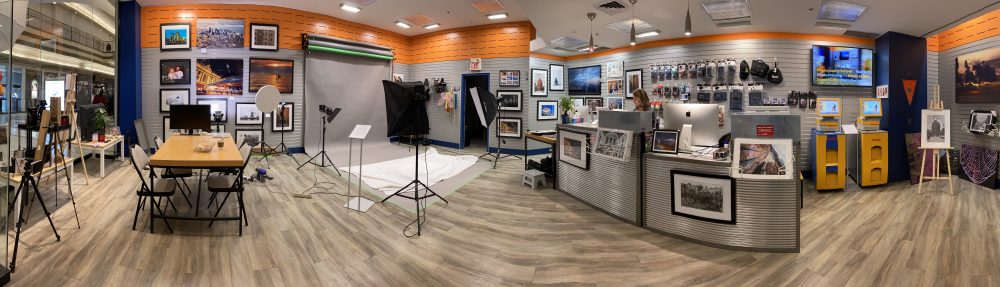
Picture more

Today, a simple tip for you all: take more pictures. Pictures document your life and the lives of those around you, and this is of course well worth doing.

Look at this link (click): people in old snapshots, and then in the same picture, shot the same way, many years later (compliments to the modern photographers for making their image quality as bad as in the originals, which is quite a feat). Talk about time. Meant to be funny, but in fact profoundly interesting, even moving. You owe it to yourself to document your life.

And not just the big things. Little things. Like the drive to work.
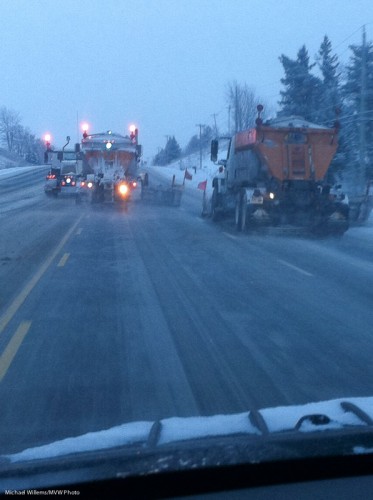
Or the drive into the city.
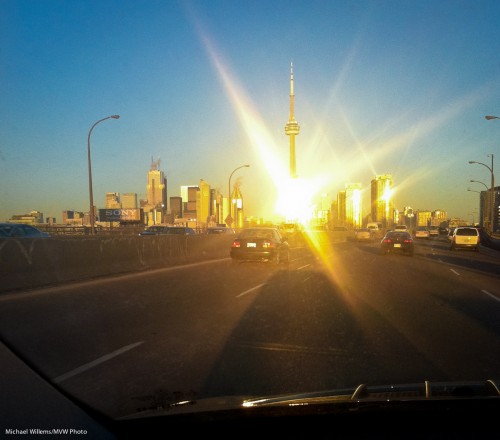
Or dinner.
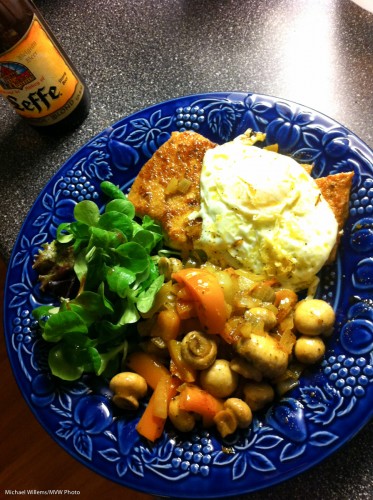
Or even the sauce that is about to become dinner.
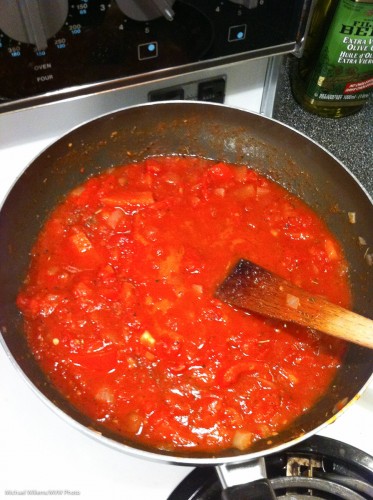
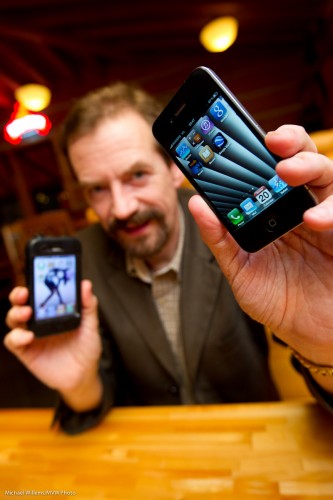
You will of course have noticed that all these are recent iPhone pictures. The best camera is, as the saying has it, the camera you have with you.

A few tips on iPhone photography:

  • You can focus where you like, by clicking on the screen in the desired area prior to taking the picture
  • When you do this, the iPhone also exposes for that area. So a normal snow pic will be too dark, but if you focus on your car’s dark dashboard, the picture will be well exposed.
  • You cannot zoom (except electronically, which ,means cropping – do that in Lightroom instead). So instead of zooming, do a lot of diagonal images to compose. That allows you to get close and get a lot in. Trust me, tilted images are OK.
  • An iPhone includes the GPS coordinates automatically with every picture.

So my advice: do carry your iPhone and do occasionally take pictures – and do look at those as a chronicle of your life.
Judge not, that ye, etc

Actually I especially like judging. I spent tonight judging photos for a contest at the University of Toronto’s Rotman School of Business.

Invited to do so with three other photographers, I judged 200 images – we quickly narrowed it down to 20, and ranked those.

This job was remarkably easy, because so many people make very basic mistakes. If you want your photo to be good, at least make sure it makes it though that first sifting. To do that, do a few simple things.

Here’s the “baker’s dozen better-get this-rights”:

  1. Ensure that your photo is in focus.
  2. Straighten horizons.
  3. Keep the image simple
  4. Crop as needed.
  5. Expose well.
  6. Make sure there is light on the subject’s face, not back.
  7. Use the rule of thirds (or at least compose appropriately, and avoid centering).
  8. Avoid “tension points”, where you cut off just a small part of a hand, say.
  9. Avoid clichés (the CN tower has been photographed before).
  10. Avoid HDR unless it is really needed.
  11. Avoid badly dodging and burning – “halos” around a subject are a dead giveaway.
  12. Avoid obscuring important parts of the image. A beam across your subject’s eye means the picture is a loss, much as you otherwise like it.
  13. Do not oversaturate the photo.

So many otherwise great photos dropped out instantly becasue of those. And they are easy to get right.

Blue

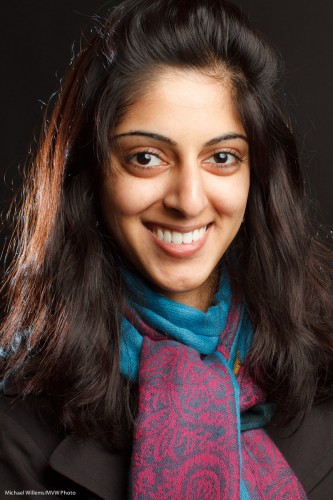
I thank Lilly Erkoc for this pic, which she took during a course I taught last week. Shot using wireless TTL. One Canon speedlite through an umbrella; one Canon speedlight aimed at the black background with a Honl 1/4″ grid and a blue gel. And that’s it!

I love that image!

Preparing

I am preparing for several courses, including the special version of my signature “Advanced Flash” workshop. which you may recall I teach in Henry’s School of Imaging location in Toronto on March 19 with Special Guest Star David Honl (Yes, the David Honl).

Dave is doing this in Canada for one day only – sign up now!).

I am also preparing more runs of my new signature course “Event Photography”, which I ran Sunday and will run at Henry’s School of Imaging as a featured course repeatedly, starting soon-  stay tuned.

And this brings me to “preparing”. One of the subjects I teach in all my courses is how to prepare. Preparation is half the work. Preparation takes time but it guarantees great results. Doing it on the fly is less successful and more stressful.

So today’s tip: create checklists per situation. Three of them:

  1. An event preparation checklist. This has names, addresses, parking details, shots you must get, etc.
  2. A gear checklist. This contains all the equipment you need for that event.
  3. A day-of-shoot checklist. This needs to contain names of people to shoot; moments to expect; shots you must not forget; camera settings for situations you expect; behavioural stuff; tech things to remember: everything you need to remember on the day. You carry this in duplicate – like everything else important.

Do you have those yet? If not, here’s your homework: go do it, make three checklists for a typical event you shoot. Questions welcome (and wait for my article on this in the June issue of Canada Photo Life magazine).

One.

One light can be enough.

Look at this great image. How was it made?

The answer is: one flash. Yes, that is all.

In this case it was a strobe, fired through an umbrella. But it could have been a speedlight.

The difference between those two options:

  • On a strobe, I measure the light with a light meter, and set my settings on the light and on the camera accordingly. And they are set for the entire shoot. So whatever the subject, the settings are the same. Done!
  • If I am using speedlights, however, the camera meters every shot. And it meters it by measuring light reflected off the subject. So the subject matters. A dark subject will fool the camera into overexposing, so you need to use negative exposure compensation. A very bright subject, the opposite – you will need positive exposure compensation.

Those are very essential differences. Read the above until you understand it, or ask me if you do not.

They have consequences:

  • If the subject distance will be static, use strobes/manual. If, however, the distance changes, then you should use TTL.
  • If the subject brightness changes from shot to shot, use strobes/manual. If, however, the subject brightness is the same between shots, TTL may be useable.

Confused yet? It is really very simple, once you know it. But then, the same applies to brain surgery.

Zoom Power

A friend asked me the other day:

Mike – I don’t understand how to compare the zoom power of my Nikon P100 26x zoom to the Canon 28-300mm zoom with my Canon 5d MkII.

Good question. But I think it is the wrong question. Or at least, the way the question is asked shows me that it might be based on the wrong premise.

The term “zoom power” seems to indicate that the ability to chance focal length settings through a wide range is a good thing. Like, a 10-500mm lens would be a good thing. Some even call this “ultra zoom technology” – you know, as in: just add the word “technology” to a term and it somehow gains in value. But only to the ignorant: when someone says “technology” like that, I just hear “marketing”.

Here’s why I think a wide zoom range (i.e. a wide ability to change from one focal length to another) is not necessarily a great thing.

First, it is a compromise. The wider the adjustment range, the more this lens will be a compromise at all lengths. A wide zoom range lens will neither be a great wide, nor a great standard, nor a great telephoto lens. Its aperture will be small, and it will vary. It will show pincushion and barrel distortion at both ends. It will not be sharp. The more a lens is like a prime lens, on the other hand, the clearer, faster, and sharper it will be.

The other reason is that of discipline. With a lens that can go from very wide to very long. you will never have a reason to be consistent in your images. Your pictures will not take on any particular look and feel: rather, each image will be different. Neither fish nor fowl, you might say.

The reason we have these super zoom compacts is for convenience, of course. But a lot of the time, this is wishful thinking kind of convenience. I hear it often: “yes, but I don’t want to own multiple lenses to get from 10mm to 500mm”. Sure, like I don’t want to die or pay taxes. Both are, alas, inevitable.

So only you can decide whether you want a wide range zoom camera or lens. To me, the wider the zoom range, the more everything will be a compromise, and the worse my pictures will be. But you may have different thoughts if size and convenience are more important to you than quality.

My lenses are a 16-35 (“2.2x zoom”), the 100mm, 50mm and 35mm primes (“0x zoom”), a 70-200 (“2.9x zoom”), and a 24-70 (“2.9x zoom”), and they are among the best on the planet. In fact my entire range of lenses from 16 to 200mm is equivalent to one 12.5x zoom, in those terms. This shows you how little those terms really mean.

But since you ask: a 28-300 mm zoom would be a “10.7x zoom” in marketing-speak. So the compact 26x zoom has a much wider range. 2.43 times wider, in fact!

Me tonight

Taken how?

  • 16-35mm lens on a 1.3 crop camera, set to 16mm, meaning, effective 21mm length.
  • Manual mode, 1/30th, f/2.8.
  • 400 ISO,

And then you get as close as you can to the closest object. The closer, the blurrier the distant objects (me!) will become.

Another blog post in a few minutes, with a reader question.

Simple Means.

Today, I taught a flash workshop that concentrated on the use of just small flashes. (Of course as you know I am doing an in-depth version of that workshop on March 19, with special Guest Star David Honl, yes? See www.cameratraining.ca/Flash-Honl.html – not to be missed!)

Anyway, simple portrait lighting with speedlites. You normally use wireless TTL for that – multiple flashes that the camera talks to using its wireless TTL technology. All major brands support this.

So here we have a simple shot of one of tonight’s students, using:

  1. a 580EX flash on our right…
  2. …shot through an umbrella, and
  3. a 430EX flash on our left…
  4. …using a Honl 1/4″ grid and a blue gel.

All this fired from a 580EX on a Canon Camera (if you have a Canon 7D or a 60D, or a Nikon, you can use your popup flash for this).

If you set the two flashes to different “groups”, i.e. A and B, you can set the ratio to what you like (e.g. A:B set to 4:1 means A is 4 times, or two stops, brighter than B). On Nikon, the system is the same although the way you set it is different (stops with respect to zero).

One important thing to remember: a key difference between strobes (you meter by measuring incident light, and it’s always good whatever the subject) and speedlites (TTL meters reflected light). So when using TTL instead of a studio, your subject makes a difference.

A subject with dark hair, a dark top, and against a dark background, will be overexposed so you need to use Flash Compensation of minus 1 to minus 2 stops. In the shot above, I used minus 1.3 stops.

Go try this if you haven’t. It’s fun. As a minimum, you need a camera with an on-camera flash (or use the pop-up on a 7D or 60D or a Nikon); one additional flash; a light stand; an umbrella; a bracket to mount them together; and a reflector (see yesterday’s post).

Reflect on this

I taught a very enjoyable class on “Portrait Photography” last night. I taught six students about studio lighting. Strobes, modifiers, light meters, backdrops, that sort of thing.

And one message was: it can be simple. One student wrote me just now:

I just wanted to tell you that I really enjoyed tonight’s workshop, which was excellent.  I learnt so much about studio lighting in just 3 hours.  I had always wondered how the big lights work prior to tonight’s workshop, and I have to say that you solved the mystery for me tonight.

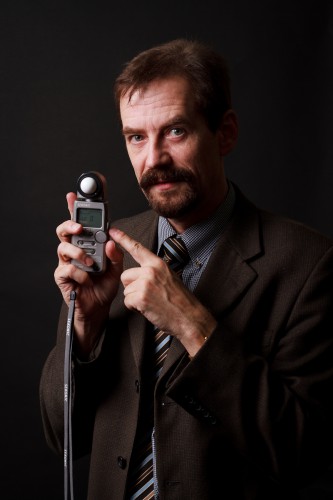
Yes it can be simple. Like in this shot, made with just one light (a Bowens 500 Ws strobe fired using pocketwizards, through an umbrella):

Michael Willems, by Franklin Wang

Michael Willems, by Franklin Wang

Observant readers (no no, not religiously observant – I mean readers who look carefully) will see that I am at 1/160s on the meter, and am using 200 ISO.

(Why 200 ISO? Should I, in a studio setting, not be using 100? Not when some students use Nikon cameras, which cannot easily go down below 100 ISO. That’s why. And why 1/160th? Because being slightly below your maximum flash sync speed, so ambient light does nothing while you avoid cutting off a bit of the image, is sensible in a studio. That’s why.)

So your settings in a studio might be:

  • Camera on manual;
  • 1/200th second at f/8;
  • 100 ISO;
  • Now set the lights to those values, using a flash meter.

I used a black background, away from the lights. That way it remains black.

So if you think that is a bit contrasty – we add a second light, right? And power it 1-2 stops below the first (2:1 or 4:1 ratio)?

Maybe.

Or maybe we just use a reflector. Saves the planet.

Michael Willems, by Franklin Wang

Michael Willems, by Franklin Wang

That way we save the second light which we can then use for the background, or for hair light, or for other funky effects.

The final picture is by another of the students:

Michael Willems, by Richard Smart

Michael Willems, by Richard Smart

Hey! Now that black background is light grey!

That is the point too. Black can be black (it is black when it has little light falling on it) or bright white (it turns white when it has lots of light falling on it). That is why I like black. White is much harder to control – it is easy to make it white, but tough to get it darker than mid grey in a typical studio.

As for the last picture: of course the top needs to be cropped off, but that is the point: these images are straight from the students’ cameras.

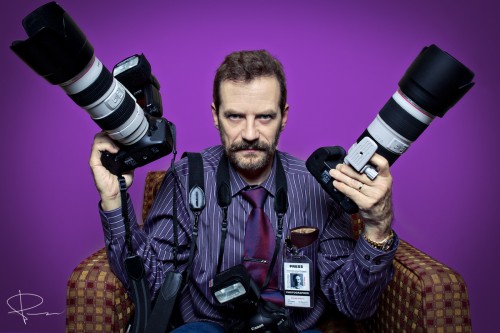
Oh – and the purple edge light is a simple 430EX speedlite, with a Honl grid and a Honl gel. Also fired using a Pocketwizard.

And yes, I think I can carry it off, purple.

Can you tell my spouse?

A student recently asked me to explain to his or her spouse (anonymity will be preserved) why it is worth investing in lenses.

Michael in The Plaid Chair (Photo: Peter McKinnon)

Michael in The Plaid Chair

And indeed I am happy to do this. Not because I have any stake in selling lenses (I teach, at various venues including Henry’s School of Imaging, but I have no stake in selling anything anywhere). But because:

  1. I strongly believe the lens is the most important part of photographic equipment between you and a great picture.
  2. A lens keeps its value much better than a camera does.

Let me explain.

  • The lens determines how sharp your picture is. Good lenses are simply sharper, and with today’s sensors this difference is noticeable.
  • The lens determines how fast your shutter speed is. And hence, how blurry the image. A faster lens (“fast” means “how wide is the aperture”, i.e. “how low is the minimum F-number this lens can go to”) means more light can get in – which means faster shutter speeds are possible at the same ISO.
  • The lens determines how blurry you can make the background. An f/2.8 lens gives you, if you want it, a much blurrier background than a consumer-grade f/3.5-5.6 lens. A “prime” (fixed) f/1.4 lens, even more so.
  • Good lenses focus faster, are quieter, have better “bokeh” (look better where they are out of focus), are water- and dust-sealed, and so on.

Those are very important factors whose importance it is almost impossible to overstate. Photojournalists like me use f/2.8 zoom lenses and f/1.4 primes. for a reason. For several reasons.

And finally- a lens keeps its value. A camera – not so much (next year it is worth half; a afew years later it has $0 value). A good lens keeps its value for decades.This is because 20 years from now it will still do what it does today (let through photons), and because the intrinsic value of the optical glass is a larger part of the value of the lens.

This is why lenses are worth buying. They make much more difference to images than the camera does, and they are a much safer investment.