Pro camera for sale – SOLD

As said, I am selling my backup camera: a  Canon 1D MkIII, new model (Serial number 565… – it’s not an “old, revised, blue dot modified” one).

This is THE Photojournalist’s camera: best I have owned. 10 fps, built like a tank.  And it’s like new. Perfect working order, no damage, has not been dropped, mistreated, or anything; no oil, no dust; low shutter actuations (around 15,000) – this was my backup camera (the 1Ds MkIII being the main one).

I am selling because I also bought a 7D and I don’t need a third backup.

This camera has the latest firmware and has been inspected by Canon CPS. It comes in the original Box with warranty doc. It has over 15 months left of the Henry’s extended warranty – fully transferable! – and it comes with original:

  • Battery
  • Battery charger
  • Video cable
  • Computer cable
  • Manuals
  • Software
  • Strap

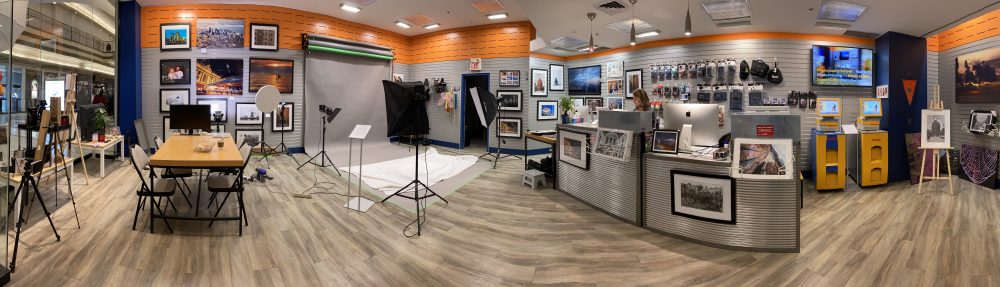
I’ll take cash, and of course you can come inspect and play with the camera here in my Oakville studio/classroom. Even take a studio portrait while you’re here 🙂

Here is the camera as shot with my Canon 7D just now, using the Bowens lights with softbox, fired with PocketWizards:

What's this?

For new SLR users: What is this little wheel next to the viewfinder (the wheel with the +/1 symbols in this image)?

It is the diopter adjustment.

This personal setting adjusts the eyepiece to your eye, just like a pair of glasses.

  1. Look through the viewfinder
  2. Now look at the focus points or the green LED information (“wake up” your camera repeatedly if necessary).
  3. Turn the diopter all the way up, then all the way down; then find the position where it is sharp – and leave it there.

If you wear glasses, you may be able to set the diopter so you can use the camera without them.

If two people use your camera, you will have to keep adjusting this setting, unless you have the same eyes exactly.

Snap

Me, snapped by a student last night:

The Nikon D80 camera is on manual. That means aperture and shutter speed are set manually, but it does not mean that the flash is manual!

The flash is still fully automatic – the camera fires a preflash, measures light return, and sets flash power for the actual flash accordingly. We call that TTL (iTTL, part of CLS, for Nikon; E-TTL II for Canon). The flash was turned back toward the ceiling behind the photographer:never fire straight into your victim’s face if the flash is the main light source.

Simple setup for budding pros.

You saw my picture the other day. That was shot quickly, and I’ll explain how.

Here’s a very simple studio (or portable studio) setup for such quick portraits:

  • Two lights aimed either at a white wall behind you or into (or through) umbrellas. Both of these 45 degrees above, on either side. (45 degree high and 45 degrees left or right).
  • The main light (which is usually two stops above the other, fill, light) preferably through an umbrella; the fill light can reflect off an umbrella.
  • One light behind the subject aimed at the wall behind him or her, perhaps through a grid.
  • Optionally a hair light, perhaps using a snoot.
  • As a starting point, set your camera to manual mode, 1/125th second, f/5.6, at 100 ISO.
  • No flash on the camera, of course.
  • Check the histogram. Adjust aperture or light power accordingly.

For the shot here, we aimed both lights at the wall/ceiling: quicker than an umbrella and since here we did not need accurate pointing and shaping, it did fine.

When the histogram looks good, finally remember to get your subject to smile, as my colleague photographer Dani Valiquette did today, when I asked her to take a portrait for me. I don;t smile, except she made me.

And hey presto, one minute later you have a simple portrait.

You need to click and then view at original size to see exactly how sharp this is. Bright flashed pixes are sharp pixels.

Personally, I prefer the serious one, but I am told by many that I look less handsome when grumpy. Surely not?

This will be a common occurrence for you as a photographer: you like one shot, and the subject likes another – often the one you think is the inferior one. Get used to it and shoot both. Without giving up your artistic integrity, you can give the customer what they want.

We're gonna need a bigger drive

Actually, you need two (one to store your images, and one as a backup). And perhaps a third for off-site storage.

And here’s why. We are seeing four trends in photography, all increasing at the same time.

  • Pictures get bigger (more megapixels).
  • You’ll take more of them.
  • You’ll re-use them more, so will want fast access.
  • You’ll store them all in the same place.

As “digital” took over my life, the number of pictures in the last five years in my Lightroom catalog increased as follows:

  • 2004 :    1,080
  • 2005 :    2,999
  • 2006 :    5,052
  • 2007 :    5,617
  • 2008 :  13,599
  • 2009 :  26,785

I stored more in Lightroom, I took more pictures, I kept more, and they also became bigger, so 2009 is disproportionally larger than previous years.

Can you see that my images appear to be increasing at more than Moore’s law rate?

Of course I expect them to top off this year – they may already have maximized – as I do more training, and more quality shooting rather than volume shooting – but who knows. Even then, larger files will make tyour storage top out. So get ready for more storage, and be agrressive.

How aggressive? The images above filla a 1TB drive (and two backup 1TB drives).

Fortunately, storage is also becoming cheaper, and by 2011 we will have 1 TB SD cards.

Air Travel

PPOC just sent the following. If you are a professional photographer traveling at this time to the US (while carry-on is forbidden from Canada to the US), then you may bring your equipment in a dedicated photography container made for that purpose, and the following applies:

  1. Ensure that you have some sort of Professional Credentials proving that you are a “professional photographer”.
  2. Make sure that there are NO OTHER ITEMS in your camera bag. I am told that if you have a snack, clothing item or ANYTHING other than camera gear, your case may be considered “CARRY ON”.
  3. Print the list of exemptions [to the prohibition, from the CATSA web site] and bring it with you as a reference in case of a dispute.
  4. Arrive early. Persons who attempt to board a plane at the last minute fall under suspicious behaviour and may be given less consideration.
  5. Ensure that you observe all size and weight restrictions with your bag. There are physical limitations to the size and weight of a bag that can be securely stored on an airplane. This may vary between aircraft.

So that’s nice. No snacks. Are my headache pills OK, or will the government now tell me how to pack a camera bag?

I have asked CATSA for a ruling on my equipment and I await (and await, and await) a response from their “customer satisfaction group”. Doubleplusgood!

Chiaroscuro

A word about a technique that has been used for centuries: Ciaroscuro. Or “light-dark”. Meaning the interplay of, often dramatic, light and dark in a picture.

This is not new; artists did the same in 1490. Chiaroscuro helps introduce depth, dimension, into two-dimensional pictures.

Traditionally, Chiaroscuro refers to any darks and lights introducing such modelling; in photography,  we more often take it to refer to strong contrasts between the dark and light areas.  But in essence, proper lighting is all about chiaroscuro.

And shadows do not only introduce dimension. They also introduce mood, and in contrasty pictures like the one above, drama.

Give yourself an assignment: in your next picture, play with light and dark a bit, and use them to produce depth, character, and mood. Consider using black and white.

And in response to the B/W request:

Tidyness is godliness.

Flashzebra offers many handy strobe accessories. Together with my Honl accessories (such as the speedstraps, gels, snoot, grids and bounce cards) I have an outfit that is at the same time more professional, more convenient, and more portable.

I talked about the speedlite cables recently. My latest addition is these: small holders for Pocketwizards that allow you to tie them onto a light stand.

This means that your outfit looks more professional, and the antenna points up, but it also means that I no longer need to hang the PWs by the cable. This has always been annoying to me. Problem solved!

Detail view:

Easy: they screw onto the PW at the back and you tie them onto the light stand with a durable elastic. Much recommended.

What is in my bag?

Further to my recent post on the silliness of the new travel restrictions (punish the innocent, further chip away at our quality of life, while doing nothing to increase security), here’s what I carry in my bag when I travel. This, plus the 1Ds MkIII camera I took the picture with, and my Macbook Air laptop.

Now, how many of those items would a security screener actually know? Let alone understand, and allow through? I mean, even when today’s ridiculous restrictions are lifted?