Pocketwizards

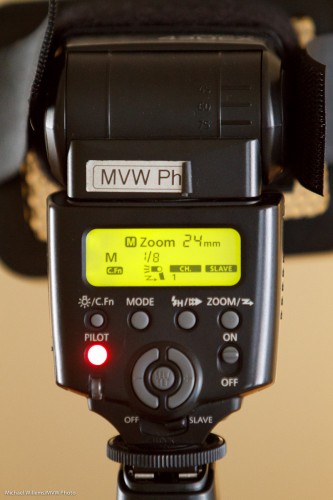
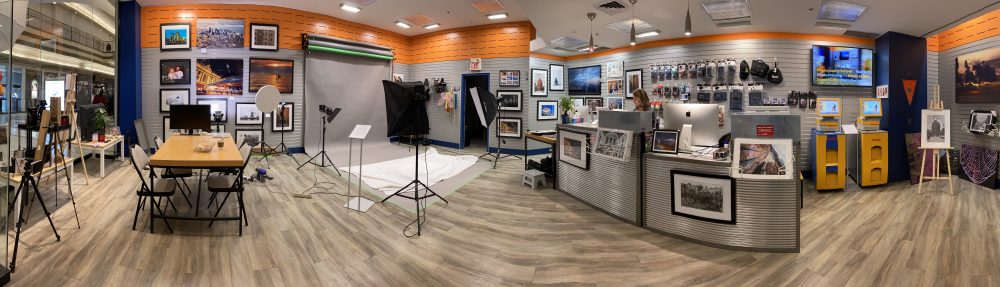
I seldom do this, but I thought my readers might like this: a friend is selling three basically new (unused) pocketwizards, plus some great extras. If you are interested mail me and I will forward your mail.

(I know it’s a good deal because I bought one of the four she originally had – I now own six).

Here’s her message:

3 Pocket Wizard Plus ll Transceivers With FlashZebra Accessories

I have a total of 3, all in absolute PRISTINE condition. I am selling them for $180 EACH. They come with original packaging, contents and receipts.

I have not used them.

BONUS!!: Each also comes with a Remote Transmitter Caddy, Deluxe Nikon Hotshoe to Pocketwizard Cable and a mini-plug (1/8″ – 3.5mm) to Pocket Wizard Cable. GREAT DEAL!!!

PRICE FIRM – Serious enquiries only please. Email Michael (“Contact” link above) if interested, and he will forward the mail to me.

I also have two of these:

http://www.henrys.com/12371-NIKON-LIGHTING-UMBRELLA-KIT-W-CASE.aspx

I will sell for $125 each

Saturate

A fall colours tip.

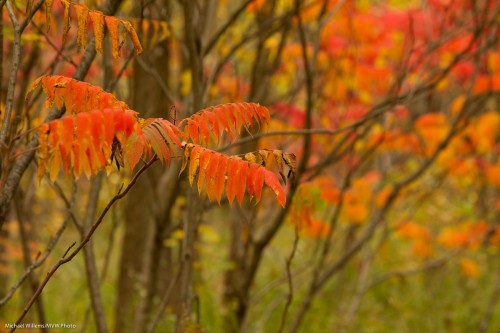
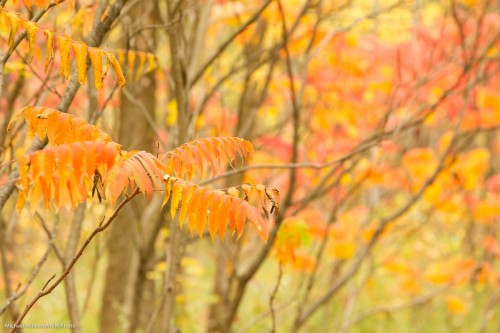
Colours not saturated enough? Like in this excuse for fall colours?

Then apart from setting the right white balance (“daylight” or “shade”; not “Auto), you have probably slightly overexposed it.

Expose a stop less (faster shutter, smaller aperture or lower ISO), and let’s see what happens:

Ah. Better.

What? A stop darker rurns orange into red? Really?

Yes. That is not a doctored image – it is real.

Saturated, you see, means “not mixed with white light”. If you mix with white lights, i.e. overexpose, then you will lose saturation, i.e. turn red into orange. To avoid this, avoid overexposing.

This is why I shoot in manual mode much of the time – I keep control.


Hot lights, strobes, or speedlights?

There are three types of studio light:

  1. Hotlight: continuous lights. Like lightbulbs.
  2. Strobes: big studio flashes.
  3. Speedlights: small on-camera or off-camera battery-powered flash units.

Hotlights (or continuous lights; i.e. light bulbs, like tungsten or fluorescent) have the advantage that you can see what they do while setting up the shot. They are what you learn at school, since they are easier. They have the drawbacks that they get hot, and that they use a lot of power – meaning more $$$ in bills, and larger cables and fuses. And they can make subjects squint.

Strobes are big flashes – they have none of the drawbacks, but also lack the advantage pof previews. This is why they have added “modelling lights” – continuous lights so you can see where you are aiming the light before you actually flash. But still, flashes take more metering and trial and error than continuous lights.

Speedlights are like strobes but they are portable and light. Drawbacks include the facts that they are not powerful, and that they are powered by batteries which run out, and that they can need more time between flashes to recharge.

Most studio photographers use strobes today, but there is no bad or good decision. Like driving diesel or gasoline, they both get you from A to B.

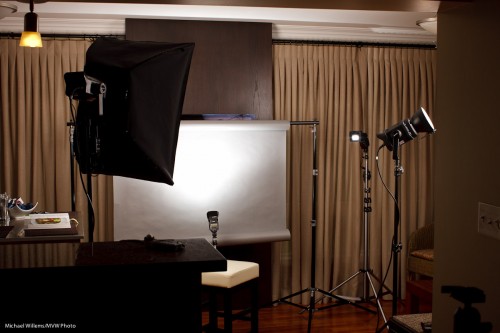
Here’s a recent portrait setup: I used two strobes here, and two speedlights (for space reasons).


Do you need fast lenses?

A recent comment on a post prompts me to remind you of what I have explained here many times before: it ain’t all aperture that makes blurry backgrounds.

Of course aperture is a main factor: the larger the aperture (i.e. the smaller the “f-number”), the blurrier the background. So an f/1.4 lens sure is handy that way.

But other factors count too!

  • Sensor: the larger the sensor, the blurrier your backgrounds can be. (Try to get blurry backgrounds with a little small-sensor point-and-shoot camera: good luck!)
  • Proximity: the closer you are, the blurrier your backgrounds can be.
  • Focal length: the more you zoom in, the blurrier your backgrounds can be.

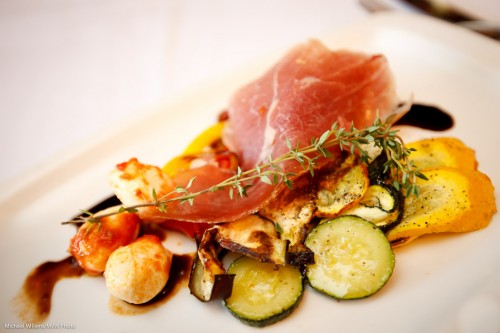
Here, my food the other day at f/2.8: blurry background because I am close. I did not need f/1.4 (even f/4 would leave the background perfectly blurred).

Food at Julia's in Oakville (Photo: Michael Willems)

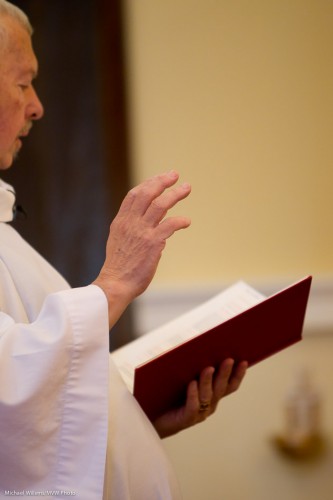
And here, the priest at St Andrews at f/2.8. This time, blur because I am zooming in, using a 200mm focal length. Again no need for f/1.4.

Fr Coughlin at St Andrews in Oakville (Photo: Michael Willems)

OK, so you do not always need an f/1.4 lens for blurred backgrounds.

In that case, why do I love my primes?

  • Light. A faster lens lets in more light, meaning you can get reasonable shutter speeds without crazy high ISO values.
  • Quality. A lens is usually best when stopped down a couple of stops from wide open. So an f/1.4 lens at f/2.8 is likely to be better than an f/2.8 lens at f/2.8.
  • And yes, sometimes you do want blurred background when you cannot get closer or use a longer lens!

I hope that clarifies things. You see, to be a competent photographer you need to fully understand this – it has to become part of your DNA, as I told my Sheridan College class the other day.


Exception

I think for once -and this is a big exception on this daily blog –  I will desist from a post: I think today may be a good time to wait a bit and to remember Steve Jobs, who passed away last night.

On a photography blog? Yes – because Apple hardware and software is big in photography, and because he did what he believed in , and because just last night in a class I was saying Apple should design digital camera interfaces. If that was the case, I would be able to cut the length of my beginners’ classes in half.

So – sad news, even if not unexpected. Steve Jobs was 56.


Dark

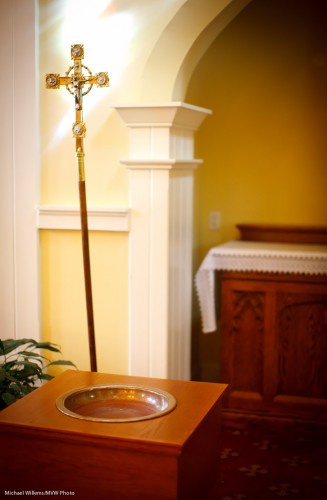
Sometimes it is dark. And yet you need to make it look light, like this, from last weekend’s christening shoot:

Church (Photo: Michael Willems)

I shot that with a 50mm f/1.2 lens, at these settings:

  • RAW
  • 1600 ISO, f/1.4, 1/100th second
  • And then I had to push it in post-processing (and remove the resulting noise)

So imagine. At f/2.0 that would have been 1/50th sec, and at f/2.8 barely 1/30th second. Which is too slow to avoid motion blur. And worse, many of them I had to shoot at 1/30th second. That would have been 1/8th sec at f/2.8 – not doable at al.

The lesson: some situations are really really dark, and if you cannot use flash (either because you cannot bounce, or because you are not allowed to use it) you have to either go to very high ISO values (like 3200 and above), or use very fast lenses, or push process. Only fast lenses and flash do not affect quality.

Affect quality:

  • Push processing
  • High ISO (1600 and beyond, depending on the camera)

Do not affect quality:

  • Flash (except light quality)
  • Fast lenses (except depth of field)

So… I love fast prime lenses, and now you know why.


Rule of Thirds

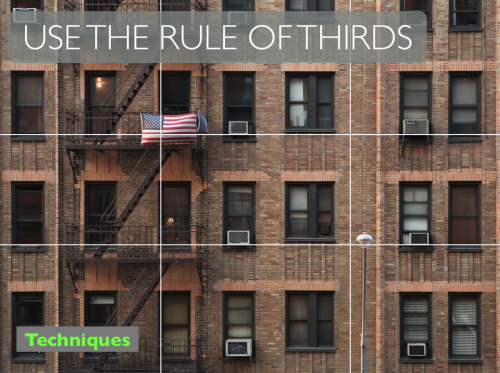
One day I’ll talk abou the rule of threes – but today, I’ll repeat the rule of thirds.

Like in the image above, taken from my room in the Chelsea Hotel in New York City a few years ago.

Simply said:

  • Divide your picture into three columns and three rows.
  • Put lines (like people, buildings the horizon) near the lines.
  • Put objects (like the flag) on the intersection of lines.

That usually makes your pictures look much more pleasing. Don’t be Uncle Fred who puts every object in the centre of the image. Off-centre composition, using the Rule of Thirds, makes your images more pleasing.

Of course if you have a reason to centre your subject: do. But in the absence of such reason: use the Rule of Thirds.


A reminder: ISO start points.

You can use “auto ISO” if you like – but never in a studio or when using manual lights.

Otherwise, if you like, you can use it, since other than in terms of grain, ISO does not affect the essence of your image. (That to me is the measure of what you should do manually: anything that affects the look of your image.)

When you use manual ISO, here’s some simple starting points that will help you get off on the right foot:

  • Outdoors, or when using tripod: 200 ISO
  • Indoors, even when using flash: 400
  • “Difficult light”, or sports: 800
  • But.. go as high as you need to get acceptable shutter speed!

Those starting points are just that – but they will start you off not far from where you need to be.

ISO: raise it when your pictures get motion blurred. Lower it when you need great quality and have light or a tripod.


How far will my flash reach?

I hear this question often enough to devote a post to it.

“How far will my small on-camera mounted speedlight reach”?

So I thought perhaps I would try to answer that for you.

At full power, if your camera is set to 100 IS, your flash will reach:

Distance = Guide Number / Aperture

The flash’s guide number, in metres at 100 ISO, can be found in its manual. The Canon 580 EX has a guide number (GN) of 58, the 430 EX has a GN of 43.  So at f/5.6 the 580EX will reach 10 metres roughly, at full power.

Things to know:

  • Smaller f-number (larger lens aperture) = more range.
  • Each time I double the ISO, I get 40% more range (square root of 2)
  • You can zoom the flash head in more to get slightly more range; wide angles give you less range.
  • Modifiers reduce the range.
  • An advanced flash will tell you the range, but only if you aim it straight ahead.
  • To test, set your flash to manual, full power.

Know your flash’s guide number at least for a rough idea!


Help – it’s night!

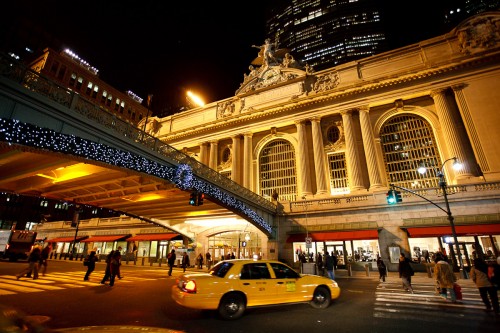
Grand Central, NY (Photo: Michael Willems)

It is night, as in this old shot of Grand Central Station. How do you deal with this?

Technique. A combination of techniques, actually. Use as many of these as you can:

  • Stabilize your camera. Use a tripod, or balance the camera securely on any surface (protecting it with a bean bag).
  • Use a wide lens. This makes it possible to shoot slower.
  • Use a stabilized lens.
  • Use exposure compensation (minus!), or spot meter off buildings, to avoid too-long shutter speeds.
  • Increase your ISO if you have to.
  • Sometimes I even slightly underexpose and then push the exposure later – better a little grain, if I must, than motion blur.
  • Take many shots – and just use the sharp ones!

As you see, there is no single answer. A combination of the above will work. Night is the best time for many shots – use it.

This shot is from the all-new “Travel Photography” course I just wrote for the School of Imaging, by the way. Completely rewritten and worth taking – if you are going to travel, you owe it to yourself!