Enough already!

The winter, I mean.

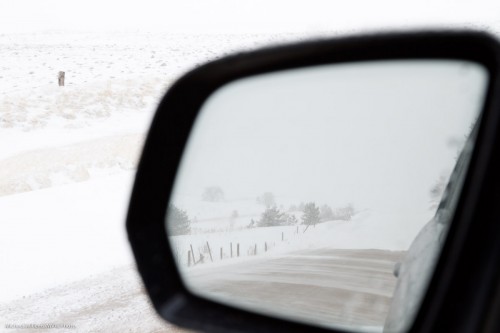
An image like this is:

  • Low contrast because it was low contrast.
  • Well exposed as long as you expose it well – use +1 exposure compensation or do it manually and have the meter point at +1, say.
  • White balanced if necessary, to make sure the white looks white.

This was on my way home today.

User Registration

I know many hundreds of you have registered here as users.

Alas, so have the spammers. I am currently under user registration spam attack: today and last night, a new fake user registers every few seconds,  I no have thousands of new fake users.

Alas, I have to, unfortunately, disable user registration.

That may or may not disable comments. A thousand apologies if it does, but I seem to have no other option. Either I sit here while I receive thousands of fake user registrations a day or I disable registering.

These spam users have domains advertising things and often, addresses ending in .pl, .ro and .ru (Poland, Romania and Russia, I fear your real users will be the losers here). No idea why they register because they then cannot do anything.

Also, I may also have to disable the emails that are being sent out. Right now for every legitimate user, ten emails are sent by my blog to these fake spammers. I do not have two hours a day to weed through the registrations: it is easy enough but takes time.

Anyone with any ideas, let me know. Yes I have tried various plugins but these do not work and are dangerous: one bad command, one wrong line of code  in a plugin will kill your entire WordPress.com blog.

Blue

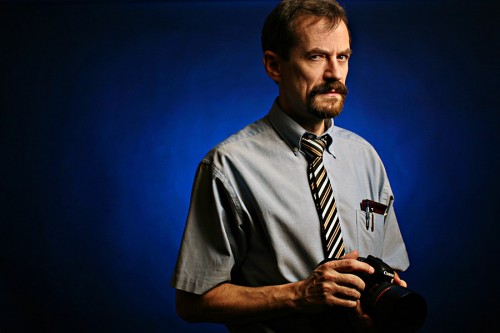
I thank Lilly Erkoc for this pic, which she took during a course I taught last week. Shot using wireless TTL. One Canon speedlite through an umbrella; one Canon speedlight aimed at the black background with a Honl 1/4″ grid and a blue gel. And that’s it!

I love that image!

Post soon

No time until tonight. But In the mean time, a note: Watch the June issue of Photolife magazine, Canada’s premier photography magazine, for an article about event shooting. Just saying…!

Also keep 19 March free for a special Toronto workshop with special guest David Honl!

Another reader question

A few days ago, reader David asked me this:

Just wanted to get your input on a upcoming event I will be shooting on Friday night. The events will be group shots (family and player) at a high school basketball game for their ‘Senior Night’. Since it will be in the gym with very high ceiling, bouncing off the ceiling does not seem to be a viable option. I was thinking about bouncing using a gobo card. Since the room will be filled with lovely (not) florescent light and wonderful (not x 2) swamp lights overhead, I could bounce the flash as a fill light to help get rid of the awesome green tones. The second option is to use an off camera 580EXII with a Honl Traveler 8 softbox (close to camera center maybe). The third option (since I believe in the power of 3) would be to use my Fong Reporter Whaletale with and on-camera flash. I am interested in “what would Michael do?” (As a a side note: I typically use a gray card to get a good white balance. I shoot everything in RAW, so flexibility in post-prod adjustment is not an issue.)

Good question, David.

For basketball I would say the following. First, here’s an example of a basketball pic I shot.
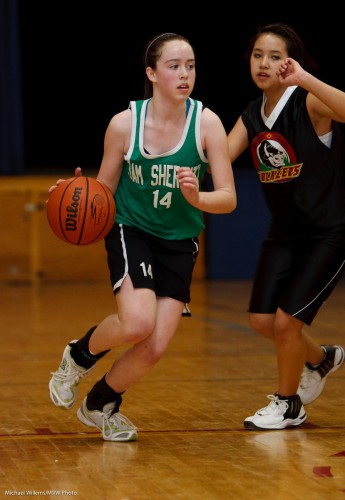
That was 1600 ISO, f/2.8, and 1/300th second.

And… oddly for the Speedlighter, I used flash, straight-on. As you correctly surmise, ceiling bounce or wall bounce can be difficult.

So this is one case where, if it is allowed (Ask the coaches! In high school basketball it will often be allowed) you can use straight-on flash to fill in the light. Of course this means recharge time between shots,  but if allowed, you may want to do it. Also watch out, you could get red-eye – easy correction of course, but still, you have to do it.

Alternately, you can bounce of a larger bounce card. That will mean less power and more recharge time, but it can be viable.

Of course you can also choose to live with the light that is available.

You other options are good to try, too. Off-camera is not likely to be much help though since at the distance you are shooting at, it’s close to the camera even if held a few feet away. The softbox, ditto, and you lose light.

Also, the long lens is great but do not forget the wide lens for close shots. And:

  • If you can, bring two cameras
  • Ask the coaches if you can use flash
  • Get close ups
  • Shoot under the rim, but be careful behind it – balls will hit!
  • Shoot vertical shots
  • Get the back of shirts to get the numbers
  • Shoot emotion: happy, sad, angry
  • Shoot action: close up
  • Shoot static for each player too

I hope that helps… and yes, I did answer this reader before that Friday!
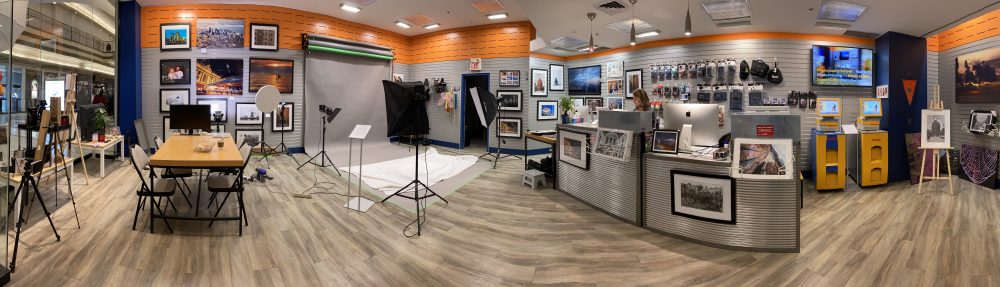
Hold it!

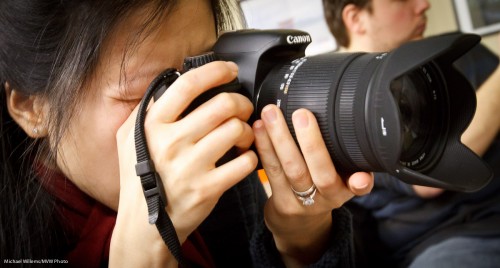
Everyone who has done courses with me knows that I explain ad nauseam how to hold the camera.

And this is how:

Why?

  • It is steadier. This is the main reason you do not move your left thumb underneath the lens, since steadiness means absence of camera shake and the resulting blur.
  • It is easy and quick to adjust focus or zoom without having to move your hand back and forth – i.e. you save time.
  • It is easy to switch to portrait orientation: only your right hand needs to move (up, in case you are wondering).
  • And we may as well add: you look just like a pro.

That’s why!

Event lenses

What lens to use at an event? I hear this question all the time, and it is a good question.Especially with “events” happening all over, during the next week or so.

In my upcoming “Events Photography” workshop I’ll talk about this topic at length. But today, let me give you a starting pointer or two. Some of this is a repeat from prior posts, but put together in one post it probably has value.

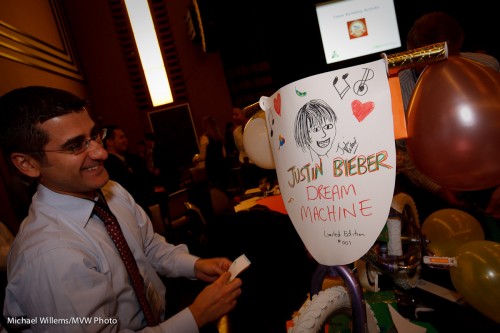
Teambuilding at a recent event

I use the following lenses rather often: and this is on a full-frame camera, so on a crop-factor SLR you need to divide each of these numbers by roughly 1.5:

  • 24-70 f/2.8: General purpose, when I expect a “normal” party or event: i.e. no cramped spaces, no ultra-low light.
  • 16-35 f/2.8: When I expect group shots or cramped spaces. I also use this to get extra perspective, or to get shots with lots of leading lines, possibly angled shots like the one above.
  • 35mm prime f/1.4: When I expect low light, or when I expect mainly “grip and grin” pictures.
  • 70-200 f/2.8: when I expect to be asked for impromptu “fly on the wall” shots and portraits.

So on a crop camera (a low- or medium-priced SLR like a D90 or a Digital Rebel) I would use the 16-35 or 17-40 lens as my general walk-around event lens and I would use a 24mm prime for low-light shooting.

Wide apertures are good

Fast lenses (low “F-numbers”, or “wide apertures” are good for two reasons: they let in more light, and they allow me to blur the background more.

The decisive moment

Yes it may

The most important lesson is: It does not greatly matter. While a wide lens is probably easiest, you can take pictures with any lens. “Fast” is more important than the exact width.

Mode tip

And today, another tip for my readers:

When shooting a subject in consistent light, use manual mode.

  • When you use aperture mode, the reflectivity of the subject, if it changes, will change your exposure time for every shot.
  • If, on the other hand, you spot meter and set a manual exposure, while the light remains the same, you exposures will all be good.

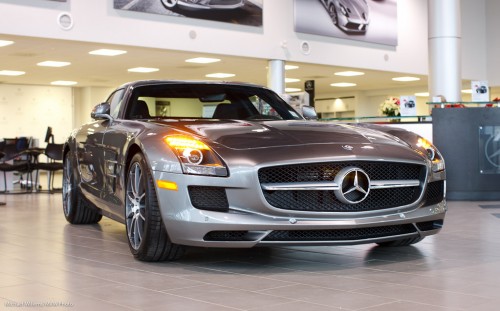
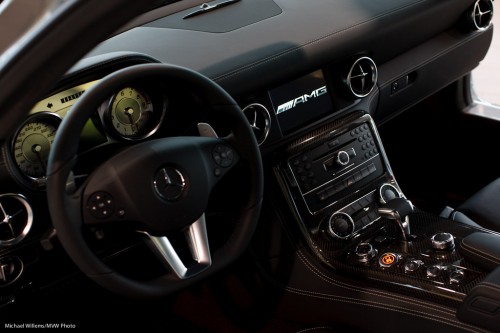
So when I was taking a few snaps of a car the other day at my local car dealership, I used manual mode (“M”). So I was able to shoot this:

Mercedes Benz

And this:

Cockpit

Without changing exposures. Since the light remained the same, the first exposure values could be used for all further shots: if it’s good once, it’ll remain good until the light changes.

By the way, in both shots the moment was chosen judiciously: the indicator light in shot one, and the “AMG” logo on the display in photo 2. The right moment!

And when you have taken exposure out of the equation, you can concentrate on composition and moment. That is why manual is often a good choice.

Repeat after me: Bright pixels are…

….sharp pixels!

When your subject is brighter than the background,

  • it stands out more.
  • it has more detail,
  • and above all, it has less noise.

Noise, like cockroaches and bedbugs, hides in the darkness.

I could give you engineering, math, signal-to-noise-ratios, and so on (yes, I am an engineer), but just take it from me.

And often, making your subject brighter is easy to do.

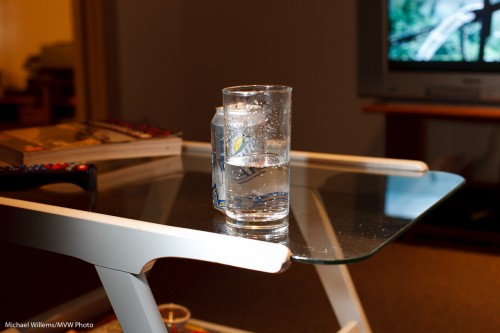
Here is a glass on a table, as you can see.

Glass, lit by general light

Now again, but this time with a TTL flash from out left, and no flash on the camera:

Glass, lit by side light

And as you see, the second one is more dramatic, the glass looks better.

Note that in the second image, I set ambient exposure to minus two stops. In other words, in manual mode, I adjusted ISO, aperture and shutter until the meter read -2. (Alternately I could have used program mode or aperture mode, and adjusted exposure compensation to -2 stops).

Why? Because I do not want the background to be totally dark.

My advice: try this yourself, right now. If it does not work, fiddle around until it does. Or ask me.