Upgrade

Yoo hoo! I upgraded today.

To this:
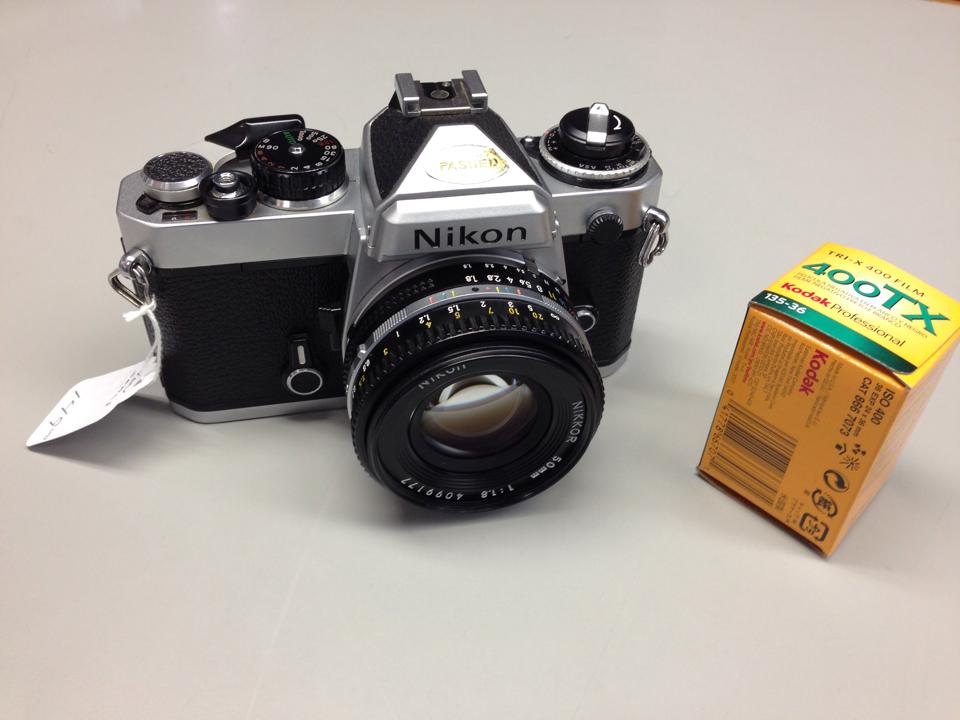
A Nikon FE SLR with a 50mm f/1.8 lens. Great condition, $150.

OK, so maybe a Nikon FE from, I am guessing, 1981 or 1982, is not an upgrade. But in some ways it is, and that is what I want to briefly talk about.

First, though, what is missing on a film camera like this Nikon:

  • “Each click costs $1”.
  • No instant feedback so I do not know if the picture worked.
  • After pictures, I need to wait a week to see my images.
  • A lack of virtually all technical functions.
  • No autofocus, no matrix metering.
  • No program mode, no shutter priority mode, no scene modes.
  • On-off switch is the wind lever, and for a left-eyed person like me, that is inconvenient
  • Just 36 clicks and you have to mess about changing films!

And some of those are huge drawbacks, the first two in particular; and that is why we shoot digital now.

But now we come to the benefits, and why in many ways this is an upgrade.

  • The camera is small and light. No ten pound brick, and yet it has full SLR functions and a full frame sensor… well, negative.
  • It is incredibly well made, Workmanship, engineering, materials: solid.
  • It has a “split screen” viewfinder with manual focus. That kind of manual focus is so accurate, and is such a pleasure to use, that I totally miss it today.
  • It has an analog meter, not a display consisting of little LEDs. That means fast response and great precision.
  • Its battery lasts for years. Not “a day”. Talk about retrograde steps in technology.
  • It is beautiful.
  • Above all: it is simple. It allows me to adjust ASA to match the film, and to set aperture and shutter speed in one stop increments. Shutter can also be automatic, so that is Aperture priority mode. (I.e. “M” and “A” are the only two modes). Those are the basic controls; that is exposure!
  • In addition, I can set exposure compensation; it has AE lock; a self timer; a mechanical backup of 1/90th second only, Bulb mode, a sliding battery check button, and an aperture preview. And that is it!

With a film camera, you have to get it right, So, just to show I can still do it, I bought a roll of Tri-X and I’ll take some photos in Toronto tomorrow. And then I’ll hunt down someone who can develop and “digitize or print”.

Fun fun fun~!
 

Anatomy of a flash

I often add a flash here, a flash there to my shoots. Easy peasy.

But if you have never set up a flash, that might not be so simple. Hence today’s lesson: how to set up a flash for some extra light.

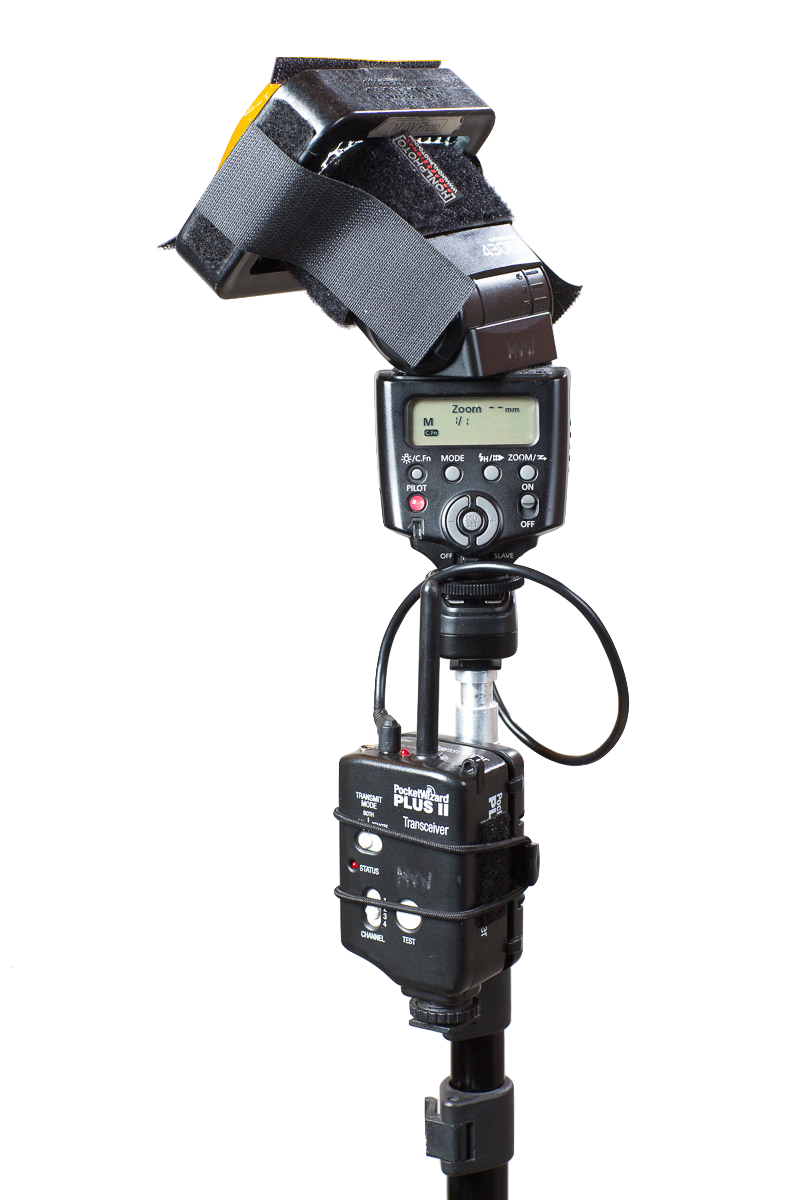
From the bottom up, we have:

  1. A cheap light stand.
  2. A pocketwizard radio trigger. This just tells the flash “fire”. No intelligence.
  3. A cable, from flashzebra.com, to connect that pocketwizard’s “flash” output to any flash, via a hotshoe. That hotshoe is screwed onto the top of the stand. (Optionally, I would usually use a ball head between the light stand and the hotshoe).
  4. A flash (a.k.a. a speedlight). This can be any brand flash, as long as its power can be set manually.
  5. On the flash, a Honl Photo speedstrap (help on with friction).
  6. Attached to that Speed Strap, a 1/4″ Honl Photo grid, to be able to direct the light only where I want it.
  7. On that grid, a yellow gel: this turns the light into yellow light.

Now all I need is an other Pocketwizard on the camera (the transmitter, whereas this one is the receiver); then I figure out the power level needed; and I am done.

Save this picture if you want to learn studio stuff!


Whoop Whoop Pull Up

The title of this post? That is a warning, the kind of warning you get on the flight deck as you are about to fly into a mountainside.

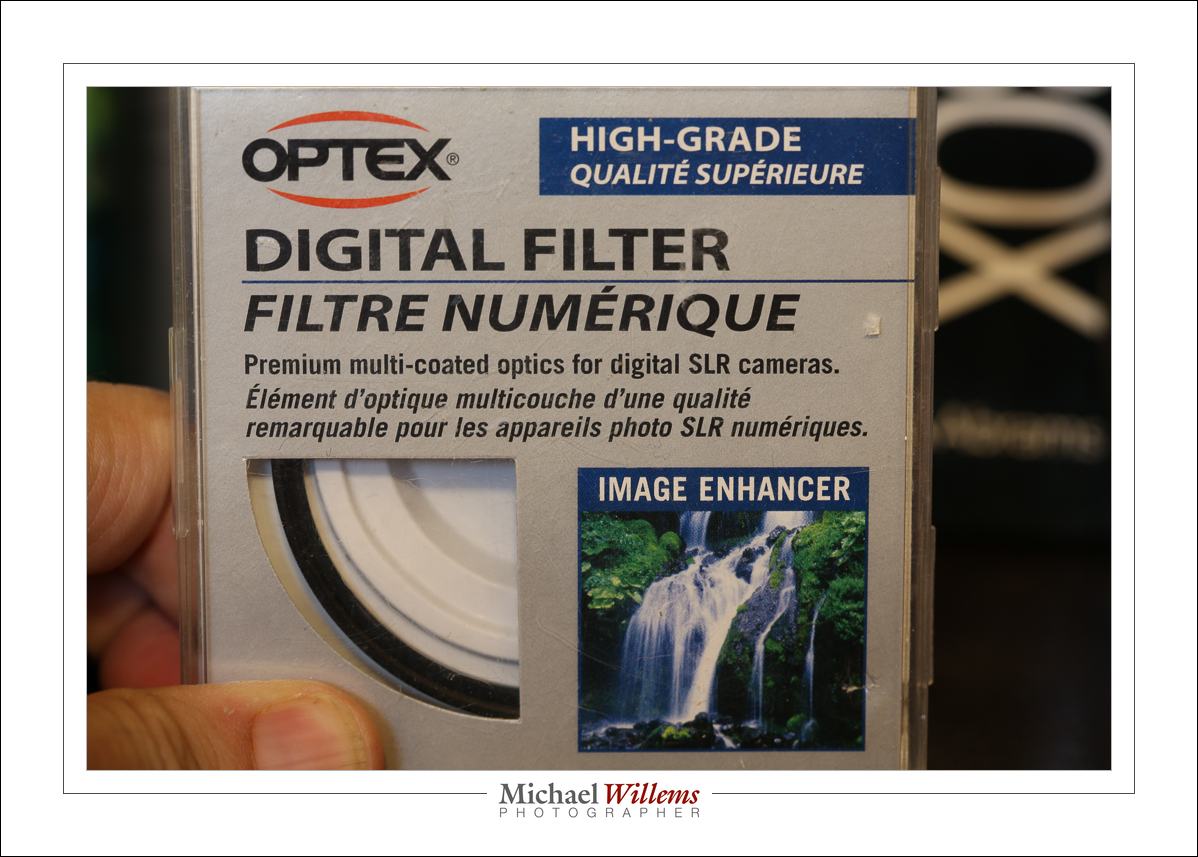
It is also the kind of warning I feel internally when I see something like this:

I mean… digital filter? Like photons care? Yes, I can imagine scenarios where a sensor needs a different filter from film, but not readily, and this ain’t one of them. This is more a marketing ploy to get Uncle Fred to hand over more money to replace his “analog filters” with digital equivalents, I think. So while having some lens filters for protection is a good idea in case it rains, do buy good filters, but don’t worry about having them always on every lens. I personally never use them.

Instead, spend your good money on a modern camera, 3 years old or younger, and on lenses.

And on my newest ebook, and do use the discount code, see yesterday’s post.  Click on the image below to also see a few sample pages, plus the table of contents.


Glass

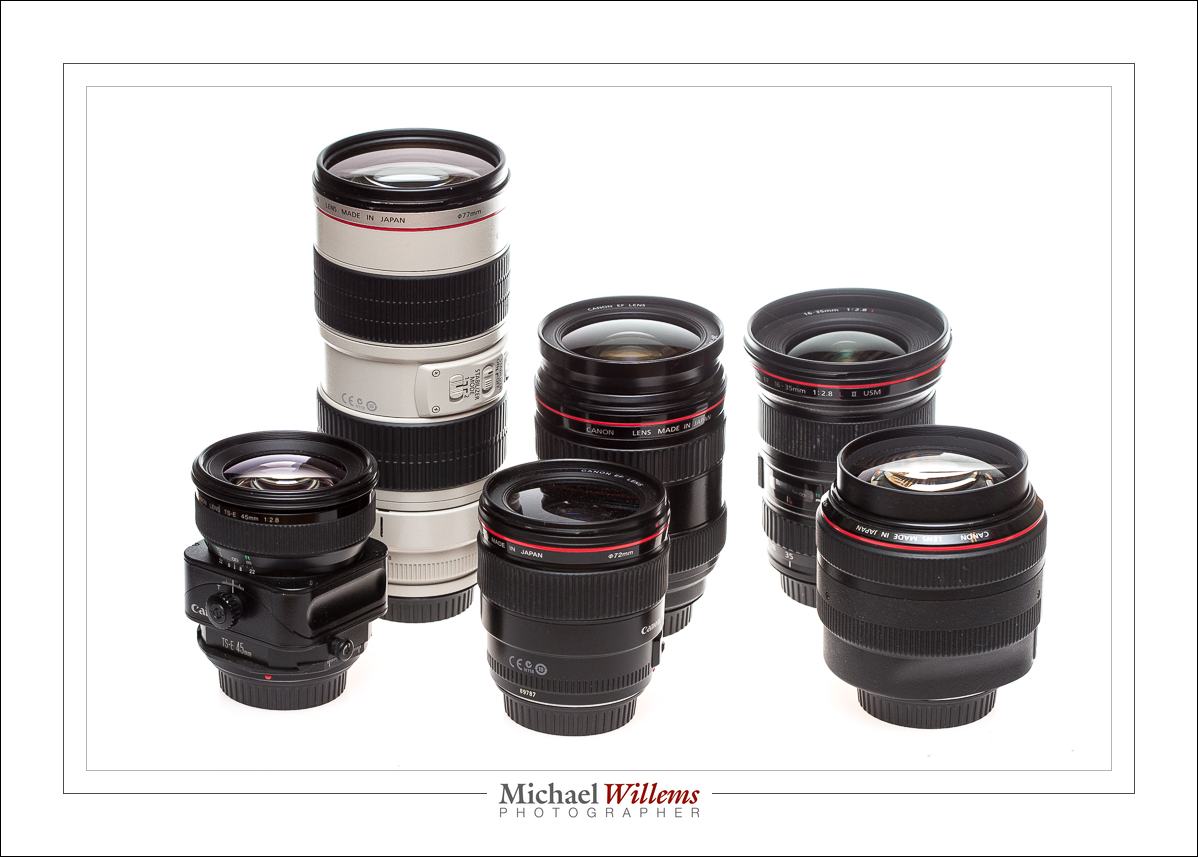
“Glass”, as photographers call lenses (we all like to use jargon) is more important than the camera itself. That’s why I have many thousands of dollars’ worth of them:

The red lines mean “L-lens”, or “luxury lens”, i.e. a pro quality lens.

So why spend so much on lenses?

Because they make the photo. The camera does hardly anything. Also, lenses retain their value much better than cameras. The value of as lens is in part due to the intrinsic value of the optical glass. And that remains. So a lens keeps value and functionlity for 20 years or more.

And that is why it is sensible to spend on lenses. Your pictures will be noticeably better. A good lens is $2,000 in many cases; but offset that against he 20 +years use you will get out of it and it’s not so bad.

I have, there:

  • 35 mm f/1.4
  • 45 mm f/2.8 tilt-shift
  • 85mm f/1.2
  • 16-35 f/2.8 zoom
  • 24-70 f/2.8 zoom
  • 70-200 f/2.8 zoom

Question: why do I have so many prime (=fixed, non-adjustable) lenses (over half)?

Bonus Question: Those are six of my seven lenses. So where’s number 7?

Mirror lockup

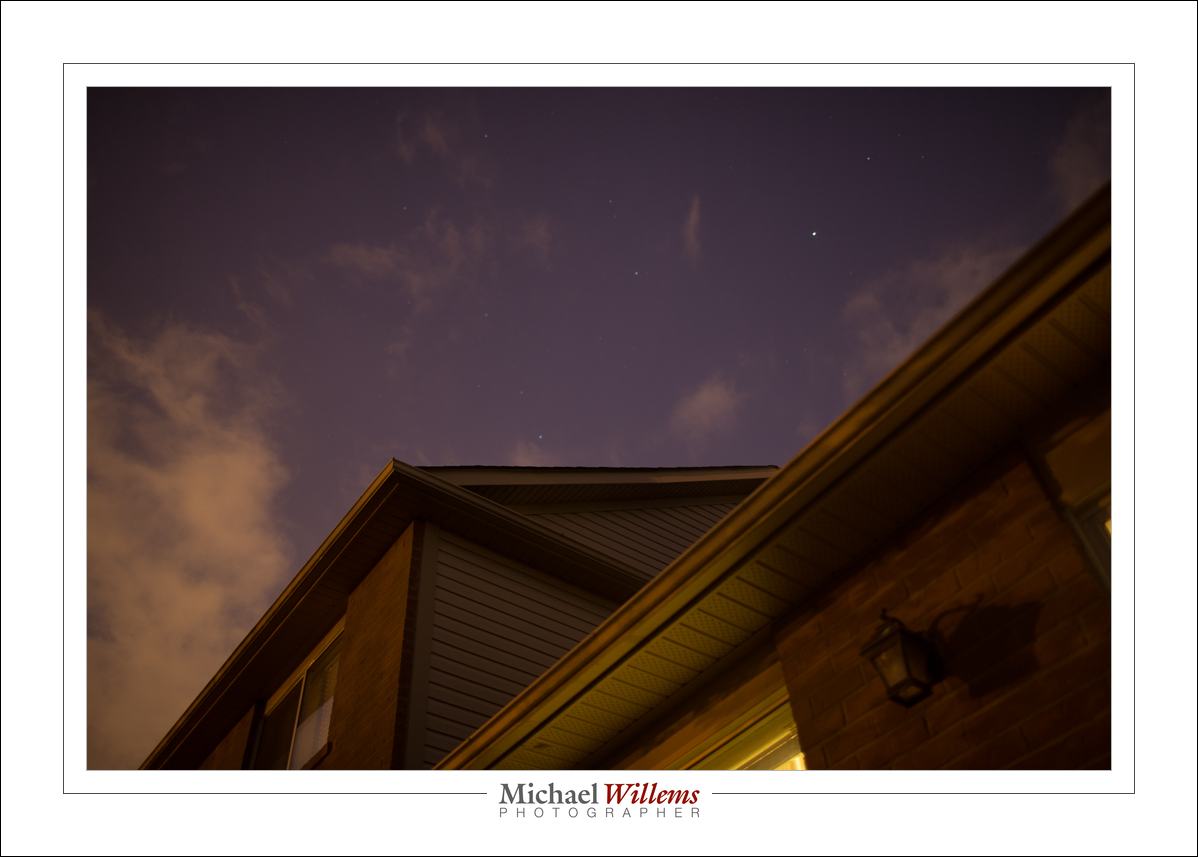
Back yard at night: 1.3 seconds, f/1.4, at ISO 100.

In your DSLR, the mirror flaps up and down every time you take a photo. This shakes the camera, ever so slightly, even when you are using a tripod. When you shoot at 1/500th of a second, you will never notice this. Also, if you shoot 10 second exposures, the slight vibration for a fraction of a second at the start will not likely show. But if you take photos with a shutter speed between, say, 1/15 sec and 1 sec, you may well notice this, since the “shake time” is significant with respect to the “shoot time”.

To avoid this, many cameras offer a “mirror lockup” function. This allows you to make the picture in two pushes: one to put the mirror in the “up” position; and the second, to actually release the shutter. You may want to try this if you want very, very sharp pictures. Here’s my street, just now:

It works like this: Activate it; then, when you press the shutter (or better, iuse the wire release) the mirror flaps up; now you need a second press to actually open the shutter.

Use this in combination with wire release and your photos will be steadier.

Tip: focus on infinity manually, and during the day, verify that the “infinity” marker on your lens actually means infinity, i.e. that it is well calibrated.


Reader Question

Reader Ray asks:

Quick questions, I have 7D and a 50D as my backup, what would be a suitable full frame up from the 7D? Are full frame slower then say my 7D?

Good questions about Canon gear.

Canon Logo

Upgrading to full frame makes sense for people who like bright viewfinders, low noise/high ISO, good quality, and wide angles. So good for you.

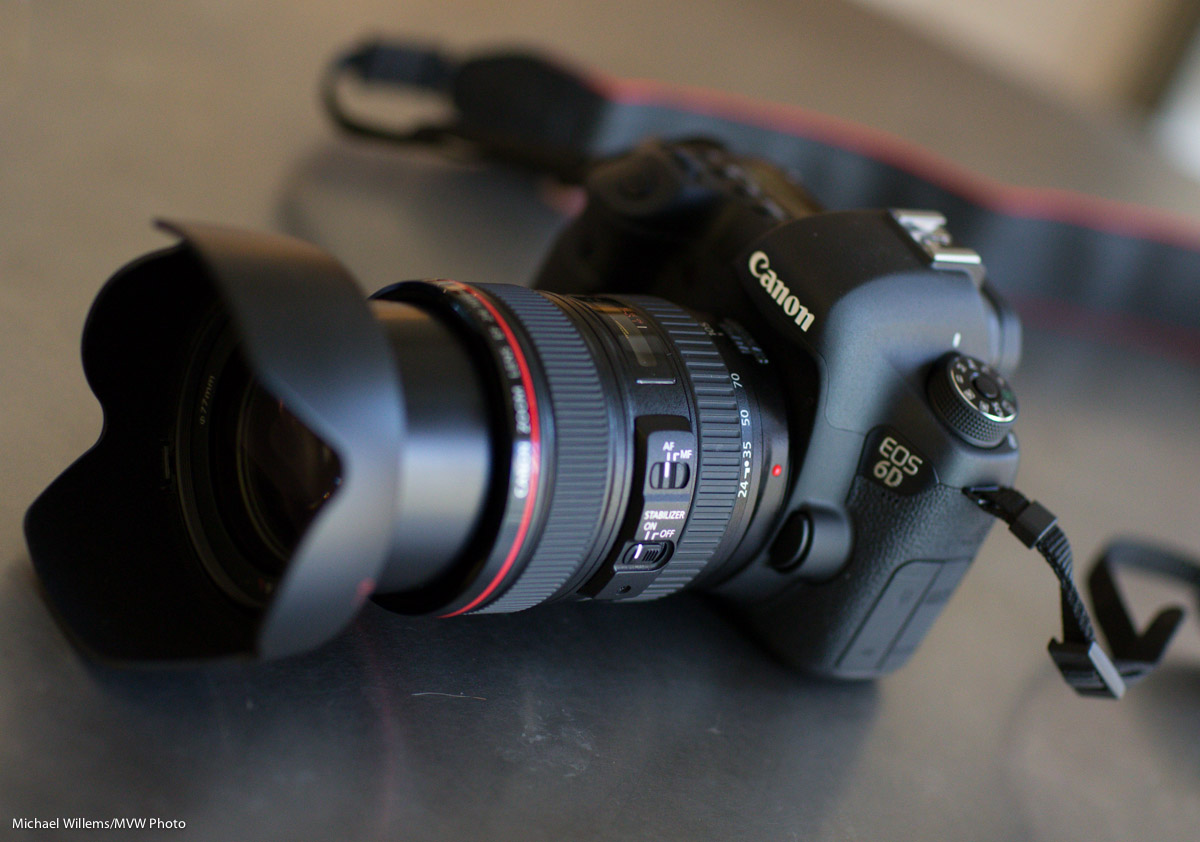
If I were in your shoes, I’d go with a 6D, the economical full frame option.

The Canon 6D, which I have reviewed briefly here, is a great camera. Canon left very few functions off. The focus system is old, and the flash sync speed is limited to 1/160th second. Both of those are relatively small limitations if you know what you are doing. (And if you do not, go here). And the shutter lasts 100,000 exposures, vs the 5D’s 150,000 or more. There’s some more small things of course.

And the 6D also has neat new features like GPS and WiFi, so it’s not all “less”.

So if you want to splurge, then go to the 5D MkIII (or even the 1Dx, if you win the lottery), but I think the benefit for many is doubtful, and the 6D is a great camera.

Yes, the full frame cameras have lower frame rates. The 7D can shoot 10 fps if I recall correctly; on the 6D, it’s 4.5. The larger mirror means slower movement. But how often do you really shoot at 10 fps? That’s a good way to wear out your shutter.

___

Do you have questions too? Ask away, and I shall answer… in most cases, quite quickly.


Full frame or not?

I am often asked “should I go full frame”?

A full frame camera is a camera whose sensor is the same size as a negative used to be. Cheaper cameras, on the other hand, have a slightly smaller sensor. We call these “crop cameras”.

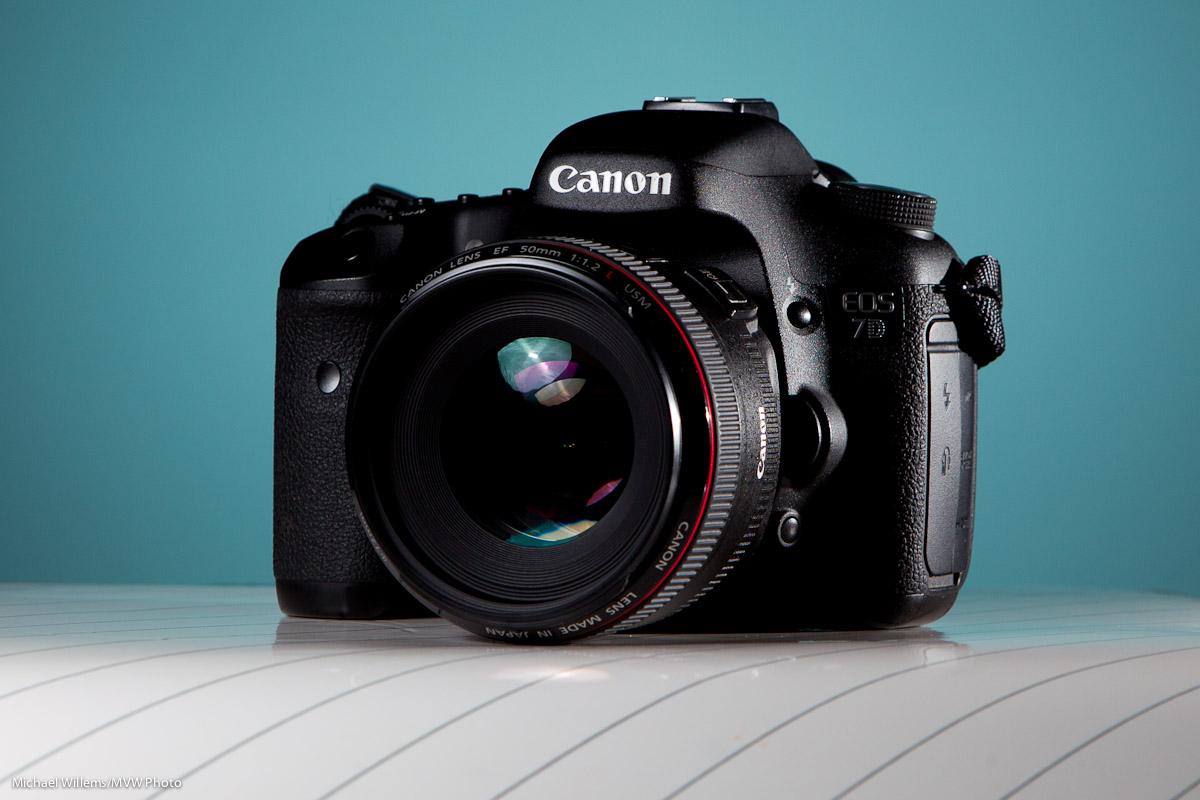
The Canon 7D, a crop camera

Making a camera with a smaller sensor means that it, and its lenses, can be:

  • Cheaper
  • Lighter
  • Smaller

That’s good. But it also means a few not-so-good things:

  • Smaller viewfinder
  • Lower picture quality (more “noise”)
  • Slightly lower ability to create blurry backgrounds
  • Lenses “appear longer”: good when you want telephoto; less good when you want wide angles.

So you take your pick. Most people start with an affordable crop camera, but go to full frame eventually.

More importantly: lenses. Some lenses can only be used on crop cameras. These lenses (EF-S for Canon, DX for Nikon) are cheaper, smaller, lighter—but they are less future proof. The other lenses can be used on any camera: crop as well as full-frame. It is the latter kind of lenses I recommend, in case you go full-frame at some later stage.

Now, off to a Toronto bank to do executive portraits. Later!


Flash too dark. Why?

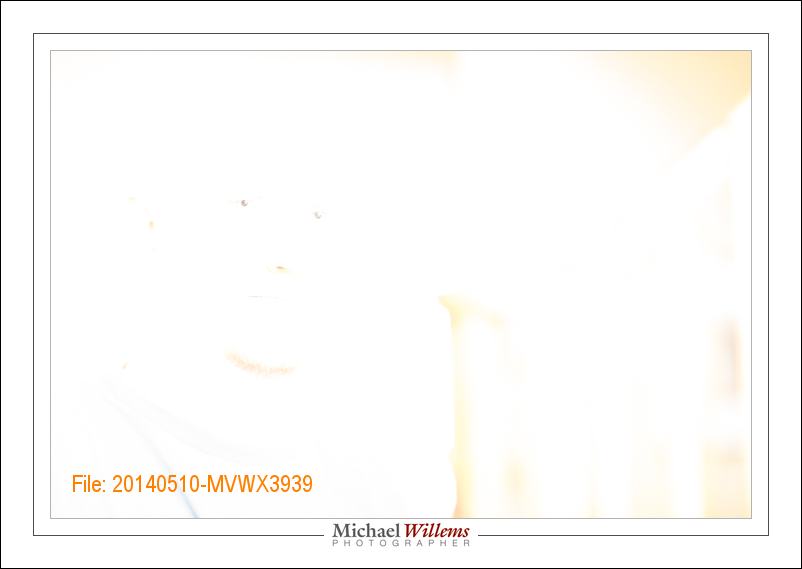
Say you take a picture, and say that the flash part of that picture is too dark. Like this:

There are two possible reasons, and it is important to distinguish between them, since they have two entirely different solutions.

  1. The flash part is too dark because your camera and its TTL metering system metered the flash incorrectly, so it somehow decided on too low a flash power setting. This could happen because of subject brightness (a white subject); because you moved the camera; because of spot metering errors; because you set the camera to the wrong mode (it should be on “TTL”); or simply because of errors in the metering system.
  2. There is simply not enough flash power available, given the chosen aperture and ISO settings.

So how do you know which one of these reasons is causing your dark flash picture?

Simple. Turn the flash, which is normally set to TTL, onto MANUAL mode, and select full power (100%, or 1/1). take the photo.

If you now see something like this, then the error was metering:

This means: given the selected aperture and ISO settings, there is enough power available, the camera just chose not to use it. The solution is to meter accurately, perhaps using matrix metering, or spot metering off a grey card; avoid recomposing; ensure that the connections are all clean and intact.

If, however, on full manual power you see the following, then there simply was not enough power available:

I.e. the camera would have liked to select more power, but it simply was not available. The solution in this case is to increase your ISO, or decrease your “f-number”, or bring the flash closer to the subject—or a combination of several or all of those.

___

Many more tips when you take one of my courses, or read my e-books, especially “Pro Flash Manual”, from this page on the e-store.

Brand aware!

An acquaintance-via-the-web asked:

“I’m not a photographer. I’m a very busy mother of three. Having said that I’m looking for a “stupid- proof” dslr camera. We’d love the quality of the photos but want something simple to use. I was looking at nikon d series as well as the canon rebels.”

Well, as you might imagine, I have a few things to say in reply!

First: the camera does not really matter. You should be in manual mode for best result, and a camera is just a camera. The lenses matter: get a fast 50mm f/1.8 or f/1.4 lens. And both brands are superb. I can, and do, use both and I love them both.

But then: for the low-end cameras, go Canon. A Digital rebel has all functions including (for most) remote TTL flash master, flash compensation, flash exposure lock/flash value lock (FEL/FVL), and many others The Nikon leaves out many of these functions in the low-end models. And believe me, you will grow to need these. So definitely, between those two, the Canon.

Third: there is no fool-proof camera. The camera is a fool. In any picture, only YOU know what should be sharp. The camera does not. Only you know how bright or how dark you need the picture. Only you know what colours you like. There is no way for a camera to know these things. You need to learn things. Get the “mastering your camera” book from http://learning.photography and read this. Read this web site. Learn how to use the camera on manual (the free chapter will help, too). Asking for a stupid-proof camera is like saying “I want to do brain surgery but I just want it to be easy: I want stupid-proof scalpels”. It just does not work that way. We distinguish Uncle Fred snapshots from real pictures by the amount of knowledge the photographer has.

And the good news: not that much knowledge is needed. Learn how to:

  • Operate the camera in manual mode (manual IDSO, manual aperture, manualshutter)
  • Focus where you need, using just one focus point
  • Set the right white balance (colours)

Learn these simple things.. get a digital rebel with a 50mm f/1.8 portrait lens and do just a few hours training and your photos will be superb. You will be grateful later in life, when you have brilliant shots of your kids. Shot like this, which you can easily take with a Rebel and that 50mm lens:

Go for it, and enjoy photography. It can be easy, but you do need to learn a few basic things.


What lens?

My current love, as you all know, is the 85mm lens. The Canon 85mm f/1.2L lens, to be precise, on my full-frame Canon 1Dx camera.

I love this lens for many reasons. One is that f/1.2 is great when I want to shoot in a classroom without using a flash or going to very high ISO values. As a bonus, I get great separation between foreground and background.

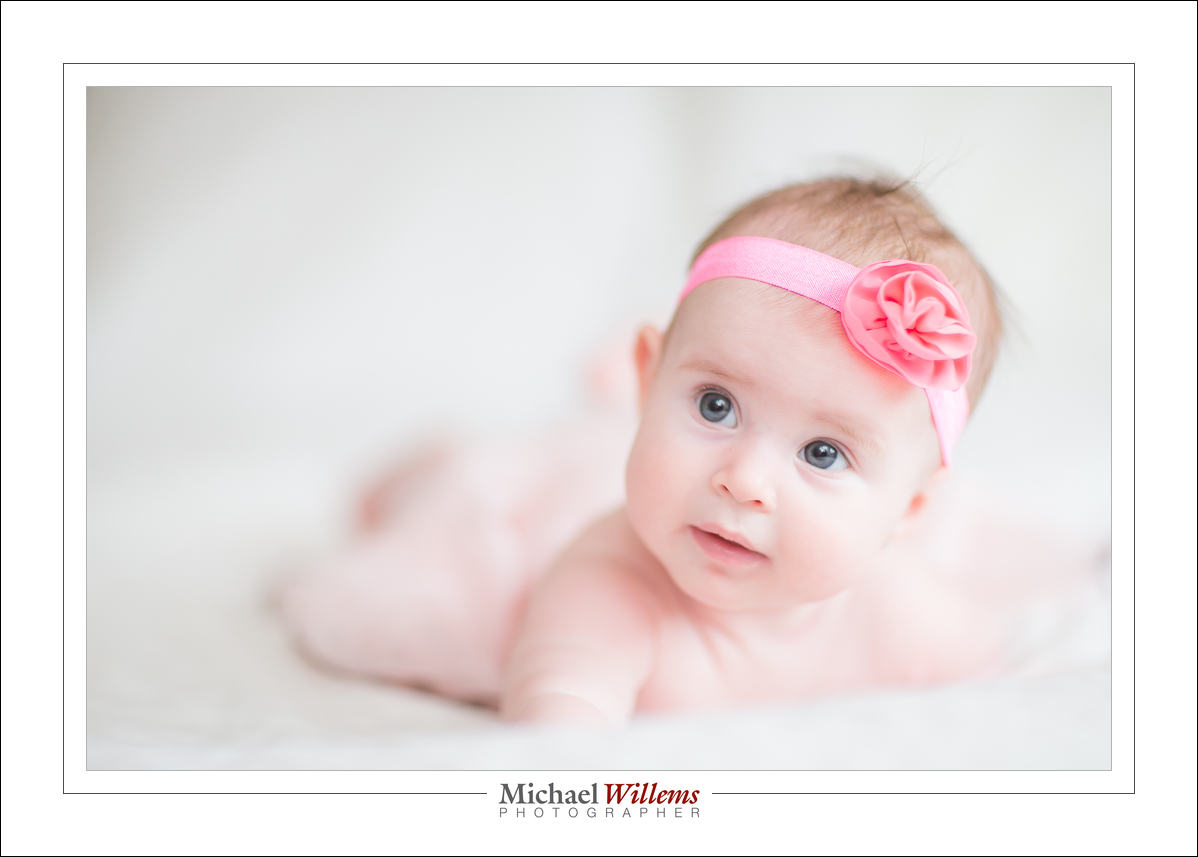
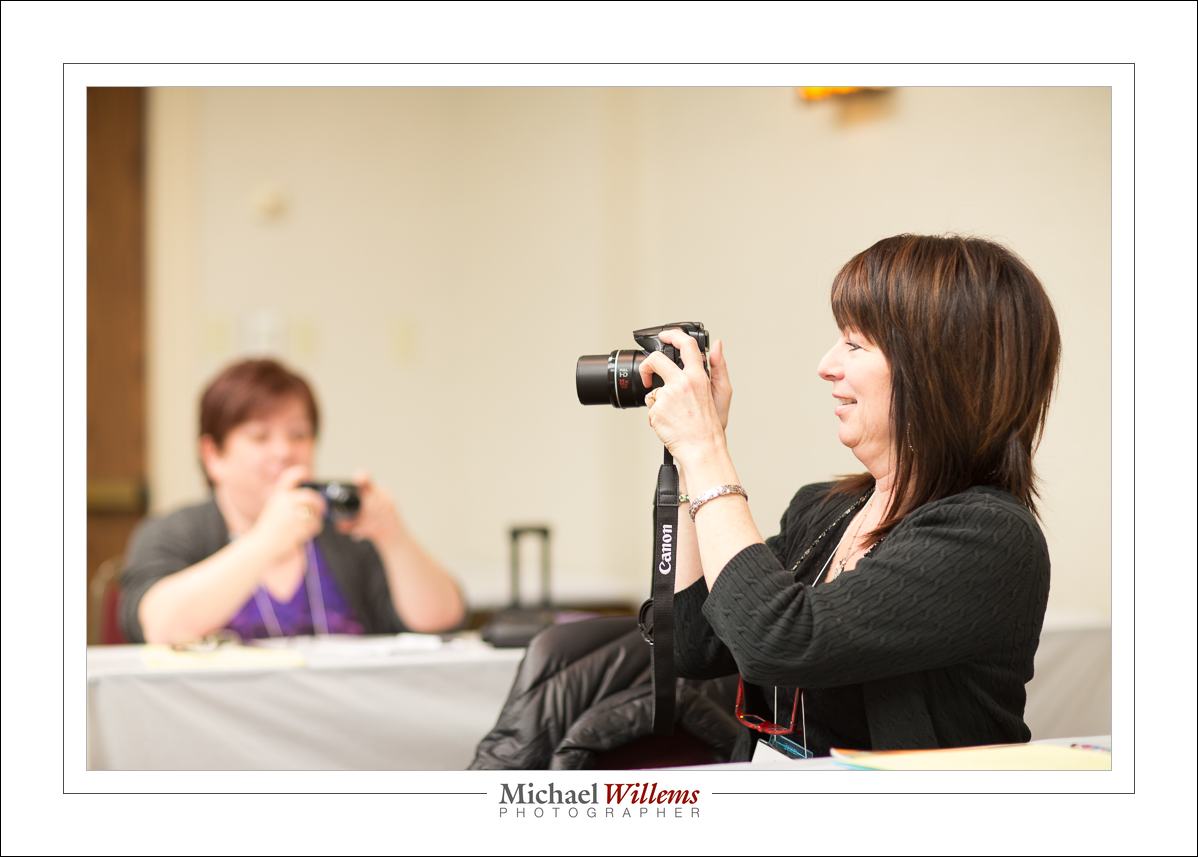
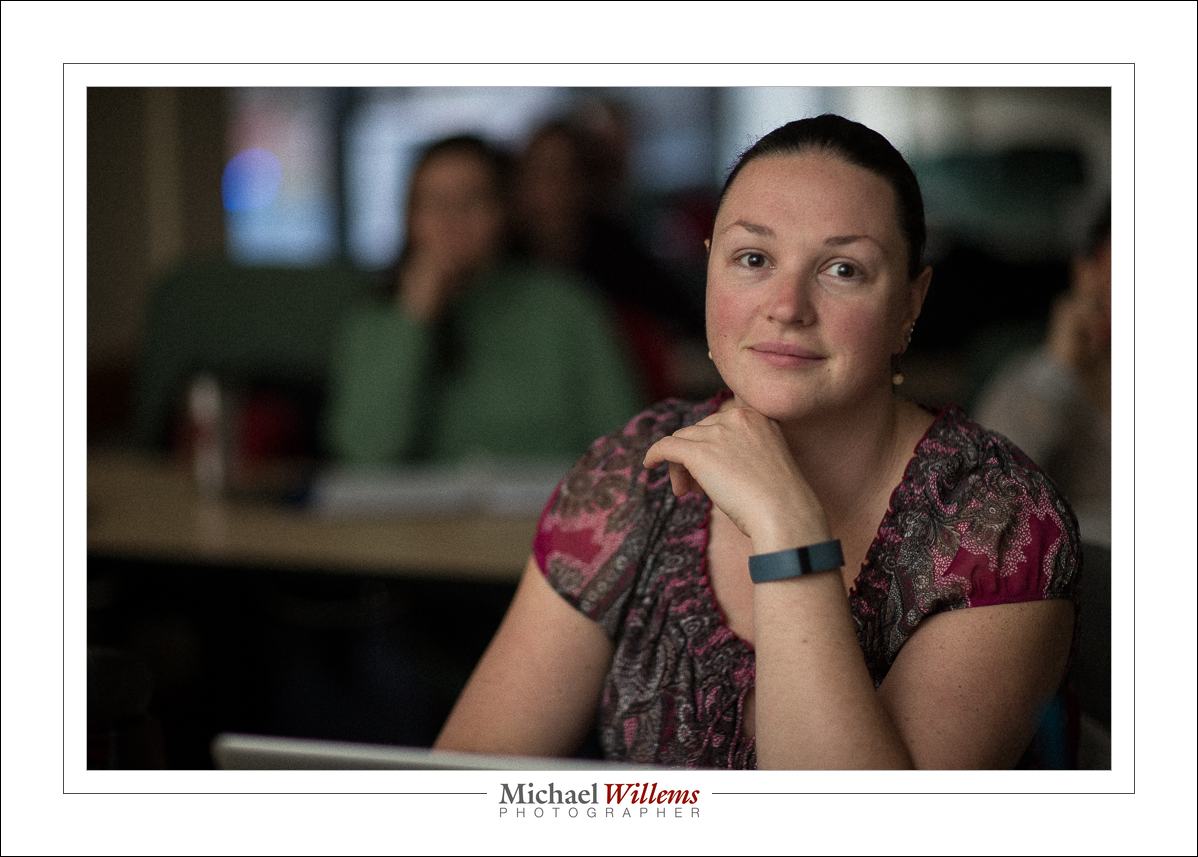
As in these three very recent shots of students:

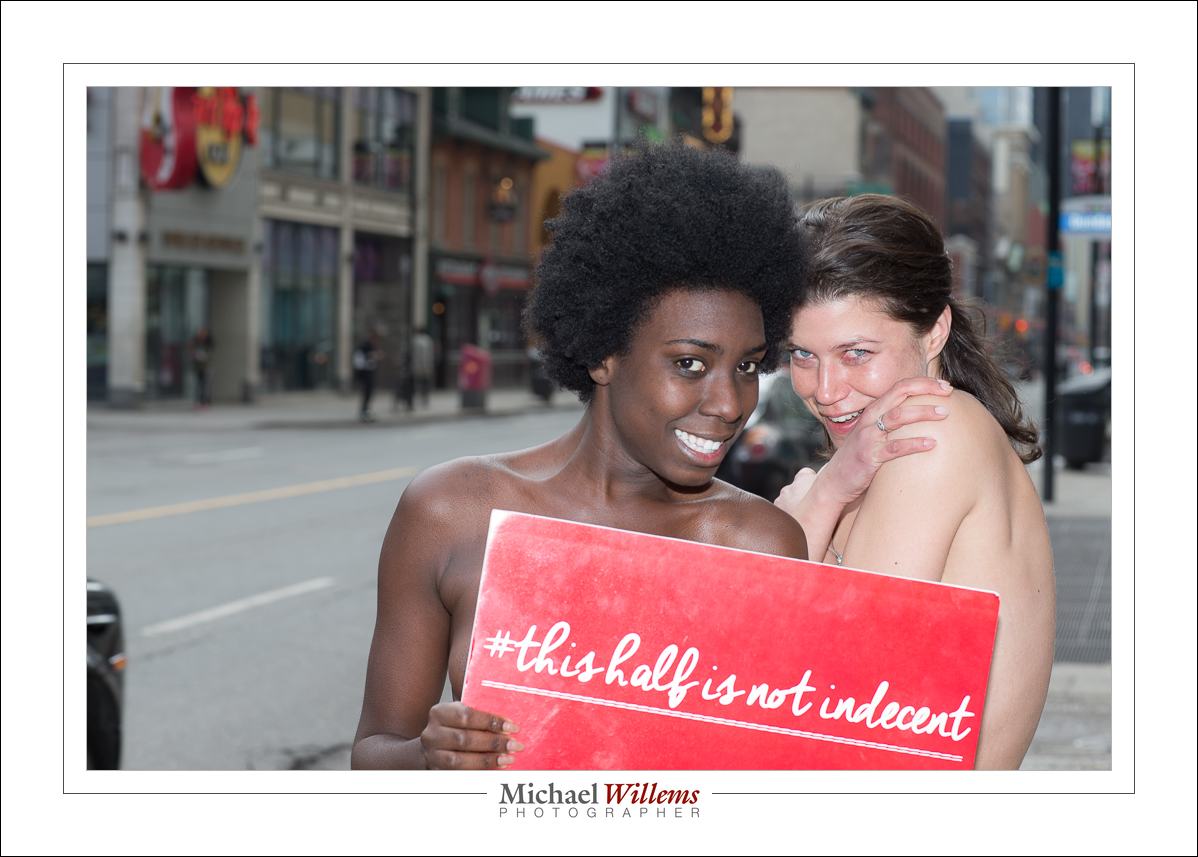
This lens is the perfect length for half body shots like this; and it is long enough to get blurry backgrounds even at f/5.6. Witness this, at Yonge-Dundas Square in Toronto (see here for the whole story):

If I move farther back, it is usable for full body shots too, of course:

Because it is a prime, it gives me the consistency I love: f/6.3 is f/6.3, and 1/100th sec is 1/100th sec. (With a zoom, on the other hand, you have to get used to motion blur effect and blurred background effect being different at every zoom setting.)

With this lens, I need to remember to move back and forth, and to leave enough space. But the point is that you can do that easily enough.

If you use a crop camera, a 50m lens would give you a comparable effect.

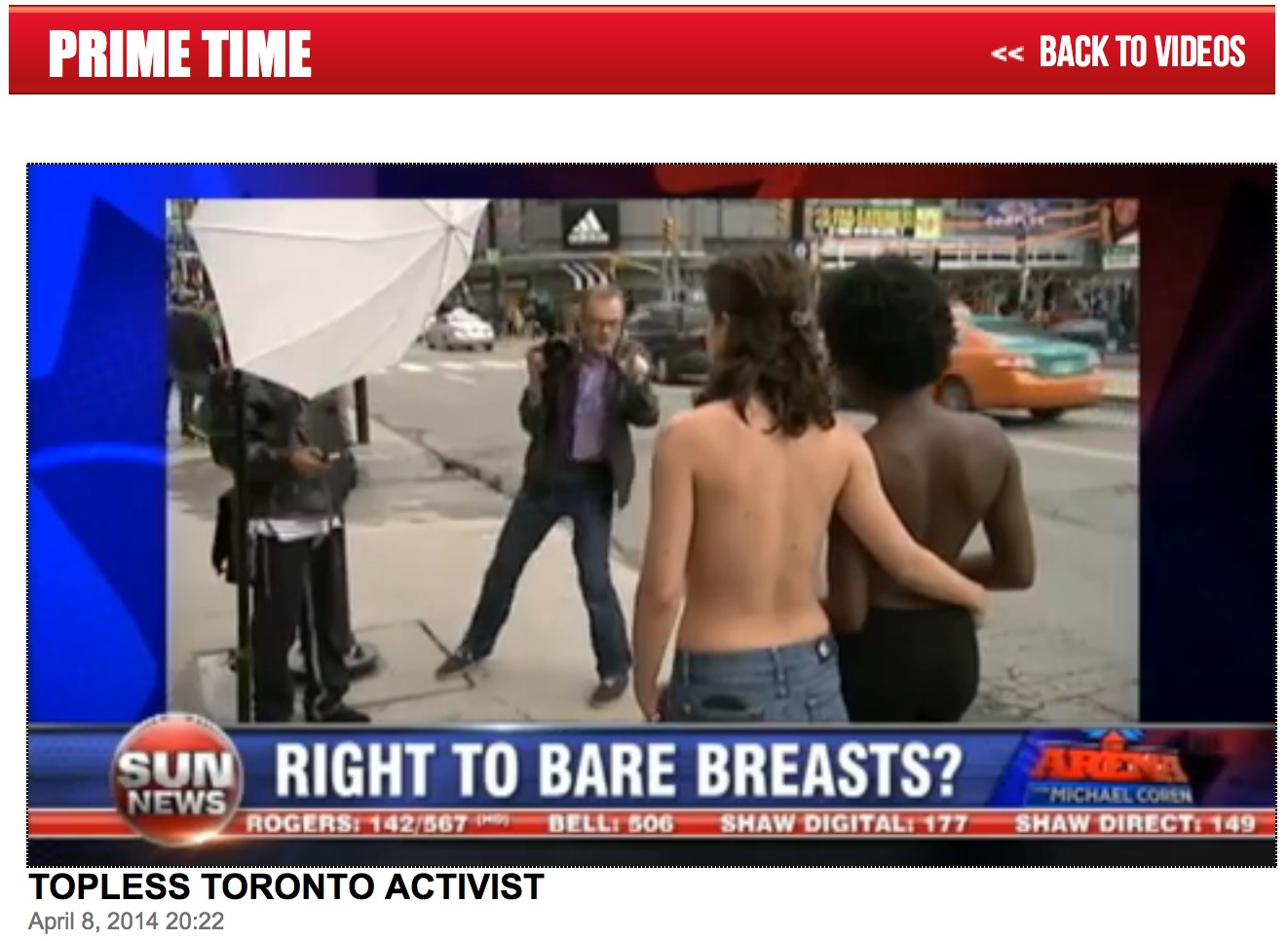
OK, and as a final shot, a screen shot from Sun News TV that aired two days ago, with the two Topfree Rights women and me taking photos of them:

Cheers!
Michael