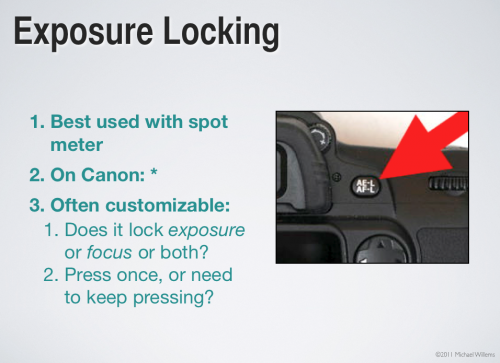
Exposure lock

Beginners may wonder what the AE-L/AF-L or the “*” button on their camera is for.

Here’s what. It’s called “exposure lock”.

It allows you to do the following:

  1. Aim at something you want to expose well (a mid0greay object, ideally);
  2. Press the lock button;
  3. While still holding it down, now recompose (i.e. aim the camera at another area);
  4. The focus and click.

That way you get a picture that is focused on what you set as the final composition, but its exposure is based on where you were aiming earlier, when you pressed the lock button.

You might use this if shooting a person against a very white or dark wll. Aim at the person, lock, now aim back at the rest of the scene, now takethe image The exposure will be based on the person, not on the wall.

Two things you need to be sure to do for this to work:

  1. Set your meter to spot metering.
  2. While locking, be sure to aim at an object that is not very dark nor very light – an “18% grey” object, like a Grey Card or like Uncle Fred’s grey suit.

Do this and all your images will be exposed great.

So why do we not use this all the time? Simply because it takes time.


Nifty.

The 50mm lens continues to be a favourite, but not always for the same reason.

There are in fact four reasons people often say they like a 50mm lens:

  1. On a full frame camera, it has the width of view that our eyes see sharply. This gives it a natural look: no compressed perspective (telephoto lens), and no expanded perspective (wide angle lens).
  2. Or – on a crop camera, it is a 75/80mm lens, which makes it a great portrait lens.
  3. And most 50mm lenses are fast. Meaning a low “f-number”, meaning a wide aperture, meaning selective depth of field.
  4. And finally, that also gives you a nice fast shutter speed in low light without having to go to very high ISO values.

Those last two points are illustrated by this picture, 50mm at f/1.2:

Reem, by Michael Willems

Pay here!


Unpredictable?

Another tip re flash (un-)predictability:

Sometimes it’s not the flash that is unpredictable; it is the review on your camera.

If your camera has a LCD brightness adjustment, set it to a constant value.

I was reminded of this the oterh day when I shot some shots with my 7D instead of the 1Ds. The 7D defaults to setting LCD brightness by itself. In these cases, when you take a shot and view it, you never know whether you are seeing a dark shot, say, or just a dark preview of a good shot.

In fact I found myself looking at shots twice, and once I’d see a dark shot, apparently underexposed; once, a bright shot, that looked fine.

I immediately realized what I was seeing, and I set the LCD brightness to “manual”, not “auto”. That problem was solved. I suggest you all do the same.

(And you really ought to use the histogram to judge your images, not the LCD, but you knew that already. Right?)


Tip of the day

Thinking a little more about yesterday’s post: here’s a suggestion for you.

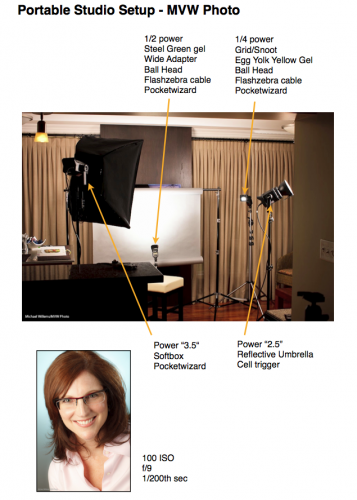
When you find a setup thart works, or when you pack your bag just the way you like – anything like that, make a one-page cheat sheet for yourself.

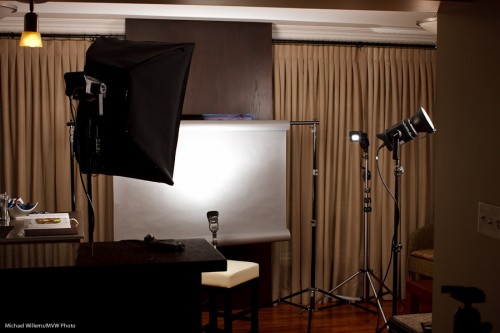
Like mine for the portable studio I showed you yesterday:

Click through to see it as a PDF:

HomeStudio-Small

And of course I have that cheat sheet PDF on my iPad also.

These “recipe” sheets help me or my assistant quickly set up a starting situation, in case I am in a hurry. (OK, I am always in a hurry.) This way, I ensure I do not forget something. I have one for my lighting bag (what goes where), for common lighting situations, and for common shoots.


A simple lighting setup?

What one person finds complicated, another finds simple.

And vice versa. A friend who visited the other night reminded me of this, when I talked about the simple four-flash light setup I was using for a headshot:

And as he said that, I realized that perhaps it’s not simple.

But if you want to take portraits, then it should be. In other words, without knowing how to do a “traditional” portrait setup, it is hard to do creative portraits. No, that does not mean you need to make all portraits traditional – you can do great stuff with one off-camera speedlight and a grid.

But you need to know how a traditional portrait is made. Which is with:

  1. A backdrop (paper roll, here).
  2. A main, or “key” light, in this case a Bowens strobe with a softbox.
  3. A fill light (Bowens strobe with umbrella, in this case).
  4. A hair light (speedlight with Honl Photo grid and egg yolk yellow gel).
  5. A background light (speedlight with Honl Photo blue-green gel).
  6. A way to drive them: Here, I used one strobe and two speedlights fired by pocketwizards; one strobe by the light-sensitive cell.
  7. Metering: I used light meter to arrive at f/9.0 at 100 ISO and 1/200th second.
  8. Ratios: I set the fill two stops darker than the key. And the hair and background light by trial and error (I got them right first time – done it before).

A note about those gels: colour makes a difference. I love the blue-green gel on the background, to contrast with the red hair – contrast is good. That’s why the butcher uses green plastic between the red meat – to make it look redder. (Oh wait – butcher? We buy meat at the supermarket now, in neat little packages. Dumb me.)

Anyhow – parsing makes things simpler. If you are faced with a complex situation, parse it, i.e. take it apart, one thing at a time. Analyse each layer until you understand it, then go on to the next layer. And before you know it, you will be saying “that’s simple”.

That’s what you learn when I teach you: how to make complex situations simple by understanding the elements, then building on those. Deductive learning, if you will.

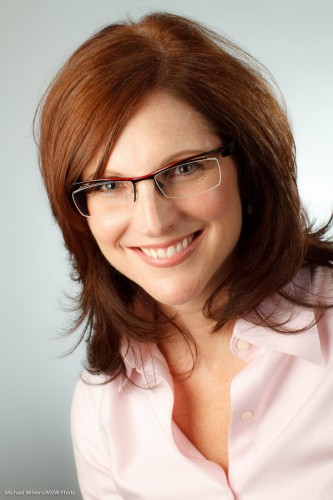
And what does the setup above produce? Portraits like this:

Headshot (Photo: Michael Willems)

(Canon 7D at f/9.0, 1/200th sec, 100 ISO)

A plug, if I may: if you, too, need an updated headshot, and live in the Greater Toronto Area, do call me. For Facebook, your resume, LinkedIn, or your web site: a good headshot helps, and Headshots Specials are on during the month of September!


A lens experiment

On my just-finished Caribbean holiday, I decided to try an experiment.

For most of my travel shots I use the super-wide lens, but I always bring a long lens as well. Normally, the Canon 70-200 f/2.8L IS. A superb lens, but heavy and big.

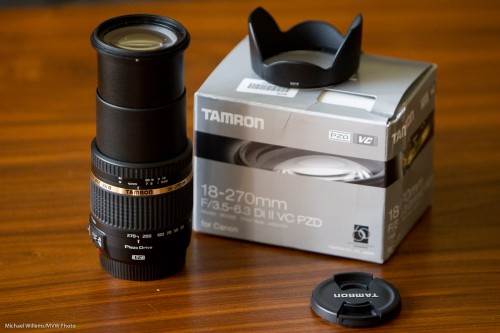
So this time I used an all-round consumer lens on my second camera- namely, a Tamron 18-270 mm f/3.5-6.3 Di II VC PZD stabilized lens for Canon. Here it is:
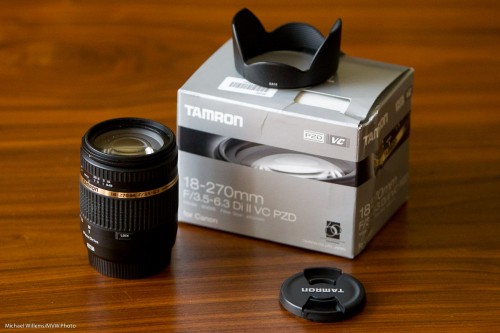
And here it is, pulled out to its full length:
I decided to try this lens for three reasons:

  • To see the differences (I have only used expenive lenses for many years)
  • For convenience – 18-270mm in one small, light package.
  • For length: 270mm on my crop camera, the 7D, is 432mm!

So how did it do?

Obviously, the convenience stands out. One lens, not three. And the lower weight. I certainly appreciated that. And the longer effective length. And if I had bought this lens, instead of borrowing it from the importer, I would have also appreciated the great price point.

Through the vacation, the lens performed well. No issues, no trouble focusing, no noisiness, no trouble of any sort. It did what it was supposed to do. I used it in one-shot focus mode, and in that mode, focus worked fine. Vibration Control (“IS” in Canon terms) also worked well – and this function is essential on a long lens.
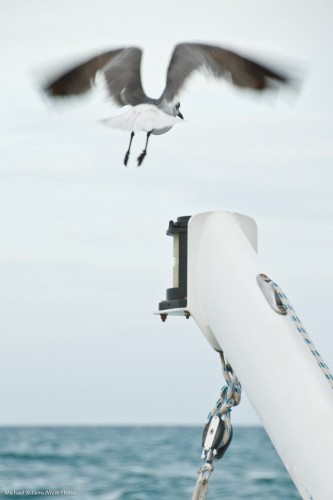
Sint Maarten Gull (Photo: Michael Willems)

As a regular and intelligent reader, you know there is a price for everything.

In this case, that price is mainly the smaller aperture (f/6.3 when zoomed out, as opposed to f/2.8 on my “regular” pro lens), with additional “small reasons”. Many people would not even notice these, but as a spoiled pro lens user, I do.

So you do need to keep in mind I am comparing apples with oranges here… given that, I see little things like:

  • The lens drops when you aim it down – hence the need for a “lock” button to prevent it doing that.
  • Turning the zoom is fairly smooth, but not as smooth as on my 70-200. The zoom smoothness is also not the same all through the zoom range.
  • Having used pro lenses for so long, the fact that the lens would not go down to f/2.8 kept making me think I was in the wrong mode – each time it took me a moment to realize why the numbers weren’t doing what I expected them to!
  • Especially when zooming in all the way, this lens is not quite as sharp as the oranges it is being compared to. Don’t be put off by that – as said, I am comparing it to a dedicated, heavy, $2.500 lens. The real question is: is it sharp enough? You judge: click on images and then click on “show full size”. This is not full size as it came out of the camera, of course, but it gives you an idea. Of course a tad of Lightroom sharpening takes care of most issues – don’t “pixel peep” too much. (Also – longer lenses are less sharp because of the air moving in between yo and your subject – do not mistake that for lens sharpness!)
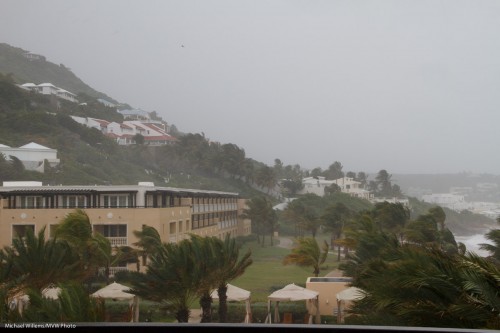
  • More barrel and pincushion distortion at the wide and long ends.

A few sample shots:
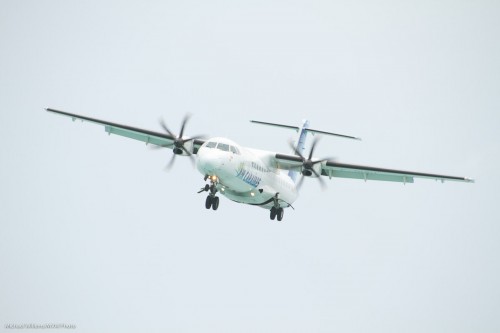
Sint Maarten (Photo: Michael Willems)

Sint Maarten (Photo: Michael Willems)

Sint Maarten (Photo: Michael Willems)

A wide angle shot; note the pincushion distortion:
Sint Maarten (Photo: Michael Willems)

I was happy (and surprised) to see no appreciable amount of chromatic aberration: I would have expected more on this lens.

Image quality seems a little less when you zoom in all the way – but that is to be expected, and in my view, 270mm is a bonus gift horse that one should not look in the mouth.

So when would I use a lens like this?

  • When I want 270mm – a great long focal length.
  • When I want convenience, and an “all in one” package.
  • When weight and size are an issue.
  • When price is important.
  • When I want to minimize lens changes, eg in dusty environments.
  • When I can only bring one camera.
  • When I expect to quickly need to change from wide to telephoto.
  • When there is plenty of light.

When would I not use it?

  • When shooting in low light environments. f/6.3 is enough in the sun or in a studio – perhaps somewhat less so in low light.
  • When quality is utterly paramount, like when shooting stock photos.
  • When shooting sports (I did not test continuous focus but I expect it would not be as good as the Canon lenses here).

This experiment was successful – I would consider carrying a “one lens does it all” again in the right circumstances, and if so, if only because of its excellent 18-270mm range, this Tamron is high on the list.


Note: As is the norm with my reviews and product mentions, I have not been paid anything for writing this review.
Filter question

A reader asked me this in an email, the other day:

hello , i was wondering how can you know how to get the right filter for your camera ?!

So that is an interesting question.

First, it is for the lens, not the camera. Each lens takes different filters.

There are two types of filters:

  • A UV filter is just for protection. I leave mine off, and only put them on when I am on the beach (as I hope to be as you read this), or when I am in a rainstorm, sandstorm or snowstorm. So I do have them, but do nto uyse much.
  • A polarizer – as you saw yesterday – is for turning skies blue and eliminating reflections.

But if you do not know what filter you need.. perhaps you do not need one at all. I don’t usually use any filters except a protection filter when I am in bad weather, as said above. Or a polarizer when I am shooting at mid day and want the skies to turn blue, or when I want water reflections to minimise.

As for how expensive a filter should be: Between $50 and $150, generally. Thin filters, used for wide angle lenses, cost more.


Outdoor flash

Summer is still here, so I think it might be a good time to repeat a couple of flash tips for the summer. Especially as I plan to disappear into the sun for a week, Friday.

Outdoors you often need flash. Sunlight is harsh: so you need to fill in the shadows.

Outdoors you need max power. So keep your speed below the synch speed – 1/250th second on my 1Ds camera. Else you need to use high-speed flash, which loses power. Which you can ill afford on those sunny days.

Outdoors you can use direct flash, aimed at your subject. It is better to have studios and umbrellas and such – but outdoors you do not have that luxury, and you do not want to lose light.

So use a direct flash, and really, it can look very good. Especially if you take the flash intensity down a little (that’s what we call “fill flash” – 1-2 stops below ambient).

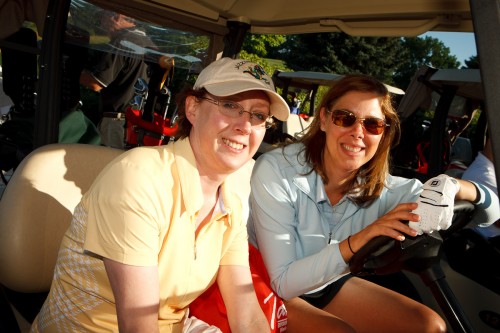
For a recent example of fill flash, see this image I shot at Minister Takhar’s Golf Open the other day.

Golfers (Photo: Michael Willems)

Not high art – but you can see the faces, and they are not half black. And often, that is all we want from a picture.


Yesterday

A student took this snap of me yesterday:

Photographer Michael Willems

He did this as follows:

  • He used his Canon 60D with my 50mm f/1.2 lens.
  • He used his new 580 EX II speedlight, bounced off the ceiling behind him.
  • The camera was set to manual exposure, f/5.6, 1/30th second
  • He selected 400 ISO.

Typical “indoors flash” settings.

The 50mm lens was set to f/5.6, so that means you could have done the same with any lens in the range of 50mm. This kind of lens length (meaning 80mm on a full frame body) is great for portraits. Which is why the 50mm (crop body) or 85mm (full-frame body) are such popular lenses.

If you do not yet own a 50mm prime lens, go get one. 50mm f/1.8, or if you can afford it, f/1.4 – or go all the way as I did, and get the 50mm f/1.2, but you will not using it at f/1.2 much.


Classy!

Fuji – I love your X100 camera.

I also love Fuji’s Canadian outfit. Who just sent me a certificate for a free 13×20″ mounted art canvas print, just for buying the X100!

And who iterated their service level: it is free, and better than Canon Canada’s CPS (which I no longer use because it costs money).  Fuji promises two hour email/phone support. Two business day repairs. Free shipping. Loaners if repairs take time. Wow!

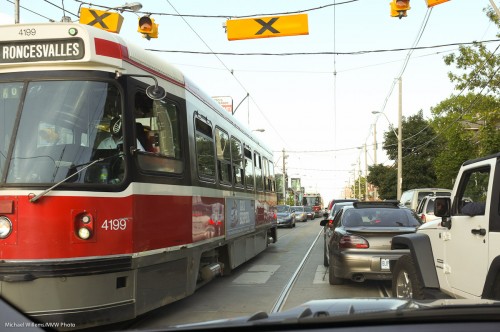
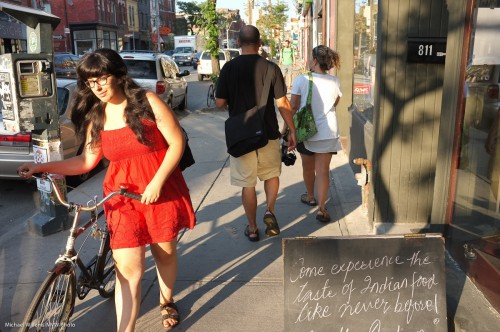
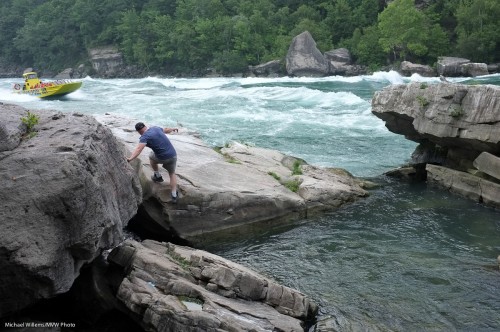
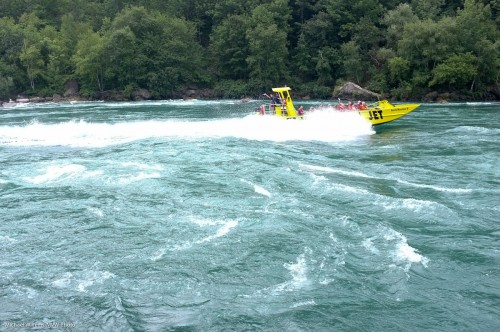
Here’s a few more snaps taken with this little camera recently in Toronto and Niagara, respectively:

Tip of the day: For an entire day, shoot with one focal length, namely 35mm on a full frame camera or 24mm on a “crop” camera. You will see this enforces a certain discipline of compositional thought.