View your work

One of the most important things you should do as a photographer is to review your portfolio with a pro. Critiquing (not criticizing – big difference) your work is the best way by far to improve quickly.

Full disclosure: I offer this as a service. Portfolio reviews can be done via Skype/online and are a very beneficial formof tuition. “Tough love” is a way of introducing feedback.

And however you do it, get that feedback. Every good learning system, from evolution in biology to op-amps in electronics, uses feedback to adjust its output to external traction to that output.

So however you do it, get feedback, and then act on it in Lightroom or Aperture and become your own critic.

In the next week, some examples. Stay tuned!

Shooting an Airshow

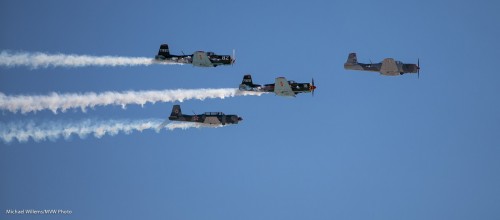
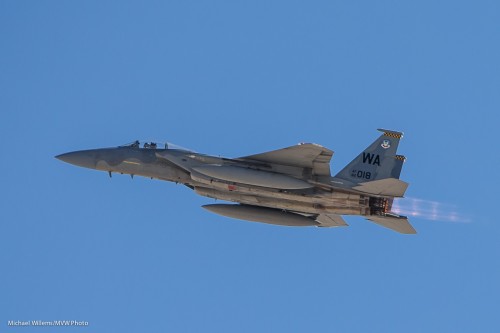
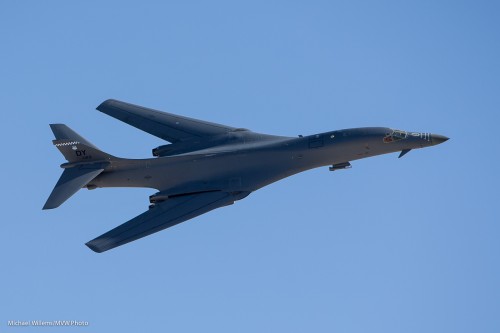
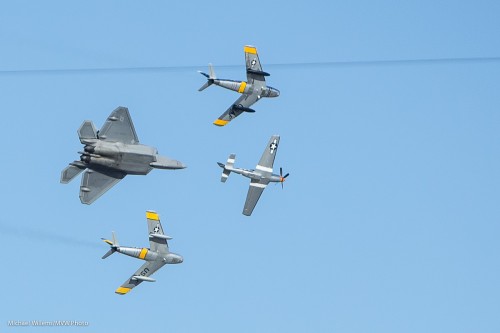
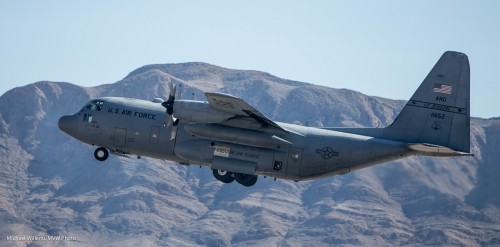
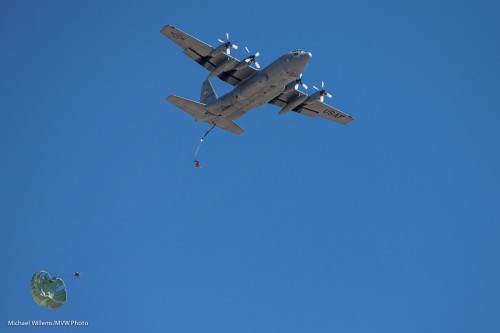
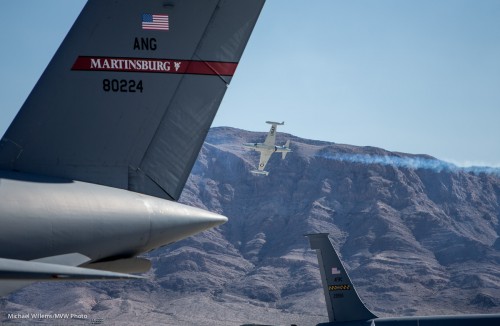
I took a few shots yesterday at an airshow in Las Vegas.

And this is interesting to you why? Because it reminds me to tell you something about shooting air shows and such.

Equipment:

  1. Use a stabilized long lens-  200-400 mm or longer is best.
  2. Set the stabilizer to “Active” or “Mode 2” if it has that option: you will be panning with the aircraft.
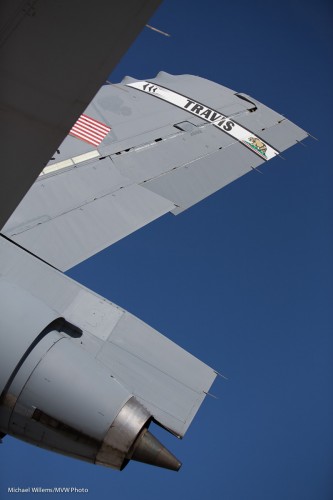
  3. Also bring a wide lens for close-up shots of ground equipment and parked aircraft.

Camera settings:

  1. Use manual mode. Figure out exposure for aircraft and set to that. Take into account direction – back lit or front lit, that makes a difference.
  2. Set your focus mode to AF-C / AI Servo. Continuous focus is usually best.
  3. Ensure a shutter speed that is fast enough – maybe 1/500th second for prop planes and 1/2000th or faster for jets.
  4. Use continuous shutter release mode.

A few more samples:

Other:

  1. Get close to the landing strip
  2. Arrive early and get a good spot with no-one in front of you
  3. Crop images when needed!
  4. Your bag may be searched, so keep it simple.
  5. As said above… use a wide lens for detail shots – lots of stuff on the ground.
  6. I always use one focus spot, except at air shows.. only one thing in the sky. So I use the “camera chooses where to focus” way. But one thing I had not realized: the camera will try to focus on the darm smoke trails. So a smaller focus area might be a good idea.

And finally, a few more samples. All at or around 1/2500th second, f/2.8, 100 ISO, with the 70-200mm lens, cropped as needed.

So.. go shoot at airshows, and enjoy shooting moving objects.


A ‘Tog Gotta Do What A ‘Tog’s Gotta Do

If you are an amateur or an emerging pro, be careful before agreeing to shoot an event! Events mark important milestones in life, and they should definitely be photographed. But they are tough. Very tough. Much more difficult than studio shooting.

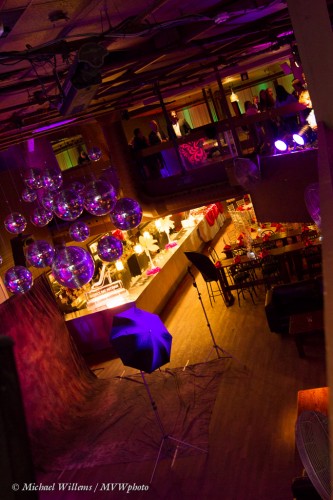
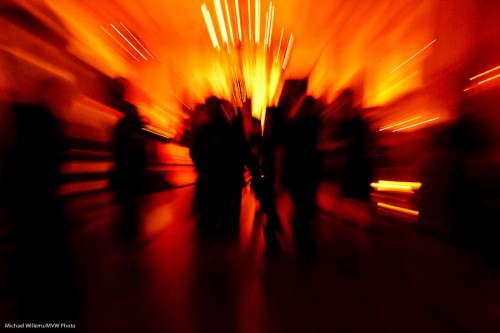
At a typical event, last night night’s Bat Mitzvah party, I need to get shots like this:

I must get this. No ifs or buts. This is a must-have: the Bat Mitzvah girl’s chair dance.

Alas, the photographer at an event like this is faced with:

  • It’s way too dark.
  • It’s also too contrasty: spotlights bright, background dark.
  • No bounce options in areas with high-dark ceilings.
  • Other areas have beams stopping my light.
  • Other areas have coloured walls or spotlights.
  • You set up for one area and then the action moves quickly to a different area – no time to redo your settings.
  • Action is too fast for me to follow.
  • You get ready and then the subjects turn away from you just as the important thing is happening!
  • In the dark I cannot see my camera’s controls.
  • In the dark I cannot autofocus.
  • It’s all moving too fast to manually focus.
  • No-one tells me when important moments are going to happen – or where!

All these and more – but failure is not an option. That’s why you hire a pro to do it.

In the next weeks I shall touch upon this subject repeatedly, with some techniques to get you started. Unless you are an experienced pro, do not attempt to shoot an event (like a wedding) until you have practiced many times. But anyway, my tips and techniques will help.

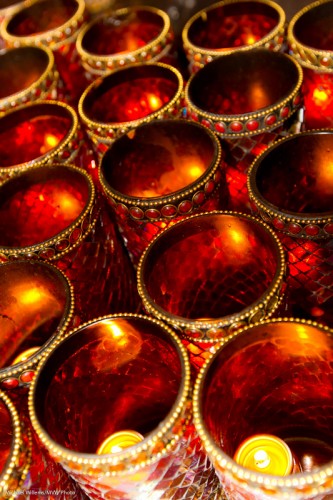
Today – what to do when you cannot bounce off a black, high ceiling? Like this:
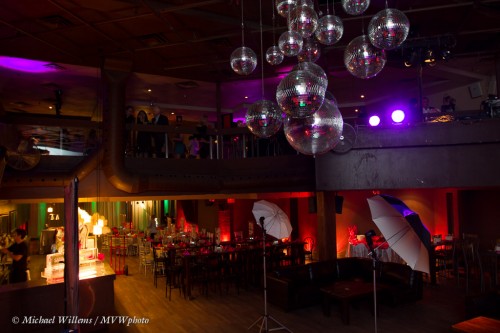
Well you can do sub-optimal stuff, like use a Fong Lightsphere (a useful device to save your behind sometimes, but not creative), or use direct flash. Ouch. Better if you get creative!

On the stage behind me, I had noticed a big projector screen:
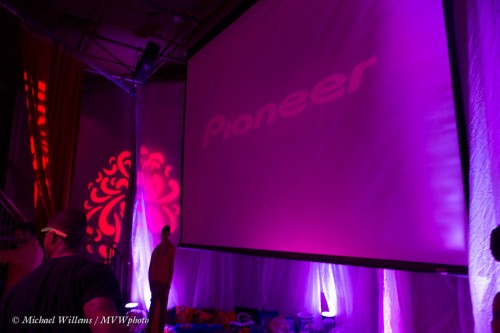
So now I have a solution. Zoom my flash in to 80mm and then aim it behind me, directly at the screen – something like this:
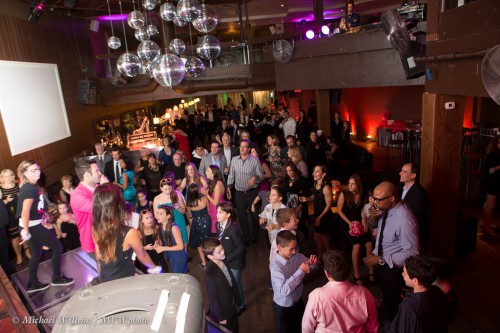
See the bright screen left? Be VERY careful how you aim your speedlight: miss the screen and you have no effect at all.

But if you do it well, you have now solved your problem: a great big softbox on the wall!
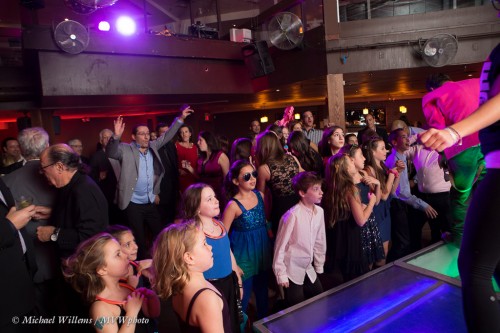
BONUS TECHNIQUE:

One I discovered a while ago by accident. But in retrospect it should have been obvious.

You saw, in the first shots, those disco balls? Aim your flash directly at them and you get great glittery decoration of otherwise humdrum shots:
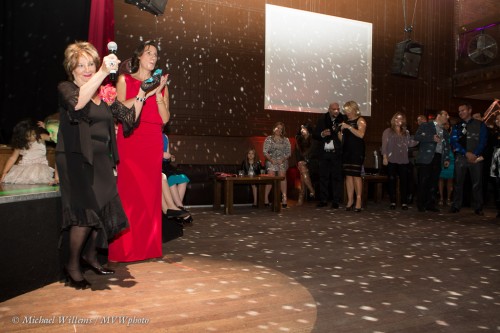
So there’s just two of hundreds of technique points for you – have fun in this festive season! And remember: don’t give up. Photography is problem solving!


“Manual”

I frequently point out to my students that there is no such thing as “manual” – there are many “manuals”. You can set (not sex) exposure manually. Or focus. Or flash power. Or focus point selection. And so on.

So today let’s talk about manual focus. When you you use manual focus?

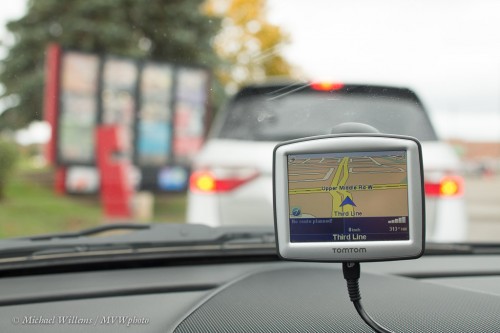
If you are me, the answer is “fairly frequently”. Like when I was picking up lunch just now:

The full list of reasons can include:

  • Because you like having control.
  • Because your lens only supports manual focus.
  • Because you are better than your autofocus system.
  • Because you are doing macro shots and accurate focus where you want it is critical.
  • Because the scene has no clear focus areas (your camera needs good light and good contract).

In my case, all of the above sometimes apply. The AF system is quicker, and pretty good; but I am pretty good also.

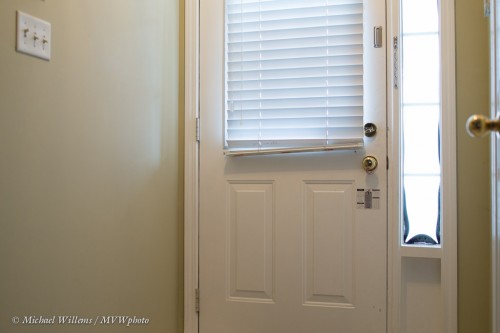
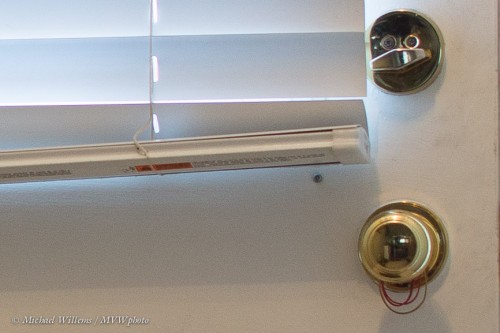
My front door, earlier today:

Which as you can see is sharp:

So try doing manual focus for a day. Set the switch on your lens to “M” and do it by hand.

The best technique is to go back and forth around the sharpest point, making the oscillations smaller and smaller. While this is slower then the AF system, it can rival, or sometimes exceed, its results, especially on full-frame classical SLRs, with their bright viewfinder and their clear sharp view. It is a little trickier on smaller-frame SLRs and on transparent mirror cameras like some Sony cameras, but it is still doable.

When do I not use manual focus?

  1. When the subject is moving
  2. Especially when I am using AI Servo/AF-C mode (the AF system keeps tracking the subject).
  3. When I am in a hurry.

But failing this, manual can be a good way to do it.

Oh, and my lunch? A Big Mac, and taken with the Canon 45mm Tilt-Shift lens – a lens which only has manual focus abilities.


Opportunity Knocks

Opportunity abounds this season – in many ways!

You can have me teach you – at Vistek Mississauga, at Sheridan College, and in the form of workshops (A Toronto Photo Club tonight; Las Vegas in November) or of private or small group coaching, which is usually the best way to quickly tie all the loose ends together and fill the gaps. Contact me if you are interested before the holidays!

You can have portraits made – family portraits are on special until December, so that you can have anything from a quick portrait to an extensive session done at a special rate, to use over the holidays.

And you can go shoot! This season is great, because it offers challenges. Dreary days. Bad light (if like me you are in the Northern Hemisphere). Food. Parties. Macro Studio. Effects.  Lights. Let your imagination run wild and learn some technique to capture this season. There’s so much to shoot!

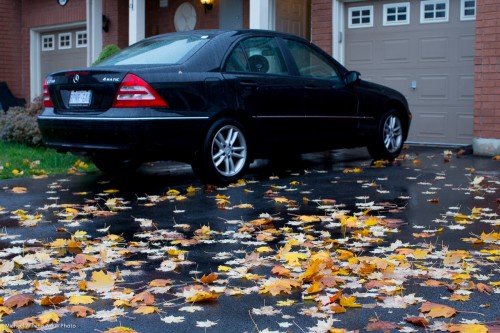
And to prove my point I just walked outside and took a few snaps outside my front door (and yes it is cold and rainy): 50mm lens, 400 ISO, 1/125th sec, f/5.6:

In the next weeks I will expand on some of these possibilities. Meanwhile.. have fun.


A couple of Q&A notes for you all!

For new readers especially, allow me to share a few Q&A notes with you…

Q: Why do you do this teaching site? And why is it free? A: because I believe in giving back. I teach photography, as you know, all over the world, from Toronto to Las Vegas to Europe; I teach at Sheridan College; at Vistek in Mississauga, and I teach and coach privately. This daily article is an extension of that. Free, because I am giving back. But also because I hope you will all tell your friends to follow this. And because I know that some of you will then use my services.

Q: what services do you provide? A: Photography and teaching. Teaching, because just a few lessons will help you master those aspects of craft of photography that you really need to learn. And photography: I shoot events (weddings, parties, bar/bat mitzvahs, christenings, corporate events, and so on); portraits (engagement shoots; corporate portraits; portraits for your LinkedIn, web site, of Facebook; family portraits, and so on). I also shoot industrial and product. With my wide range of equipment and skills, I can manage anything. See www.michaelwillems.ca for more information.

For wedding and family photos go here:

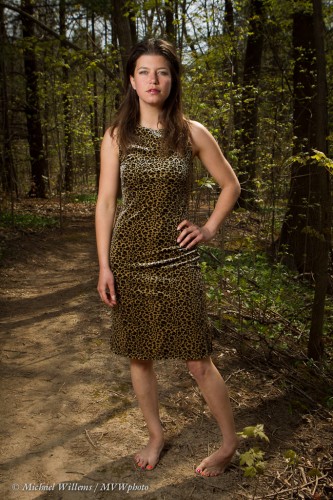
Q: Why is flash so prominent in your writing? A: Because it is my specialist subject – I teach people flash all over the world – but mainly because it is beautiful light once you know how it works. As in this photo of my frequent model; taken with one camera, one lens, and one off-camera small flash in an umbrella. Very very simple, and good right out of camera.


Q: Do you really do a daily post? A: yes. I may sometimes miss a day or two, but in that case I make up for it later by posting more. A post for every single day of the year so far. If I get tired of that I will slow down, but who gets tired of photography? It’s fun!

Q: Any special offers? A: glad you asked. Yes, I have autumn specials on right now for both individual teaching, group teaching, and photography. Contact me to hear trhe details.

Q: Can I repost this material? A: I will typically give you permission but only if I am fully credited; and it does depend on the purpose, location, etc. Just drop me an email to ask!

Q: Can I ask you a question? A: Yes please. I welcome your questions (send email to michael@michaelwillems.ca) and if interesting to others, will answer them on speedlighter.ca! Please also feel free at any time to comment on my posts (the little link at the bottom).

___

Back to regular programming!


Tardy Tuesday

A late post today – but since I have no boss, late is OK.

A quick tip for beginners: always make sure your lens is set to allow autofocus! (Set the switch on the side of the lens to “AF”, or “A/M”. If you set it to “M” or “MF”, you are disabling the autofocus system. A very common beginner’s mistake… and all your images are blurry. So, every time you change lenses, ensure you are set to autofocus. And if the camera refuses to focus, check the switch. And on some Nikon cameras, also ensure that the switch on the side of the camera is set to AF-S (usually) or AF-C (action).


Miscellany Monday

Miscellany Monday, here on speedlighter.ca!

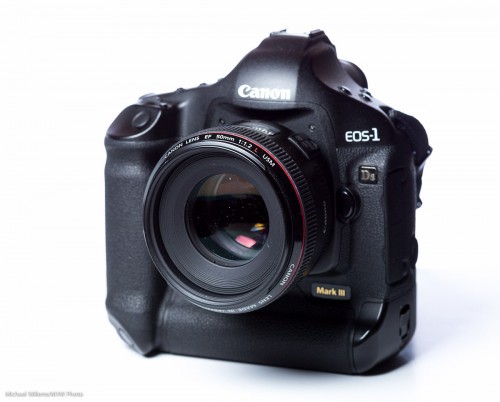
First: I am selling my Canon 1Ds Mk3. See the ad here: http://toronto.en.craigslist.ca/oak/pho/3277248183.html – if you are interested, contact me!

Second: The next few weeks, I am teaching my workshops at Vistek Mississauga – there are spots open, so take them right now!  Book here now.

  • Sep 22: DSLR Basics plus DSLR Advanced
  • Sep 29: Exposure and Composition, plus Basic Lighting for portrait and table-top photography
  • Oct 13: On-Location Mississauga Walk

Third: helping a student with his T3i Rebel the other day, I realized I need to point out something. Namely, metering, and in particular flash metering for shots where you use a flash as well as ambient light.

  • On a Canon 1-series body, evaluative metering is biased heavily toward the focus point. So if I compose a shot with the subject on the side, and I use a single focus point on the right to achieve that, metering will be biased towards the subject.
  • But on lower-end Canon cameras, evaluative metering is often biased toward the centre. So the camera in the shot above would try to light the centre, and would overexpose the subject.

If you see this phenomenon, you have several options.

  • You can set metering to average (centre-weighted) – this may just help.
  • Or you can put the subject in the middle and press the * button (flash lock), then recompose and shoot.
  • Or you can use flash compensation.

The thing is not to necessarily attempt to memorize what each camera does. The important lesson here is to realise that metering can make or break a shot, and that you have several options to solve issues that arise from this. As long as you know the fundamentals, you can solve any issue.


Welcome!

I see that there are many new readers – a big welcome to them here.

And for them, today let me explain what this site does for you.

I am, as you see, a full-time photographer. I shoot such diverse things as press, portraits, corporate, product, events (I am a big event shooter!), weddings, and art (including art nudes – my 5-week solo exhibit “To Find A Muse” just finished in Toronto’s historic Distillery art district – Framed giclée prints are now for sale: www.michaelsmuse.com).

I am also a big speedlighter. As my readers here know, nothing beats carrying small, convenient speedlights, especially when compared to carrying huge studio strobes. And when you know how speedlights work, you can get great results from them. Like this simple shot – made at mid-day, i.e. in awful light, with two speedlights and modifiers:

As an engineer, I understand the technical ins and outs; and as a photographer I love the art you can make with them.  And this blog teaches you to do that. Meaning that I teach the basics here, as well as advanced techniques. You need to know:

  • Limitations, and how to overcome them
  • How to make art with light
  • TTL: how it works, exactly
  • Camera settings
  • What you need to buy
  • Functionality you only get with speedlights
  • Canon versus Nikon
  • Practical tips
  • Shooting in a hurry

And so on.

Teaching is in my blood… coming from a long line of teachers, I love to convey knowledge – and I enjoy it! As an engineer, I have always thought good teachers make complex things simple – not the other way around. I teach at Sheridn College, and I have taught my signature Advanced Flash course in such places as Toronto, Las Vegas, London, Phoenix, Rotterdam, and Niagara; more to come. Every photographer should know these simple techniques. And you can learn them in my courses and private training (www.cameratraining.ca) but also by playing and trying, supported by this daily site.

Yes. Daily. Every day I write a post that helps you with some aspect of photography. Don’t ask me how.  For over three years now. And you can read all of it; search; read categories; etc.

What do I get out of it? Fame.. students… shoot clients… but especially, the satisfaction that I have contributed.

Enjoy!

Michael