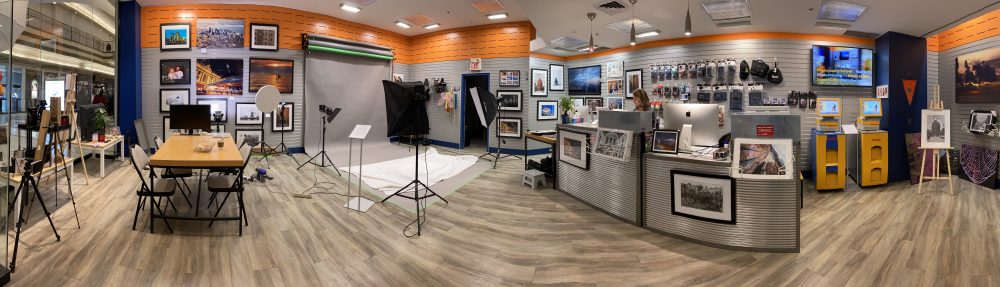
Wide angles, and why?

I like wide angle lenses, as this shot, taken the other night at an event I was shooting, shows:

A wide angle shot

A wide angle shot

I used a bounced flash and set the camera to manual mode and opened up the aperture, slowed down the shutter, and increased ISO enough to allow the available light to d some work as well.

And wide angle means:

  1. I can focus easily on “everything”
  2. I can use a slow shutter speed without blur
  3. I can get close to someone or something, zoom out, and thus introduce depth.

And that is what I did there.

Regrets, I've had a few…

…but then again, too few to mention. Except one, at the show: namely, that I don’t get to see the actual exhibition. I’m always presenting!

Michael Willems presenting, shot by Ray of RPW Photo

That said: I love the work.What could be better than educating thousands of people in a hobby (or profession) that is exciting, creative, fun, and extremely rewarding in almost every sense?

Those of you new to the blog: a few important tips.

  • Sign up for emails (on the right) so that you get an email every time I post. I write at least one learning post every day.
  • Search, using the search field
  • Go back – this blog is almost like a book: a post of a year ago is still entirely valid today!
  • Use the category cloud to search for key words.
  • Ask me questions – I’ll answer them on the blog!

And above all.. go shoot some nice pictures.. shoot a lot. And never stop learning.

Reiterated Trick

I mentioned this once before as an aside, but it is worth a post: a trick that tells you which flash is casting what light in your images.

Say I am lighting a person (like me) with a flash outside. Nice:

Subject lit with an off-camera flash

Subject lit with an off-camera flash

But how can I be sure this light is from the flash? I mean, is that really all the flash? Or is the subject in the sun? Or in a mix of light?

Solution: put a coloured gel onto the flash. Now you see:

Subject lit with an off-camera gelled flash

Subject lit with an off-camera gelled flash

Ah. So it was the flash! Not only that – you can see exactly where it is -and importantly, where it is not – illuminating the subject.

Useful trick, eh? One more reason to always carry gels along with you.

Digital SLR Gotchas: Auto ISO

Auto ISO is a great feature, but use it wisely. Here’s when NOT to set your DSLR to “Auto”:

  1. When using a tripod: you want low ISO then.
  2. When shooting in a studio setting: same, low ISO
  3. When using flash at events: dfoit yourself and select 400 or 800 as your starting point (and go higher if you need)
  4. When shooting sports: your camera will go to a low ISO: you should go to 1,600 ISO instead.

My most expensive camera does not have auto ISO – you do not need it. I like having it, but I can live without it.

My starting points: 200 ISO outdoors, 400 indoors, and 800 in tough light (sports, museums). And then vary from there.

Pic of the day

And how would you like to take pics like this, shot about an hour or two ago on my way back home from day one of the excellent Henry’s Digital Imaging Show:

Oakville.com party in Oakville

Oakville.com party in Oakville

How did I shoot this:

  • A Canon 1D Mark IV camera with a 16-35mm f/2.8 lens
  • The lens set to 16m (equals a “real” 22mm)
  • A flash on the camera set to -1 stop flash compensation
  • The camera set to -2 stops on the meter in manual (1/30th sec at f/4 if I recall correctly)
  • A Honl Photo half CTO gel on the flash
  • White balance set to “flash”

That’s how it’s done. Come to my courses and I’ll explain more!

At the show today!

Today I had a great time, as I hope did all my listeners, at the Digital Imaging show. Before it starts, the room looks like this:

Toronto's Digital Imaging Show, May 2010

And  then the doors open and it gets hectic:

Toronto's Digital Imaging Show, May 2010

And all seats fill up. Thousands of people, and I love seeing, listening, and talking to thousands of people.

If you want to hear me talking about Travel Photography, Flash photography, Digital SLRs, Lightroom and RAW, and much more: I’ll be there tomorrow until 4, and then all day Sunday as well.

Reader question

A reader just emailed me, telling me she recently attended a course for her Nikon D5000 camera, and says:

“I will be attending a fundraiser in Oakville this evening and bringing my camera (of course).  I am have a bit of difficulty firstly with indoor dimly lit lighting and secondly I am looking to create the look of my subject which is focused and the background is faded.  I am having many, many other problems, but for know if you could help out with those two that would be splendid!”

Let’s see if I can help. Of course there is a lot to learn (it’s what photographers spend years learning), but I am sure some quick tips will be of use.

First, you want photos like this:

Gregry Talas at The Kodiak Gallery

Gregory Talas at The Kodiak Gallery

In other words, photos where the background is well-lit by available light (not under-lit) and the subject is well lit by your flash (not over-lit).

Here’s some starters, then.

  1. Lens: You will probably want a “slightly wide angle” lens setting. This is a “real” lens setting of 35-45mm: that is a setting between 24 and 30mm zoom on the lens on your crop-factor camera (see the dial on the lens)
  2. ISO: Set your camera to 400 ISO, or 800 ISO if it is darker or the ceilings/walls are far away. or your pictures turn out too dark.
  3. Mode and settings: Select “Manual” exposure mode (“M” on the dial on top ) and choose a shutter speed of 1/30th second if it is dark (1/60th if it is bright). As for Aperture, select the lowest “F”-number you can go to (e.g. 3.5 or 4, depending on your lens; as low as 2.8 or even lower on a professional lens).
  4. If the previous step is difficult you can just use Program Mode, “P”.
  5. Flash: Turn on your SB-600 or SB-900 flash (you do have one, right?) and ensure you have fresh batteries, and spares.
  6. Bouncing: Above all: if at all possible, try to bounce the light off the wall/ceiling behind you.

What are we doing here?

  1. The wider angle is suitable for events, and makes it easier to shoot at low shutter speeds.
  2. high ISO and slow shutter speed give you a well-lit background
  3. The low “F”-number gives you your blurry background.
  4. The bouncing gives you nice, soft shadows and avoids overexposing your subject with harsh, flat, horrible direct flash light. It also avoids red-eye.

I hope that helps.

Please do search the blog here for terms like “bounce flash” and “events”, and scroll down and select the “FLASH” keyword and browse through those articles. Ignore the advanced ones, just read the ones that speak to your situation. Here’s a few samples:

And that’s just a quick search. This blog is a useful resource, if I say so myself, if you use the search function.

And as for your event: above all, have fun! Tell people “heads together” when you shootthe “grip and grins”. And enjoy making them smile.

And finally: take more courses. That’s what they are for, and you will be amazed at how few three-hour courses you actually need to learn photography. See you in class!

Digital SLR Gotchas: LCD

The LCD on your digital SLR is fabulous.

But do not use it to judge exposure, for one main reason: it is not objective. Its apparent brightness is affected by ambient light as well as by your LCD’s brightness settings, and this can easily lead you astray. I see this all the time in classes. “Why is my camera overexposing every shot?” is usually answered by “it’s not, but you have set your LCD to full brightness”.

My tip:

  1. Expose well (use the tips on this blog; learn exposure compensation; learn to use the spot meter).
  2. Use the histogram to judge whether you got it right.
  3. When using the LCD, use a Hoodman Hood Loupe.
  4. Set the LCD to “average” brightness.

I like to “expose to the right” – your preference may be different. Either way: do not judge a photo by the LCD on the back of your camera.

Flash: TTL or manual?

Do I set my flash to TTL or manual?

Both.

TTL (fully automatic flash measuring) is a revolution, and you should use it whenever:

  • The subject moves
  • You move
  • You have little time
  • You use one flash on camera
  • You use multiple flashes but they are within eyesight of each other

Use it as is (your flash shows “TTL” on the back display), and do not forget to use Flash compensation to adjust to taste (or when shooting dark or light subjects).

I used TTL here, Sunday night (with -2 stops flash compensation, or it would have been too bright):
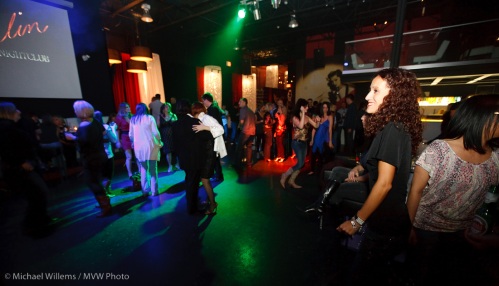
Berlin Nightclub in Oakville

Berlin Nightclub in Oakville

Manual (your flash displays “M” at the back and you set the power level to 1/1, or 1/2, 1/4, etc) is useful in cases almost opposite to the previous, namely:

  • You and your subject are stationary
  • Things are predictable and you want full control
  • You have time to meter, try, and iterate
  • You use multiple flashes and they cannot see each other
  • You use Pocketwizards

You can even mix: use TTL for most flashes but fire small accent lights using Pocketwizards and manually set flashes.

Earlier that same Sunday night, when I had time, I used three speedlites set to manual and fired by Pocketwizards, here:

Berlin Nightclub in Oakville

Berlin Nightclub in Oakville

You can probably see I also used some Honl gels: one red and one purple. And one flash was zoomed in to light the picture.

A good photographer knows both TTL and manual. Practice with both, and make them “your own”.