Crowds

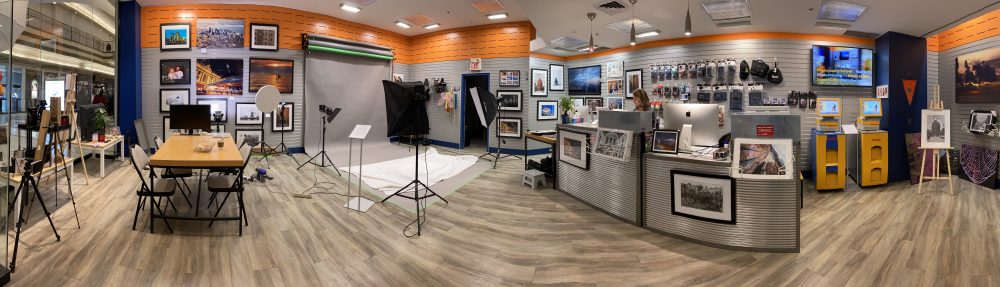
These are the crowds I like when I speak – this was at the recent Henry’s Photo Show at the International Centre in Toronto last month:

IMG_1499

That said – small classes also have their charm. Large groups make it easier for the speaker to see where the interest is – there is a “crowd spirit”, if you will – but small groups are much more individual in nature.

Either way, if you are interested in photography: today is a better time than ever for training. And it is more important than ever that you do it – a few hours’ training saves you years!

If you are new to digital photography, a course will teach you things such as:

  • Extras to add to your camera
  • How to Focus properly
  • How to use – and not use – the “scene modes”; and when to overrule the camera
  • How to use Exposure Compensation
  • When to use -and not use-  Flash

The kind of stuff camera manuals will never tell you.


Stop!

Stop down if you want even brightness across your image.

Or, on the other hand, open your lens to the wides stop if you want vignetting – often, for instance in portraits, it is an advantage.

Here is my ceiling, shot with my Canon 7D, with the 35mm lens fully open at f/1.4:

IMG_2218

And the same shot at f/2.0, just one stop from fully open:

IMG_2219

Can you see how the first one is vignetted, meaning it is darker along the edges? Save both images and flip rapidly between them, if it is not obvious to you here. You’ll see the difference, I promise.

(Yes, and this is on a crop camera. Let’s debunk the myth that this only happens on full-frame cameras.)

So: want vignetting? Then open your aperture all the way. Or want even brightness? Stop down by one or two stops.

When to look for black and white?

It seems almost too obvious, but one time you may want to consider going to black and white is… when you see strong blacks and whites. Like in this shot I made at a recent wedding:

MVWS9604

Strong blacks, strong whites, nice greys, and an off-centre composition. That makes this shot, wouldn’t you say?

Assignment: shoot one photo in black and white today. You can shoot in B/W in your camera or do it in Lightroom/Photoshop/etc.


Juxtapose!

One thing we as photographers always look for is juxtapositions. Things like:

  • Red vs green
  • Blue vs yellow
  • Old vs new
  • Large vs small
  • Clean vs dirty
  • Square vs round

Or as in this case: conservative Islamic vs Western liberal:

IMG_0921

Yes, that is the Great Pyramid.

Any juxtaposition makes us think “this is interesting”. And that makes for an interesting picture. So today’s tip: Whenever you see any kind of juxtaposition, have your “contrast-detector” go off, and ask yourself: “could there possibly be a picture here?” If in doubt, shoot!


Blurry backgrounds

…can be achieved by setting our lenses to a low aperture value (a large aperture) like f/1.4 (if you don’t know how to do this, you could use your camera’s Portrait Mode).

But that is not the only way to get these blurry backgrounds. The effect can also be achieved or enhanced by reducing the distance between us and our close object. Because it is the relative distance between the close and the far that determines the far object’s blurriness.

So if I move my hand really close, as close as I can focus, then even at f/5.6 I can get dramatic blurring in the background. And that is what is happening here:

Canon 7D, f/5.6, 1600 ISO

Canon 7D, f/5.6, 1600 ISO

Remember that whenever you want blurred backgrounds: get close to your object, and/or zoom in on it.

Best friend

Tip of the day: today a tip that will save you money.

Get yourself one (or a few) of these.

MVWS0006

$1 at the dollar store will get you several. And you use them to keep dust and sand off the camera, off your lenses, and away from your camera’s switches and openings. Dust that is not on your camera will not get into your camera.

And like a cleaner drives more smoothly (proven fact), a cleaner camera takes better pictures.

Four weeks to Phoenix

My “Advanced Flash for Pros” workshop in Phoenix, Arizona [link] on December 3 is getting signups, so it is definitely on, and we may need to schedule a second one (the number of participants in each one is limited to allow enough personal attention). Exciting – not just because of the workshop, which I teach regularly, but because of the location: I have never been to Arizona.

Any suggestions or things I should photograph near Phoenix in December?


Colour match

I noticed the matching colour, here in the picture below.

It is always a good idea to look at colour while you are shooting. And you can learn to notice. Start like this: If anything strikes you: shoot!

IMG_1910

Harmonious colours, is how we describe colours that are close together (as opposed to contrasting colours, which are opposite, like red-green, or blue-yellow). The above shows harmonious colours. These strikes us as gentle, soft, understated, even.

Taken at “Tribe” on 24 October 2009.