50 Ways

Outdoor flash:

The problem is all inside your head
She said to me
The answer is easy if you
Take it logically
I’d like to help you in your struggle
To be free
There must be fifty ways
To Use A Speedlight

There are; and sorry, Paul Simon.

Outdoors you want to make the background “darker for drama”. So you go to 100 ISO (lowest you can) and 1/250th second (fastest you can if using a flash). Then f/13-f/18 will give you a dark sky. Simple recipe!

f/18 may not be possible because your flashes may not have enough power. So to figure out what to use, you do this:

  1. Use two flashes on the subject’s left, and two on the right.
  2. One slightly higher; one lower.
  3. Both slightly behind subject aiming forward.
  4. Set them to manual/half power, say (full power is too much usually; flashes may overheat).
  5. Use them straight on – modifiers “eat” too much power.
  6. Fire them using Pocketwizards or similar radio triggers.
  7. Move the flashes as close as you can to the subject, and see what aperture that gets you (use a light meter or trial and error).

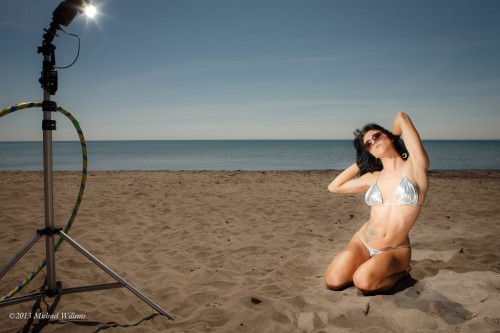
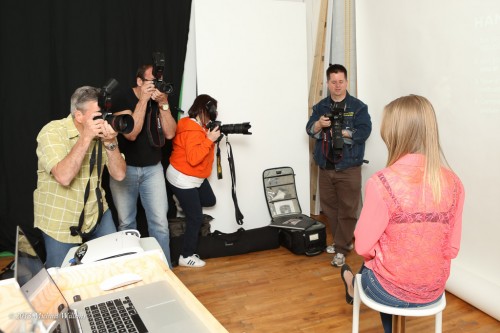
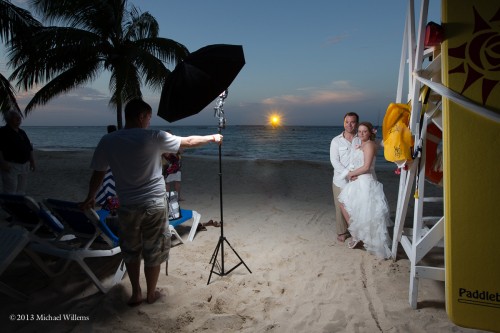
Today, for me, with two flashes on each side of the subject, this was f/13. Here’s the setup:
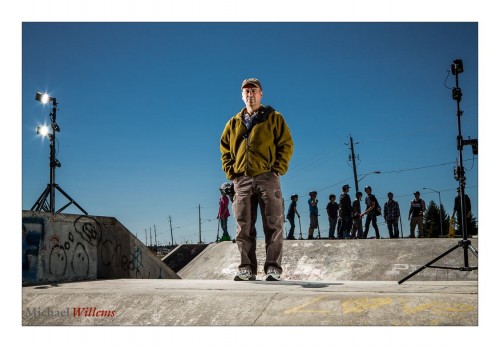
And that gets us:
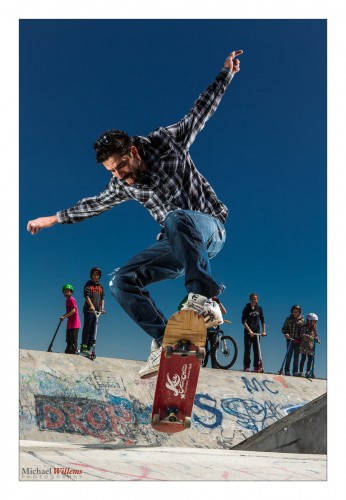
Not bad, eh?

Remember to pre-focus, and then use manual focus; also, go low enough so the subject is high; then, make sure you click when the subject is at the predetermined point.
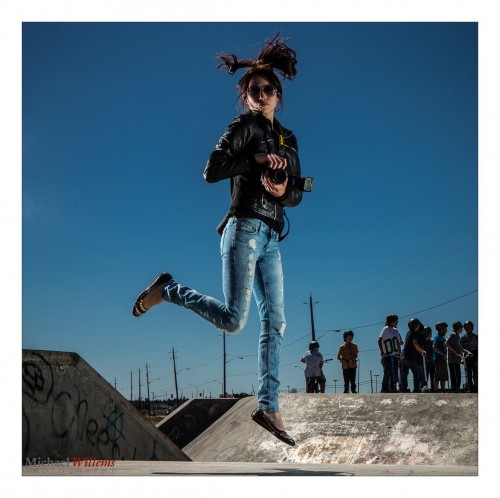
Easy, and I can teach you how to do this, as I taught the Porcupine Camera Club today here in Timmins, Ontario. There must be fifty ways to Use A Speedlight, and especially outside, these are fun!
 

Last call for….

….tomorrow night’s course in Hamilton, Ontario on Studio and Portrait photography (www.cameratraining.ca/Studio-Ham.html). In just three hours, from 7-10pm, get the fundamentals plus lots of practical tips and “guaranteed success” starting points, or “recipes”, for studio-style portraits.

It’s just $145, a very small class, taught by me in person, and you need nothing special (just bring your DSLR camera). Book right now on www.cameratraining.ca/Booking.html

What, again, is a “studio-style portait”?

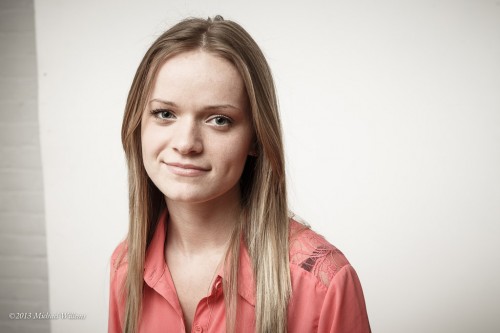
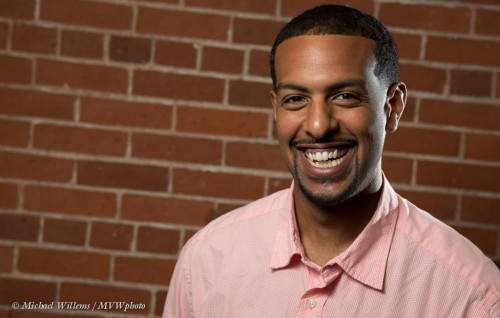
That picture qualifies, not because it was made in a studio (it was in the classroom at Vistek’s Flash course Saturday), but because it was made under controlled conditions:

  • The subject was “posed” (although I call it “positioned!) carefully.
  • It involved flash (not by any means necessary, but usual).
  • It has simple layouts.
  • There is no “clutter”.
  • Light(of whatever type) was carefully considered and controlled.
  • The subject is the subject – i.e. it is not an environmental portrait.

The point about controlling light is especially important. I used two small flashes in the case above: one. through an umbrella, for the main light (the “key light”) and one as the rim- or hair-light, shining towards the camera.

If you come tomorrow night, you will learn all about this, and much more – like light positioning, camera settings, using a light meter, success recipes, obtaining natural expressions: the list goes on, and all inside three hours, with a professional studio, a model, and myself. See you there?


Studio is simple

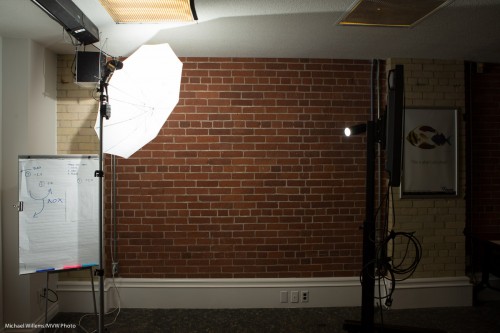
Studio shooting is very simple. This, today at my Vistek flash course, took but a moment or two to set up: a studio, using just ordinary speedlights and a few accessories:

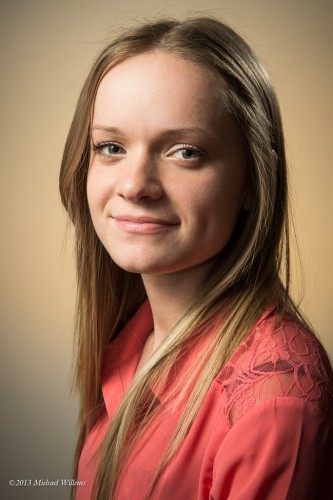
Two speedlights, fired by pocketwizards. One on a lightstand, through an umbrella. The other on a clamp through a snoot from the back. Both were to manual power at 1/4 power.

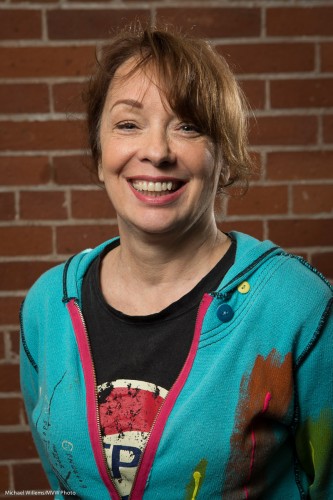
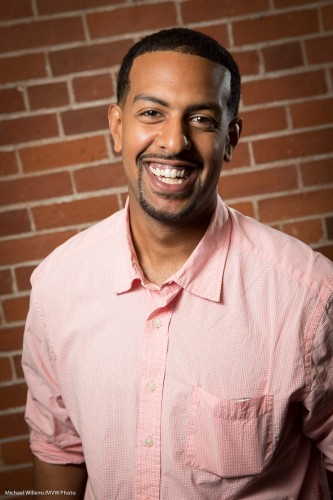
And at 200 ISO, f/5.6, 1/125th second, that results in this student portrait:

And the great thing about this kind of “manual” shooting, where the flash is also set to manual (rather than using TTL metering) is that once you have the light right, it is right for every subsequent shot.

Regardless of subject: a pale person dressed in white, darker person dressed in black, and everything in between. You will never need to re-meter, provided you have each subject stand in the same place.

And how do you like those smiles? And a hint: they were not created by telling people to smile.

___

NB: This post shows you it’s simple. Want to learn the details of this type of studio portraiture? Come to my Tuesday evening course in Hamilton: http://www.cameratraining.ca/Studio-Ham.html and I’ll teach you all this – pocketwizards, light meters, light angles, and more.

Beach Notes

So. Going to the beach and bringing my camera is a no-no, unless I have:

  1. Sunscreen.
  2. Either shady areas or an off-camera flash.

So here’s why. Today was the first day of good weather in Toronto. And here is model Danielle on the beach (Hanlan’s Beach in Toronto), the way a good photographer without flashes or reflectors might have captured her:

That is fine – well exposed, well composed, well focused. Which is all you can hope for. Great stuff.

But perhaps a tad boring, no?

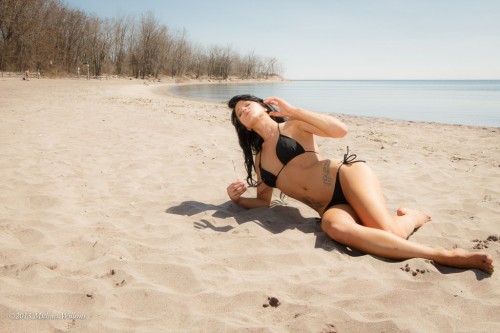
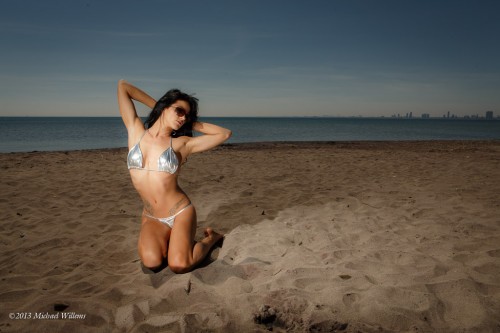
How about this instead? An artistic, dramatic portrait?

Taken at the same time. Yes – “bright pixels are sharp pixels”.

And I did this like this:

So:

  1. I exposed for a dark, saturated background.
  2. To this end, my camera was on manual at 1/250th sec at f/14, 125 ISO.
  3. Then I used a speedlight, set to half power, (manual), fired by pocketwizards, to light the subject.
  4. The speedlight was off camera, at an angle of almost 90 degrees.
  5. Yes and I held another such speedlight in my hand – photography is hard work.

What could be easier? A speedlight can do this in bright sunlight if unmodified . A strobe would be needed if I wanted to use an umbrella or softbox.

Seeing nude women on the beach, a man came up and chatted. “I like to lean, but I am told you cannot take good pictures in sun”, he kept telling me. “Yes you can. if you know and use flash”, I kept telling him. “No, cannot take good pictures in sun, shadow will be bad, light will be harsh”, he kept telling me. Yeah, right on for not listening. Yes, you can do great images in direct sunny 16 sunlight. All you need is flash knowledge and equipment.  It’s what I spend my life teaching and evangelizing.

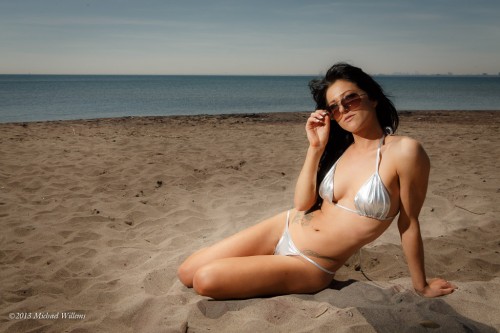
One more shot:

No photoshopping: that is how I shot it!
Oh.. and about the sunscreen?

I. Forgot.

Yes, even though I brought it, I forgot to apply it – forgot, I kid you not. So now the aloe vera cream to mitigate the pain. Hey, I know about photography, but in life I still make beginners’ mistakes. I can teach you photography (www.cameratraining.ca), but please do not ask me to teach you life.  I know when I am beaten – ouch!


Cardinal Rules for studio light

So yesterday I taught my signature “Advanced Flash” workshop in Hamilton. And one of subjects was restricting and directing light.

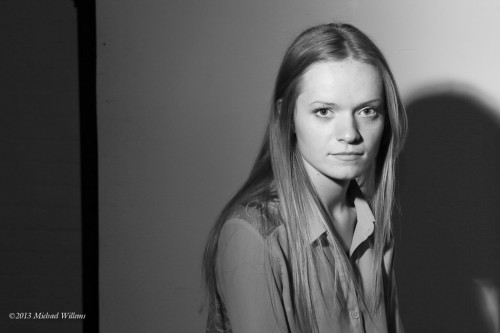
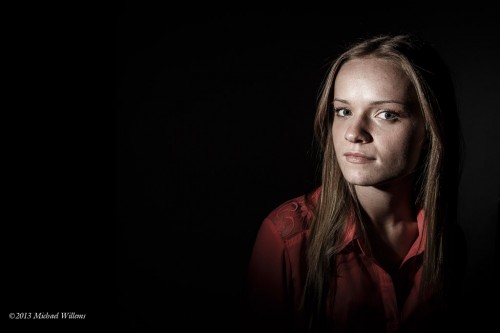
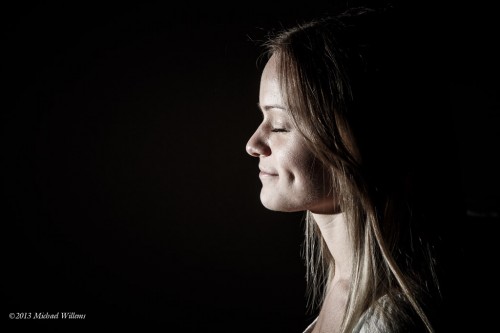
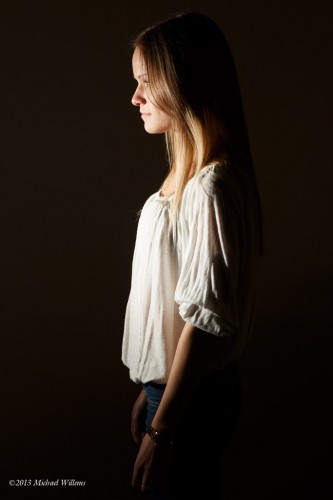
Look at these four images of Vanessa, our workshop model for the day, and consider me what you see happening here:

As you see, they are in increasing order of, as I like to call it, “specificity of the light”.

And can you see how they all show a different aspect of the model’s personality? And how they are all “storytelling pictures”?

Here’s the thing: all of these were taken with just one flash. Four very different types of light; one flash. And here were you, thinking “I can’t do what Michael does because I don’t have all the gadgets and gizmos he has, and I don’t have $30,000 to spare on equipment like he does”. Well – no longer true. You can keep it simple. Just keep in mind what I like to call my cardinal rules:

  1. Work out what the background should be like.
  2. Set your camera accordingly.
  3. Have the flash elsewhere than where your lens is.
  4. Always know what your flash reach is – “where is it shining”.
  5. And for effect, make it specific.

As for (1) and (2), I shoot at 1/125th second, f/8, 200 ISO. That gives me the dark ambient light I want.

As for (3), in the interest of speed, I used wireless TTL flash setup. But I could have used pocketwizards, of course, and I normally would have.

As for (4) and (5), except in the first image, which was bounced and hence not at all specific; and in the second image, where I used a Honl Photo 8″ softbox and which hence was only somewhat specific; I used a grid on the flash for the rest (my favourite flash accessory, a Honl Photo 1/4″ grid), in order to restrict where the light goes.

Here’s what the studio, and a few of the students, looked like:

Of course we can make it more complicated, and add the required “shampooey goodness(tm), but even that only neeeds a few flashes and a reflector:

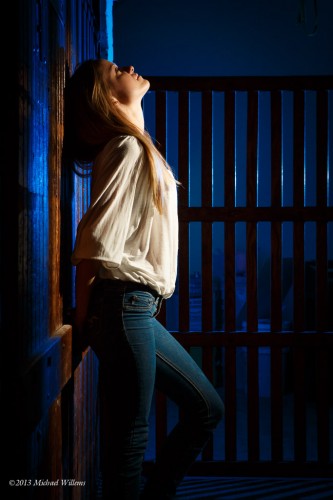
And then you get creative – two flashes, one with a grid, one with a blue gel. And then you can concentrate not just on your light, but on your positioning – as in this one, where my friend and great fashion photographer Baz Kanda did the positioning:

Even that is simple – just two small flashes with simple modifiers.

___

Learn the skills and become a great photographer with little equipment: it is very rewarding and you can do it. Many more courses coming up, so stay tuned on http://www.cameratraining.ca (click on “schedule”).


A “Simple is Good” studio setup

I trained a local photographer in the subject of studio photography yesterday, and we kept it simple. Because simple is good!

First, let me show you a resulting picture of her friend, the model for the day:

Good studio photo, right? Yup.

So how did we get to this?

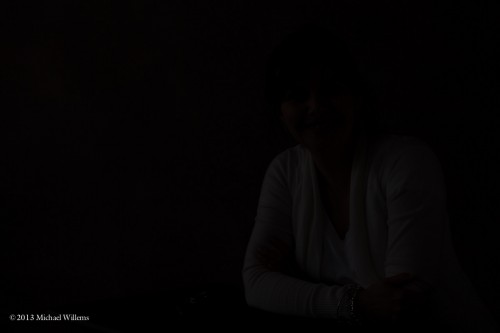
First, set the camera to standard studio settings. Like 1/125th to 1/200th second, f/8, 100 ISO.  This is designed to make ambient light go away. The studio was a bright room – big windows with only light sheer curtains. And yet with those settings, it looked like this in photos:

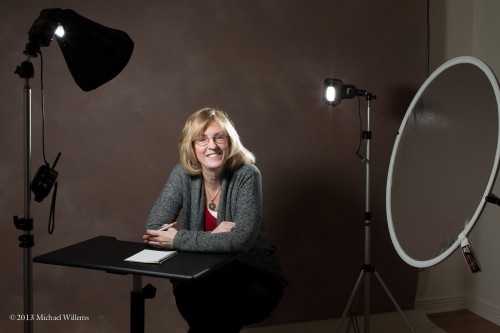
Second, now add lights where you want them:

  • A camera with a pocketwizard transmitter on it.
  • A main light – a speedlight (Canon 430EX) fitted with a Honl Photo Traveller 8 softbox.
  • A Pocketwizard to fire this flash.
  • A Flashzebra cable from Pocketwizard to flash hotshoe.
  • A light stand with ball head for it to sit on.
  • A reflector to act as fill light.
  • A  430EX flash to act as hair light (Shampooey Goodness™).
  • A light trigger from Flashzebra to set off that flash.
  • A similar ball head and stand.
  • A Honl Photo 1/8″ grid to restrict the light’s path.

All this looks like this (remember, take a “pullback shot”):

Third, now set the power levels. With the camera at 100 ISO. 1/200th, f/8, a power level of about 1/2 on the main flash and 1/4 for the hair light did the trick.

All this takes minutes to set up. A pro studio shot can often be done with simple equipment like this. And note the appropriate backdrop. The blond hair means we wanted a darker background. For dark hair I might have wanted a lighter backdrop: in that case I can add another light to light the backdrop I have.

This image is good and needs no pst work other than cropping to taste. Note the correct catch lights in the eyes: 45 degrees off centre and crear (and round, here).

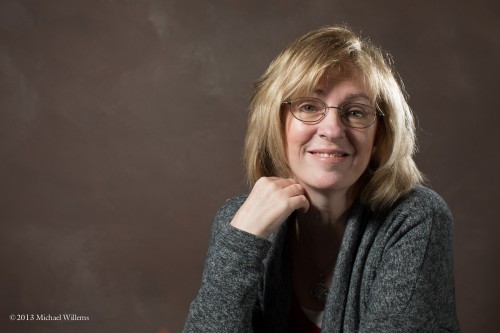
Now, another shoot, the day before: friend and ex colleague (and client) Keith, showing true character:

This was done with three lights: One with softbox where I am., and two feathered flashes, unmodified, on each side, lighting both backdrop and side of his face. Again, a simple setup, although it took a few minutes work to set up. Slifght clariti enhacement to give it more pop, and slight desaturate to meet the web spects that this image was taken for.

By the way, fun expressions are good. Can you see how in that picture, Keith’s nice guy nature really shines through, even that was not te point of the picture? try to capture your subjects’ personality in the images you make.


Tropical Paradise.

If you are thinking of a destination wedding, I say two things:

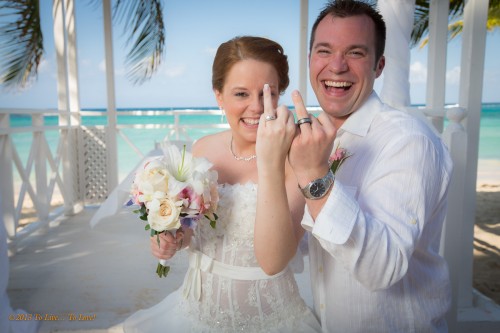
  1. Do it – you will never regret it. The beauty is amazing, and “all in once place just metres from your room” is great for a relaxed wedding. Marry in a beautiful resort and your images will show that beauty.
  2. Bring your own photographer. He will be able to capture your wedding better, but he wil also capture more than just the wedding, in a way no local hotel photographer can ever do.

Jamaica was fabulous. The people, the wedding…

A few tips.

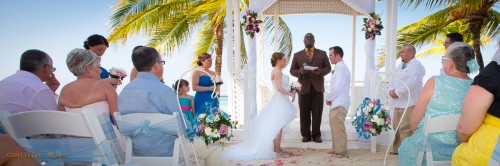
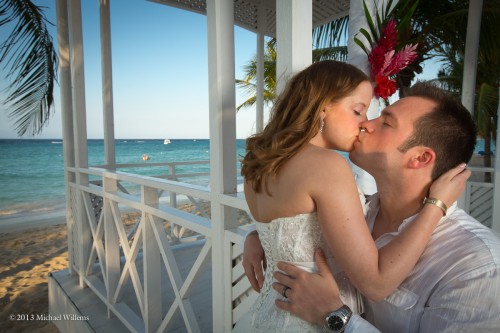
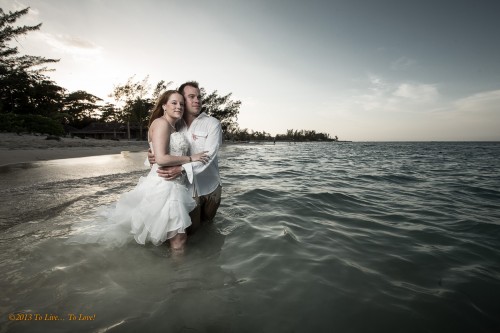
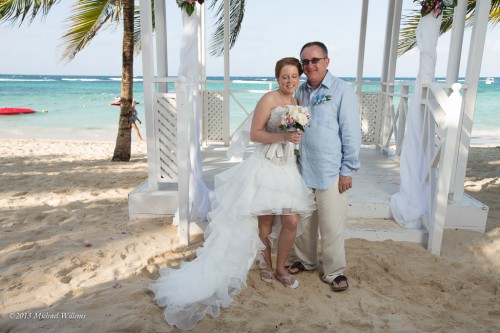
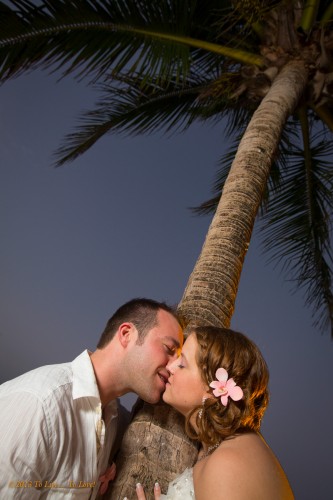
In terms of light, I did several things. Mainly, create colourful backgrounds by exposing for those backgrounds, and then use flash to light the foreground; as in the image above.

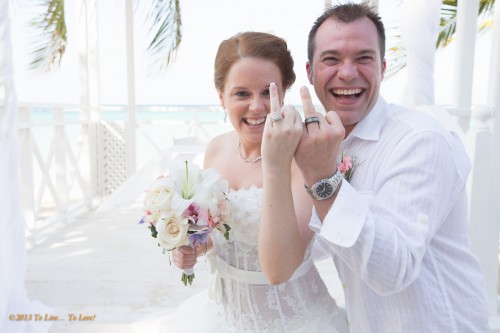
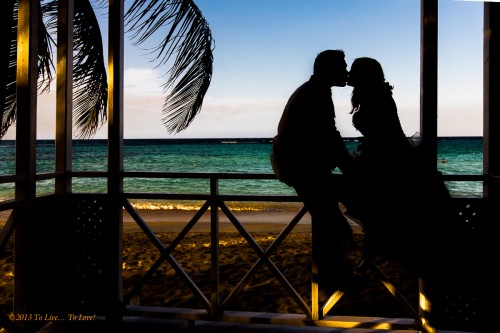
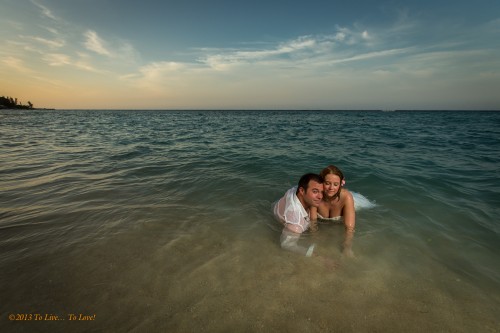
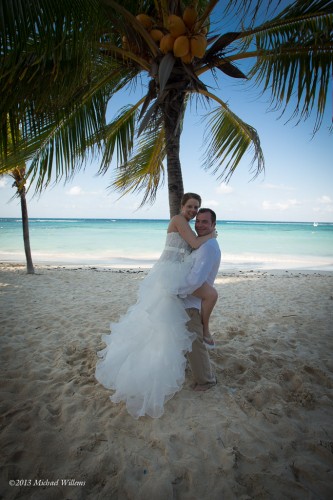
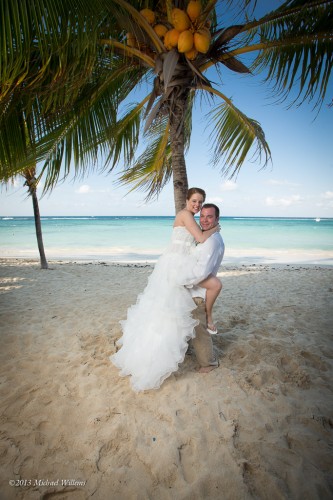
But I also did some with blown out backgrounds: look at the background:

The first has no flash, and is exposed for the couple. The second has flash, and is exposed for the background. Both are good, and I advise all photographers to do various styles: “your” style, but also other styles, and then you choose the best later.

And d not be afraid to use high ISOs. You may need them in order to get fast enough shutter speeds.

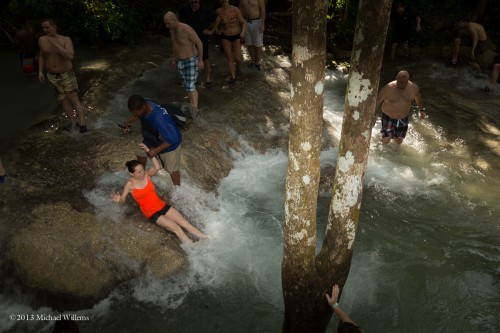
I also encourage shooters to use selective lighting, like I am using here at Dunn’s River Falls:

My flash was zoomed to 125mm even though I was shooting at a wide angle, and it was aimed at the subject. Magic!

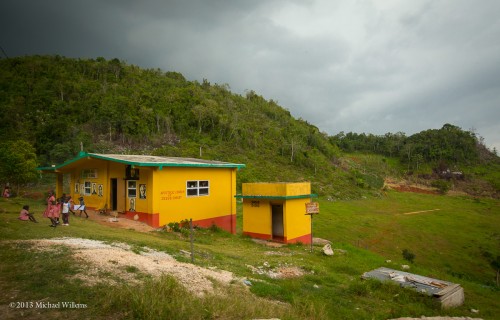
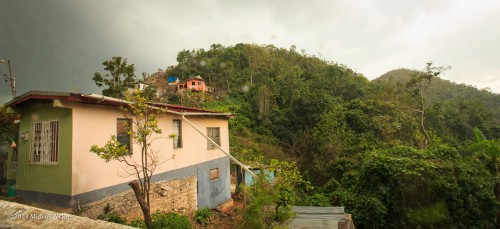
Do not be afraid of rainy days. They are beautiful, as in Nine Miles here (where Bob Marley was born):

Now, back to my photo finishing – which will take me a little while (think, all week). I will leave you with one more Jamaica image:

Jamaica

As Bob Marley said:

No want you come galang so;
No want you fe galang so.
You want come cold I up;
But you can’t come cold I up

(“I don’t want you to be like that / You want to put me down, but you can’t put me down” – from “Trenchtown Rock”).

Jamaica made me cheerful. Not just because Bob Marley, whose music I have listened to since 1975, was from here (I saw his Mausoleum, and much ganja was smoked there), but because people are friendly and happy and smiling; and because I love the Jamaican patois, and the handshakes, Ya man, everyting irie. Respect!

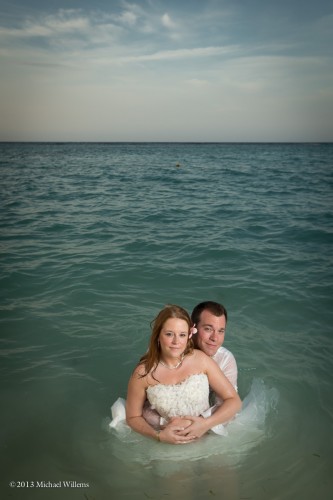
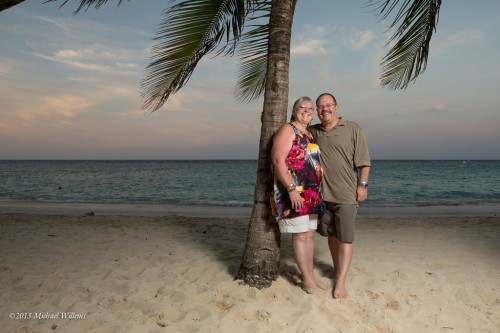
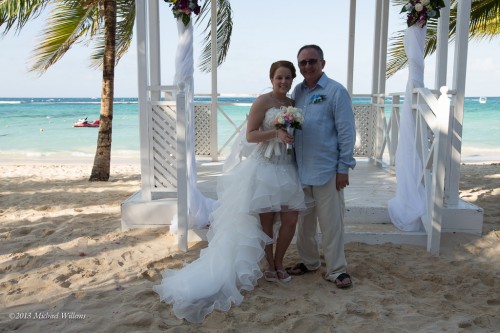
But I am cheerful also because Kristen and Dan’s wedding was a lot of fun to shoot. Since I was with them all week, they got the entire week covered: the trip, the wedding day, the “trash the dress” the days after, and their friends and family.

And when the mood is great, the photos are great, as was the case here this week.

And in the Caribbean, it is all about colour and light.

Or lack of light: keep light off subject, then expose for the background and the picture takes itself:

But sometimes the light needs some help, like here:

An image like that is taken how? Well..

  1. by first exposing for a darker background – 1/250th second, 100 ISO, f/8 perhaps. F/11 would be even better but then the flash has to punch through that f/11, so it had better be a powerful, close by flash.
  2. By taking the flash off camera. I used pocketwizards and one flash, today.
  3. And by modifying the light.

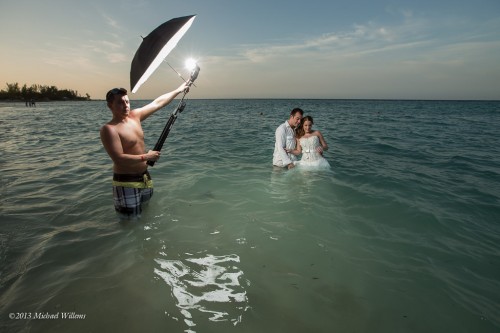
My single flash was modified and held by guest TJ:

This makes for great photos, some of which I might also do a little Lightroom treatment on, like here:

And some I will not do that to, like this:

I apply the Rule of Thirds, of course. And I use negative space. And close-far. But can you see how here, it is all about light and colour?

In family shots too, which I made for a few people (featuring Catharine, the groom’s mom):

Now in all these I used the settings and rules and principles above. But as the day went down, it as necessary for me to progressively open the lens more. More about this later – and how and why I did them without using either TTL or a light meter.

Going home tomorrow. No want Sunwing to cold I up….!

Michael


What you need on the beach

…is an umbrella, and an off-camera flash in that umbrella, as I said the other day. Some of you have asked “why” – so here’s why.

Bride and dad, with no flash:

Same, but with flash in an umbrella:

As you see, the first example is terrible. Now, I could have increased exposure (higher ISO, slower shutter or lower “f-number”), but that would have also lost the background: it would have become all white.

Two more examples:

Both cases show why you need flash, no? Without my flashes, I would have done little of value in Jamaica.

And on-camera flash would have looked flat und uninteresting.

Here’s a typical setup – and the yellow flash and ghost hand (if you look carefully) belong to a person I have removed here for clarity 🙂

And I did not need a lot:

  1. Camera, of course
  2. Wide angle lens.
  3. Two pocketwizards.
  4. PW to flash cable from flashzebra.com.
  5. Flash, with spare batteries.
  6. Lightstand.
  7. Bracket for mounting umbrella and flash on lightstand.
  8. Optional: second flash with pocketwizard and cable, fitted with 1/4″ Honlphoto grid and Egg Yolk Yellow gel.

Easy once you have the knowledge… which brings me to my courses. Have a look at www.cameratraining.ca under “Schedule” and see what I can help you achieve – then sign up now.


Light.

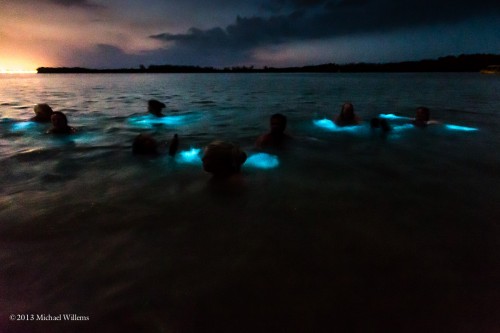
A phosphorescent dinoflagellate, you say?

Yes. A kind of microorganism that glows in the dark.  And it lives in salt water, but especially in Jamaica’s Luminous Lagoon. And it glows when agitated – like when there’s swimmers:

I was the only person to get any pictures. Why? Because it was dark. Very dark. Very, very dark.

So I had to shoot like this:

  • 16,000 ISO (!)
  • f/2.8 – f/4
  • 1/2 second shutter time, on a boat.
  • Manual focus – guessed because it was too dark to see even to focus manually.

Even then, I had to push the shot a little in post.

Longer shutter speeds and a tripod, you say? Not on a moving boat!

I could not see my focus scale, so I could not even look at the lens and manually set the sharpest point to, say, 3m. It was all guesswork – and guess what, it worked. Good gear (f/2.8, 16,000 ISO, yes, sixteen thousand) helped me a lot.