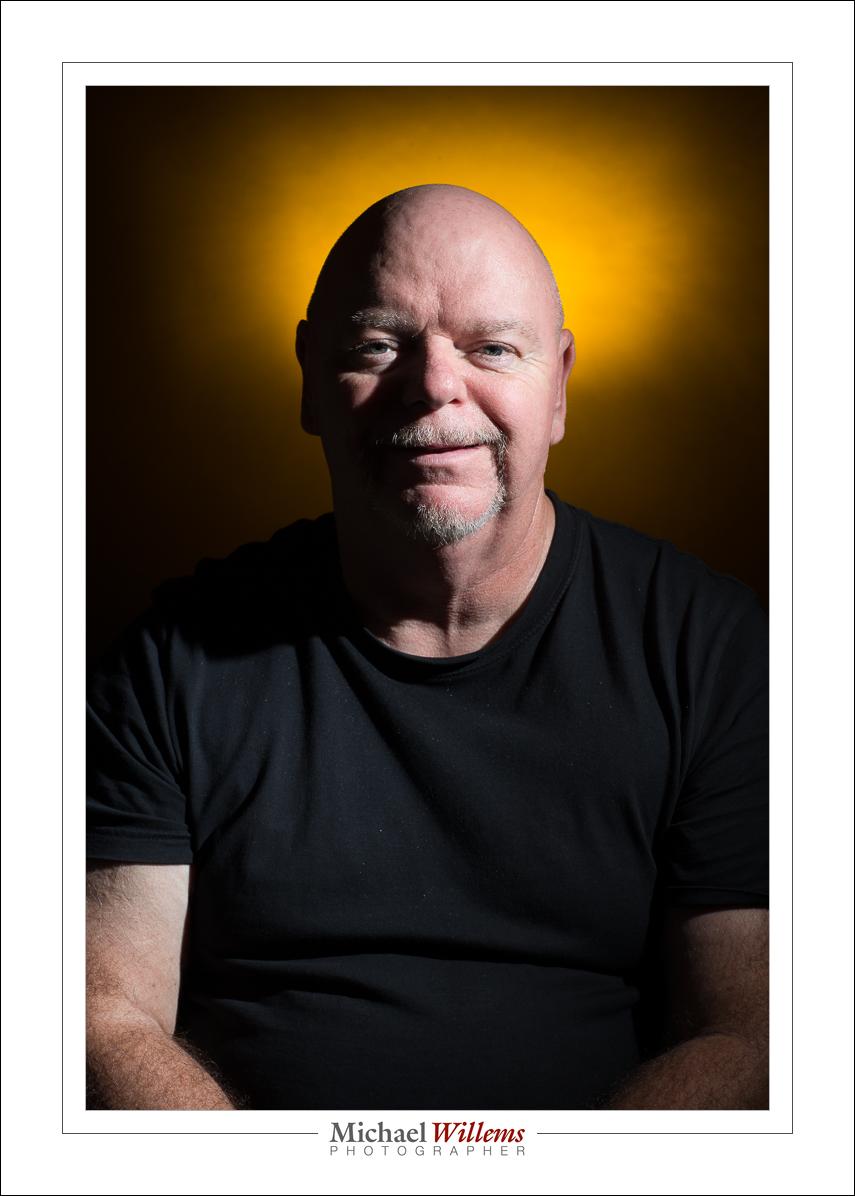
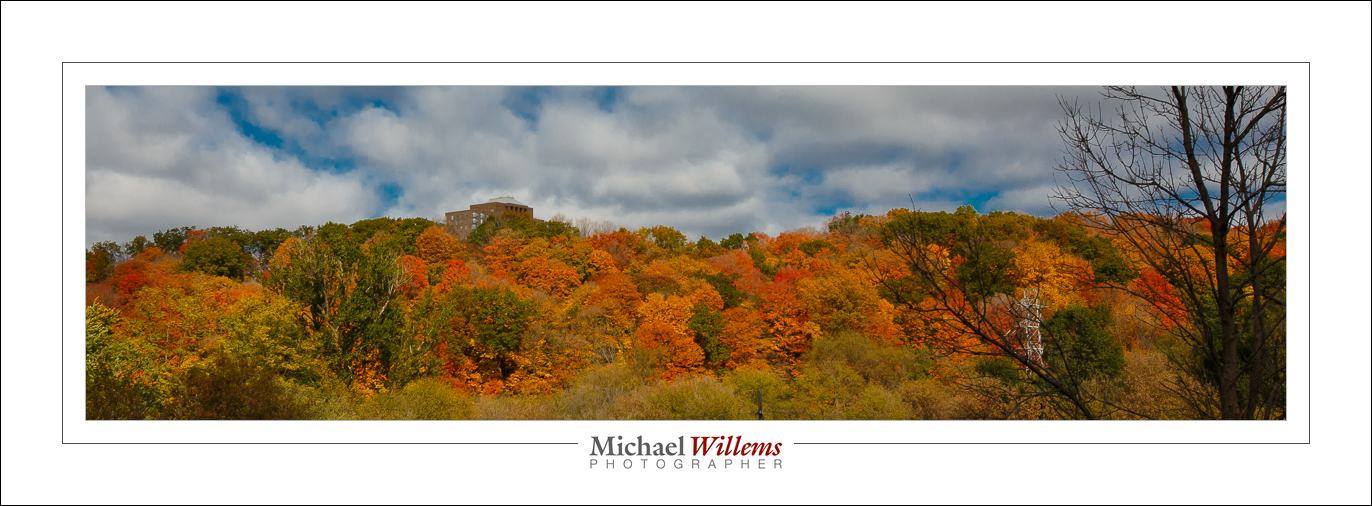
Brought to you by The Weekend, here are some snaps. Sometimes no talking, just sharing. Rare, but today it’s called for, I feel.
From today:
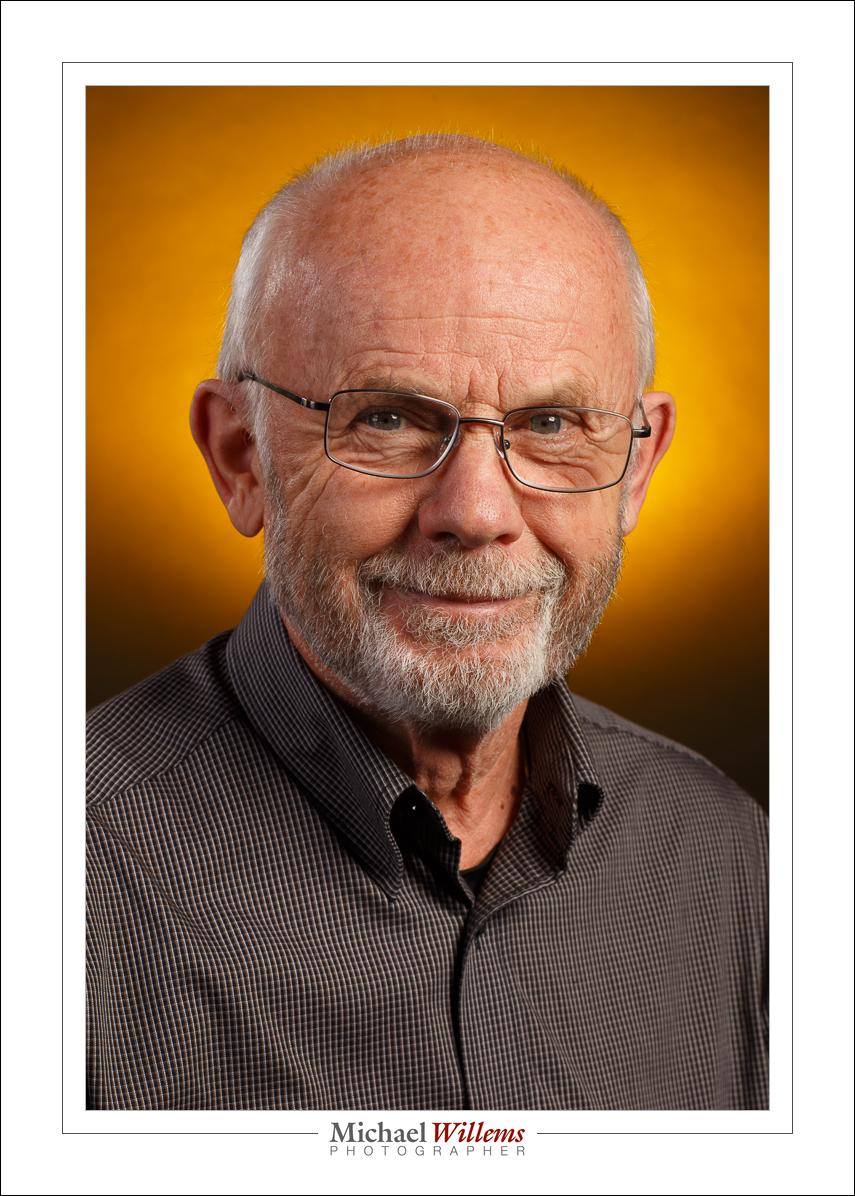
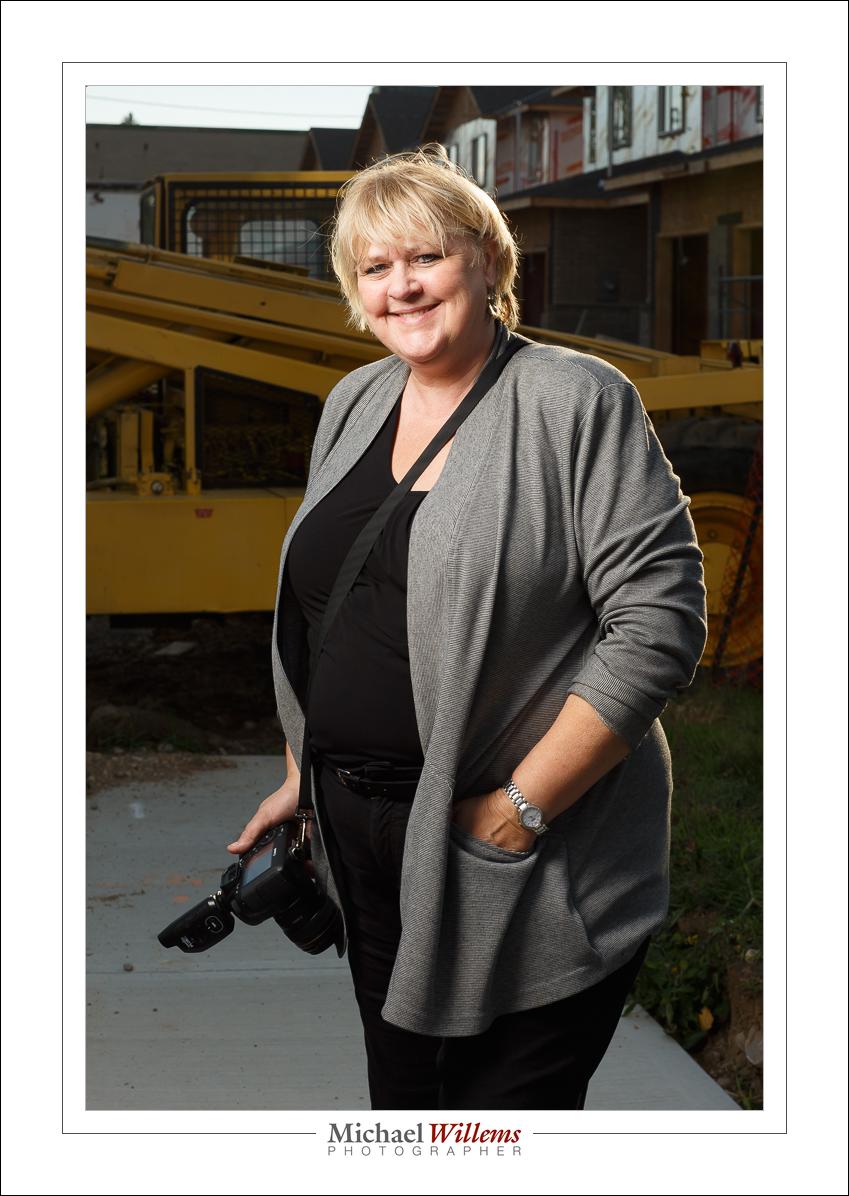
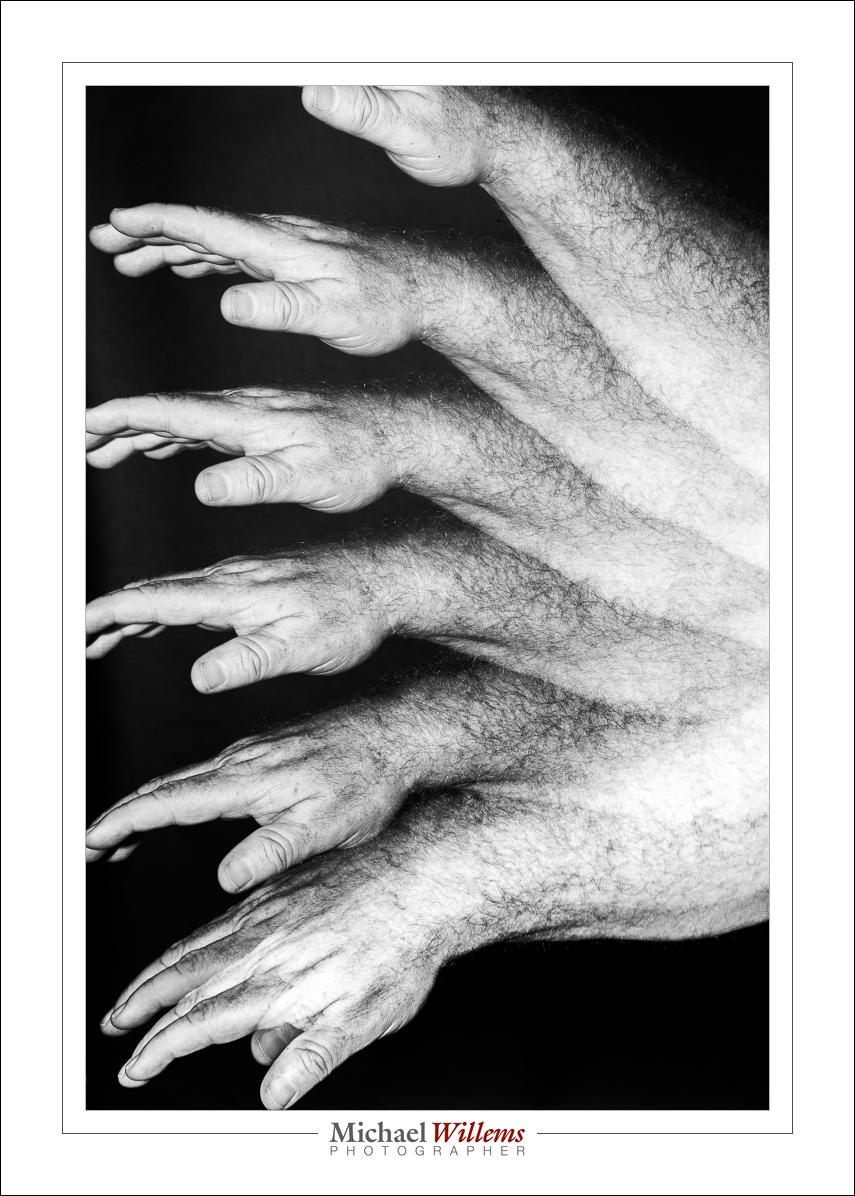
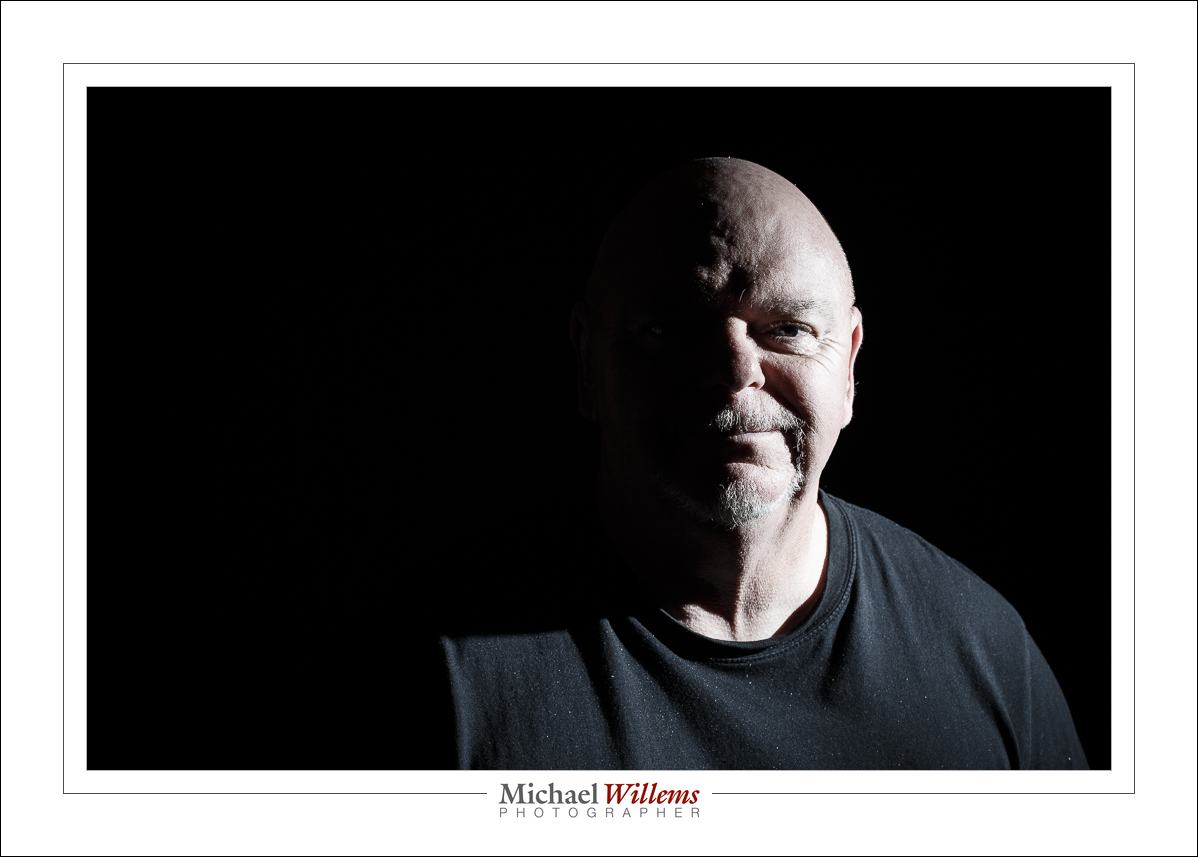
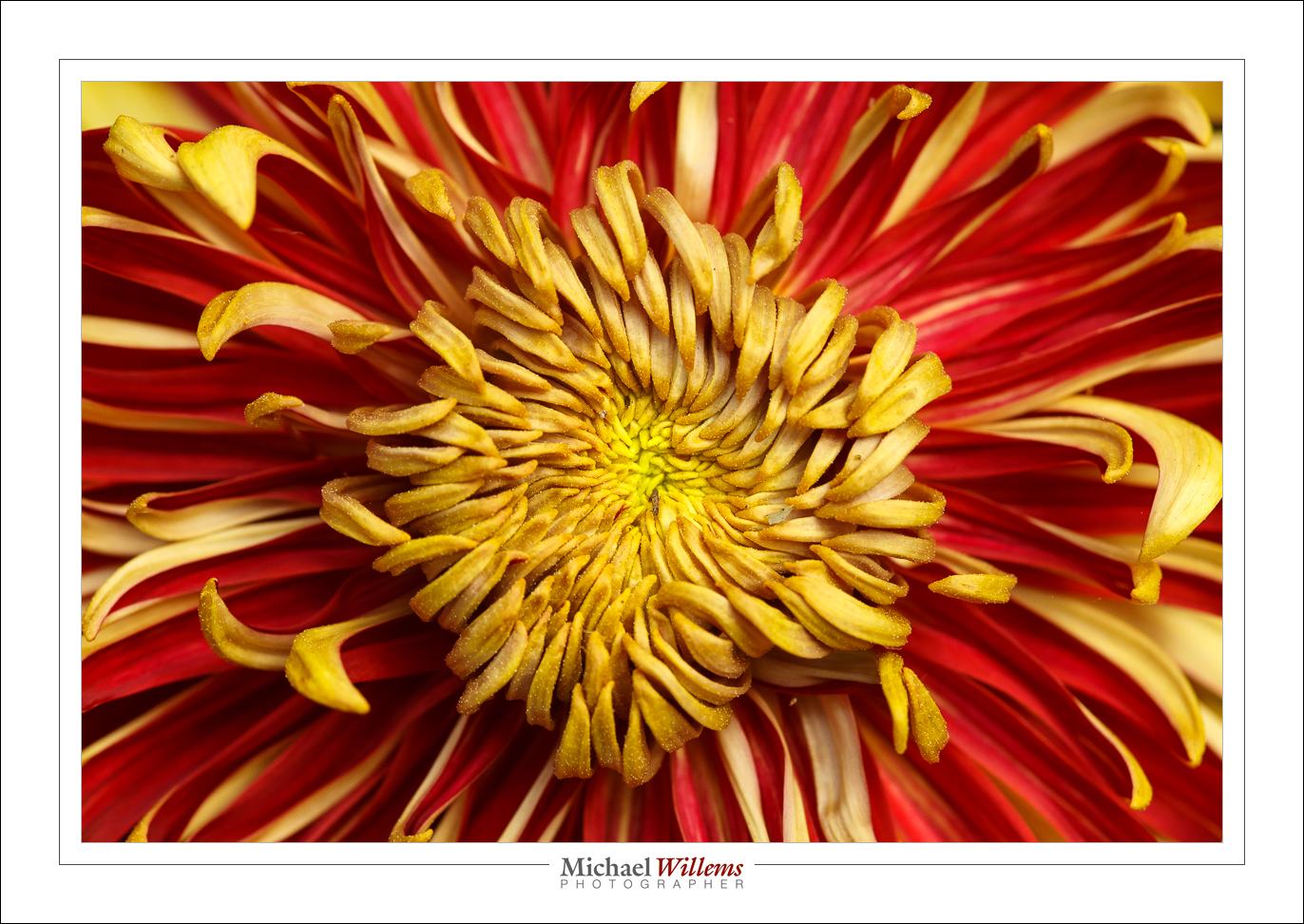
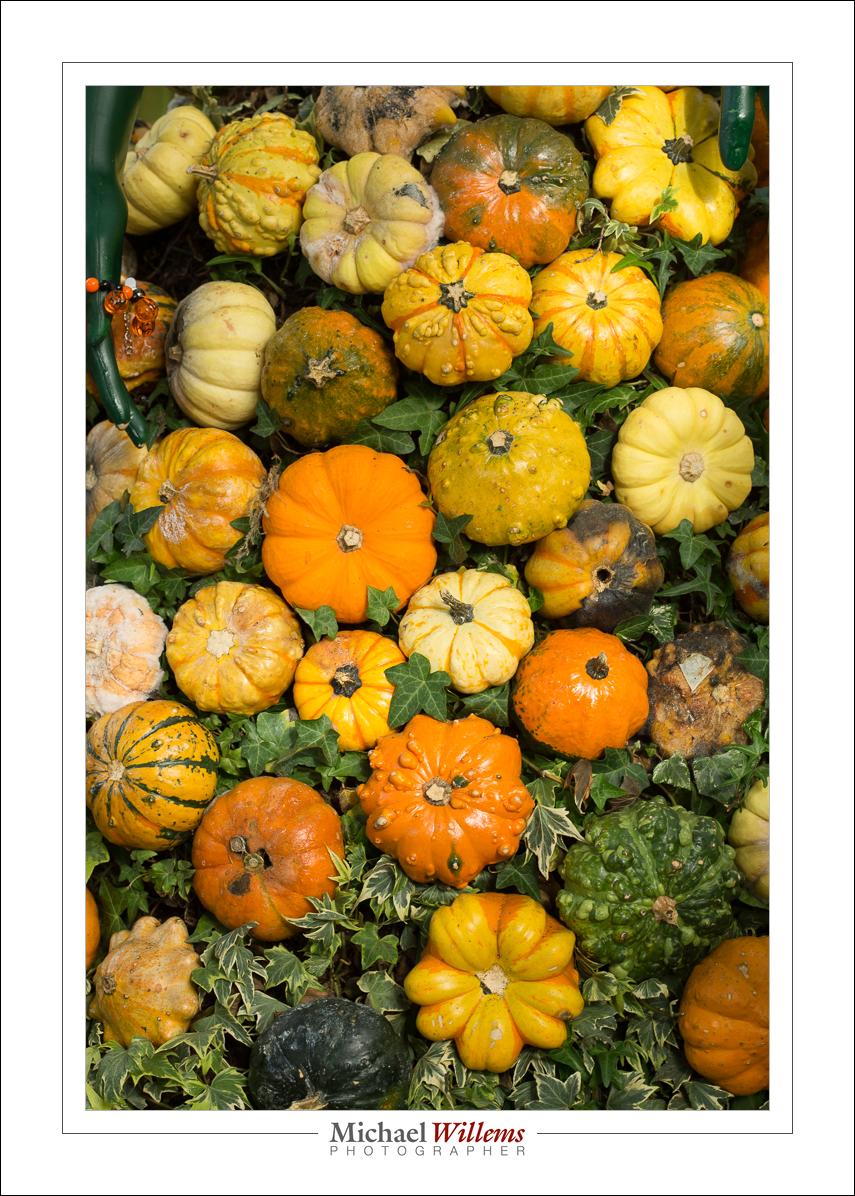
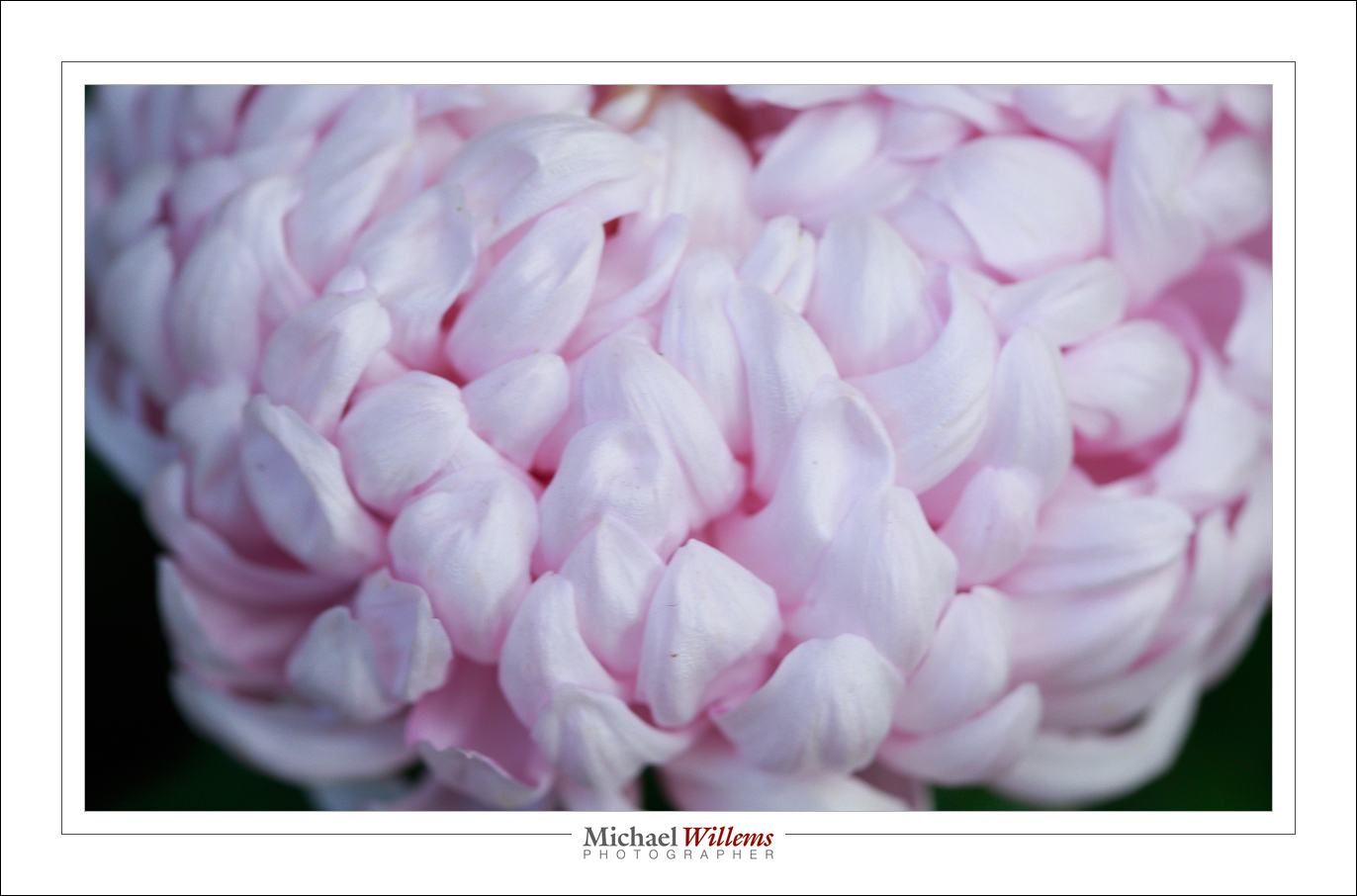
And from Saturday:
Enjoy your week!
-Michael
Brought to you by The Weekend, here are some snaps. Sometimes no talking, just sharing. Rare, but today it’s called for, I feel.
From today:
And from Saturday:
Enjoy your week!
-Michael
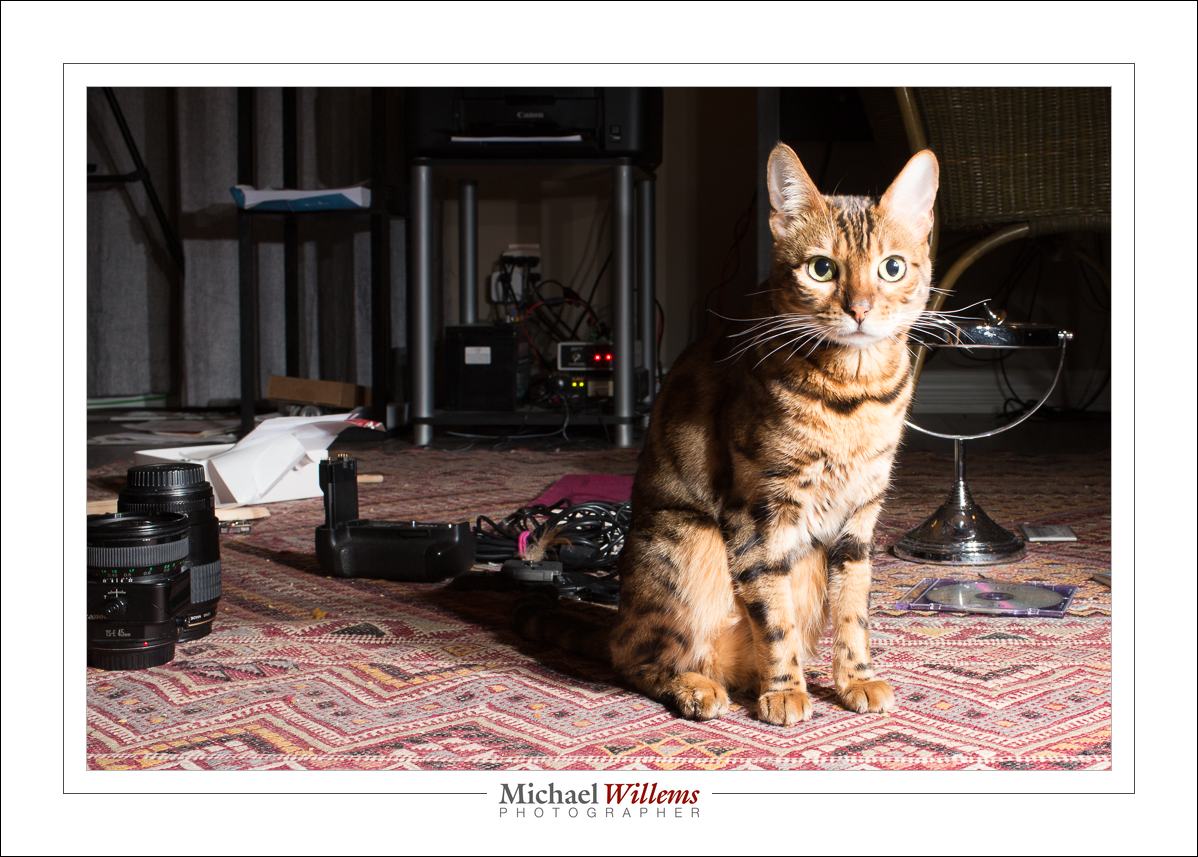
…then use flash. And if you use flash, then use it off camera.
Flash is crisp and sharp. Or rather, using flash leads to crisp photos because:
Like this:
Alternately…
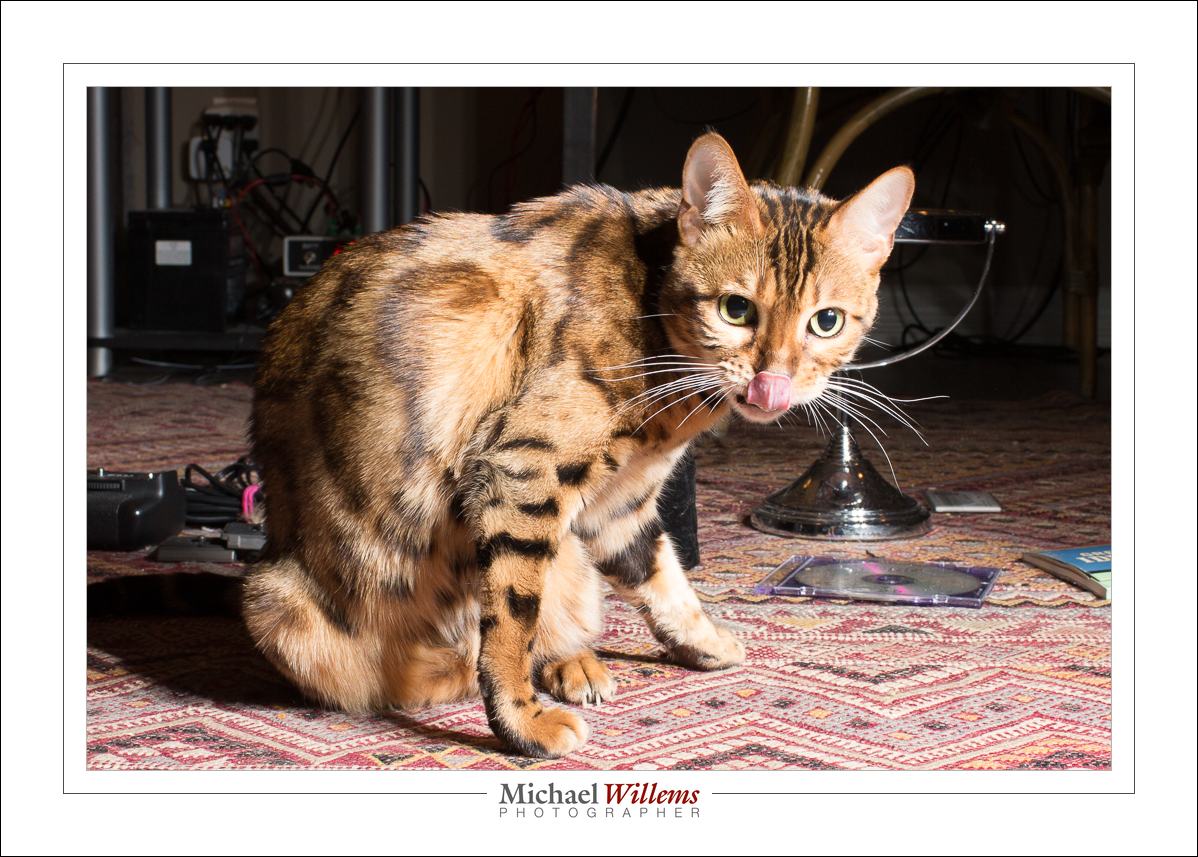
Maybe better: close to the ground to get a ‘cat’s eye view’:
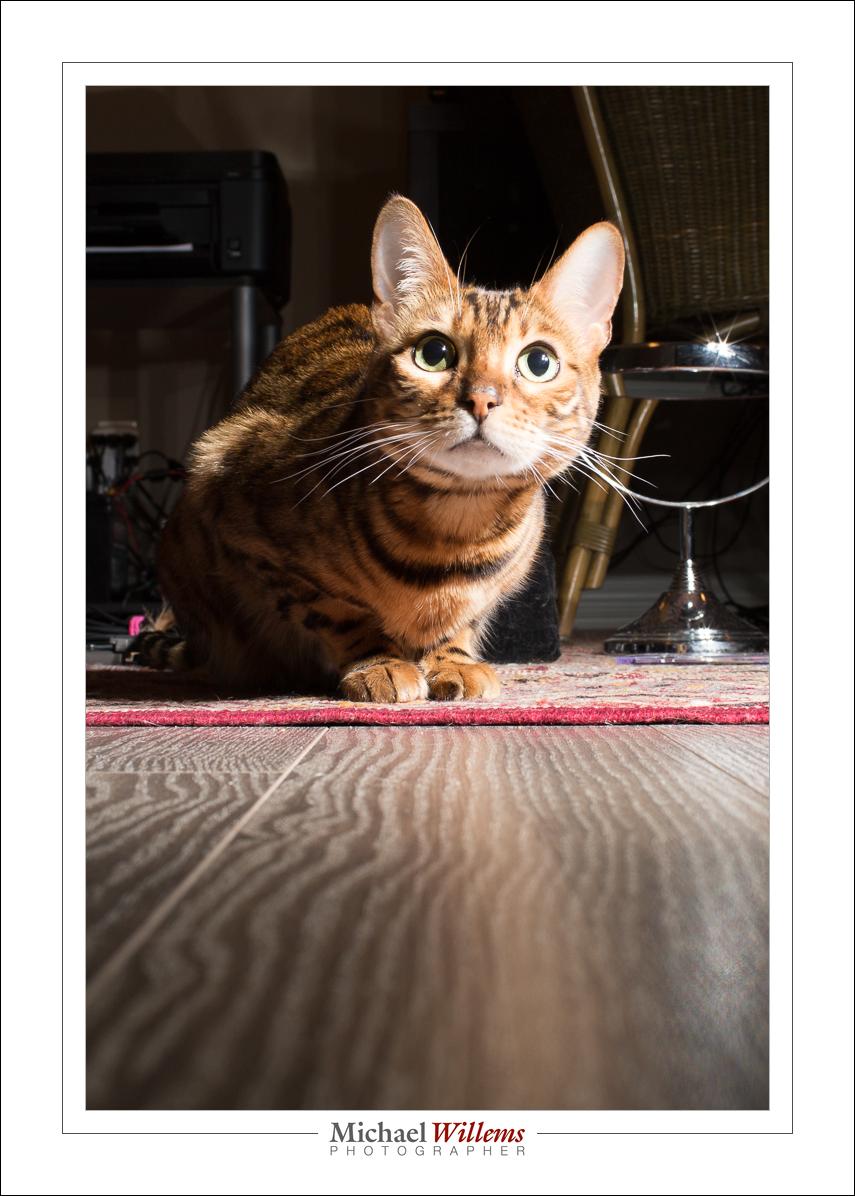
1/30 sec at f/11, 400 ISO. Meaning, the ambient light basically disappears. The photo is crisp because although the shutter is slow, ambient light does basically nothing and the flash speed (1/16,000 sec, because the flash is set to 1/16 power) is the effective shutter speed.
…all of which is made like this:
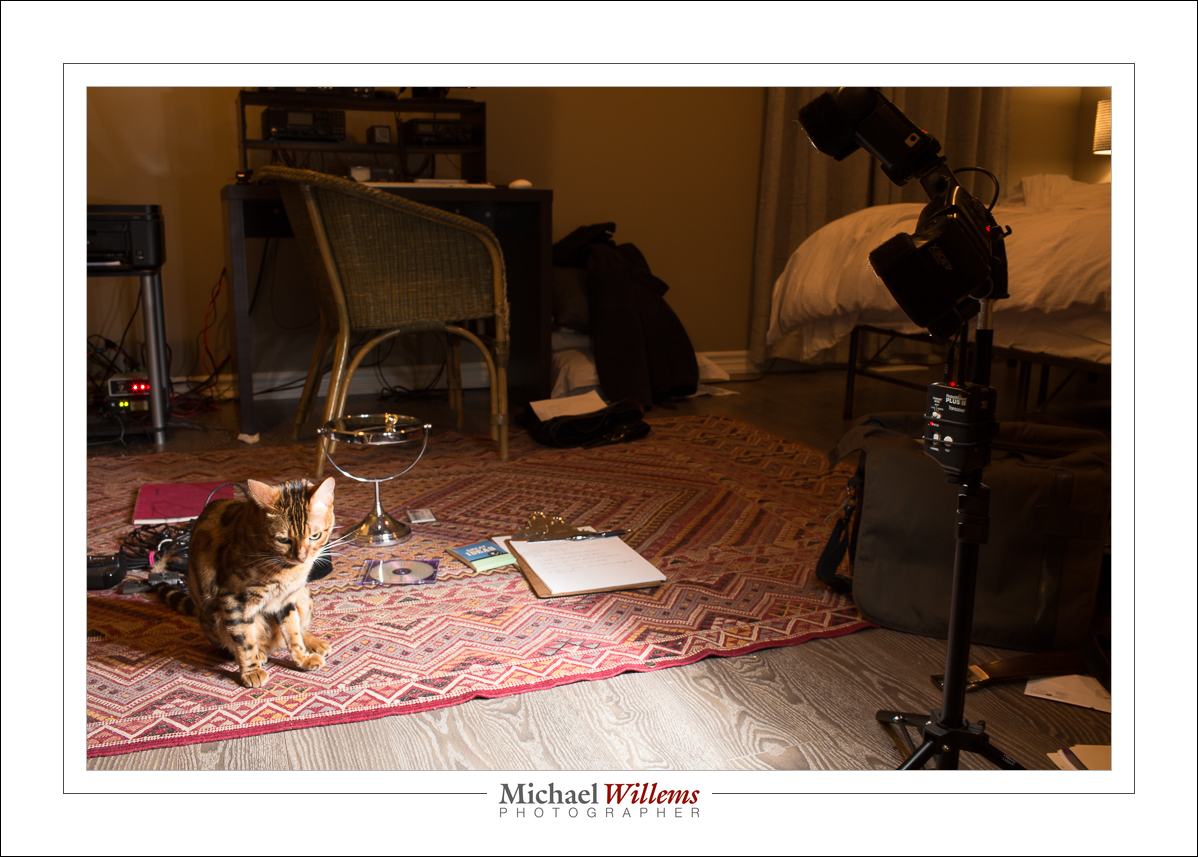
The flashes are on the right: three flashes fired by one pocket wizard. Note that in this last image, I used a very slow shutter speed (several seconds, if I recall correctly) in order to show some of the ambient scene.
Anyway: can you see how much more lively and “real” these images look than a simple “even lighting” image, such as a “natural light” image that some photographers proudly boast is their only source of light?
One more thing to note: I am using three flashes connected via a three-flash mount (see yesterday’s post). With no softening modifier such as an umbrella or a softbox. The take-away lesson from this: When using off-camera flash, a softening modifier is not always needed.
The death, in my arms, of my three year old Bengal cat Shiva last week reminds me again how ephemeral life is. Here he is, poor Shiva, taking his final journey to the vet an hour or two after his death for a postmortem:
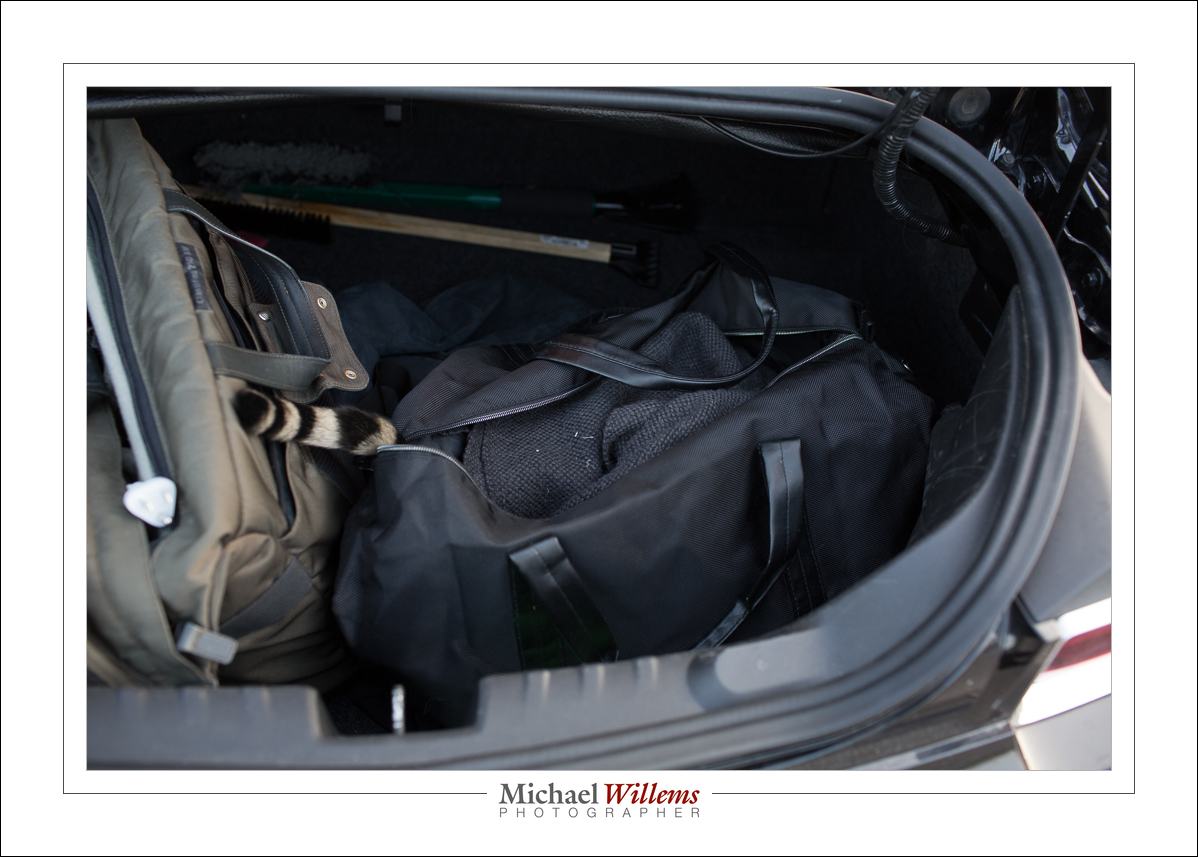
I am happy that I have many more pictures of Shiva. Thousands. The maybe five or six pictures of dead Shiva are nothing compared to the many hundreds of live Shiva.
After the vet visit, I decided to do something more fun and take some photos of my car:

(85mm, 200 ISO, 1/200 sec, f/11 – that’s the “Sunny Sixteen” rule)
And here’s my foreverspin spinning top in action (bounced flash at half power; meaning an effective virtual shutter speed of roughly 1/2000 sec):
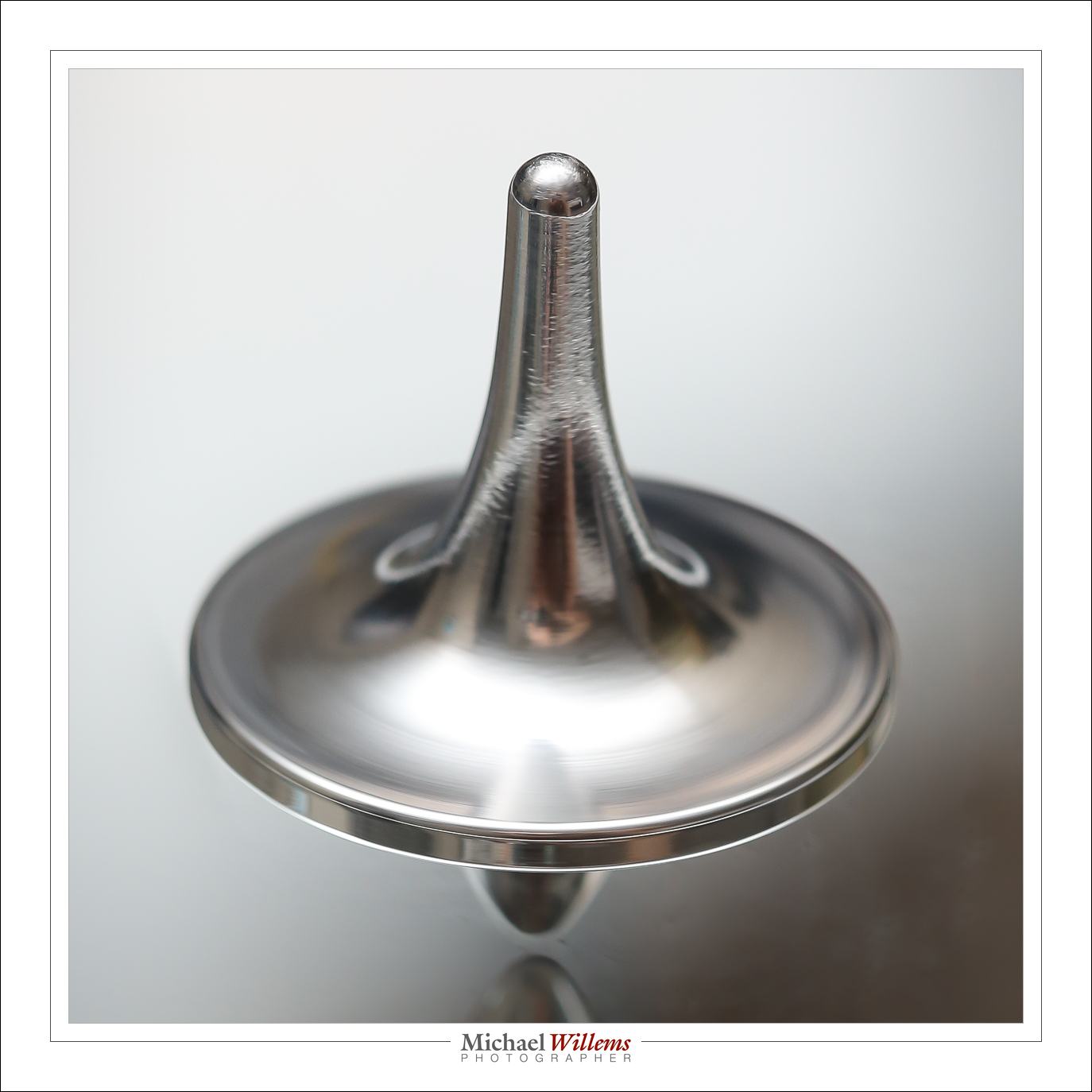
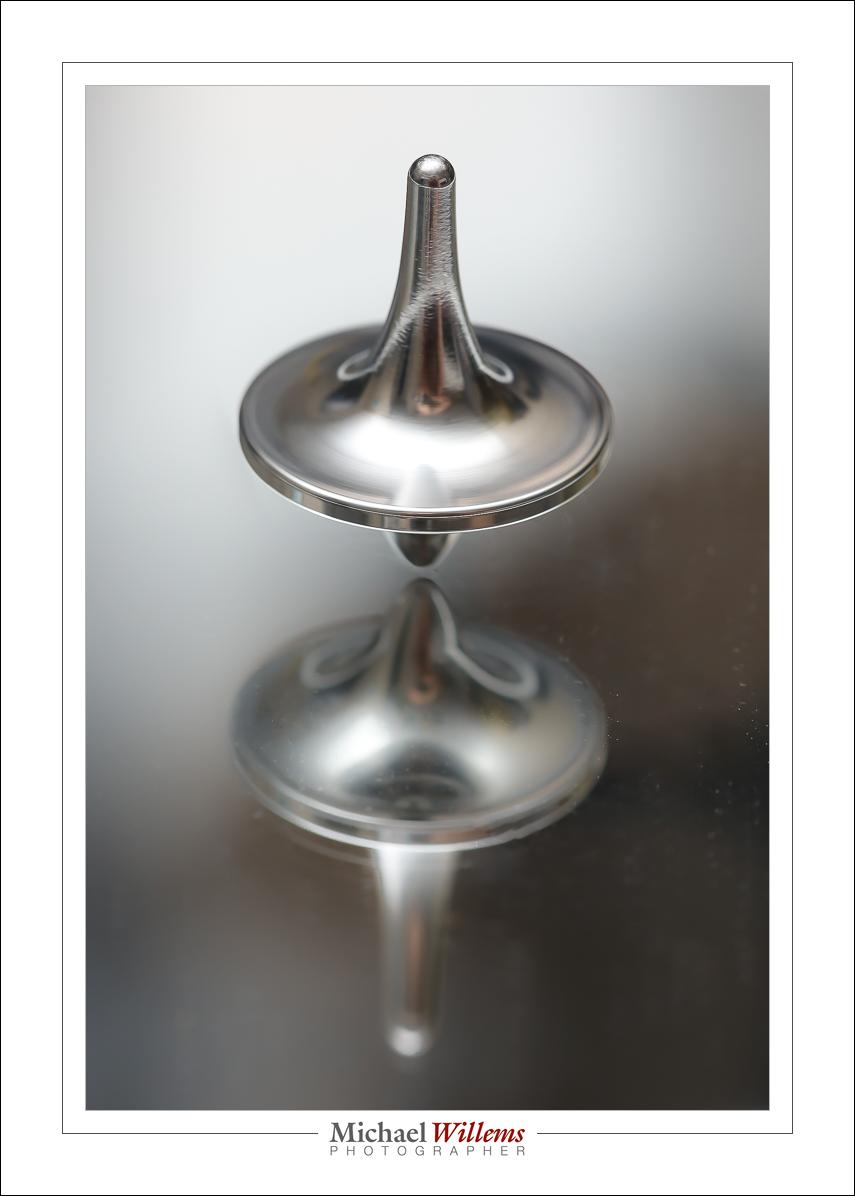
The point: document your life, as I do, even though photography is my job as well.
I can picture anything. Do you want the same skills? Easy. Learn, And it’s really simple today. Start here: get the free downloads from the bottom of this page: www.michaelwillems.ca/learn.html – those are free chapters from some of my e-books that are useful by themselves. Learn those.
Then learn more of the technical and artistic skills you need. Get the rest of the e-books. Or come to my frequent workshops: see the listing here. Or get individual, bespoke training, which many of my clients find is the best way to quickly learn. However you do it: learn, while you can, and have a documented life. It can be over all too soon, but more importantly: every day is one to share, to treasure, to come back to. Photography is how.
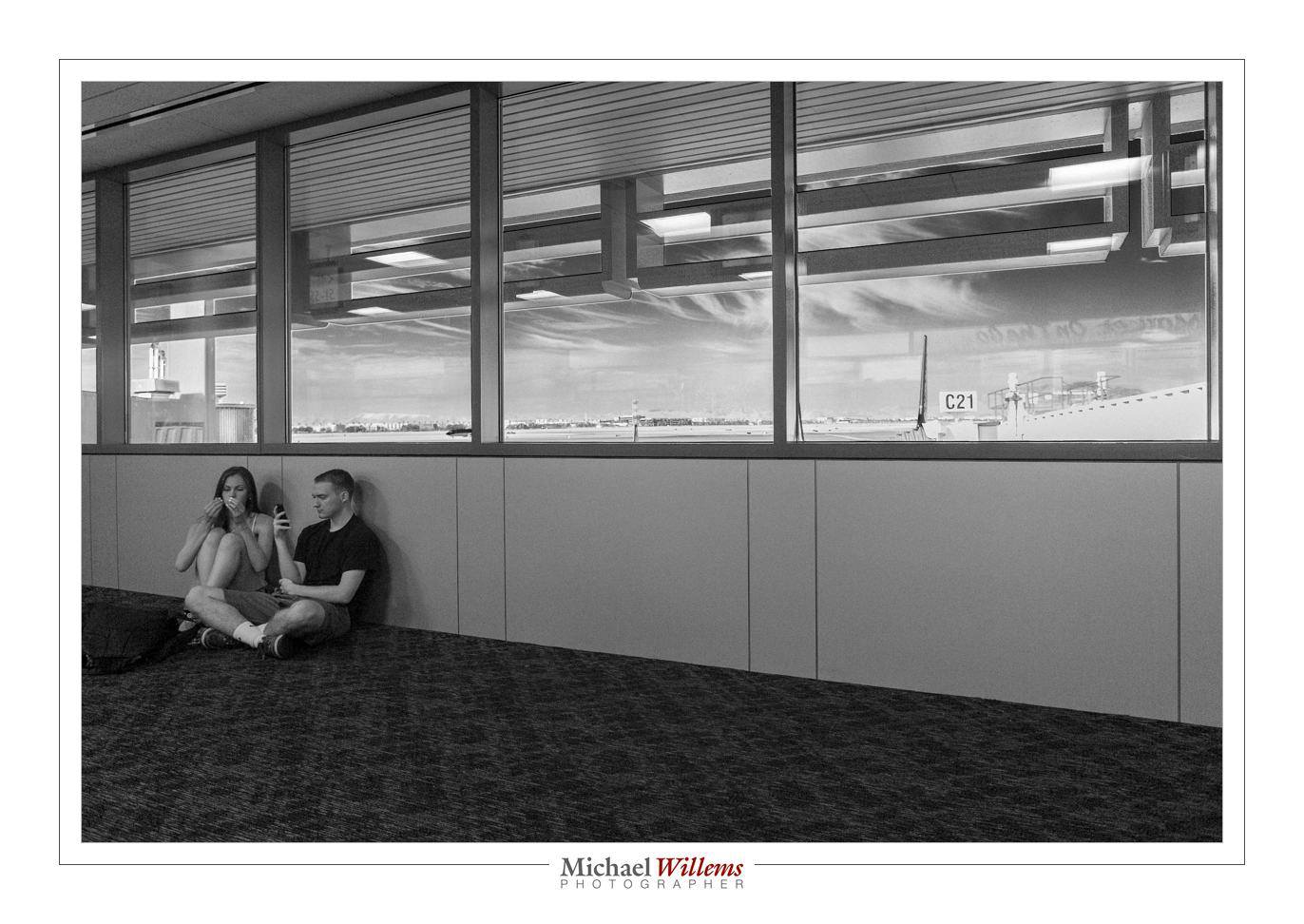
I always carry a camera. Doesn’t this pic shout “Travellers”? No comfortable seating; he is on his smartphone; she is looking at her fingernails; aircraft operations go on slowly in the background. A big but not too busy airport (Las Vegas? No. So where? I cannot remember). Where are they going? Where is their carry-on luggage? Questions.
Here, from years ago, is an assignment for you:
Put your 50mm f/1.8 lens on your camera and, using just available light, go shoot twelve things in your living room that show its character. Or shoot lots, but pick the best twelve.
Then put these together in a 3×4 arrangement, like this (yes that was my living room at the time):

This assignment forces you to look properly. What is it that shows the character? What makes for a simple shot? It also forces you to use the right techniques for simplifying and filling the frame. And you get to practice low-light shooting, selective focus, and so on.
But most of all, you get to think about subjects. Initially you’ll struggle to find ten – then suddenly 100 pictures will suggest themselves.
Show me your results!
This morning, I ran an outdoors workshop in Toronto, for US-based Digital Photo Academy. And I took some snaps, although I was not there to shoot. (I think I was there to melt: it was 30ºC and 95% Relative Humidity).
So anyway: let’s look at a few of the compositional principles I used.

Reflections…
What was it that struck me in the image above?? The perfect symmetry. Flat water, clear reflections. And white sky (and hence water). Learn to spot reflections–just in case. This is a case where you do put things in the middle, rather than using the Rule of Thirds.
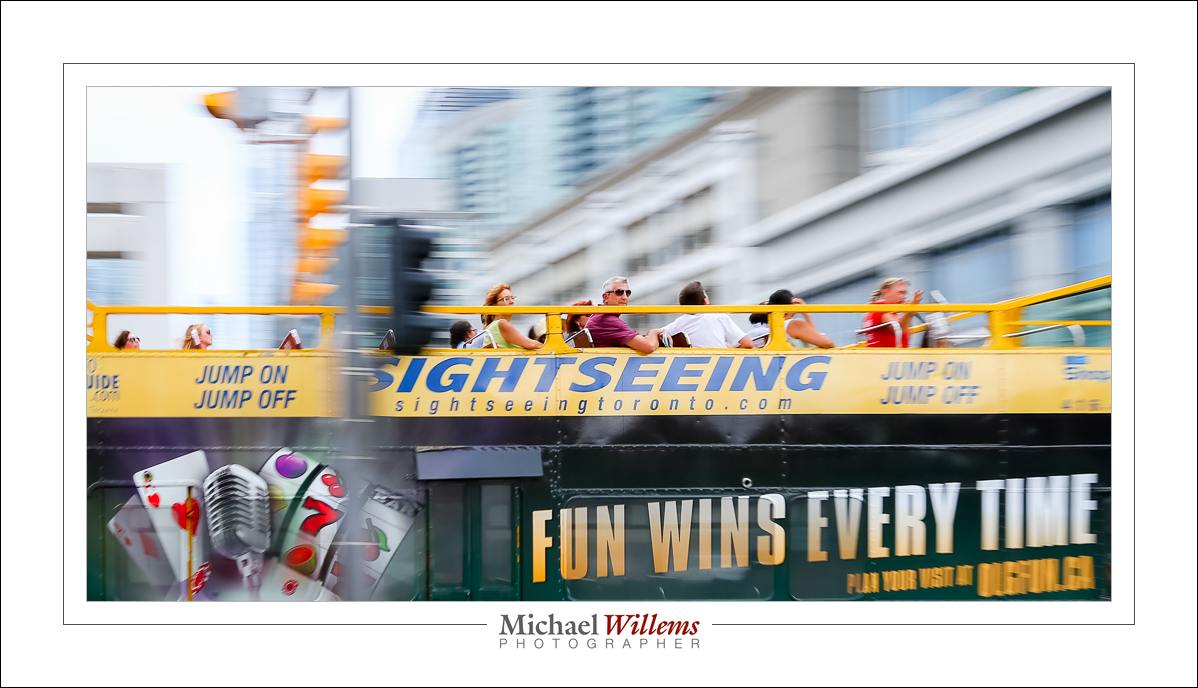
Sightseeing in motion.
Above: Motion. I “panned” with the bus, i.e. I moved my lens with the bus, at 1/30 second. That way, the passengers are sharp, while the background is streaked in the direction I moved my lens (left-right).
Next, this photo of a certain well-known tower:
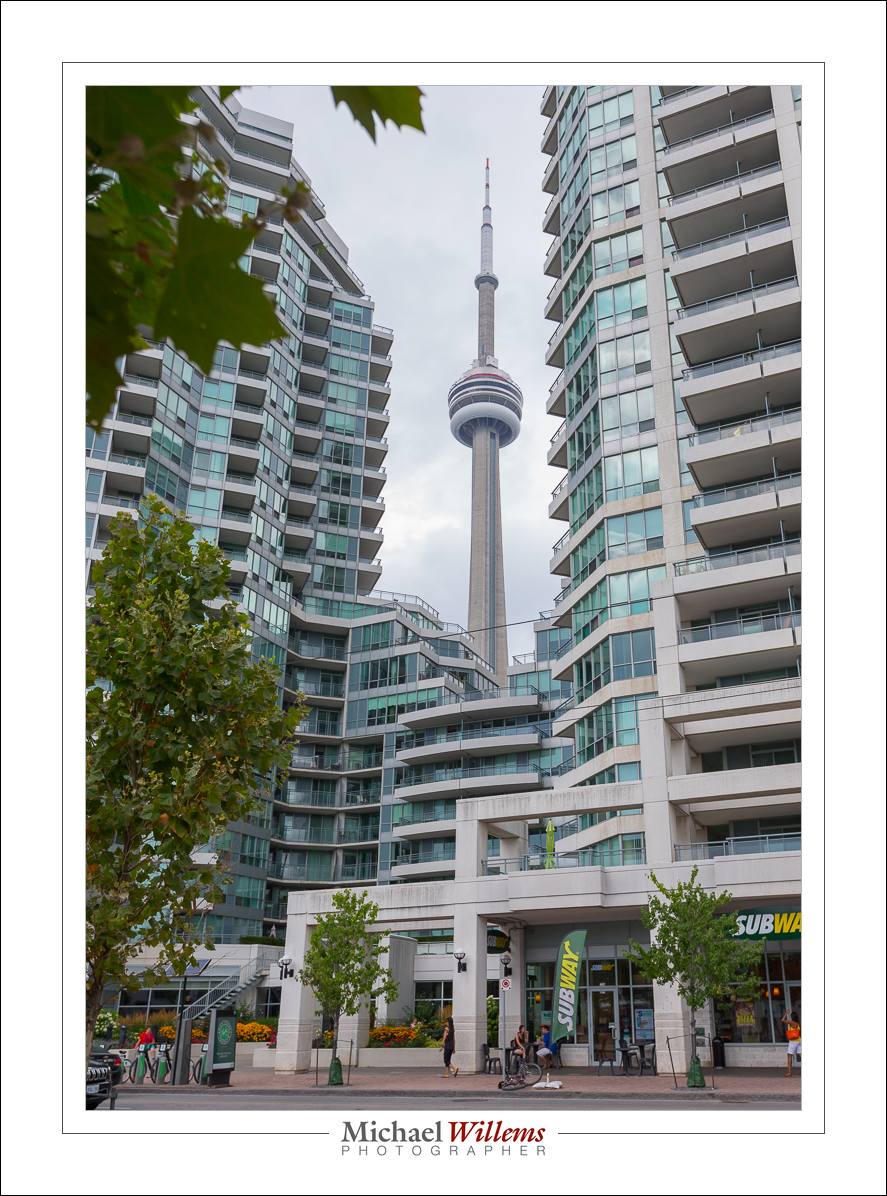
Colour coordination
…which is a good example of framing. I am using the buildings and the tree to frame the CN tower. So it’ll go to prison for a murder it didn’t commi…. oh never mind.
Next, some words.
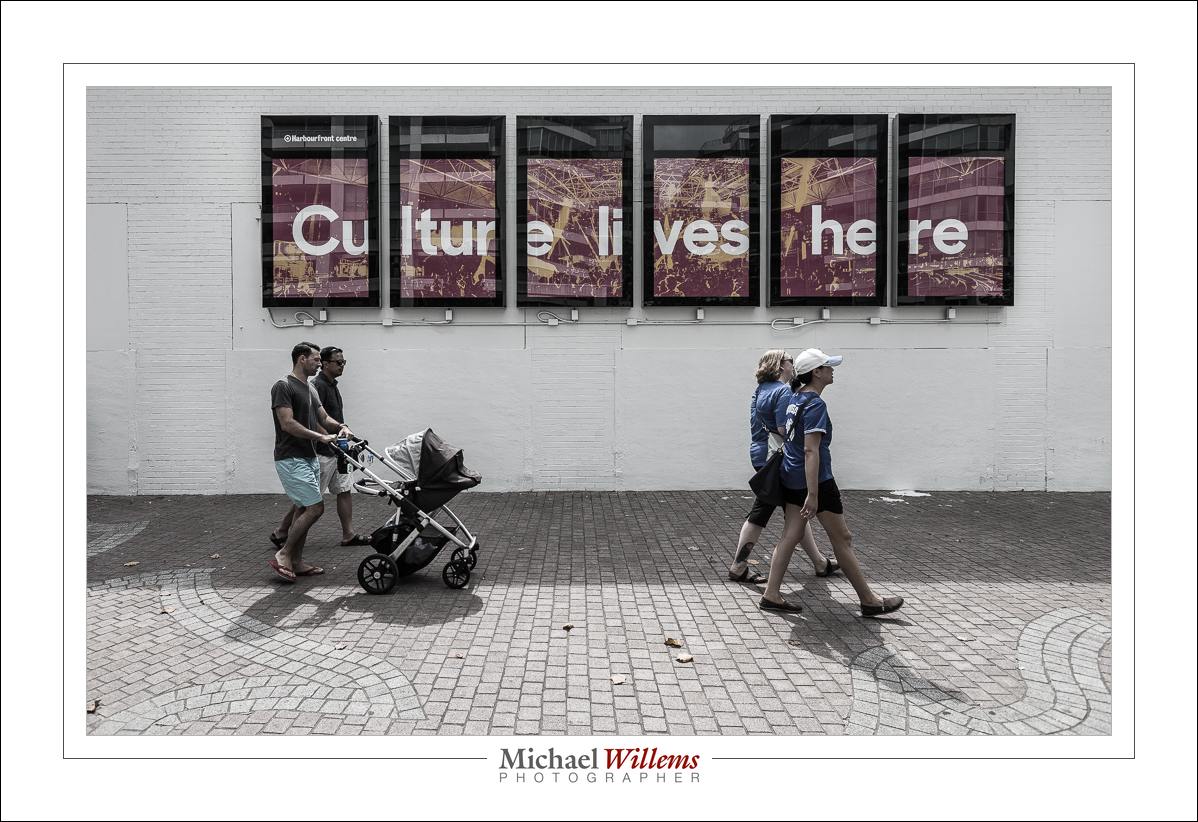
Culture, and progressive values.
People in front of signs are interesting when the words mean something. Culture. And is that two men pushing the baby–stroller? Questions are good. rather than spoon-feeding your audience, make them work out what’s happening, You can spoon-feed babies, instead.
Now to bigger matters:
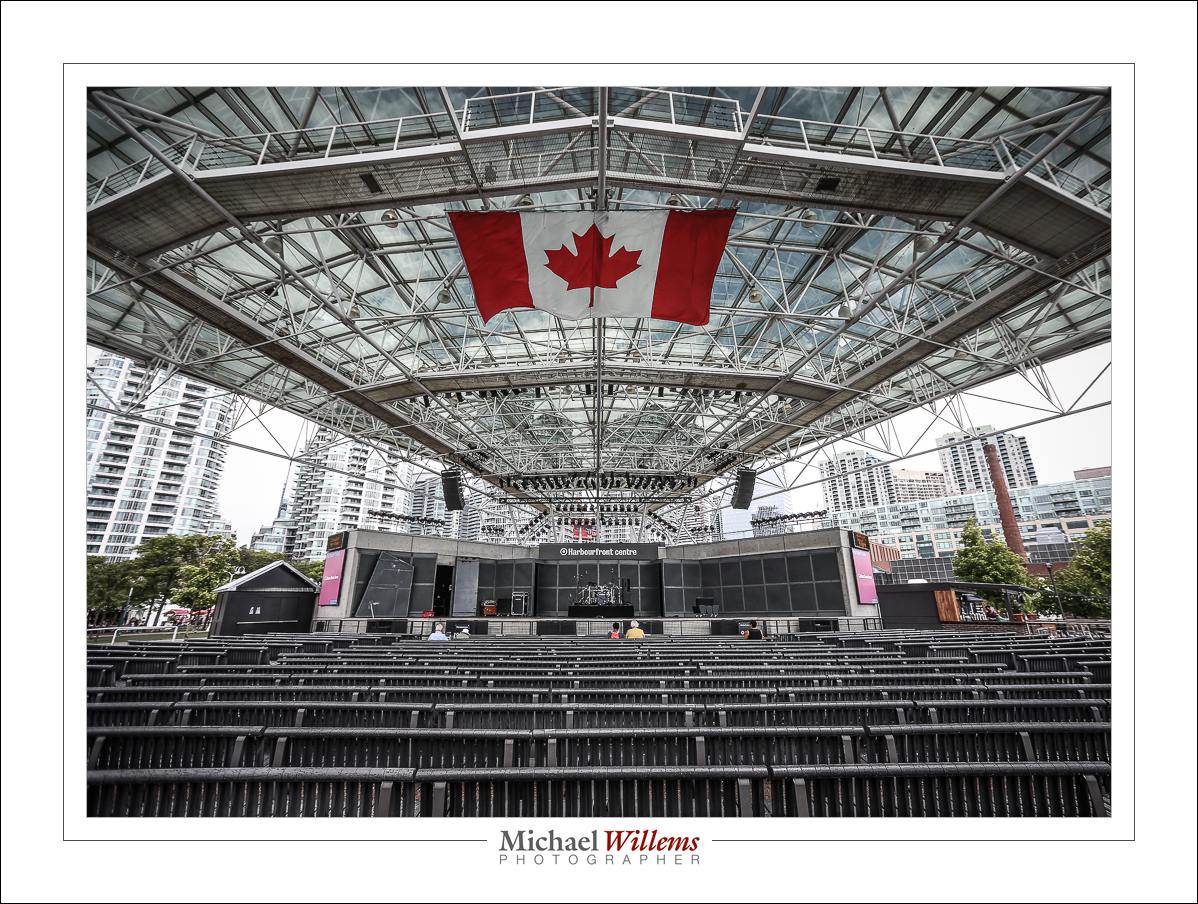
“Exit Stage Left”. Waterfront
Great stage, especially when seen through a 16m lens (on a full frame camera). Sharpness, symmetry, and the Maple Leaf flag.
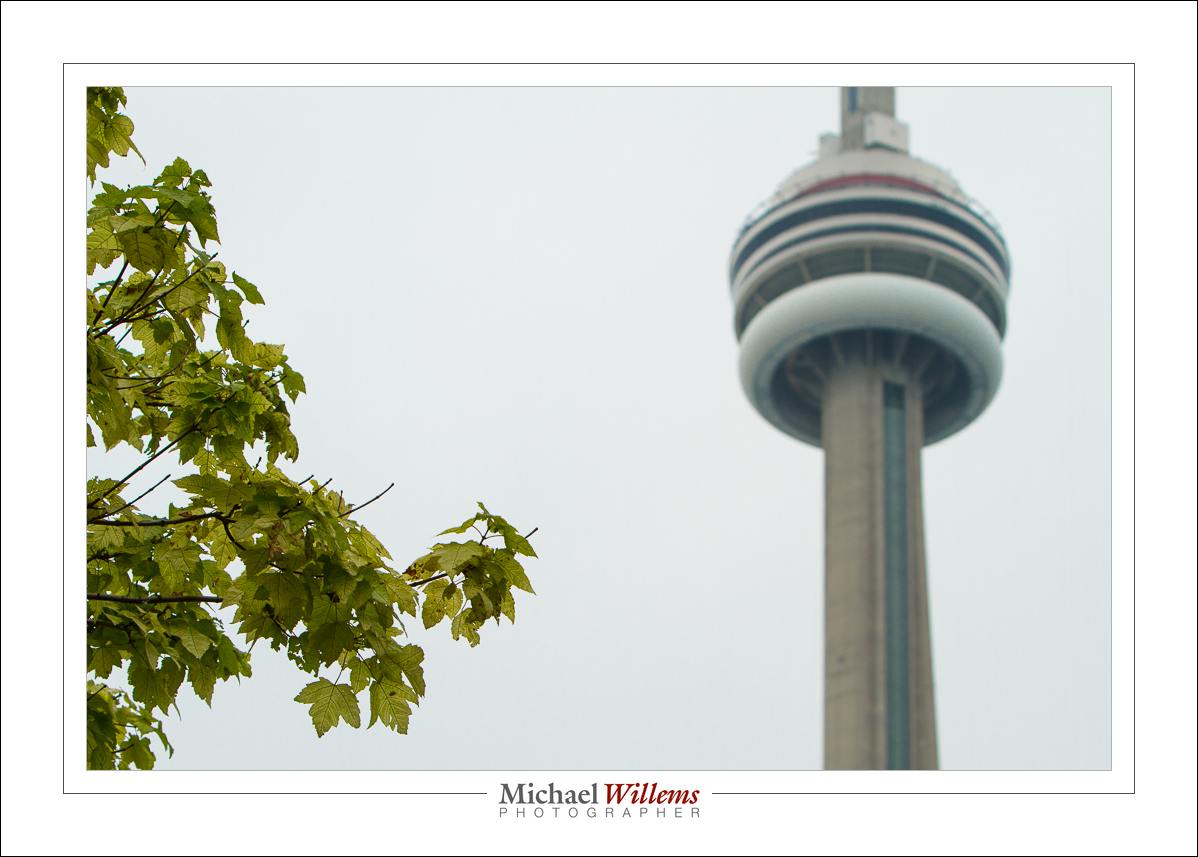
CN Tower.
In that picture, we see a blurred CN tower—but only blurred a little. The framing tree is sharp. And above all else, we see… simplicity. A golden rule of good photography:simplify, simplify, simplify, simplify, and simplify.
The same applies to this:

Master of its domain!
And I presume you see the Rule of Thirds being applied there too. As well as in this picture:
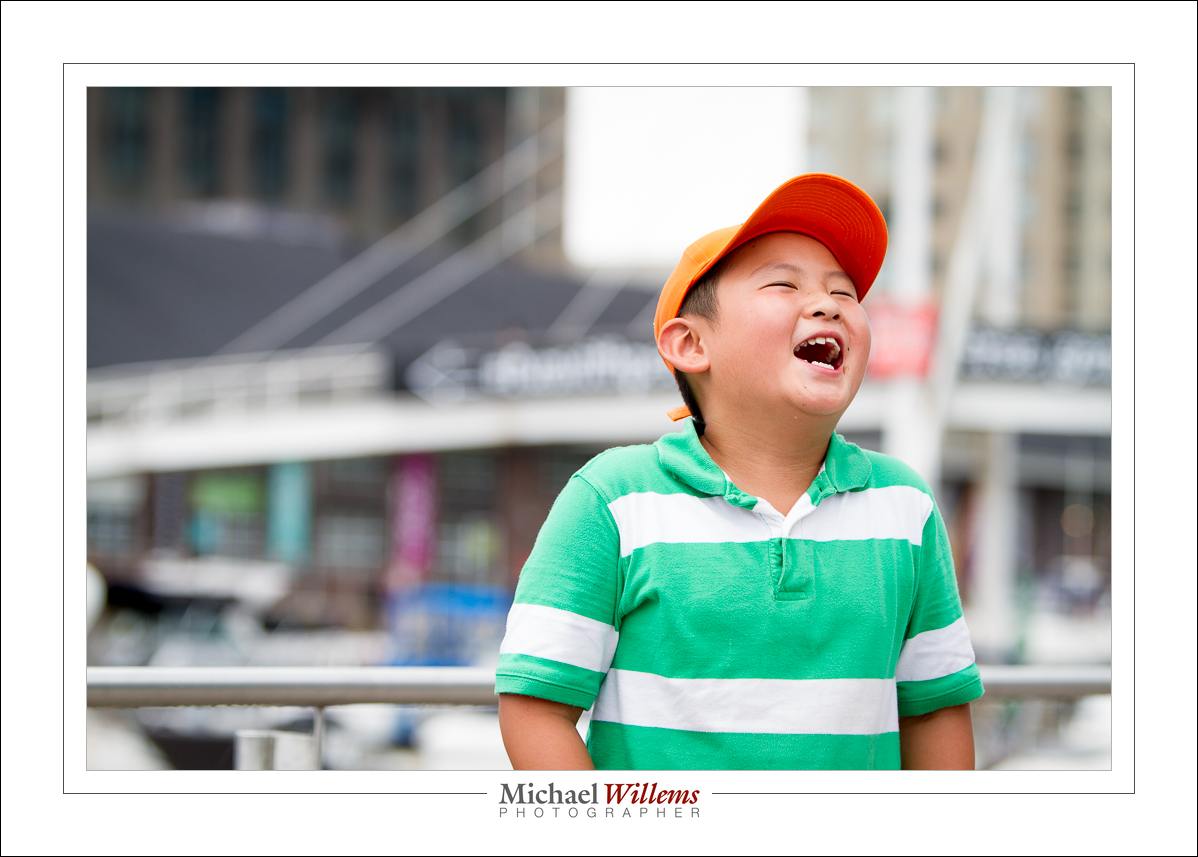
Fun and joy.
And that picture is, of course, all about the Right Moment. And about another rule: “If It Smiles, Shoot It”.
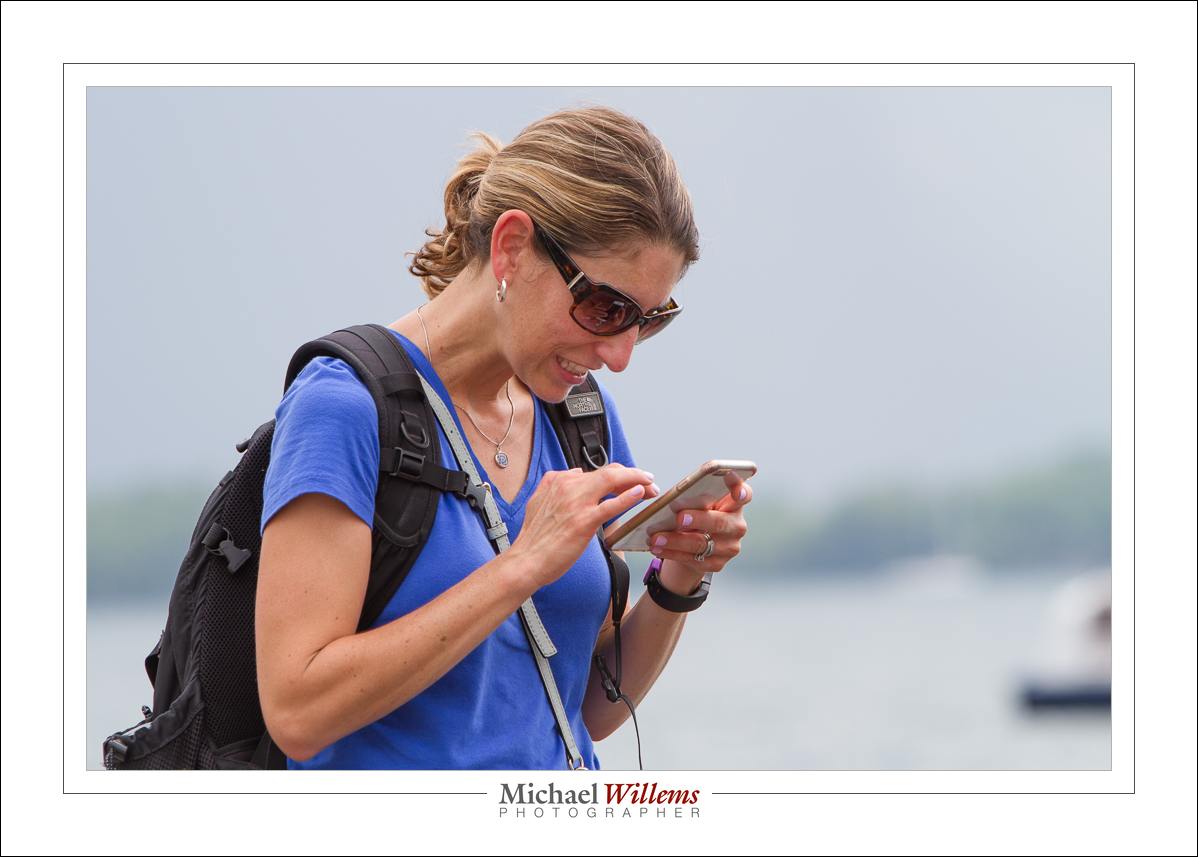
People and their devices.
A snap of a person wrapped up in her iPhone.
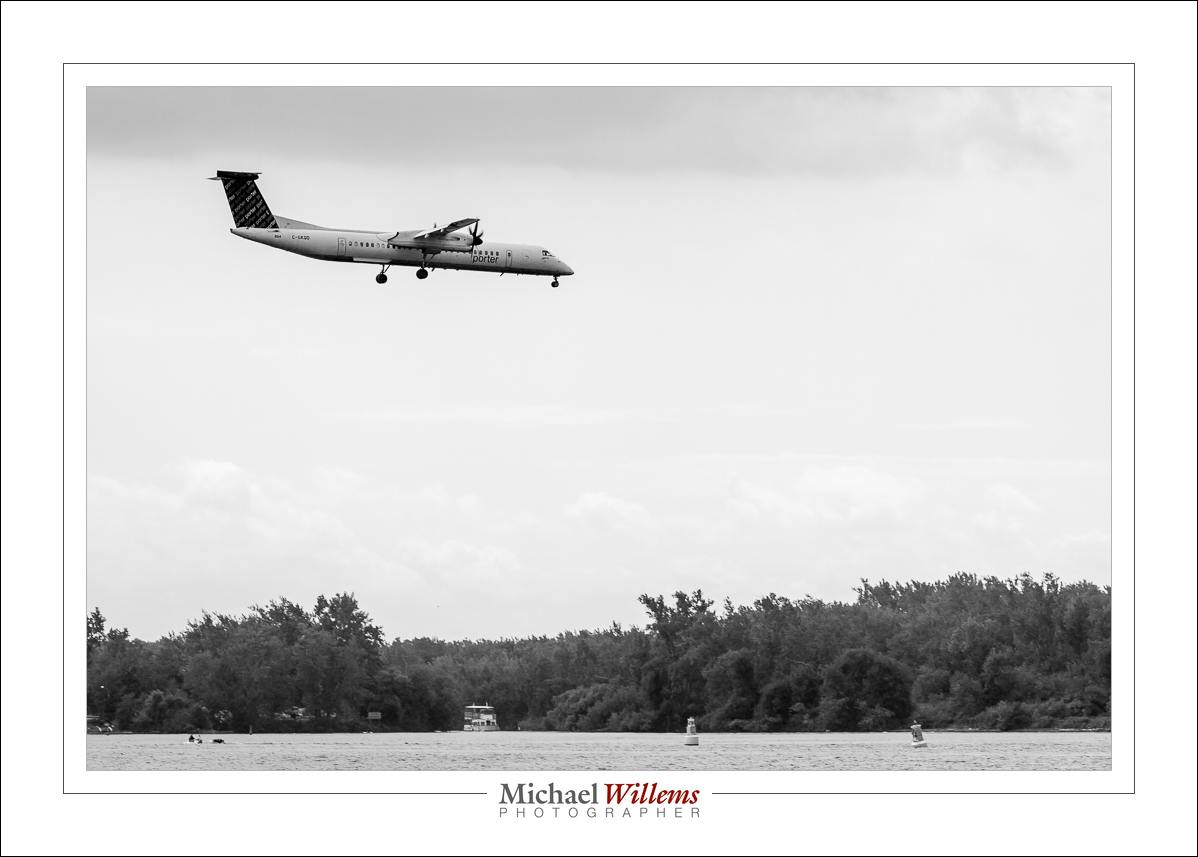
Porter on (Very) Short Final.
An airplane photo. Because why not.
And then, back to progressiveness:
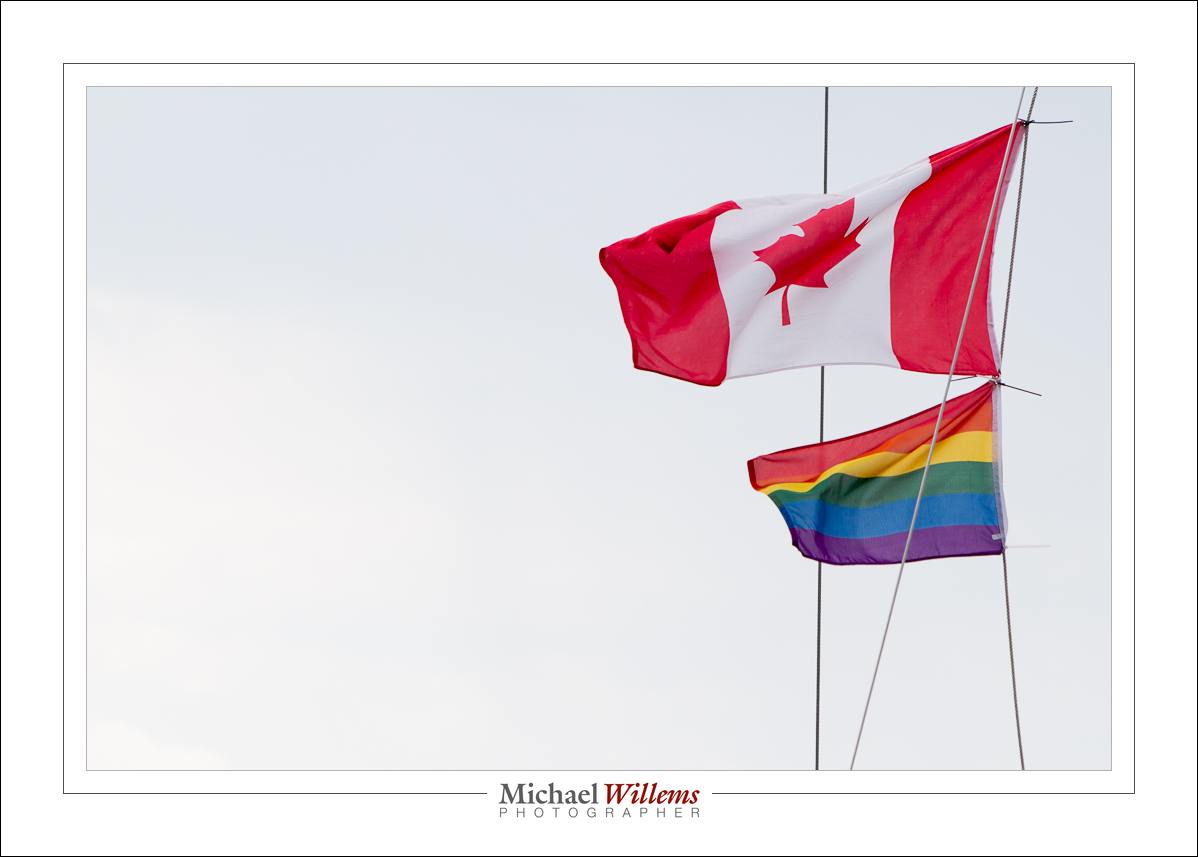
A progressive city, eh.
Toronto really is a very progressive city. (Though now, with a career politician at the helm, I wonder).
What I need not wonder about was today’s weather. 30ºC, and 95% Relative Humidity, interspersed with frequent heavy downpours, and air that looked like it was trying to start to rotate. Those clouds looked dangerous:
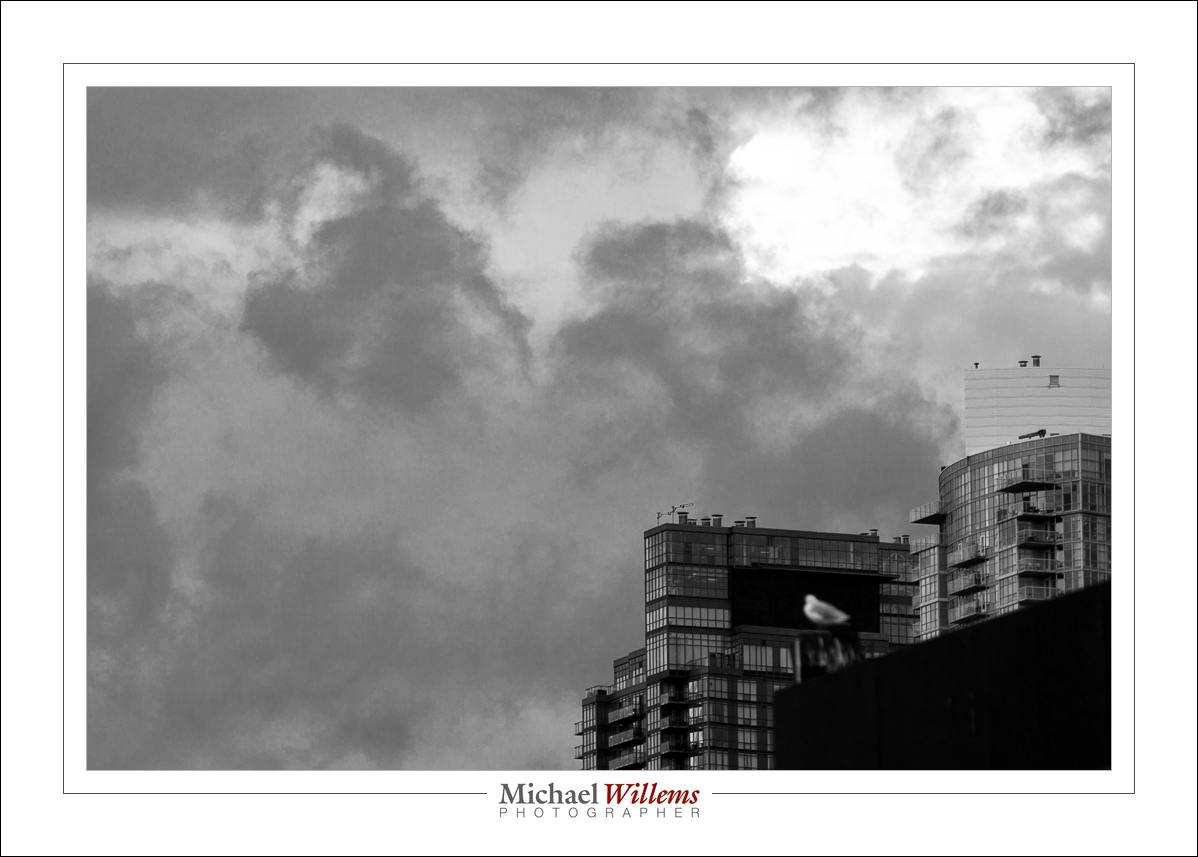
Dark Skies. Incipient Rotation.
What was I using there? Clear subject, simplicity, Rule of Thirds.
Do some of your own now. And think, consciously, about the principles and techniques you can use. Your pictures will be better for it. Take one of my courses if you need to learn. The good news, “it’s all just technique” and “it’s all simple to learn”.
Have fun!
Take a look at my e-books:
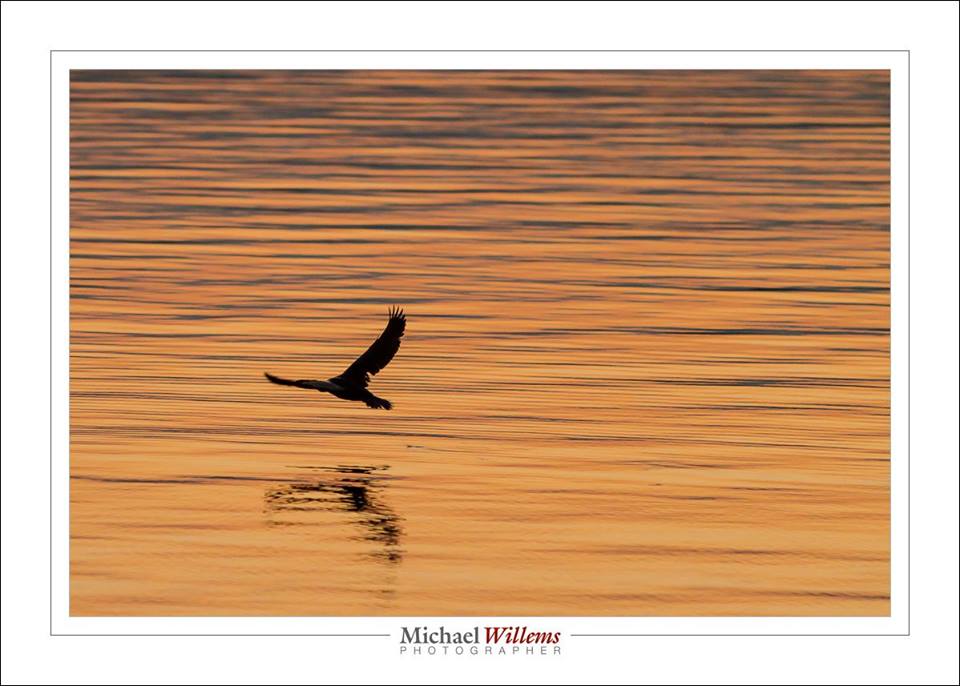
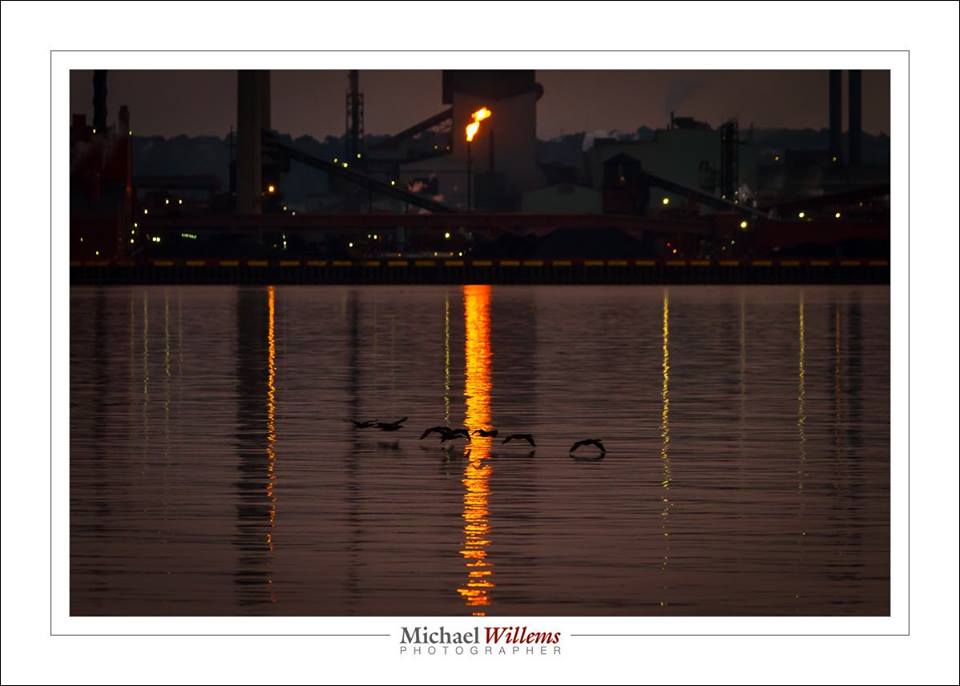
One piece of advice to you photographers out there: shoot everything. As do I: from news to portraits to industry to birds. So sometimes I go out with a friend for a few hours, as I did last night. Here’s a few of the results, from Hamilton, Ontario. An industrial city (“Steeltown”), and more; I go out opt my way to shoot that industry. Why on earth? Surely there’s no beauty there?
Well, I think there can be. Especially if you choose the moment right; in this case, around sunset. Here are a few samples:
For these, I needed to be quick. Back focus (no time even to change to AI Servo) and quick reactions meant most were good:

For these, I had to wait until ambient light was almost gone:
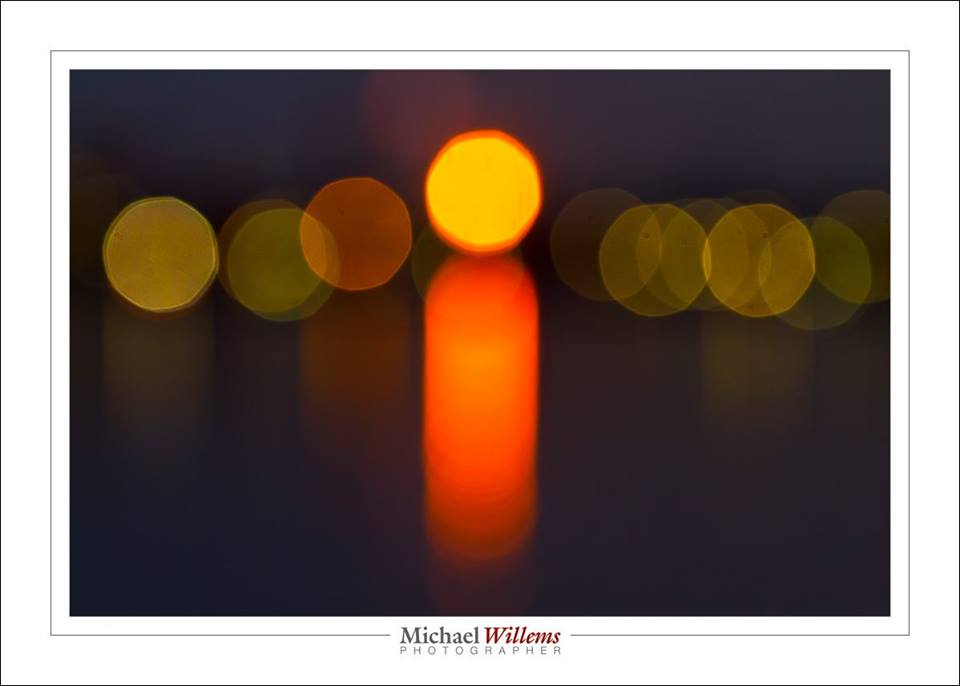
This is out of focus deliberately:
MV Floretgracht (and you are Dutch if you can pronounce that):

And a few more samples:
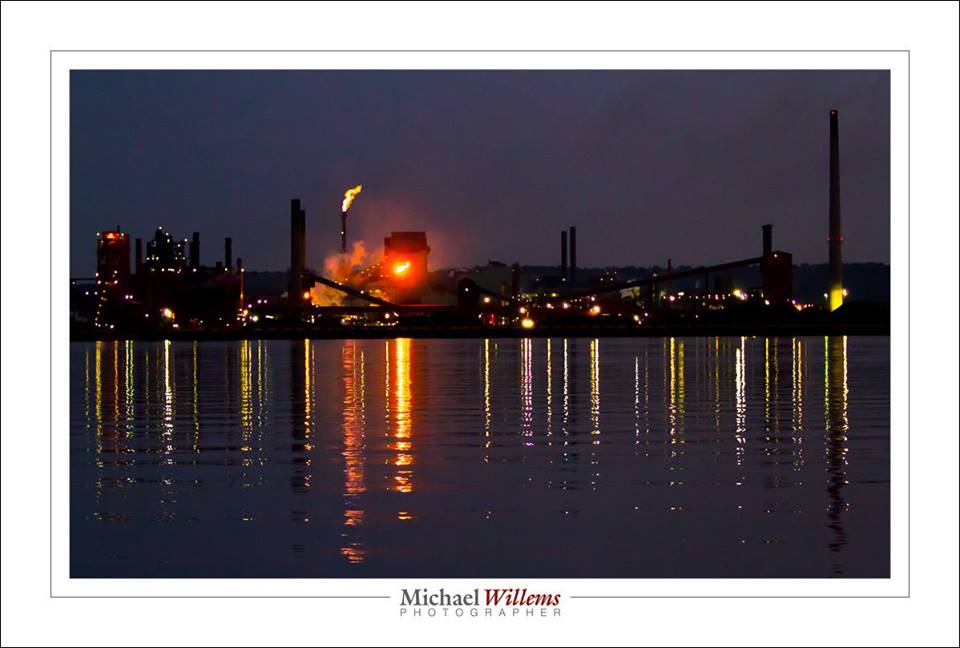
Layer cake?


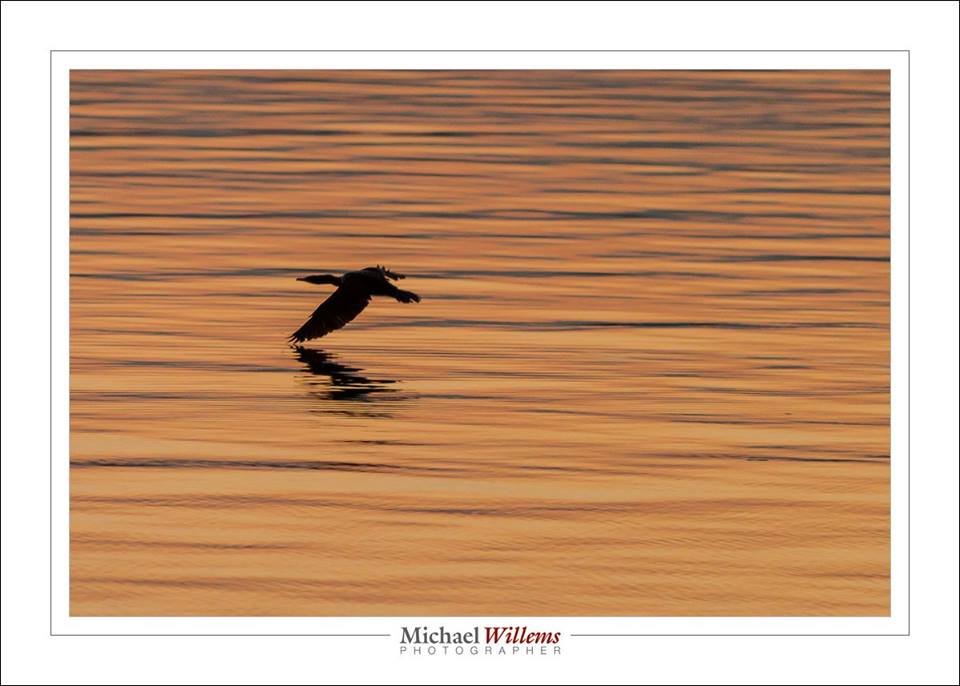
I do not often shoot these things–which makes it important to every now and then do just that. Do the same: go shoot something you rarely shoot!
I do it properly. During a portrait session with a client just now, I also did a few “desat” portraits. Because why not!
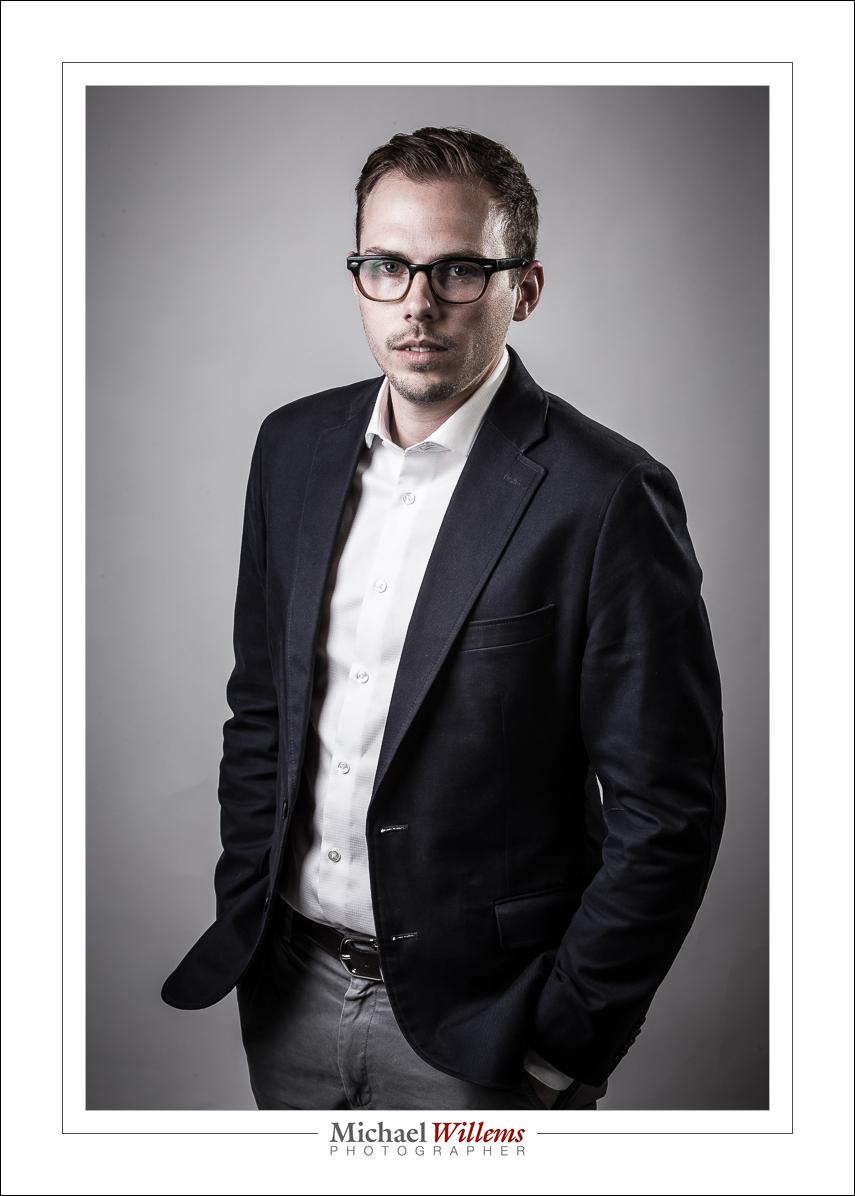
Also black and white and “standard linkedin” colour. And high-key (without jacket) as well as standard. What I mean is this: when you do portraits, do them well, so you are seen as not “Uncle Bob”.
And with that, go outside and bring your flash!
You can learn from me this coming Monday, in Burlington. It promises to be great weather. Or you can learn in Brantford on Sunday, even earlier.
Either way: learn how to use a flash in outside light. To do that, buy my flash book, come to these courses, and in all cases, start here:
Then check background, and adjust only aperture. If flash is not bright enough, turn up power, remove modifiers, or bring it closer.
And have fun.
Here’s an example of outdoors on a sunny day:

Benefits: You get no annoying sunlight, and you avoid those horrible overexposed backgrounds. And you can direct the light. Control is everything!
Last night I shot a kickboxing tournament in Vaughan, Ontario. So the food was all Italian, and I must say, rather good. As was the wine. I used a flash of course; bounced behind me, as usual. A few samples:

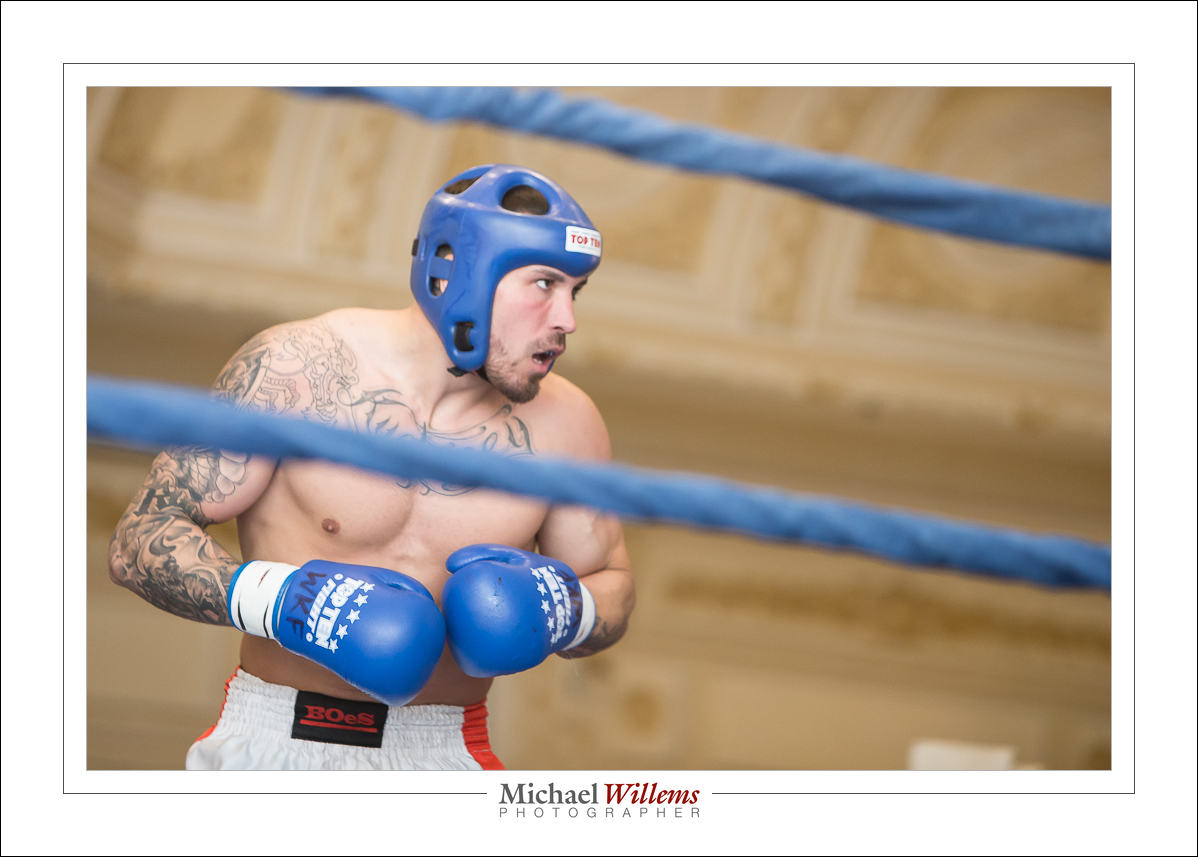
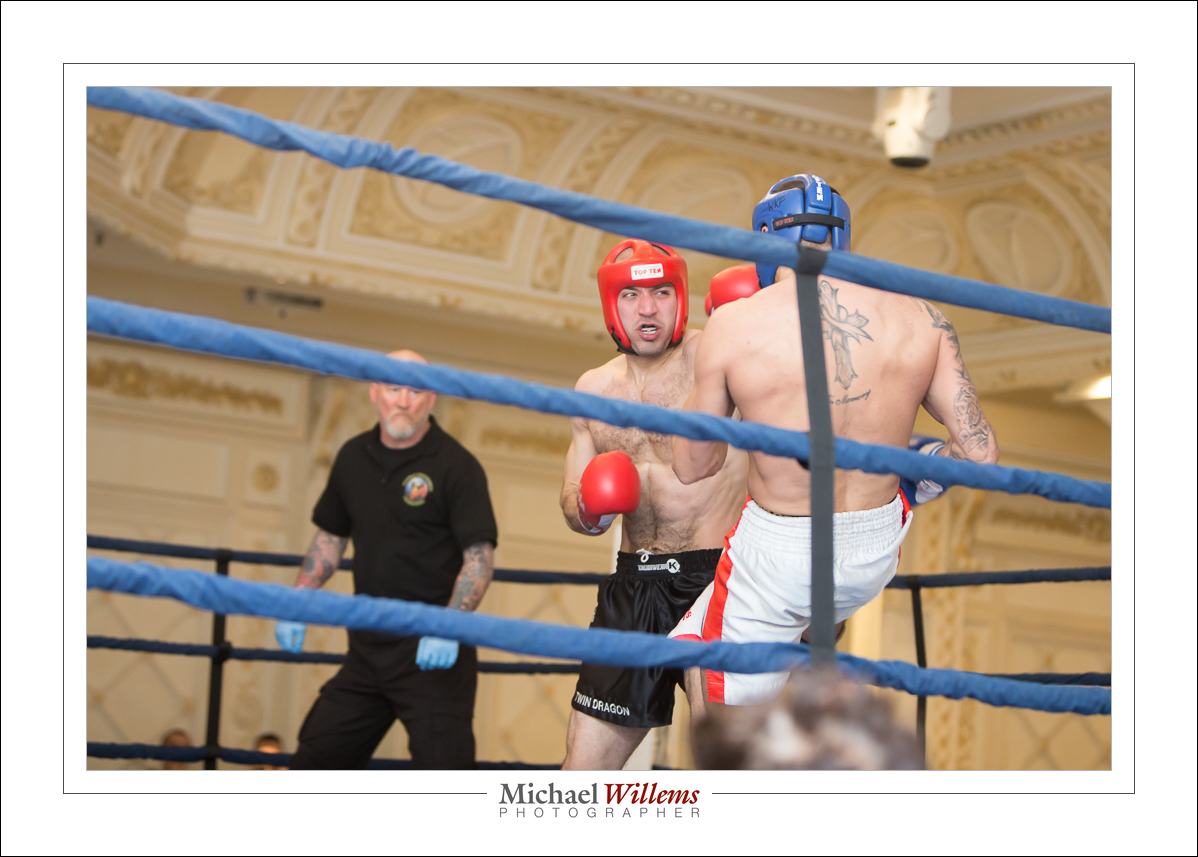
But I chose to set my camera to 3200 ISO. For three reasons:
That’s why. You see the logic? And as you look at those shots, I hope you realize that high ISOs are nothing to be afraid of.
A well exposed photo at high ISO is always better than an underexposed shot at low ISO, remember that!
POSTSCRIPT: I shot these from my seat at the dinner table. Not wanting to get in the way of the hired pros. And wanting to enjoy my dinner.
Tip: I am available for private training, as most of you know, whether local or worldwide using Google Hangouts. And if you want to start by doing it yourself, get my e-books from http://learning.photography.