Action…

I shot some photos at a block party yesterday. A block BBQ, to be precise. And I would like to share a few of those here, in order to convey a few points you may find useful.
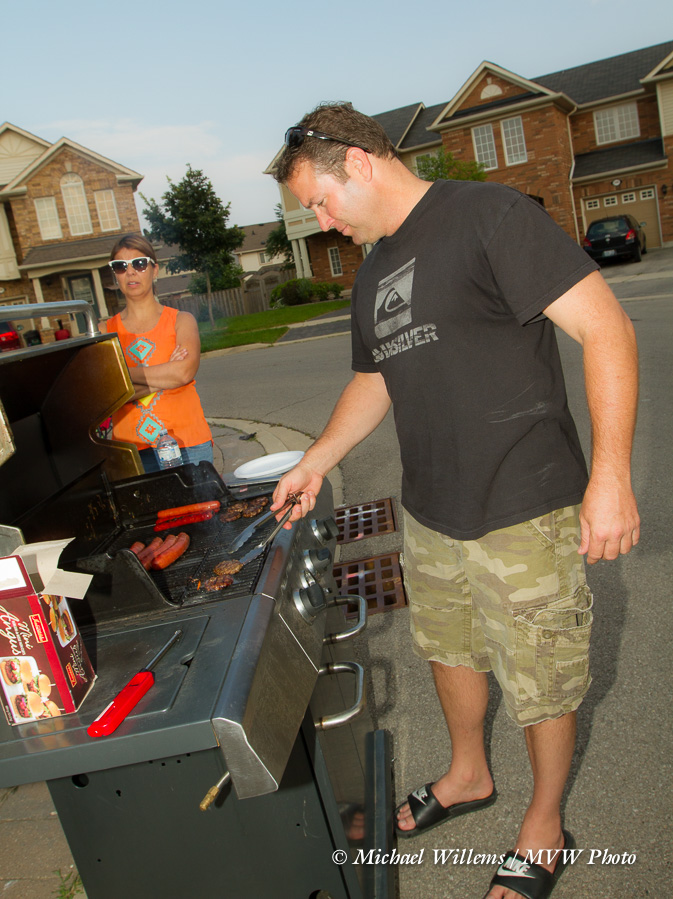
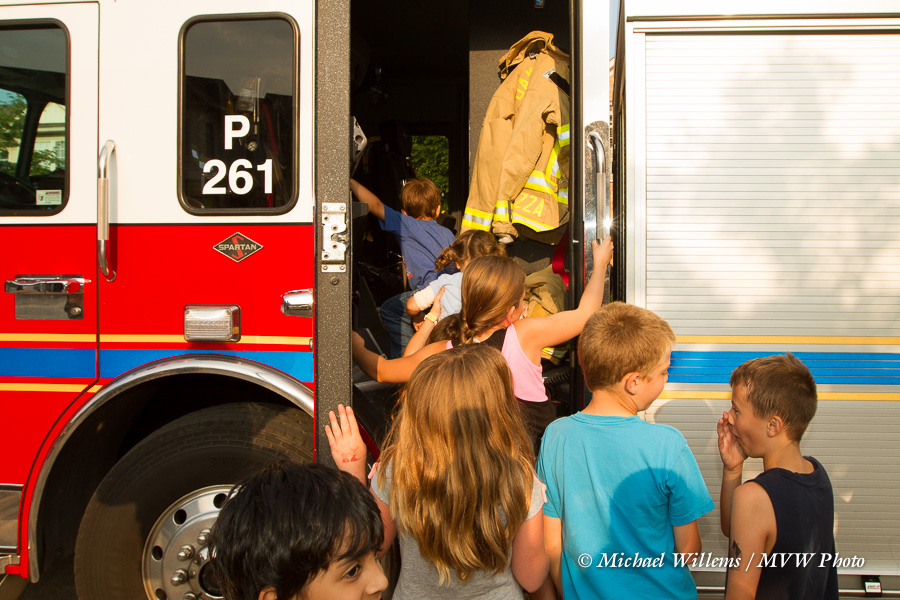
First, the colours. As you see, they are vivid. Did I pop them up in “post”? No. I used a flash. Using a flash allowed me to slightly decrease background exposure, which makes colours saturated. The foreground is lit by my flash. If you go two stops darker, or more, for the background, you really ought to use off camera flash. But up to about a stop and a half you can get away with on camera flash. (Manual mode, 1/250 sec, f/8, 250 ISO; TTL Flash). Yes, all 8 of these images involve flash.

It is for this reason that I am sad when I hear “I am a natural light photographer”, as I so often do. Many photographers say that—some, famous and experienced. In my view, at worst, saying this means “I do not understand flash”. And it always means “I am deliberately and knowingly depriving myself of half the creative options out there”. I can do available light or flash light. An “available light only” photographer can only use, well, available light on;y. That seems a shame, to deprive yourself of creative techniques you may in fact want, or even need, to use on occasion.

A few more examples:
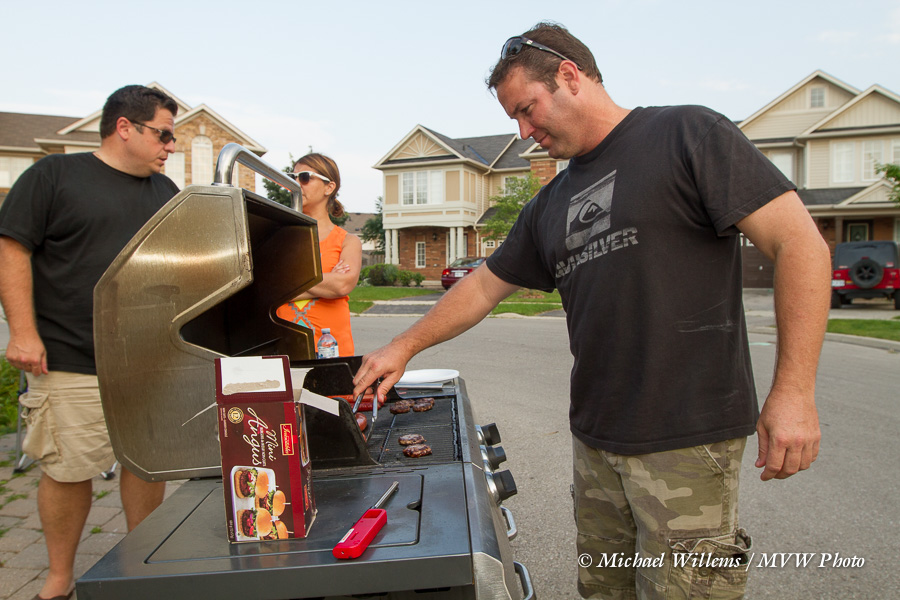
You see the same here. All pictures in this post involved the flash.

You also see also that I made it easy on myself by using a fairly wide angle lens (mainly the 16-35, but on a 7D, so that means 24-50 in “real” numbers).

You will also notice that as much as possible, I shot with late afternoon sun (the “golden hour”). Not always possible, but when it is available, use it.

And above all, you will start to notice that the best shot are moments. Moments where something specific happens. Not just dead-looking poses.
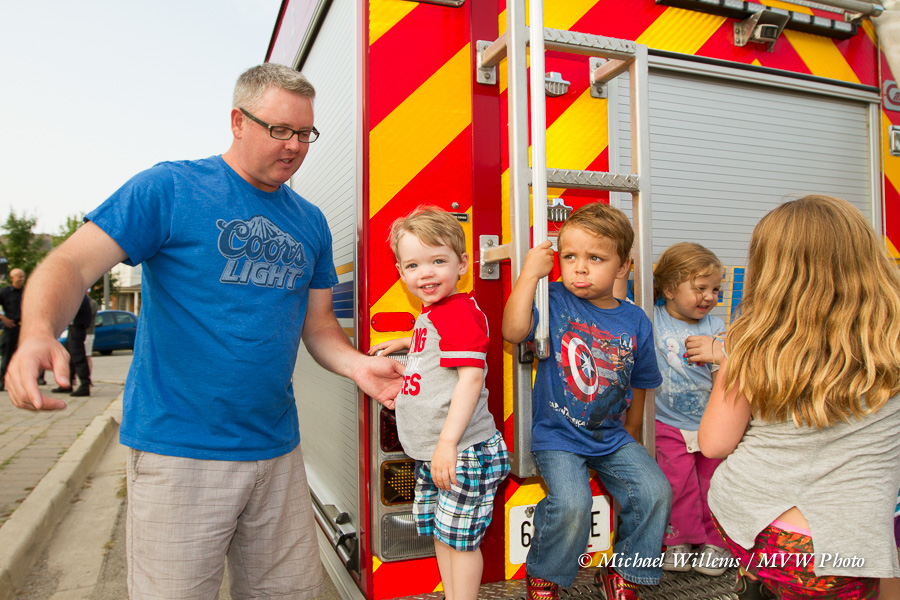
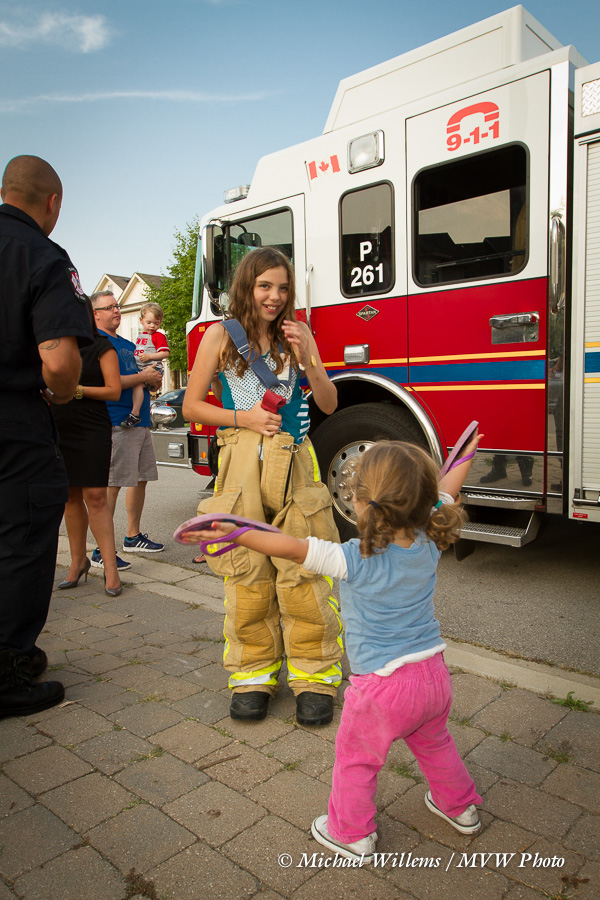
The next time you shoot an event, try to use these techniques. You may not like them; you may say “that is so not my style”. Fine—but you do need to know them.  You owe it to your family, customers, whoever you are photographing.

___

Let me photograph you; your kids; your family. See http://www.tolivetolove.com and http://learning.photography for samples, prices, and more. Special offer this week for headshots: but with or without special offers, go for it and have your family captured forever in beautiful photos. Please do it… it is the only time travel you will ever do.

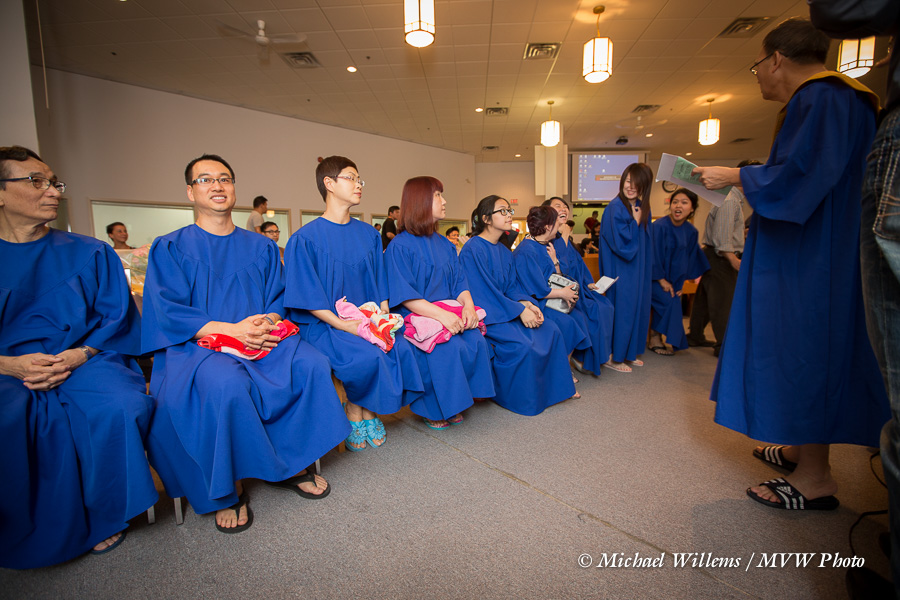
 

Event

Event shooting is difficult, because things are not under your control. In addition, there is never enough light; bouncing may be tough; there is not ebnough time.

But it can be done, and it can be done well. Especially if you remember you are a storyteller.

You start with an establishing shot. This sets the scene for “where”.

Then you proceed to the “what”…

Then the “why”, “when”, and “how”.


As you see, plenty of detail, plenty of the event, plenty of “background” (the “B-roll” you hear me talking about so often).

In all of this, remember to be roughly chronological; and remember above all to make the viewer work it out. The ideal photo is a photo that makes the viewer take several seconds to tell the story in his or her mind.

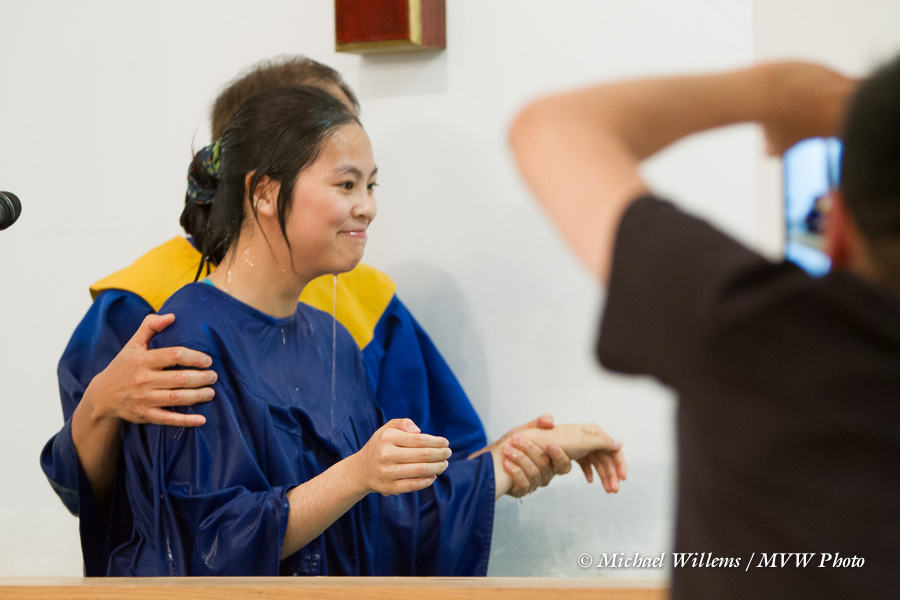
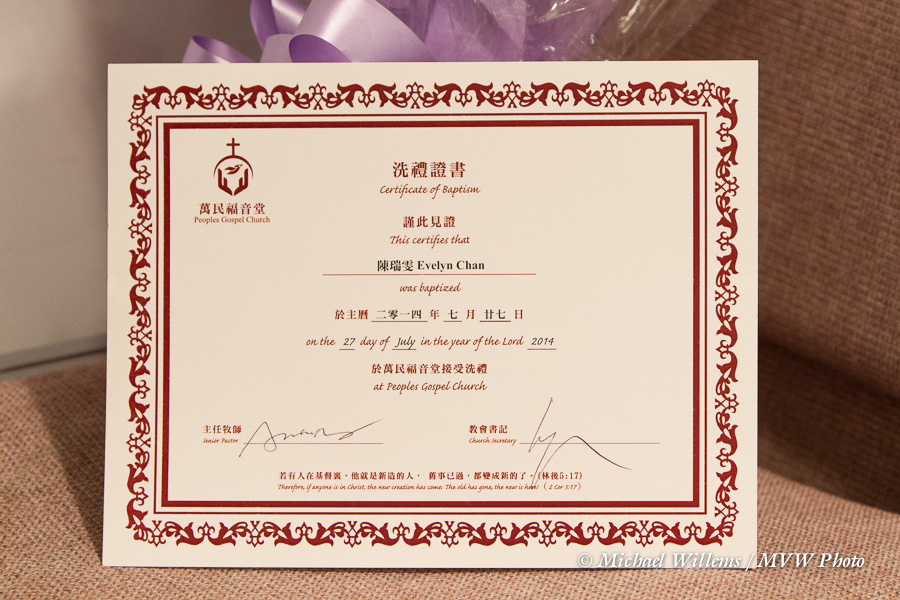
The photojournalism story above is already quite good, in just 8 pictures, at working out what is happening. The full shoot consisted of 314 photos. You can imagine that this tells more of the nuance, more of the detail: but in essence, these 8 pictures tell it all (yes, I know, I chose a different person for the post-baptism shot here).


Point Of View

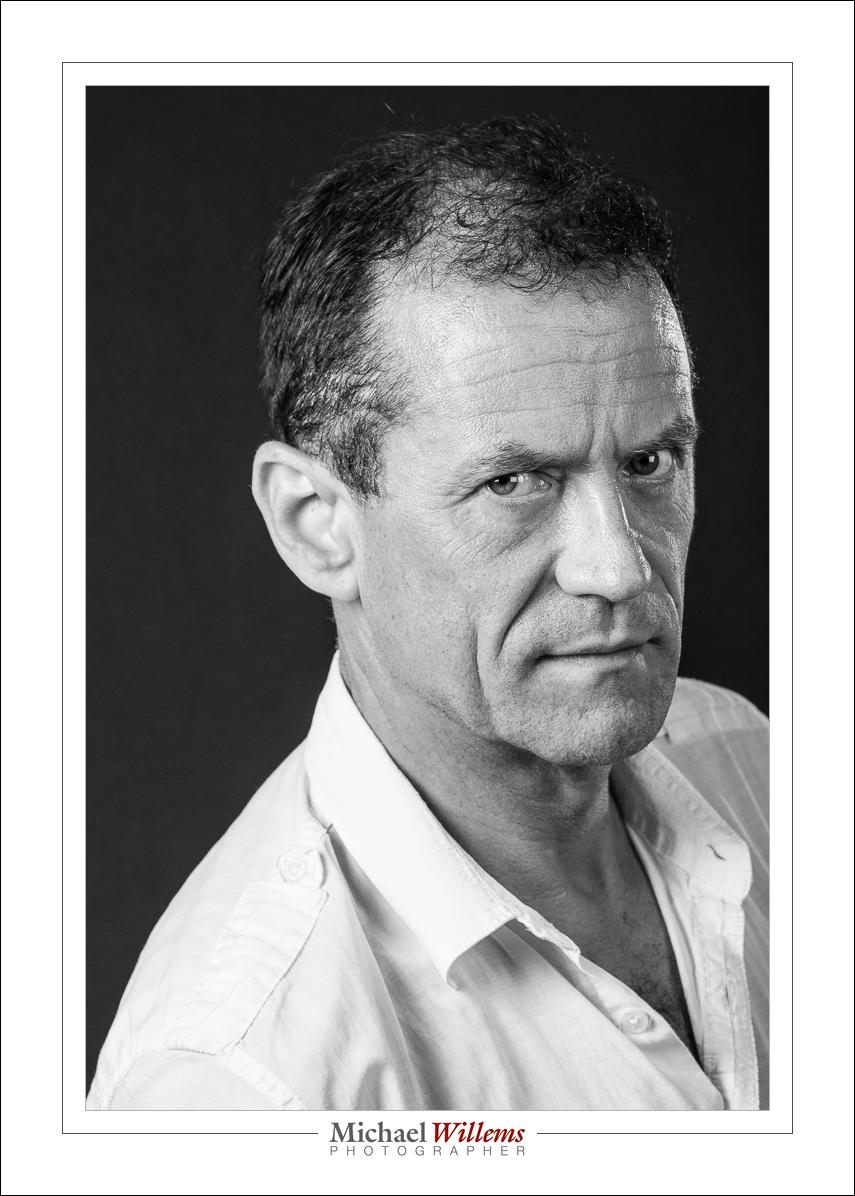
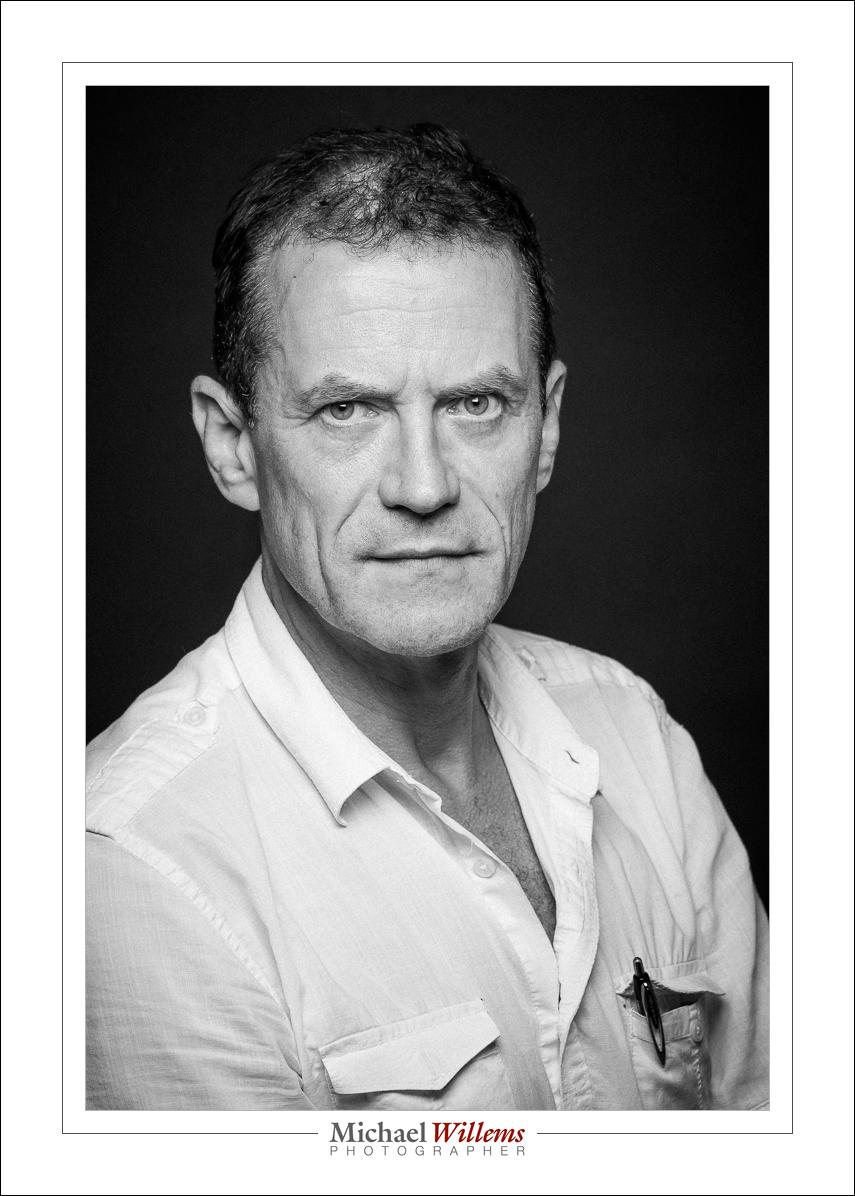
A portrait is simple, right? Look at the camera and smile.

Not so much. Apart from the “smile” thing, there’s also angle. And the same person can look very different if shot from different angles.

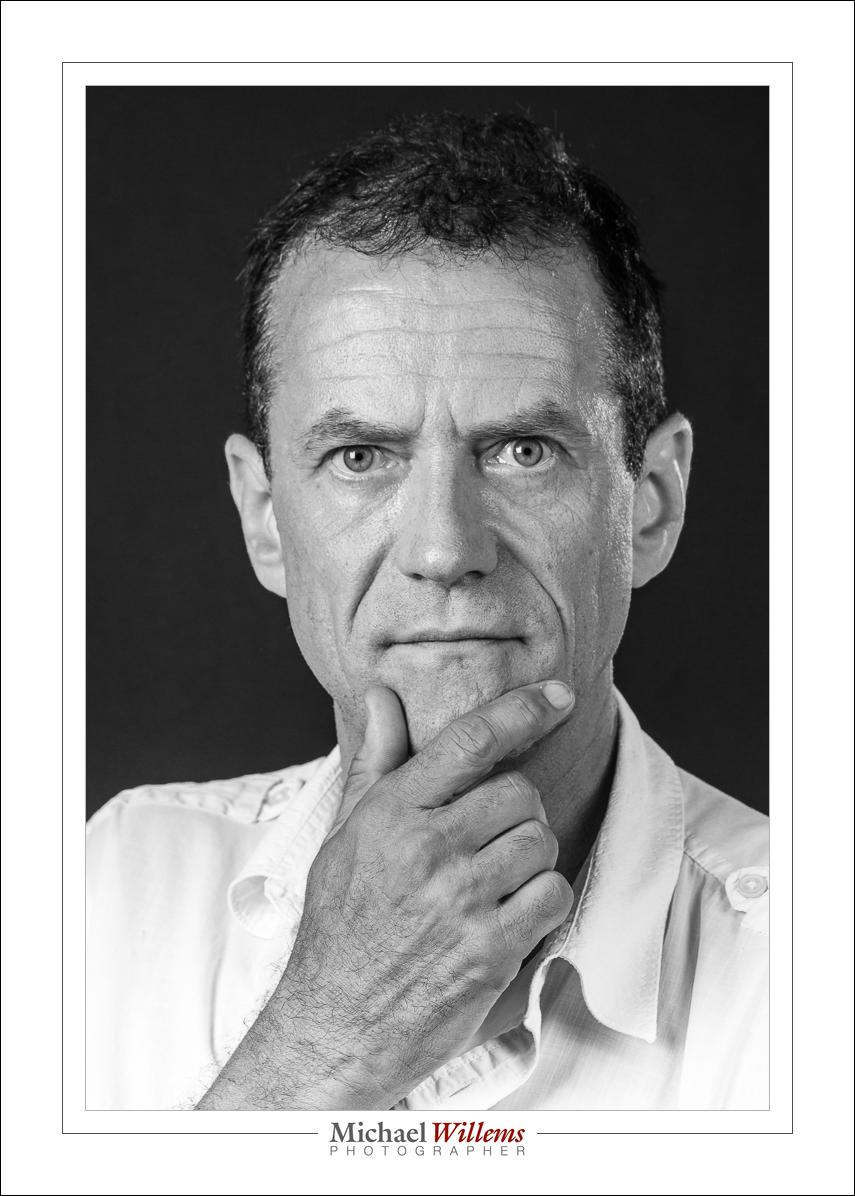
Like me, a couple of days ago:

Michael Willems (www.michaelwillems.ca)

Michael Willems (www.michaelwillems.ca)

Michael Willems (www.michaelwillems.ca)

Michael Willems (www.michaelwillems.ca)

Can you see how they are all different, and yet the same person? Some work better than others. So when you do portraits, try all sorts of angles, and then analyze which ones work. Model the face (avoid even lighting, for interest). Watch for shadows and ensure you get good catch lights.

And note that all of these work better in B&W than they would in colour.

So…. try some B&W portraits from various angles, lit by softboxes.


Lighting a face: a small detail

The title says it. Detail, and attention to it, are what makes you a pro.

Look at this image, from last Friday. The lovely and talented Vanessa Scott, whom I photographed in Timmins, Ontario:

(ISO100, 1/60 sec, f/5. Lit with two flashes, direct, no umbrella. Left flash gridded 1/4 power, right flash unmodified 1/2 power.)

Not bad. But look closely at Vanessa’s face. Closer!

See the two little bright areas next to her mouth? My right-side flash was as little too low, so the shadows are not quite right.

Let’s start up Lightroom and make it better with the Develop module’s healing tool. Two little clicks and I fill those light areas:

Proper Rembrandt lighting. So the whole image now looks like this:

A subtle change, but much better.

And as said, that’s what makes you a good photographer. Attention to detail. When you hire a pro, like me, this is the kind of thinking he or she will engage in to get you the best possible images.

___

I have amazing deals for portraits this month. From corporate headshots to family photos: give me a call or send me an email to hear the options.

Print.

A photo is not a photo until it is printed. And you should print your photos. Today, I am making a case for doing that.

You are reading this post because you are into photography. You are a beginner, or an advanced amateur, or a seasoned pro who would like some new techniques. Either way, you have come here to learn about something dear to your heart: making images. And for many of you—especially the beginners—this means you have hundreds, thousands, tens of thousands of images that live only on your disk drive.

Great. But that is not the whole job. You are leaving out the last step. A very important step; I would say an essential one. Creating a print from the best of those electronic files.

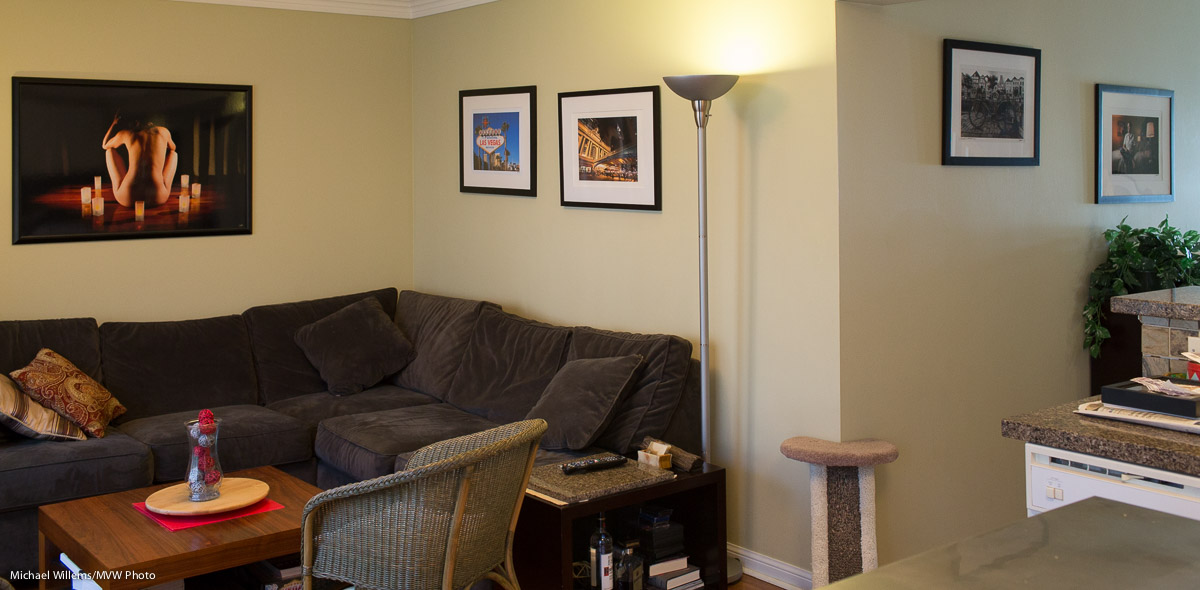
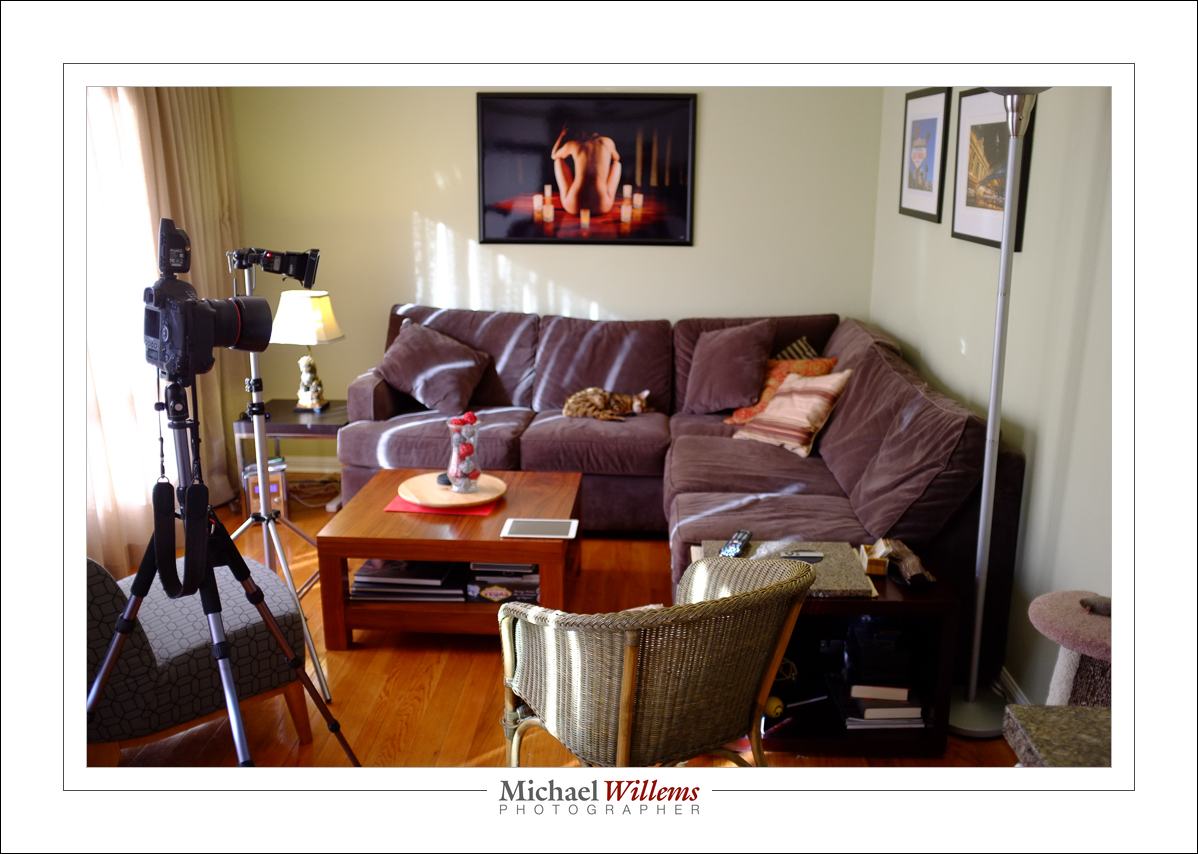
Like here, in my living room, which as you can see is decorated with one artistic nude, three travel photos, and one “selfie”:


Why is printing images so important?

For many reasons, of which I am going to mention the top six.

It is the only way to preserve the image. Digital images get lost. Let me repeat that: Digital images get lost. All information carriers (Papertape. Magnetic tape. Floppy disks. Hard disks. CDs. DVDs. CF cards. SD cards. USB keys. Every single type!) lose their information in anything from a year or two to a decade or two. I cannot stress that enough. You will lose your information. CDs, DVDs, hard disks: all of these are meant for temporary storage. there is as yet NO permanent storage solution other than cuneiform clay tablets. “The cloud” is no solution either: things get lost.

Also, even if by a stroke of luck you do not lose the data, you cannot read old media (try to read an 8″ floppy disk: I challenge you!). We may be the generation that takes more photos than any preceding generation; we are also the generation that will lose more photos than any preceding generation. This is a tragedy. Please.. print, to preserve.

They decorate your living room very nicely. There is a reason there is no hotel without prints on the wall. Prints add style, class, to your environment. Not just to hide stains: prints look beautiful on your wall and you can choose something to complement your environment (e.g. urban scenes in a country cottage, and vice versa).

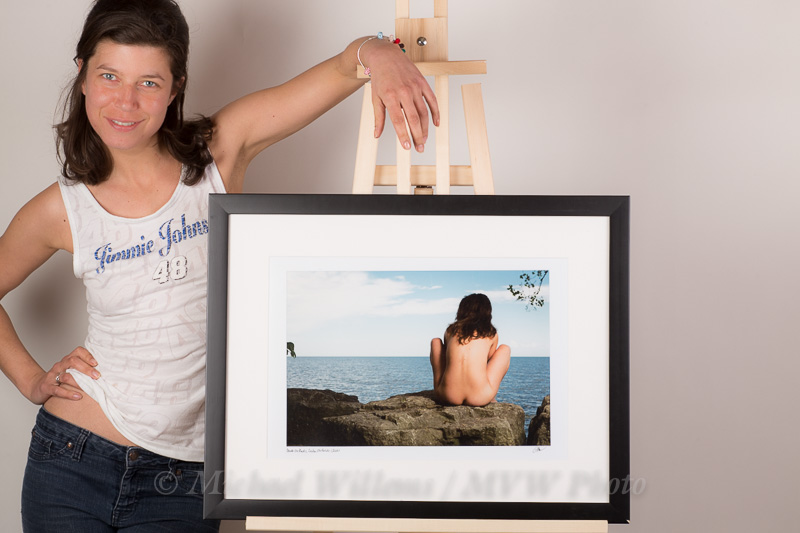
Prints look much better than displays. Prints can be much larger (the nude above is 40″ wide); they can be on metallic paper (that one is); they have wonderful colour saturation, and they are, when done properly, much better than a display. Yes, printing needs to be set up properly, but it is worth doing.

They are a great way to share. Having photos on a hard drive is ok, but how often do you show them? A print on a wall is seen every time someone walks by that wall. And not just for ten seconds: for the entire evening, if you have dinner guests.

There are many possible formats. I love fold flat photo books with hard pages. There are many formats, from canvas wraps to such books: you can go wild. All this amounts to much more than just your LCD screen!

You will feel good about your skills. There is a special thrill in seeing your work large, as it is supposed to be, on your own wall. Your work instead of some IKEA artist’s work! This is an important motivator to keep shooting, as well.

My recommendation is a strong “go make some prints from your best photos—today!”

EXTRA: TIP for readers in the Toronto area: for great prints, in a wonderful variety of types, go to Fotobox in west Toronto, on the Queensway. Tell them I sent you—they have done my large metallic prints, and I am delighted with their service, attitude, skills, quality and pricing. Fotobox, 936 The Queensway, Toronto, ON M8Z 1P4(647) 430-8499. See www.fotobox.ca. (And no, before you ask: I am not being paid for this mention.)


Starting Year Six

I am today starting year six of this blog, the Internet’s only daily photography teaching blog.

My mission is the same as it has always been: to educate. I aim at everyone from beginner to pro. Short posts, all designed to educate in some way or form. And it’s daily: whenever I miss a day or two, I make up for it later.

www.speedlighter.ca is, and will always remain, free of charge. All I ask in return is that you:

  • Tell all your friends and acquaintances about this blog. “Like” the posts you like (click on the facebook share button). Better still, share the posts you like with your friends. In other words, help me reach a larger audience.
  • Consider training, private or in a small group. A half day’s course/seminar can turbocharge your photography.
  • Have a look at my e-books and, if you like them, buy them, as many hundreds of you already have.
  • And finally, last but not least, that you consider me as a photographer, for photographing everything from corporate headshots to industrial to models to family photography and weddings. If it can be photographed, I can do it.

Today, a short note about make-up.

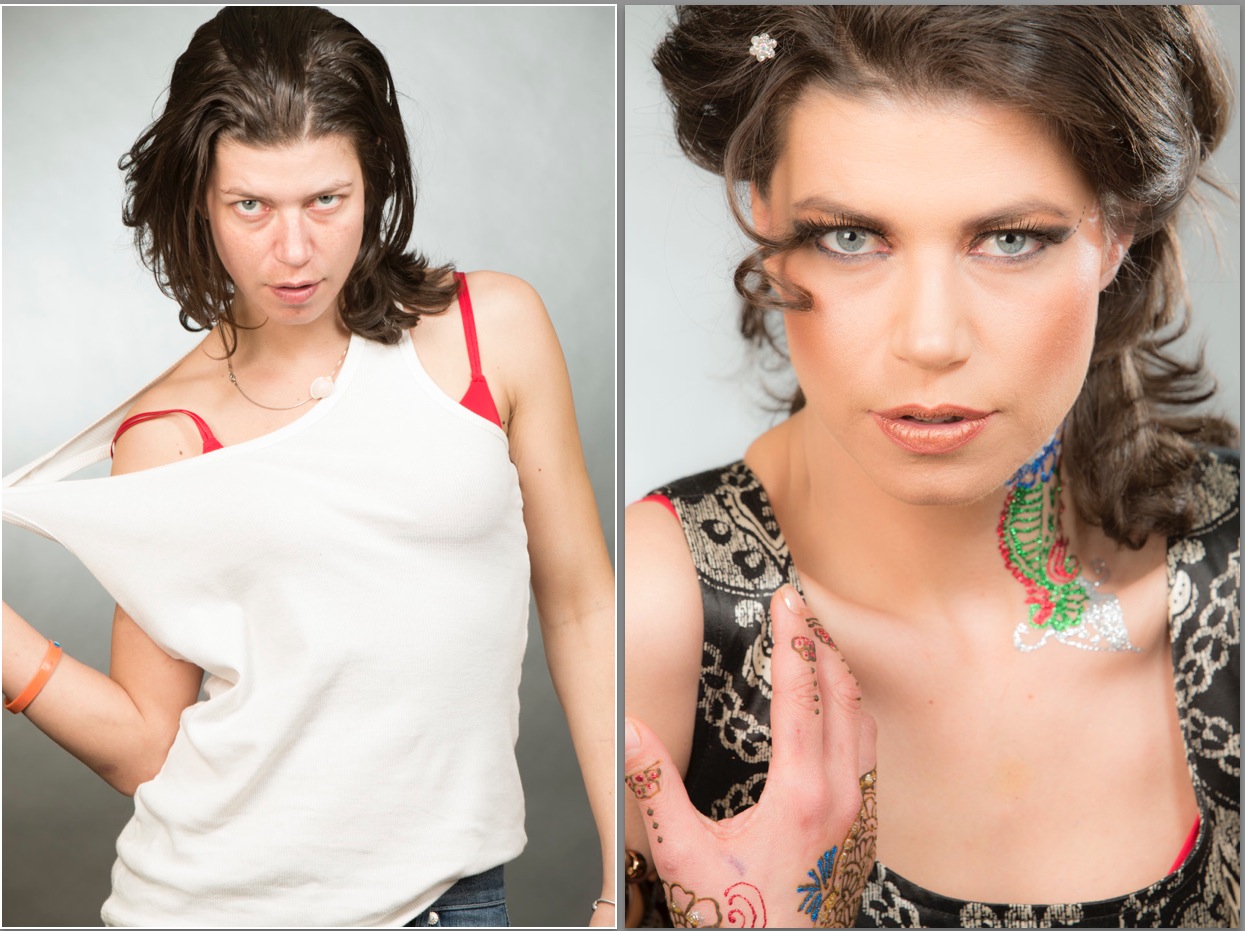
As you will see in my price lists, I offer make-up artist and hair stylist for shoots as an optional extra, at $125 each. If you want to be shot for a formal photo of whatever kind, do consider a good MUA. Even if you are a man it can be worthwhile. Sure, it’s more money, but it’s amazing what make-up can do.

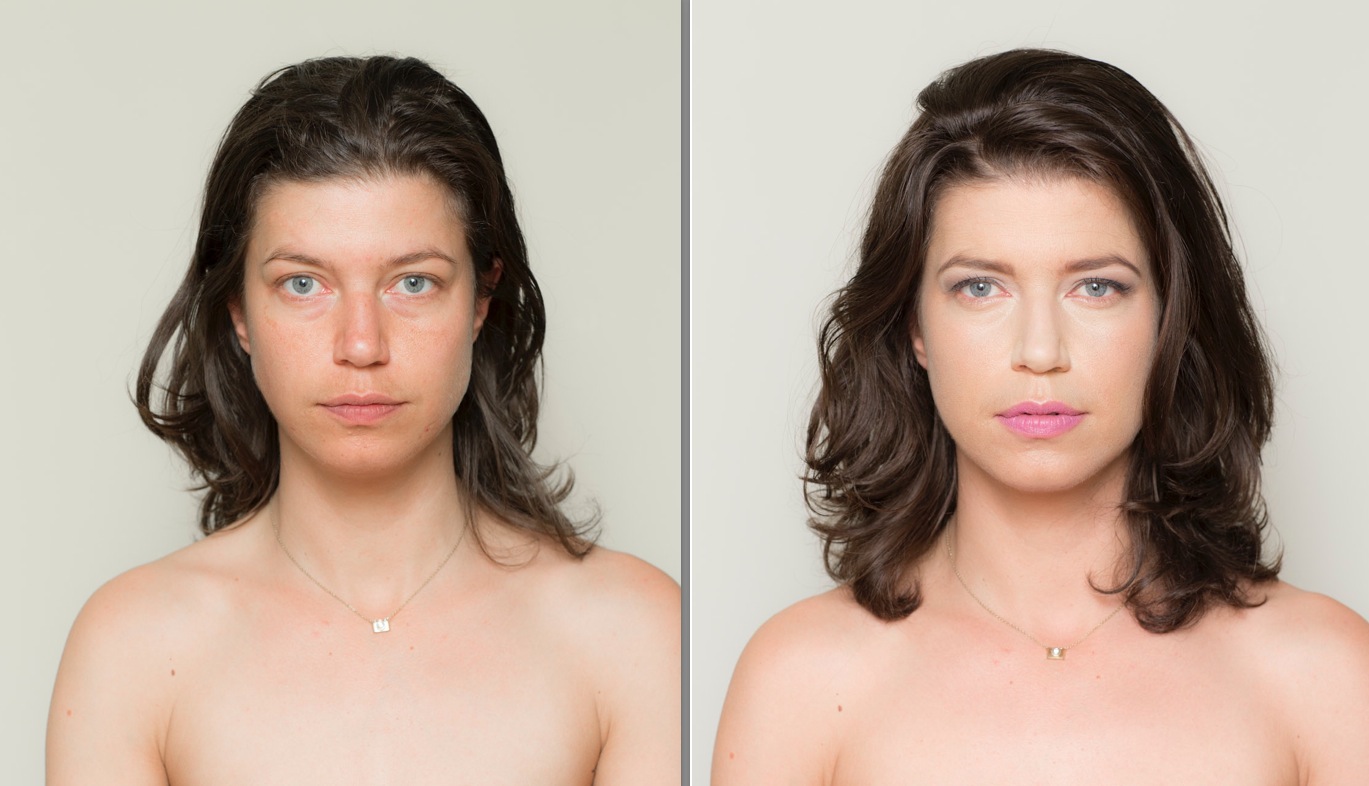
Look at this recent example (Make-up by Melissa T, one of my regular super-talented MUA’s):

Obviously she is very pretty with or without make-up, but I think you will agree, the attention given to make-up and hair do put the second photo in an entirely different league.

TIP: if you cannot afford one, go to Shopper’s Drug Mart: they have MUAs in the store who will do it for you, when you buy some make-up. Some of them are very good.

Here’s another example, from a shoot earlier this year. Here, the theme was Desi (pertaining to the Indian subcontinent) and henna.

Yes, that was on the same day, just an hour apart, No tricks involved. Just make-up. Stars and celebrities look great on TV, in part because they have make-up done. So if you hire me for a headshot (for press releases; your company’s annual report; newspaper announcements; LinkedIn; your web site; even for Facebook use!) consider having a MUA (Make-Up Artist) present as well.

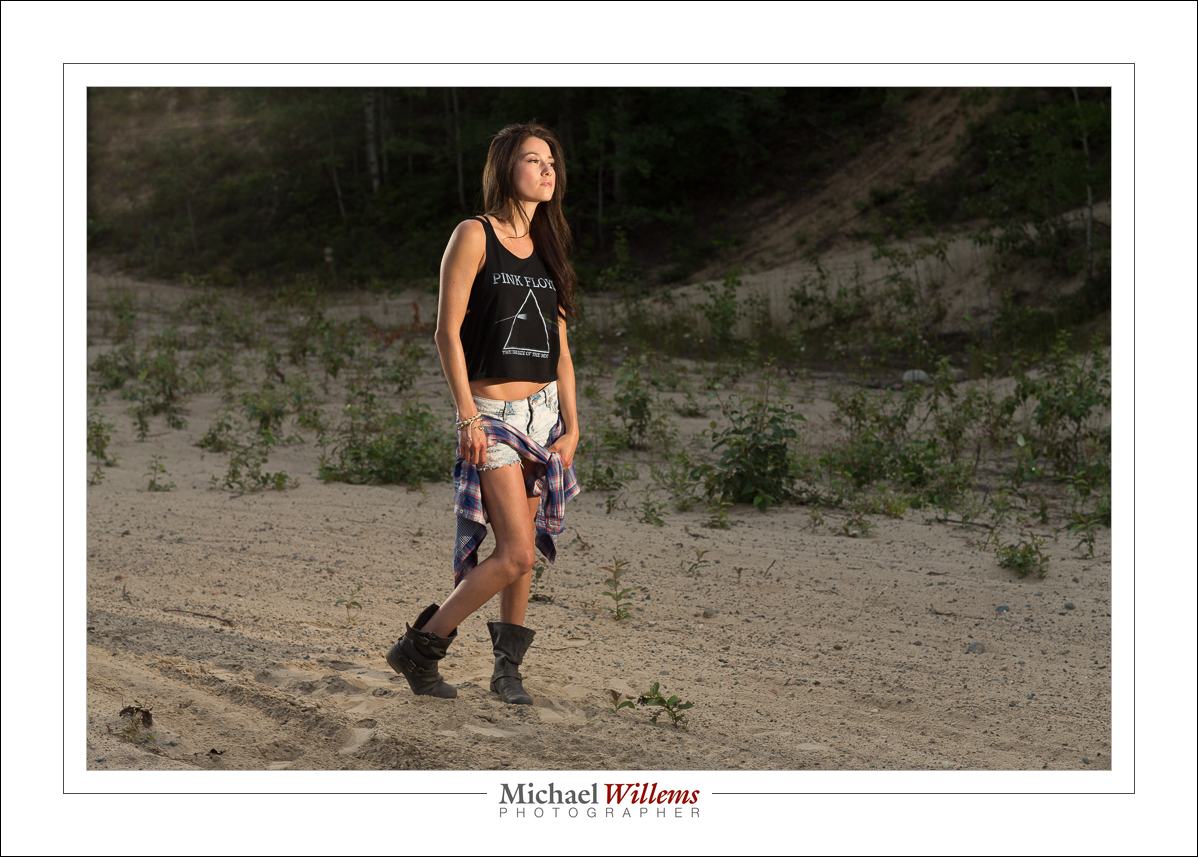
I’ll finish with one more photo, from last Friday, the beautiful Vanessa Scott in Timmins, Ontario:

SOOC (Straight out of the camera). Canon 1Dx with 85mm f/1.2 lens, set to f/5.6 and 1/80 second at 200 ISO. Lit by two flashes:

  • One on our right with a Honl Photo half CTO gel and fired through an umbrella;
  • One on our left fitted with a grid and a quarter CTO gel, as the hair light
  • Both set to manual power; half on the right, quarter on the left
  • Both fired through Pocketwizards.

This is not rocket science. I can teach you how to do this in one three-hour lesson. What I cannot teach you is how to be Vanessa, or failing that, how to find your own Vanessa to shoot.

And when you do, do consider adding pro Make-Up and Hair.


Gelling!

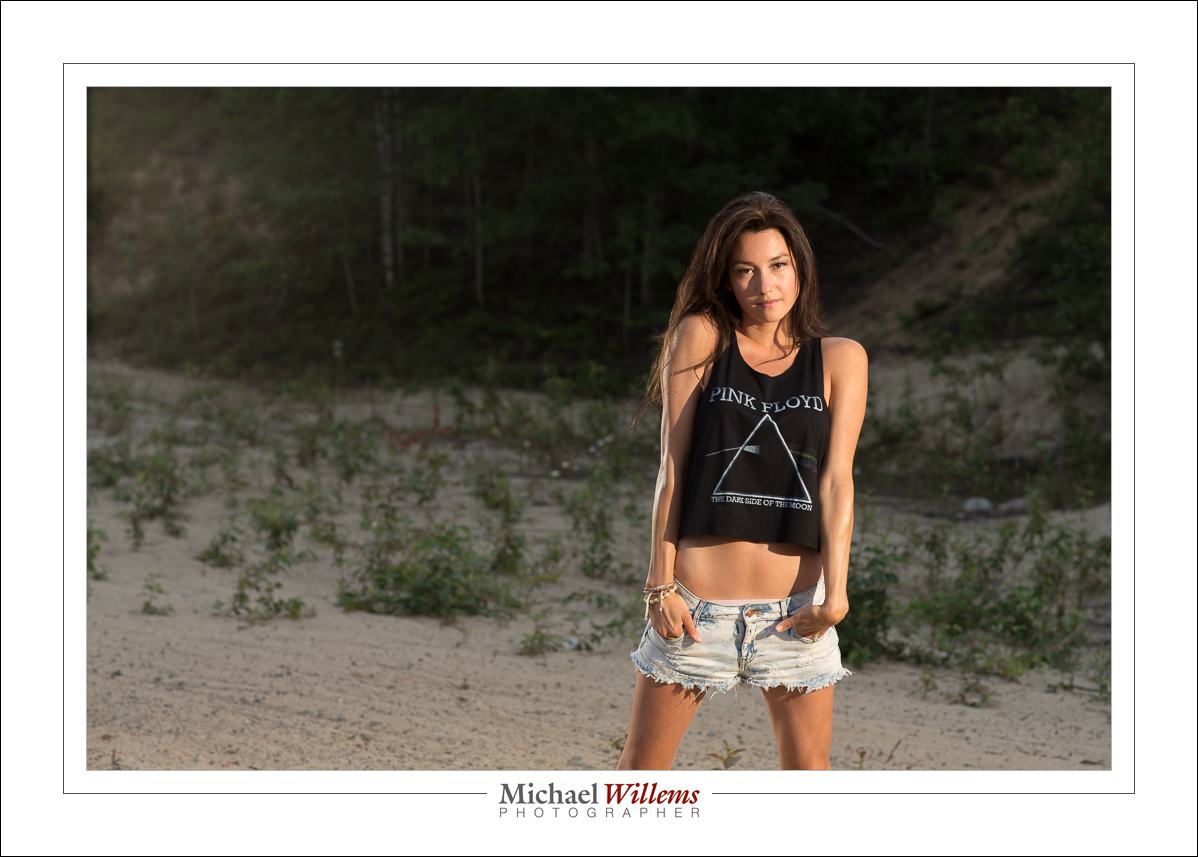
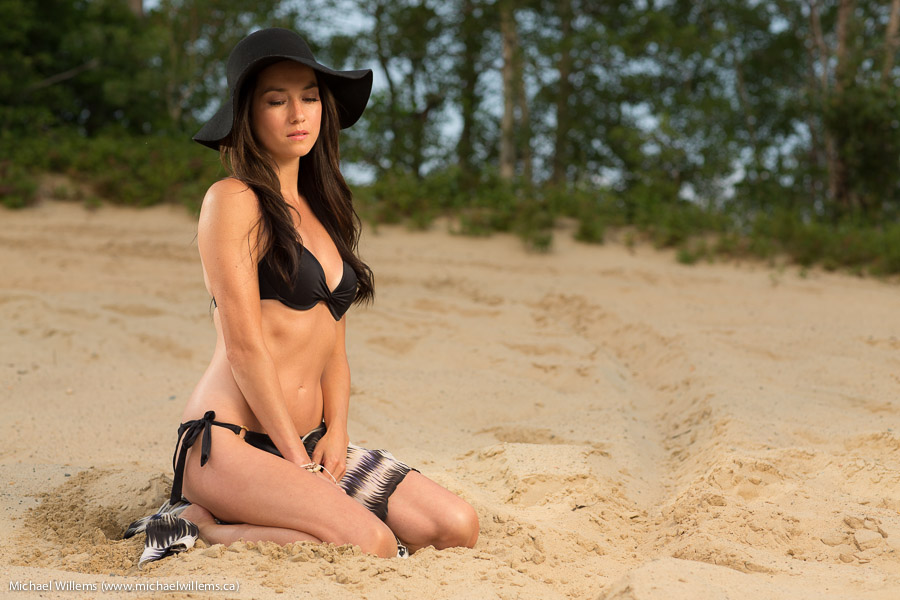
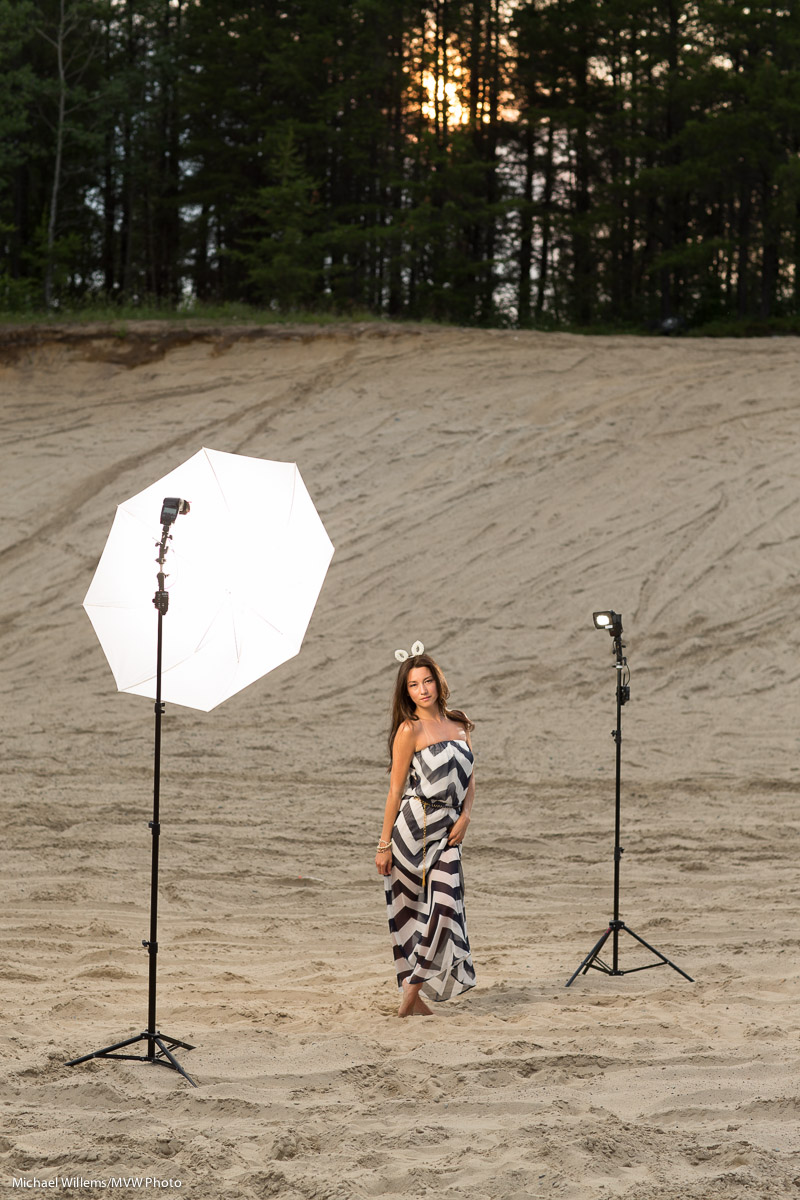
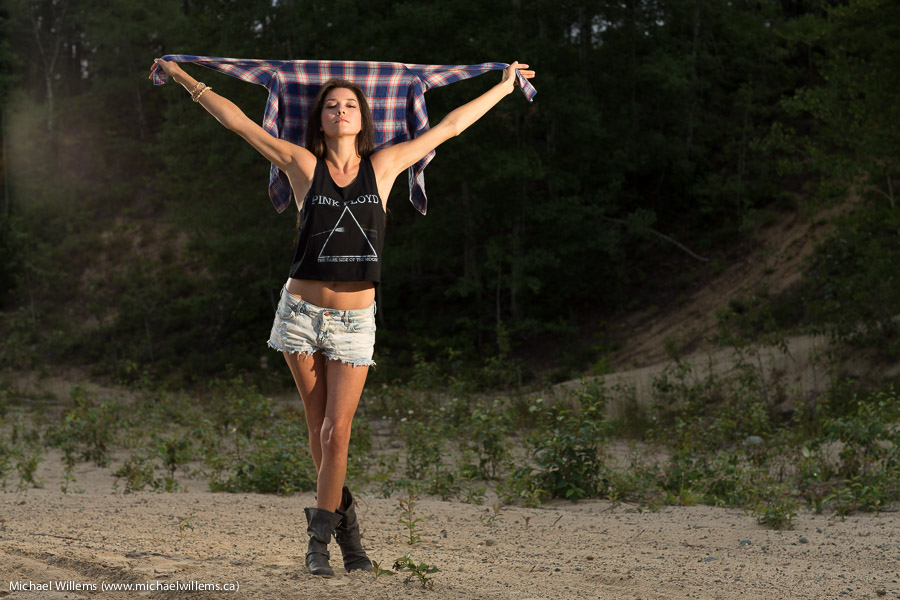
In yesterday’s shoot with Vanessa Scott in Timmins, Ontario, I used gels to recreate the sunlight that was fast fading below the hills. All shot with Canon’s amazing 85mm f/1.2 len.

(1/200th, f/4, ISO100)

Vanessa looks like she is in that light, because I put a CTO (Colour Temperature Orange) gel by Honlphoto on the main flash, like so:

You will see also that I am using a second flash, fitted with a grid, for the hair light. Two flashes driven by Pocketwizards—that’s all.

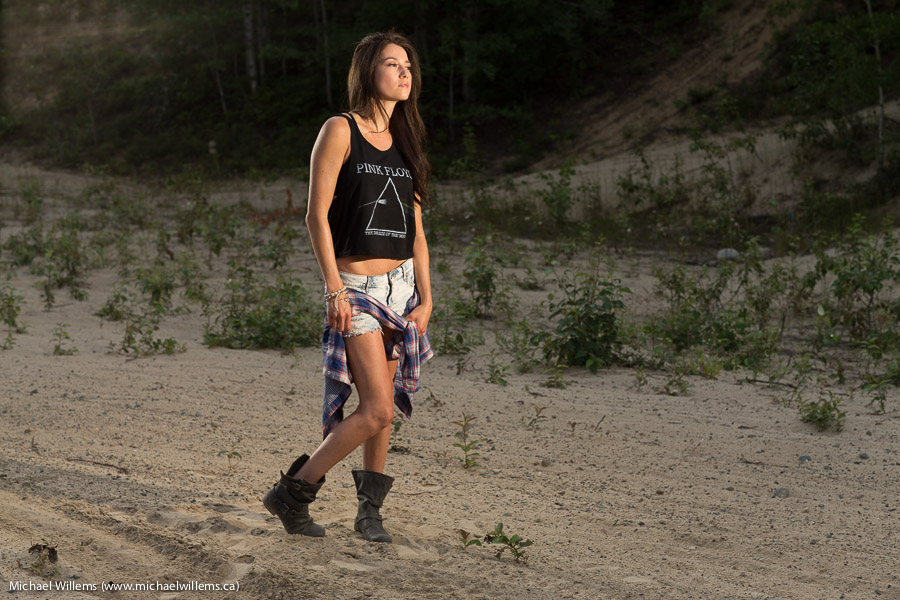
One more from this amazingly versatile young woman:

1/60, f/5, ISO100 — I had to adjust for fading light


Again, the flash allows me to offset the subject against the background, which I keep dark. Without the flash, I would lose the nice colour and I would have to make everything, including that background, very bright.

And that’s how the cookie crumbles.


Portrait extremes

Within minutes, I made three different pictures today during the class I taught at Sheridan College. I wanted my students to see how simple it was to do various portrait lighting types.

A traditional portrait with key light, fill light, hairlight (“Shampooey Goodness”), and background light looks like this (made with four flashes):

Key light on our right through an umbrella; fill light on our left, two stops lower; hair light behind left, shining forward; and background light bright on the background from behind the subject. to blow out the background completely.

So now the opposite: one with just the key light, off to the right, unmodified except for a grid:

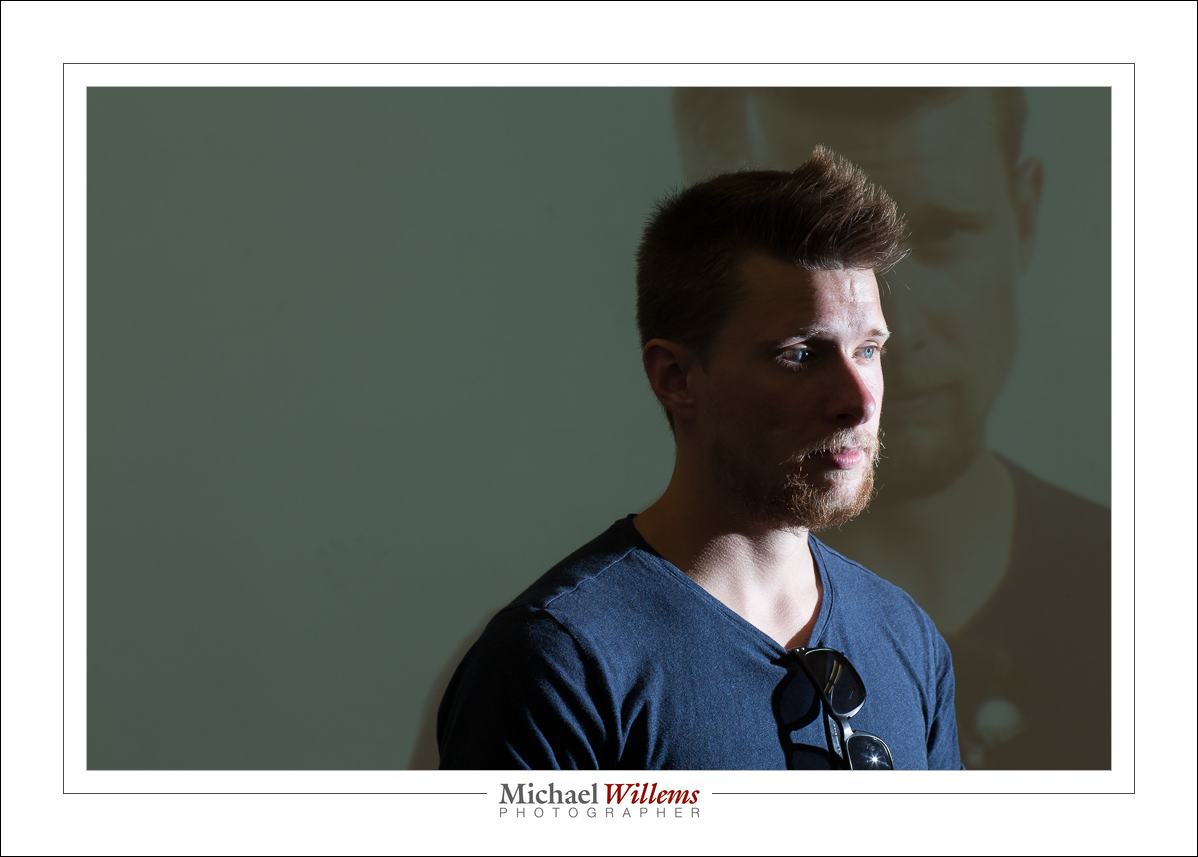
And a hybrid: same settings but I turned on the projector behind the subject with a previous picture. A picture within a picture, as it were:

All these were made at 1/125 sec at f/8, ISO400.

Simple setups can make interesting pictures. What can you do with simple light?


Because…

Why do self portraits, you ask?

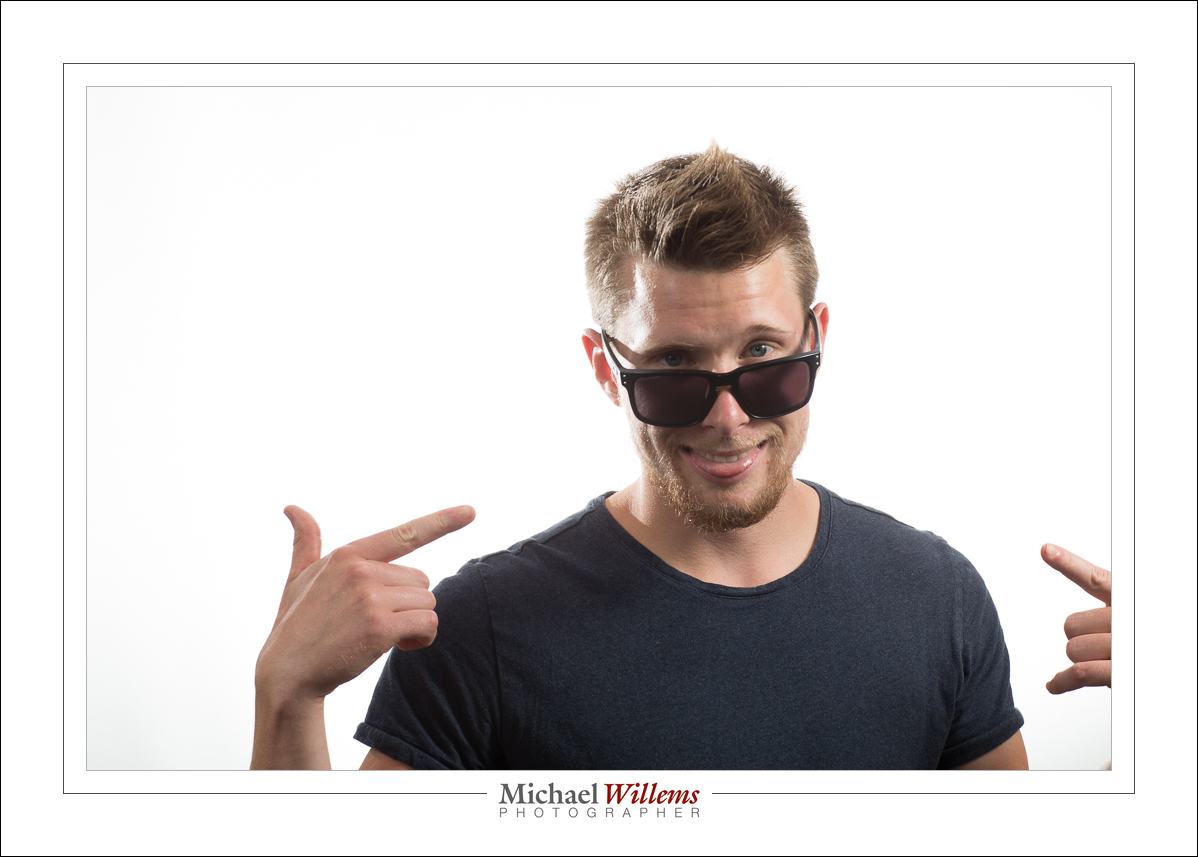
Self Portrait, Michael Willems

We do self-portraits first because we are there. After all, I am my most available and most patient and most understanding subject, all at once. I can try a portrait 100 times until I am completely happy.

There are, however, other reasons to do “selfies”, too:

  • I am not critical (“that makes me look fat!”)
  • I know the importance of making photos to document my life. I am always telling my clients to please have photos made: today is yesterday’s “those were the days”, and I believe that thoroughly.
  • I know my thoughts, so photographer and subject are always on the same wavelength.
  • I keep in practice.
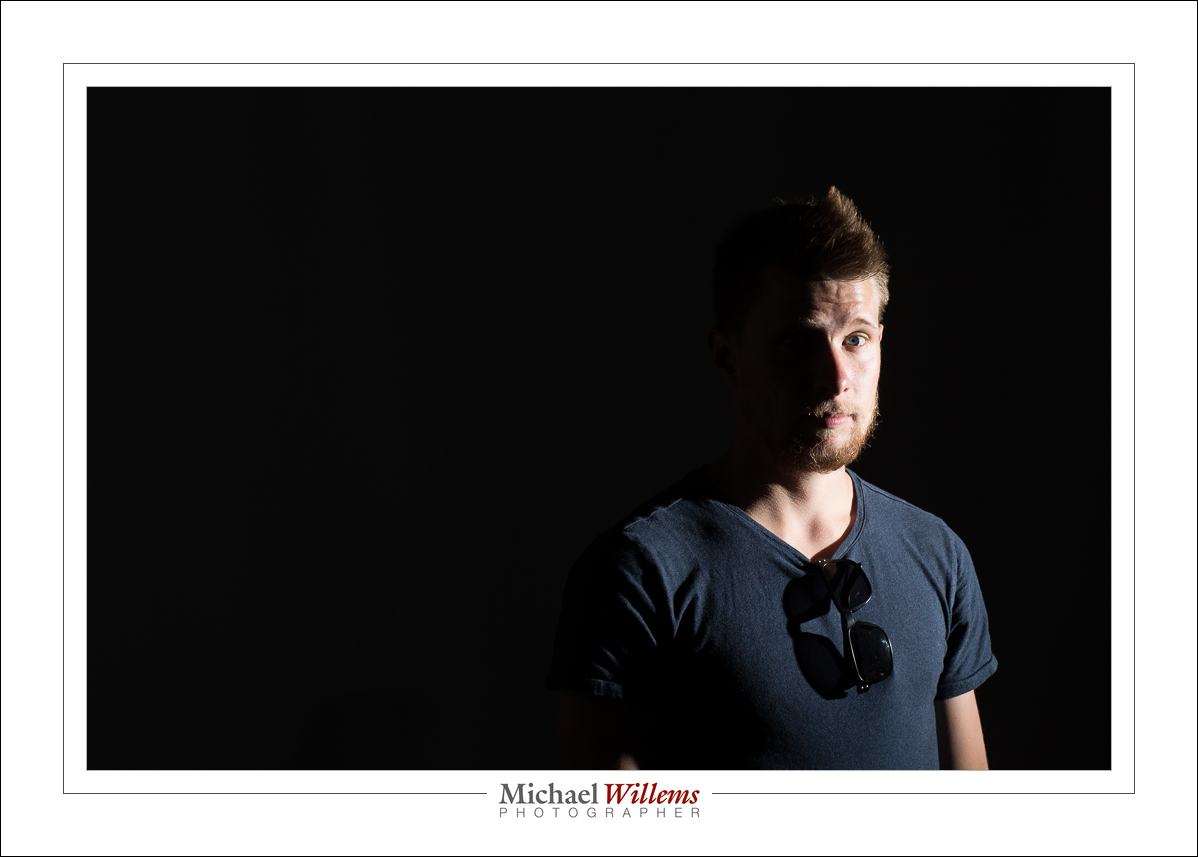
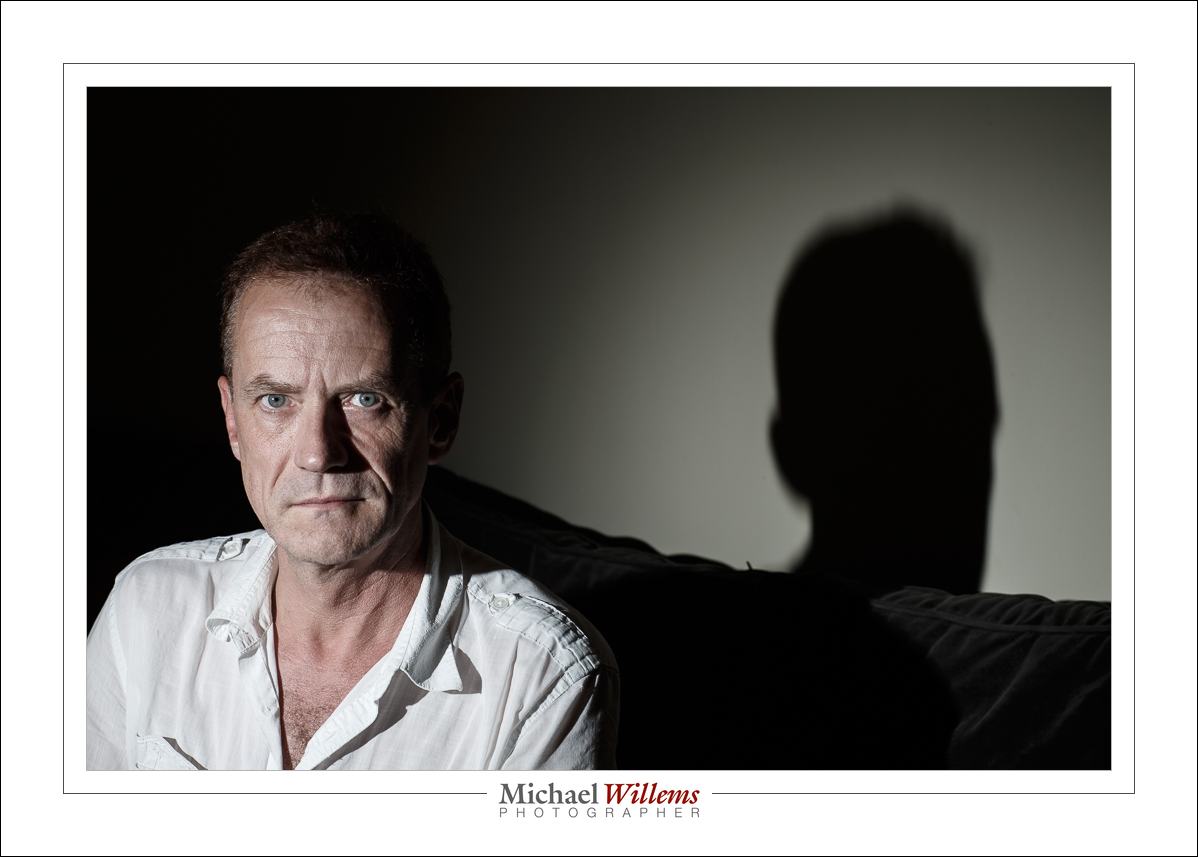
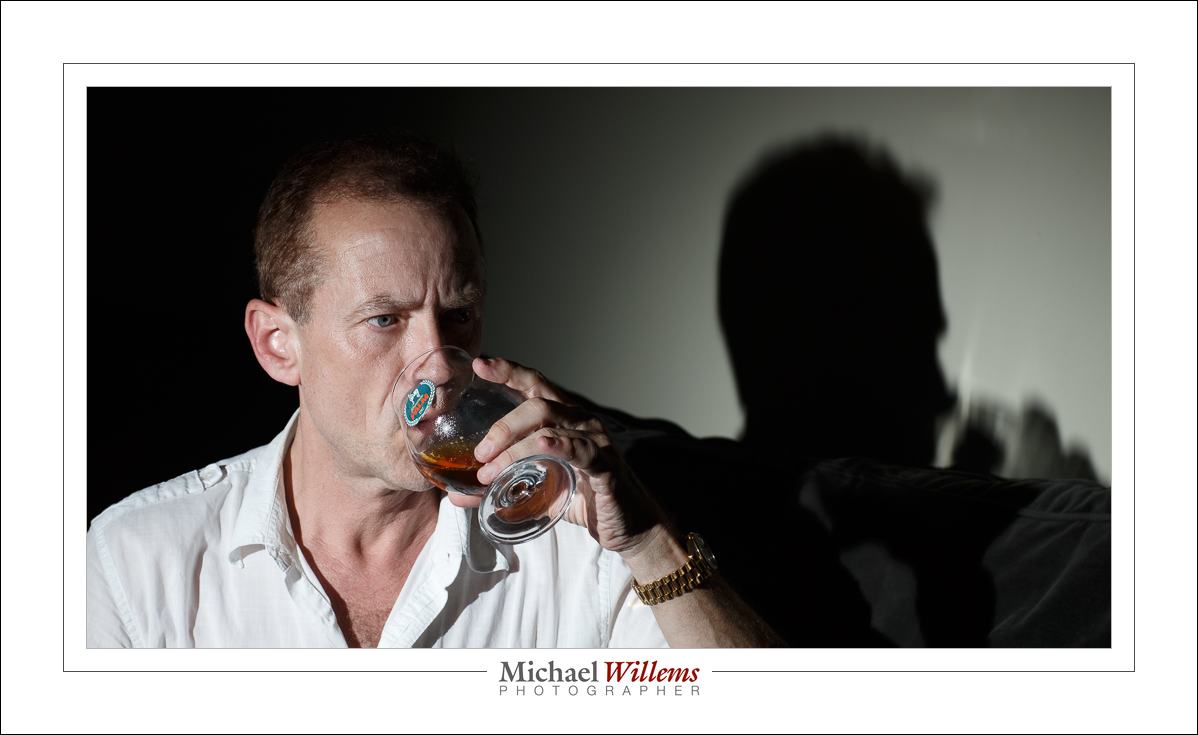
  • And probably most importantly: I do not always want portraits that make me look great. Like yesterday’s “unhappy” photo. Or today’s, which I just took, where I am showing extra contrast in the skin tones. So I emphasize wrinkles. So? God knows I earned them!
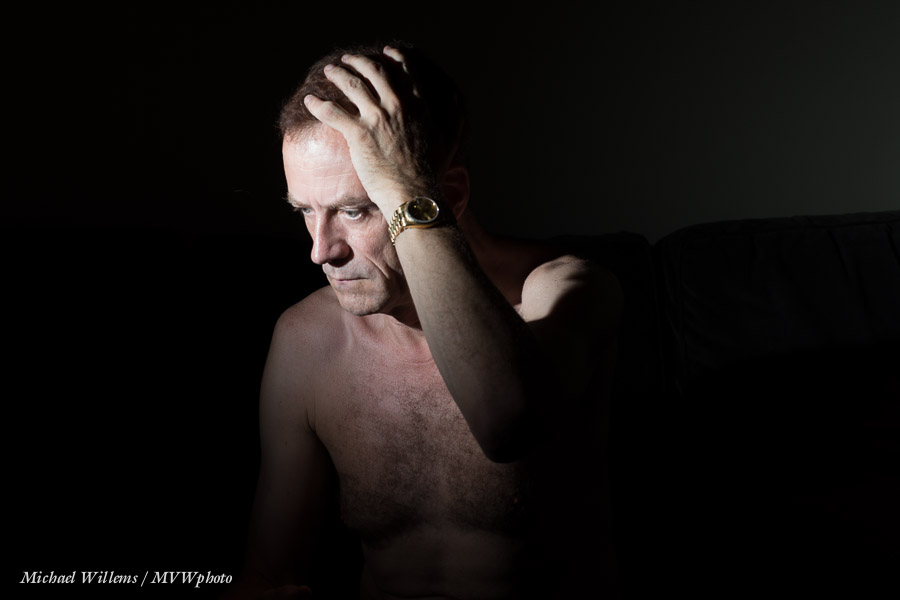
I made the above self portrait this afternoon, in my bright living room:

The camera, on a tripod, was set to f/8, 1/125 sec, 100 ISO (that is why the photo is dark even though the room is bright), with the flash set to 1/4 power (that is why the subject is bright). Like yesterday. Including the 1/8″ Honl Photo grid on the flash.

I am on a roll, and will do some more. But first, one of these:

Enjoy your weekend, everyone! Happy 4th of July to my American friends, and Shabbat Shalom to my Jewish friends.


Reflecting a mood

Today’s shoot was themed “Sad”. I have a student, Evelyn, who is a talented photographer herself, who asked for some help to learn how to shoot a sad portrait/self portrait.

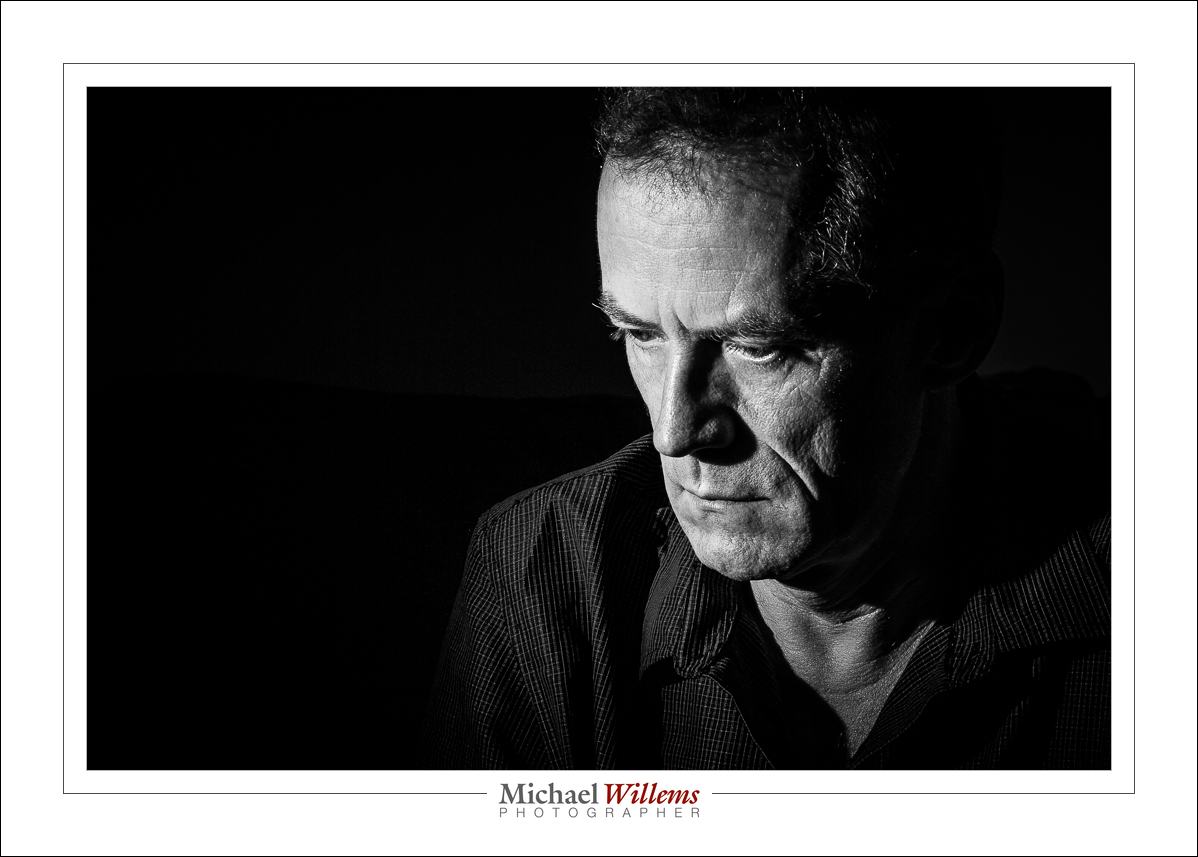
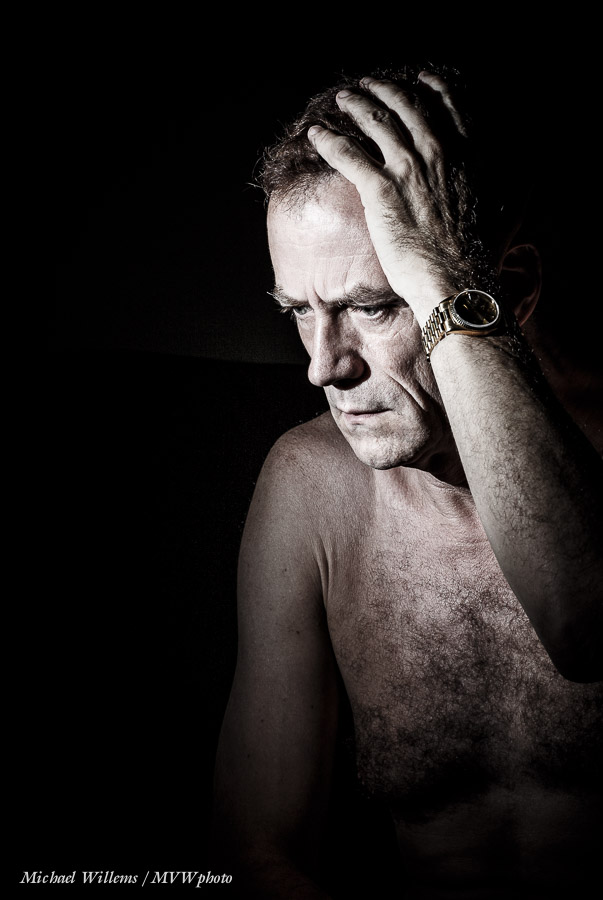
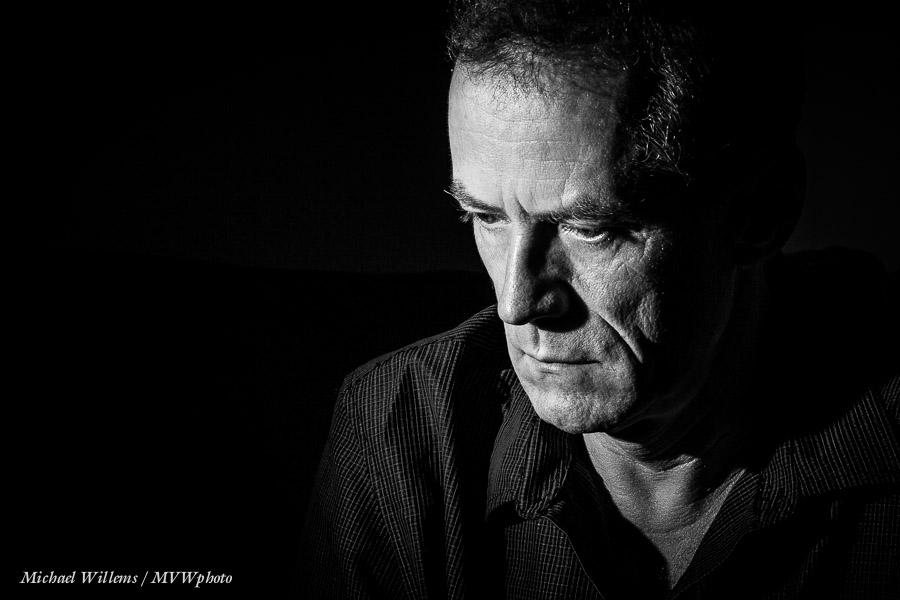
So before she arrived, I quickly shot one of myself. It ended up like this:

The shot took just a few minutes to produce, and I will share the history of how I made it.

First, I decided to not use the studio, but the couch. The studio is too clinical for the subject to get into a sad mood. Sad mood makes me think things like:

  • hard light
  • lots of darkness
  • b/w or desaturated
  • extra contrast and presence and sharpness
  • no eye contact
  • eyes cast downward
  • using hands, arms, etc

So I used one flash, off camera. The camera was on a tripod. I used pocketwizards. Here’s the obligatory “pullback shot”:

The camera was set to 100 ISO, 1/125th second, and f/8, standard studio settings, with the flash set to Manual mode, 1/4 power. Experience tells me that those settings will work at that distance.

When I use that setup and those settings with a bare flash, I get this, straight out of the camera (“SOOC”):

One of the elements of a sad picture is darkness. Lots of darkness—a metaphor for a dark mood. So I want a chiaroscuro picture. Hence, I do not want the wall lit up. The solution: a Honl Photo 1/8″ grid fitted to the flash does what I need. Here, also SOOC:

Better.

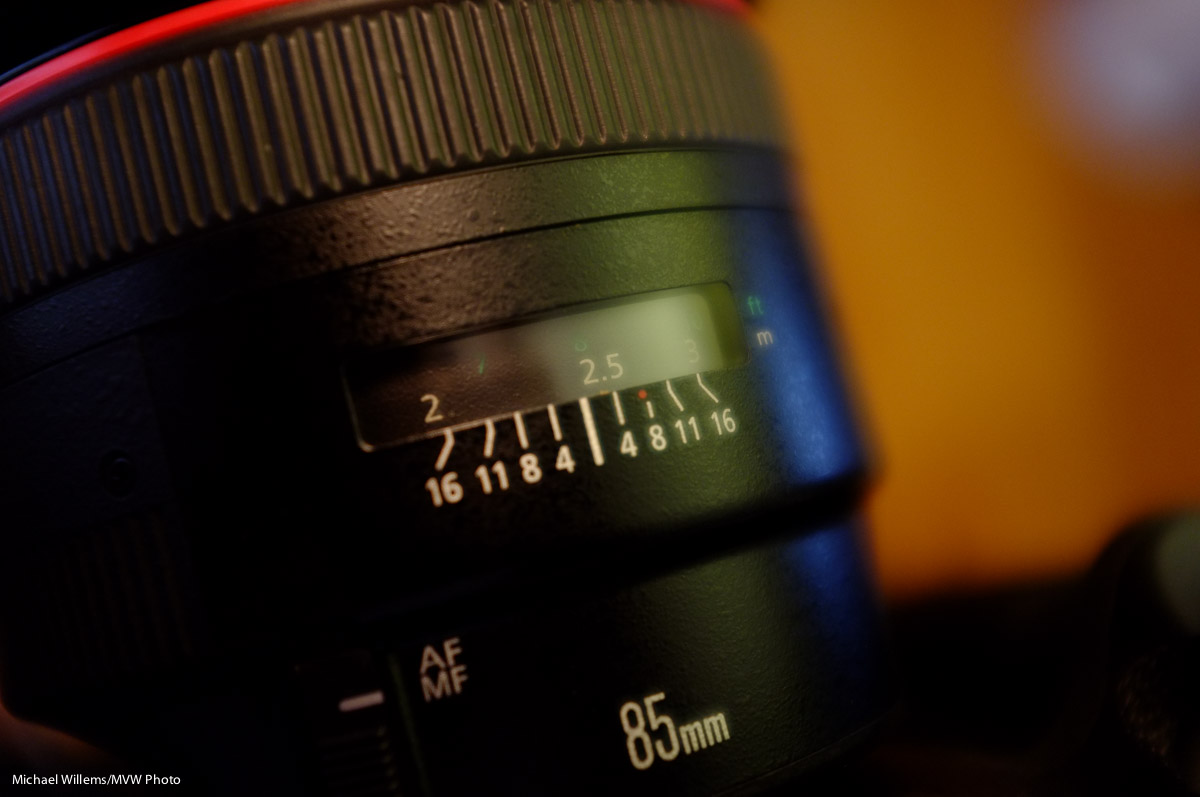
With the lens set to “M” (manual focus) I used the lens scale to manually set the focus distance to the distance between the camera and where I would be. That’s why you have that lens distance scale:

I checked by zooming in to 100%. After one slight adjustments, my pictures were razor sharp. I used the timer shutter release.

After I took the image, I desaturated it using my standard “Desat” develop preset, and I cropped the picture vertical:

I decided to go B&W for most. Here again is the winner:

Having that, I awaited my client and after she arrived, we shot some similar ones of her. All using the 85mm prime lens. Of you have a crop sensor camera, a 50mm lens would do great for these shots.

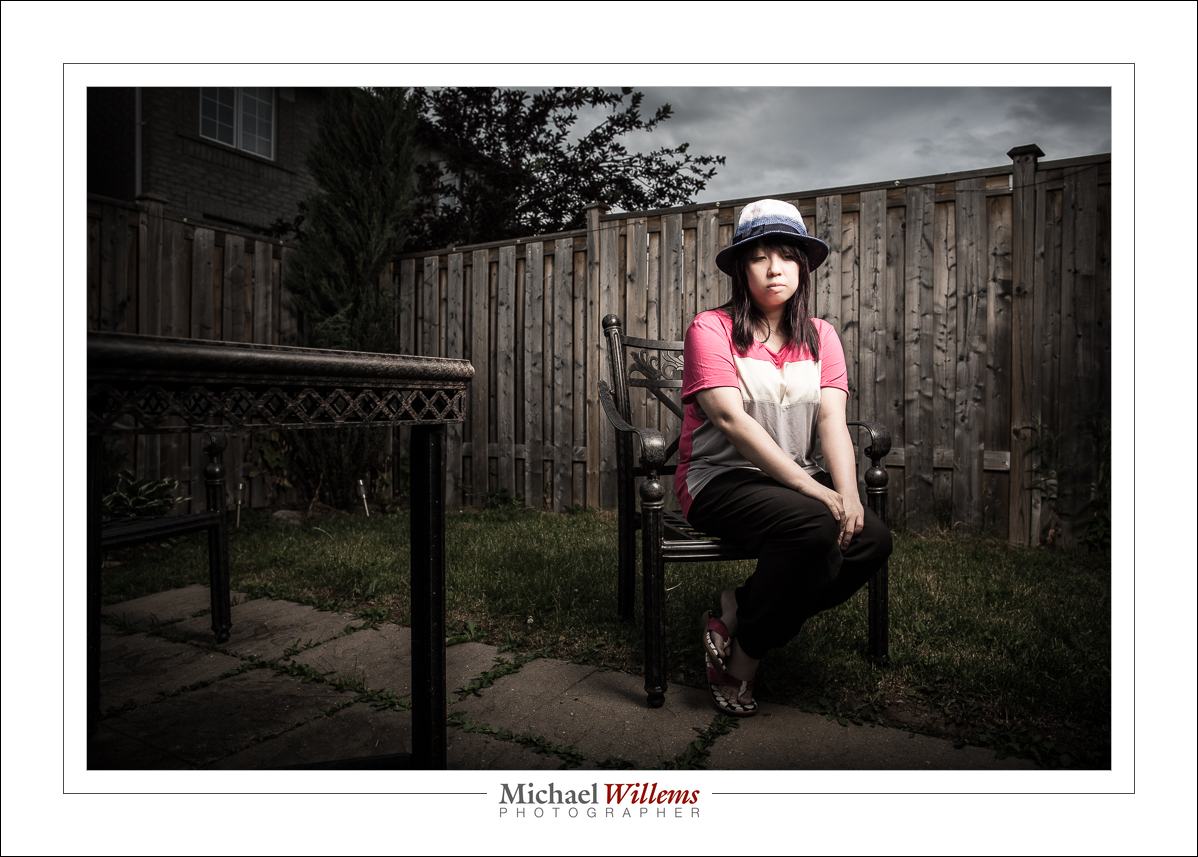
In the above image, the sadness is produced almost entirely by the person’s expression and body language. But sometimes the background is not absent, but instead is an essential active part of the mood-setting. That was shot two, made outdoors with a Bowens studio strobe powered by the Travel Kit.

I used my 85mm lens for the previous shots, but I used a 24mm prime lens for this shot. A wide angle, so the subject will be small in the image (else I get distortion). An environmental portrait.

Here it is, also desaturated, but otherwise SOOC:

And finally, one in B&W:

What do you think? Sad enough?

___

Want to learn this? Do a custom training session like this, designed for your unique individual requirements. Check out http://learning.photography and contact me to find out more. Whatever your level of knowledge, you will kick your photography into overdrive by filling in knowledge gaps and refreshing creative ideas. In person or via the Internet. Do it!