Street

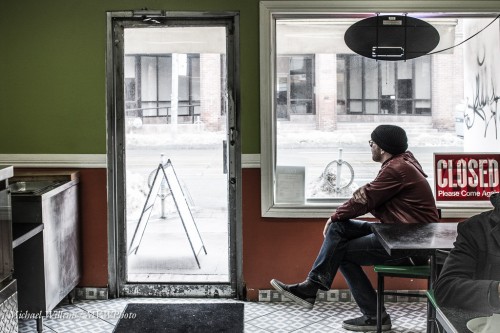
A shot from today, as I was awaiting my lunch Roti, on Queen Street East in Toronto:

Grunge. Street. Sign. Composition. Thought. Storytelling, or rather, making the viewer look at what’s happening and try to figure it out. The moral of this story: carry your camera everywhere. Do not be afraid to use it. Tell stories, raise questions. No, I do not only shoot portraits and nudes.

(Though I do shoot those, too. Look here for a set of two (warning: nudity – if that warrants a warning in your world), and view both: a recent nude I shot, and then one from over 2,500 years ago – an awesome coincidence, as I had never seen this until after the shot. Plus ça change…)


Noooo….. not me….. noooo…..

We all, as photographers, encounter people who do not want to be photographed.

Usually, in my experience, women; and usually because “I am too old”, “I don’t have any make-up on”; “I am not photogenic”… and so on. Sometimes “because the images will get onto the Internet”.

Whatever the reason, what are we as photographers to do?
I think the answer comes in several forms.

First and foremost: be sensitive to this. If I were in charge, no medical doctor would be allowed to graduate without first having undergone a digital rectal exam, and no photographer could use that job title without first being photographed, preferably in the nude.  In other words, you need to be sensitive to others’ hesitation to be photographed. After age 30, we all think of ourselves as permanently 25 – except me, because I know I am 25.  And these silly camera things distort us so we look older!

Second, try to assure these subjects that if they let you take their photo, they can look at it and you’ll delete what they do not like. You need to have skills for this (hence all my courses), but it is worth it. Skills like not lighting in an unflattering way, using flash, keeping parts dark, and so on.

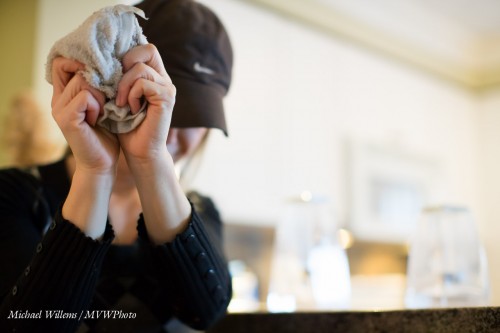
Third: use tricks. Like this, one of my favourite party shots. I tell hesitant subjects “I’ll blur you – hold out your drink, I’ll show you”.
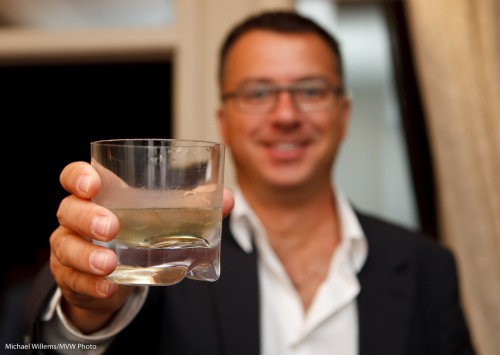
The usual reaction is “awesome”.

Or try more unusual shots, like these:
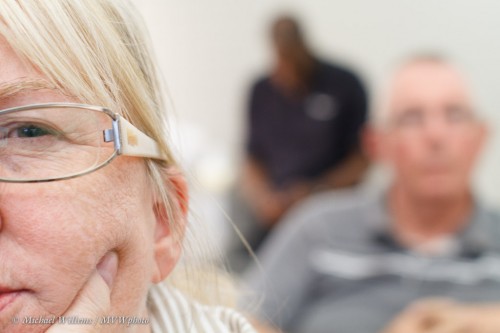
There too, the usual reaction is “awesome”.

Finally: do respect the “no” and walk away, but do try again later. Often people change their mind. In photography, sometimes “no” means “No, but I hope you persuade me”.
 

The Dramatic Portrait

Outside, right now. It is bright. Bright. Super-bright! Noon under a blue sky, and snow everywhere.

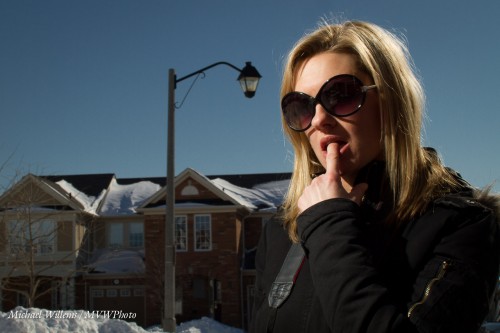
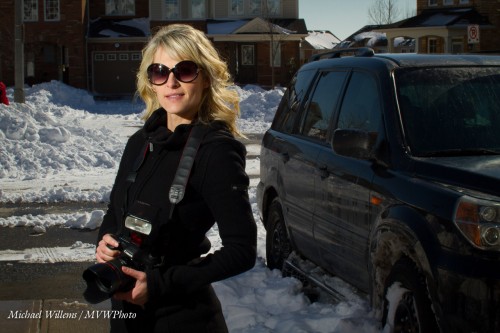
So now how do I do a dramatic portrait like these of my two students, wonderfully talented photographers Jenni and Becky (respectively)?

How indeed. Look at them full size to see the drama. Saturated colours plus plenty of personality! And that is how we shot them – no “Photoshopping”.

If I had used just my camera I would have had to angle them into the sun – bad. Instead, I prefer to:

  1. Angle them away from the sun to avoid squinting.
  2. Thus, use the sun for the hairlight (The “Shampoo-y Goodness”).
  3. Then, get a dark, saturated, background. First, I set my shutter speed to the fastest I can use: 1/250th second, the maximum flash sync speed.
  4. Then, I select a low ISO (100) and small aperture (wait for it: f/18).
  5. Then I use an off-camera TTL flash to light up the subjects. Yes, TTL, in this case: no need for Pocketwizards here.

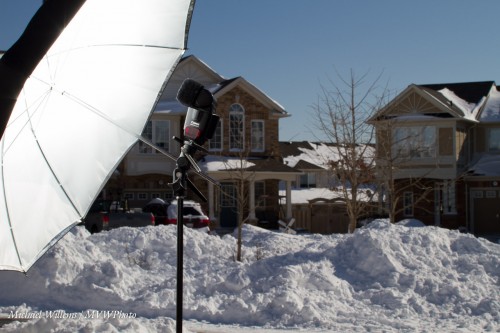
Now, the challenge: enough flash. Unless the flash is very close, it will not work well if it is a simple speedlight. I tried shooting into an umbrella:

But this needed the umbrella to be a little closer than I liked, so I turned the flash around and shot direct, discarding the umbrella. Yes, you can use direct flash, unmodified, if you are mixing with ambient light, and if the flash is well off camera. This gives us short lighting.

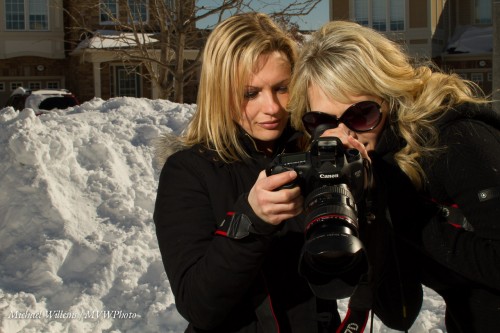
Here’s the students:

And they did very well indeed: their photos are stunning. Dramatic, and they now have a whole new range of possibilities added to their repertoire. You should consider learning the same: yes, you can do this with simple equipment.


___

Want to learn all this stuff? Allow me to once again point out these current and upcoming learning opportunities:

Michael


Snap of the day

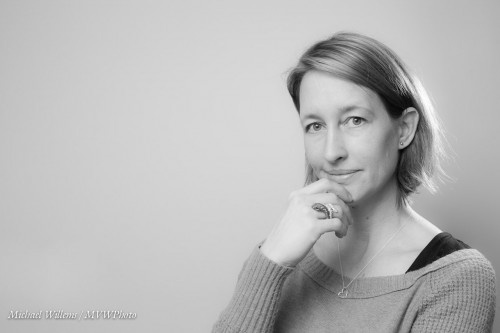
Here’s my student, photographer and friend Michelle:

Any portrait photographer wil recognize some or all of these factors:

  • I shot this in colour, of course (RAW), and converted to B/W in Lightroom afterward.
  • I shot the image horizontally, in landscape orientation – not in the more usual portrait orientation.
  • Negative space is good.
  • And so is the Rule of Thirds.
  • I used a hair light, behind the subject on our right, to get the “shampooiee goodness” look.
  • The eyes have catchlights. From my umbrella, on our left.
  • I shot some images. The subject liked this one only. I liked three others also. This is very usual – people look at themselves differently.

Go do some portraits. They are fun!


A few quick pointers

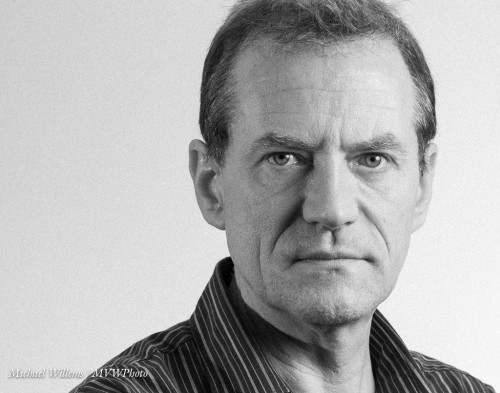
Here’s me yesterday, shot by my student Sarah. Great portrait. She shot it vertically, but I cropped it horizontally. Did she need a lot of equipment? Noe: her existing 7D with 580EX flash, plus my stand, bracket and umbrella.

I would today just like to briefly answer a few frequently asked questions.

  1. Do you shoot RAW? Yes. You have to. It’s a no brainer – only shoot RAW please.
  2. What mode do you shoot in? Manual. That way I am in control. Not the camera.
  3. What ISO do you shoot at? Whatever I feel like. High enough. 1600 easily, 3200 if I must. See yesterday’s post!
  4. What batteries power your flashes? Rechargeable, NiMH. Low-self discharge. Using Maha or Lacrosse conditioning chargers.
  5. Do you use TTL or manual flash? TTL at events, usually. But of course, when shooting in studio settings, when I take repeated shots, or in a studio or outdoors using strobes, then it’s manual flash all the way.
  6. Can you use your flash straight-on? Sure. When you have to. Or outdoors, when your flash is just the fill light (say, two stops below ambient). But otherwise, bounce; or use off-camera flash, or softened flash, or all of the above.
  7. Is a catch light necessary in portraits? I would not say absolutely necessary, but it is highly recommended. See above.

Useful?

More on this blog: search for these terms here and red all the detail.

And have fun!


Never do this.

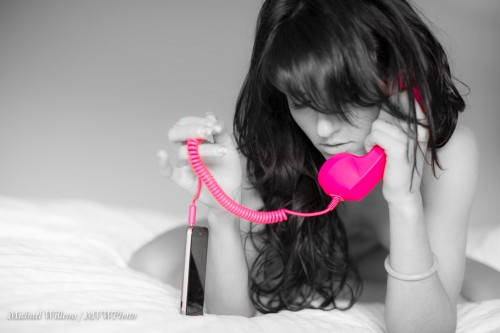
This. Selective colour. As I mentioned here before: a sin, a never-do, a teary clown: a cliché.

So why did I do it in that image I shot yesterday?

Because to every rule, there is an exception. Don’t ever let anyone tell you to “always” or “never” do something. Always or never means “Always or never – EXCEPT if you have a good reason in your own mind to break the rule”.

In this case, the image worked best in B/W, but the cool iPhone headset in luminous pink was too good to not show in colour. OK, selective colour then, and damn the torpedoes.

How:

  1. Go to the DEVELOP module in Lightroom
  2. Enter the HSL section and select S (Saturation)
  3. Drag down all colours to zero, The with the pick tool, select the handset and drag UP. (Red and Magenta, in this case).
  4. Now with the BRUSH tool, set saturation to zero, and wipe out any saturation in the rest of the image (face, hands, and so on).

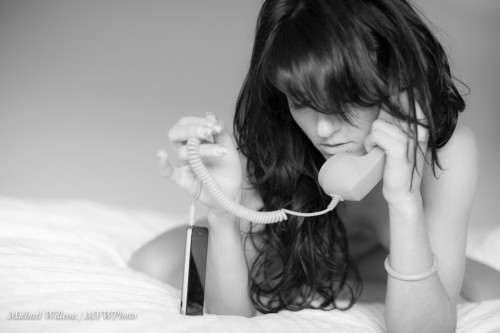
Took me just a few seconds. Which is why I can try it out, and then decide perhaps the B/W version is better after all?

You judge. And remember: never take anything for granted in how you shoot. Always be ready to experiment. That’s how you get unexpected results. But also, never be afraid to throw out your experiments.


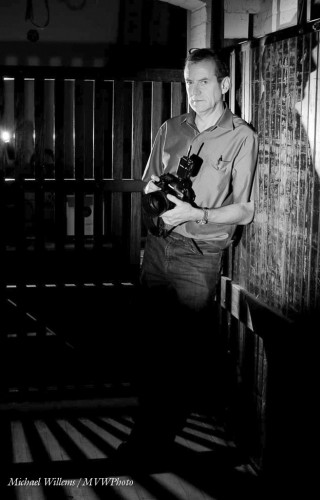
Here’s me during a shoot last week:

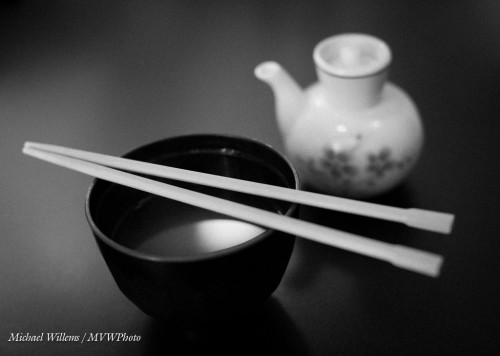
And here’s part of my lunch, the day before:

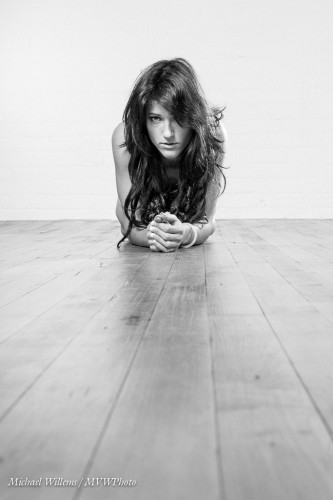
And my model the other day:

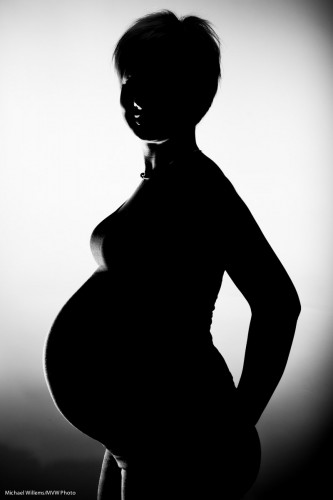
And:

What do all these have in common? They were shot in (or rather, converted to) black and white. And they work: black and white often works very well.

So my suggestion is that if you have not recently done this, shoot some black and white today.  Shoot them in colour as RAW images, but convert to B/W after you shoot. And see what works, and what does not.


OCF again

And today, some more off-camera flash, using images I made earlier today as an example.

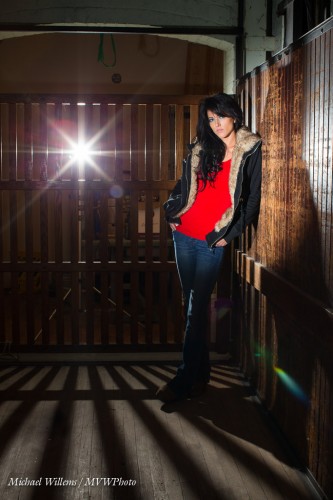
Simple means (a camera, a couple of speedlights, a light stand or two – all affordable, light, and simple) and some knowledge is all you need for this:

In fact I used just one (off-camera, modified) speedlight for that shot.

And for this one, just two:

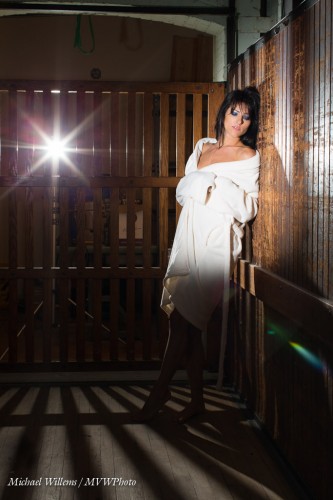
One was behind the elevator as you can see – aiming at us. It was fitted with a Honl Photo 1/4″ grid. The other flash, on our left, was fitted with a Honl photo snoot. That’s all – very simple, and with great results. Here’s another version:

What do those images show?

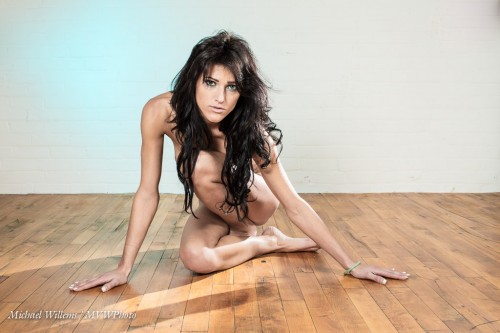
  • That you can use direct, unsoftened flash – as long as it is off camera.
  • That it is more about not lighting – that’s where it starts.
  • That shadows are cool.
  • That prime lenses are good.
  • And no filters, or the back light will cause unacceptable flare and lens artefacts.

If you wish to see more, head for my tumblr site (those are nudes).

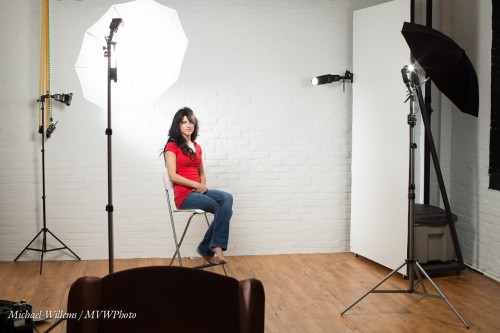
Sometimes I use more lights, as in here: two speedlights with umbrellas, one with a snoot, and one with a grid and a gel:

Which can lead to images like this:

All these shots can be made using very simple means.  And that is my point here today: off-camera flash can be very simple indeed, and can lead to great results.


Point of view: yours for the choosing.

New photographers often ask me “but how do you compose?”.

I give them the simple rules (and they are simple – like the Rule of Thirds), but I also point out one very important thing: where you are, and where and how you are looking, is everything in defining what your photo will be.

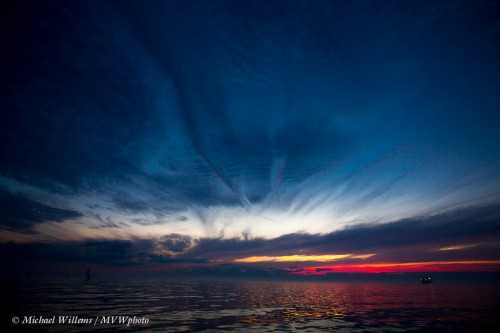
Take this scene I shot on Lake Ontario a few months ago:

Impressive, no? All you have to do is be there!

(Oh, and know how to expose. oh, and know when to – I had about thirty seconds of this sunset. Oh, and see the possibilities. Oh, and have the right lens.)

Can you see what kind of lens I used? Yes, a very wide angle lens (16mm on a full frame camera, corresponding to a 10mm lens on a crop camera).

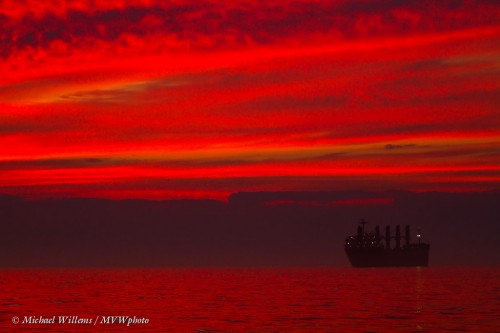
Now look at this shot:

Ah, a different scene altogether. But guess what? Same time, all within those thirty seconds. This time I used a 200mm lens on a crop camera, and aimed at the ship in the bottom right.

Yes, one moment can result in two entirely different shots. It’s all in how you look at the world. And that’s what photographers do: show their vision. A photograph is more about you than about the subject!

With that in mind, a very successful 2013. Take some training (you know where to find me!), have your work reviewed, and especially, practice. Have fun – this blog will continue to help you in many ways. All I ask is: share (the little clicky thingies above each post) and tell your friends!


Darkness…. can be good

Advice: don’t “correctly” expose all your photos!

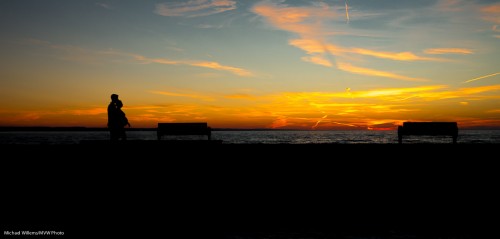
Two examples here; first, “Beginnings and Continuity”, Port Dalhousie, ON:

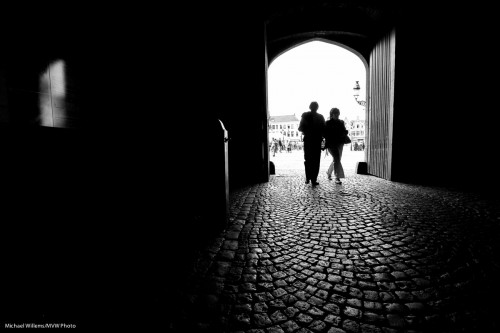
Followed by “Continuity and The Now”, Brugge, Belgium:

Both these images use darkness as a device. The top one does this in order to saturate colours and to silhouette the pregnant couple. The bottom one, in order to emphasize the stone and the stark cold strength of buildings built to last many centuries, as well as to anonymize the people who come and go in the “now”, while the “continuous” lasts.

In all these cases:

  1. Look for strong back light, and a subject that is not lit by that (or any other strong) light.
  2. Expose for that back light (e.g. spot meter off the sky).
  3. Adjust to taste.
  4. Do any remaining work in post producrtion – but if you do this well, there is little or no such post work to be done.

And Bob’s your Uncle.

Try it now!