Flash from behind

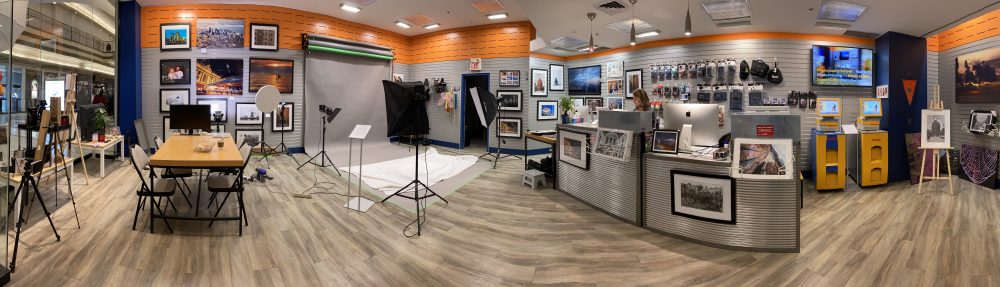
Look at this picture, which a student took of me in a class the other day:

Michael Teaching

Can you see how she turned her flash behind her, so it aimed at the wall above her, which in turn lit me with soft, gentle light? Otherwise, if she had aimed it at me directly, we would have seen all the things that people hate in flash:

  • oily skin
  • flat face
  • dark background
  • overexposed subject
  • shadows under the chin

Instead, we get soft, natural looking light.  And it’s easy: turn the flash so that the light bounces behind you. With TTL, it’s easy: the camera does the math. You just push the button.

Sometimes you make do

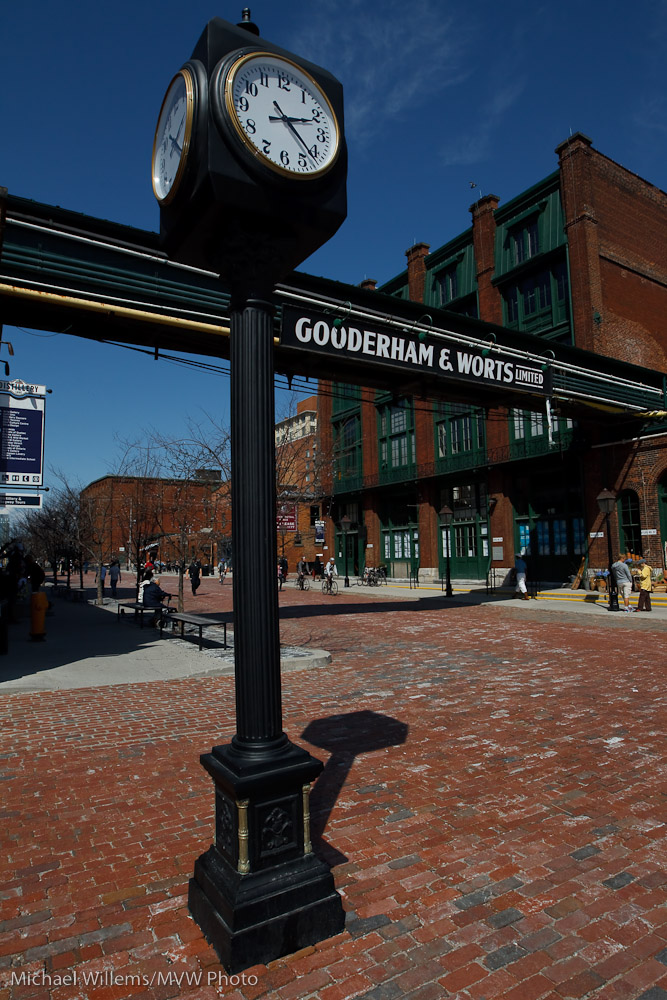
…with a hand, if you want a foreground object to light up with your flash, when for effect the background needs to be darker. Like just now in The Distillery District in Toronto:

Another snap:

Again, using flash for lighting up the foreground, while exposing down to saturate the background on a bright day around noon. Sure you can take pictures at mid-day.

You can do a lot…

…in spite of conventional wisdom. Conventional wisdom has it that the Canon 7D is not the best for high ISO shots. And that you need twice the lens length, so 50mm on a crop camera needs 1/160th second..

So you could not possibly do a shot like this at

  • 3200 ISO
  • in available tungsten light
  • with a 50mm f/1.4 lens
  • set to f/2 at 1/40th sec0nd,
  • hand-held:

Cat, 3200 ISO, f/2, 1/40th sec, Canon 7D, 50mm

Yes you can. Hand held, slight noise reduction applied in Lightroom.

Night airplane

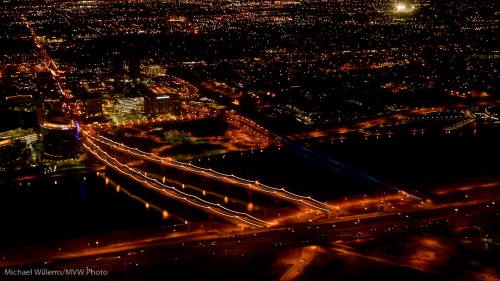
As we approached Phoenix last week, where I was teaching workshops (one with David Honl), I took this:

To do this:

  • Expose properly (several stops below metered).
  • Take many pictures.
  • Set ISO high to keep speed acceptable.
  • Aperture open (low “F-number”).
  • Be discreet in today’s nervous air travel environment

Do all that and you’ll get some cool pictures.

Portrait using two flashes

Here’s an impromptu portrait I took on Tuesday, of a lovely student who kindly volunteered to be the subject, in the Flash for Pros course:

And here’s how I did this:

  • Camera: The camera was a Canon 7D
  • Lens: I used a 50mm f/1.4 lens. (50mm on a crop camera, even the very cheap f/1.8 version, makes a great portrait lens).
  • Settings: The settings were Manual mode at 1/30th second, f/5.6, 400 ISO
  • Flashes: I used two 430 EX flashes on light stands, fired from the pop-up flash (like most Nikon cameras, the 7D allows this). Other than that, the pop-up flash was disabled. (I could also have used a 580EX on the camera as master.)

And how I used those flashes:

  • I used e-TTL, so I did not have to meter and set the flashes manually.
  • The main flash (“A”) was on camera left: a 430EX fired into a Honl gold/silver (half CTO) reflector. It was about a foot away from her.
  • The second flash was also a 430EX; this one fired straight at her from 45 degrees behind, through a Honl 1/4″ grid. This flash was also about a foot away from her.
  • I set an A:B Ratio of 4:1, so the main light was two stops brighter than the hair light.

Another student that night wrote a blog post, here, where you can see a few pics with some of the modifiers I used.

So it’s actually quite simple: now you go try. It is amazing what you can do in just a few seconds with just a couple of flashes (speedlites) and some small, light, convenient modifiers.
Gold and blue

One more “blue background, gold foreground” picture for you all. No, two.

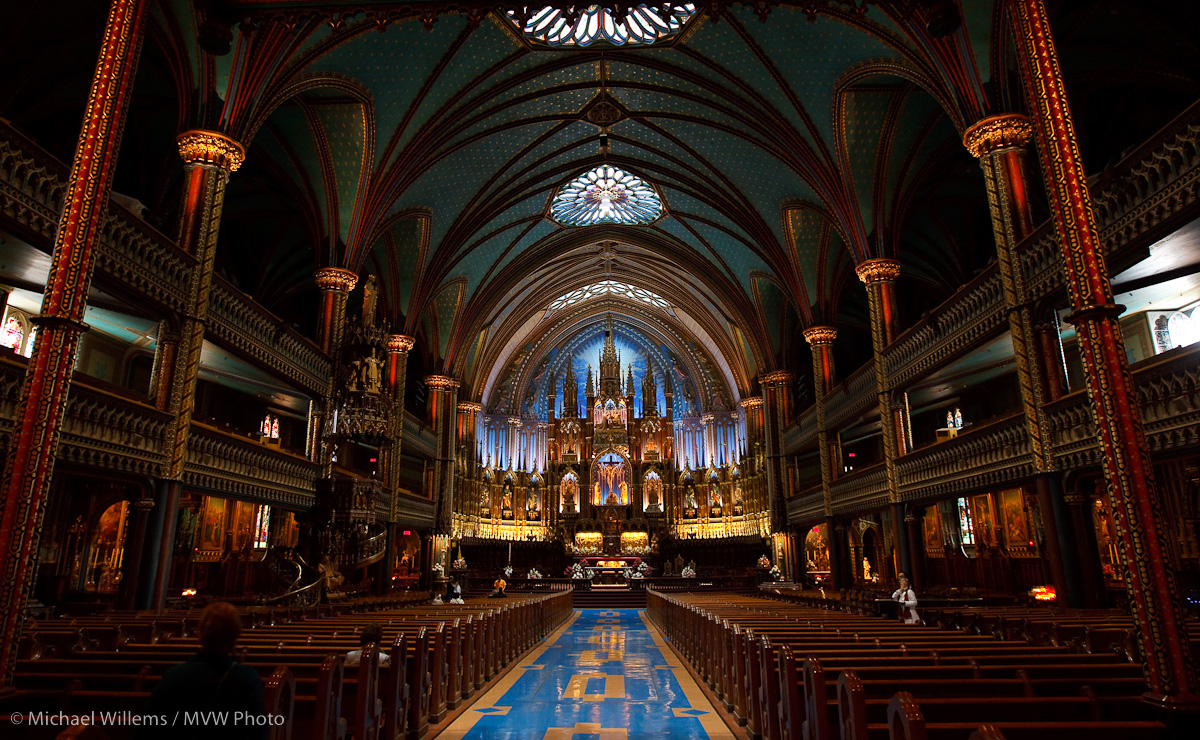
Here is Christy, of Studio Moirae, looking radiant, mainly because she looks radiant – but also perhaps just a little because I lit her with a CTO gelled flash (with the white balance set to “Tungsten”, which turns everything blue except the bits lit by my gelled flash)?

And one more lovely participant in the course, who soon will be two: