Dreaming.

Professional Canon shooters used to have a thing called “CPS” – Canon Professional Services.

For years, I was a member. All you had to do was to be a real photographer, have your portfolio etc OK’d and buy (And prove that you bought) lots of Canon gear, like pro lenses and bodies. In return you would get loaners and slightly faster service, and a separate lineup at the Canon service desk: consumers to the right, pros to the left.

Why you need spares

Why you need spares

Then in 2010 someone had a bright idea.

“Hey – these pro shooters only spend maybe $40,000 on Canon equipment. And they upgrade all the time. None of that is enough – surely we can squeeze more money out of them? They need us, so let’s make them pay for real service! Instead of us supporting them let’s have them support us! Let’s charge $100 a year in some countries (or in Canada, $250)”

I think CPS is free in some countries, and I think Canada is the most expensive country (Canon, please correct me if others have to pay even more). Also, service levels differ: in Canada they are pretty vague: Canada “Platinum” has a “Service turnaround target” (i.e no commitment) of 4 days, and a 30% discount of an unspecified service cost.

Needless to say, I did not renew. At first, before I saw the conditions, I tried – but when they “could not” (i.e. refused to) accept Amex, I gave up. Just as well.

I keep getting emails with a link to a European please renew page – but no way. If anything breaks I’ll wait, use a spare (you all have spares, right?), or use my excellent Henrys extended warranty.

So Canon makes great cameras, but if you were expecting goodwill here – no way. After paying tens of thousands of dollars over the years, being sent a bill for what should be provided in the first place is simply insufficient and disappointing.

Question Time

Time for a reader question, I thought. So… reader Lisa asks:

I searched through your blog before I thought about sending this email. I have been reading a lot of online information about the Canon 5DMii having focusing issues, unlike the old Canon 5D.  I found nothing on your blog about focusing issues. I do a lot of pet photography for non-profit organizations and I cannot afford focusing issues, but I want to move up to a full-frame semi-pro camera (that’s affordable to me). If this is the case, what is your opinion if you’re willing to offer it up, on purchasing a used 5D to get reliable focusing as opposed to a new crop like the Canon 7D? I have been using…ah hem…my little XSi (been collecting professional lenses and saving up for a new body). Should I just invest in the 7D and wait until a new 5D comes out?  I really want the full-frame, but I need focus reliability.

Excellent question, and one with a few different answers.

First: the rumours. I generally take these with a pinch of salt. Canon cameras do have the occasional focus issue, believe me – but the Mark II having such issues is more of a “meme” than reality, I think (Meme? look it up. Google is your friend.). Often, people who complain do not understand how to use the equipment. In general, I would not be put off unless you are sure that for your types of photography, a camera will not do.

Now, some notes in response to your questions.

  • There is a big difference in focus systems, and the 5D MkII has the old system, while the 7D has the best focus system I have yet seen on a DSLR. Fast, flexible, great options. Much more modern than the 5D’s (either 5D).
  • That 7D focus system is especially good when you are shooting sports. It is fast. For animals – if they move, a newer focus system is great. Not the most important thing, but great.
  • You shoot in controlled conditions, so noise (one advantage of full frame) is less important to you I expect.
  • You shoot in controlled conditions, and at f/5.6, so focus will be good too.
  • The original 5D is a bit of a dust magnet. I would say a newer camera would be beneficial. Also – the focus system of the MkI and the MkII is essentially the same.
  • Yes – I agree, full frame is great. But for you, I would say it makes less of a difference. Low noise, not a great issue.

So if the choice is 5D (MkI) or 7D, I would vote 7D. On the other hand, if you really want full frame, then 5D Mk II would be my choice.

The moral, for everyone here who faces similar choices: there is often no “best” choice. In this particular case, all the options are good in different ways, so you will be delighted whatever you choose.

Hold it!

Everyone who has done courses with me knows that I explain ad nauseam how to hold the camera.

And this is how:

Why?

  • It is steadier. This is the main reason you do not move your left thumb underneath the lens, since steadiness means absence of camera shake and the resulting blur.
  • It is easy and quick to adjust focus or zoom without having to move your hand back and forth – i.e. you save time.
  • It is easy to switch to portrait orientation: only your right hand needs to move (up, in case you are wondering).
  • And we may as well add: you look just like a pro.

That’s why!

You know this.

But I want to show you again – and emphasize it once more:

Flash needs to be bounced.

I shall illustrate with three snaps of a kind volunteer in last Sunday’s camera course that I taught in Oakville.

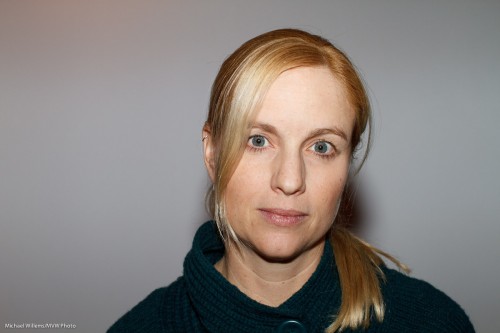
Snap one shows that aiming your flash straight at your victim ought to be a federal offense. (The young lady was warned and kindly agreed to be pictured this way, with a 580EX II flash straight into her face, using TTL, but knowing there would be better snaps to follow):

Not that she doesn’t look great, but the photographic qualities leave much to be desired.

  • Shadows under her ears;
  • And under her chin, a hard shadow;
  • “Deer in the headlights” look;
  • Skin looks reflective;
  • Face is flat;
  • Background is dark;
  • The catch light is in the centre of the pupil.

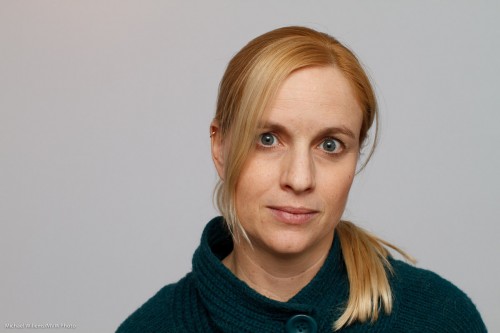
So then I turn the flash up at a 45 degree upward angle right behind me. That way the light comes from 45 above in front, from her perspective, and this is typical beauty lighting:

This is still using TTL, so all I had to do was to turn the flash behind me, and bang. A portrait instead of a snapshot. All the problems solved in one go!

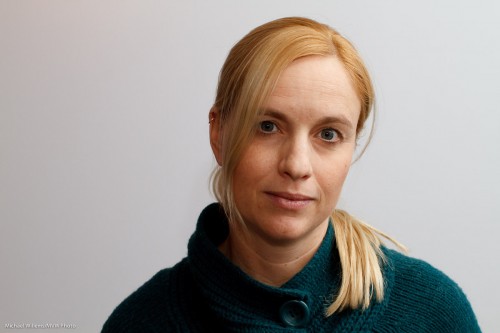
You could also turn the flash to the right or left, so she gets light from the side, above:

Now the face is more three-dimensional and sculpted.

I would normally use more straight-on lighting (pic 2) for women and more side lighting (pic 3) for men (because the latter tends to show “character”, which can be a euphemism for “age”).

Either way, though: avoid flash on camera aimed at your subject. This is why your pop-up flash is evil, and why my 1D and 1Ds bodies do not have one.

And with modern TTL flashes and cameras, you do not need to do anything other than “turn the flash head”.

Macro, anyone?

A definition for you, today.

“Macro” (or as Nikon calls it, “Micro”) means “showing ordinary things large”.

But true Macro, following the official definition, means the ability to obtain a 1:1 ratio between the object’s size and the size of the image on the sensor. So a 1cm long bug casts an image 1cm long onto your sensor.

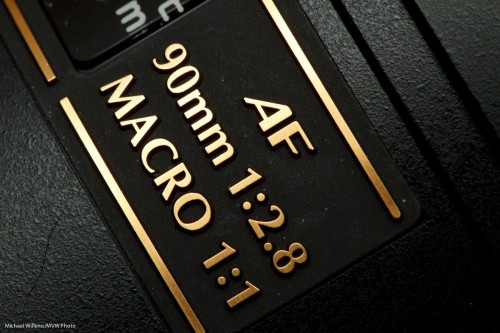
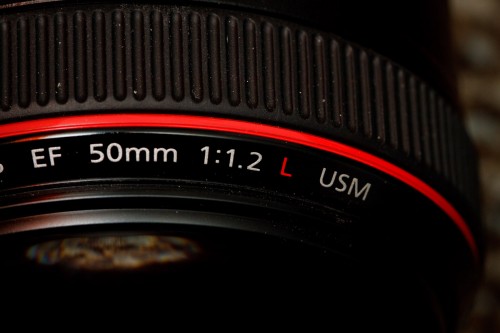
A lens can be a normal lens (not macro, usually 1:5 or worse, meaning a tiny bug image on the sensor), or a “macro featured lens” (perhaps 1:4, so that would make the bug 1/4 cm long on the sensor), or a true macro lens, like this one:

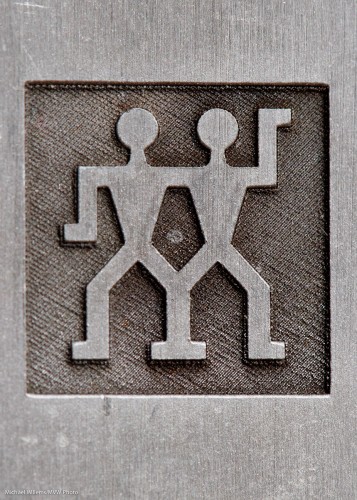
See the “1:1” marking? This, as you have seen, can give you cool images of day-to-day objects in a new light. Like this, the top of a knife:

Or this:

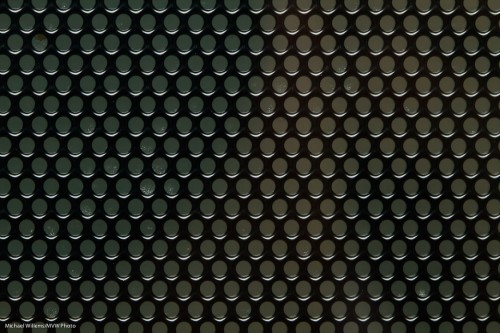
Yup. That’s the front of a microwave.

Or finally this:

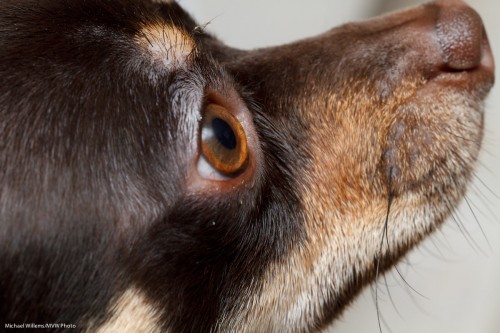
Cute eh?

If you have a macro lens, try to shoot a few normal objects close-up, in your kitchen.

Depth of field in Macro

When shooting Macro pics, you often fight to get enough depth of field. Even f/16 might only get you this:

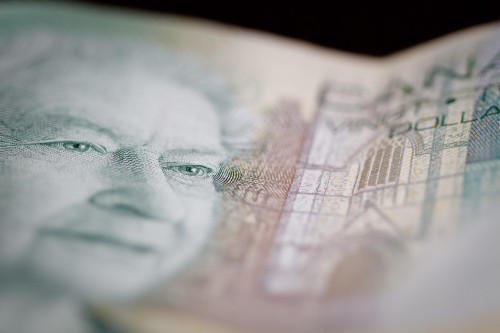
So why not forget that and play? Selective DOF can be very effective, as in here:

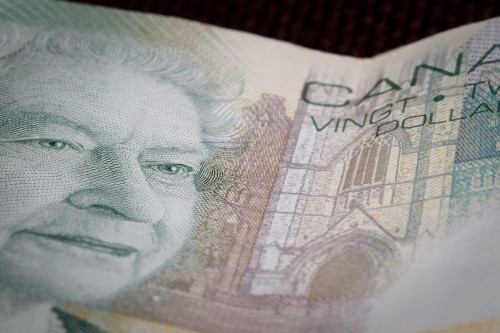
That was f/2.8 with the 100mm macro lens. Doesn’t that make Her Majesty’s eyes stand out nicely?

As in all these things, it is a matter of choosing the technique to suit the message.

Macro tip

Macro photography is the only type you can do 365 days a year in your kitchen – and you’ll never run out of subjects.

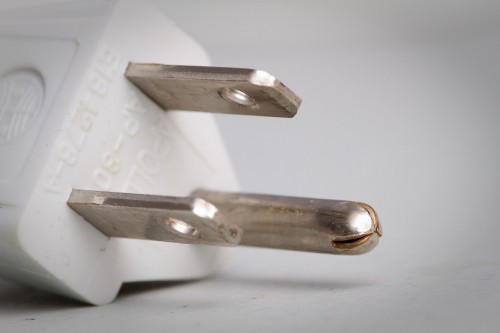
Macro photo of a household plug

Macro photo of a comb (Photo: Michael Willems)

Macro photo of a comb

Combs have names? Really? Yup.

Of course you use reflected light (open daylight, or bounced flash), and a tripod. And you use exposure compensation (or flash compensation) when shooting subjects like the ones above.

One more tip though.

You need to clean up dark subjects. Either before you shoot, with a brushm or afterward in photoshop. So you go from this:

To this (and that is only partially cleaned up):

And that was your tip for the day: Always clean up Macro objects or they will look dirty.

Safe shots

Those of you who ever shoot events (indoors or outdoors, from weddings to parties, from sports to graduations) will be glad that I have developed a special course in “Event Photography”. You will see this marketed in various places soon (check out Henrys: link soon).

One quick tip from that course here: Develop your own “safe shots” and always include those.

Here is one of mine.

Cheers! (Safe party shot, photo Michael Willems)

Cheers! (Safe party shot, photo Michael Willems)

Cheers! (Safe party shot, photo Michael Willems)

Cheers! (Safe party shot, photo Michael Willems)

Cheers! (Safe party shot, photo Michael Willems)

Cheers! (Safe party shot, photo Michael Willems)

Why is that a cool shot?

  • It shows depth.
  • It blurs faces  -ladies especially love this.
  • It is fun and everyone lives that fun.

Develop your own, and always get that. There, you’re on your way to developing a style!

Engineers

I have always been a good teacher because I am, at heart, very simple. I think intelligence means “making complex things simple” – not the other way around. Ask any consultant. The consultant who uses obfuscatory language (complicated words) is the wrong consultant. The one who explains complex things in simple words is the one you use.

And as an engineer, I think sometimes other engineers make things seem too complex.

So, an example. Somewhere deep in its menu, my Canon 1D MkIV camera has (among many other settings) four possible settings for how it achieves focus when you are shooting a burst of shots. Here’s how Canon explains it is an explanatory document (and remember this is meant to clarify!):

The Engineers’ Version…:

C.Fn III-3: (AI Servo 1st/2nd image priority) has had the optional [3: Release/Tracking priority] setting added. Shutter-release priority (rather than focus priority) is given to the first shot. During continuous shooting (from the second shot onward), stable focus-tracking of the subject is given priority. This new setting, which was the only option for AI Servo AF release/tracking priority with the original EOS-1D, EOS-1D Mark II and EOS-1D Mark II N, was conspicuously absent on the EOS-1D Mark III. Now, EOS-1D Mark IV users will have the best of both worlds together with the new improvements to AF hardware and software.

Now the detail:

(Michael’s note: Four options in the C.Fn III focus customization setup menu are explained here. Each one defines “First frame during continuous shooting/All subsequent frames in burst”.)

  • 0 AF priority/Tracking priority: Shutter is released once subject is in focus. There may be a delay when image is blurred./Focus is prioritized. Continuous shooting speed may slow down depending on amount of blur , contrast and brightness.
  • 1  AF priority/Drive speed priority: Shutter is released once subject is in focus. There may be a delay when image is blurred/Continuous shooting speed is prioritized. Continuous shooting may slow down. (depending on amount of blur , contrast and brightness) but is faster than for tracking priority.
  • 2 Release/Drive speed priority: Shutter is released even if subject is out of focus/Continuous shooting speed is prioritized. Subject tracking may not be active depending on amount of blur , contrast and brightness.
  • 3 Release/ Tracking priority: Shutter is released even if subject is out of focus/Focus is prioritized. Release timing may be delayed depending on amount of blur, contrast and brightness.

All clear? I did not think so: I have spent time deciphering this. So now let’s look at…

Michael’s Version:

The camera focus system has the following options for “burst shooting”:

  • It can either start shooting only when good focus is achieved, or it can start shooting as soon as possible, even if focus may not be perfect yet.
  • And that decision can be different for the first shot versus for all subsequent shots.

There are therefore four different setup possibilities:

  1. First shot: shoot only when focused. Subsequent shots: shoot only when focused.
  2. First shot: shoot only when focused. Subsequent shots: shoot as quickly as possible, even if focus may not yet be perfect.
  3. First shot: shoot as quickly as possible, even if focus may not yet be perfect. Subsequent shots: shoot as quickly as possible, even if focus may not yet be perfect.
  4. First shot: shoot as quickly as possible, even if focus may not yet be perfect. Subsequent shots: shoot only when focused.

Another, simpler way to explain this would be:

  1. First shot: shoot accurately. Subsequent shots: shoot accurately.
  2. First shot: shoot accurately. Subsequent shots: shoot quickly.
  3. First shot: shoot quickly. Subsequent shots: shoot quickly.
  4. First shot: shoot quickly. Subsequent shots: shoot accurately.

When do you use these modes? If “getting the shot” is more important, in developing news events, for instance, then you should probably shoot quickly. If quality is more important, and if events repeat, as in some sports, then you should shoot accurately.

The default is to always shoot accurately. We recommend that you leave it like that, unless you are shooting events where you simply must get the shot, even if it may not be quite as well focused.

——–

And you realize, that is just one of the many options and settings on the 1D MkIV camera. I would love to produce a plain English “how to”-guide, including a “recipe book” of all the recommended starting settings for various situations and sports (Canon, if you are interested, do let me know).
Gridlock

Why do you use a grid on a flash?

A grid softens the light somewhat, an effect I really like. But the main use for a grid is to avoid the light going everywhere.

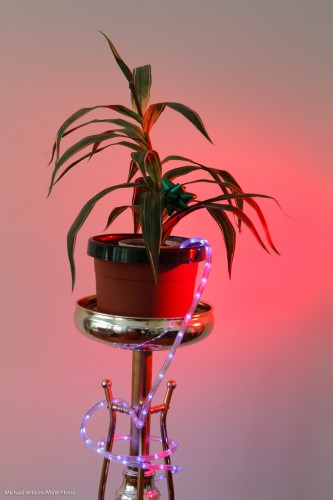
Look at this image: lit from the side with a bare speedlight (a Canon 430EX, which is equivalent to a Nikon SB600) with a red gel.

As you see, light hits the wall.

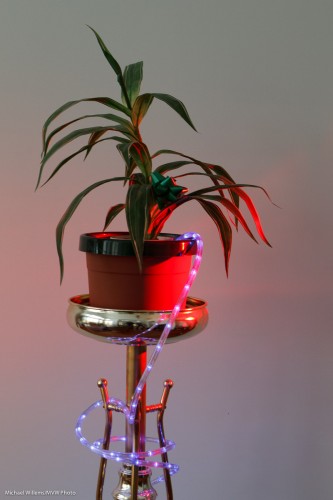
Now look what happens when I put a 1/4″ Honl Photo grid on the flash, with a gel on top of the grid.

Ah. No more light spill onto the wall.

That’s all. As simple as that.

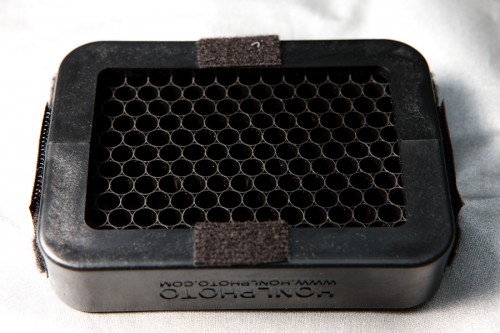
And here’s what a Honl grid looks like: