Sample

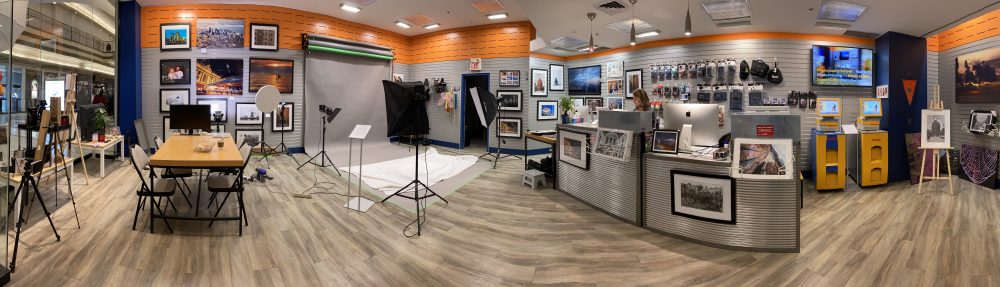
OK, one more sample from the fun series of Flash seminars I did with David Honl at Studio Pet’ographique in Las Vegas.

We filled up the room both days and had a lot of fun. I love sharing what I know, and doing practical shots makes it even better. More later but now I need tocatch a plane to Philadelphia and on to Toronto tomorrow morning.

Gel, grid, and softbox were used fior this picture of a student volunteer:

Photo by Michael Willems

Looking at the light.

Offline soon!

Flash tip

When your flash is grossly overexposing your pictures…

  • The flash is not seated correctly, or the contacts are dirty
  • The flash is set to MAN (manual), instead of TTL
  • You are using + Flash Exposure Compensation (or on a Nikon, also Exposure Compensation).
  • You are simply too close.

Those are four obvious starting points.

Here is me, pictured by David Honl in Las Vegas the other evening. Using a Leica X1 with off camera flash equipped with CTO gel and Honl Photo Traveller 8 softbox.

Michael Willems, shot by photographer David Honl

Michael Willems, shot by David Honl using a Leica and flash

Viva Las Vegas

So I am doing day two today of a two-day seminar series, with special guest star David Honl (yes, the David Honl).In fabulous Las Vegas.

This is tremendous fun – we are taking students first through a thorough grounding in flash theory and hands-on background, and then through a series of actual shots.

Yesterday’s seminar was full; today’s is full too, but I am sure I can fit one or two more in. See http://www.cameratraining.ca/Vegas.html for details.

Would you believe, I forgot to bring a mini-USB to USB cable, so I have two cameras full of tremendous shots, which I cannot share. The setup shots yesterday, as well as model and photographer Yasmin in Nelson, a fantastic “ghost town” plot of abandoned items.

I’ll try to do this today. Stand by for more posts!

iPad Maxi

I received my iPad 3G the day it was released in Canada. Time for a quick review of this oh so important device for photographers, i thought.

In short: The iPad (or in apple-speak, just “iPad”) is a great device. Not a general purpose computer: it is limited, in part by physical limitations and in part by Apple’s need for control. But in spite of this you may well need one. In fact I think you do.

But before I explain why you need one, let’s start with the bad.

Many restrictions are clearly designed to give Apple control over what we do. Restrictions like the fact that it is completely locked down. You cannot add apps other than those okayed by Apple: Steve Jobs gives you, as he put it recently, “freedom”, namely the “freedom from pornography”. Big mistake, as it shows his true colours. Apple needs to be careful: Sony became irrelevant because of its media-ownership inspired controlfreakery, and Apple is slowly on its way to do the same.

An iPad is like a car, or a cable company PVR: you’re really just renting it and you get the feeling that tuning it to your needs would be, if it were up to Apple, a criminal offense. In fact in Canada, jail breaking may soon be exactly that.

So you need iTunes, a horrible app designed seemingly only to give Apple control, for everything. Even for simple things like deleting an image from a photo gallery, or moving one, you need iTunes.

This is inconvenient. I recently noticed I had one incorrect image in a gallery I was about to show as a slideshow on the iPad. Alas, I was 100km away from home, and to delete this one image I would have had to drive back to my iMac. This portable device is only portable if your iMac is, too. (And no, you cannot carry the laptop, because you have to sync your iPad either with your MacBook  or with your iMac, not both.)

There is more such evilness. You cannot sync over Bluetooth or WiFi, thus requiring silly cables. You cannot set a default browser other than Apple’s Safari (like iCab, which is a more functional browser). You cannot just save files. The photo browser is very limited, and does not for instance support hierarchical folders. There is no file manager.

Some of the lack of functionality is not evil, but just consists of unnecessary restrictions by Apple engineers who inexplicably do not think this is necessary. Many simple settings are missing: again like your PVR or car, the device is hardly tunable, and this does get in the way.

For example,

  • In an astonishing oversight, you cannot sort images in the galleries. It’s alphabetical or nothing. “Just rename them”, the fanbois say. Oh – any idea how much work it is to rename 100 images in a gallery? what happened to drag-and-drop?
  • You cannot set the day of week to start when you want (apparently an Apple week starts on Sunday, while mine starts Monday), except as a workaround by setting your country as UK. But then you get Google UK searches every time you search in the browser, and new addresses are added in the UK, with silly phone number formatting.
  • If you have multiple calendars, like one for work and one for personal appointments, then you cannot change the calendar an appointment belongs to once you have created it: instead, you have to delete and recreate the appointment.Another astonishing oversight.
  • There is no-good to-do list app that syncs.  Apple is immune to corporate functionality, it sometimes seems.
  • The mail client is limited. If you have two accounts, as I and many others have, it takes many clicks each time to check them both, navigating back and forth through a very laborious interface. You also cannot set a “from” address. When creating mail, you cannot use bullets. Or numbered lists. Or a properly formatted signature file: that alone is a big limitation for me. So yes, you can email, but it is unnecessarily restricted and half the time I go back to my Mac. I am not sure why Apple does not add more functionality where it clearly is needed and does not rely on heavy processing power or memory.
  • Few Apple employees can be bilingual. I keep having the iPad “correct” my spelling when it shouldn’t.  Not to Apple: Some of us speak multiple languages!
  • I cannot edit my WordPress blog on the iPad, or see statistics. The HTML is too complex, I suppose, and the statistics page uses Flash.

Things like that are annoyances, but time-wasting ones. I just wasted five minutes trying to enter an address in Canada, but the device kept defaulting to the UK. Turns out you cannot just enter the country: I had to make up a city and street.

So OK, the iPad is not a general purpose computer. Then why do you need one?

Let’s look at the benefits.  They are mainly obvious ones, but until you use one you don’t really see how changing they are.

Like the big bright LED backlit screen. Many other things that seem too obvious to mention but that are nevertheless huge, like:

  • 10 hours away from a charger
  • No need to open a lid to use it
  • Wireless on the go at all times
  • A useable keyboard
  • Its smaller than a laptop
  • Orientation sensing, with a switch so you can read in bed.
  • Great reader apps ibooks and kindle

The secret, I think, is to look at the iPad as a better mousetrap.

It is all of these:

  • a book reader, but one that plays all your music too
  • a web browser, but one with a touch screen
  • a photo viewer, but one that also browses the web
  • a portable computer, but one that is always wirelessly connected
  • a portable email device, but one with a large enough keyboard
  • a portable computer, but one with 10 hours battery life on one charge
  • …and so on.

This device is like the hitchhikers guide to the galaxy. Obvious benefits like the ones above lift this pad info an entirely new computing device category.

And of course the way it shows off photos, in spite of the limitations, is fabulous. Much better than a portfolio book.

And yes I did write this on the iPad. In bed.
Zoom zoom zoom

Another flash tip for you today.

580ex2 Flash

580ex2 Flash

Say you are using a flash for a portrait outdoors. You want to decrease the ambient light, of course, and add flash to light your subject. But uh oh – you run out of enough power. You verify this with the full-power tip I gave you the other day. Not enough.

Now what?

One option: concentrate the light more.

Your flash includes a zoom mechanism, to ensure the light goes as wide of the lens. If you have insufficient power, you can:

  1. go to manual flash zoom (press buttons on the back of the flash for this)
  2. zoom in to a longer setting then your lens (e.g. 100mm when in fact you are using a 35mm lens).

Drawback: only the centre of where the flash aims is now lit – so, aim carefully. The big benefit, however: the light is concentrated more, and hence brighter. You get more power when you need it!

I am off to Vegas now, to teach Advanced Flash with David Honl. Talk to you all soon!

DSLR or point-and-shoot?

People often ask me: should I get a DSLR or a point-and-shoot?

Of course there is no answer to that that I can give – any more than to a question like “should I buy a Kia or a Mercedes?”. But what I can do is give you pros and cons. So you can decide for yourself.

First, there is the simple point-and-shoot. These are small, simple, light. They have few buttons. These cameras are truly “point and shoot” – except this is perhaps an oversimplification.

Point-and-shoot

Point-and-shoot

Pro:

  • Small, light, quiet. You can put one in your coat pocket and forget it.
  • Affordable.
  • Simple macro mode.
  • Simple scene modes (“food”, “party”, etc) for people who do not know photography.

Con:

  • Confusing menus
  • Most functions accessible only through these menus
  • Easy to hit the wrong button accidentally
  • “Noisy” – in the sense that high ISO pictures have grain
  • Slow to react after you press the button
  • Often, no viewfinder, meaning impossible to see in bright daylight
  • No ability to achieve limited depth of field

The simple point-and-shoot is for light, casual users who do not demand much from their cameras. If a simple occasional snapshot is what you want, go for it. Else, look at the next categories.

Next: the advanced point-and-shoot. This category includes the Canon G11, the micro four-thirds cameras, other fixed-lens “pro-sumer models”, and most Leicas, for example.

Pro:

  • Almost as small as a simple point-and-shoot
  • Other advantages too (quiet, light, etc)
  • Much better functionality: more “DSLR-like”.
  • Including all the professional modes: P, A/Av, S/Tv, M
  • Better user interfaces
  • Lower noise (digitally speaking), making slightly higher ISOs possible
  • Often, a viewfinder – albeit small, it’s often there.
  • More buttons. (Yes – this makes it easier!)
  • Can take an external flash
  • Some, like the micro four-thirds cameras, can even take additional lenses.

Con:

  • Still “not quite a DSLR”: higher noise than DSLR, slower focus, slower reaction speed.
  • No interchangeable lenses for many of these
  • Less ability to achieve limited depth of field

This category is great for people who want pro-quality photos, or nearly so, without the bulk. Yes, there are compromises, but these are minor compared to the alternatives. I would carry one of these if I could not carry a DSLR.

Finally, there is the DSLR. From low-end (Digital Rebel, D3000/5000) to medium (7D, D700) and all the way up to high-end (1D MkIV, D3S), these are the “gold standard”.

Canon 7D, by Michael Willems

Canon 7D, by Michael Willems

Pro:

  • Great quality, low noise at high ISO
  • Fast focus
  • Fast repeated shooting, so you can shoot sports
  • Immediate shooting: press the button, get the shot
  • GREAT ability to achieve limited depth of field

Con:

  • Heavy, bulky
  • Costly
  • Need to change lenses for different purposes
  • Need to learn some things.

I called this the Gold Standard – because it is. There is a reason all the pros use these. There is often no way to get the shot you want without them.

My advice is to start with an SLR. If that is not possible, go down to one of the other categories. Even the cheapest SLR will produce professional pictures: no need to spend $5,000 on a camera unless you need the specific features this brings, such as ultra-fast operation, the ability to use dual memory cards, or waterproofing.

Flash tip

Today, a quick but important (and as far as I can tell, pretty unique) TTL flash tip.

So you want to know if you can do a certain shot? TTL outdoors is fighting against the sun. Do you have enough power to do the shot? It’s always a battle.

You can of course fire a test shot. If the flashed area is dark, try exposure compensation, maybe. Or spot metering, or using FEL (flash lock). Or rely on the LCD display on your flash to tell you the expected distance. All very time consuming and uncertain. What if I just want to know “do I have enough power in my flash to do this shot” and then if yes, figure it out from there?

I am glad you asked.

  1. Set your camera to highlight review mode (“blinkies” on)
  2. Set your flash to MANUAL
  3. Set power on the flash to FULL (100%, a.k.a. 1/1)
  4. Take the shot!

Now you know:

  • Blinkies means yes, you have enough power. Turn the flash back to TTL and go from there.
  • No blinkies means that however you compensate or meter, nothing you can do. Get closer, or increase your ISO, and try again.

Simple, innit? This trick has saved me countless times.

Tricks like this one, and many more, is what you will learn in Las Vegas next week, and in Mono, Ontario the week after. Come join me and David Honl in Vegas and me and Jospeh Marranca in Mono to learn more!

Manual focus? Six reasons.

Should you ever focus manually? When?

Well, yes. Indeed there are circumstances where manual focus (setting lens or camera switch to manual focus, and turning the focus ring yourself) is the way to go.

And here’s a few of those circumstances. I can think of six right away:

  1. Macro. When shooting macro, for instance when shooting flowers, bugs, food or jewelry, use live view and zoom in electronically if you can, then use manual focus.
  2. You are using a Nikon D40/60/3000/5000 and a fast 50mm lens. Those lenses do not autofocus on those low-end Nikon cameras, so you have to do it by hand.
  3. It is night. Your camera cannot focus well in the dark.
  4. When shooting through glass, like on an airplane.
  5. The subject has low contrast. Ditto – you may have to do it by hand.
  6. When the subject is unpredictable in time but not in space – like fireworks. Or sports, when you know where the action will be. Pre-focus there manually!

Tip: Do not confuse manual focus with “using one focus point”. When using autofocus, you should always (or virtually always) use one focus point. When the camera chooses it will choose what you do not want to see sharp.

Homework: go take ten pictures right now where you focus manually. You;ll see how easy it is, and how consistent once you get it right.