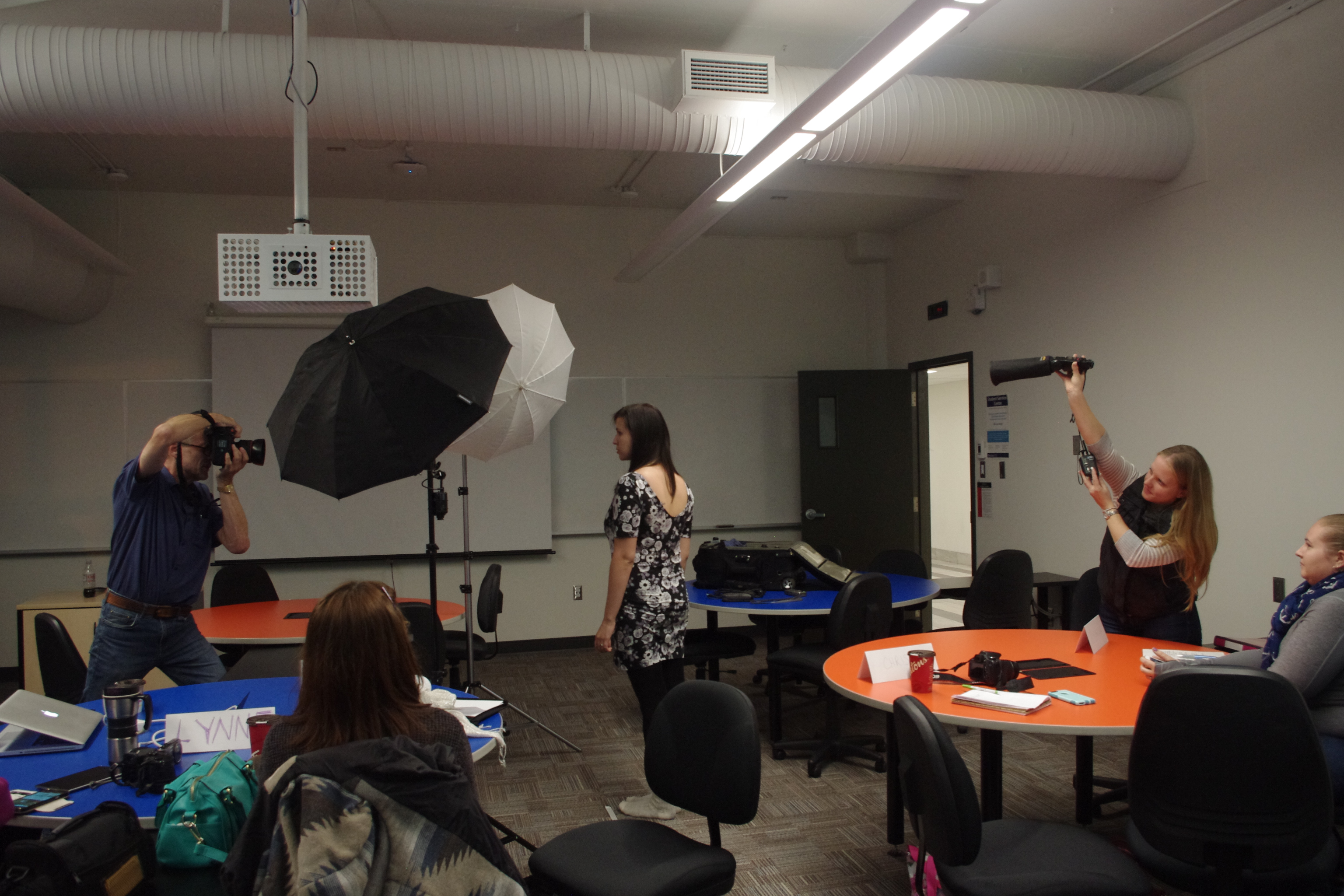
Left right left right

Did you know that we are left- or right eared and eyed just as much as we are left- or right-handed? Odd thing, the brain.

Why is this important? Because of how you look through your camera. If, like me, you use your left eye, your right eye looks at the back of the camera. If you use your right eye, you have to squeeze your left eye shut, or you can use it to get an overview of the scene.

What are you? The vast majority is right-eyed and -eared, or if left handed, the opposite. Some, like me, are right agreed but left eared and left eyed.

Check it out now. How do you look through your camera?

Tonight I am talking about Creative Flash at tthe Etobicoke camera club. Check it out. Humber Valley United Church … Islington & Rathburn. $5 for non members. See you there perhaps?


Photography and you and me

Here’s how it all started:

www.economist.com/blogs/prospero/2016/04/history-photography

And still, we learn. Last night:

image

Only I was not upside down. Thank WordPress and its tablet interface.

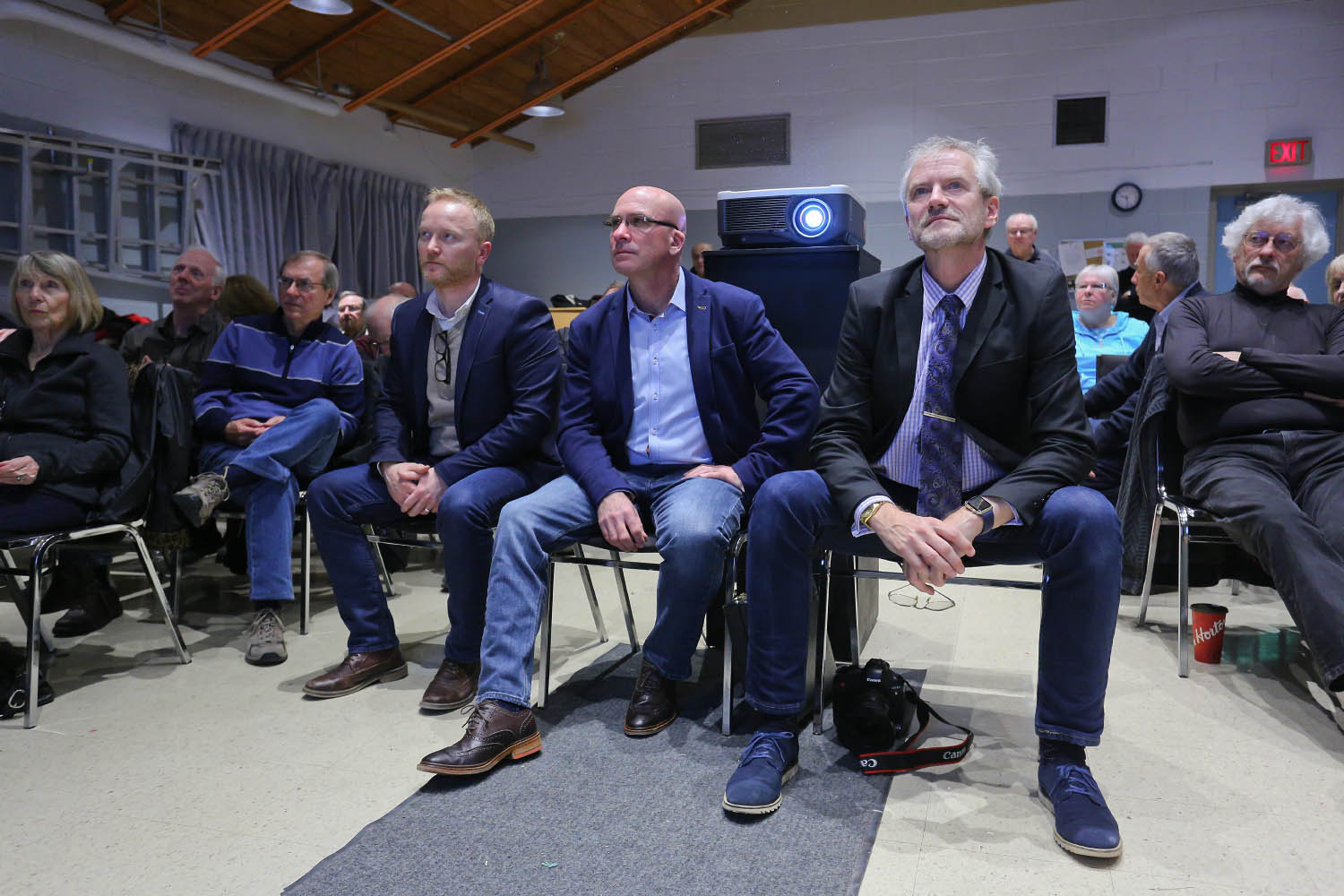
the meeting, attended by 100 photography enthusiasts, was about the Photographer’s Workflow. I outlines best practices and tricks and tips. Fun.

Interested? See me Monday evening at the Etobicoke Camera Club, teaching Creative Flash.


That Creative Dip

We all hit it every now and then, if we are engaged in some creative endeavour: the dip. The block. The point when we think “I am bored with this, I have done it all. I cannot come up with anything new, creative or fun. I’m done, and moving on”.

tumblr_nvlnmgEcfp1qfts2ko1_1280

Blocked? No you’re not! You are just bored. And delayed. Temporarily. Your muse will return.

So how do you deal with this in the interim?

By making it new. Get inspired! Do things like:

  • Have a good night’s sleep. Or two. Start there!
  • Realize you are not alone. Entire web sites are dedicated to Creative Block.
  • Google photographs of the type you like. Read some of the back stories.
  • Read some photography magazines.
  • Learn something new. A new type of photography; a new technique.
  • Read photo books.
  • Carry a notepad and immediately write down what inspires you.
  • Get my books from Amazon or from http://learning.photography.
  • Set yourself challenges. Like “shoot only B&W for a week”, or “Focus manually for a week”, or “take only wide angle pictures for a week”.
  • Join a meetup group, like Brantford Photography School.
  • Contact your friends who like photography, and go for a walk around town, do some street photography.
  • Do macro photography indoors. Do whatever photography you have not done.
  • Binge Watch Netflix for an entire weekend—then get on with it.

There are many ways you can re-kindle your enthusiasm. Look for the ones that resonate for you, and, as said: get on with it. There’s lots to do.

There’s been 12 billion years before you when you were not here, and before our universe collapses or freezes, there’ll be another 12 billion years—you and I are just here for a few decades. Enjoy them.


Adobe Bug Redux

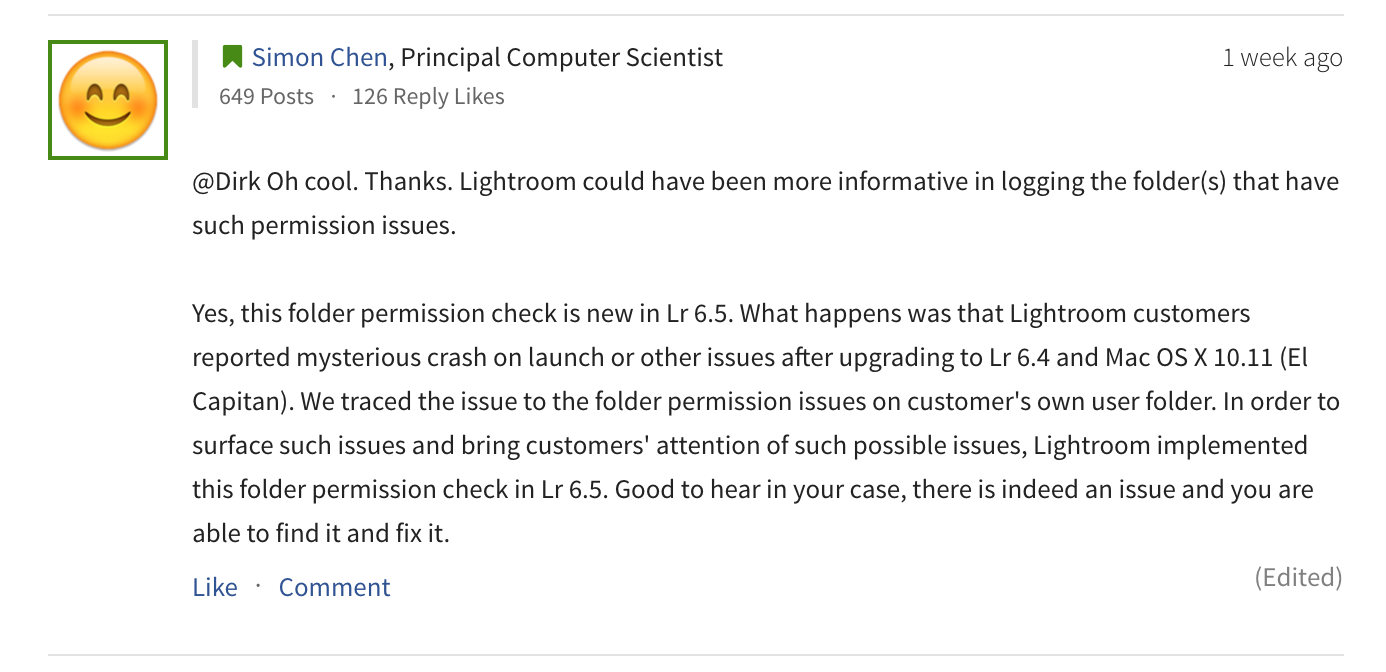
It’s even worse than I thought. It appears that Adobe deliberately caused the “Lightroom [etc] will not start” issue!

This apparently from Adobe:

Screen Shot 2016-03-24 at 14.45.50

So Adobe installer screws up the folder owner/rights; then Adobe causes their apps to refuse to start when it detects the issue. And they give no information: the fix (below) is out there, but you have to Google to find it.

Absurd that Adobe can do this: stop people’s business cold, deliberately. A bug is inevitable and forgivable, but a deliberate decision to not allow the app to start when they detect it, is unforgivable.

Almost enough to give mega-corporations a bad name.

Oh wait.


Back up—intelligently

An advanced computing tip today on Speedlighter. This is an extended version of a previous post.

Have a Mac or UNIX-like computer? Then you can use a simple little command to synchronise disks. Let me explain.

I have two hard disks next to the Mac. Two 6TB disks (I recently upgraded them).  I work on one: all my images and Lightroom files and office admin files live there. Then I have the other as a backup disk.

Whenever I work, as soon as I am done on one and am sure it’s all good, I run the following command on my mac:
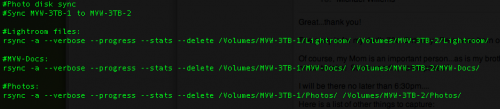
I.e. the following is the actual commands; the lines above preceded by # are just comments.

rsync -a –verbose –progress –stats –delete /Volumes/MVW-3TB-1/Lightroom/ /Volumes/MVW-3TB-2/Lightroom/

rsync -a –verbose –progress –stats –delete /Volumes/MVW-3TB-1/MVW-Docs/ /Volumes/MVW-3TB-2/MVW-Docs/

rsync -a –verbose –progress –stats –delete /Volumes/MVW-3TB-1/Photos/ /Volumes/MVW-3TB-2/Photos/

So if your disks are called “Photodisk1” and “Photodisk2”, for example, and your folders are called “Photos” and “Lightroom”,  then you would make it:

rsync -a –verbose –progress –stats –delete /Volumes/Photodisk1/Photos/ /Volumes/Photodisk2/Photos/

rsync -a –verbose –progress –stats –delete /Volumes/Photodisk1/Lightroom/ /Volumes/Photodisk2/Lightroom/

(Each command is all on one lline; i.e. your file has two lines of text)

The rsync command intelligently compares the two disks and adds anything to disk 2 that was added to, or changed on, disk 1, while deleting anything from disk 2 that was deleted on disk 1. A perfect and simple backup in seconds (the first time can take a day of course, depending on how full your first disk is).

Using the nano text editor, I put these commands in a little text file called “syncdisks”

nano syncdisks

…and after I save that file, I make it executable using the chmod command:

chmod 755 ./syncdisks

I then call that file by typing

.syncdisks

(with the period) every time I want to run it.

I could automate further (drag it to the desktop so you can simply click on it) but as it is this is good for me – and it shows the power of the command line, doesn’t it?

(If this was all a bit techie for you, ignore this post and move on. You can always call me to come and so it all for you. A few hours on location consulting and you have everything organized, installed, and working perfectly)
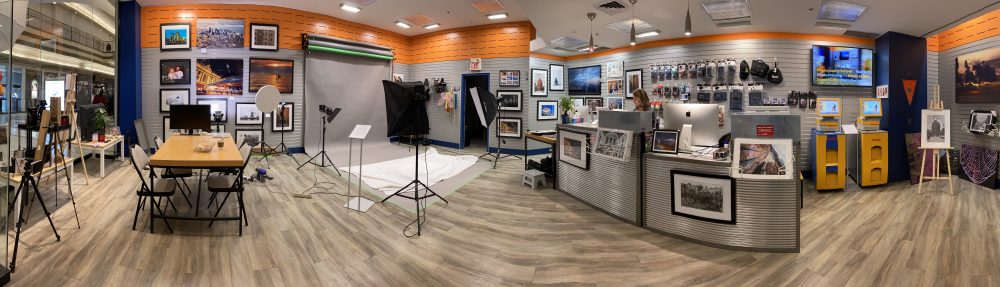
Judgement day.

it was judgment day today. But fortunately a benign one. The Latow photography guild in Burlington held a photo contest with a South African photo club. 60 photos, 30 from each club, were to be judged. I was one of the three judges, and had a great time tonight. I saw excellent, excellent work.
IMG_0074

(Photo: Paul Sparrow/Latow)

And I observed a few interesting things.

First, that the status of work was incredibly high. Some beautiful, beautiful work. Mostly technically perfect.

Second, that the standard of Photoshop/Lightroom work in Burlington was very high. Higher than that in South Africa.

Third, that my judgment and that of the two other judges, highly experienced professionals, wee very very similar. Our grades were usually identical as far as I could see.

And fourth, and most interesting, was that whenever the picture was not perfect and could have been taken to the next level, it was usually a case of the photographer letting himself or herself off easily.  We all have a tendency to do this. The “yes but” phenomenon. Yes, but there wasn’t enough light. Yes, but I didn’t have enough time. Yes, but there were no clouds. Yes, but that car was in the background.

You must not do that. No one is  interested in the excuses. The only thing that matters is the end result. The photo. Nothing else matters. If there are no clouds in the sky, come back on a day when they are there. If there is not that of light, come back when the light is better!

This was your conscience speaking. Now, a beer and bed.


Truth—a beginner’s tip

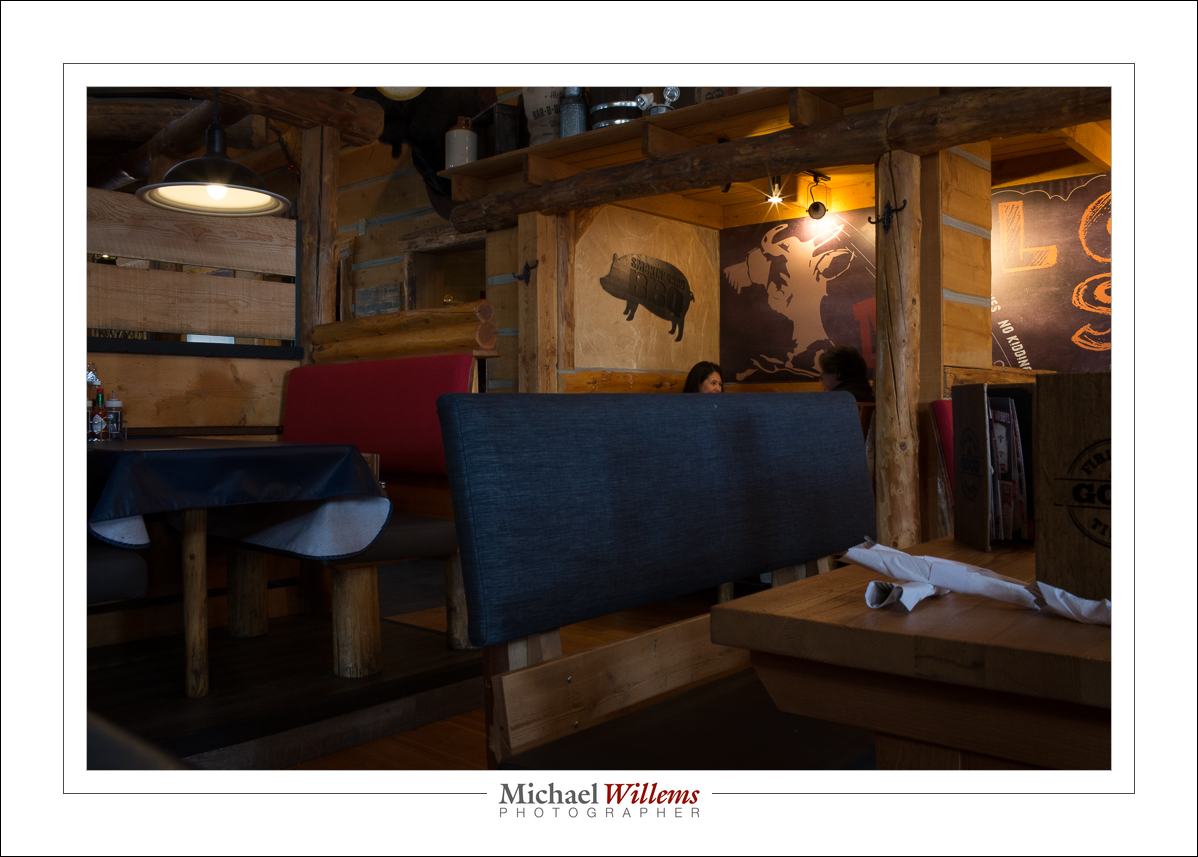
Theories are best tested. Like the theory of exposure. Which, as it turns out, actually works. Let me show you.

Think: You are filling a bucket. Your aperture is like a faucet. Your shutter speed is “how long do you told the bucket under the tap”. Together, the time and the stream of water fill the bucket.

So here’s f/22 at 1/4 second. A triple of water, so filling the bucket is a slow process:

20160223-1DX_6957-1024

That should be equivalent to:

  • f/16 at 1/8. We open the faucet, but reduce the time.
  • f/11 at 1/15. We open the faucet more, but reduce the time more as well.
  • f/8 at 1/30… and so on:
  • f/5.6 at 1/60
  • f/4 at 1/125
  • f/2.8 at 1/250
  • f/2 at 1/500
  • f/1.4 at 1/1000

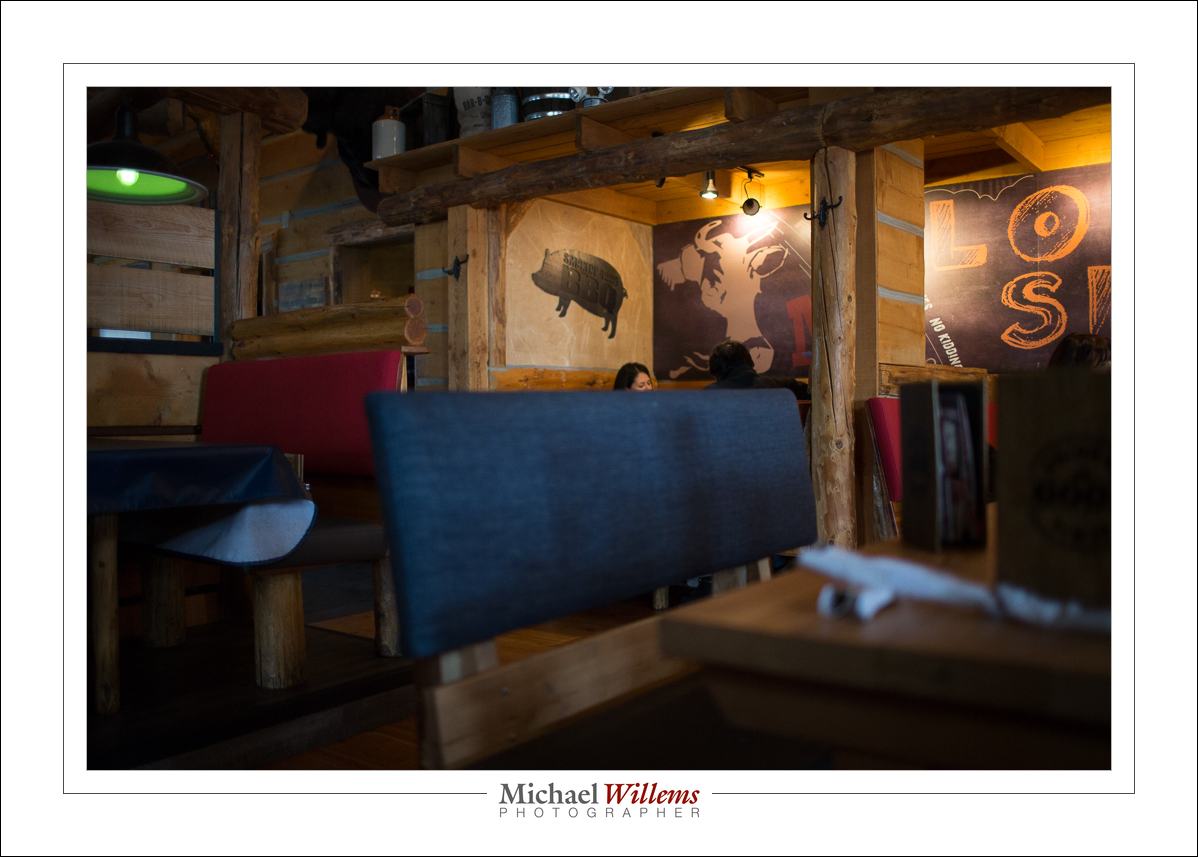
And indeed it is. Here’s f/1.4 at 1/1000:

20160223-1DX_6967-1024

You should be trying this stuff, not just reading this. We lean by doing. Muscle memory!

Bonus points:

How do I know the first one is f/22? Look at the star from the lamp top right. Star means small aperture (high f-number).

Why is the other lamp green in the fast shutter picture? Because it is a fluorescent light. It goes on and off, and changes colour, 60 times a second or more. A fast shutter speed will catch that. Your shots are all going to be a different colour/brightness.


Tip: Get my books at http://learning.photography. Amazing books which will have you actually understanding your camera and what to do with it, in record time. 

Blitz!

…which is German for Flash, because why not.

A small note. There are several spaces open still for Saturday’s hands-on flash workshop in Brantford. A great opportunity to learn how to use flash. TTL. Manual. Speed lights. Strobes. Whatever it is, we’ll talk about it and you will get to do it.

Read all about it here. You have just a few hours left to benefit from the low price.


Why I…

…don’t live in Europe anymore.

Don’t get me wrong. Europe is great. History, culture, art; pragmatic politics; liberal philosophy; well-educated people; intellectual discourse on TV rather than clips for 11-year olds. All good.

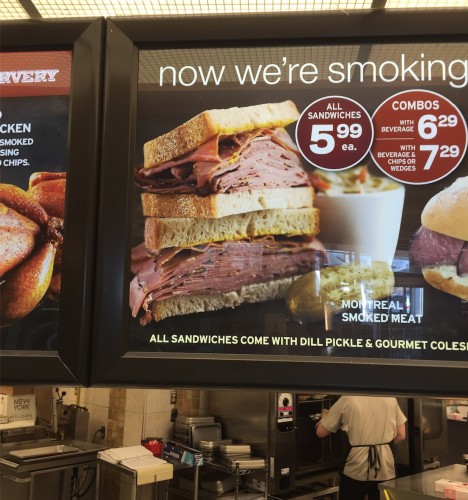
But then this, at my local 24-hour supermarket:

23198938856_3315d50d25_o Screen Shot 2016-02-05 at 19.27.23

A typical Reuben sandwich. Has half a cow on it.

And in Europe, the Europe I remember, this would have one slice of meat. One. Not two.

Imagine a lunch table in The Netherlands, or an Autobahn restaurant on Germany, or any hotel with a “continental breakfast” pretty much anywhere in Northern Europe. One slice. If you take two, you are a waster, a bad person. One is plenty for a good person; two is for bad people. A 24-hour supermarket or two in every small town in Europe? Yeah. ten centuries after hell freezes over. Wasteful “American nonsense”. And it is “unnecessary”.

Like drive-through ATM machines (why park and waste time lining up?); drive-in cinemas; easy Internet banking; cheap commoditized goods; lower taxes; and much of what makes North America great. After all, we are here for a few decades and then we are gone. Why deny ourselves everything that makes life easy? We should try to make things easy. In Europe, it is my impression that the intention is to make life as difficult as possible. Here we say “Yes, unless”. There, they say “NO, unless you can show why it should be allowed”. NO, unless you can show why it is “necessary”.

Another example. Here, to get a personalized car number plate (mine are “MVW1” and “CAMERAS” (!) ), you look up the available names online, pay the government a couple of hundred bucks, and you’re done; your plates arrive in a few weeks. In Europe it is impossible to, because GOD FORBID that we make life more fun or easy for people. No, we can’t allow such :”American Nonsense”.

I wonder what those Europeans would make of a sandwich with about 40 slices. Heart attack, probably.

And photography has many parallels. Until not many years ago, photography was a “protected” (i.e. regulated) profession in much of Europe. Here: do what you like. Which is how it should be, however difficult it is for established photographers. Let the chips fall where they may.

And who wins, in all these circumstances? The consumer!