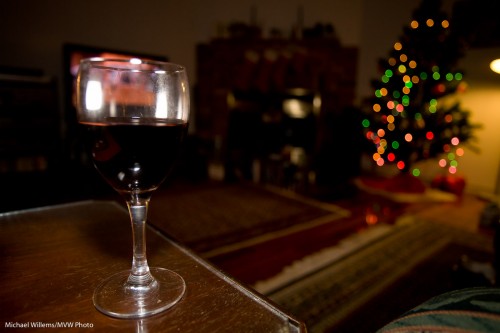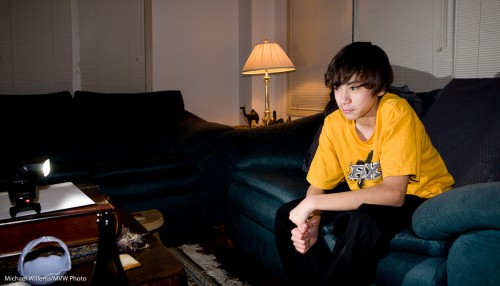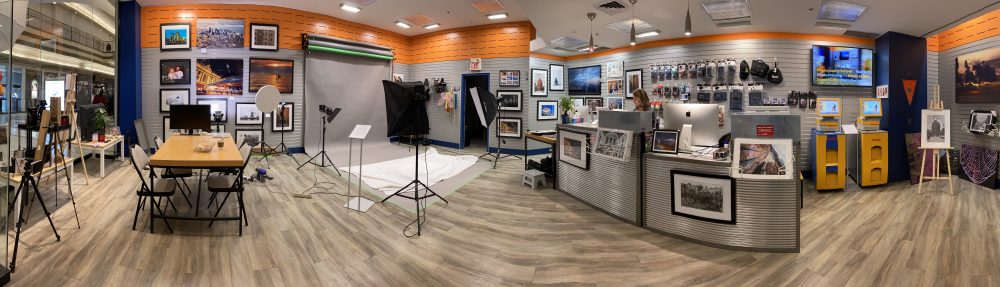
Open wide

Wide angle lenses tend to be under-appreciated by amateur photographers. “Surely to get a good photo you need to have a long lens: the longer the better!”

No, not so. A wide angle lens (say, a 10-20mm lens on a crop camera, or a 16-35mm lens on a full-frame camera) allows for interesting pictures.
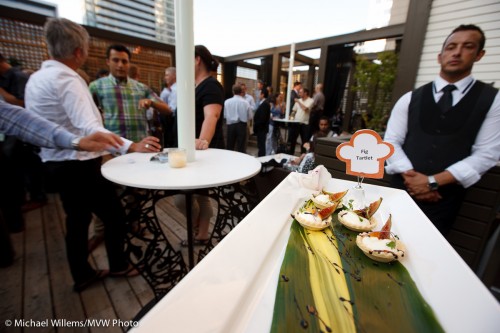
Wide lenses are great for creative reasons:

  • You get depth, three-dimensionality – we call that “close-far” technique.
  • You get leading lines, strong diagonals.
  • You can make great “environmental” portraits, with a person surrounded; enveloped, as it were, by their environment.

And for technical reasons:

  • It is easy to focus “everywhere:”: depth of field is extensive.
  • It is easy to use slow shutter speeds without motion blur (rough guideline: a 15mm lens can be used at 1/15th second, while a 200mm lens needs 1/200th second).
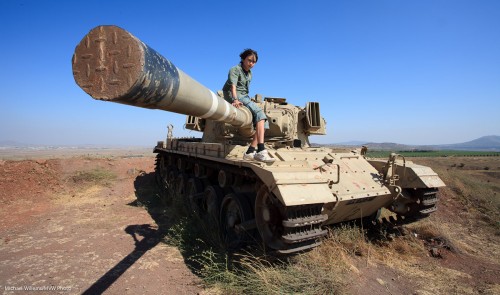
If I were to have to choose one lens (admittedly this would have to be with a gun to my head: life is not that simple) – but if I had to choose one lens, then I would choose the wide angle zoom as my lens of choice.
RGB, and the moment

Often, in a shoot you have just a few minutes to get the shots you want. Like in events, the money shot is often the kiss, the handshake, the moment the document is signed or the ribbon is cut, and so on.

And often, it is the light. Light that spends a few minutes between uselessly dark and uninterestingly bright. Those are your minutes, so be ready!

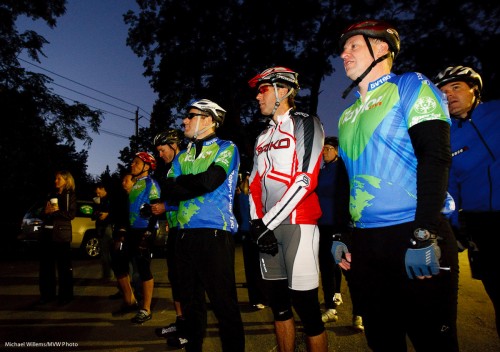
Like here, in a shoot of a bike race that started at dawn:

Riders Ready to Roll

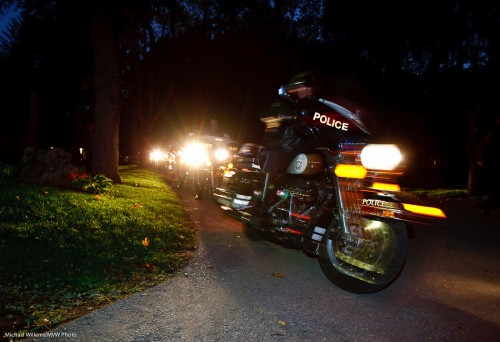
Dawn (and later, dusk) means a few minutes between dark and light. And those minutes are great since they have blue skies with enough colour, and all the other colours are saturated too.

Saturated means “not mixed with white”, after all.

OPP Bikes Set Off

The combination of the primary colours red, green and blue makes these images visually interesting. So when shooting an event:

  • Set up your camera early
  • Find the right viewpoint early, too
  • See if you can find red and green elements to your image
  • Then, be ready to pounce during those few valuable minutes.

And your results will be cool.

“Yes but I want to shoot like that all day”. Well, then learn how to use flash and modifiers. But you will have a much easier time when you use – and often have no alternative but to use – those few valuable golden minutes between light and dark.

Endnote: There is still space on our all-day The Art of Nude Photography Workshop on Sunday, but be quick.

Turn baby turn

Why do I tilt my pictures? I get asked this rather often.

Indeed I do this with quite a few of my photos. It often gives a dynamic, artistic feel.

Big Bird at Christmas

But that is not the only reason I tilt my camera when I take images.

Here’s why I tilt:

  1. To get more in. This is the most basic: a diagonal is longer. Often it is as simple as that.
  2. To achieve the rule of thirds. Good composition is essential.
  3. To simplify (“de-clutter”). Also very important.
  4. To enable use of primes. In a zoom lens you can zoom – with a prime you can only turn or move back and forth.
  5. To equalize people: if one person is taller, you tilt to make that person appear the same height as the other person in the picture.
  6. To be dynamic: diagonals mean dynamic energy!
  7. To be artistic. Sometimes, I do do it for that reason!

So as you see, there are many reasons, and the art reason is only one of them – and not the most common!

Establish

(EDIT): When shooting an event, always shoot a “B-roll” of images, as movie people would call it. In your case, as a still photographer you use your B-roll to help establish “where, why, who, what, and maybe even “when”.

So recent shoots I have done have included the following as shots in the first dozen or so:

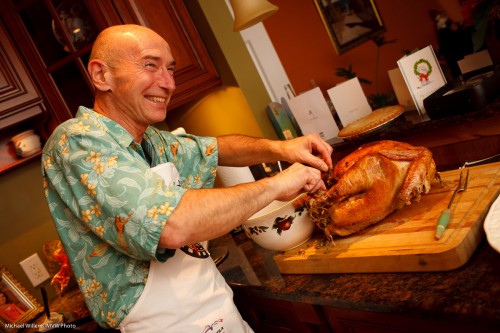
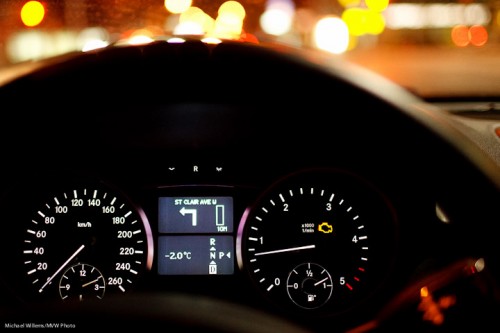
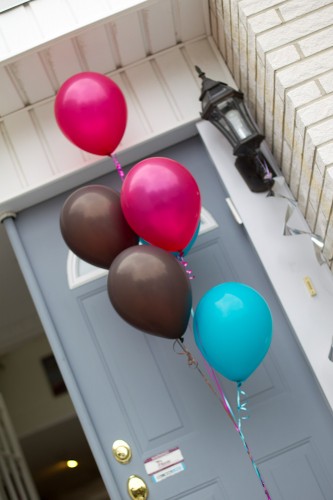
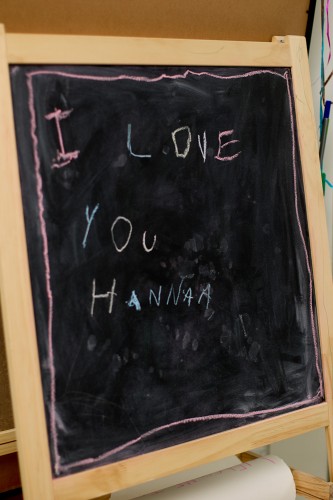
Where

What

Why

Who

This kind of storytelling is essential for a successful shoot.

Tip: To arrange your images, use Lightroom collections, where you can order things the way you like, rather than folders.

Simplify!

After yesterday’s long post, a few short ones. You will, I hope, bear with me and forgive. And – simple is good, since I am sure you are all preparing for New Year’s Eve.

Simple is good – and in that vein, this one is to emphasize once more the importance of simplifying your pictures.

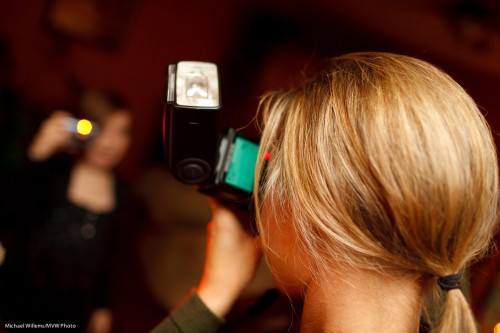
Shooter shooting shooter

You do this to make your pictures look better – much better – and you do it by:

  • Zooming in.
  • Repositioning yourself: up-down, left-right, and around.
  • Tilting!
  • Blurring the background.
  • Cropping.
  • ..even moving things or your subject.

This is the most important lesson for many amateurs, because it is the most sinned against and the easiest to fix.

Go check what you did on your last 100 images: could you have simplified?

Prime primer

Why do I shoot events with a prime lens?

My favourite lens is the 35mm f/1.4 lens on my full-frame camera.

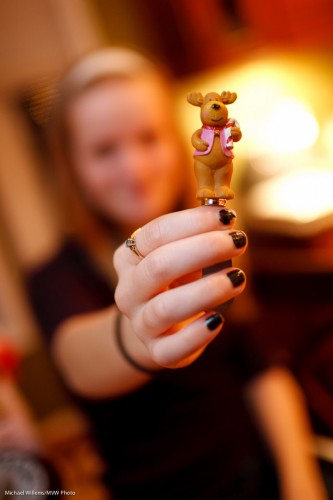
Party figurine at f/1.4

I like primes because they:

  1. Are often smaller and lighter than zoom lenses.
  2. Are generally sharper as well.
  3. Are faster (meaning they have a lower f-number/bigger aperture) so that (a)  I can shoot in darker surroundings.
  4. Are faster (meaning they have a lower f-number/bigger aperture) so that (b) I can blur backgrounds more dramatically.
  5. Force me to use one view angle, meaning that (a) both my pictures and settings are more consistent.
  6. Force me to use one view angle, meaning that (b) I need to tilt and move more rather than zoom to achieve the right composition.

I love the 35 because it is also the perfect length for “grip and grin” party pictures.

For beginners, there is an additional huge benefit: by not zooming but using the same focal length, you get much more quickly to a deeper understanding of the relationship between aperture, focal length and depth of field.

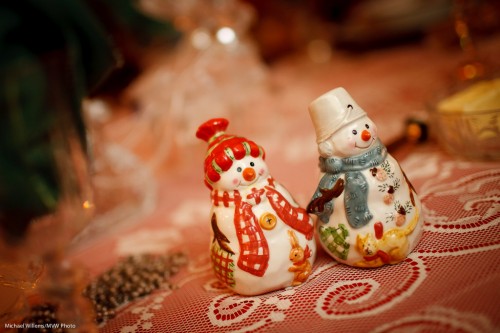
Happy Xmas figurines

There is a lot of benefit there. So I shot two events in the last two nights, and you can be sure my 1Ds camera was my main camera, and it was fitted with the 35mm prime lens.

(As I have pointed our here before, if you have a crop camera, like a D90, Rebel, or 60D, you will want a 24mm lens instead, since 24 x 1.5 = 36).

Of colour and curves

A few words, to reiterate a few useful concepts. Illustrated by a few snaps I took last night during a short walk (shot because it was bitterly cold).

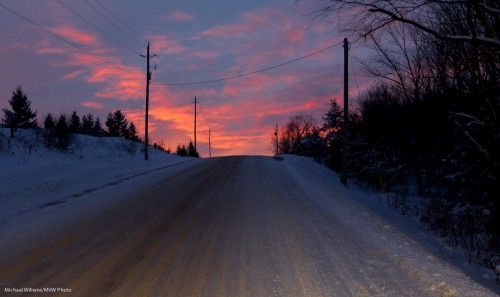
First, sunsets. As you also saw in yesterday’s evening picture, colours get nice at sunset:

25th Sideroad Sunset

To get these colours you need to make sure you do two things:

  1. Expose right. That means underexposing a little. You can start with exposure compensation set to -1 stop, but you may want to go even lower. The less light, the more saturated the colours get.
  2. White balance right. Do not use “auto”, but use “daylight” instead. “Auto” tries to neutralize colour casts. Not what you want!

Then, frames. Consider using them when you can.

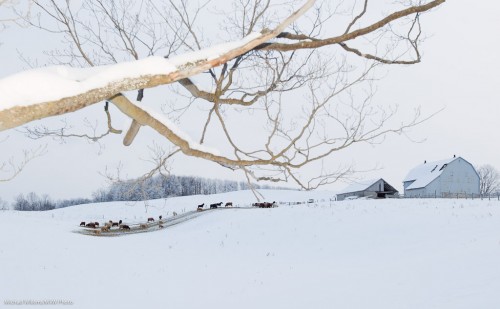
Cold Cattle

Love the curve.

If I had had more time I would have gotten down lower into the snow to rearrange the tree.

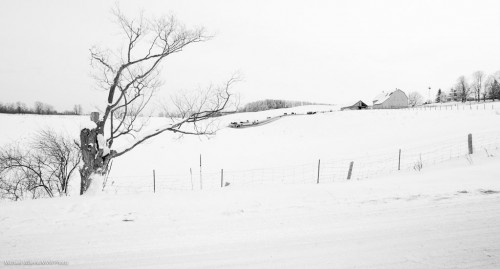
As for colour: these winter scenes can also look good in black and white.

Cold Cattle in B/W

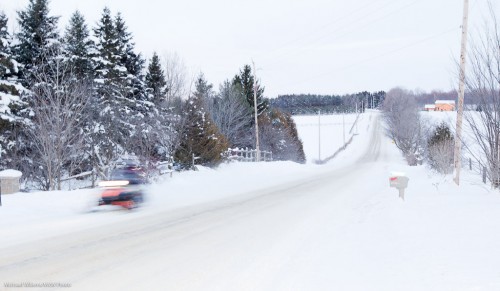
And finally: sometimes, action is good, to relieve the stillness. Like this snowmobile whizzing past:

Action in the snow

Go take some snaps if you are lucky enough to have snow where you live!

Storytime

When you shoot an event, say a party, remember to tell a story. That means you also shoot, in addition to the “grip and grin” happy faces, the following background shots:

Where? – an “establishing shot”

What? Is it a happy occasion?

Why? What is the occasion?

Who?

And finally, How?

These shots, which you intersperse with the happy snaps, make your shooting so much more valuable.

Most event photographers forget this. If you don’t your shots will be better.

On another note: I need an assistant, maybe an ex student, for a two-hour corporate headshot shoot, tomorrow morning (Friday morning) in north Toronto by the 401, at 8am. If interested, email! (UPDATE: this position has been filled)

Party recipe

There will be many parties in the next few weeks for many of you, so I would like to give you a few tips and reminders for better event photos.

I shall illustrate with a few pictures of an event I shot the other day.

A Recent Party picture

First, your equipment:

  1. Use an external flash. Never the popup.
  2. Aim it behind you – yes, behind you, high so that you bounce off the ceiling, provided there is a ceiling and it is somewhat like white.
  3. Use a “slightly wide angle” lens. I love the 35mm prime (fixed) lens – on a full frame camera, which means a 24mm lens on a typical crop sensor camera.
  4. A prime lens is good as it forces a consistency to your compositions, which will pay off since it also means consistency in your settings.

Cheers!

Then, the settings:

  1. Mode: Camera in manual exposure mode (“M”)
  2. Flash: in its normal TTL mode
  3. ISO: Set ISO to 400 for most venues (800 if it is dark, possibly even higher if the venue is pitch black)
  4. Exposure: Set aperture and shutter speed to a combination of values that gives you an ambient exposure of -2 stops. That is, when you press half way down on the shutter as you aim at an average part of  the room, your meter in the viewfinder points at a value around -2.  A typical combination at 400 ISO is f/4 at 1/30th of a second.
  5. White balance: Set your white balance to Flash. That gives you warm backgrounds, but your subjects will look natural, since they are lit primarily by the flash.
  6. Flash compensation: if your subjects are small in the picture, with a large background, your camera may overexpose the flash portion. In that case, use flash compensation and set it lower: try a value of -1, say.

If you shoot in a very dark venue, you will need to go to a wider aperture, so I recommend fast lenses. I often end up shooting at f/2, or even lower.

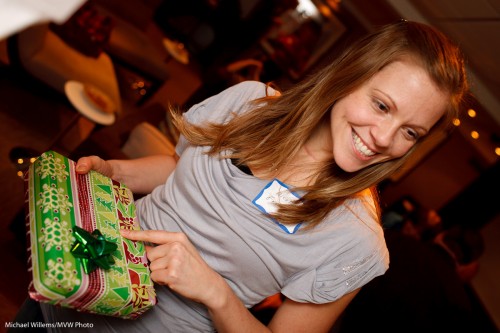
Is this present for me?

And finally, composition:

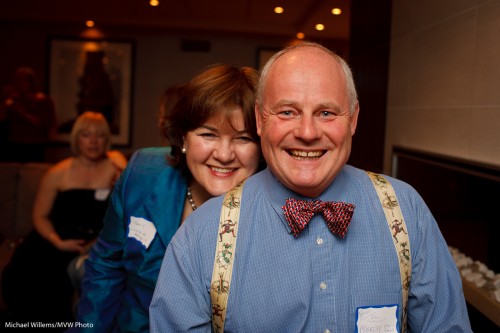
  1. Shoot “grip and grins” like the first one above: people like those. Heads together!
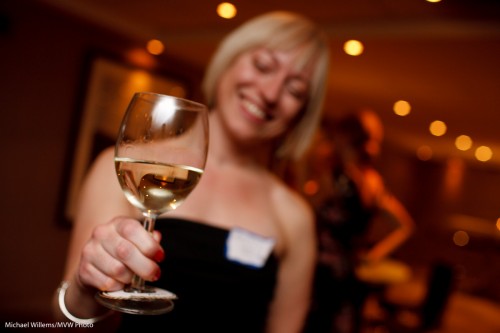
  2. Also shoot “fly on the wall” pictures. “If it smiles, shoot it”.
  3. Use the rule of thirds – “off-centre composition”)
  4. Tilt whenever you like.
  5. And please also shoot the food, the room, the small details.

The above will give you great images. But remember to finish them in Adobe Lightroom: crop, do minor adjustments, and only show your great pictures!

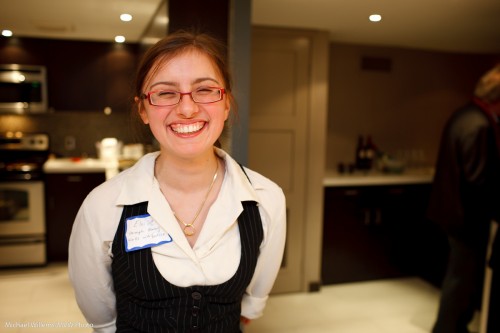
A wonderful smile

Above all: have fun!

Christmas reminders

Today a very quick reminder (especially as yesterday I published two posts):

Shoot detail.

Christmas cheer

Use off-camera flash.

You do not need light stands, necessarily: you can often use just the little plastic stand that comes with the camera. Here, you can see it in the shot!

Off-camera flash

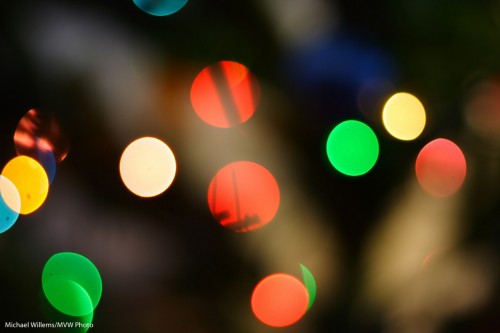
And finally, throw lights out of focus (with the aperture open all the way):

Lights

Tomorrow, a new tip.