Lenses

Take a headshot portrait (one where the head fills the page) using a 20mm lens.

Go on, do it. You know you can. And I mean a real 20mm lens, so if you have a 1.6 crop camera like a Digital Rebel you would use a 13mm lens; on a Nikon you would use a 14mm lens. Or that setting on your wide angle zoom lens.

You would get this – and thank you to the student who kindly volunteered to be pictured with, um, an enlarged nose:
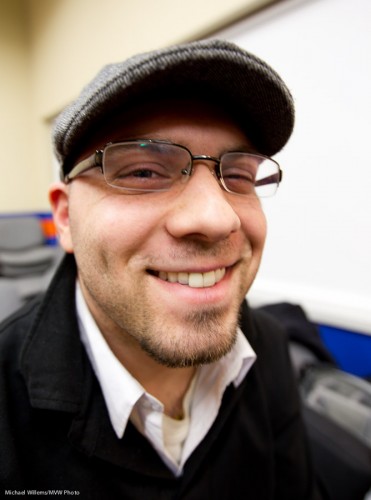
Because that is what happens when you use a wide lens, because you have to be so close.

You see, it is not the lens that has the bad magic. It is your position right in front of his face.

Now use an 80mm lens (that would be a 50mm lens for crop factor camera users). That forces you to step back a couple of metres. Now you get this:
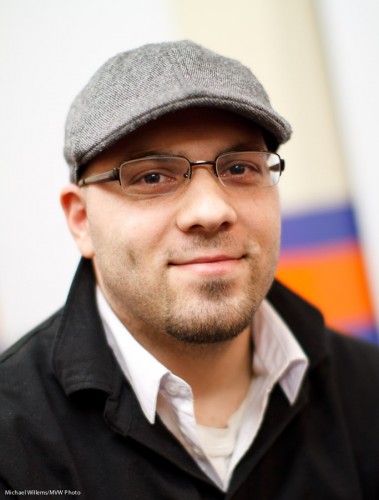
That’s a lot better, eh?

So the moral: portraits are best taken from a few metres away. Either that means you use a longer lens (80-135mm), or you avoid headshots where the subject is large so you have to get close.

And therefore yes, you can use a wide lens – just with a small subject, in the middle. So an environmental portrait with a wide angle lens is fine, if your subject is small and not near the picture’s edges. Otherwise, a long lens. On a crop camera, 50mm and longer!
Judge not, that ye, etc

Actually I especially like judging. I spent tonight judging photos for a contest at the University of Toronto’s Rotman School of Business.

Invited to do so with three other photographers, I judged 200 images – we quickly narrowed it down to 20, and ranked those.

This job was remarkably easy, because so many people make very basic mistakes. If you want your photo to be good, at least make sure it makes it though that first sifting. To do that, do a few simple things.

Here’s the “baker’s dozen better-get this-rights”:

  1. Ensure that your photo is in focus.
  2. Straighten horizons.
  3. Keep the image simple
  4. Crop as needed.
  5. Expose well.
  6. Make sure there is light on the subject’s face, not back.
  7. Use the rule of thirds (or at least compose appropriately, and avoid centering).
  8. Avoid “tension points”, where you cut off just a small part of a hand, say.
  9. Avoid clichés (the CN tower has been photographed before).
  10. Avoid HDR unless it is really needed.
  11. Avoid badly dodging and burning – “halos” around a subject are a dead giveaway.
  12. Avoid obscuring important parts of the image. A beam across your subject’s eye means the picture is a loss, much as you otherwise like it.
  13. Do not oversaturate the photo.

So many otherwise great photos dropped out instantly becasue of those. And they are easy to get right.

A few travel snaps

I thought that perhaps today I would just share a few travel snaps.

Can you guess which city I took these in?

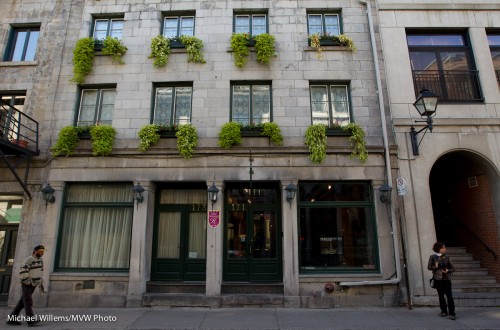
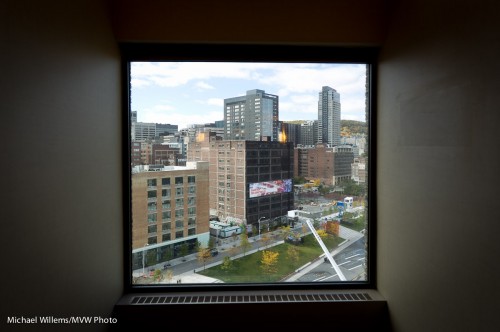
Using available framing:

Quartier Des Spectacles (Photo: Michael Willems)

Quartier Des Spectacles

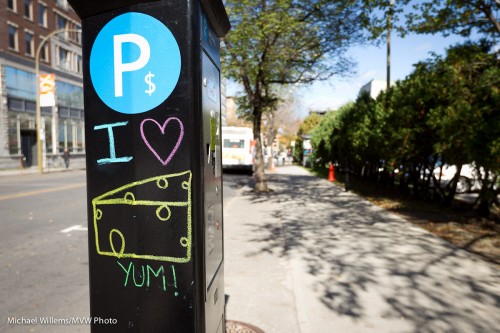
Emphasizing by using selective depth of field:

Yum!  (Photo: Michael Willems)

Yum!

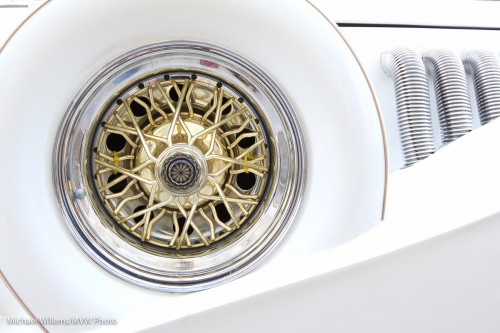
Using detail and simplifying by getting close:

Limo  (Photo: Michael Willems)

Limo

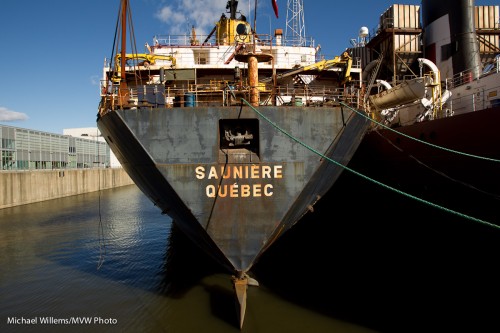
Using colour by exposing well:

Ship  (Photo: Michael Willems)

Ship

Showing people:

Snapping a snapper (Photo: Michael Willems)

Snapping a snapper

You have guessed which city this is, by now, perhaps ?

Depth of field in Macro

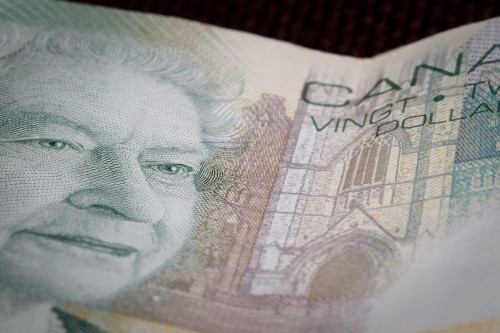
When shooting Macro pics, you often fight to get enough depth of field. Even f/16 might only get you this:

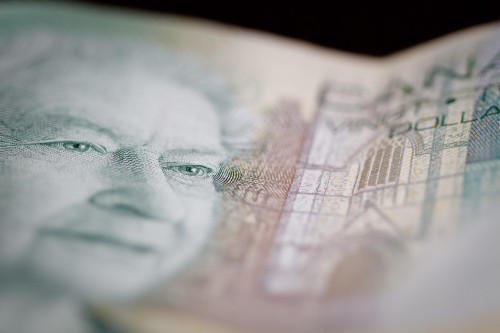
So why not forget that and play? Selective DOF can be very effective, as in here:

That was f/2.8 with the 100mm macro lens. Doesn’t that make Her Majesty’s eyes stand out nicely?

As in all these things, it is a matter of choosing the technique to suit the message.

Safe shots

Those of you who ever shoot events (indoors or outdoors, from weddings to parties, from sports to graduations) will be glad that I have developed a special course in “Event Photography”. You will see this marketed in various places soon (check out Henrys: link soon).

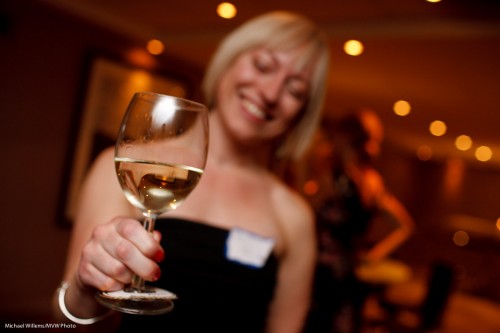
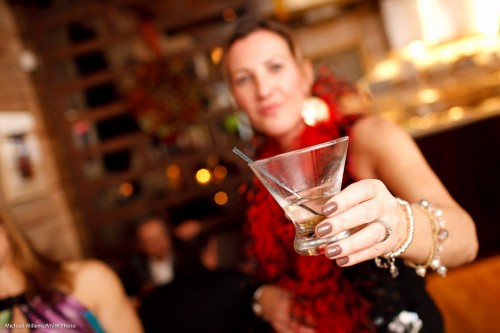
One quick tip from that course here: Develop your own “safe shots” and always include those.

Here is one of mine.

Cheers! (Safe party shot, photo Michael Willems)

Cheers! (Safe party shot, photo Michael Willems)

Cheers! (Safe party shot, photo Michael Willems)

Cheers! (Safe party shot, photo Michael Willems)

Cheers! (Safe party shot, photo Michael Willems)

Cheers! (Safe party shot, photo Michael Willems)

Why is that a cool shot?

  • It shows depth.
  • It blurs faces  -ladies especially love this.
  • It is fun and everyone lives that fun.

Develop your own, and always get that. There, you’re on your way to developing a style!

It’s all about viewpoint

One trick to make your images more interesting is to avoid shooting them from the “Uncle Fred” 5.5-feet-above-the-ground position.

I demonstrated this the other day to a group of students during a “Composition” class I taught at Henrys School of Imaging in Mississauga.

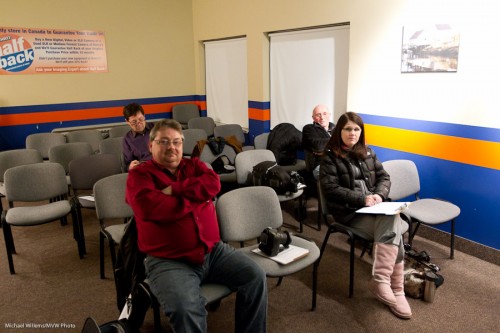
First, here’s an “Uncle Fred” snap:

Ouch. Brrrr…. bad composition, people in the middle, legs cut off: lots of room for improvement.

So let’s get on a chair:

Note how I also tilted the picture. Why? Well… mainly “to get it all in”. Never be afraid to do this: it helps you compose, but it can also often lead to better pictures, more interesting, more dynamic – and of course you can simplify, this way (get rid of stuff you do not want).

Another viewpoint, finally. This one is also much more interesting than just “from 5.5 ft above the ground”: in this case we get down low. A very different effect:

That one could benefit from a slight repositioning, but I shall explain tomorrow why I shot it the way I shot it.In any case – much better, no?

The first thing I do when I am to shoot a standard event (someone handing over a cheque, say, or cutting a ribbon) is to find a good viewpoint. Uncle Fred’s is not necessarily the one you want.

Your exercise for today: shoot a creative shot (of anything you like) from right-by-the-ground level.

Framed

In the series of “and yet another composition tip today”, I would like to talk for a moment about framing.

We do this often. Why? Why do we frame subjects?

In photos, we do it just like we do on walls, because it emphasizes, in other words draws attention to, your subject; makes it stand out. It’s just one of those things we seem to find visually pleasing.

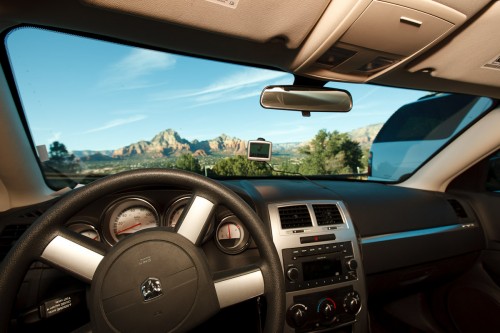
And you can frame in many ways. For example, use your car (and yes, to light up the inside, I used a speedlight here, bounced off my hand):

Sedona, AZ (Photo: Michael Willems)

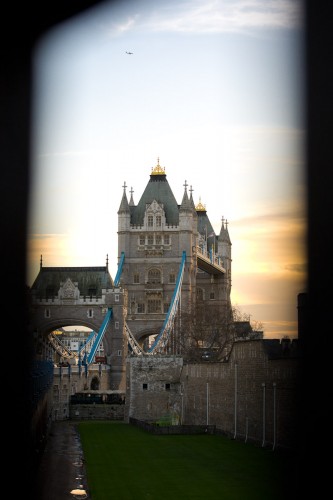
Or perhaps use an opening in a brick wall, as I did here in London:

Tower Bridge, London (Photo: Michael Willems)

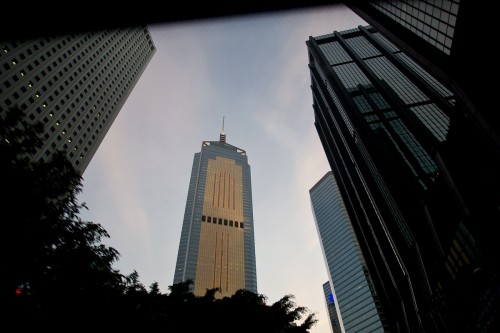
Or use buildings:

Hong Kong Skyscraper (Photo: Michael WIllems)

Use anything you like. The point is, when a frame presents itself, consider whether it might be the way that for this particular photo you want to draw attention to your subject. Is this frame relevant? Will it add to the story? If so, give it a go.

Negative space

Since I am still getting over my sinus cold, just a quick tip today:

When you shoot a subject and want to show it in isolation, use “negative space”.

Negative space has “no information” in it – it is not literally empty, but it serves no purpose other than to show off isolation, vastness, and to make the subject stand out against this; to show it in its context.

How often do you use this technique?

Low contrast – now what?

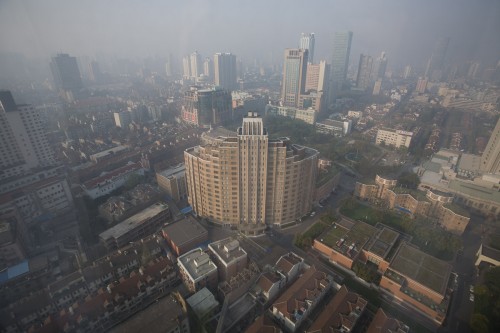
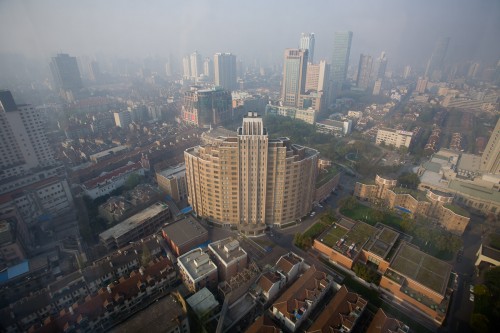
So you have a low-contrast, hazy image like this.

Shanghai Morning 1

Yup, it is a hazy morning in Shanghai. Now what?

You have several options.

  • Live with it. Haze is not always bad! Sometimes (“foggy mornings” come to mind) you want this sort of low contrast.
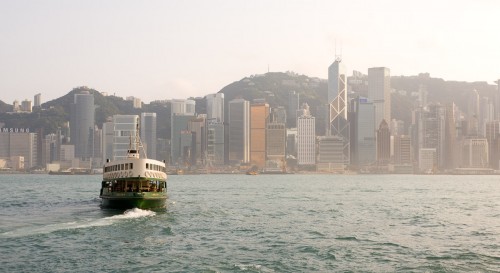
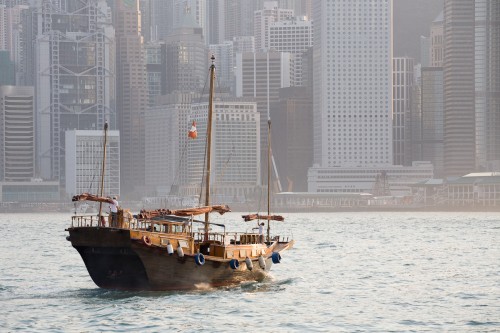
  • Put a sharp object in front. This is a very powerful technique: it makes the haze into a benefit, as in the boat image below.
  • Finish in post-production. In the last image below, I increased exposure until the histogram hit the right side of its box; then I pulled down “blacks” in Lightroom to make the blacks black – i.e. until the histogram hit the left. You can use “Levels” in Photoshop to achieve the same result.

Like this:

Hong Kong Harbour

Shanghai Morning 2

And.. you are shooting RAW, right?

Easy Portrait Tip

An easy portrait tip (or two) for you today.

Uncle Fred puts every subject dead in the centre. You, of course, will not do that, since it leads to an unbalanced image. You will use off-centre composition instead. In a portrait, you will put the centre point (the eyes) a third of the way from the top:

Able Assistant Matt

You will also:

  • Ensure there is a catchlight in the eyes.
  • Focus on those eyes.
  • In a formal portrait, use f/8 (or at least f/5.6 – f/11, in that range).
  • Light from one side, or straight on, but in any case from 45 degrees above.

Like I said, simple – but very effective. Try!