
16mm, f/2.8, 1/20th sec, 1250 ISO, 1D Mark IV
From yesterday’s “Travel” class.
16mm, f/2.8, 1/20th sec, 1250 ISO, 1D Mark IV
From yesterday’s “Travel” class.
One tip that may help you make better pictures: crop in the camera.
We always look at the image in the centre (or roughly in the centre) on our viewfinder. But next time you take a picture, look at the edges. Ask yourself: “is everything I see on the edges really necessary?”and remove everything that is not necessary, by:
For example, like this:

Do this simple thing and your pictures will be simpler, and better.
A few tips, on and off over the next few days, about shooting events. Events such as parties, clubs, openings: lots of people and they are camera aware.
Today: What to shoot. I recommend that you shoot “all three views”:

(Can you see that I bounced the flash off the ceiling behind me?)
If you shoot plenty of all three views, you will have plenty of material for a great album. And people remember the details!
A reminder of how to make your photos three-dimensional.

You do this by:
In the photo of the Israeli tank, I used a 16mm lens on a full frame camera – this would be a 10mm lens on your crop factor camera.
The “close-far” effect is due to you being close to one thing and far from others. The wide lens enables you to compose like that.
So – get wide – get close!
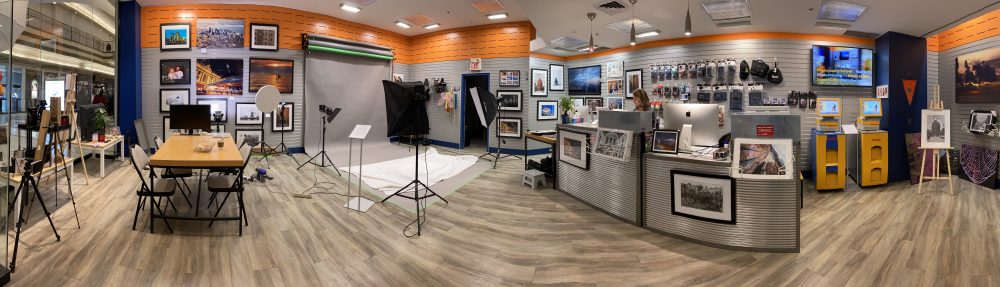
I took this “grab-shot” at the Kodiak Gallery the other day with a Canon 7D and 50mm f/1.4 lens:

Canon 7D, 50mm f/1.4 at f/1.4, 1/250th sec, 800 ISO
This shows that with the right lens, you do not need flash. You also do not need a macro lens every time. You can use what you have, if you keep your eyes open.
Also note:
Simple. Just keep your eyes open.
When you shoot architecture and you want a straight photo, with no distortion, like this:

…then you need to do the following:
You will now get an “undistorted” picture where the background is enlarged and drawn in to the subject.
No, not the chair – what I mean is, I tilted this to get the chair in:

Dutch Angle, they call it. Hollywood term, mispronunciation of “Deutsch” – i.e. German.
As I have mentioned before, I tend to use angles for four different reasons:
Don’t discount that last reason. People will assume I was being creative, but often I just want to fit it in. And -depending, of course, on the subject- that suits me fine. I once heard Peter Power, one of Canada’s premier photojournalists, say the same at a workshop I took. I agreed then, and I still agree!
And sometimes you til because you can’t stand up straight:

Just kidding. Really.
Tip: always look for, and when you see them consider using, curves.
We like curves. While straight lines take us (and in the case of photos, our eyes) like a freeway to our destination, curves are more like a gentle river, or a winding mountain road, where it’s more about the trip than about getting there.
Imagine putting a bride on these stairs: wouldn’t that look good?

Today, a few quick portrait pointers.
Here’s a picture from a very recent portrait shoot:

Why did I shoot this the way I did? What went into the decisions? I thought it might be good to share some of my thoughts.
Every shoot is different, but here you see some of the decisions that can go into a portrait.
What lens to put on your camera?
Sometimes it is difficult to decide. But sometimes it’s easy.
Social events are easy. When shooting such events, where there are people socializing, eating, drinking, I recommend a wide angle lens between at least 24 and 35mm “35mm equivalent” (greater range is ok of course).
Meaning that if you have a full frame camera, use a lens in that range. If, as is more likely, you have a crop camera like a Nikon D5000 or Canon Digital Rebel, you use a lens 50-60% smaller to give the same effect, i.e. a lens in the 16-24 range. Like a 17-40.
At yesterday night’s event with Wendel Clark, ex Leafs captain (below) I used a 16-35 wide angle zoom on my 1.3 crop camera (I used the new Canon 1D Mk IV).

I do this a lot, and so can you.

Remember to get close to people.

Another option is to use not a zoom, but a wide angle prime lens. On my full frame camera I use a 35mm f/1.4 lens quite often for these events.
The pictures that the three above are part of will be on Oakville.com in the next few days.