Trick

You know why I want people, and especially my students, to know all about flash? Because you never know when it will be needed.

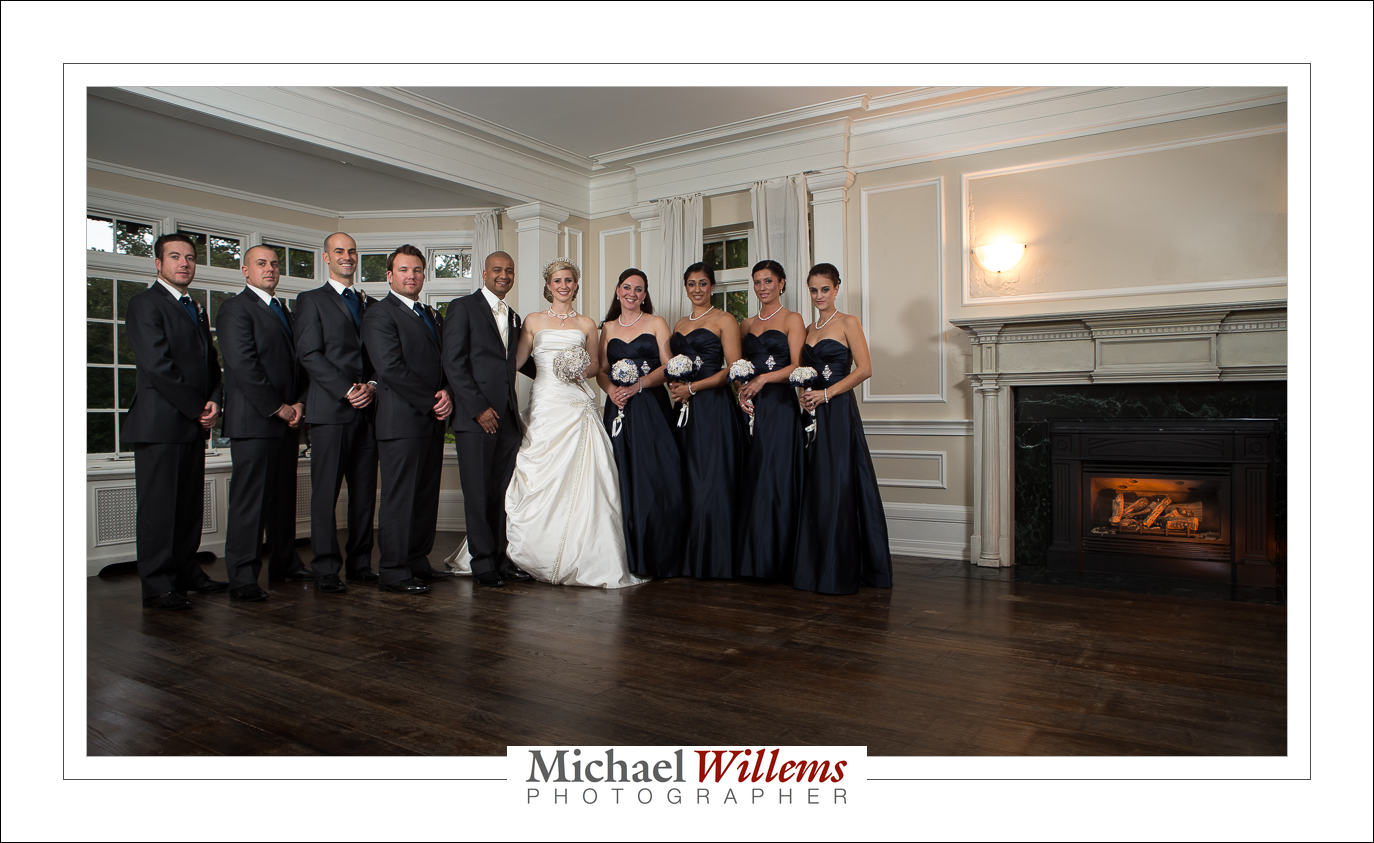
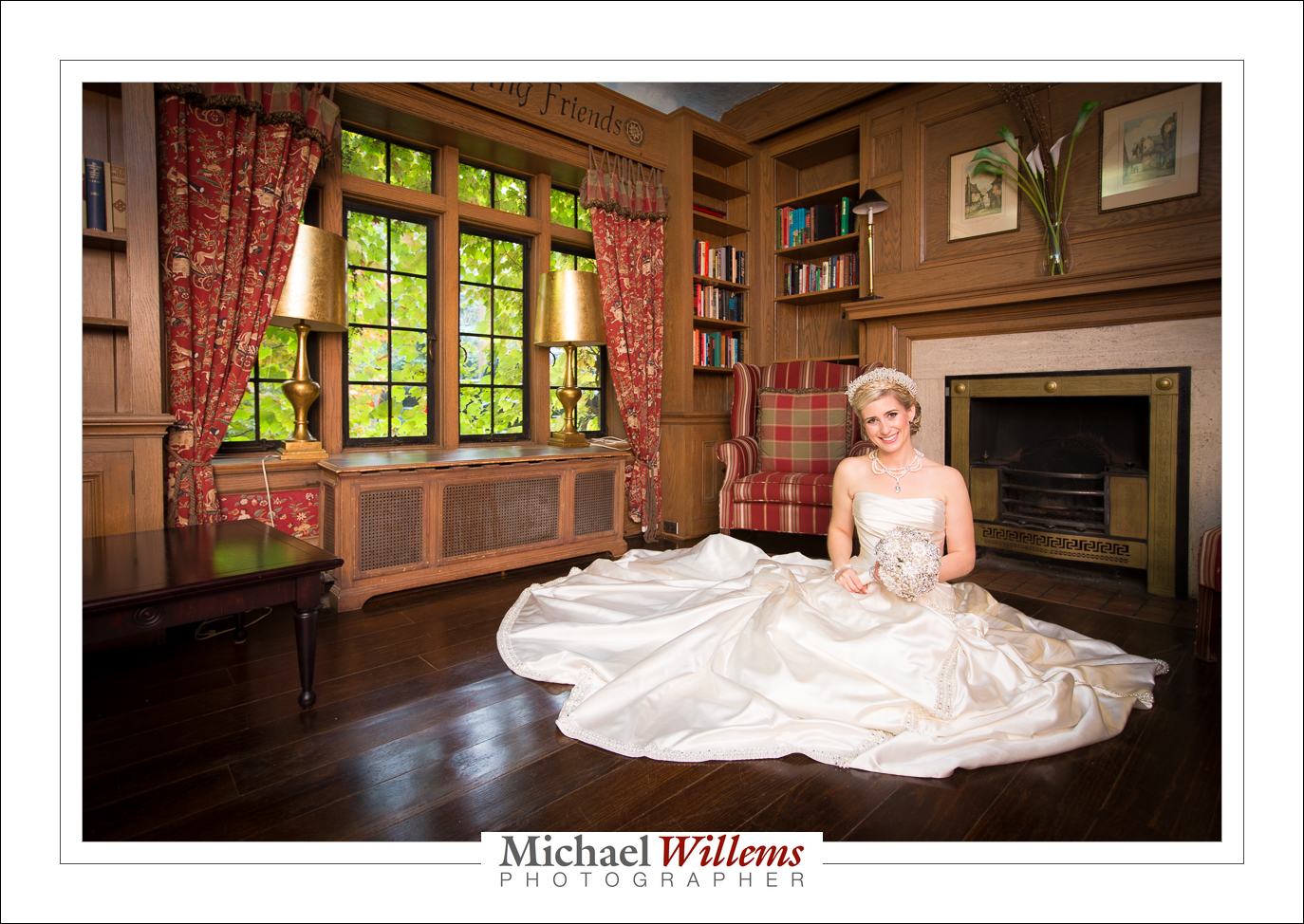
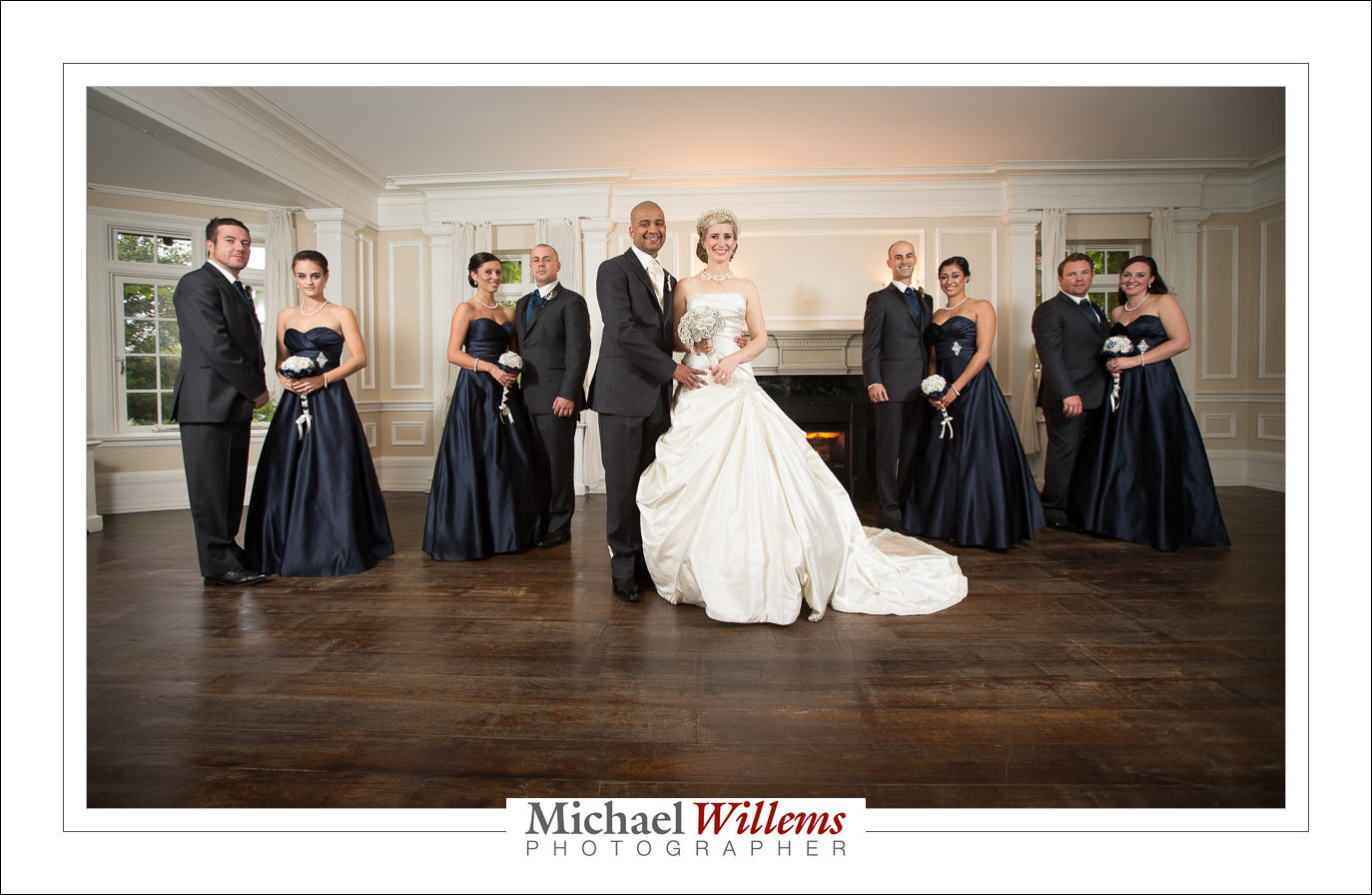
Take this shot, from the wonderful wedding of Stephanie and David on Saturday:

That nice fire in the fireplace, with its warm glow? The bride wanted the fireplace. And so we turned it on, of course.

Yeah right. There was no turning on – not possible. So that is a 430EX speedlight fitted with a snoot and a rust-colored gel (both Honl photo).

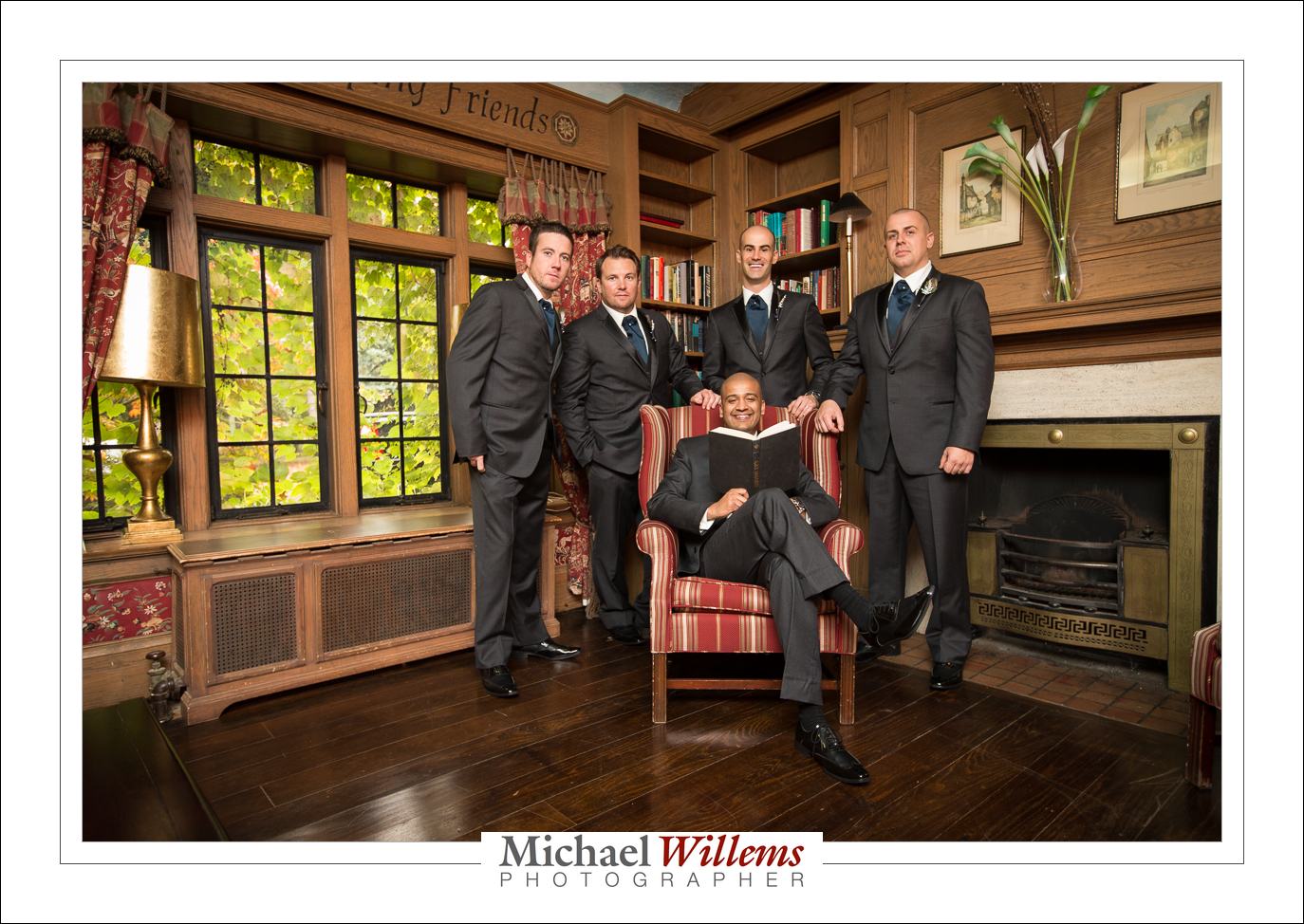
Same here:

The moral of the story: flash is not always used simply “to light a dark room”. In my world, the more common world is to do something creative. Take charge of the light, including its location and colour.


A wedding shoot

At Saturday’s wedding of Stephanie and David, I shot mainly with the wide angle lens – in fact all but two or three shots were done with the 16-35 on a full frame body. Why? Because of the environment I am in.

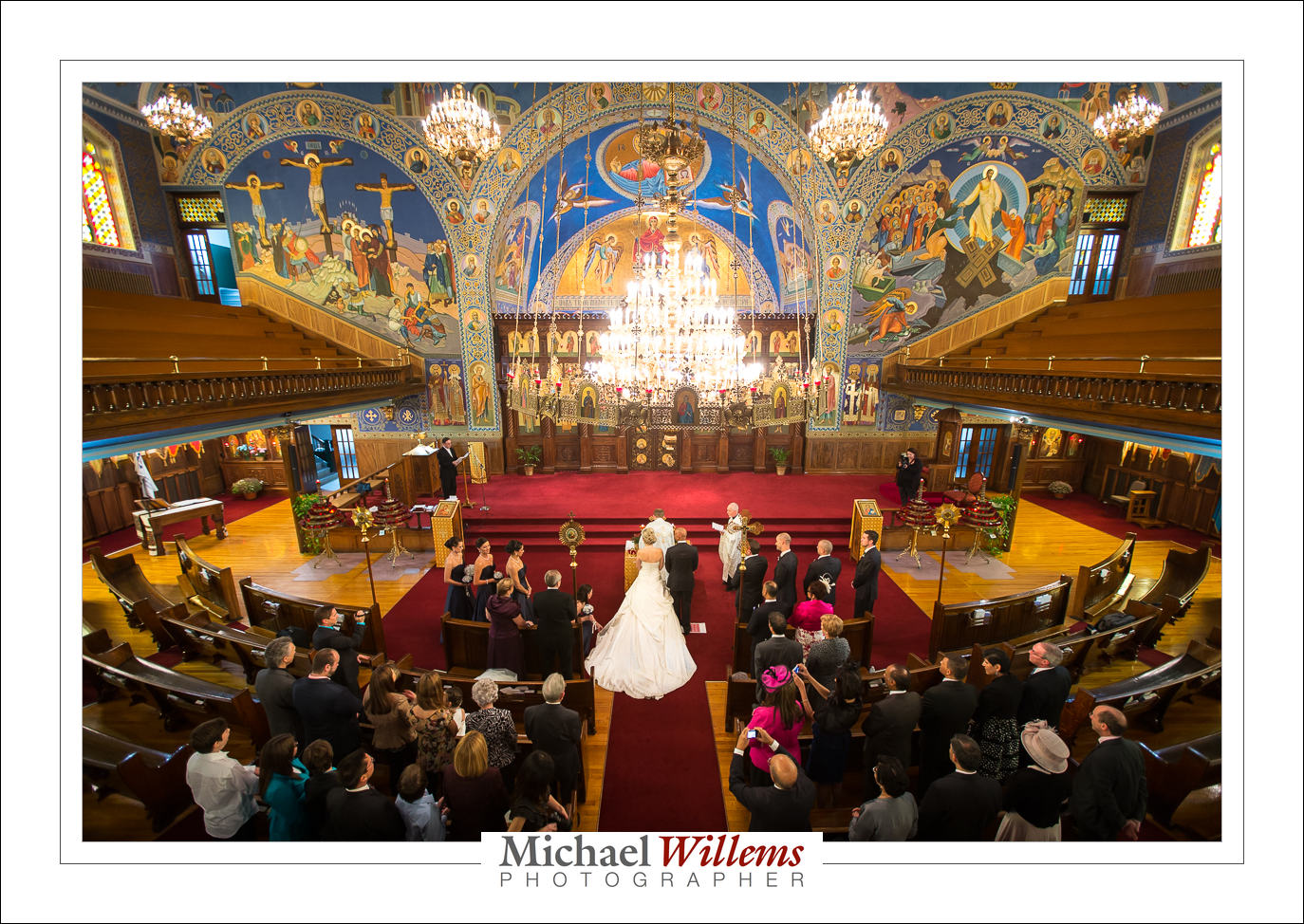
First, the Ukrainian church – the same church, incidentally, where my big fat Greek wedding was shot – and a beautiful church it was:

Why would that make me shoot wide?

First, it calls for wide to “get it all in”. And second, I want wide to get that wonderful sense of the beautiful church. But also, because of technical reasons: I can shoot at f/2.8 and still get great depth of field. With a longer lens I would have to shoot at f/4 or f/5.6 or even more, and that means slower shutter speeds or higher ISOs. And my shutter was already at 1/30th second, and my ISO was already at 1600.

Why available light? Well, the flash would not do much in a wide shot like that, but even if not: I do not want to disrupt a solemn occasion with constant flash-flash-flashing. The wedding is not there for me: I am merely documenting it. This is one of the times I use available light only” let no-one say that The Speedlighter doesn’t know available light.

But there’s a limit! Here, later the same afternoon, I am using a little bounced flash:

Here, I also used bounced flash, but still at high ISO to get good shutter speeds:

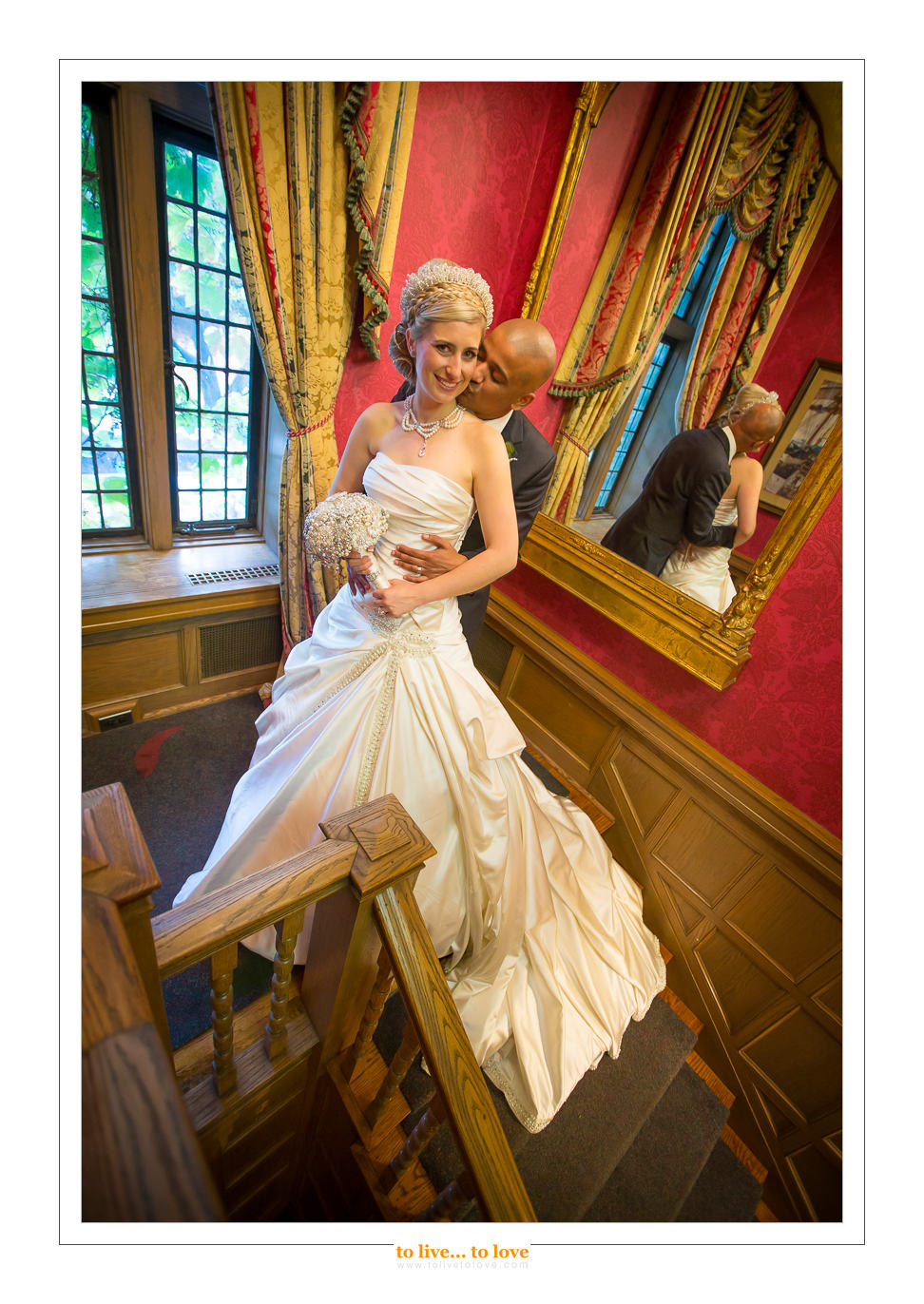
And one more, of the radiant bride:

All done with the wide lens, the entire wedding. Spectacular shots, great depth of field at low aperture numbers, and slow shutter speeds without camera shale: what is not to like? And yet, the Uncle Fred shooters I saw all day (and there were many!) all had ordinary lenses, even long lenses like the 70-200. Good luck with that lens in such dark environments!


Reader question

Time for a reader question. Today, one of my readers asks: “What lens should I use to shoot nudes?”

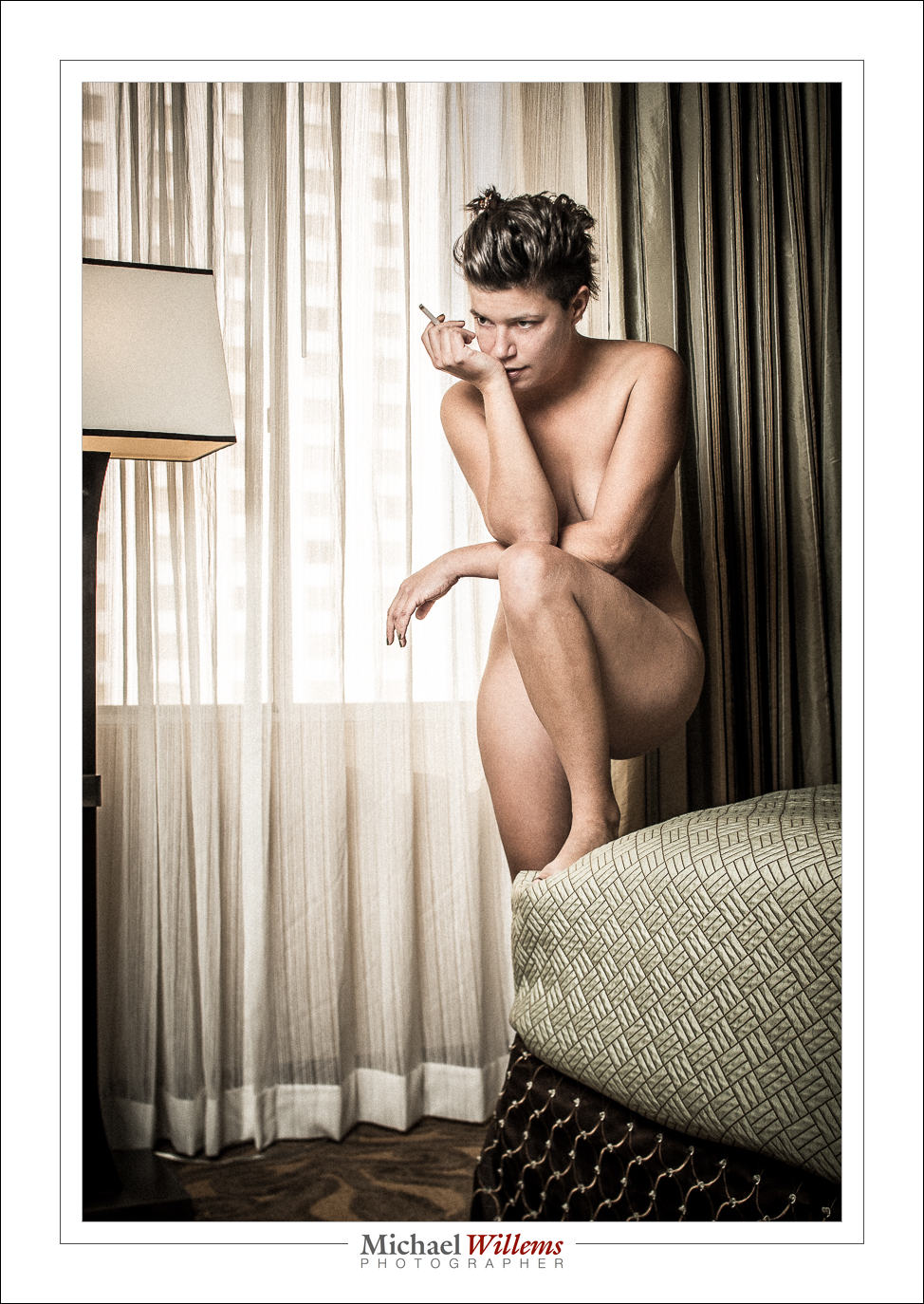
A very difficult question to answer satisfactorily, because “it depends”. How large is your space? What are you shooting, what style? And it it detail? Or headshots? Well, if they are nude perhaps a little more than headshots, but presumably not always full body shots like this:

That, by the way, was shot with a 45mm tilt-shift lens.

When I get a question like this, I try to do some objective analysis. So just now I looked at my statistics, which is very easy to do in Lightroom, and I see the following. Out of many thousands of images, I have used the following lenses:

  1. 100 Macro f/2.8: 0% of shots (just 5 shots out of thousands)
  2. Tilt-Shift f/2.8 45:  1%
  3. 70-200 f/2.8:  1%
  4. 35mm f/1.4:  3%
  5. 16-35 f/2.8:  5%
  6. 50mm f/1.2 : 9%
  7. 24-70 f/2.8: 82%

So as you see, I probably shoot in small spaces (yes, usually); I do not often need to shoot in very low light (correct; I use flash); and I often need the convenience of a zoom lens. The 24-70 fast zoom, therefore, is my top used lens. It’s not that I prefer it, I prefer primes; but when shooting outside a controlled area like a studio, a zoom is the easiest option, often enough.

But your circumstances may differ, so I cannot say what you should use. It’s entirely up to you: as you see, you can use anything. Just use it well. Do not, for instance, use a 16mm lens when doing close-ups, unless you want distorted body parts. And do not shoot at f/1.4 if you want the entire person to be in focus. And do not use a 200mm lens in a tiny room. And so on.

You’ll see, it doesn’t really matter. Whatever you feel like using, and the “normal” portrait recommendations apply.

That’s a wrap

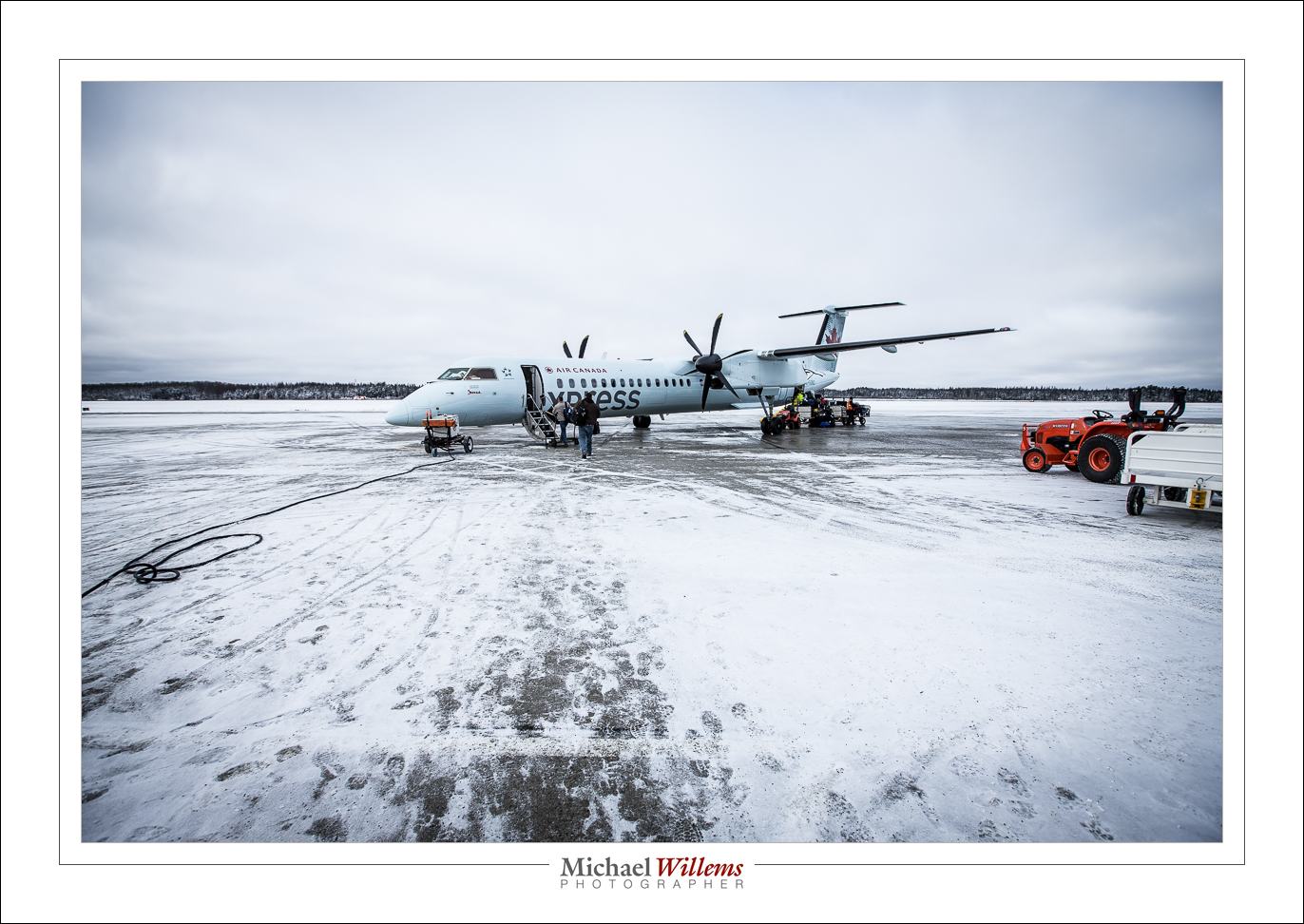
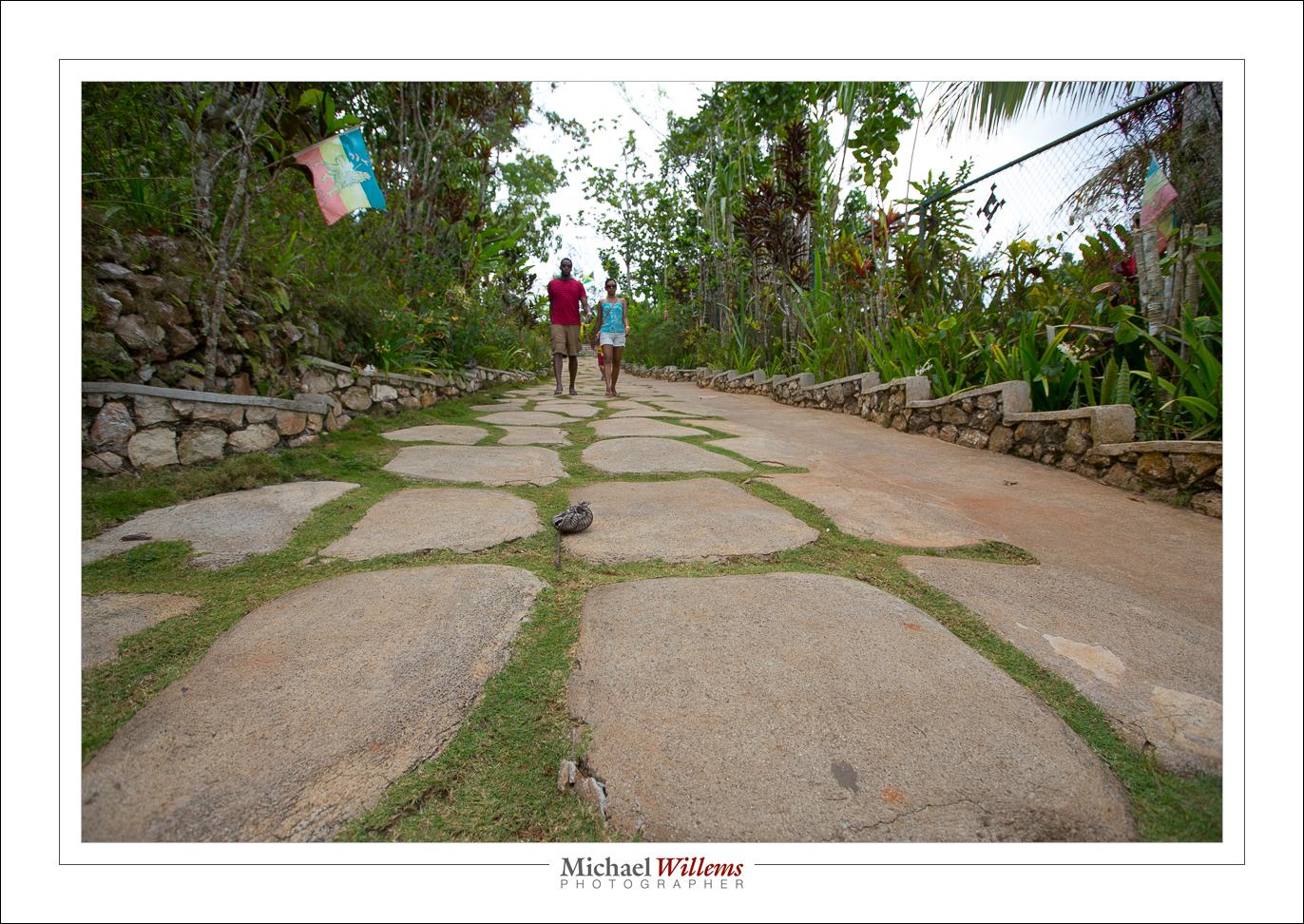
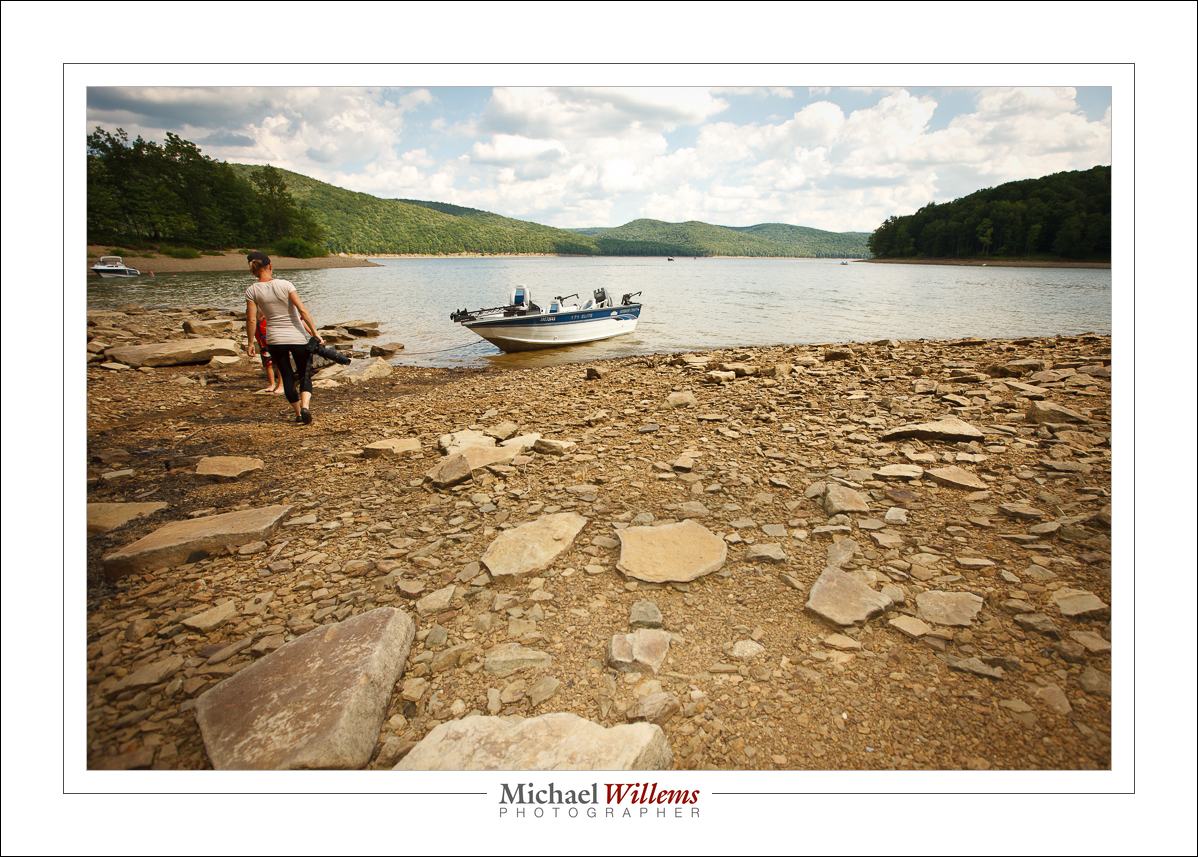
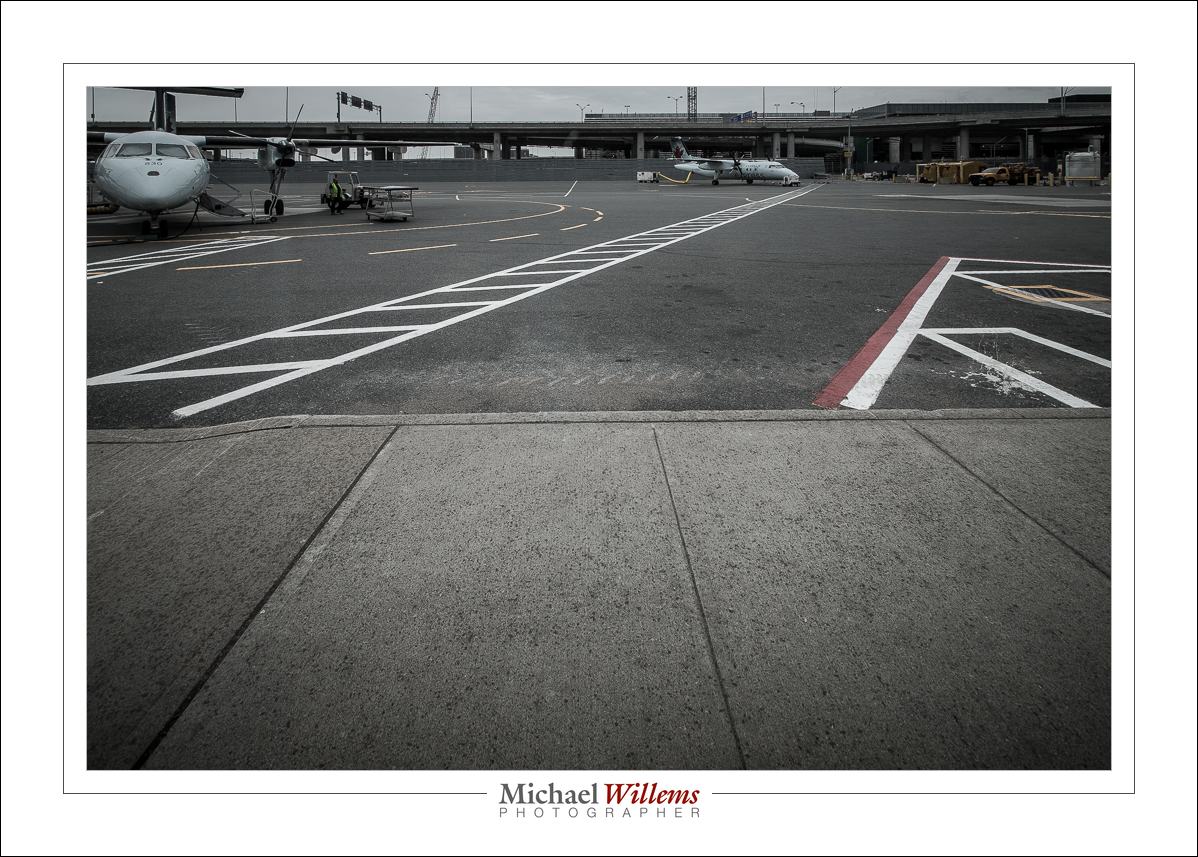
No no, no fear, I am not stopping this blog. I am, instead, talking about the “wraparound” effect a wide angle lens can give you. Wide, like 10mm on a crop camera or 16mm on a full-frame camera. That angle looks like this (Timmins Airport, the Bob Marley mausoleum in Jamaica, and Philipsburg in St Maarten, respectively):

As you see, the picture seems to wrap around you, giving an effect of “being there” and of perspective and depth. That’s why so much photojournalism, and so many National Geographic images, are made this way.

But to really get this effect, you need to have a few things in place.

  • You need a wide lens, zoomed out (10mm/16mm as said);
  • You need to be close to something, like the ground in this case;
  • And also – and this took me years to figure out – this effect depends to a large extent on lines converging. That means you need some kind of pattern or texture or parallel lines in the close-by area so you see the lines converging.

The stones here seem to wrap around; without stones, no wrapping:

And the lines are clearly converging, leading to the same – and again, without lines, no wrapping:

So if you like that look, now you know how to get it.

___

Oakville “Flash” Courses 9/10 November: EDIT: Saturday Nov 9 is AVAILABLE, but Sunday Nov 10 is FULL. I am limiting the number of students in each class to no more than 4-5, so do get there first.  See the syllabus here, and book via the link at the bottom of that page – indicate your desired date!


Baker’s Dozen Lens Tips

Oh, I get that question so often: “what lens should I get”?

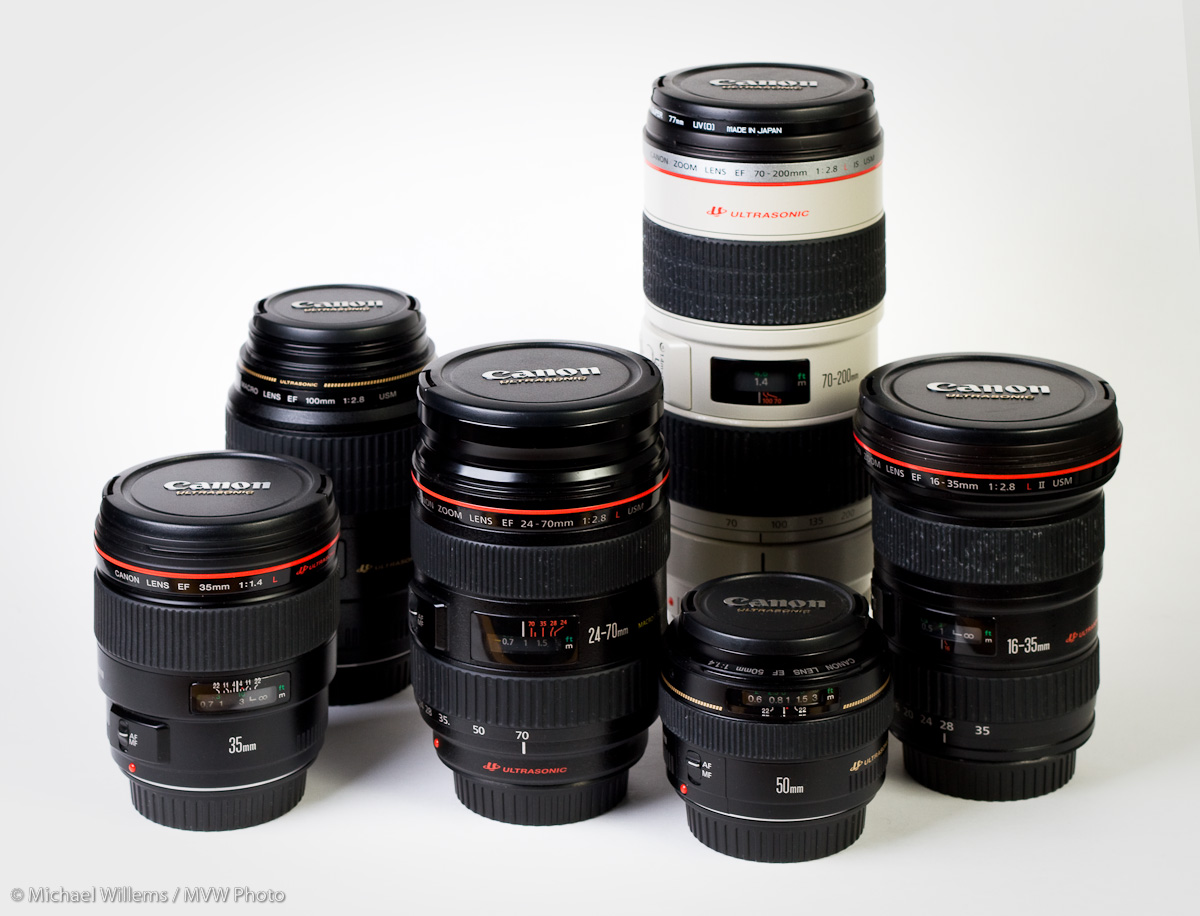
Michael Willems's Lenses

A Few Of Michael's Lenses

And of course that is a difficult question to answer, because there is no “should”. It depends. But in general, these remarks may help:

Michael’s Baker’s Dozen Lens Tips:

  1. The lens makes the picture more than the camera does
  2. Faster is better. The lower the lowest “f-number”, the better.
  3. Zoom lenses are more convenient, but prime (fixed) lenses are faster, better, and lead to more consistent photography.
  4. Consumer zooms cannot go to the same lowest f-number when zoomed in and out. Pro lenses, on the other hand, can go to the same lowest number whether they are zoomed in or out.
  5. IS/VR, stabilization, is a great feature: get it if you can, especially on long lenses. It will allow you to shoot 1-3 stops slower without camera shake.
  6. The very wide angle lens is underused (10-20mm range on a crop camera, 16-35mm on a full-frame). This lens is especially great in travel and journalism
  7. A good lens keeps its value for many years. (The corollary: no great deals on used lenses).
  8. Always use a lens hood (good lenses come with one).
  9. Manufacturer lenses are typically better than third-party lenses, but not always. Third party lenses do offer better warranties.
  10. The greater the range of a zoom lens, the more it is a compromise.
  11. Specialty lenses (fish-eyes, tilt-shift) are great fun but you will probably not use them all that much (ymmv). A macro lens, however, is also a great portrait lens, and you will probably use it regularly.
  12. Do try the lenses you have in mind. You can order into the store, or you can rent before you buy!
  13. Full-frame lenses (eg Canon EF) can be used on any camera of the brand they are made for. Crop lenses (eg EF-S, DX) are cheaper, but can usually only be used on crop cameras.

There’s more, but not much, so this should get you started!


All set

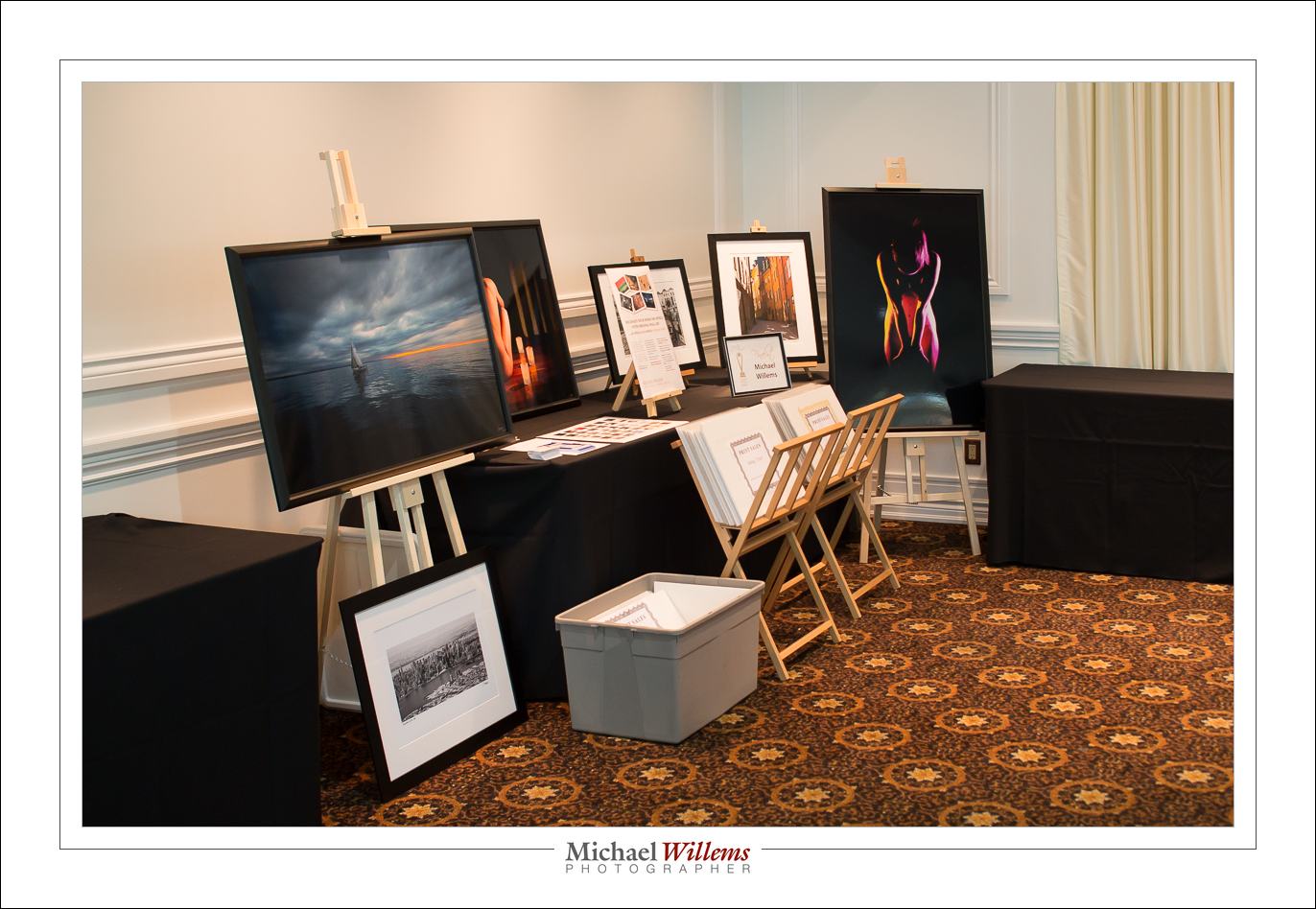
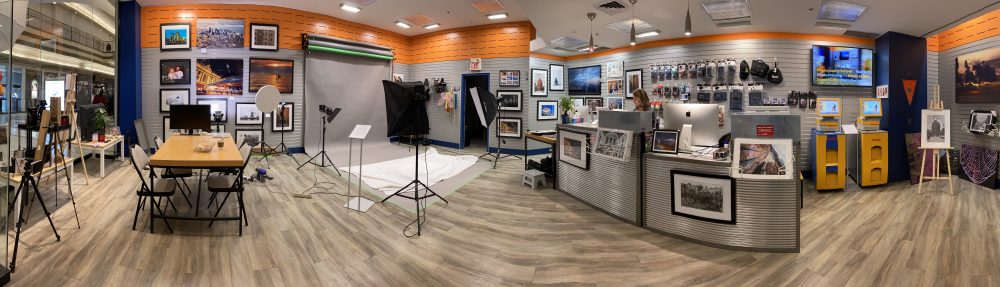
Okay… I am all set for tonight’s Art Council event. A grand ballroom full of people, and a number of artists (namely, a few members and the finalists, me included) set up to display some work. Here’s mine:

On a different note: a reader asked me a few questions about macro lenses, and I thought I might repeat them here:

Macro lenses come in a variety of lengths from the 45mm range to the 200mm range. Ken Rockwell (The more time I spend in your class, the lower my opinion of Ken Rockwell… although he has some reasonable resources on Nikon equipment) is of the opinion that anything below about the 100mm range is more or less useless.  His argument being that you don’t really want to get close to your subject.
… Forgive me, but isn’t a macro lens designed for the express purpose of getting close?  May as well just use a normal lens if you don’t want to get close, yes?

Good question. Well – first, a macro lens isn’t really about “how close you get”, but it is more about “how large the object will appear on your sensor”. If I could get an object to look huge from a ten meter distance, that would suit me fine, too. Well, that is exaggerated, but you get my point.

A true macro lens has a ratio of 1:1 (or conceivably more). Meaning that at its “closest” extreme, the object appears the same size on your sensor as it is in life. A 2cm long bee would throw an image of 2cm onto your sensor. (A “macro featured zoom”” typically has a 1:4 ratio: it is not a true zoom. The 2cm bee would be a 0.5cm image on your sensor.

The reader continues:

Forget Mr. Rockwell for a moment. Let me approach my question another way.
Amongst my other hobbies,  I am an ‘N’ scale model railroader.  If this means nothing, I can clarify a little bit by saying that in ‘N’ scale  1/16th of an inch is roughly equivalent to 1 foot in real life.  A locomotive that’s 80ft long in real life, is 5″ long in ‘N’ scale.
Lets say I want to take a picture of my layout, as if it were “real life”.  I want to get lots of depth in the picture… lets say a near head-on shot looking down the side of the train as it rolls around a curve… Would I not then want a wide angle macro lens? So that I could focus as if I were only a 1/2″ (6ft) tall man with a camera that’s only 1/32″ (6in) square standing 5″ (80ft) from the train?

Yes. The length of the lens you like is determined by all sorts of factors. Do you want to be close? You probably do. But someone shooting bees doesn’t, for fear of disturbing said bee (or of getting stung). Also, keep in mind that a 60mm macro, used on a crop camera, would be like a 100mm macro. And keep in mind that a wide lens will have greater depth of field (depending on its position). I think saying “short macro lenses are useless” is not a very nuanced statement.

And in your case, I think you are probably right about your needing a wide macro lens. But I would have to see your setup. You might also want to (or even need to) consider a tilt-shift lens, at least for the larger “overview”-type shots. Tilt-shift lenses (see previous post) can shift the focal plane, giving you great depth of field at large apertures.

As said, I would have to see. One good thing you can do is rent a lens – or perhaps a few lenses – and see what you get. I fear you will end up with several lenses, since an “I am there” shot is very different from an overview shot.

One more thing. Shoot at small apertures, meaning slow shots, so you use a tripod. If you want the train to be zooming through the picture, slow it down so it looks like it’s zooming in a 6 second exposure, while in fact it was crawling.


Military Technology

Once again, military technology is at the basis of what we do with technology. It is incredible what humans will do in order to more efficiently fight other humans.

In the early 20th century an Austrian army captain named Scheimpflug worked out how to handle perspective in aerial photographs (this would come in handy in WWI, no doubt). Hauptmann Scheimpflug is famous for explaining what we know as the Scheimpflug principle. If you like math, look it up on Wikipedia. I warn you, it took me a while to get my head around all those formulas.

What do they do for us? They tell us how to use tilt-shift lenses (or view cameras) to change the plane of focus.

And I will give you a simplified version of its implications here today (yes, it’s simplified: no need to start pointing that out). I am talking about tilting here today, not about shifting. But even simplified, this is an advanced article that assumes you already know at least the basics of what tilt-shift lenses do.

I wrote this because I usually see people with tilt-shift lenses just wildly change every adjustment randomly: and that is not at all a way to guarantee results. Knowing stuff is always better.

WHAT TILT-SHIFT LENSES CAN DO

A tilt-shift lens (its tilting, specifically) allows you to shift the plane of focus so that you can make sharp not “stuff parallel to the sensor” (like the wall in front of you), but “stuff at an angle to the sensor” (like the floor below you).

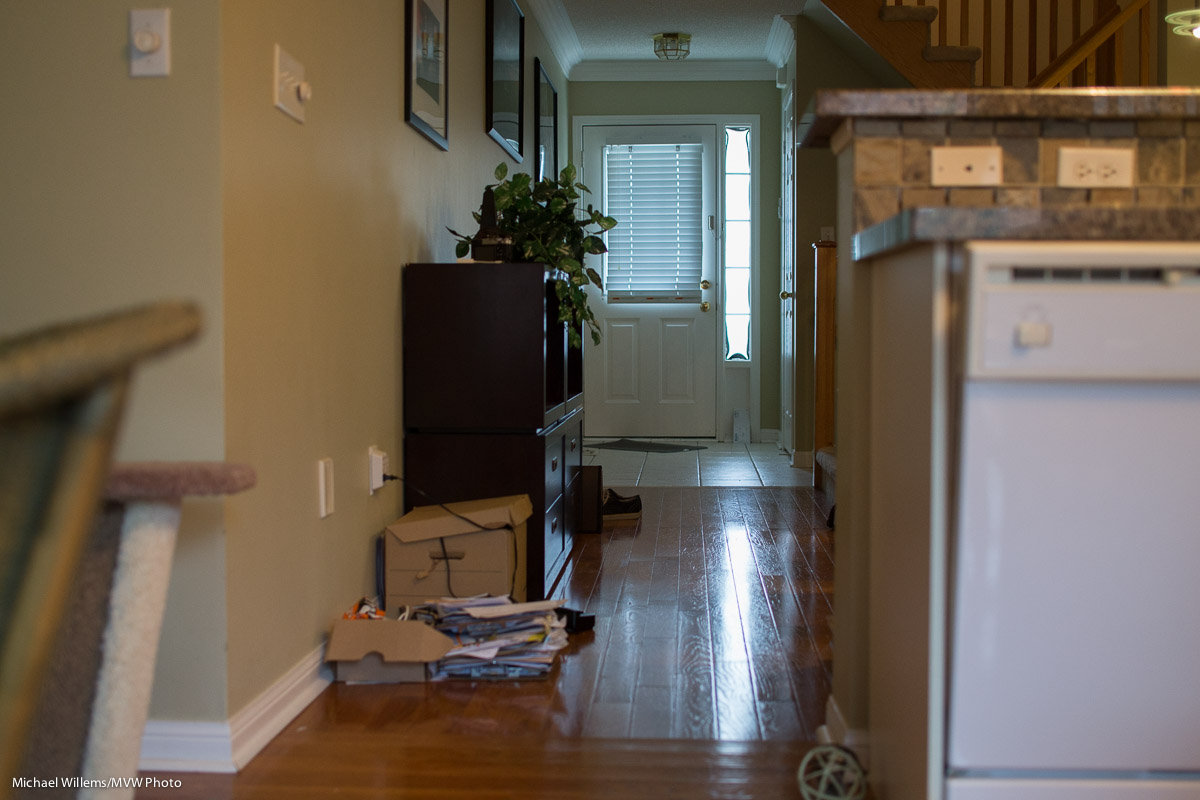
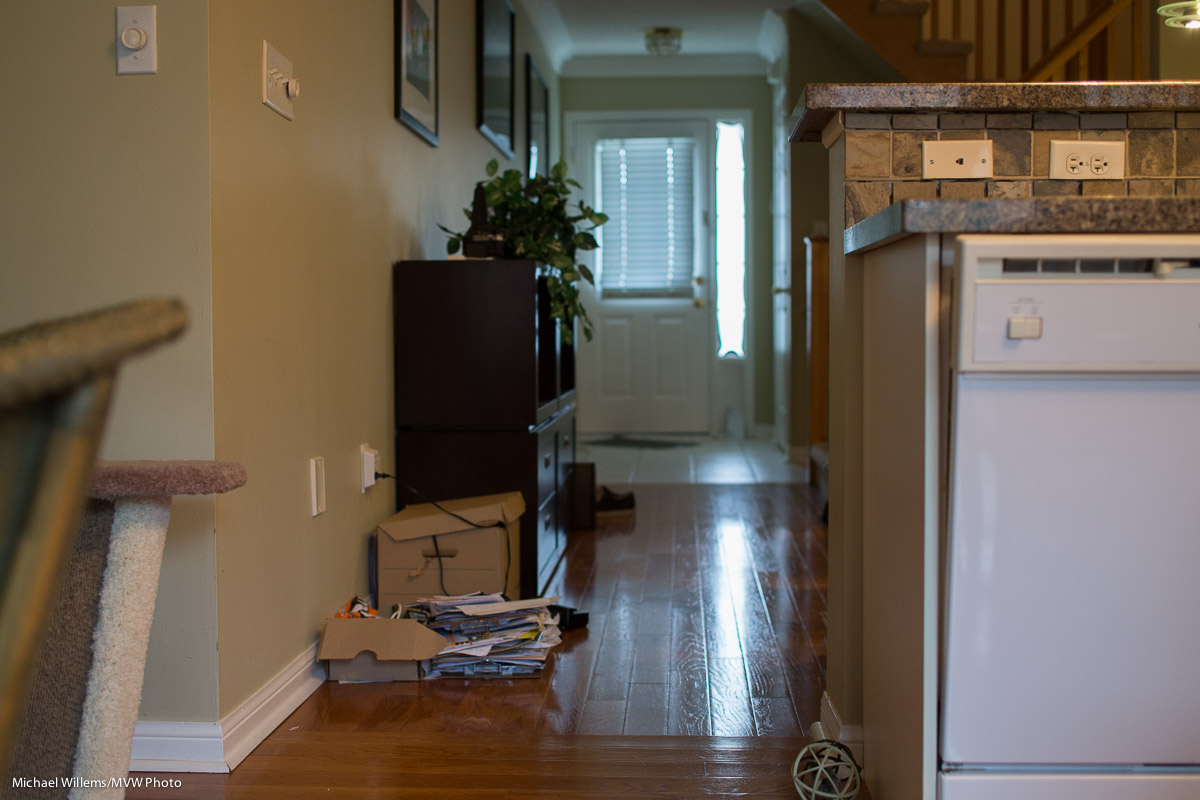
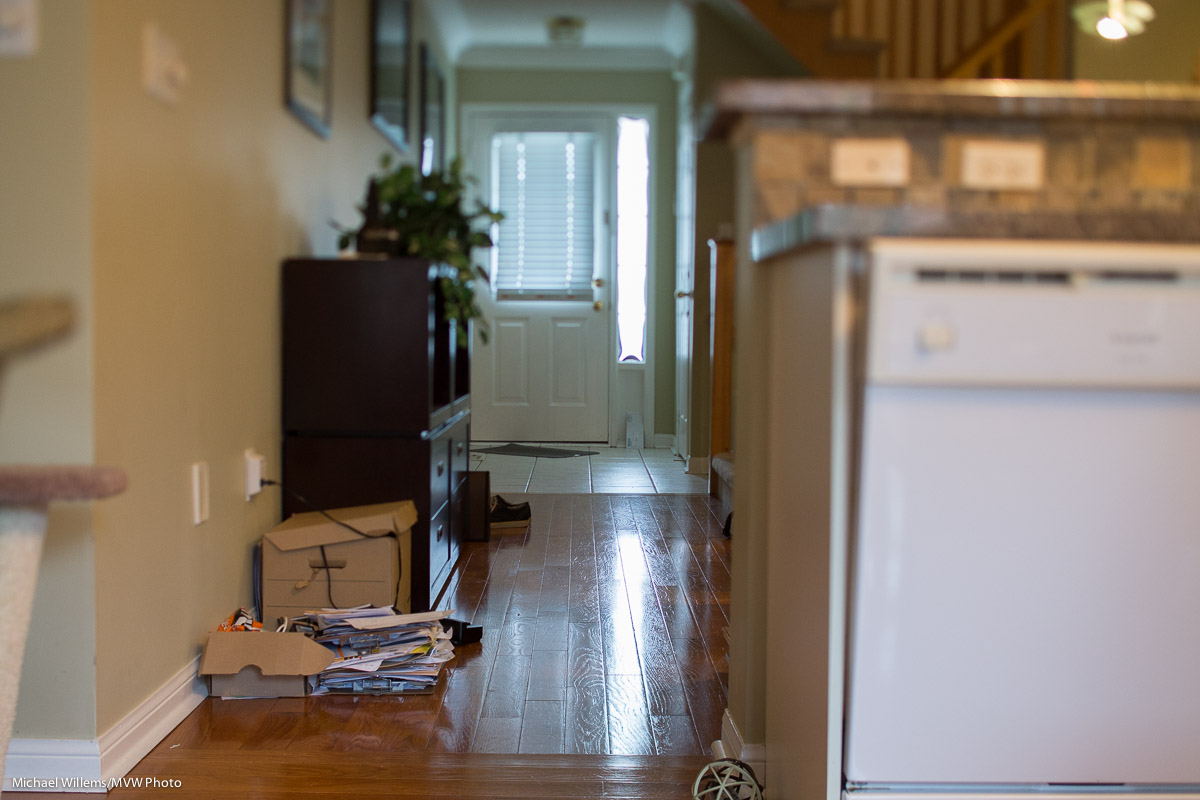
Consider this, the normal situation. With my 45mm lens set to f/2.8, I focus on the door, so it is in focus (but the stuff close to me is not):
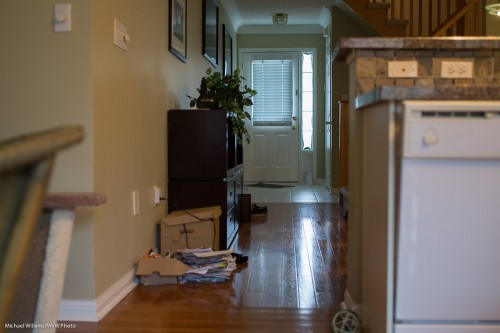
Or I focus on the stuff closest to me, so it is sharp (but the door is not):
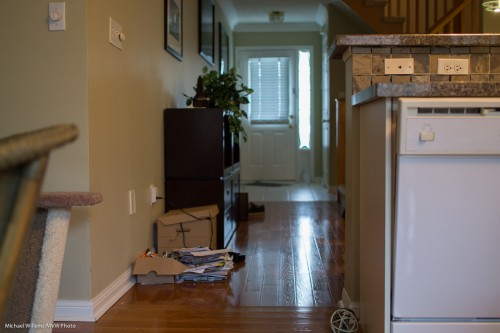
And if I want both in focus, well, I would have to go to a very small aperture (maybe f/16 or even smaller) to get them both sharp. Or to a wider angle lens, or I would have to move way back. None of which may be practical, or even possible.

Enter the tilt-shift lens. If I…

  • tilt the lens down by the the right angle; and
  • hold my camera at the right angle; and
  • am at the right distance from the floor; and
  • focus at the right distance…

(I told you this was complex), then I can do anything I like. Like this:
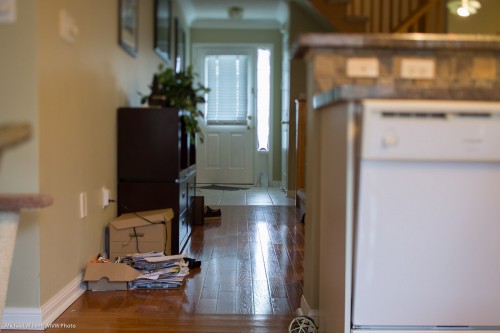
The floor is in focus, from close to far. And yet I am still just at f/2.8!

So far, so good. The question is: once you have a tilt-shift lens, how do you focus it where you want? With the number of variables I just mentioned, there’s just about infinite possibilities, and very few of those actually work for you.

LET’S SIMPLIFY!

I like simplifying. So let’s start with taking variables out. Let’s hold the camera parallel to the floor (i.e. aiming straight ahead, not up or down) and set the focus to infinity. Then the focal plane (“where it’s sharp”) will be perpendicular to the sensor, and since we are holding the camera straight, that means it will be the floor – provided we get the height of the camera above the floor and the angle of tilt down right. Just two things!

And the relationship between them is given by a simple relationship:

J = f/sin θ

Where:

  • J is the distance to the focal plane (“the floor”)
  • f is the focal length of the lens (45mm in my case)
  • θ (theta) is the angle at which you tilt the lens down (down, because the floor is below you).

My 45mm lens can shift down up to 8 degrees.  So the relationship between angle and “how high you have to be above the floor if you want the floor to be in focus” is:

45mm T/S LENS

TILT ANGLE (deg) – DISTANCE (mm)

  • 1°   2,578   (=2.57m)
  • 2°   1,289   (=1.29m)
  • 3°   860   (=86cm)
  • 4°   645   (=65cm)
  • 5°   516   (=52cm)
  • 6°   431   (=43cm)
  • 7°   369   (=37cm)
  • 8°   323  (=32cm)

Remember, this is with the camera pointed straight ahead, and the focus set to infinity. (Why this is so is easily derived from the formulas in the Wikipedia articles and basic knowledge, but I will spare you the math, except to mention that that the tangent of 90 degrees is infinity).

So in my last image, I was about 85cm above the floor, with the lens angled down by 3 degrees. Bingo.

(A tilt-shift pens is hard to adjust very finely: the adjustments are very precise. Patience is needed.)

An alternate way to use this simple rule is to start with what you want. I.e. “if I am x distance away from the floor (and pointing straight ahead with my focus set to infinity), what should my angle be?)

The formula is simply the same as above, so it becomes:

θ = sin-1 (f/J)

So if I want my camera to be, say, 1.7m above the ground, I would have to angle down by sin-1 (a.k.a. arcsin) (45/1700), which my calculator says is 1.52 degrees. Yes, a scientific calculator is handy. Or you could work these out once and carry a little table with you, like this:

45mm T/S lens

DISTANCE (m) – TILT ANGLE (deg)

  • 5m   0.5°
  • 4m   0.7°
  • 3m   0.9°
  • 2m   1.3°
  • 1.5m   1.7°
  • 1m   2.6°
  • 0.5m   5.2°

NOW WE GET A LITTLE MORE COMPLEX

Now let’s let go of the assumptions, namely that you focus on infinity and point straight ahead.

When you alter the focus setting of your lens (i.e. you do not focus on infinity), the focal plane swings up and down. It still starts below your camera at a distance given by the formula at the top, but now it is not parallel to the horizon. As you focus closer, it swings up (or you swing the camera down, whichever you prefer):

Scheimpflug Intersection (Source: Wikimedia)

By how much? I.e. what focus setting will give you what angle?

Aha, glad you asked. Another formula!

From Wikipedia:

ψ = tan-1 ( (u’/f) sin θ)

Where:

  • ψ (psi) = the angle that the focal plane angles up by;
  • u’ = the distance along the line of sight from the centre of the lens to the PoF (i.e. the distance to the focal plane; i.e. the focus setting, since you will be focusing on your plane of focus);
  • f = your lens’s focal length;
  • θ = the angle you have tilted the lens down by.

So that means that while at infinity focus the plane is perpendicular to the sensor, as you focus closer, the plane tilts up.

IN PRACTICE

So now.. knowing all this, in practice, this is what you would do if you want a particular focal plane to be sharp:

  1. Determine how far away from the intended focal plane you will be. E.g. if the intended focal plane is the ground, say in a landscape shot, then you may say “the sensor will be 1 metre above the ground”.
  2. Put the camera on a tripod at that distance from the ground.
  3. Aim it straight ahead (the sensor is vertical).
  4. Set the focus to infinity.
  5. Now, using the tilt-shift mechanism, tilt the lens toward the intended focal plane (e.g. down, in this example) by the angle given by θ = sin-1 (f/J) above, so in our example, with a 45mm lens and 1m distance above the floor, that means angle down by 2.6 degrees.

Alternately:

  1. Aim the camera straight ahead (the sensor is vertical).
  2. Set the focus to infinity.
  3. Now, using the tilt-shift mechanism, tilt the lens toward the intended focal plane until you see it sharp.

Both these ways to get to the same result give you a sharp ground (if that is what you are intending). The first method is less error-prone, of course; calculating angles rather than trial and error is always recommended if you can.

Not perpendicular?

And if the focal plane should not be perpendicular to your sensor, e.g. because the landscape slopes up, or because you wish to aim down at an angle, then start as in the first method above; then (after aiming down if need be*) and simply adjust focus closer than infinity until the plane tilts up to where you want it.

(*) If you aim the camera down, of course the actual distance between it and the intended focal plane increases, so you will have to lessen the tilt angle.

Did I mention this was a little complicated?


Disclaimers: Any errors here are mine. And as said, of course I am simplifying a little here. If we were to be totally accurate, we would take into account the different distances between lens and focal plane on the one hand (hinge rule) and sensor and focal plane on the other hand (Scheimpflug rule); and the fact that a T/S lens on an SLR does not rotate around its axis, but instead, rotates up or down in its entirety; and the fact that a lens is not a simple single-element idealized lens (lens plane versus lens front focal plane). But what I discuss in this article will do entirely well enough in practice.

___

American friends: why am I using metric instead of feet etc, you may ask? Read what The Oatmeal says, and no more words necessary.
 

Softening Recipe

Here’s a simple recipe for a dramatic flash shot outside. Like this:

Look s”photoshopped”, yeah? Well, it isn’t. It was shot like that. And for that, you need:

  1. An external flash on top of the camera
  2. A sunny day
  3. You in very close proximity to the subject
  4. The possibility to set flash (Canon system) or camera (Nikon system) to High-Speed Flash (Canon) or “Auto FP Flash” (Nikon)

On a sunny day, you now shoot as follows:

  1. Camera on manual mode
  2. Flash on TTL mode
  3. Camera set to 100 ISO, f/4, and 1/2000th second
  4. Honl or similar softbox on the flash
  5. You very close to the subject’s face (otherwise, there’s not enough power).

“High speed flash/FP flash” allows you to go to a shutter speed of 1/2000th, which normally you cannot do (normally, you are limited to around 1/200th second).

As a result, you now get dramatic light with nevertheless a blurred background.

Why do you have to be very close? Because high speed/FP flash diminishes the power of your flash very dramatically, more the faster you go.  And the softbox diminishes it even more. Hence – be as close as around 10 inches from your subject, or the flash will not show.  But when you get it right, it is a very cool look.

___

There. Another secret free to you from The Speedlighter. Want more? Come see me do my Flash workshop at Vistek in Toronto tomorrow, Saturday Oct 5. And get the flash e-book!


A little something, Nikon users.

I cannot escape it any .longer: I need to point out something to Nikon camera users.

When you adjust things like exposure compensation and flash compensation on a Nikon, you normally get adjustments of one third of a stop. So you would get

  • 1/3 stop
  • 2/3 stop
  • 1 stop
  • 1 1/3 stop
  • 1 2/3 stop
  • 2 stops

…and so on.

But on Nikons, this is shown not as fractions (“1/3”) but as decimals (which would be “0.3333”, but is expressed as “0.3”. So we get

  • 0.3
  • 0.7
  • 1
  • 1.3
  • 1.7

..etc. And the number of new Nikon users who get this wrong is incredible. I so often hear ” I cannot go to one stop, I can only go to 3 or 7 stops”

An easy mistake to make, if you overlook that “0.” preceding it.  But now you have been warned.


A specialty lens worth playing with

A repeat for those new to this blog: one of the coolest lenses you can try is the tilt-shift lens. It basically turns your camera into a view camera, where the lens element can tilt and shift with respect to the film, or in our case, sensor.

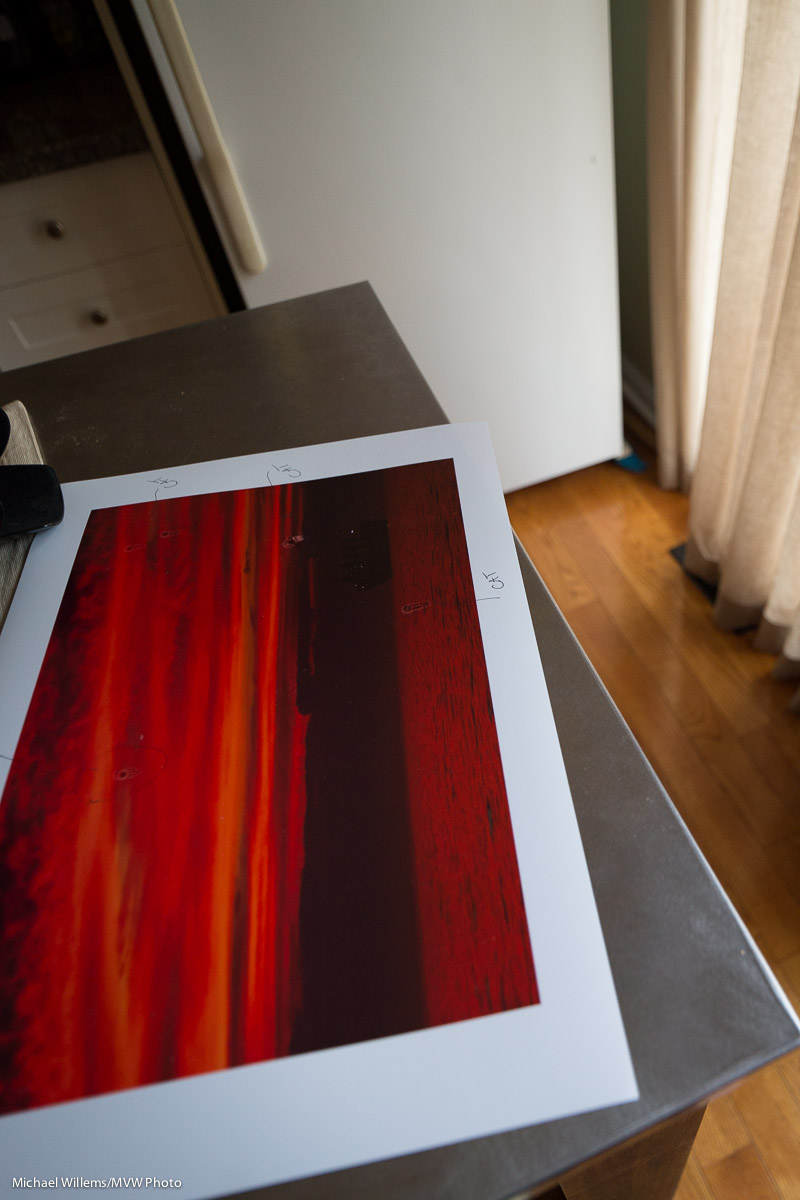
This picture, at f/3.5, shows only the back of the print in focus:

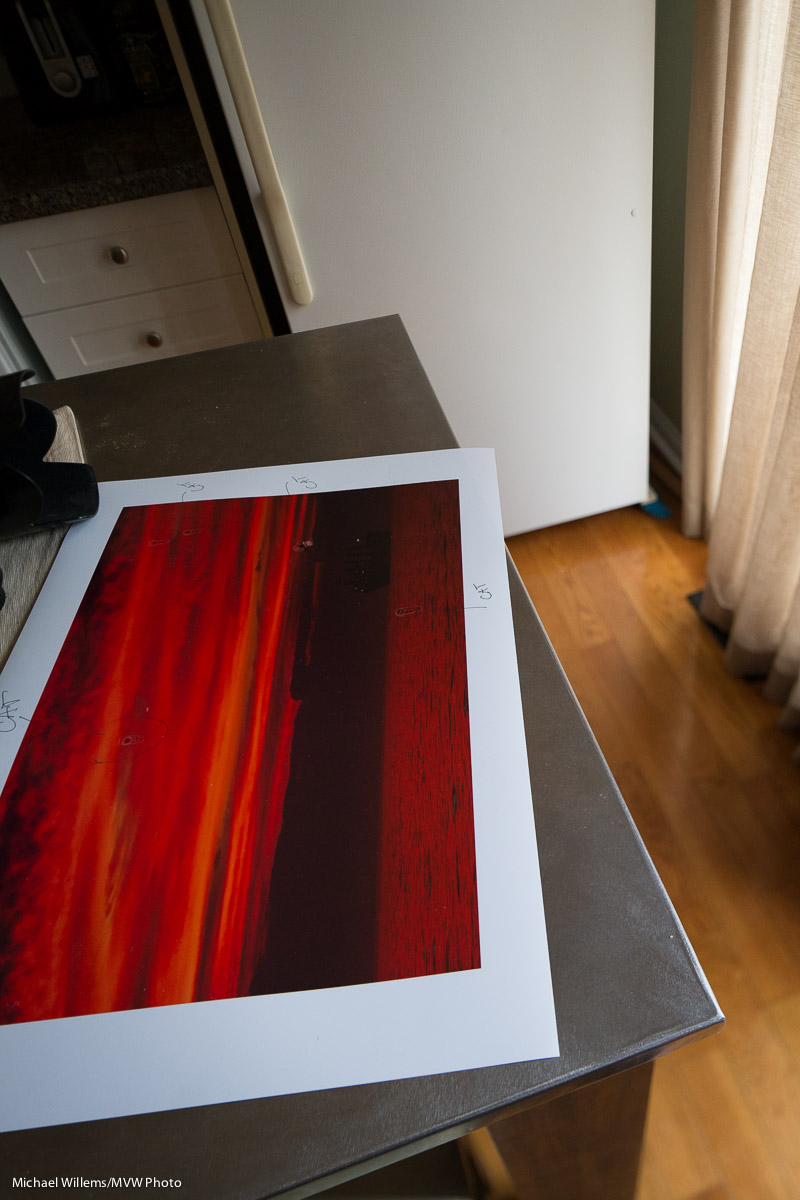
To get the entire picture into focus I guess I could stop down the lens, or move back. But with a tilt-shift I can avoid this: I can just tilt (=angle) the lens down, and I get:

Now the front of the print is sharp, but so are the drawers and fridge in the background; while the curtain is still blurred. I tilted the focal plane to where I wanted it; not just perpendicular to the lens direction (and parallel to the sensor).

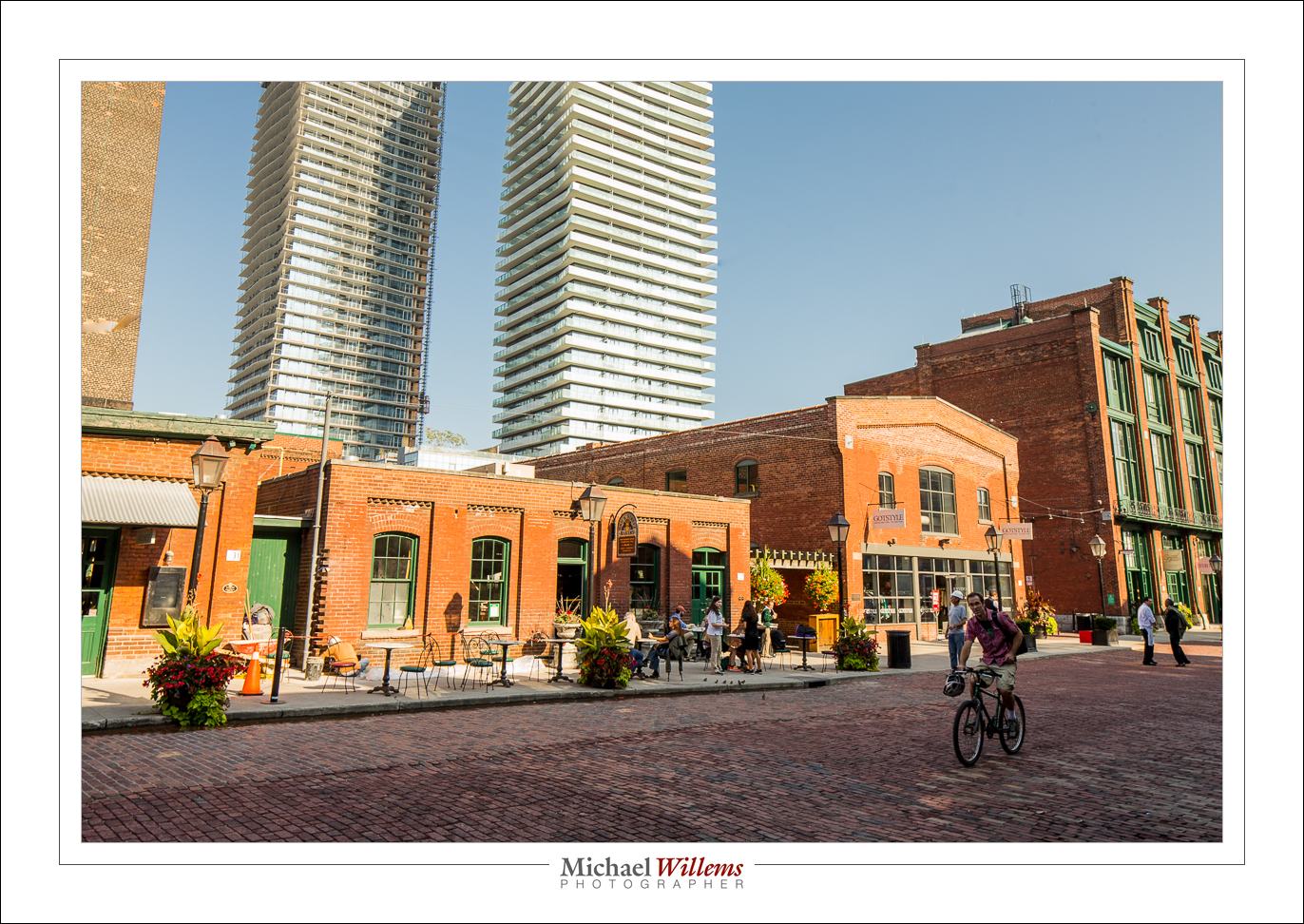
Shifting (up-down) allows me to correct for perspective. When I shoot this, aiming the camera up, I get things converging at the top:

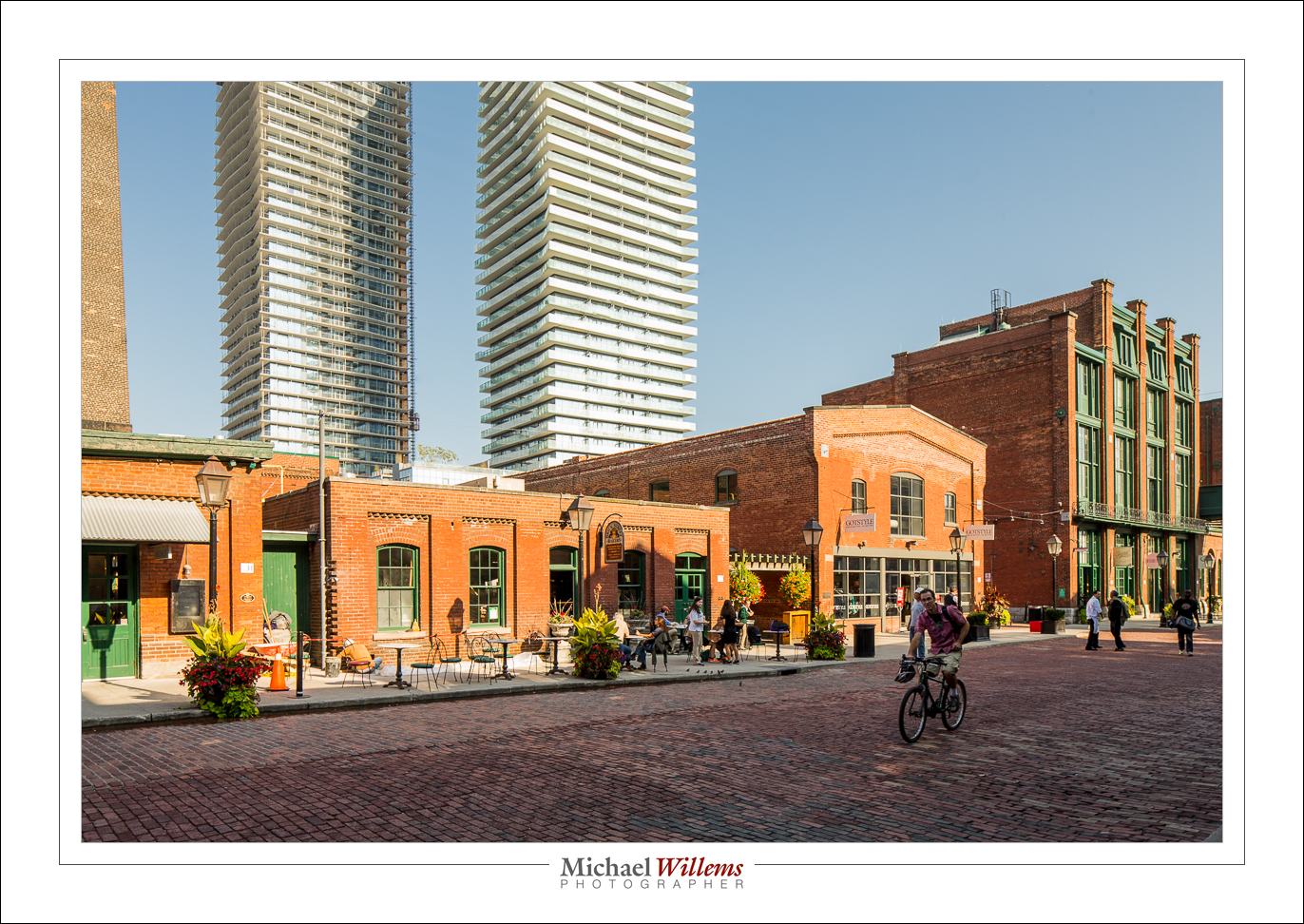
Keep the camera parallel to the ground, and shift the lens up, and I get this, straight out of camera, no Lightrooming needed):

(Those were done with the Canon 24mm TS-E f/3.5L lens I have for a few days from GTAlensrentals.com. I own the 45mm TS-E f/2.8 lens, but the wider one is nice for architecture).

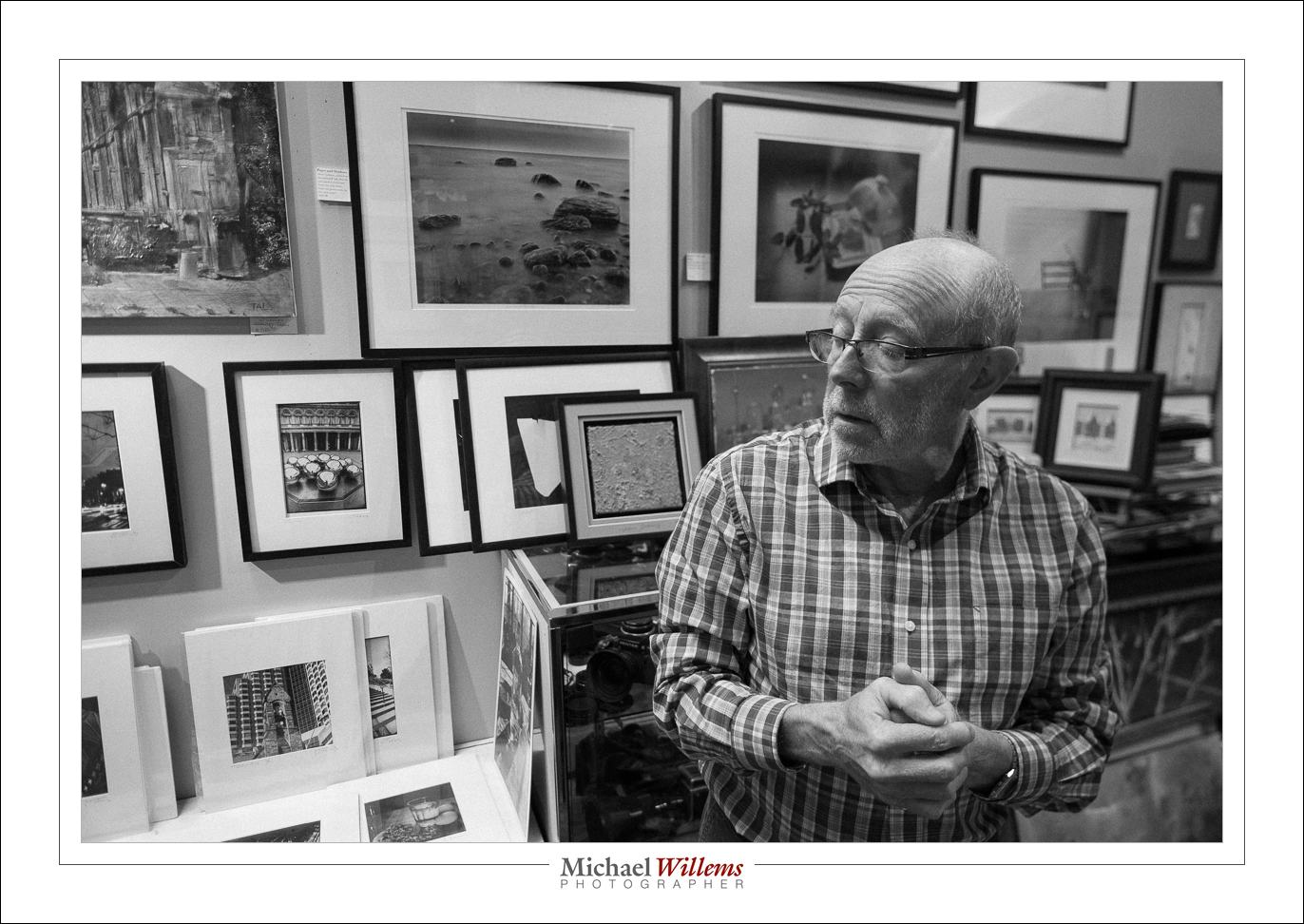
Of course you need to expose manually and focus manually with a tilt-shift lens. But that is easy, and a small price to pay, so I have a tilt-shift on my camera rather often. Like the other day in Toronto’s historic Distillery District, above. Here’s Gregory Talas, owner of The Kodiak Gallery in The Distillery, which held several of my exhibits, and still has a few of my pieces on display.

There’s a lot of specialty lenses, like Macro lenses, fish-eyes, and so on, but the tilt-shift is a special specialty lens worth playing with, especially if you have never operated a tilt-shift camera.