Close-up photography tip

Do I need a macro lens for close-up photography?

Yes. No. Depends. Depends, like so many things.

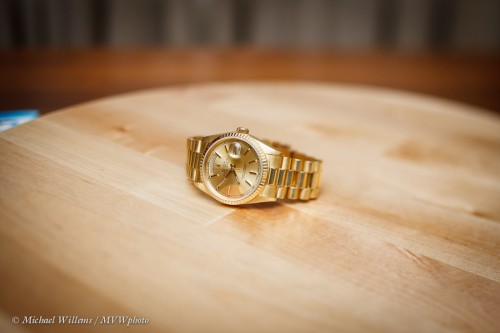
Often, a long lens will do well. As in this image, taken with my 70-200 2.8L stabilized lens:

And the next thing you need to ask yourself is: how large does the picture need to be? What is it for? A large poster, or a small print, or a web site?

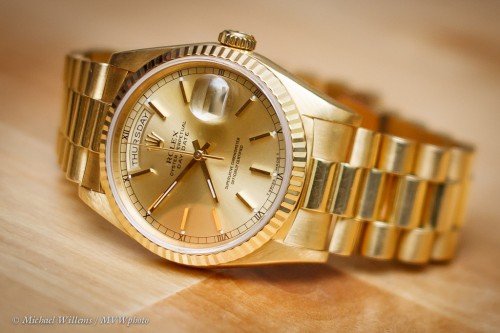
If the answer is one of the latter two, i.e. “not large”, and your sensor has lots of pixels, you can simply crop. As in this image I took just now with my 45mm tilt-shift lens on my 1Ds Mk3 camera, a full-size sensor camera. This is not a macro lens, so I cannot get close:

But because my camera has lots of pixels and this image was meant for web sites or smaller prints (like 5×7, say), I can crop down to just the watch, and I am still left with 1833×1222 pixels.  Even that is too much for this web site: when you click on the image below to see full size, you will see a large image on your screen that is downsized to just 1024 pixels across.

And that is plenty here. In other words, you may not need a macro lens!

A few more tips:

  • Clean the object before shooting. Every speck of dust will show
  • Use a tripod
  • Clean any remaining dust specks in Lightroom or Photoshop after taking the shot.

So… the obvious answer is not always the whole answer, or even the right answer. The world is not black and white; it is 256 shades of grey.

(PS: Isn’t that tilt-shift lens disgustingly sharp?)

More on tilt-shift lenses

I have been asked to write more about a special lens I mentioned a little while ago: the tilt-shift lens.

This, as you recall from that prior post, is a manual-focus, prime, special lens that allows you to tilt the lens (change its angle so it does not point straight forward) and shift the lens (so that it points straight forward, but not inline with the camera’s viewpoint). Rather like a view camera. Mine is the Canon TS-E 45:
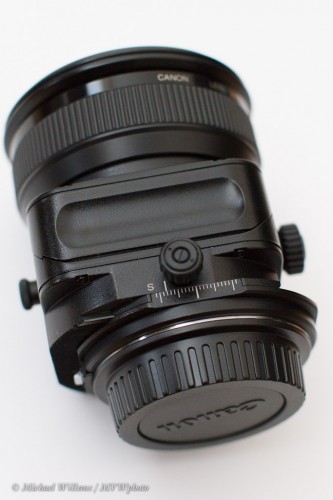
Shifting with TS-E 45
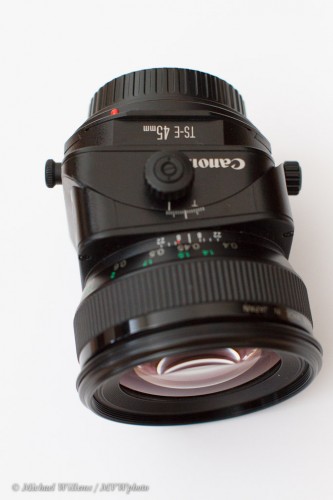
Tilting with TS-E 45

The question is: but when do you actually use it? Can you show examples?

Sure, here’s a few more examples.

You use this type of lens when you want to introduce “dollhouse”-type distortion:
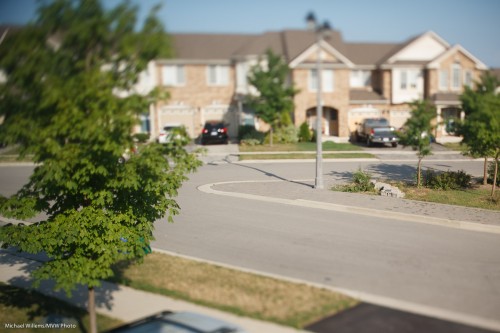
Or when you want to fix perspectival line convergence or divergence in architectural photos, say, like when pointing the camera UP or DOWN.
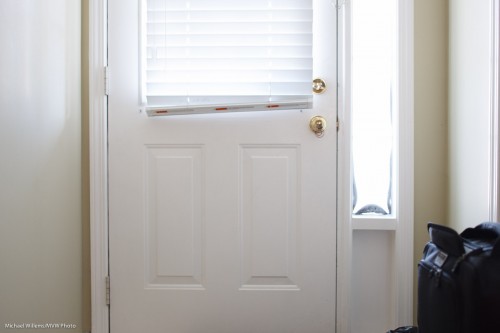
My Door
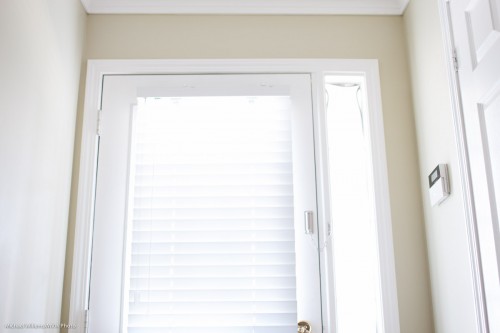
Top of my door, when I point the camera UP
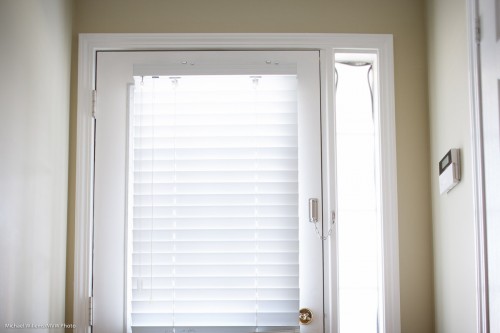
Top of my door, when instead of pointing up, I shift my lens up

Now those effects of a tilt-shift lens can be mimicked in Photoshop (or Lightroom, in the case of the perspective distortion) quite well.

The third is different: focal plane shifting.

Say I shoot my shoes. I am at f/2.8 because I need light. Unfortunately, that also gets me too-narrow depth of field.
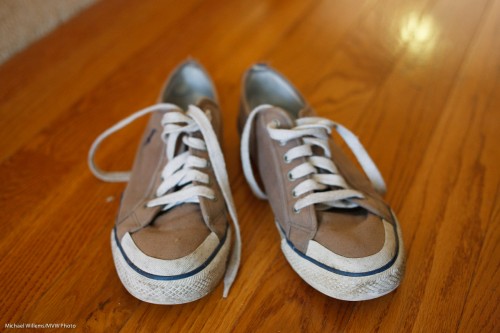
Sometimes I want that, but sometimes I want to see the shoes back to front. With a tilt-shift lens that is easy:

  • Rotate the lens so the tilting goes up-down.
  • Tilt down (towards the closest object that needs to be in focus).
  • Try to focus. If you have not achieved focus in the plane you want, repeat the process with different shift angles until you are happy. Remember, you do not always need the ful tilt angle: sometimes a degree or two will do it.

Now you will get what you want:
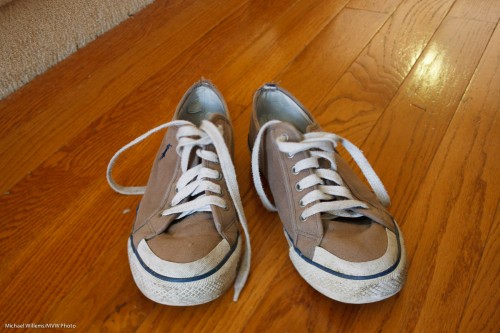
The same applies to any object close to you:
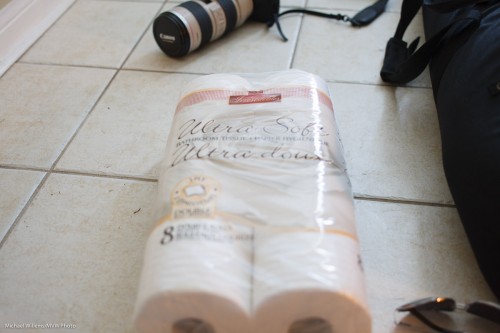
No Tilt-Shift lens used, focus on back
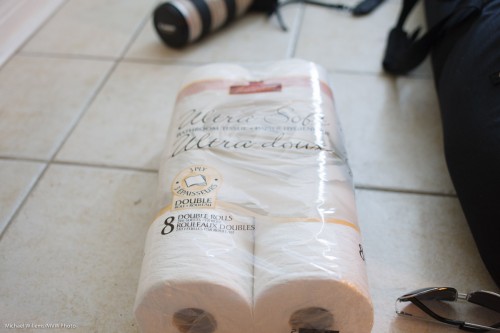
No Tilt-Shift lens used, focus on front
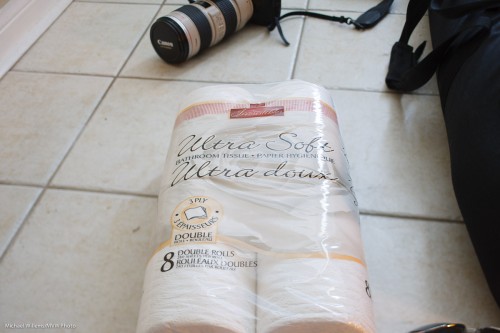
Tilt-Shift lens used: focus everywhere

Another example:
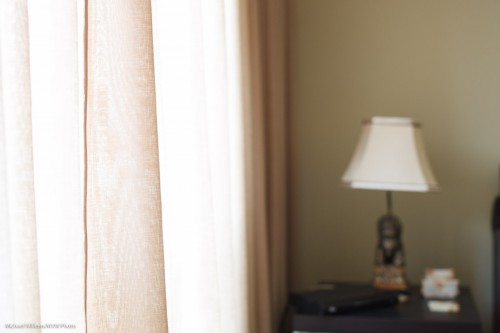
f/2.8: No Tilt-Shift lens used: Blurred background
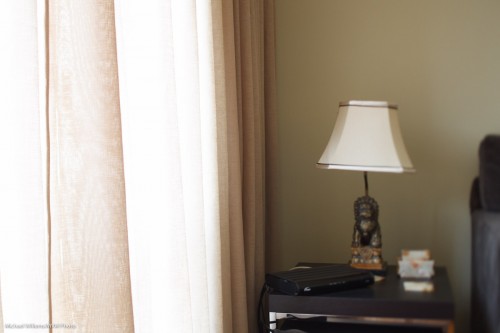
f/2.8: Tilt-Shift lens used: Background also in focus

And one more example:
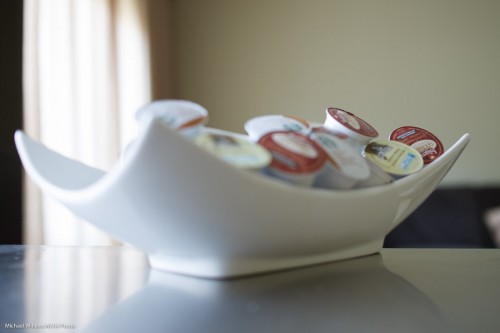
f/2.8; No Tilt-Shift lens used; focus on back
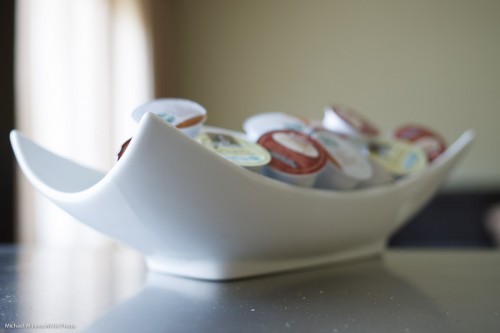
f/2.8; No Tilt-Shift lens used; focus on front
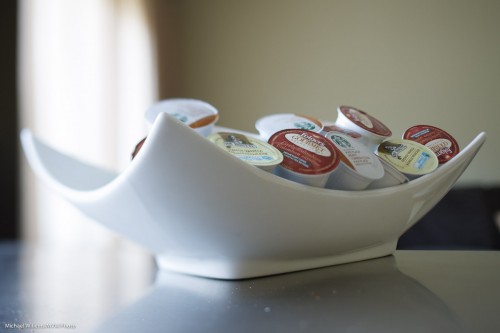
f/2.8; Tilt-Shift lens used; focus shifted

Notes to observe when using a tilt-shift lens:

  • Small changes in angle/position of camera can have huge changes in focus. Make small changes and use a tripod.
  • Use manual exposure: first meter when you are not shifting or tilting, then lock in that setting. Auto exposure does not work reliably when the lens is shifted or tilted.
  • The focus plane is wedge-shaped and rather critical: take your time to achieve perfect focus.

So when would I (do I) use one?

First, whenever I run into any of the above. Typically, product and architectural photography are two areas that come to mind instantly. The 45 is not a wide-angle lens, so it is suited to “natural looking” images.

But also whenever I feel like shooting things at an angle. And in creative portraits. And when the environment is not great so I need other ways to make portraits and other pictures look interesting. Do not discount a tilt-shift lens for portraits, or anything else. Here’s me a moment ago, with 5 degrees down tilt:
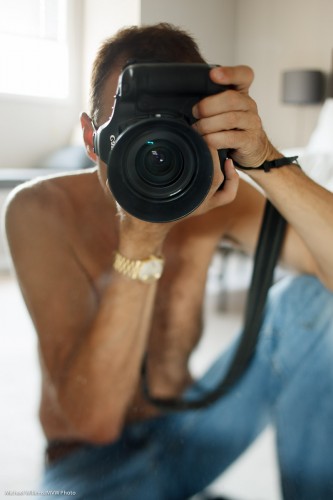
See that nice selective focus effect?

I also use a T/S lens when I want extra narrow DOF. This is what a normal f/2.8 gives me:
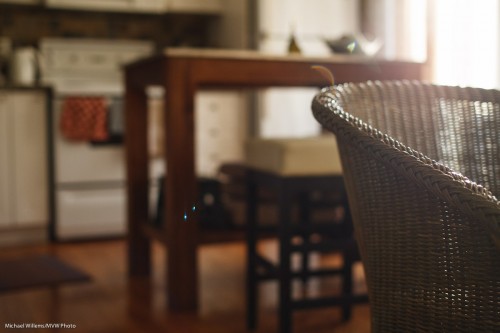
And this is what f/2.8 with the lens tilted away from the chair gives me:
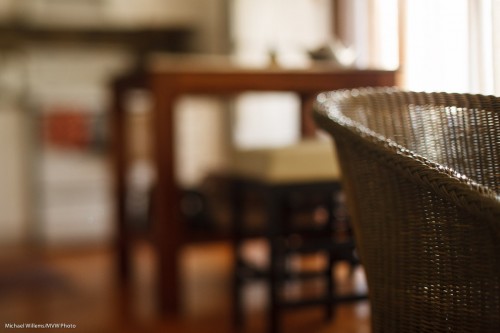
See? A T/S lens is for much more than just products and buildings. Don’t discount this type of lens by thinking it is just for those disciplines: a wedding photographer or a portrait pro can use one too! In many of these types of photography, manual focus is a mere inconvenience – or maybe not even an inconvenience: it’s kind of cool to do it yourself.

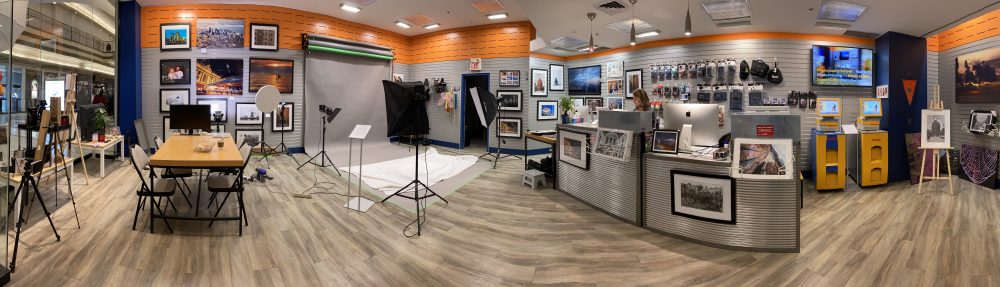
PRO TIP: if you are interested in this type of lens, rent one. Play for a few days, plan some product, some architecture, some landscape, and some portraits, and have a blast for a day or two. Then you will know what this lens does for you and whether it is worth the money. Only you can decide!
 

What should I buy?

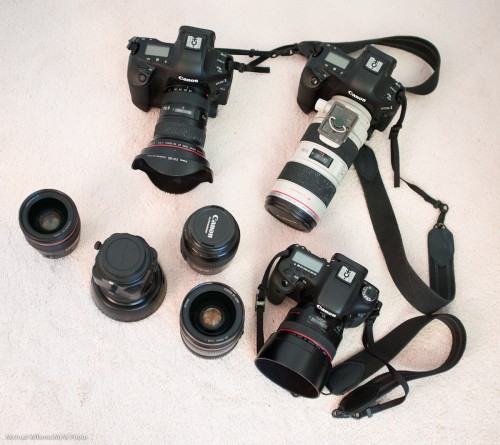
This question keeps cropping up – no surprise there. Photography equipment is expensive and making the right choices is therefore very important. Here’s just some of my gear:

The lenses are:

  1. Prime 35mm f/1.4
  2. Prime 50mm f/1.2
  3. Prime 100mm f/2.8 macro
  4. Prime 45mm f/2.8 Tilt-Shift
  5. Zoom 16-35 f/2.8
  6. Zoom 24-70 f/2.8
  7. Zoom 70-200 f/2.8

Cameras are 1.0 sensor (full size); 1.3 sensor (the 1D) and 1.6 sensor (the 7D). Which means that range of lenses can handle pretty much everything. My lenses are all I could wish for. Just about.

But do you need that kind of investment? Not if you don’t make a living from photography. I have a few tips for you when considering buying a lens:

  • Lenses are much more important than cameras. Invest in your lenses – the camera makes little difference.
  • I would simply start with a kit lens and a fast prime 50mm lens (“50mm f/1.4” or “50mm f/1.8”).
  • Always buy the fastest lenses you can afford (the lowest f-numbers). As you see here, none of my lenses are slower than f/2.8.
  • A lens that “does everything” is a compromise. The more a lens does, the more of a compromise it is. A 18-55 (crop) or 24-70 (full frame) is a better general purpose zoom; for longer and wider you add separate lenses.
  • IS/VR (Image stabilization/Vibration Reduction) is a great function, and is definitely worth the money if you can afford it.
  • If you shoot travel, if you like perspective, if you shoot street, etc – add a wide angle lens – for crop camera that means a lens in the 10-20mm zoom range. Super-wide lenses are the great under-appreciated secret in today’s SLR photography.
  • If you shoot macro, get a dedicated macro (close-up) lens.
  • A macro lens is also a great portrait lens.
  • If you shoot birds or go on a safari, get the longest lens you can buy – perhaps even adding 1.4x or 2x extenders.
  • For specialized product or architecture shooting only, get a tilt-shift lens.
  • For events, get a 24mm (crop camera) or 35mm (full frame camera) prime lens.

Now that you know those ground rules:

  • No, you cannot do it cheaper if you really want to do it well.
  • But yes, you can do it cheaper if all you want is the shot, and pro quality is not important.
  • Yes, an expensive lens is better than a cheaper lens. Sharper, faster. stronger.
  • Yes, lenses cost a lot – but then, they last a long time (decades), both technically and in terms of depreciation.
  • Yes, you really have to carry more than one lens if you want quality. I would not have those seven lenses if I did not need them. You may not need as many – but to stop as one is being over-optimistic.
  • Yes. you can buy third-party lenses (Sigma, etc) but try them out before you buy and make sure you are happy!

The above pointers should get you started. The faster the lens, the better: go have fun with lenses!


5D MkIII

Kristof, a friend, showed me his 5D MkIII today.  All good – a 7D with all its advantages including functional focus, plus a lot of 1-series features, like double memory cards and great high ISO performance.

The User Interface was not quite as good as in the 7D – it has been “improved” (i.e. dumbed down) to the point that in some cases, it makes little sense. The nice “small wheel for left/right, large wheel for up/down” navigation is now replaced with multiple menus within each menu, meaning the user base will now find Canon menus as confusing as they do the Nikon menus. Also, some UI features are ridiculous – like the remote flash setting, which is only recognizable by the word “OFF” – until you turn it on, the camera does not mention what exactly it is that is “off”. Who makes these poor design decisions? A committee, I dare say!

But overall the camera is great. Except mainly for things you can change – like some of the default settings, which are, just like on the 7D, wrong. Like default “fix bad photos dynamic range” settings which are ON; focus point setting by joystick which defaults to OFF, and a few others.

In a future article I will give you all the settings you should change from the default to a better setting.

For now, for a starter, find the custom interface settings via the Quick menu and set the default meaning of the joystick while shooting from nothing (OFF) to “Change focus point”. That way you can quickly move the focus point just by using the joystick alone, without first having to press other buttons.

Now I start saving for a 5D3 – it is usable as a pro camera now. It misses some 1-series features, of course, but enough is there to make it a viable contender.

More soon!


Keeping It Clean

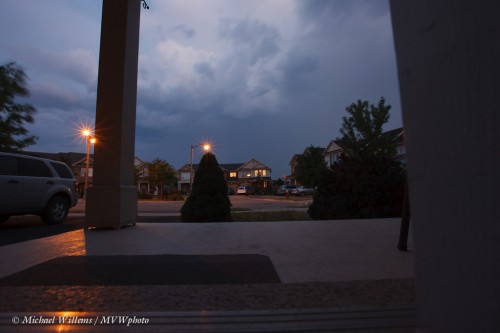
It is very important to keep your camera’s sensor clean.

Dust shows at small apertures, like f/16:

f/16, and that looks OK until you look at the small

See those dark dots? That is sensor dust.

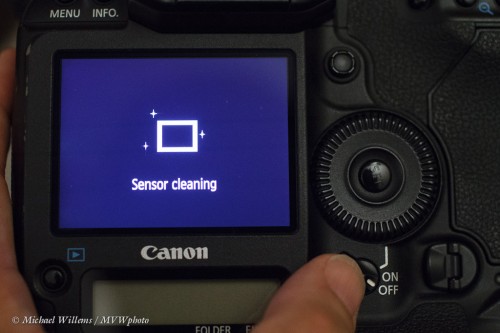
You can try to get it off with the self cleaning mechanism, see the top picture. Or with a blower (be careful – use a full battery). Or with pads and liquid, but that is potentially dangerous – one mistake and your camera is toast.

So the best way is to keep the dust off in the first place, and to minimize the effects

  • Use the self cleaning mechanism.
  • Avoid lens changes unless necessary
  • Shoot at larger apertures if it’s all the same to you 🙂
  • When changing lenses, try to do it in a safe dust-free place
  • Hold the camera upside down (-ish) when doing it, so that large dust falls out of, rather than intio, the camera

I regularly clean my sensors -looks like my 1Ds is ready for another cleaning, from that photo.

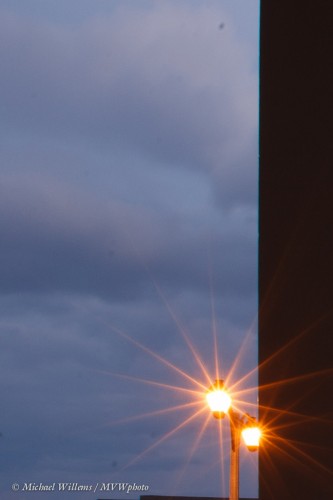
Bonus question: how do you know I was shooting at a small aperture?

Answer: because of the starburst from the street light. The smaller the aperture, the more starburst effect.


DOF in product photography

I was asked several times in the last few days about a previously made point (yes, since you ask: I repeat things quite frequently, since repeating is the way we learn – especially if, as I do, you explain in a slightly different way each time).

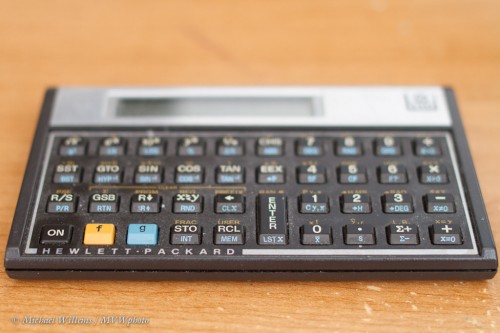
In product photography, you often want great depth of field (“DOF”) – i.e. everything is sharp from front to back. Like in this picture of one of the best calculators ever made, and shame on HP for stopping production: this is still the best calculator I have ever owned:

Oh, but we cannot see the calculator at the back. DOF is insufficient. Well, I suppose we could shoot at f/45 if our lens allowed it, but that would lead to slow shutter, fuzzy pictures, and might still not be enough even then.

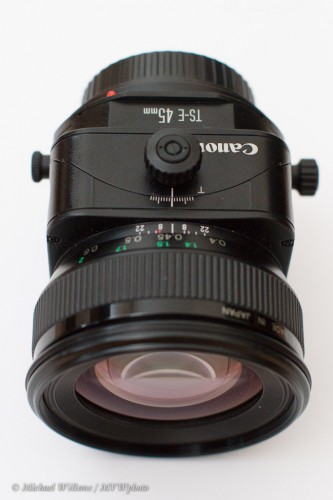
So? The tilt-shift lens to the rescue. Resulting in this, at the same settings, including an aperture setting of f/3,5!

This is that lens:

It is a manual focus only lens that allows tilting, which moves the focus plane, like for the shot above:

And it allows shifting, for occasions where you point up or down or left and right, like in architecture, and you do not want verticals to converge.

It also allows turning by 90 degrees, so your tilting and shifting can be along any axis, horizontal or vertical or diagonal.

The last adjustment is interesting: unlike the DOF, this you could usually also do in Lightroom (or PS if you feel so inclined), but why bother if you can do it while shooting?

Tilt-Shift: A specialized lens, but invaluable (meaning valuable – the English language is illogical) for product shots. Real product photographers should own one, so if you need product shot and you do not own this type of lens… call me!


Learn…

Today I teach DSLR courses at Vistek in Mississauga.

There are open spots, so if you have always wanted a refresher, head on over.. 10AM bascs, 2pm advanced. Both are good: I recommend you do both. see the list, and sign up, here – or just turn up.

Why am I excited about this? Because these courses are my own, they are good, and buying an SLR is nothing unless you learn how to use it, and I can teach you.

Starting with these simple three tips of the day:

  • While it is not strictly necessary to turn off your camera before changing lenses, memory cards, etc, I still recommend it. Because it is good practice, but also because on most DSLR cameras, when you turn off/on, the camera attempts to clean the sensor. And the more sensor cleanings, the better.
  • Charge your LiIon battery daily. Let it run down every month or so – not strictly necessary either, but not a bad idea, and the camera can tell more accurately how full the battery is.
  • Use the viewfinder, not the back of the camera – and make sure the eyepiece is set to your eyesight. The diopter adjustment is meant for this purpose (now you have something to google or look up in your manual!).

Not rocket science, but often, small tips make you a more efficient photographer, so you can concentrate on the really important stuff: moment, composition, and light.


What should I buy?

A common question that I therefore hear often:

“I am going to buy a [new] camera. What should I buy?”

Followed often by:

“Oh. Isn’t there anything cheaper?”

Starting with the last question: there’s no free lunches. As for the first – that’s like asking “what car should I buy”. I have noi idea what car you should buy – it depends in needs, budget, availability, and so on.

I have two small cameras: a Canon G9 and a Fuji X100. And three SLR cameras:  A Canon 7D, a 1Ds Mark3, and a 1D Mark4. They each have pros and cons. All I can give you is some pointers.

You buy a compact camera if:

  • You have a restricted budget.
  • Size and weight are more important to you than flexibility and quality.
  • You will replace it every few years.
  • You do not need special lenses (wide angle, telephoto, macro, etc).
  • You shoot mainly static subjects.
  • You want to be inconspicuous.

You buy an SLR if:

  • Quality is paramount.
  • You are willing to learn.
  • You want to be able to shoot quickly once you aim at a subject.
  • You will shoot a lot of “difficult” subjects (sports; night scenes).
  • You are willing to invest for the future.
  • You wil by extra lenses.
  • You need to be able to use a big flash.

A few recommendations, then:

  • Think carefully about what your requirements are. What will you use the camera for? What do you need it to do? What do you expect from it?
  • If you buy a compact camera, look for one with a large sensor. These are available nowadays – small sensor cameras produce graining pictures, especially in the dark, and have trouble producing those blurry backgrounds we all love.
  • If you buy an SLR camera, I would recommend a Canon Digital Rebel – but that said, there are no “bad” cameras. Nikon and Canon are the pro brands, but Olympus, Pentax, Sony, and in the compact cameras, brands like Samsung, are just as good. Sony wants to be one of the big boys. Samsung is innovative. And so on.
  • So go hold the camera. Try the controls. Try how it feels. Fall in love – else you will not get most use out of the camera.
  • Make sure the controls are easy and convenient. I find, for example, that touch screens are gimmicky and inconvenient – you keep hitting the wrong thing all too often, and you have to take your hands off the camera to set anything.
  • If you buy an SLR, consider not getting the “kit lens” – these are not very good – but invest in a better lens or two.
  • Include a “portrait lens” – 50mm f/1.8 or f/1.4.
  • Read dpreview.com for a review of your chosen camera.
  • Have realistic expectations. A compact camera will not do for sports shooting, for example.

Does all that help? Yes, some thinking is required, and compromising – just like when you buy a car.


Wide Lens Caution

I am a big fan of wide lenses – 16-35mm on my full-frame camera, or 10-20mm on your crop camera.

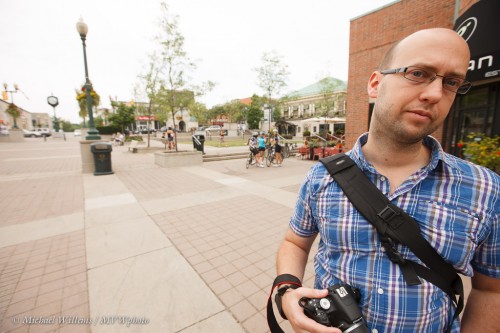
But there is one thing to watch out for: do not get too close to people. Especially, do not put them into the corner: here is volunteer student James on Sunday:

Avoid the corners!

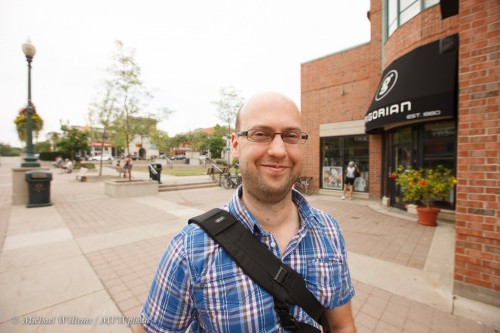
And avoid getting too close in general. As in this one, which is much is better, but the extreme proximity to my subject still distorts his face:

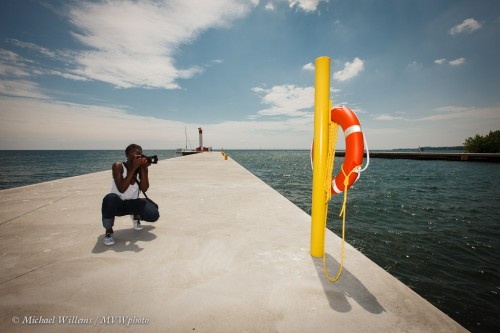
Wide lenses rock, as long as you avoid this gotcha. What they do do is give you diagonals. depth, perspective, and a few technical advantages also: the ability to shoot at slow shutter speeds, and almost infinite depth of field. so if you do not yet have a 10-20, go buy one, and shoot this kind of image:

QED.


What to bring on a trip?

Reader George asks:

For leisure traveling which gear would you take with you Michael? I’m off to China for 3 weeks in September and still can’t decide what to take with me having 6 lenses /3 primes;28,50,85 and 3 zooms 16-35, 24-120, 70-300/ and one body d300. Looking to buy a used second body either d700 or d7000 since I believe I need a back up just in case. As for packing I have already few Think Tank bags to chose from.

Well. Here’s what I will bring to Europe when I travel to the Netherlands late August:

  1. A camera – Canon 1Ds Mk3 or 1D Mk4 (if I had an 1Dx I would bring that).
  2. A backup camera (quite so, George): a Canon 7D in my case.
  3. Two speedlights
  4. 16-35mm lens
  5. Probably also the 24-70mm lens, but this is not strictly necessary – after all, the 16-35, when used on the 7D crop body, is like a 24-50 lens.
  6. If I have space, the 70-200mm lens: but unless I travel to Africa to shoot lions, this will be my least used lens.
  7. A prime lens: probably the 35mm f/1.4.
  8. A light meter.
  9. Batteries, chargers, plug converters
  10. Memory cards
  11. Flash modifiers
  12. Ziplock bags, dental floss, pen, business cards, and so on.
  13. Laptop.

And indeed, a Think Tank air travel bag that everything fits into. so I can bring it on board rather than checking it. Packing this bag is an art and will take me many hours: the restrictions of airline policy is the greatest factor in limiting what one can bring on a trip.