Here’s a recent shot of a recent Advanced Lighting class in Mono, Ontario:
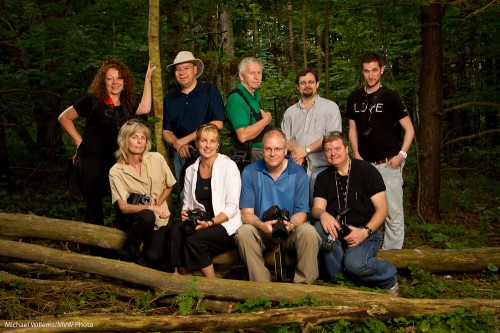
Lighting Class, Mono, Ont.
(Lit by two flashes, one in a softbox and one with a grid).
Here’s a recent shot of a recent Advanced Lighting class in Mono, Ontario:
Lighting Class, Mono, Ont.
(Lit by two flashes, one in a softbox and one with a grid).
There are some colour combinations I always look for. If you see those, think “could there be a shot here?”
They include Red vs. Green, a combination that contrasts on the colour wheel:

Red and Green
But also:
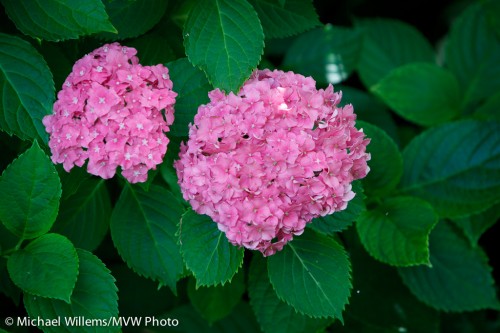
Green and purple
And this one, shot in yesterday’s “Creative Urban Photography” walk that I did with nine students in Oakville:
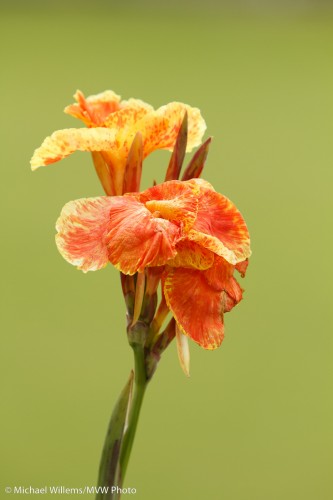
Harmonious Colours
So any time you see any of those combinations, ask yourself “could there be a picture?”. And if you see lots of green, look for some red; if you see lots of blue, see if you cannot find some yellow to add to it.
Update: two more notes. First, remember to set your white balance properly (e.g. on a cloudy day, use “Cloudy”). Second, the upcoming autumn is a great time. Cloudy, overcast days provide wonderful saturated colours, and of course the leaves are turning. Get Out and Shoot!
Today I taught Travel, Kids, Composition, Flash, and more to an overflowing crowd at Henry’s in Mississauga.
If you were one of that crowd, welcome here, and it was a great pleasure to have such an intelligent and attentive audience!
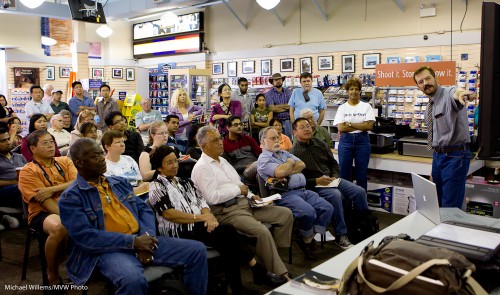
Michael Willems Teaching
OK, do not eat quite yet.
I shoot events. All the time. It is what I love to do.
And these events are organized by corporations, or wealthy people, or governments, or charitable organizations. You name it. People like to get together. And all these people have paid a lot for the food – or sweated, making it.
And food is ephemeral: it’s there – then it’s not.
This is where photographers do a very useful job. One good photo, and that food exists forever. Like beauty, or youth.
And like these delicious strawberries, which I shot at a very nice private event in Toronto on Labour Day:
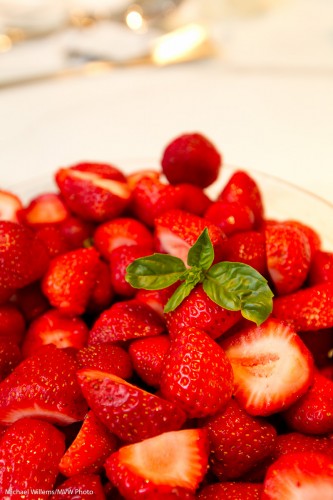
Strawberries, by Michael Willems
There. And this too:
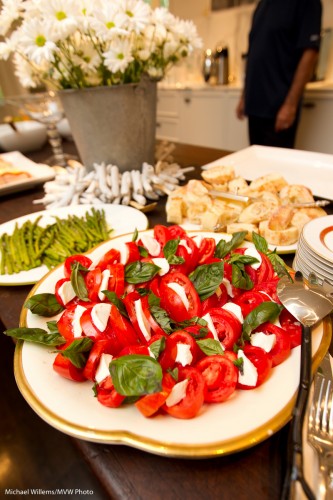
Food Shot, by Michael Willems
The way to do this:
Your images will be loved by your client. The book can now include food shots as background or detail shots. The food is now good forever. The investment is secured for all eternity. And the story is a better one: not just grip-and-grin images, but also “background”.
In an intensive half-day custom course, I taught my student Melony some glamour photography techniques a few days ago. From flash techniques to colour to modifiers to using a light meter to posing.
She brought her daughter as her subject, and both did excellent work.
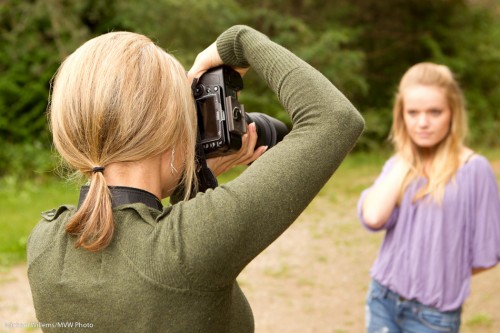
Student shooting model
(By the way, did I ever tell you to make the viewer work in interpreting an image? Yes I did. And the blurred out daughter in the background is an excellent way to do that. Don’t tell the whole story, let the viewer figure it out.)
But anyway. Student Melony also kindly photographed me:
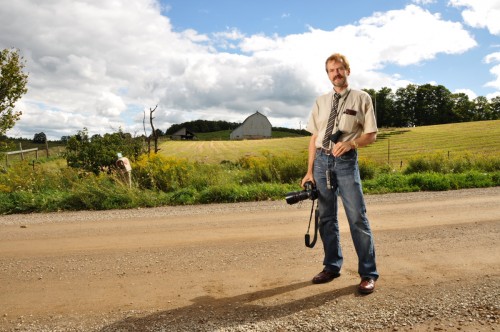
Michael Willems, by Melony McB.
That is a great portrait.
And I can say that because it is the photographer who makes the portrait, in this case, more than the subject.
So how did we do this? Why does it work?
This works because:
Pocketwizards and a battery-powered Bowens light, as well as a speedlight, were used here.
And kudos to those of you who spotted the other essentials, around my neck: a Hood Loupe by Hoodman, and a flash meter.
Light makes a photo. Creative light makes it better. And it is simple. Once you know it.
This is the sort of stuff I teach at my workshops, and Joseph Marranca and I are doing several more in October: check the schedule on www.cameratraining.ca !
And yes, I wear a tie almost every day.
Or is it?
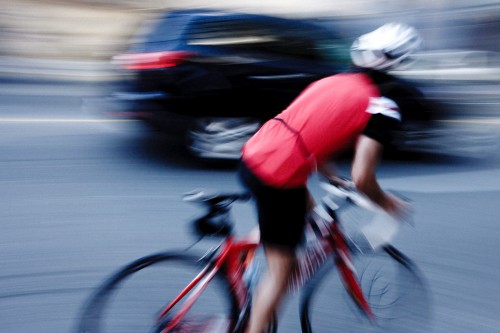
Bike, Toronto, Aug 2010
Indeed not. That is why you have a shutter speed priority (Tv/S). Sometimes you want to show motion, and you do that by blurring things.
I took the shot above while panning at 1/15th of a second (and f/22 at 100 ISO: it was a bright day in Toronto). It shows “in a hurry”, dynamic motion much better than a “frozen” picture of the same subject would do.
Instead of making your subjects big, like so:
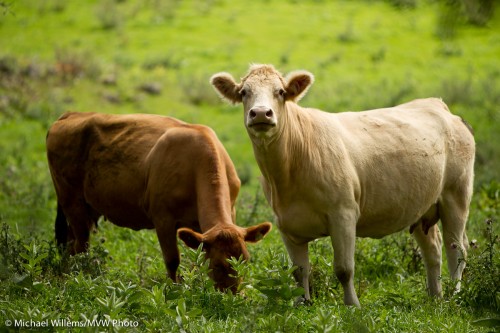
Moo!
…you can also make them small, like so, and surround them with “nothing much”:
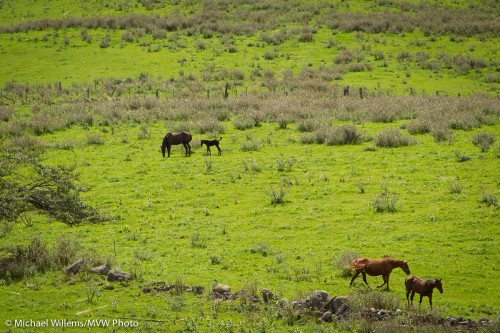
Horses in Mono
We call that using “negative space”.
The use of Negative Space is a great way to show your subject not as huge, but as interconnected with, and inhabiting, a large area.
The negative space needs to be just that: negative space, i.e. devoid of meaningful content. It does not have to empty: just empty of information.
Always carry your camera, even at night.
I just got back from teaching, after an executive portrait shoot this morning.
But I want to talk not about light, but about lack of light. And how when it gets dark, you do not put away your camera. Like I carried mine, just the other night in Montreal:
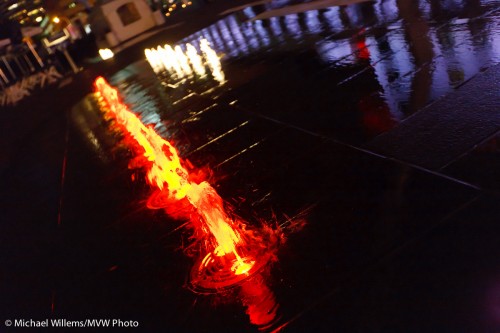
Montreal, night scene, handheld (Aug 2010)
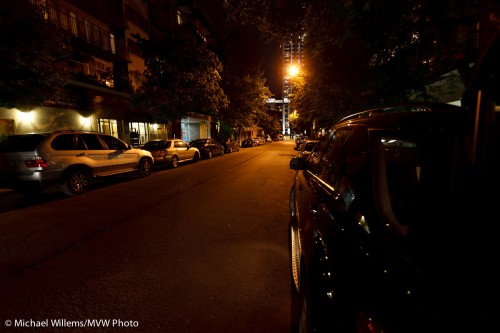
Montreal, Rue Hutchison, Aug 2010
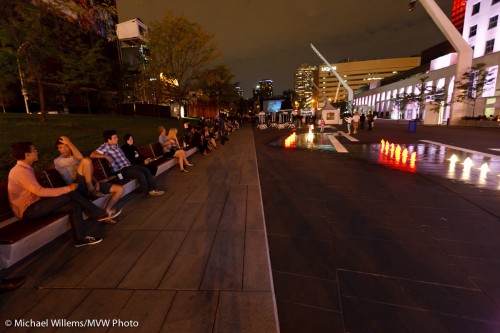
Montreal, "The Shining", handheld
All those were handheld shots.
Tips for those:
If you do it that way, it is easy. And you will be happy with your images.
I have mentioned this before: the need to have your audience piece things together themselves.
One way is to use selective depth of field. Like in this snap from a recent outing in Mono Cliffs Provincial Park:
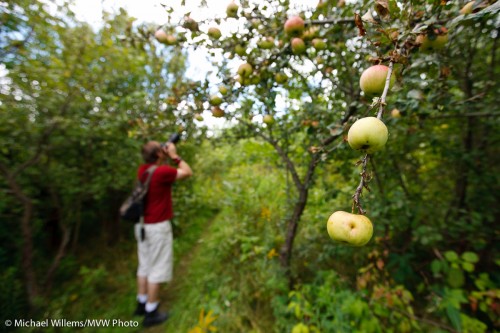
Mono Cliffs Provincial Park
You see the apple first, then a blurred out view of the photographer, then you figure out what it is, then you slowly see what’s happening.
This snap also shows the benefit of wide angle lenses. As does this:
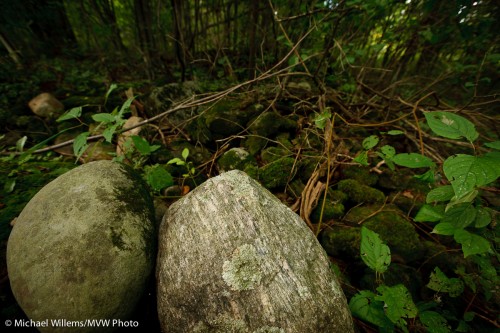
Mono Cliffs Provincial Park 2
Depth! And I also used a bit of flash, with a half CTO gel.
And one more, finally: colleague Joseph Marranca in the park at the lookout point. Also shot with a little fill flash with a half CTO gel, with the camera’s white balance set to flash. After first exposing properly for the background, of course.
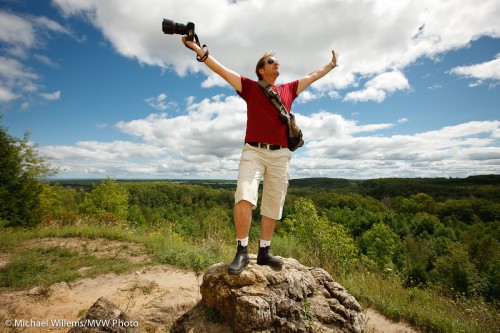
Mono Cliffs Provincial Park 3
What we are doing there? tracing out the route for the upcoming Nature Walk course!
All those shots were taken with a wide angle lens. Wide meaning 16mm (or 10mm if you have a “crop factor” digital camera, i.e. one that is not “full frame”). Wide angles rock.
…the size of your umbrella, anyway.
I am using a big Photoflex umbrella today. How big? Here’s how big:
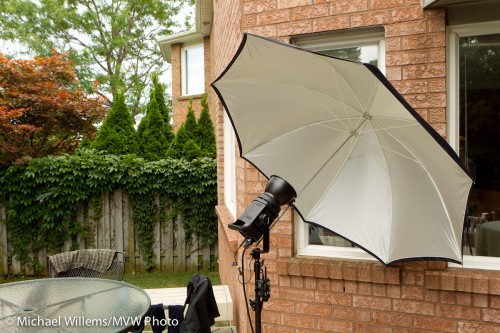
Big Photoflex Umbrella
This umbrella, which can be used to shoot into, as I am doing here, or to shoot through, is huge. Which makes the light softer.
It is also very reflective, more than most. And that helps: I was able to overpower daylight on an overcast day with the single Bowens 400 Ws light set to 3 (out of 5), somewhat close to the subject. With my regular, smaller and less reflective umbrellas, I would have used a setting of 4 to 5 for that shot.
So, all this amounts to:
Here is that battery pack:
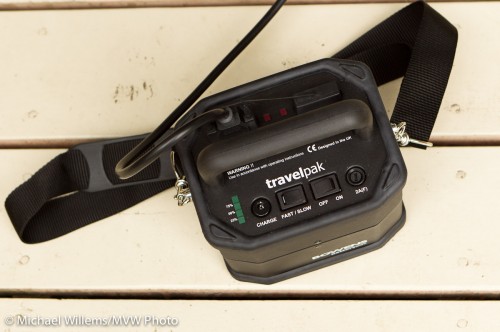
Bowens battery pack
At full power, I get 150 shots out of a small battery (attached at the bottom); at power level 3, it is closer to 300 shots.
So by using a nice umbrella, metering to minus two stops ambient (minus three if metering off the dark garden), then setting the flash to the aperture thus achieved, which was f/5.6), I get this shot:
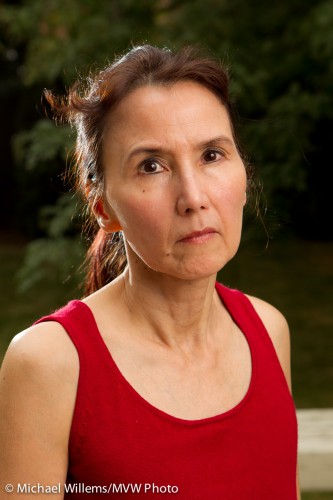
In the back yard, lit by flash
As you can probably see, I am also using a speedlite on the camera left, to separate the hair from the background and to give some edge lighting interest. That speedlite is fitted with a Honl Photo 1/4″ grid to avoid the lens flare I would otherwise get.
Time for this snap: couple of minutes.
If all that is confusing, as it will be to beginners, then just take one of the flash courses and learn how to do this. It is fun, and well within reach of amateurs – not just for pros!
Michael’s Quick Judgment: