The colour of the day.

Why do we use colour?

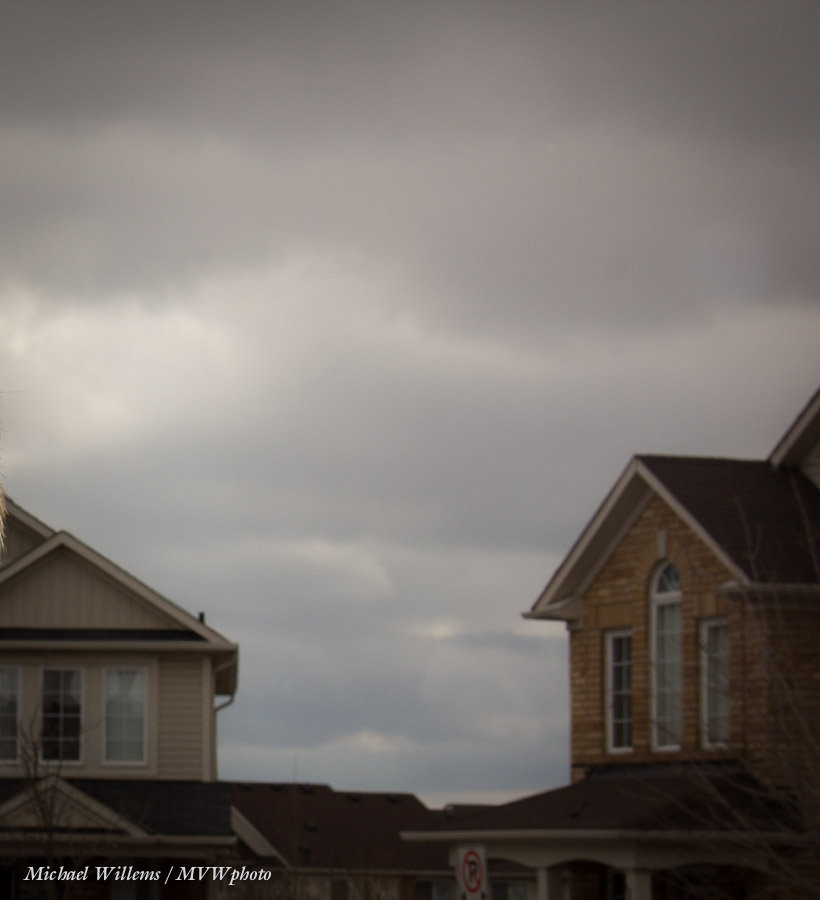
Sometimes I like simplicity, like here:

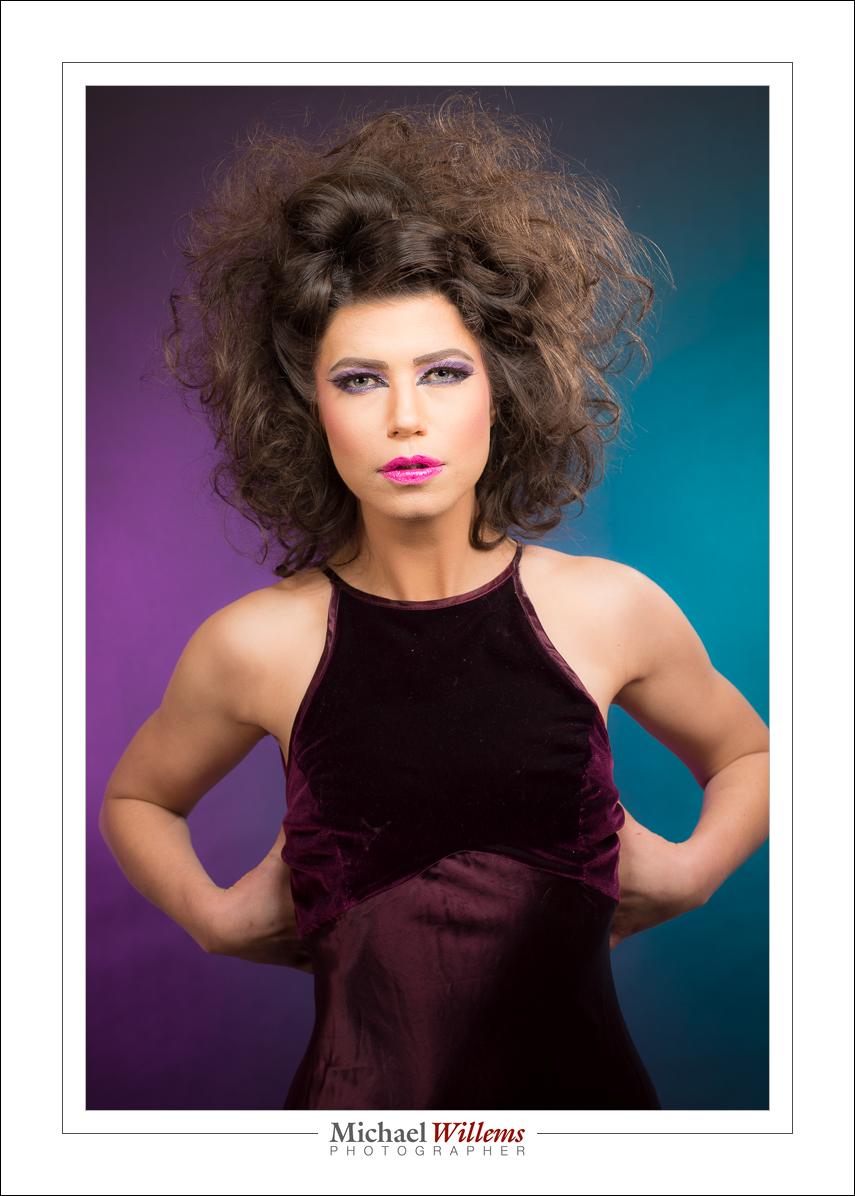
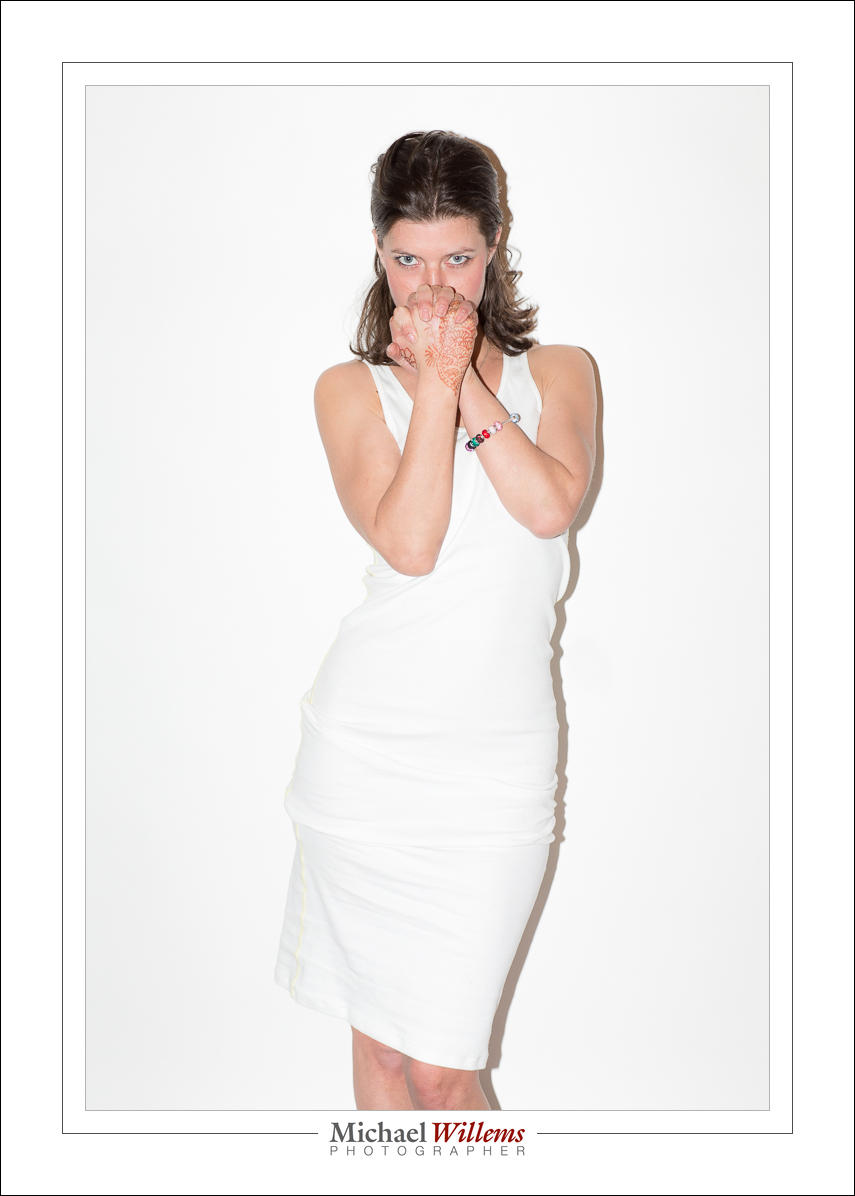
Sometimes, on the other hand, especially when I print images, I like to fill the frame with colour. Like here, from last night:

(Make-up by Glam IX Studio; model Kim Gorenko.)

The colours match the dress and the eyes. Two speedlights aimed at the background.

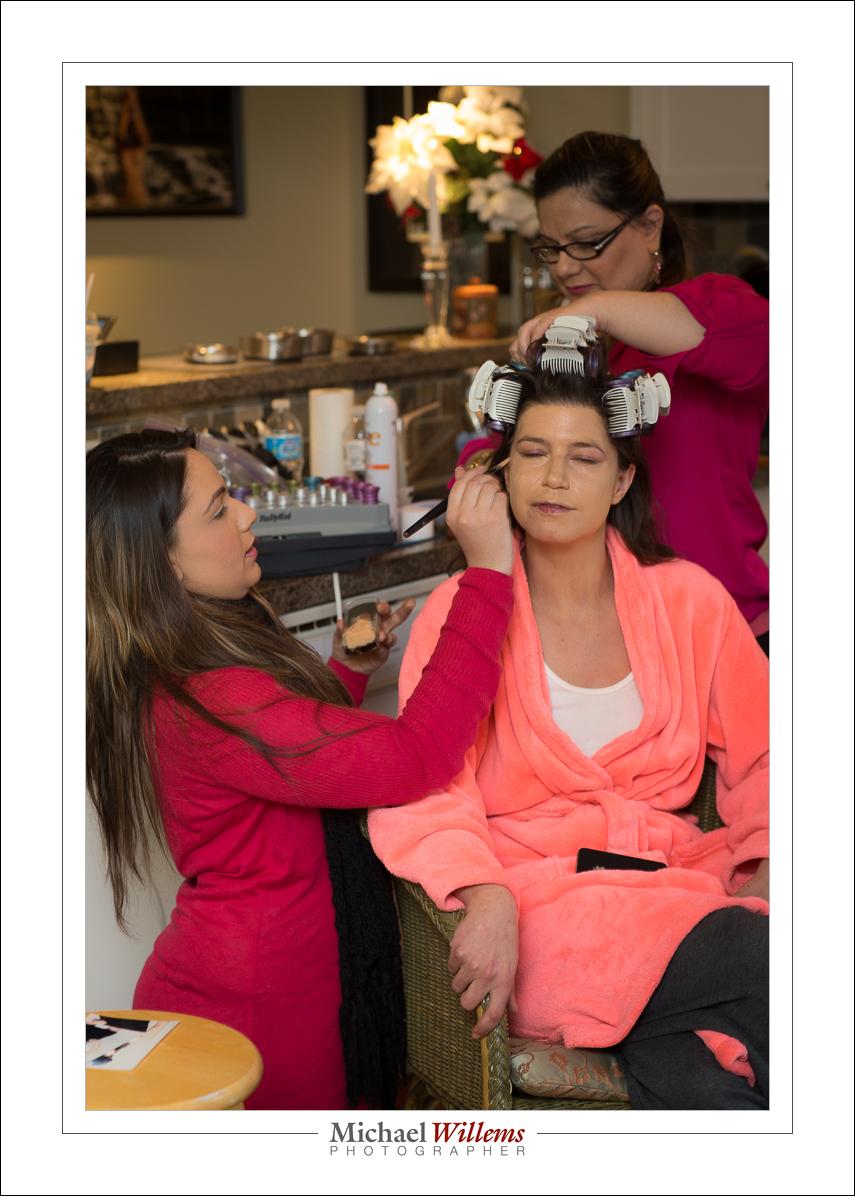
That last shot also emphasizes again the importance of getting a glamour-type shot like this right in terms of pose, light, and make-up.  Look at the before/after. Nothing was done here, only make-up. Straight out of camera:

The make-up and hair took about three hours to do: these are serious skills.

For a successful shoot, it all has to come together!

Now on to my Video with DSLR course, which is about to start.  Check www.cameratraining.ca for details on upcoming courses.


Go Toward The Light

One thing beginners often forget is the light;l specifically, where is it coming from.

So tip: always ask yourself that in every picture. Where is the light coming from.

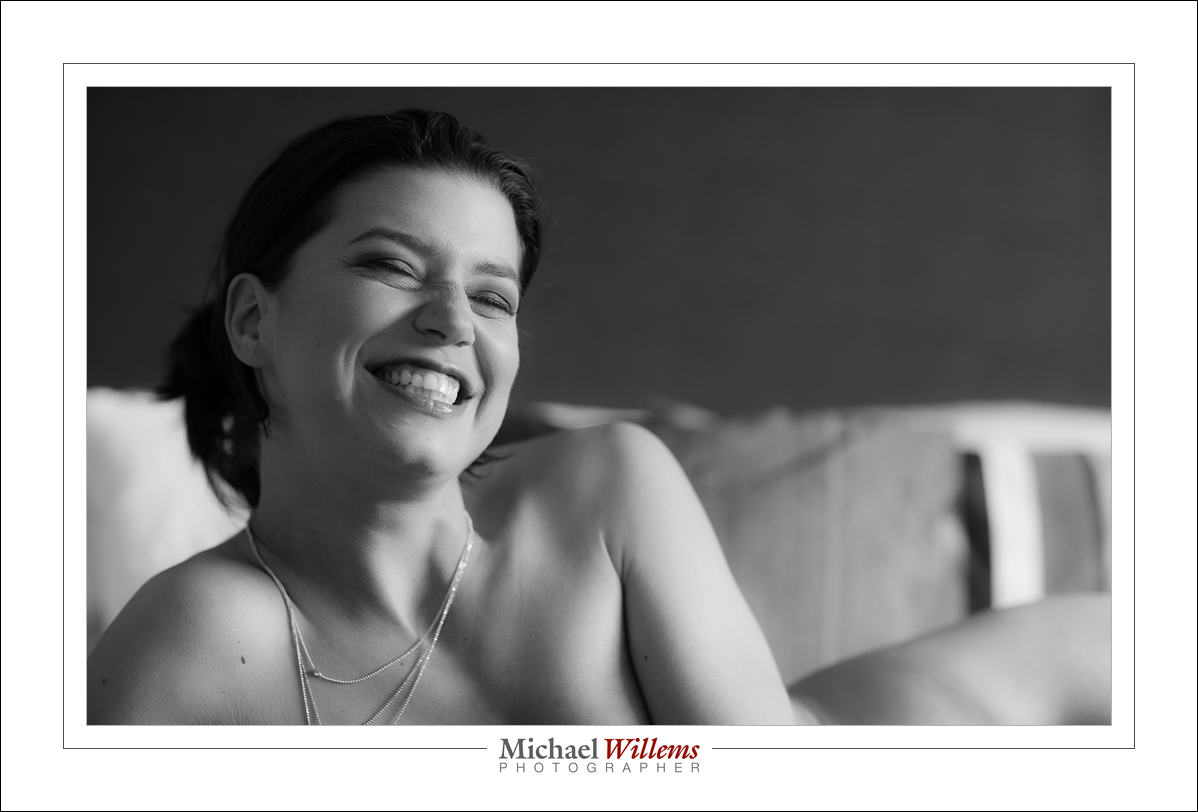
In the picture above, I asked my model to turn towards the light (which was window light on the north side of the room; i.e. soft reflected light). If I had not done that, the back of her head would be lit. In portraits, I think carefully about where the light should be coming from, and usually the answer is “from 45 degrees above, in front of the subject, perhaps left or right slightly”.

And you can do the same. As long as you ask the question!


The secret of fluorescent

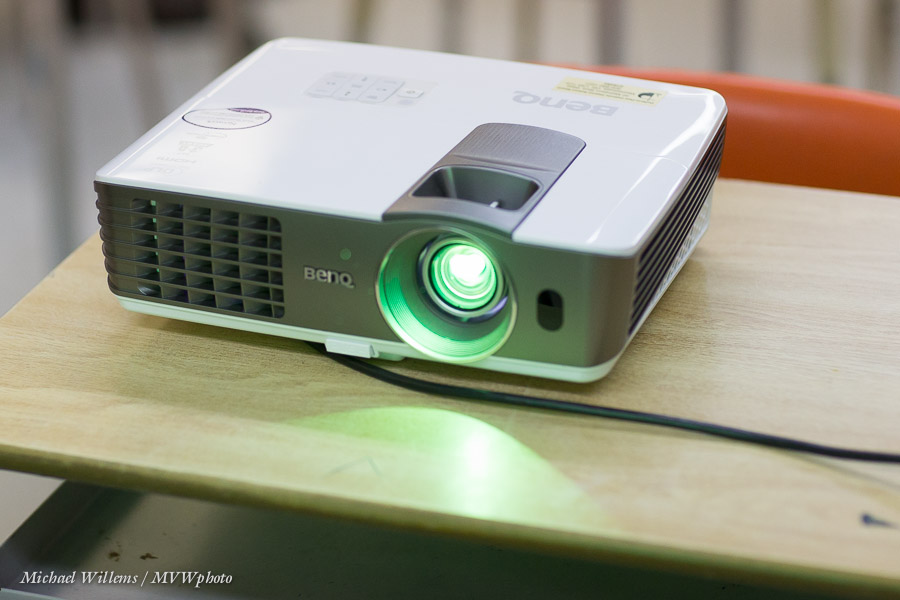
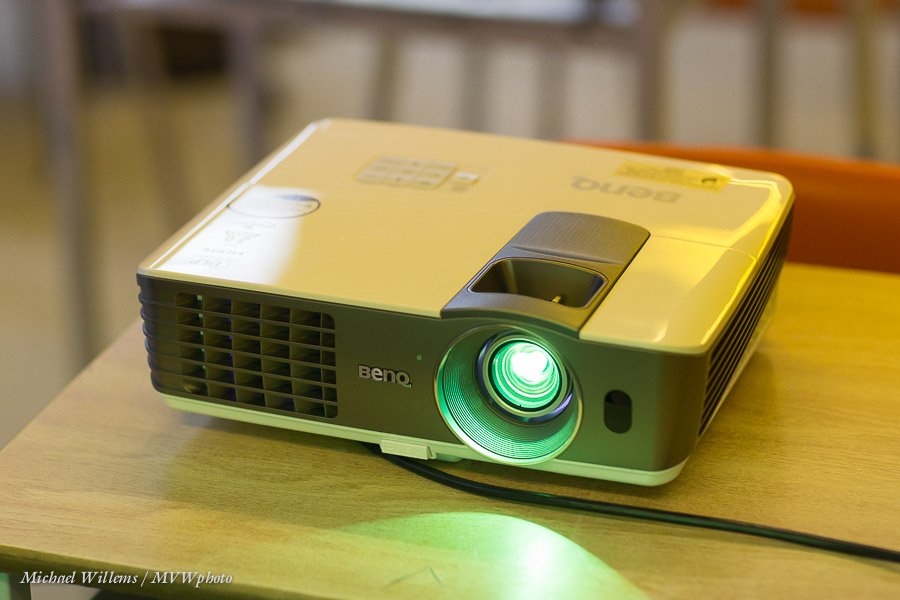
Consider this: two images taken at the same time.

Same projector. Same time. Huh?

A hint of what happened is in the projector light. It is the same hue in both images. So the camera’s white balance setting did not change. So the colour changed.

And the light, what was it?

Fluorescent, and that is the reason for what you are seeing.

Fluorescent lights are not continuous. Instead, they go off and on many times every second. Some flash on and off 1,000 times per second, but the cheaper ones go on and off 60 times a second. And that means that if you use a long shutter speed, like 1/60th of a second or slower, you will not notice any strange effects. But if you use a fast shutter speed, like 1/1000th second, then you can easily accidentally hit the part where the light is only just beginning to glow or where it is just going off.

So, when using fluorescent light, use slower shutter speeds than the light’s frequency. Which can be 1/60th second for the traditional older fluorescents.


The secret of darkness

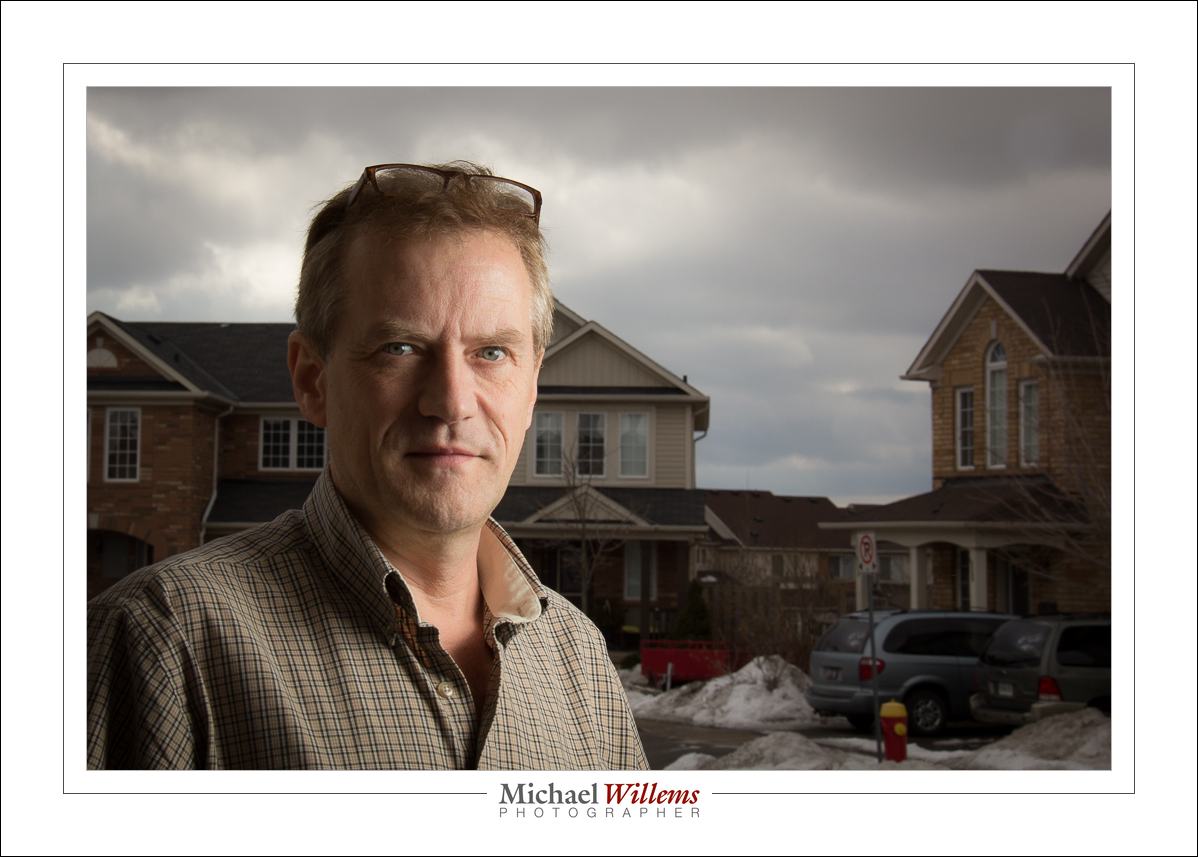
The shot I showed you the other day had a darkish background.

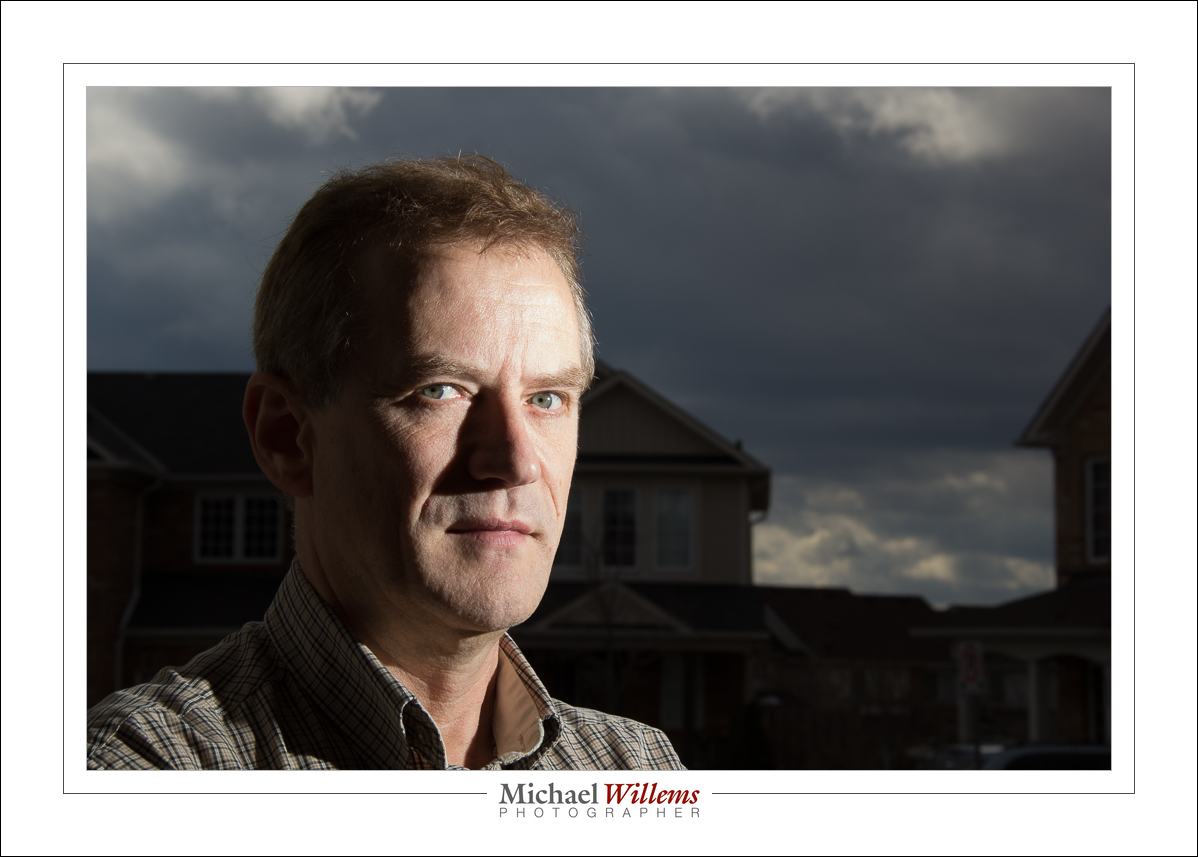
How dark? It was my usual “two stops below normal”. I.e. when I look at the scene, my light meter indicates not “0”, but “–2”.

Today: what happens when you make the background even darker. Like, four stops below normal. I.e. I use an aperture even smaller (I still of course use 100 ISO and 1/250th second).

Now we get a very dramatic portrait:

Which one is right? That is an impossible question to answer. It depends on what you want. On your style. On the picture and its purpose. There is no one “correct” photo. What you need to learn is the techniques to do all this. Then you can make up your mind for each photo you make.

One thing to keep in mind: the lower picture used such a small aperture that the flash had to be sued without a modifier: else it would not have had enough power. If you take my Flash course I will teach you a trick you can use to always know when you have enough power–or not.

___


Light, Portrait, #1

A few words about lighting. Today, two lighting types for you:

Broad lighting—you are mainly lighting the half of the face that is largest to you )turned toward you).

Short lighting—you are mainly lighting the half of the face that is smallest to you (turned away from you).

There are many other types of lighting (Split, Rembrandt, Butterfly, Loop, etc), and they merge into each other rather than being cleanly split (e.g. you could make the case that the second picture is really more Rembrandt Lighting); but these two will do for now.

The effect: Broad Lighting makes a face look broader. Short (or narrow, as I like to think of it as) Lighting makes the face look narrower.


More about that pro shot

As for yesterday’s shot: why do we call a portrait like that “dramatic”?

Because it is dramatic. And it is that for two reasons:

  • Two, you bring drama to colours and texture and contrast and skies by underexposing.
  • One, the (flash-lit) subject stands out clearly against the darker background.

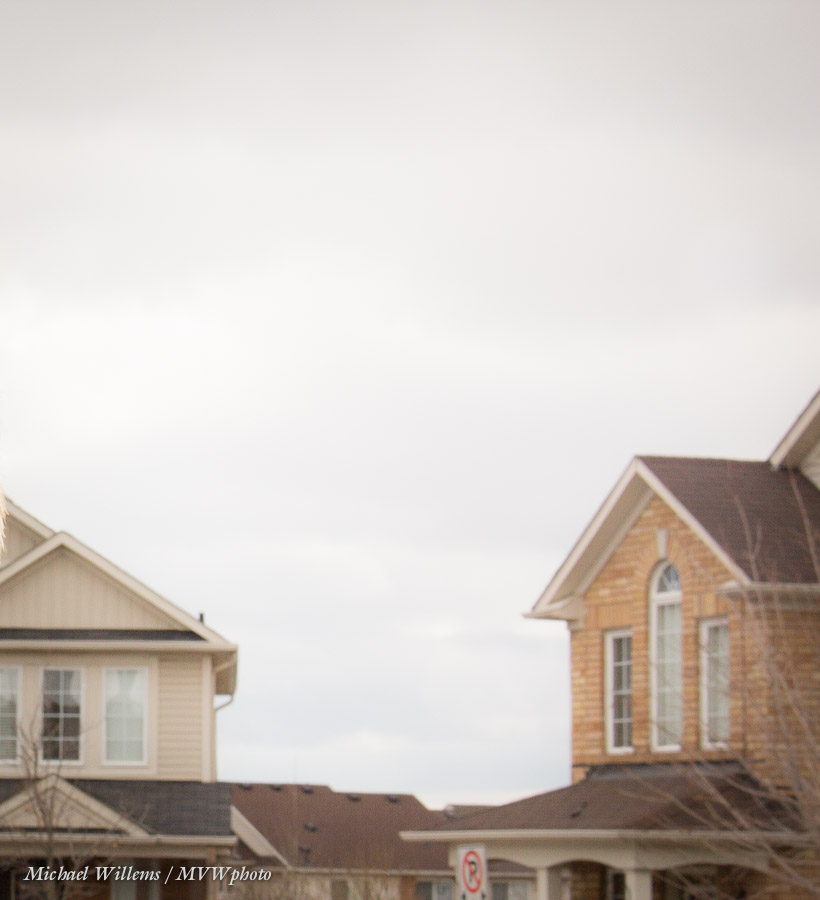
Consider yesterday’s sky the way it “really” was (if the camera exposed the way it wanted):

Now consider the way I shot it (2 stops “underexposed”:

See how the second shot shows detail and texture? And the dark ominous look allows me to light the subject so the subject is the “bright pixels”. Hence, a dramatic portrait.


Pro Aesthetic

Yesterday’s shot of the day was an “amateur” pro shot. Today, a “pro” pro shot. This one:

Lit how? With one off-camera flash (a Canon 430EX II speedlight) on the right, shooting through an umbrella. Using a 50mm lens.

The secret here is the “looks like it’s photoshopped in” look. Without actually using Photoshop or Lightroom. This is shot in camera. And you get this kind of “dramatic portrait” look by making the background darker.

How? The recipe for such a bright day, outdoors shot is simple.

  1. Set ISO to 100.
  2. Set shutter speed to 1/250th sec (the fastest sync speed; on some cameras it is 1/200th or even 1/180th)
  3. Now select the aperture that gives you a dark background, ca “minus 2” on the meter. This is generally between f/5.6 and f/18, depending on how bright it is. In the above shot, it was f/13.

That’s the background done. Now the flash:

  1. Set the camera to master/commander, and ensure the flash on the camera only issues commands (i.e. it is “off” when the actual picture happens).
  2. Set the remote flash to slave/remote
  3. Put it on a light stand and use a modifier like an umbrella if possible. 45 degrees up, on the side. (If possible: if you are shooting at f/18 the flash may not have enough power when you use a modifier, unless it is very close to the subject.)
  4. Test shot. If the flash part is to bright, use flash exposure compensation (FEC) to turn it down a stop. If it is too dark, try FEC as well, but the reason may be “insufficient available power”; in that case, bring the flash closer or dispense with the modifier.

And that’s the shot you get. Simple, very simple. now you go do it!

___

Learn all about this: Buy the Pro Flash Manual

More hands-on courses in Oakville imminent: see http://cameratraining.ca (http://cameratraining.ca/Schedule.html for the schedule). See the Kelby quote on the front page 🙂


Amateur Aesthetic

Today, another example of the “Amateur Aesthetic” or “Snapshot Aesthetic”made popular by such contemporary photographers as Terry Richardson, after Diane Arbus and Nan Goldin, two of my favourites.

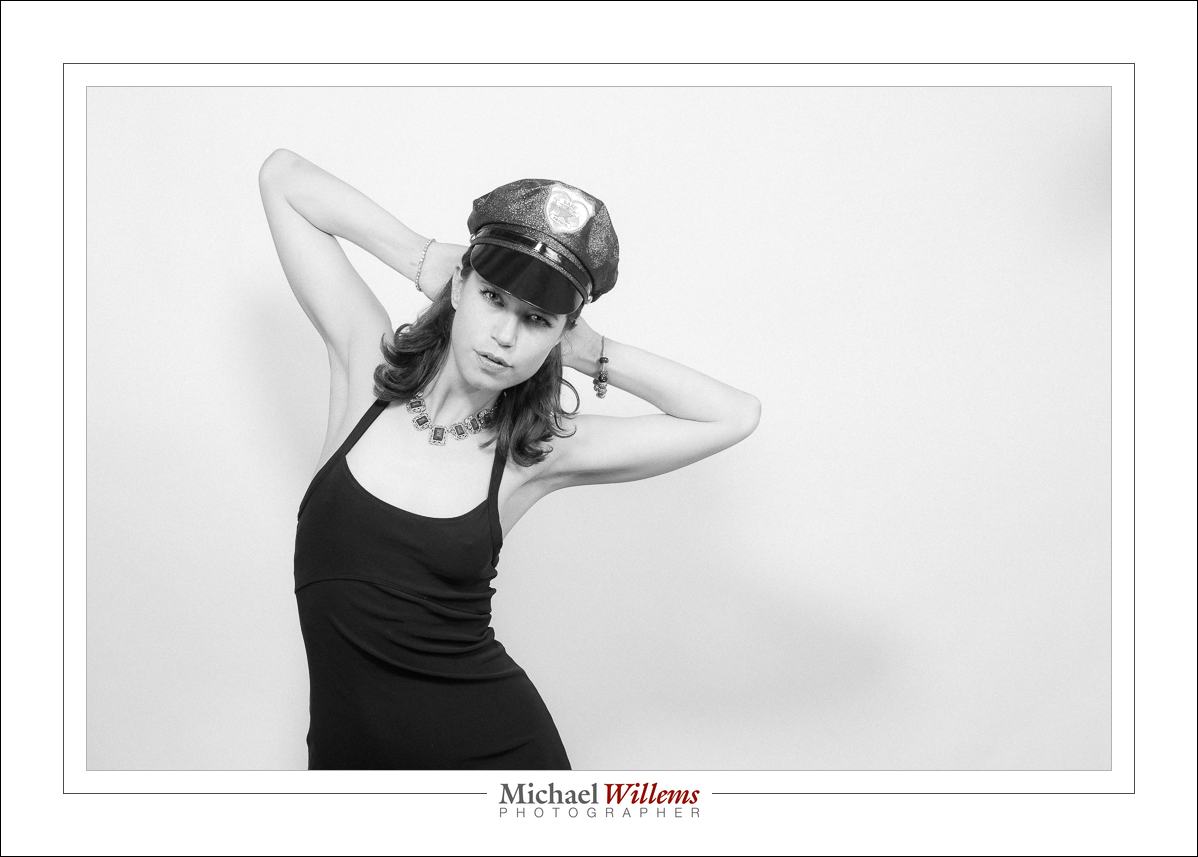
Here’s mine, a high-key model shot:

We call it amateur, or snapshot, because you use a flash straight on, and aim at the subject, and have the subject stand in front of a white backdrop, camera aware. Like Uncle Fred does. This gives you the drop shadow. It also, however, gives you very flattening light, and models like this: it hides any facial features. Overexposing a little, or rather, exposing brightly, makes it even better in that regard.

Unlike your Uncle Fred, my models and I think carefully about composition, light, and expression and pose. The direct flash means you need to aim the subject’s face down a little, else light comes “from below”, which is never flattering.

So nothing is left to accident, in spite of the amateur look.

For this shot, I used 1/160th sec, 400 ISO, f/5.6 and an on-camera 600EX flash. The flash compensation, like in the examples of a few days ago, was set to +2 stops, and I used TTL flash metering for flexibility.

Your assignment for today: shoot a portrait like this. I am about to teach a TTL flash course, and my student will do this as well. In addition to “proper” flash, you need to know techniques like this as just another tool in your toolbox.


This Report Contains No Flash Photography

Mass hysteria: we see it in humans all the time. Don’t use your cell phone in a gas station (total number of fires or explosions worldwide as a result of cell phones: zero). Don’t use your blackberry in a hospital (a 100 mW blackberry is supposedly a danger, while the doctor’s own blackberry, or the security guard’s 5,000 mW walkie-talkie, apparently represent no danger). Our local hospital has a No WiFi rule—and yet there is a WiFi network all over the hospital, named “staff only”.One presumes staff WiFi is kinder, gentler, somehow. Do not vaccinate (danger of vaccination: negligible. Danger of the diseases prevented by vaccination: immense). And so on. Superstitions are dumb, and I mean that: dumb because they knowingly do not look at evidence, just at emotional “I read it on the Internet” inputs.

One particularly insidious one is the uniquely British “This Report Contains Flash Photography” warning, with an exclamation mark, no less:
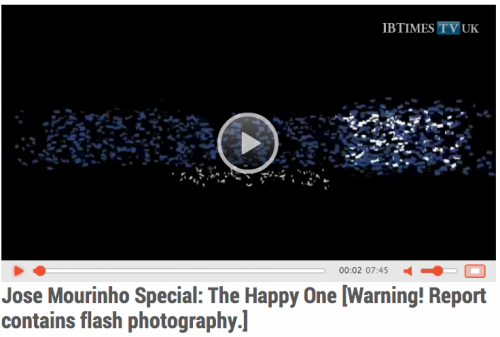
Every news item in the UK that has a photographer flashing is preceded by this warning. Even news web sites carry it. Newsreaders say it.  Enough to make you really, really fear flash photography. And as you may have guessed, The Speedlighter cannot let that go unchallenged. It is insidious because it leads to a general fear of flash.

The British justification is that there are some epileptics sensitive to flashes. Which is true, and we should not trivialize the seriousness of epilepsy. I would not: I myself have a brain that is very sensitive to light flashes at certain frequency, and EEGs have shown me to be very close to this type of photosensitive epilepsy: my brain displays distinct epileptiform EEG patterns. I remember the EEG: a weird experience, to have my brain affect the frequency of the flashes I was seeing. Brrr… Br-r-r-r-r-r… Brrrr… B-r-r-r-r-r-r… the flashes went.

However, (a) there are very, very few people with actual photosensitive epilepsy (a few thousand in the UK, The Guardian estimates; it is unlikely that out of those, more than a few are watching any particular broadcast), and (b) they are sensitive to repeated, regular flashes, say at 15-25 Hz, not to individual and irregular flashes from cameras.

The reason this warning is nevertheless carried is, apparently, a regulatory one. Safety above everything, and the law is the law.
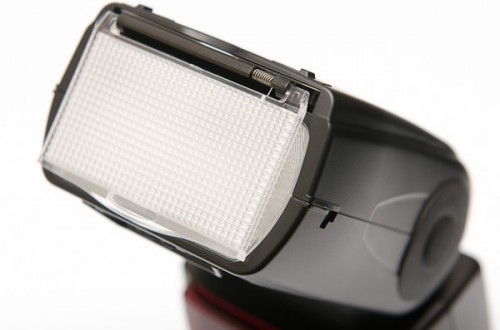
And the problem with that is that if we put safety above everything, we do not have a workable society. Of course, in practice clearly we do not do this: we make reasonable accommodations. Else, cars would have to move at 5 km/h with a red flag preceding them. And with two drivers at all times, preferably. We would, of course, not fly airplanes at all; nor would we ride horses. All nuts and nut products would need to be permanently banned, as would alcohol and tobacco—and fat. We would force-vaccinate all kids. All movies that contain any adult situations, nudity, political statements, religious discussion should be banned for fear they may offend.

As you see from these hyperbolic hypotheticals, saying “safety above everything” is unworkable, and we do not do it. We just pretend to, because it is comfortable for simple minds to hear that our governments are removing all risks.

When deciding whether a warning is useful, you look at other places, Do other countries mandate this warning? Not to my knowledge; and yet, there are no hordes of Americans, Germans, Canadians, and so on all dropping like flies from flashes in news reports. So we can safely say: yes, this is another case of mass hysteria. If you are asked not to flash because someone objects, fine. If you yourself have light-sensitive epilepsy, then ask for no flashing. Other than that:
___

Have you seen my new Video With Your DSLR course on the schedule? Check out www.cameratraining.ca‘s schedule page.
 

Terry

If you read this blog, you know I am all about proper lighting. And proper lighting is about off-camera flash technique, modifiers, and so on.

But it is also about making exceptions. One of those is what I like to call the “Terry Richardson look”. Look him up: he is one of the world’s most highly paid photographers and his typical work consists of putting famous people (think Barack Obama, Miley Cyrus, and every other celebrity) against a white wall and shooting with a direct, on-camera flash.

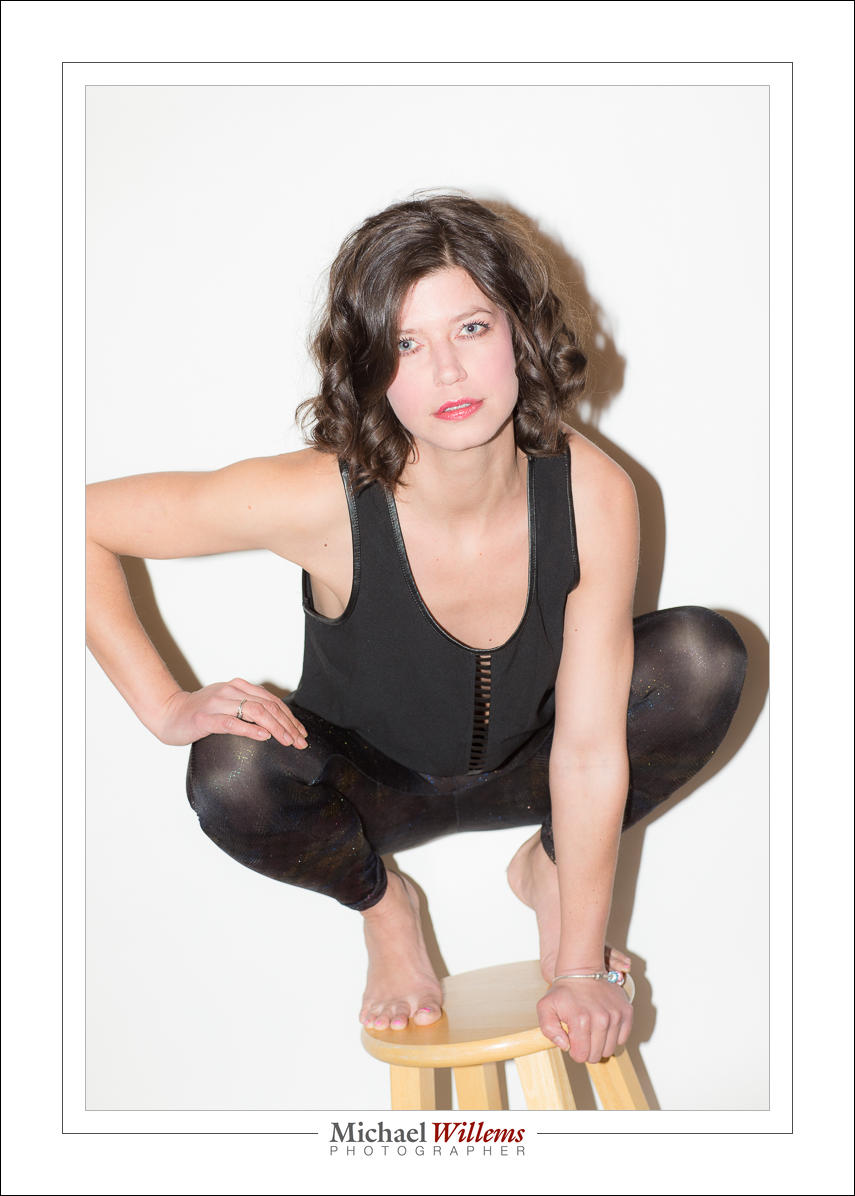
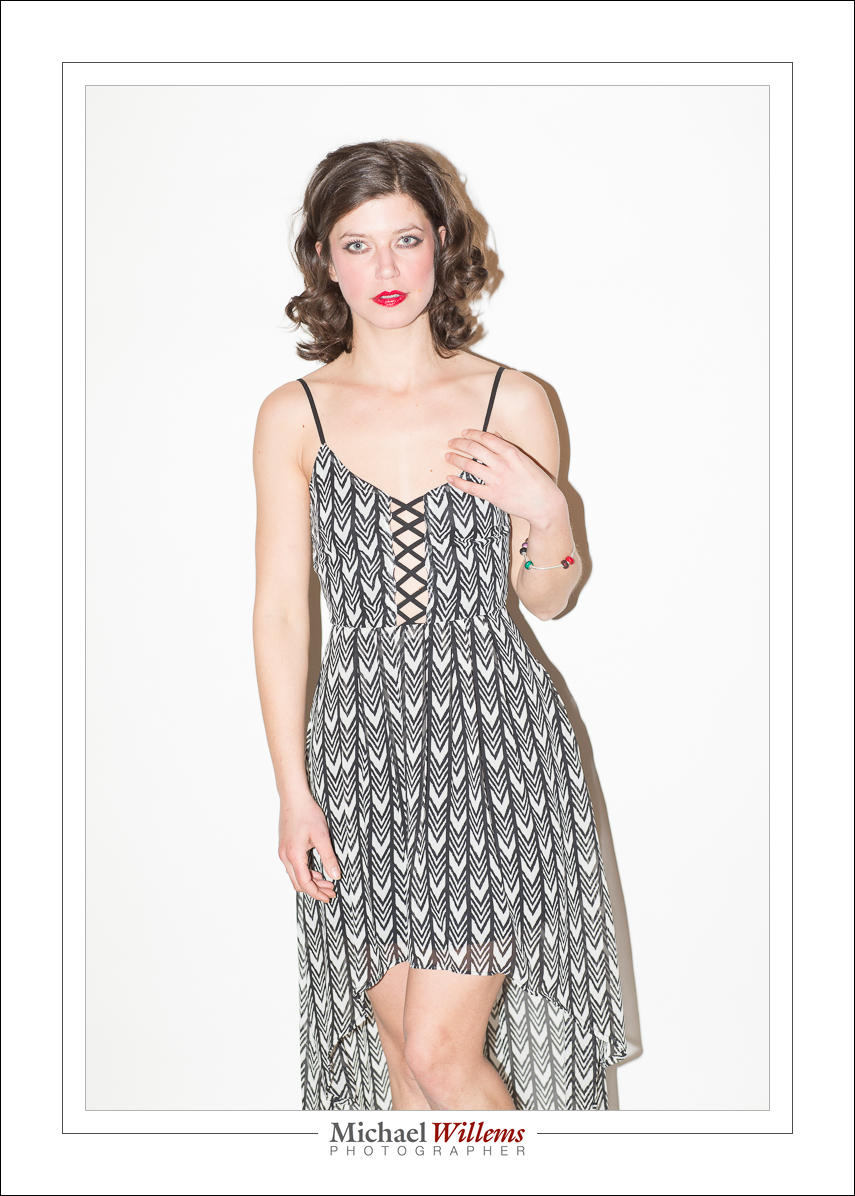
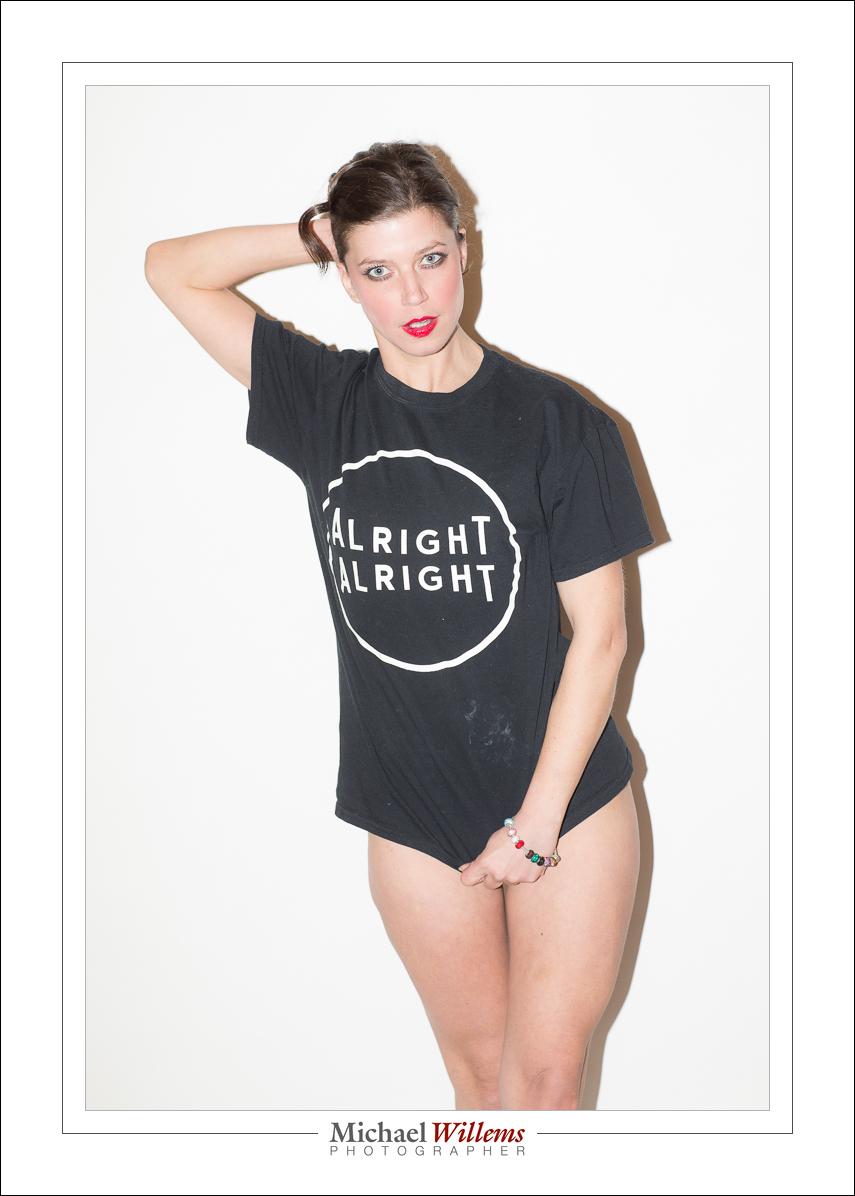
Normally, this is a recipe for disastrous snapshots. But he somehow carries it off, and we call it the “punk/amateur aesthetic”. And so I like to think I can carry it off too. Have a look at some shots from yesterday:

So why do these work, against all better judgment?

Because they have a recognizable look. And because they are what I would call urban cool. And they provide wonderful, even, beauty lighting that compliments skin and fills in any facial features (think wrinkles). And because lighting skin brightly is very complimentary. This Terry Richardson technique can take ten years off someone’s age.

The images above were made in the studio with a simple on-camera flash aimed straight into the subject’s face. I used TTL flash and (this is crucial) I set flash exposure compensation (FEC) to +2 stops. 400 ISO, f/5.6, 1/125th second.  You need a powerful flash (I used a 600 EX): the pop-up flash will not do.

But the above is all you need. And—here’s the kicker—because of this simple, all-filling light, no post work needed to be done on these images.

A few more examples:

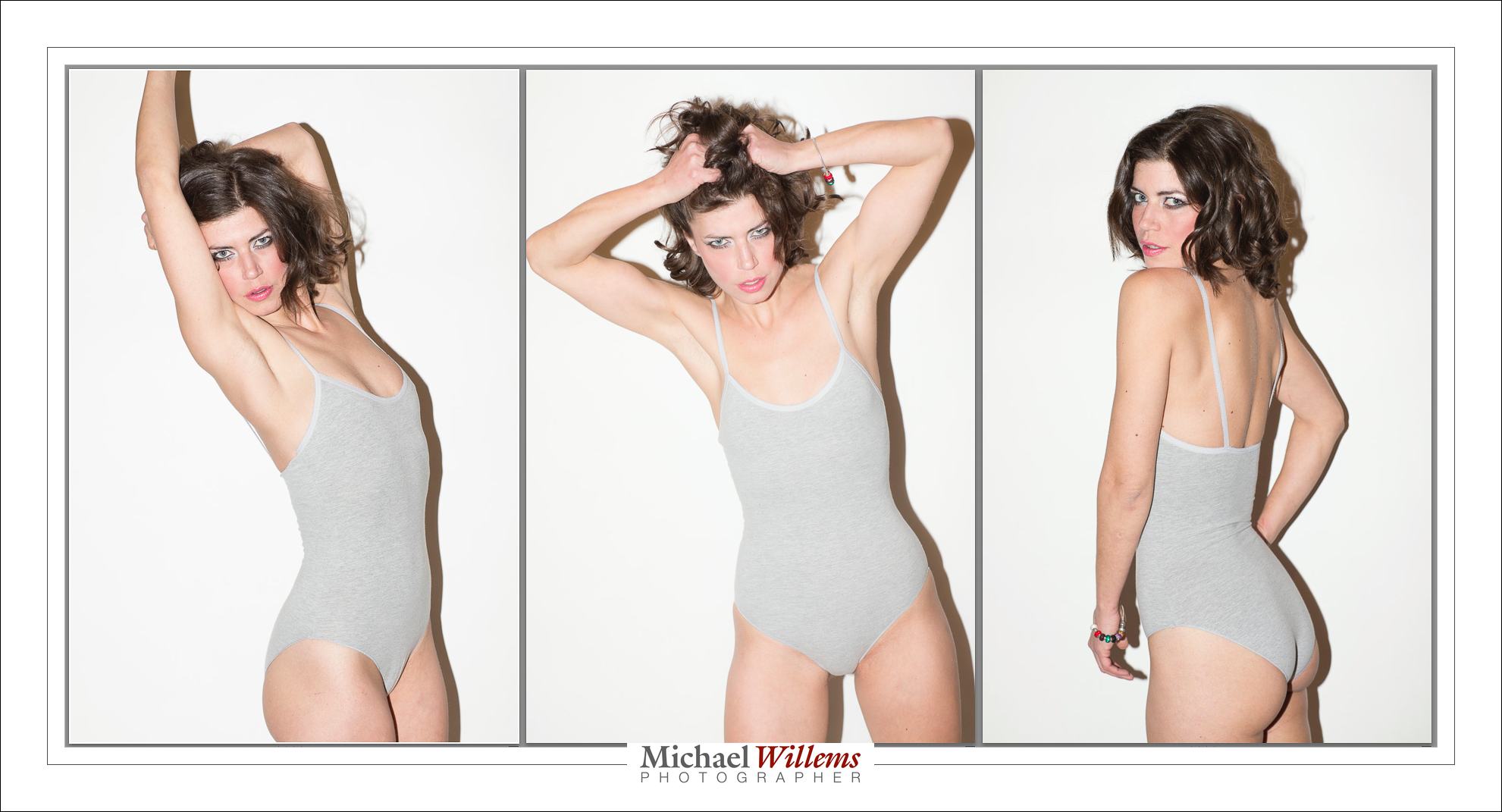
Triptychs work well, too:

So this technique may look like a snapshot technique, but it is in fact well thought out and executed. Of course I would not recommend doing this in all your pictures, if only because twenty years from now, this will look dated. But for sure, Mr Richardson is on to something here. And I am happy to have this available as one of my techniques.

___

Note: if you want to also see the nudes from this session, head on over to mvwphoto.tumblr.com