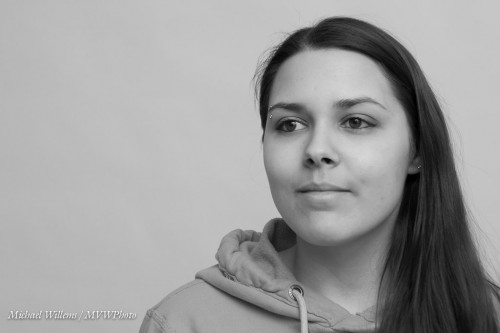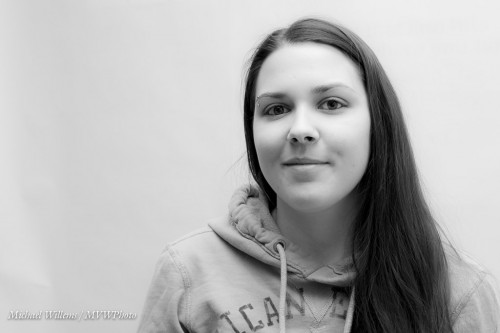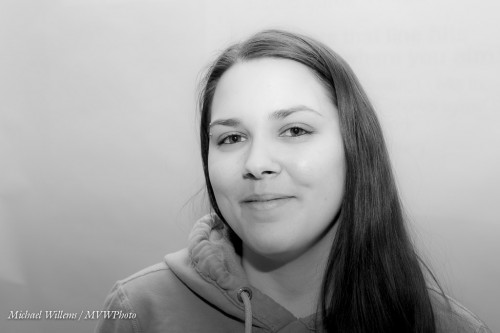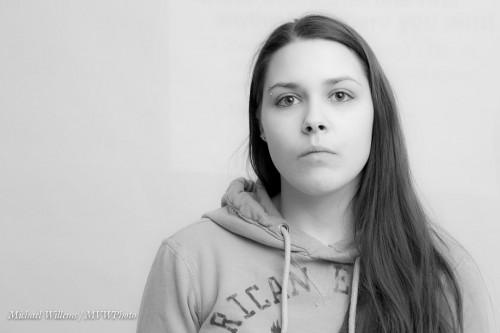
Breaking the rules

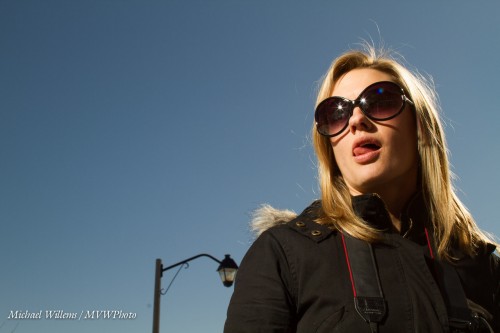
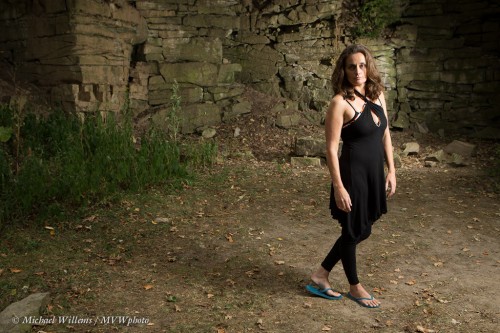
One of yesterday’s shots was a shot with very bright back light:
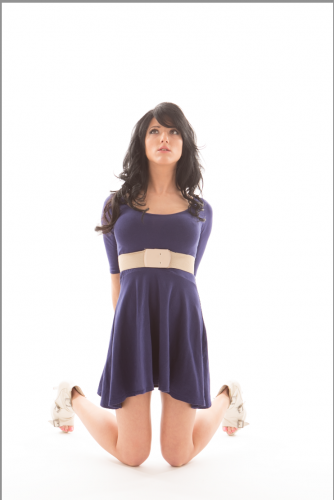
As you see, this image is so bright, that the flare in the lens is causing a lack of contrast. Here’s how much I blew out the background: red means “loss of detail”. Which is what I want for the background.
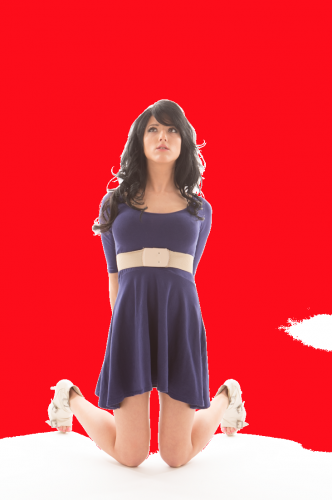
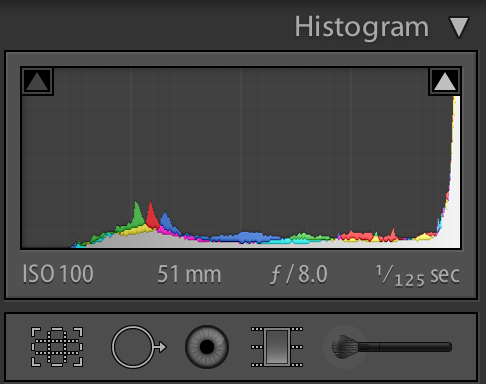
Now for that flare. I can see that the histogram, as a result, shows that there are no true blacks:
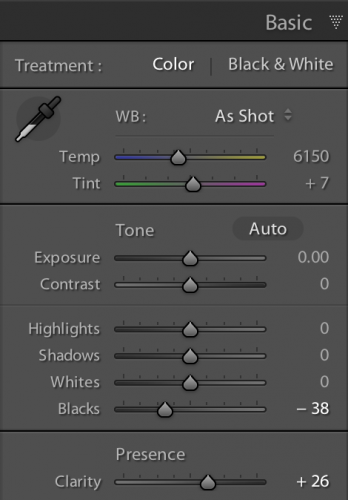
And now to finish the image, I can do a little post work – very easy. Drag the “Blacks” control to the left until the histogram touches the left edge. There are true blacks in the image so I want to see them as true blacks. And drag the “Clarity” control to the right until I get the right look. Which was like this:
That leaves me with the finished image as follows:
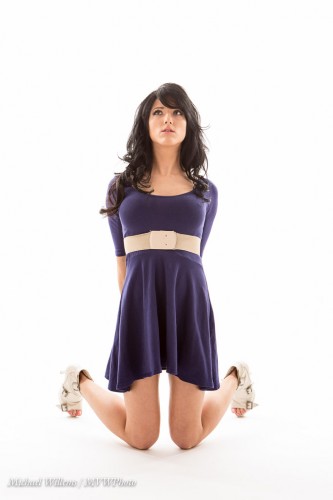
Which as you can see is much better than the original, Look a her hair, for instance, and at the flare (or lack of it, in the finished image) on the dress: problem solved.

This is a rather extreme example, but you will encounter this frequently. Keep this in mind, then:

  • Note 1: know your lenses and how they react to back light.
  • Note 2: remove your lens filter – it would have made the flare much worse.

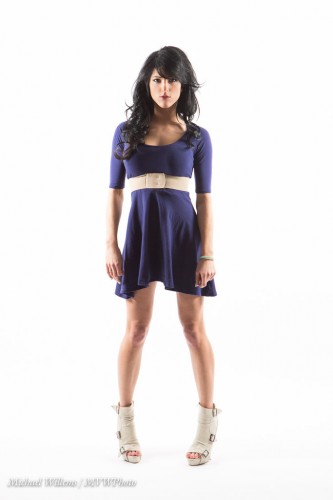
And note 3: you are allowed to do some post work. Another sample:
___

Note: The new workshop schedule is now up on http://www.cameratraining.ca – book soon to ensure your place. Flash, Canon/Nikon TTL, Nudes, and Studio Portraits are all available.


Separate!

Tip of the day: separate your subject from the background.

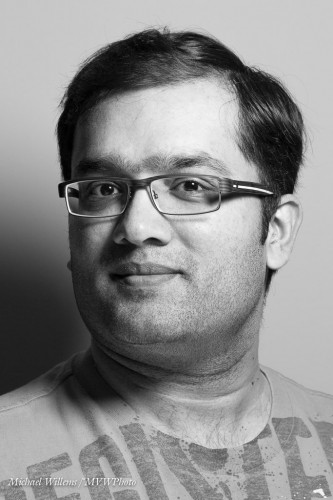
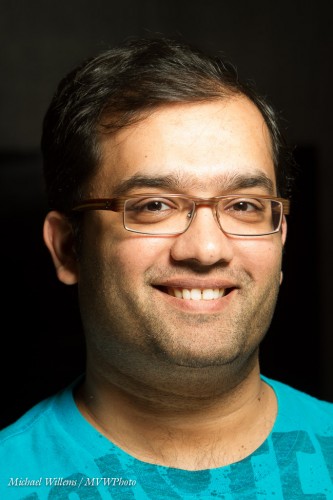
Like in a portrait like this, of my friend and student, talented photographer Adnan, (using one off-camera speedlight). I suppose it is “OK”, but no more than that.

…but there is no separation between the subject’s head and the background.

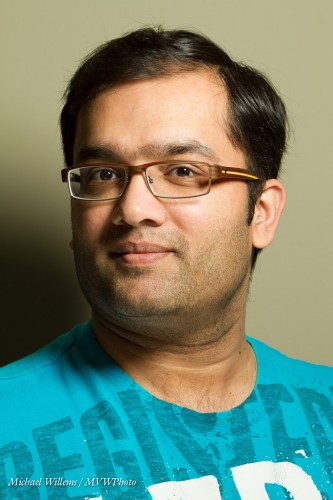
Better, use either a hairlight or simply a better background:

We still have the dramatic look, but now we see where Adnan ends and the background starts. And now I could make it black and white:

Simple portrait rules like this make all the difference!


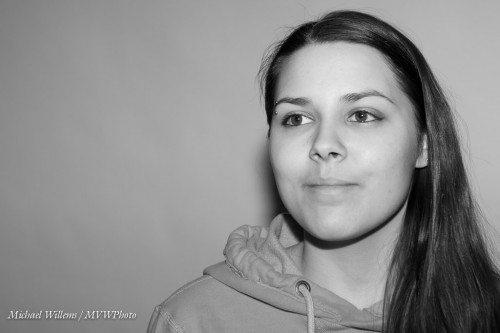
Trixie

I shall now repeat a flash trick I have mentioned here before years ago. Time for a refresher.

You all know how important it is to avoid, at least when the flash is on your camera, direct flash light reaching your subject. Both in order to avoid “flat” light, and especially to avoid those nasty drop shadows, like this (don’t do this at home, kids):

But you have also heard me talk (and those who come to my upcoming flash courses will learn hands-on) that you should “look for the virtual umbrella”. For most lighting, this means 45 degrees above, and in front of, the subject.

So when you are close to that subject, you aim your flash behind you to get to that point. Good.

But what when you are far, as when using a telephoto lens? Then the “virtual umbrella” may be in front of you. And aiming your flash forward is a no-no, since the subject will be lit in part by direct light.

A-ha. Unless you block the direct part of that light!

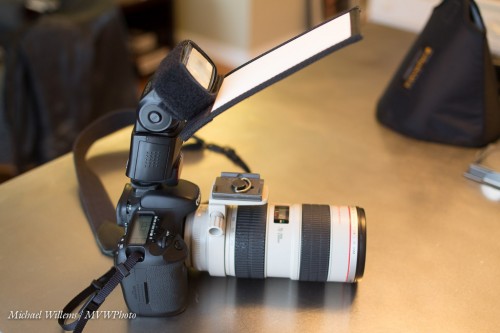
Like this:

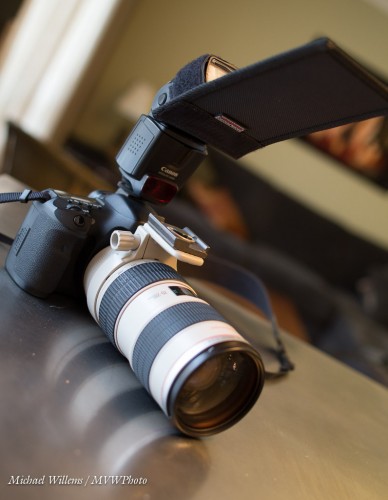
As you see, I use a Honl Photo bounce card/gobo to block the direct light. Simple, affordable, and very effective. I use either the white bounce side, or the black flag side, depending on the ceiling and position.

Simple, effective – done!

And one more thing. Direct flash is not bad per sé. Not at all. As long as it is not coming from where your lens is, it can be very effective, like in this “funny face” shot of a recent student (you know who you are):

Lit by a direct, unmodified flash. And the hairlight, the shampooy goodness? Yeah. The sun. Just saying.

(And yes, that too is something I will teach those of you who sign up for one of my upcoming flash courses.)


A bottle is a bottle is a bottle?

I don’t think so.  Look at this bottle:

Now look at this bottle:

Now look at this bottle:

They are of course the same bottle, same  time, same camera, same lens: but lit very differently. Number one, back lit with visible background. Number two, lit from its front by soft umbrella light, with a simple reflector/scrim background. Number three, back lit with soft light, bounced against the reflector; also with that same simple background.

The point is: hardness/softness of light and direction of light will make major differences to the image. When you make a photo, ask: what if the light was on the other side?  What if it was hard and direct instead of soft? Wat if I had several light sources, not one? And then, try these things. Use flash, of course, not just available light – try both, or a combination. What will happen is that you will get a good appreciation of what’s possible – and these skills will take you far.

One thing you need is flash skills: learn them from me. All new dates on www.cameratraining.ca/Schedule.html – sign up now, if you want to take part in a great learning experience.


How Dark Is It?

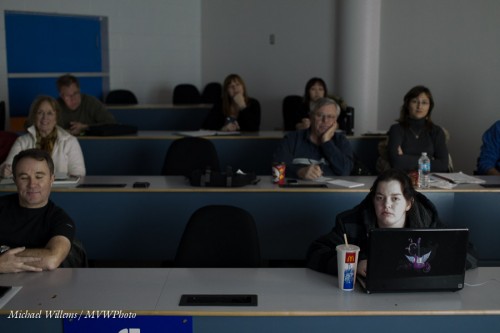
I looked around and asked my Sheridan College class, yesterday night: “how dark is this classroom?”

Most said “rather dark”, because it looked rather dark.

To us.

But not to my camera. Not necessarily.

I showed them. Click-click-click-click-click. And it was this dark in the room:

No, this dark:

No, this dark – not that dark:

No, this dark – not at all dark:

No, this dark – extremely bright:

The point I am making: your camera is a light-shifter. Do not settle for “my eyes are seeing X so the photo must look like X”. Why? Says who? Unleash your creative side, and see the camera as a light shifter.

And when you combine that with flash, you have a true creative tool at your disposal. Learn it; use it!


Find the Umbrella

Of course you bounce, yeah? I mean – one on camera flash, and you bounce that off the wall? My favourite modifier!

So you do NOT, ever, do the following indoors: aim straight at your victim. You see why:

Ouch. In spite of lovely Sarah, that gives flash a bad name. Instead, you bounce your flash off a wall or ceiling:

How do you decide where to point it?

One of the many things I teach in my Flash courses is just that. When using on-camera bounce flash, you should “find the umbrella” – i.e. where it would be if you were in a studio – and then point the umbrella there.

That often – usually, in most social situations – means you point the flash behind you.

Not straight up, when you are close: straight up when close to people means you get “the undead”: people with dark eyesockets:

Also, in this situation you do not point forward and up 45 degrees, for two reasons: (a) you get only a lit forehead and background; and (b) you get a lot of direct forward light, so it’s back to the horrible shadows:

Poor Sarah.

Let me correct that by showing you how it looks when I aim the flash up, 45 degrees behind me:

It’s easy once I show you. For now, just remember: find the virtual umbrella and point your flash there.

(By the way: when you do need to point forward -when the subject is far-, you need to do something else, and I will teach you a cool trick about that soon.)

___

The above images, featuring Sarah, are from yesterday’s all-revamped Flash course that I taught in Hamilton. Good news if you had to miss it: several new dates have just been scheduled, and several new courses! Sign up right now: www.cameratraining.ca/Schedule.html


An important law

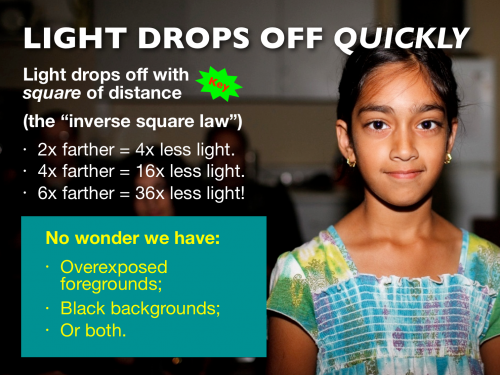
The “inverse square law”, passed by the Ontario government in 1988 as part of bill 42-C sub… no never mind. It is a law of nature:

And that is why forward flash from your camera gives you those bad black backgrounds (not even mentioning the shadows, the oily skin, the deer-in-the-headlights look, and so on).

This inverse square rule should be part of your photographic DNA, if is isn’t yet. Move a flash closer, and it can have more power. And vice versa.

But this law is sometimes understood incorrectly. It applies to distance between light source and object. NOT distance between object and photographer.

Find that hard to understand?

Then consider this: does a pale person turn into a dark-skinned person when you move back? Does a black-skinned person turn Caucasian when you approach? No. They turn into, respectively, smaller and larger persons (so the rule that fewer photons reach you does hold), not into darker or lighter persons.

My all-new flash course runs at 2pm in Hamilton: two and a half hours to go. I had better pack!


X marks the spot

Today, another small but important tip:

When you shoot portraits, stick some painter’s marking tape onto the floor exactly where you want to subject to stand.

Why? Well, if you shoot with manually set flash, you will want to  keep the subject in the same place, because if they move even a little closer to, or away from, your lights, you need to re-meter and re-set your exposure or your flash power. But even when you use TTL, there is a lot to be said for consistency. Your light direction is paramount, and small changes in position can dramatically change that. Finally, the marked spot makes the shoot faster: no need to subjects to constantly be told where to stand.

So make life easy for yourself: “X marks the spot”.  This way you can make every shot consistent and successful.


The Dramatic Portrait

Outside, right now. It is bright. Bright. Super-bright! Noon under a blue sky, and snow everywhere.

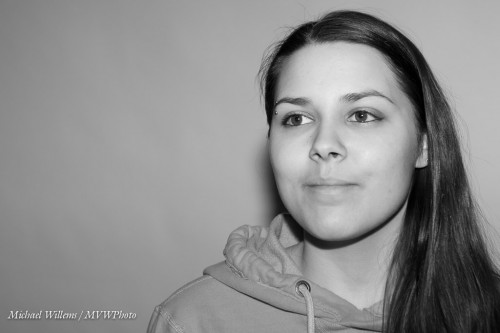
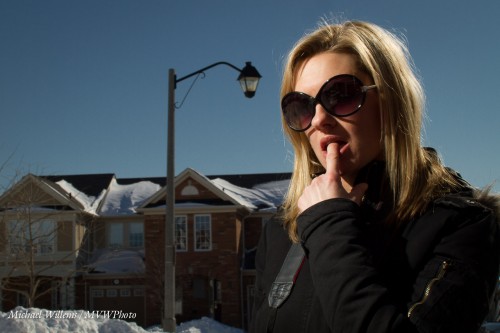
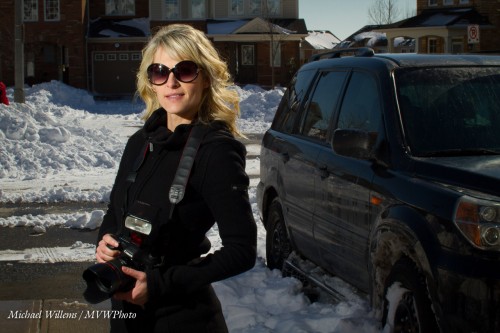
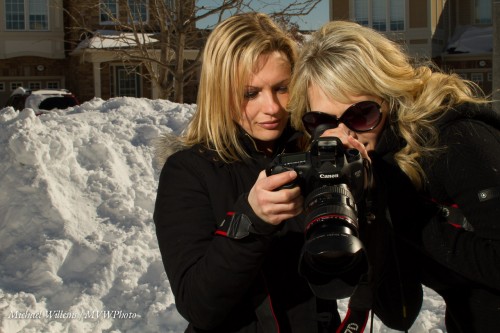
So now how do I do a dramatic portrait like these of my two students, wonderfully talented photographers Jenni and Becky (respectively)?

How indeed. Look at them full size to see the drama. Saturated colours plus plenty of personality! And that is how we shot them – no “Photoshopping”.

If I had used just my camera I would have had to angle them into the sun – bad. Instead, I prefer to:

  1. Angle them away from the sun to avoid squinting.
  2. Thus, use the sun for the hairlight (The “Shampoo-y Goodness”).
  3. Then, get a dark, saturated, background. First, I set my shutter speed to the fastest I can use: 1/250th second, the maximum flash sync speed.
  4. Then, I select a low ISO (100) and small aperture (wait for it: f/18).
  5. Then I use an off-camera TTL flash to light up the subjects. Yes, TTL, in this case: no need for Pocketwizards here.

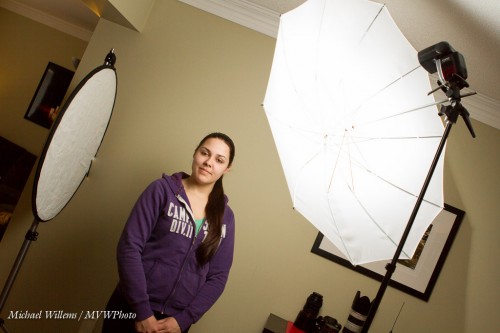
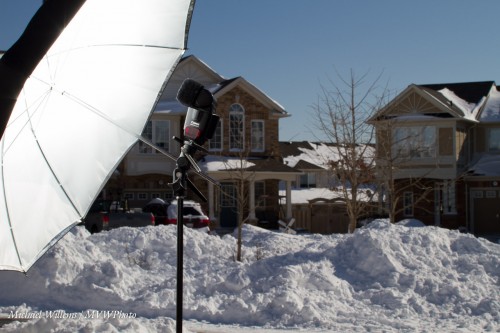
Now, the challenge: enough flash. Unless the flash is very close, it will not work well if it is a simple speedlight. I tried shooting into an umbrella:

But this needed the umbrella to be a little closer than I liked, so I turned the flash around and shot direct, discarding the umbrella. Yes, you can use direct flash, unmodified, if you are mixing with ambient light, and if the flash is well off camera. This gives us short lighting.

Here’s the students:

And they did very well indeed: their photos are stunning. Dramatic, and they now have a whole new range of possibilities added to their repertoire. You should consider learning the same: yes, you can do this with simple equipment.


___

Want to learn all this stuff? Allow me to once again point out these current and upcoming learning opportunities:

Michael


Why flash at all? Why outdoors?

No, I am not referring to people who enjoy opening their raincoat outdoors to show that they are wearing nothing underneath. As the Speedlighter, I am of course once again referring to flash lighting.

On a pro photographers’ forum recently, a few people said they shot “with available light only”. They seemed proud of it.

I have heard this many times. And I admire people who can do this. But I must admit that whenever I hear it, I think “this is probably because the person in question does not know flash”. And in most cases, that is true.

I know, there are legitimate differences in artistic insights. And yes, you can make great art without flash. No dispute there.  But that said:

  1. The number of situations you can handle is very much restricted if you do not use flash as an option.
  2. The number of styles you can produce is very much restricted if you do not use flash as an option.

Situations include very dark rooms. Back light. Bad colour. High contrast light. Badly directed light. Uneven lighting. Direct sunlight without squinting. Special effects requiring extra light. Special effects requiring colour. The list goes on.

And styles, even more so.

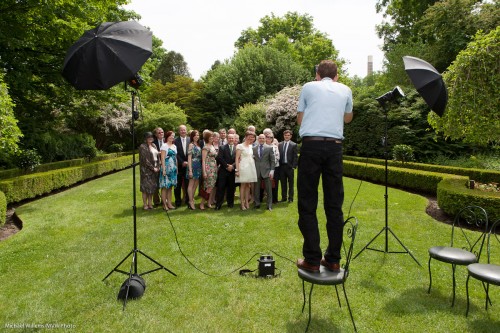
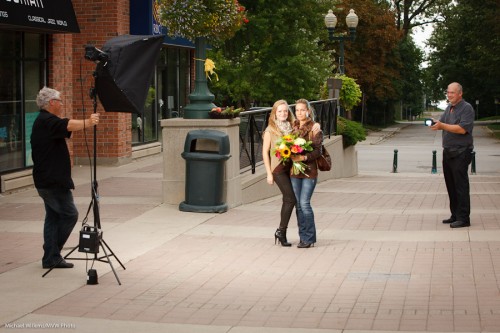
An example. Lucy and Matt’s wedding last year. Here’s me, about to shoot a group shot in direct sunlight:

\

(Notice how I am up? That is the only way to get all these people into the shot, if there are many layers of people.)

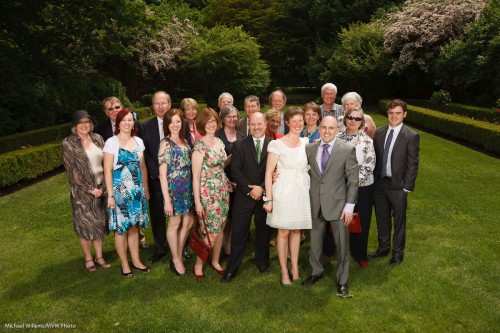
Anyway, if you zoom in (click until you see “original size”, you will see the people are not that well lit – not, that is, in a flattering way. And “bright pixels are sharp pixels” (Willems’s Dictum) – here, the people are not the bright pixels!

But in my shots, they are:

See what I mean?

And take student Melissa at last year’s Niagara School of Imaging at Brock University. No way you could do this type of dramatic portrait without flash:

Obviously, the effect photo from the other day cannot be done without flash either:

Nor can this:

Or this:

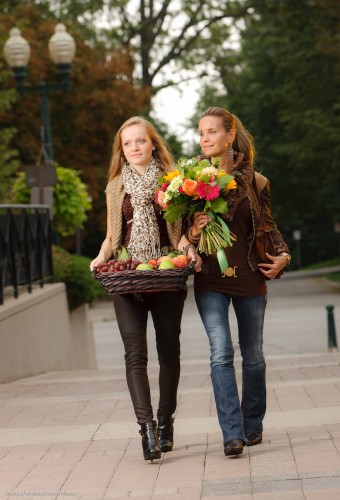
And the list goes on. Like this outdoors fashion shot of Melony and daughter Vanessa:

Vanessa and melony showing fashion (Photo: Michael Willems)

Which was shot like this, of course:

This, too, needs flash:

The list goes on. I think perhaps over half my images could not be made without flash. So.. why would you want to be a photographer who deliberately restricts herself or himself to half the possibilities?

___

Don’t forget, my new eBook is out: A unique book with 52 photographic “recipes” to help you get started immediately in many situations – including many that need flash. Read all about it here and order online today:

www.speedlighter.ca/photography-cookbook/