Table of Truth

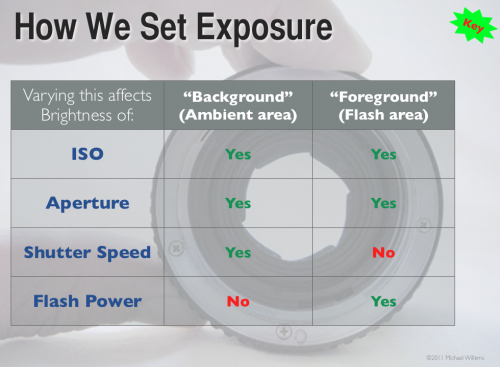
In case you, like many photographers, wonder how aperture and shutter, as well as ISO and flash power, affect your flash pictures – here’s how!

Study that graph – a good photographer knows this graph off by heart – in fact, a good photographer has made this chart part of his or her DNA.

Note that if you set your camera to an automatic mode (like P), or if you set your flash to an automatic mode (i.e. TTL), you’ll get confused, since the camera varies things! So when learning, keep everything on manual.


Dark arts

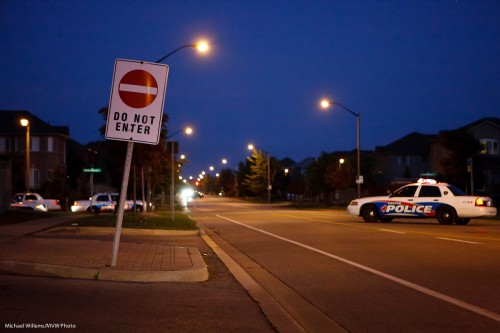
Darkness techniques, I mean. In other words: what do do when you have to shoot in the dark. Like in an image such as this, from the other night (as a photojournalist I take quite a few of these):

The simple answer: there’s no simple answer. In other words, there isn’t one single technique.

What I do is a combination of the following techniques:

  • Try to shoot when there is some light- not usually an option, since the criminal element does not wait until
  • Use a tripod or monopod, if possible.
  • Use a fast lens (one with a low “F-number”).
  • Use a wide lens, if possible – wider lenses are of course more tolerant of motion; while longer lenses show every little tremble.
  • Use a higher ISO – 3200 in this image, which is as high as my a-little-long-in-the-tooth 1Ds Mark 3 can go.
  • Crouch and make myself into a tripod.
  • Take the image many times – in the hope that one will be “accidentally sharp”.
  • Underexpose, and then later “push” the image (at the expense of more grain).
  • Use what you get – in this case, cars turning around right beside me lit of the police cars on the left, so I waited for more cars to do that (otherwise, those police cars would be dark).

By using some or all of the above techniques, you can get sharp pictures even when it is difficult, and when others fail.


Back to basics

You know that as an event shooter, I use TTL (through-the-lens flash metering, using a preflash) very widely. Much as it is sometimes hard to predict, it is the only thing you can use when things are moving quickly. Like at an event.

But sometimes, things go wrong. I had flash maslfunctions for part of Saturday’s shoots. You see, TTL is not really unpredictable -once you know how it works (metering bias to the focus point, for instance, and an assumption of 18% grey where it meters) it is predictable. So a malfunction is when it becomes actually unpredictable.

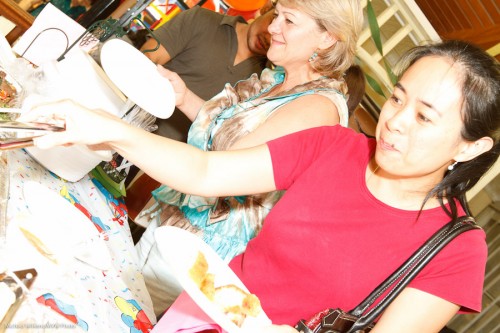
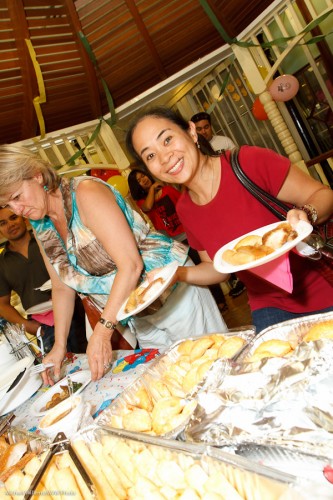
As it did Saturday with my dying 580EX II flash. Here’s three consecutive shots – I do everything the same, and yet I got, in rapid succession in the same setup, one dark shot, one light shot, and one OK shot:

Too dark. And the next one, way overexposed:

And the third one, almost OK:

I cannot live with this craziness. So then what do I do? I go back to basics. Actual basics. The basics we used in 1980. Namely, I set my flash to manual power setting (my camera, of course, is already on manual exposure settings).

One quarter flash power ought to do it, I thought, looking at where I was bouncing and what my settings were – and that worked great:

So then for the next dozen or two shots I stayed in the same place, shot people at the same distance, and kept the flash and camera set to the same. Bingo, predictable shots.

So when life hands you unpredictability, force predictability on it If you use the same settings and it’s all manual and your distance to the subject stays constant, the pictures will all be the same.

Sometimes, 1980-style basics work just great. Actually, they quite often do. My camera is very often on the “manual” exposure setting, for instance.


Flash assist

Sometimes when shooting an event, I cannot easily bounce my flash. In that case, I will first try to use mainly available light –  meaning, turn up the ISO. That gets me shots that are borderline acceptable, like this from Saturday’s event shoot:

So here’s the message: even when I am not using the flash as the main, overpowering, major light, I still use it in these cases.

Turning the flash on and bouncing it behind me, while I lose most of that light in this room, still gives me a better picture:

This gives me what I would call a “flash assist” image:

  • Better light, brighter whites
  • More control over direction of the light
  • Fewer shadows where I do not want them, and softer shadows overall
  • Better control over colour balance
  • “Bright pixels are sharp pixels”.

So why did I take the first picture above?

Simply because my 580EX II flash failed. It fired intermittently Saturday, This is why pros always carry spares: I grabbed my other, second, 580 EX II and put that on my camera instead. The first 580 will have to be retired – a blow, because it’ll cost me more than I earned in the shoot to replace it – but them’s the breaks.


A simple lighting setup?

What one person finds complicated, another finds simple.

And vice versa. A friend who visited the other night reminded me of this, when I talked about the simple four-flash light setup I was using for a headshot:
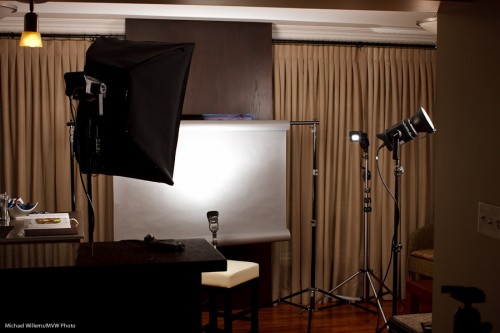
And as he said that, I realized that perhaps it’s not simple.

But if you want to take portraits, then it should be. In other words, without knowing how to do a “traditional” portrait setup, it is hard to do creative portraits. No, that does not mean you need to make all portraits traditional – you can do great stuff with one off-camera speedlight and a grid.

But you need to know how a traditional portrait is made. Which is with:

  1. A backdrop (paper roll, here).
  2. A main, or “key” light, in this case a Bowens strobe with a softbox.
  3. A fill light (Bowens strobe with umbrella, in this case).
  4. A hair light (speedlight with Honl Photo grid and egg yolk yellow gel).
  5. A background light (speedlight with Honl Photo blue-green gel).
  6. A way to drive them: Here, I used one strobe and two speedlights fired by pocketwizards; one strobe by the light-sensitive cell.
  7. Metering: I used light meter to arrive at f/9.0 at 100 ISO and 1/200th second.
  8. Ratios: I set the fill two stops darker than the key. And the hair and background light by trial and error (I got them right first time – done it before).

A note about those gels: colour makes a difference. I love the blue-green gel on the background, to contrast with the red hair – contrast is good. That’s why the butcher uses green plastic between the red meat – to make it look redder. (Oh wait – butcher? We buy meat at the supermarket now, in neat little packages. Dumb me.)

Anyhow – parsing makes things simpler. If you are faced with a complex situation, parse it, i.e. take it apart, one thing at a time. Analyse each layer until you understand it, then go on to the next layer. And before you know it, you will be saying “that’s simple”.

That’s what you learn when I teach you: how to make complex situations simple by understanding the elements, then building on those. Deductive learning, if you will.

And what does the setup above produce? Portraits like this:

Headshot (Photo: Michael Willems)

(Canon 7D at f/9.0, 1/200th sec, 100 ISO)

A plug, if I may: if you, too, need an updated headshot, and live in the Greater Toronto Area, do call me. For Facebook, your resume, LinkedIn, or your web site: a good headshot helps, and Headshots Specials are on during the month of September!


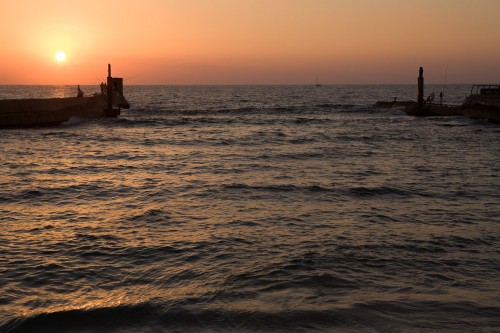
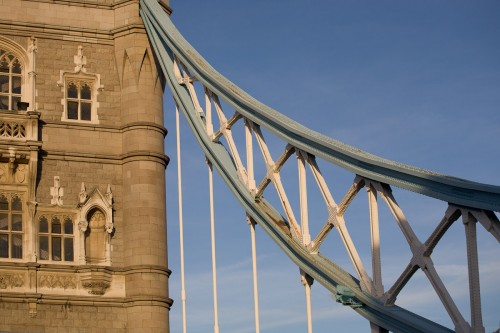
Golden

I don’t have to tell any of you the best time to take photos, right? Mid-day on a sunny day.

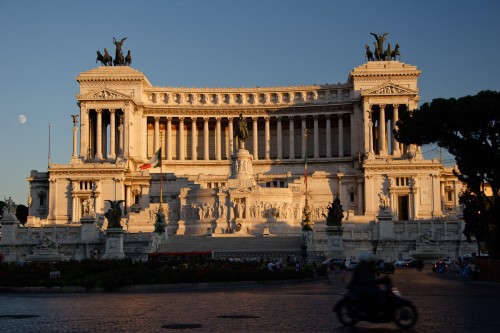
Kidding. Of course what I meant is “the hour before sunset” – or the hour after sunrise, but then I tend to be asleep. The Golden Hour, as we call it.

Piazza Venezia (Photo: Michael Willems)

Around sunset:

  • Light becomes more red since it passes through more atmosphere;
  • The sky gets darker, meaning more saturated (blue rather than blown out white);
  • Light becomes less harsh;
  • Shadows get longer and softer.

To benefit from this, ensure that your camera is set as follows:

  1. White balance – daylight (the sun symbol);
  2. Exposure – not too bright (maybe exposure compensation around -1 stop);
  3. If the shutter speed gets low, ensure you increase ISO or use a tripod.

Simple. In Rome, as above, and in Tel Aviv, London and anywhere else you care to shoot. Sometimes it is just as simple as “be there at the right time” rather than “use lots of technique”.

Tel Aviv (Photo: Michael Willems)

Tower Bridge (Photo: Michael Willems)

Of course as you all know, you can also shoot at mid-day – that’s when flash comes in. More about this in many future posts, I can assure you.


Fashion flashin’

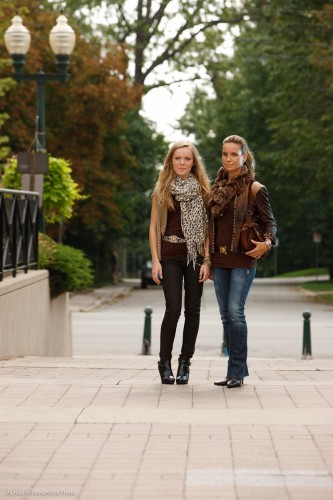
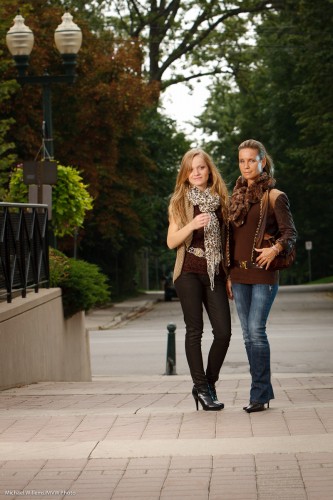
Sunday morning, around mid-day, in downtown Oakville I shot a fashion shot for a magazine front cover.

Outdoors fashion is, as always, a matter of many things coming together at once. One of those is light. Without light, even on a wonderful overcast day (wonderful in photo terms), the image lacks something. The mother and daughter models lack a certain je-ne-sais-quoi.

Actually I do know – they lack light:

Models in Oakville (Photo: Michael Willems)

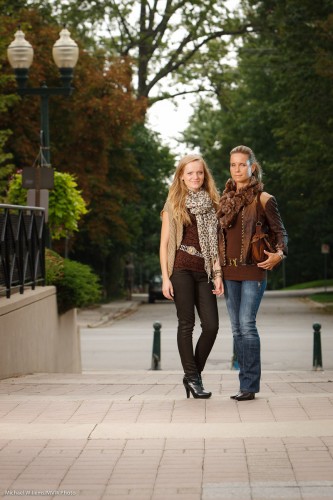
So we add a flash. I used a Bowens 400 Ws strobe, although I could have used speedlights. The sequence is as follows:

  1. I set my camera to manual.
  2. I select 1/200th second and 100 ISO.
  3. That gave me, on this particular day, an aperture of f/5.6 for a nice saturated background. (To arrive at this, I can use my in-camera meter or my light meter set to ambient.)
  4. I now add the strobe, set it to 80% power about 6ft away, and test this with the meter (now set to flash mode). Well have you ever:  the meter immediately indicates f/5.6! (This is just experience. If you are less experienced, no worries – just turn the light up and down until you do read f/5.6).

That gives me:

Models in Oakville (Photo: Michael Willems)

If I want the background a little darker I change the speed to 1/250th (still in my flash sync range):

Models in Oakville (Photo: Michael Willems)

Okay, we are set. If the sun comes out a little more,  I go to 1/250th, and if it gets a tad darker I go to 1/160th.

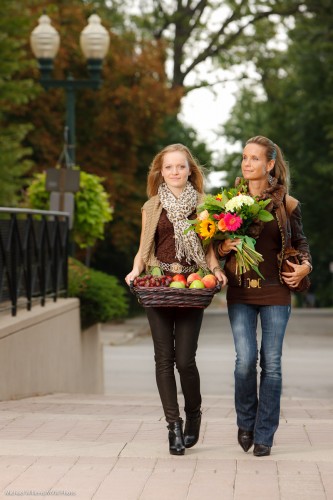
The idea of this shot is autumn – so we now bring out the props. Autumn flowers and fruits and vegetables now gives us this:

Models in Oakville (Photo: Michael Willems)

Notice the speedlight with a blue-green gel as accent/hair light on our right? The speedlight was held by Kurt, who assisted on this shoot, and was set to 1/4 power (again – experience tells me that setting will probably work – and it did).

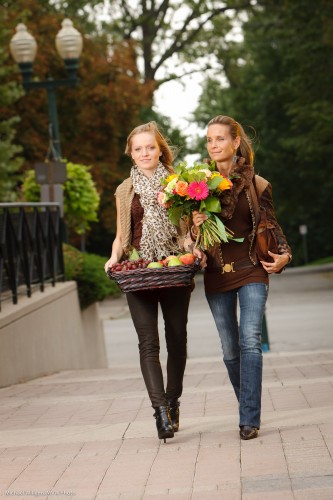
The final step is to make that an egg-yolk yellow gel instead of a blue-green gel – yellow accentuates the late day setting sun feeling that is synonymous with autumn. (I use Honl Photo gels).

Models in Oakville (Photo: Michael Willems)

And there we have the image. (In fact this is not quite the image – that one went to the client, and I do not like to publish images in this open forum before the customer has used them!). Also – note that these are shot a little wide since this is for a magazine front page, so there needs to be space for text.

Notes:

  • Umbrellas and softboxes outdoors will be blown away, so hold on tight.
  • If the models move, use AF-C/AI Servo focus mode.
  • With two models, be very aware of the danger of blinking – one of them will blink in very many images, so check, and take many images.

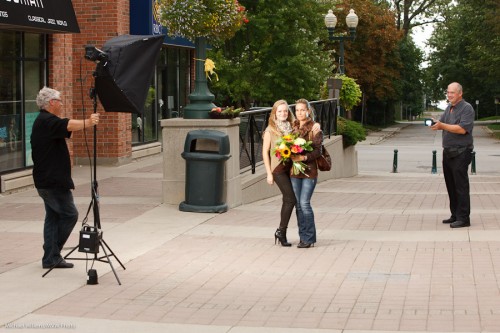
The setup was as follows:

Fun shoot.

(And perhaps also, a shoot that explains why photography costs money: A car full of equipment, props that get used just once, two sets of clothing, and five people taking several hours. All this costs money!)


Vegetation Tip

A quick tip, today:

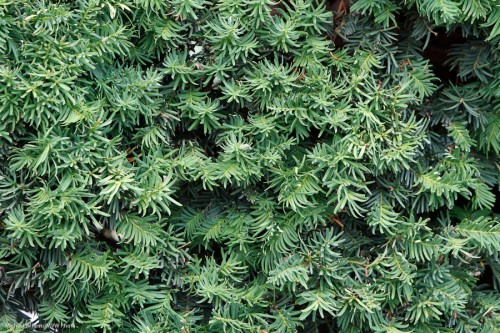
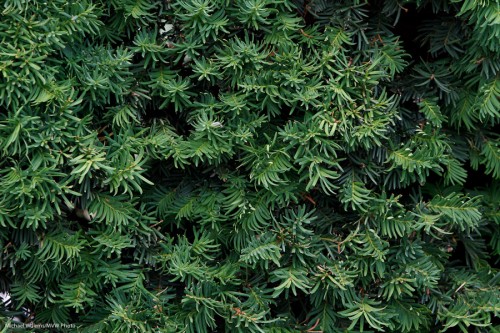
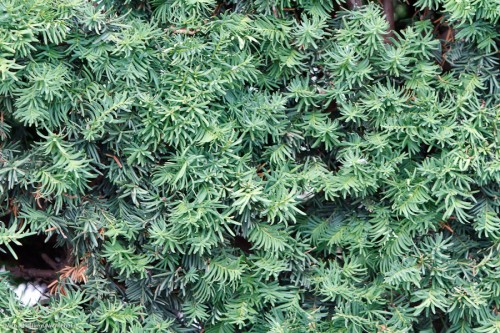
Green vegetation is dark. About a stop darker, on average, than a grey card.

That means that when you shoot green plants (a hedge row, or the back yard,or the fall colours), the image is too bright. Too bright means “washed out”:

Not too bad.. but one stop darker – i.e. exposure compensation set to minus 1, or the light meter pointing at “-1” if you do it manually – gives you this:

Much better.

If you had adjusted the wrong way, i.e. to plus 1, you would have gotten this:

Of course this holds for average green plants – some are brighter, and if you mix sky into the mix your camera will give you different readings (you might try the spot meter).

At least you are warned now – plants will often look washed out unless you expose them right – and right often means down by a stop.


The Importance of being colourful

Colour is an interesting thing. It can help or hinder your pictures. It helps if you are using it where it is wanted; it hinders if you use it when it is not, or if you fail to use it when it is.

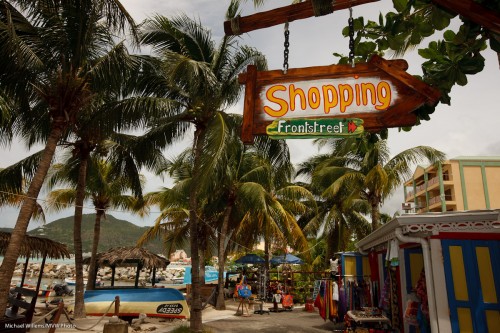
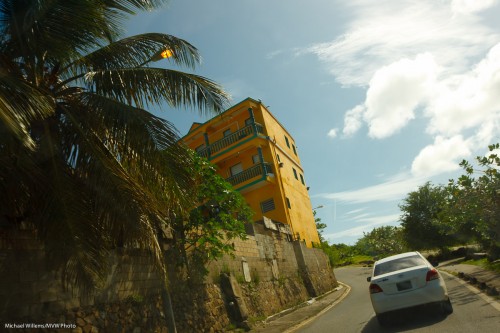
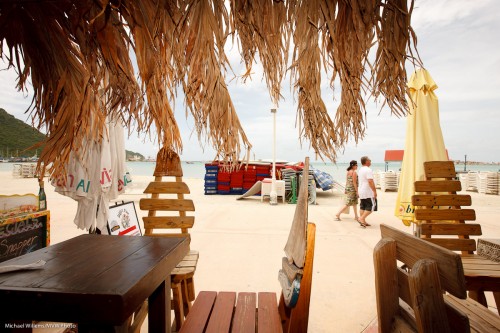
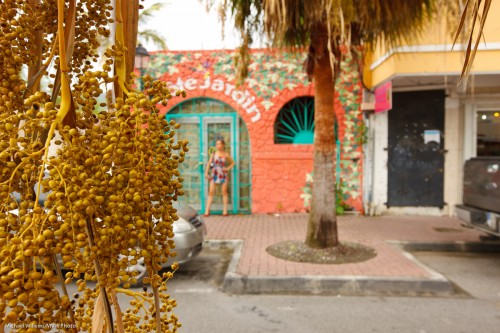
The Caribbean is all about colour. People are happy, the sun is hot, and everyone uses wonderful bright colours. So a scene like Philipsburg, Sint Maarten, needs colour:

Philipsburg (Photo: Michael Willems)

Technique needed:

  • Flash: I needed to use my Canon 580EX flash for this sign.
  • Exposure: I made the colours vibrant by exposing the rest of the image down a little: 1/200th at f/13 at 100 ISO.

In the following image, I needed no flash – or rather, it would not have done anything:

Sint Maarten (Photo: Michael Willems)

In the next example, I needed the flash just to light the plants that make up the roof, or they would have been black:

Sint Maarten (Photo: Michael Willems)

And one more, where I used the flash:

Sint Maarten (Photo: Michael Willems)

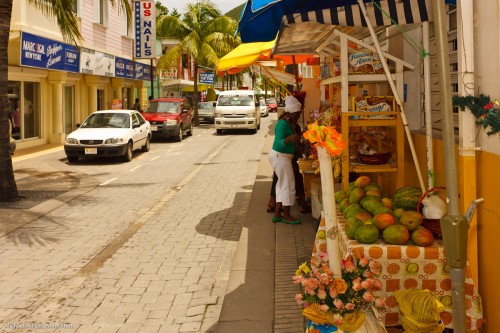
One more – a street grab:

Philipsburg vendor (Photo: Michael Willems)

And one more, again showing wonderful Caribbean colour:

Philipsburg (Photo: Michael Willems)

I suppose this all boils down to a few simple rules:

  1. Decide if color is needed; is it an important part of the image?
  2. If so, expose well – underexposing ever so slightly will make colours more. saturated; overexposing leads to washing out. (Note: you are allowed to “expose to the right and fix in post – you get better quality).
  3. Use a flash if needed to light up areas that need lighting up.
  4. Use the right white balance.
  5. Consider a polarizer on sunny days.
  6. Add a little saturation in post if you have to.


All very logical once you think about it.


Eyes Skyward

Want a dramatic sky?

Dramatic sky in Oakville (Photo: Michael Willems)

The simply do the following:

  1. Aim at the sky – fill your entire viewfinder with it.
  2. Lock your exposure, by pressing the “AE-L” button (Nikon) or “*” button (Canon).
  3. Aim down to compose the way you want.
  4. Focus on a close-by object (by pressing the shutter half way and holding it after the beep).
  5. Shoot!

Simple, innit?

And there are two ways to do this:

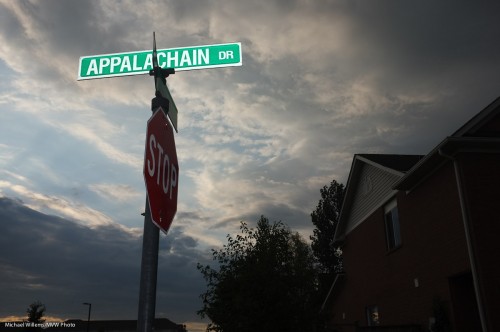
  • If you turn on your flash, the close by object gets lit up, as in the above image I took in Oakville on a walk, with my excellent Fuji X100.
  • If, on the other hand, you did not turn the flash on, the close by objects would now all be silhouettes. Which can also be nice.

You’re the boss-  which is what photography is all about!