Slowlighter?

Well, you do not always have to use additional lighting, of course.

Remember that image yesterday?
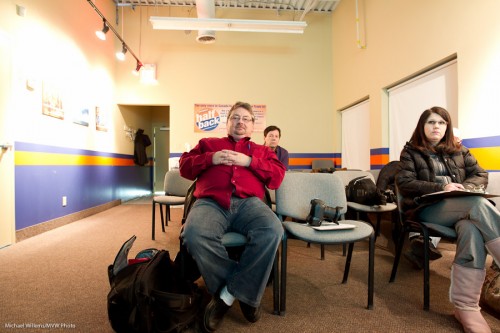
That was shot in the dark – yes, in a room where I had turned the lights down to almost zero visibility. Just to show it could be done.

If you use “auto ISO”, when using a wide angle lens that will lead to something like 12800 ISO at 1/15th second. As it did in my case. It looked like this:
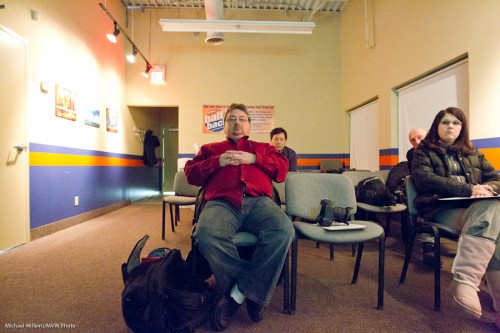
Yeah, nice and stuff. And perfectly usable; do not be afraid to do this.

But when you zoom in, you see the drawback of those high ISO values (click to see real size):
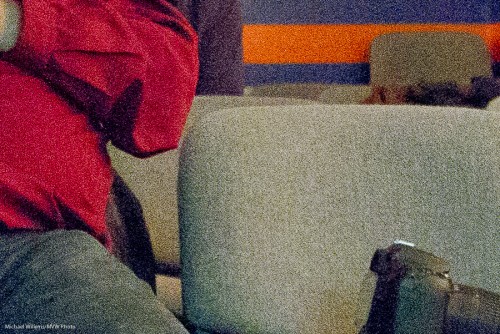
See what I mean? Not bad, but not great, with all that grainy noise.

So then I turned the ISO down to just 400. This of course got me an exposure time of 5 seconds, so everyone sat still. Result:
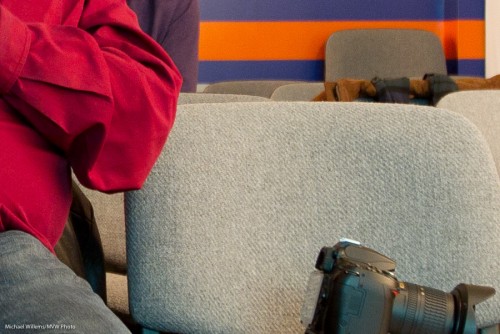
I promised yesterday I would explain why I shot with this composition instead of aiming down a little? Simple: because I did not have a tripod, so I needed to use the desk to hold the camera still for 5 seconds.

If you feel like another exercise: here you go. Go shoot a night image that looks like day.

You will need a tripod. You will need patience. You will want to use a low ISO value to avoid noise. Cold northern hemisphere nights are best to reduce noise. Go try it yourself tonight. And do not forget to make your image a nice composition.
About colour in photos

In my series of “travel tips”, here’s a thought or two about colour.

Colour is often nice when used very deliberately. And the good news: there are tricks to doing that.

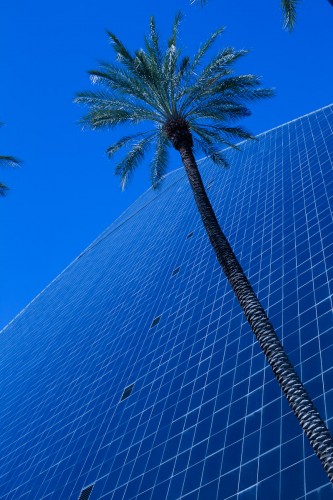
Like using single colours. Whenever you see a strong primary colour dominate, consider whether this might contain a picture:

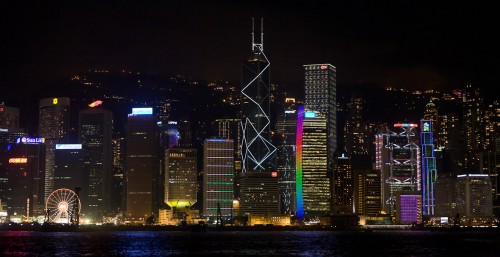
Blue Vegas

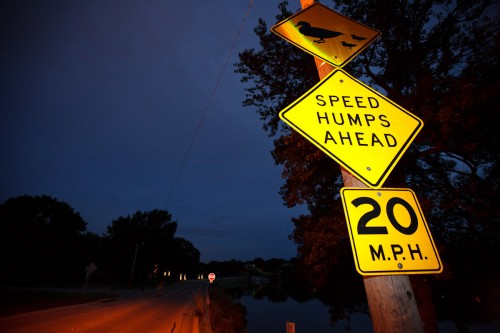
Or when you see opposite colours – like blue and yellow together:

Speed Humps!

(Can you see the use of flash in that image?)

Warm colours are good too – think about a sunset. Think of adding a little CTO filterin front of your flash (a gel – I use the Honl gels, which like the rest of the Honl range of modifiers, has made my life much easier).

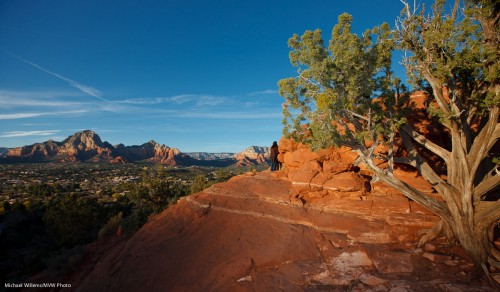
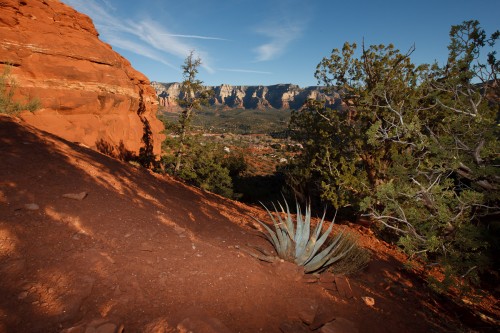
And I especially like the combination of all three main primary colours, red, green and blue, all in the same image:

Sedona Afternoon View

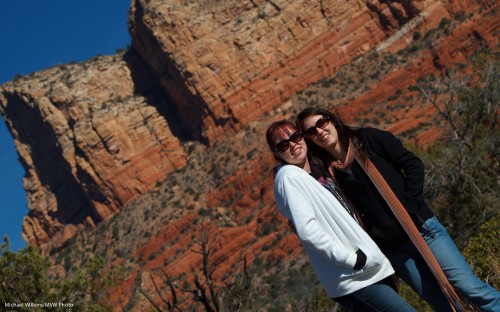
You will see this in many of my images: here’s another one, an on-request snap of a couple of tourists in Sedona, AZ (can you see I used a long lens for this? Why?)

Sedona Tourists

Finally, candy colours can be fun too: we look at them, our eye is drawn to them:

Candy Cane Colours

So my lesson for today is: think about colour: how are you using it? Are you getting the best out of it?

Foot note: I mentioned David Honl above. Dave is coming to Toronto – he is my special guest in a three-hour course on “Event Photography and Creative Light”, on Saturday, 19 March 2011. The location is to be announced but it will be in, or right next to, Toronto. Let me know right now if you want to reserve your space.

Flash Outdoors?

Another quick travel photography tip for you all today. My cold is still getting ever so slightly better every day – soon, longer posts. Until then I concentrate on useful!

Flash. Use it outdoors. When it’s sunny.

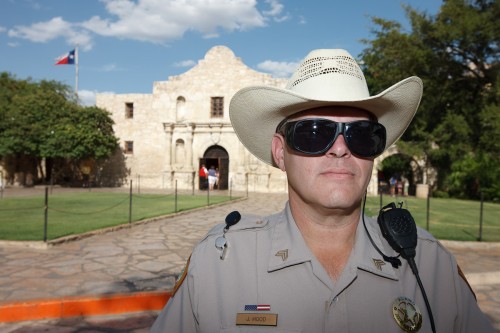
Yes, you need flash when it is bright and sunny! Like here:

Officer Hood at the Alamo

Without flash, his face would have been dark.

And look at this no-flash shot. Can you see what’s wrong?

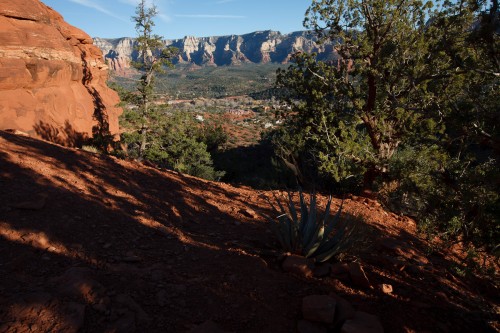
Sedona Sunset

Right, so now we light up the foreground with our speedlight:

Sedona Sunset

Sedona Sunset - with flash

See how much difference that makes? In that last picture, I used a flash exposure compensation setting of -1 stop, to avoid the flashed part of the image becoming too bright. All I wanted is some fill.

Softly softly.

In keeping with yesterday’s post, one more post on lighting humans, and why a”softly softly” approach is good especially in glamour and art nudes photography.

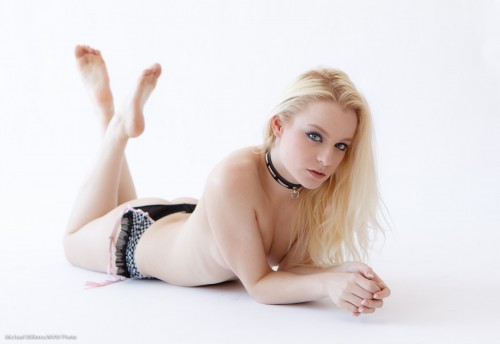
In Sunday’s “The Art of Photographing Nudes” workshop, we shot a lot of the images using available light. Images like this:

Model Kassandra relaxing

In a shot like this, you take a “soft” approach in various ways.

  • You use soft light, especially when shooting females. Available daylight from a north-facing window is good. That is what we used here.
  • You also use bright light, Bright, high-key light makes skin softer and smoother. Everyone likes that.
  • You take an easy approach with the model. Calm, take your time, do not rush and do not over-direct. If a model has an idea of her poses, some light instruction is all you will want to do. Else, the shoot will be less relaxed and your images will suffer.
  • You go easy on explicitness. Keeping things hidden is often a way to make a picture more interesting and more alluring.
  • You go easy on complexity: keep it simple. In nudes especially, the emphasis is on the human body, not on the backgrounds. I like using very simple backgrounds for much work, like the image above.

Those simple tips will help you get the most out of any portrait session. In our next workshop on this subject (which we will do in the next few months, probably in March) we shall do more.

Warning: bodies here

Today marked the first “The Art of Photographing Nudes” workshop that Joseph Marranca and I held in Mono, Ontario for photo enthusiasts.

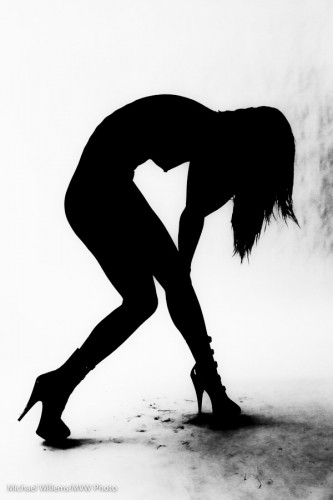
Kassandra, grunge James Bond nude silhouette

In this workshop, students learned about such things as:

  • Background of the nude photograph
  • Types of nude shots
  • Challenges
  • Equipment/technical
  • Model: interaction, finding, putting at ease
  • Men vs Women
  • Light: how to keep it simple
  • Colour vs Black and White
  • Composition
  • Do’s and Dont’s

Many practical tips made this a very useful way to spend a Sunday, and everyone went back with lots of shots.

When you have a great model like Kassandra, your task shifts slightly from directing every shot to “setting up the shot, then taking lots of images, then selecting the ones you like best”.

We shall be holding another one in March – let me know if you think you might want to be one of the students. Two expert photographer instructors, one cook (thanks Michelle) and no more than ten students at the most.

After the click, another few shots.

Warning: those of you that are offended by the sight of the human body (I am sorry if in 2011 you are: we all have one – and  if you want to be a photographer you had better get used to that fact!) – that there will be unclothed human bodies after you click here:

Continue reading

Snow Tips

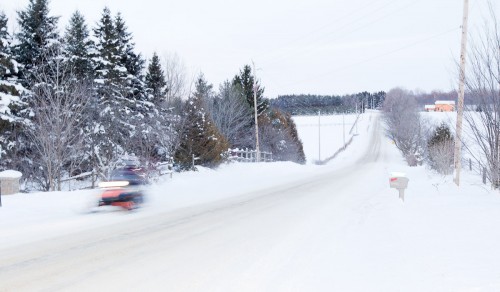
Snow. The many inches I got here in the last day or two prompt me to write you a quick post about snow pictures. And how to take them safely.

Pics like this:

Snow scene outside the driveway

The things to keep in mind are:

  • Exposure: expose to make the snow bright. If you are using a semi-automatic mode (like A/Av) or an automatic mode like P, you will need to use exposure compensation: usually +1 to +2 stops. Use the histogram to verify.
  • White balance. On a sunny day, snow is blue. Setting your white balance to “daylight” minimizes this problem.
  • Camera safety. When going back inside to where it is warm, your camera will mist up. To avoid this, wrap it inside a tightly closed ziplock or ordinary plastic bag, and let it warm up in there. No condensation!
  • Flare. Use a lens hood to avoid flare.
  • Lens safety. if it is snowing, use a filter on the lens to avoid water getting in.
  • Battery. Carry a spare, because your camera’s battery will not last all that long if it is cold. Put a warm spare in and warm up the cold battery, and you will be fine.

Simple tips that make the difference between missed opportunities and nice pictures.

And yes that is a snowmobile in the picture. Ontario. Snow. Cold.

Smiiile!

OK, so – no, don’t ever say that to a subject. The command “smile” is like saying “look weird”, “look unnatural”, “assume a pose”. And not only to young children.

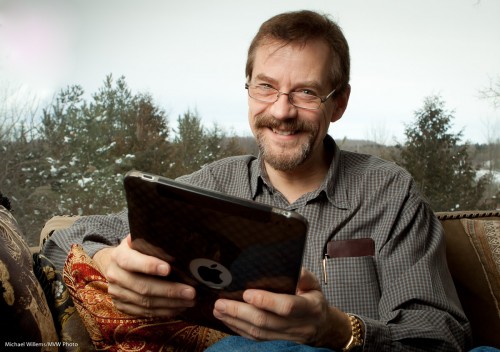
Instead, tell stories, say something funny, get the subject to relax. This picture of me was taken by a student a day or two ago:

Michael Willems - smiling

And I never smile. But, mention certain subjects and I smile naturally, not because I am told to smile – that never works.

This is one reason portraits can take time to make. Getting a subject to relax cannot be done in a hurry.

How did we light this?

  1. Expose for the background. Ensure the background light does work as “fill light” for the subject.
  2. Use an umbrella-mounted speedlight (shooting through the umbrella if you can), connected via pocketwizards.
  3. Position the umbrella somewhere 45 degrees above the subject, and for a male, 45 degrees to the side if you like.
  4. Set the flash power according to the exposure you worked out for the background. Use a light meter to verify that.

Bob’s your uncle: Practice that technique and you will do much better when shooting portraits. And remember, never say “smiiile”.

Building the shot

…and the excitement, takes time.

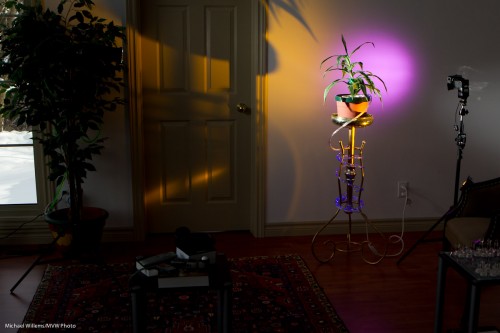
So let me talk you to a shot I took today while explaining flash techniques. Talking you through my process will help you come up with a process of your own.

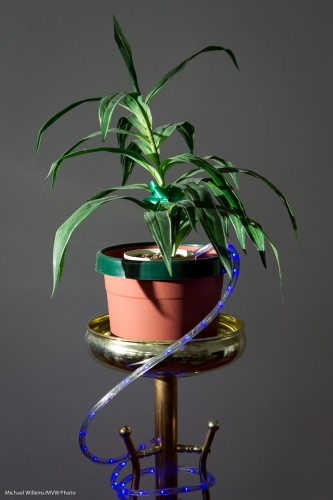
First, I decide what to use. Okay, small speedlights, but on manual, and used like studio lights.

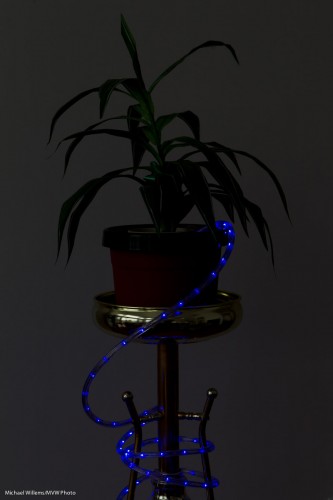
Studio light means the available light does not work. So I set my camera to settings that ensure that – 200 ISO, f/8, 1/200th second. And before Ido anything else, I ensure that those settings give me a dark picture:

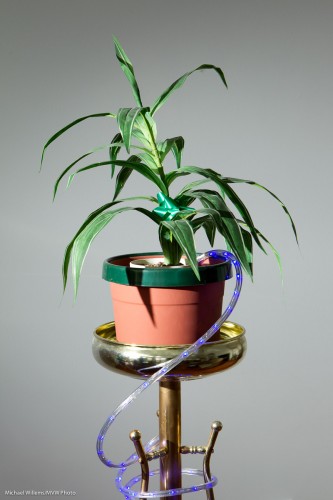
Then I add a flash. One bare flash on our left, once I set it to the right power level (half power, a power level that my light meter told me would result in f/8 at 200 ISO on the camera) gives me this:

Yeah, fine, but too much light on the background.

So now I add a Honl Photo snoot to the flash (a 430EX in manual mode, fired by a Pocket Wizard and fitted with a Speedstrap to attach snoots etc). That avoids spilling as much light on the background.

Now I get:

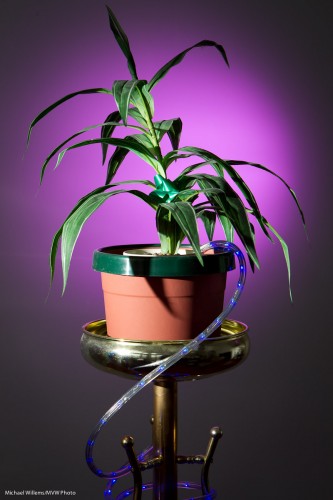
Niice. But now I think… Okay, can I add some excitement? Maybe some colour in a Hollywood spotlight.

So I think – what goes with green? Purple. Purple and green is a great combination which you will find in nature all over.

So I equip another flash (anotyher 430EX) with a Honl 1/4″ grid and on that grid, a purple gel. That gives me:

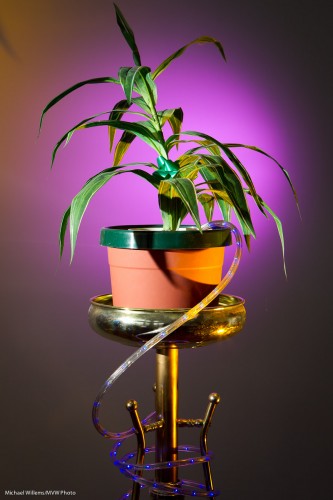
Nice, no? But now I am all into excitement, so I want to add more. And I also think the right side is a little dark. Okay.. “Excitement ‘R” Us”, I think: Honl’s Egg Yolk Yellow gel is my favourite since it gives a great saturated light.

So I add a third flash (also a 430EX and also with a Honl grid and the yellow gel) – like this:

So now I have this:

I could go on from there – you see how this works?

Important Note: David Honl is joining me in a special workshop in Toronto on Saturday March 19 – keep that date open, it’ll be fun. Dave and I have taught workshops together in Phoenix and Las Vegas, and the Toronto one will once again be fun. “Shooting Events” and “Creative Light” will be the themes. See you there!

RGB, and the moment

Often, in a shoot you have just a few minutes to get the shots you want. Like in events, the money shot is often the kiss, the handshake, the moment the document is signed or the ribbon is cut, and so on.

And often, it is the light. Light that spends a few minutes between uselessly dark and uninterestingly bright. Those are your minutes, so be ready!

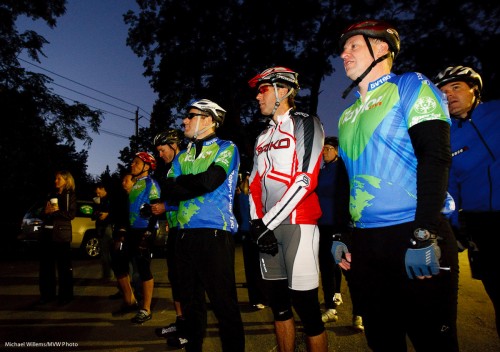
Like here, in a shoot of a bike race that started at dawn:

Riders Ready to Roll

Dawn (and later, dusk) means a few minutes between dark and light. And those minutes are great since they have blue skies with enough colour, and all the other colours are saturated too.

Saturated means “not mixed with white”, after all.

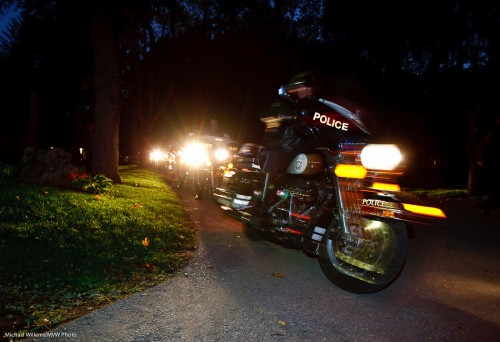
OPP Bikes Set Off

The combination of the primary colours red, green and blue makes these images visually interesting. So when shooting an event:

  • Set up your camera early
  • Find the right viewpoint early, too
  • See if you can find red and green elements to your image
  • Then, be ready to pounce during those few valuable minutes.

And your results will be cool.

“Yes but I want to shoot like that all day”. Well, then learn how to use flash and modifiers. But you will have a much easier time when you use – and often have no alternative but to use – those few valuable golden minutes between light and dark.

Endnote: There is still space on our all-day The Art of Nude Photography Workshop on Sunday, but be quick.

Power!

Power. To the Speedlighters.

When you are using  a flash outdoors, power is the greatest need, and potentially the greatest problem. If your flash is to be comparable to outside light, or even brighter than it (“nuking the sun”), you need lots.

So I have two tips for those of you using speedlights (small flashes) outdoors.

  1. Do you have enough power? To find out, Set your flash to MANUAL mode (on the back of the flash). Now set it to full power (100%, or 1/1). Now Fire! If you get overexposed parts, you have enough power, so any dark pictures are due to your settings or metering. Carry on and find the problem. If not, you simply do not have enough power, so forget it or move the flash closer.
  2. Need more power? Then zoom in your flash manually. Eg when using 50mm lens, zoom the flash to 105mm. Again, using buttons on the back of the flash (you may need to, dare I say it, read the manual!). This zooming in gives you a centralized, concentrated beam of power. The outsides will be darker but wherever you aim your flash wil be lighter.

Those two tips have saved me many times. I bet they will do the same for you.