Light and dark

Ciaoscuro is all about the play between dark and light.

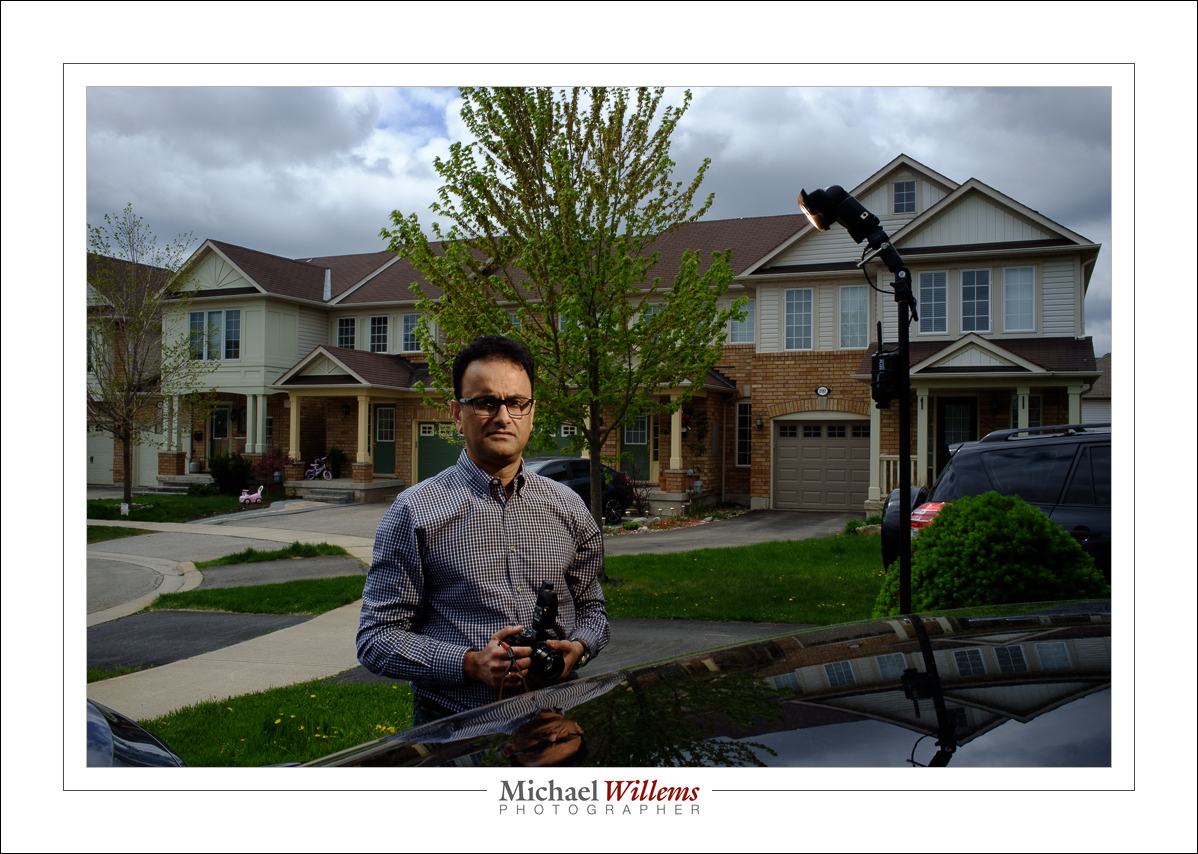
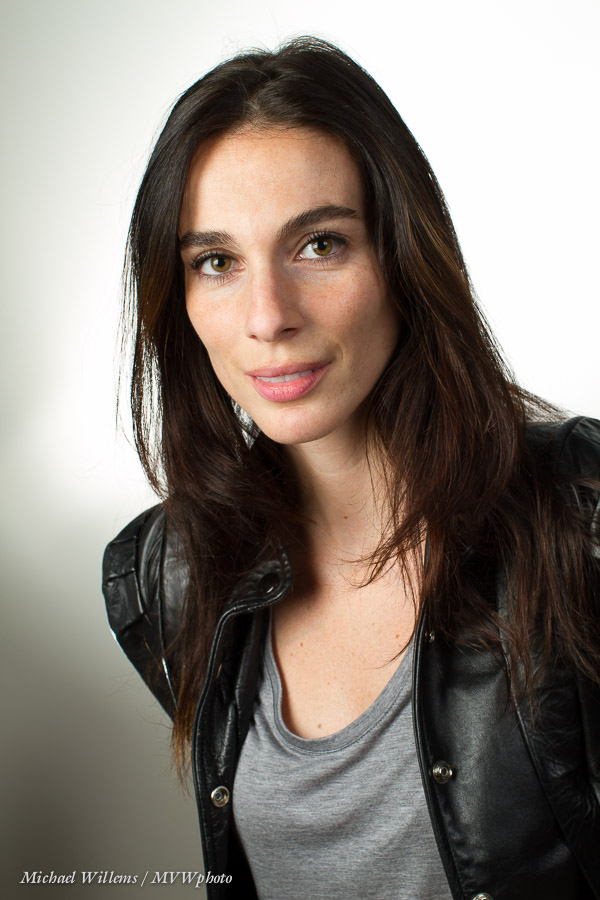
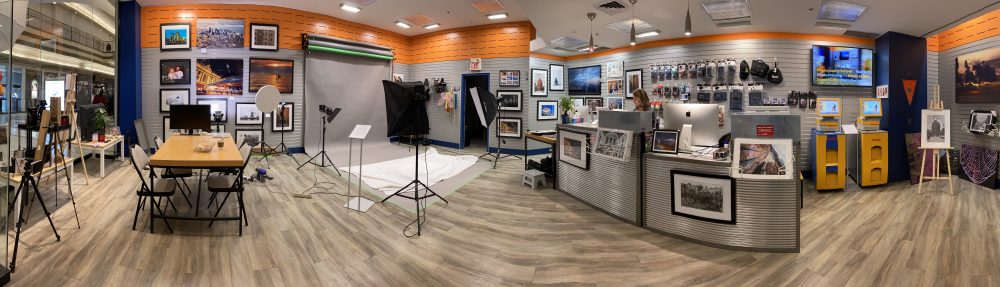
Take this student at Vistek, the other day. Lit from where the camera is, you get this:
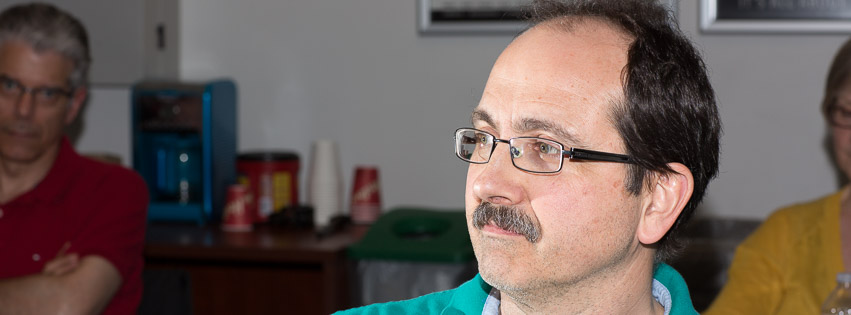
Fine, I suppose… competently lit, just barely.. but is that creative? Not really.

Now, lit from the side, with a simple flash with a grid on it, no other modifier, we get this, instead:
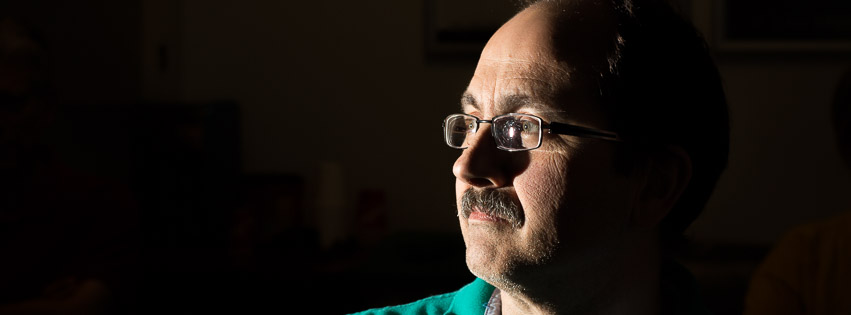
I think you will agree that’s a lot better, and for several reasons. One is that there is less stuff. Only what’s important is lit: the rest is simply not lit at all. Second is that the face is now shaped (modeled) by the light. Third is that what is important is lit; what isn’t is simply not lit. Light direction as well as distribution and quantity are now totally under your control.

(Note that the grid is essential: without it, the flash light would spill onto the walls and ceiling and floor and from there to the rest of the room: no black room)

What I used? A 5Diii with a 600EX flash on the camera set to be master (but not to fire itself); and a 430EXii slave flash on our left. that’s all. “Studio setting” (1/125, 200 ISO, f/8) ensures that the ambient light is black.
 

Workflow and Lightroom

I talk about Lightroom a lot, as you will have noticed. The reason is that Adobe Lightroom is hands down the best workflow tool I know. Workflow meaning “what happens between arriving home with the camera to the finished product”.

Lightroom 6, as you will have seen, is a step forward. It has its issues—for now, the speed of the face detection module is way below par—but you can work around those, and they will be fixed.

But you do need to learn how to use it. Thank God it’s not Photoshop: it takes days to learn, not years. But it does take days.

Enter some help.

On May 30, I teach a workshop at Vistek: Lightroom and Workflow”. In it, you will learn backup strategies, computer strategies, Lightroom workflow and editing, and much more. Seating is limited, so sign up soon.

The same is true of the Flash workshop this Saturday in Oakville.If you missed the Vistek workshop, come on Saturday: 1pm, see http://learning.photography/collections/training-300-advanced/products/flash. Seating limited, so be quick if you want in.

Now, a (repeat of) a little flash tip.

If your flash looks too dark in the photo, why is it? It could have two very different reasons:

  1. Metering is wrong; the TTL circuitry decided on too low a level.
  2. With the current ISO and aperture, you simply do not have enough power (eg the ceiling you are bouncing off is too high).

To know which one: set your flash to manual mode, full power (1/1). Shoot. If the picture is overexposed, you had reason 1; if not, you had reason 2.

To solve the issue: For reason 1, go back to TTL and use flash compensation. For reason 2, go back to TTL and lower the f-number and/or increase the ISO.

That’s all – pretty simple, but often overlooked.


Setup for outdoors flash pics.

A student just asked me:

When you were at the London Camera Club, you had your usual stand/flash holder/umbrella combo on display. Unfortunately, time didn’t permit me to ask about it. Would you mind mentioning what brands the components are – I would like to have a similar set up for my Speedlight.

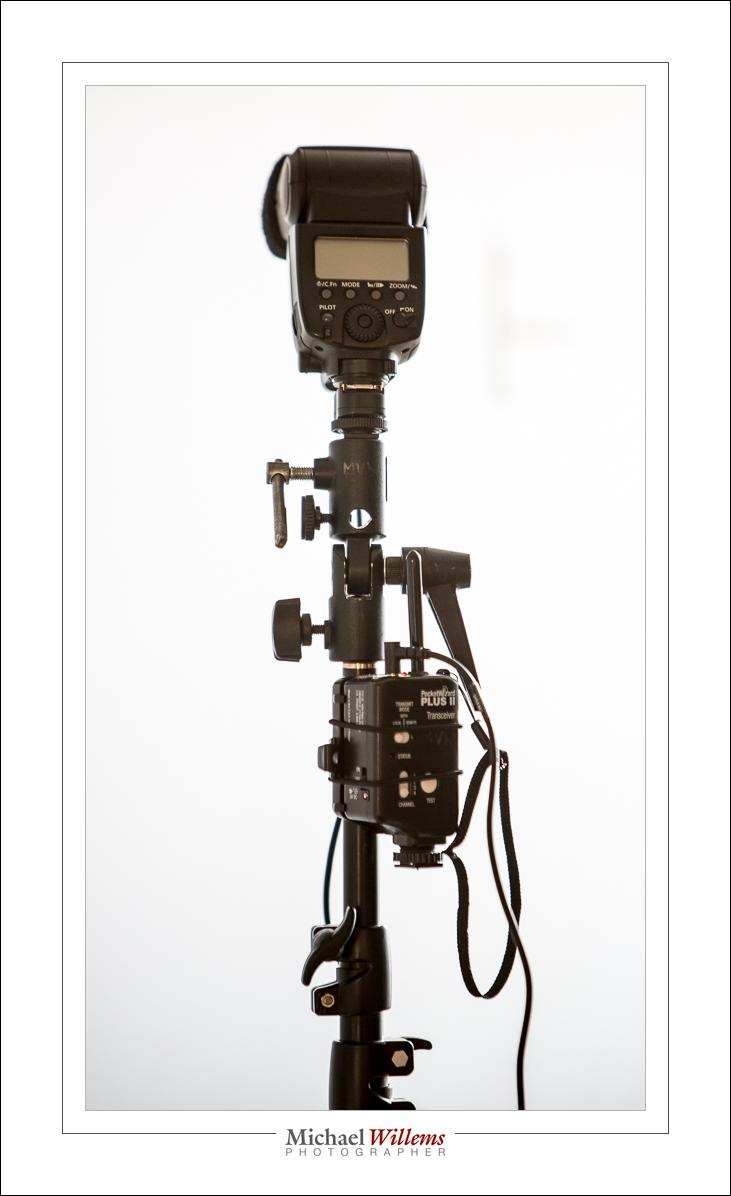
I use the following setup:

So that is:

  1. A Light stand. Any brand is OK if it is sturdy enough.
  2. A mount that sits on top of the light stand and swivels. The flash sits on top of this mount. My mount is a Manfrotto,
  3. A pocketwizard receiver. I use the simple Pocketwizard PlusX: $180 for two of them.
  4. A cable between the Pocketwizard and the flash hotshoe. This cable sits on top of the mount, and the flash on top of it.
  5. An umbrella that goes through the mount (you can see the hole in the photo). This should be an umbrella with a removable cover, so you can shoot into the umbrella as well as through the umbrella.

Because this is non-TTL, the flash can be any flash. Any make, and type, as long as it has a manual power level setting and you can disable any timeouts (otherwise it turns off every minute or two).

To a large extent, these are commodity items. There are many brands. Nikon has a kit of mount plus stand plus umbrella for just over $100, for instance, but anything that looks sturdy enough will do fine.

As for radio triggers, I use Pocketwizards because they are the industry standard and rugged, and they use AA batteries; but any other non-TTL trigger will work just as well.

The setup above serves me well: it is what I use for up to 90% of my outside pictures.

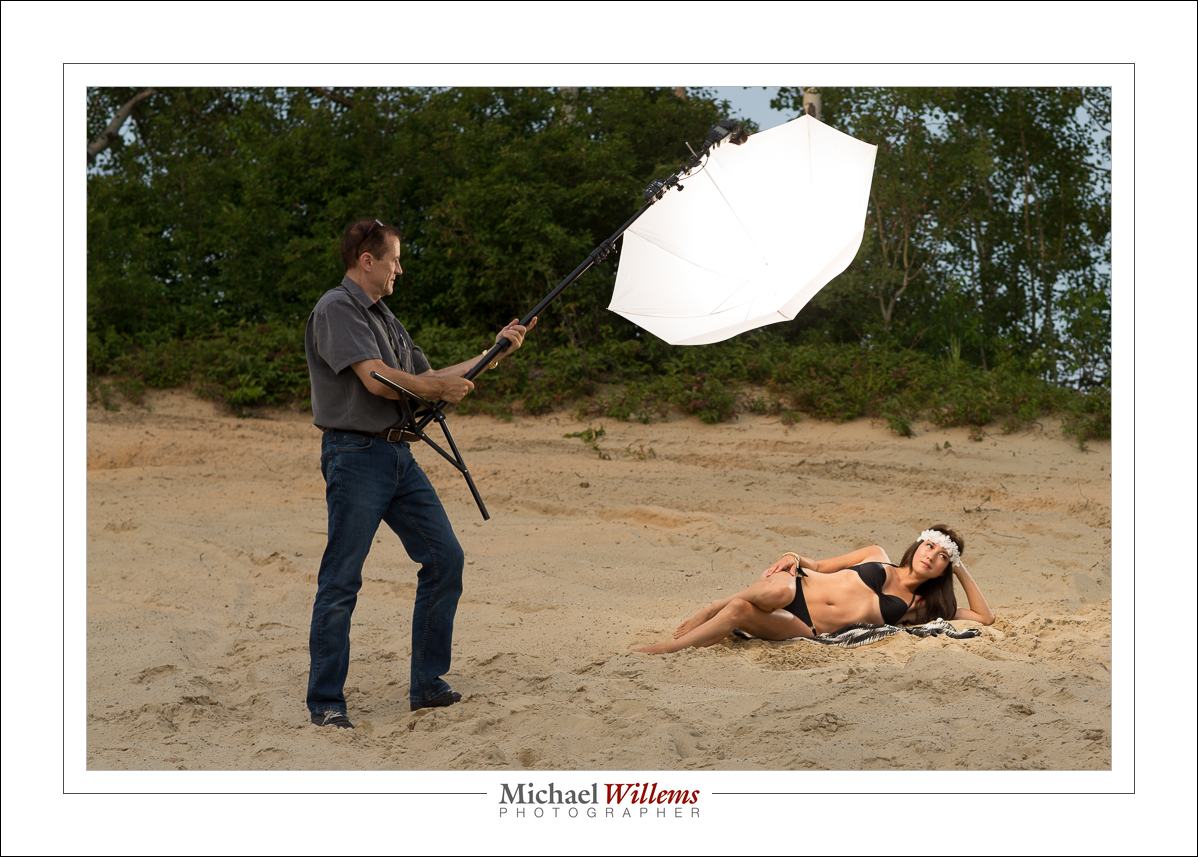
Like this scene, the way it looks to my eyes:

And here comes rescue, a.k.a. me and my umbrella:

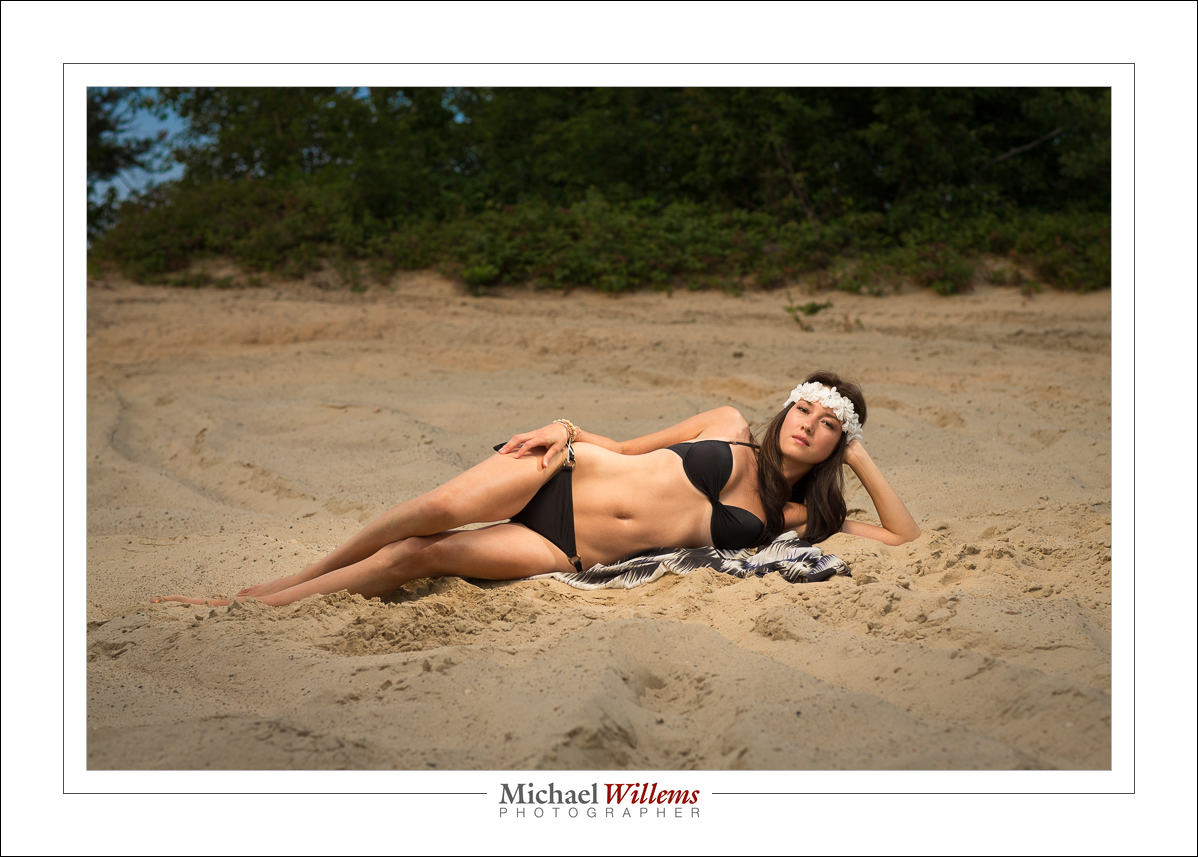
…which results in:

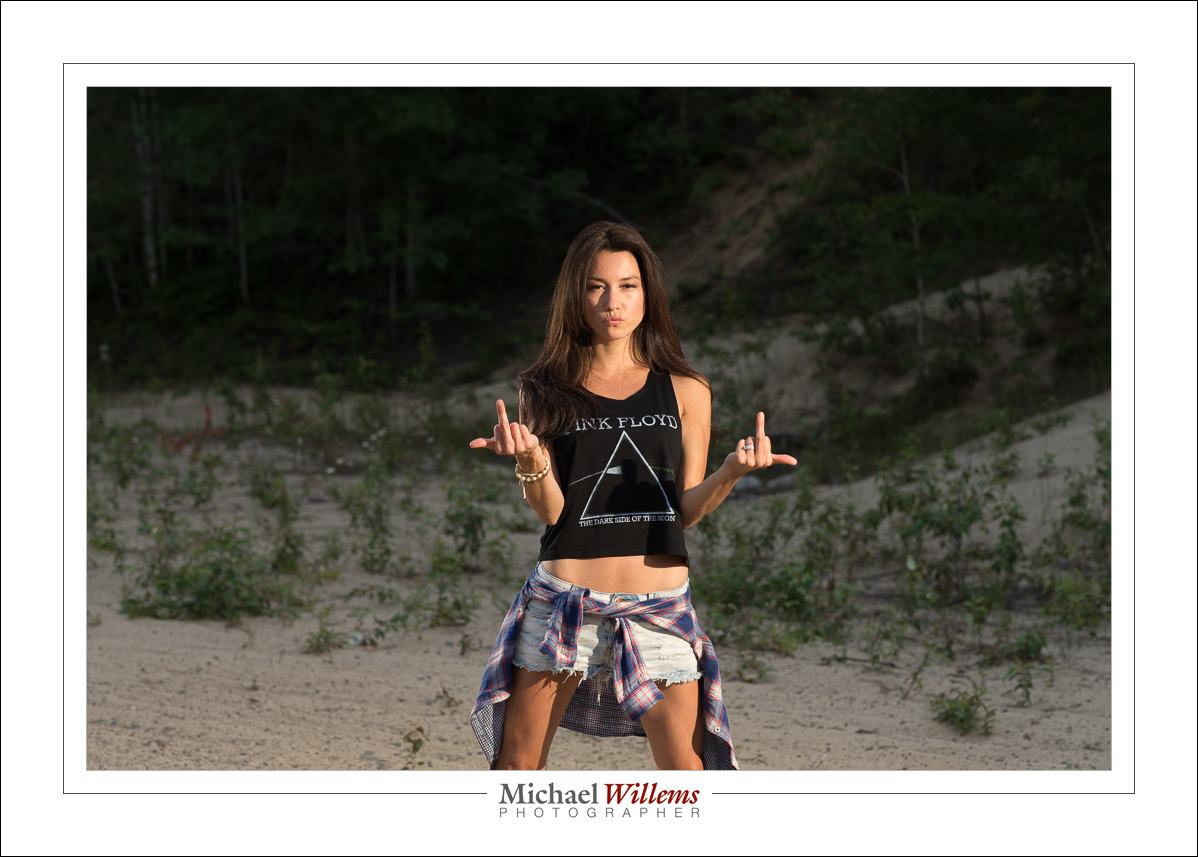
And the lovely Vanessa from Timmins has a sense of humour:

The good news: this type of dramatic lighting is simple, once you know how!

___

Want to learn how to do this? I have a couple of spots open on my “Mastering Flash” workshop in Oakville this Sat 23 May, 1pm—4:30pm. This is a very small workshop: 3-6 people maximum. If you are interested, email me: michael@mvwphoto.com. You can book on http://learning.photography.


Add a splash.

There are many distinct ways to use gels. They include:

  1. Colour correction in mixed light
  2. Background Colour shifting
  3. Adding backgrounds
  4. General creative use
  5. Adding warmth

Type 5 is easy. Like here:

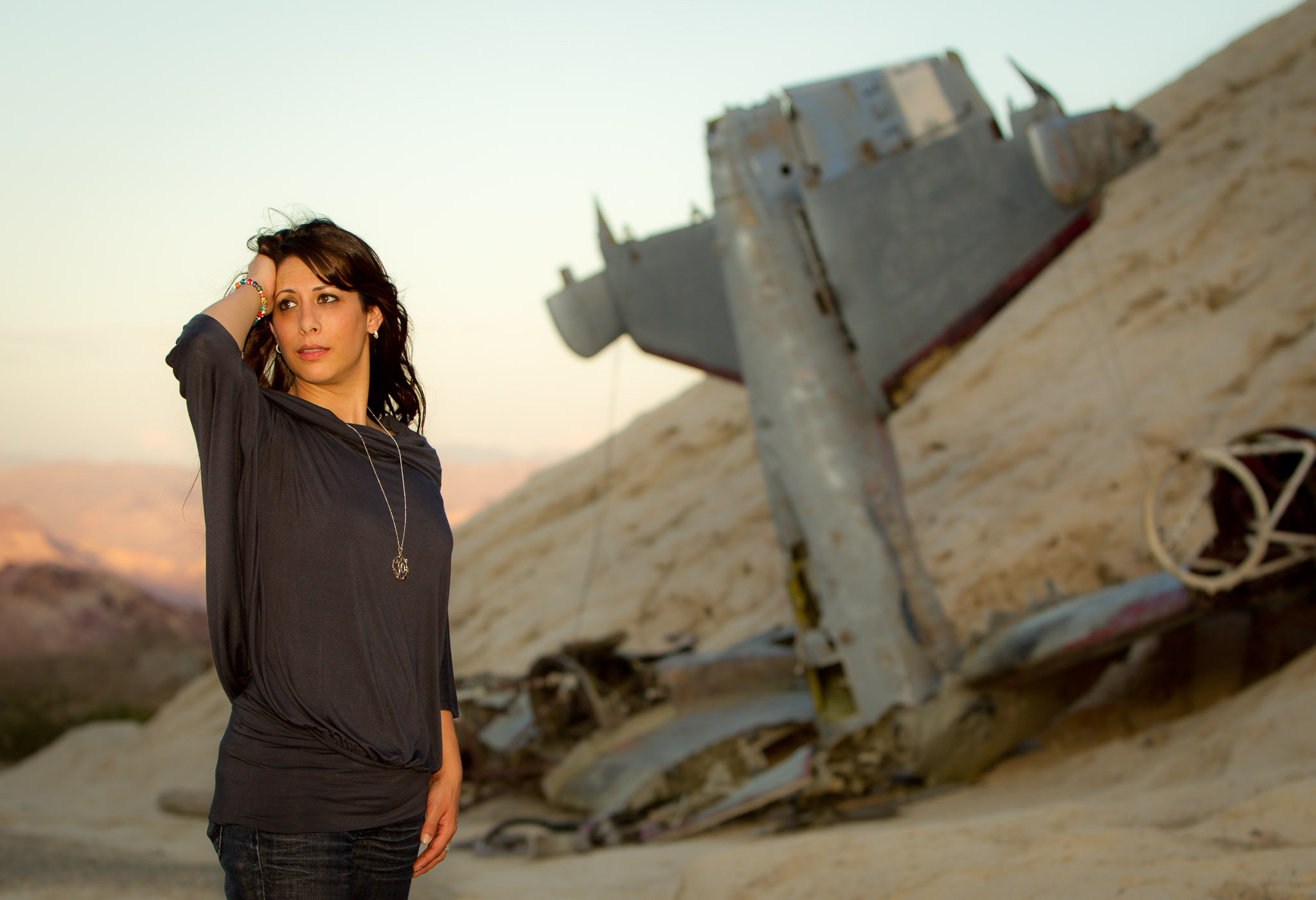
Nelson, NV, 2010

Indeed the sun was setting, so we have beautiful “Golden Hour” light.  But Yasmeen is in the shadow of a mountain, so she is not lit by this great light. She is on fact hardly lit at all.

Solution: I use a flash. On camera. Now she is lit. But I gel that flash with a CTO (Colour Temperature Orange) gel. Now it looks as though she, too, is lit by that setting sun light we like so much. And because I use the ultra convenient Honl photo gels, sdlapping on that gel takes less than a second.

The solution: a cool shot, where otherwise there would be no shot at all.


Flash and what you want.

Your background is what you want, not what it is.

Huh?

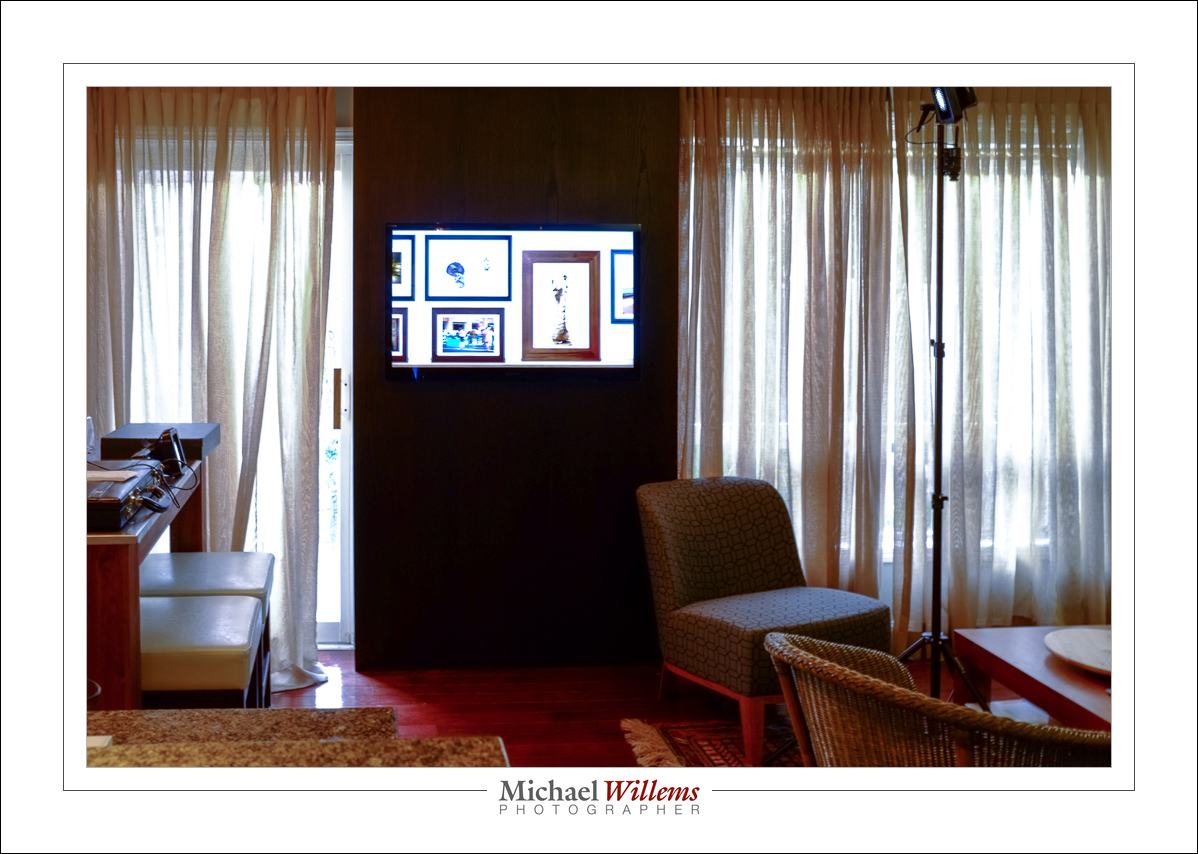
Take this example. My room looks like this, right now.

(0.5 sec, f/8, 200 ISO).

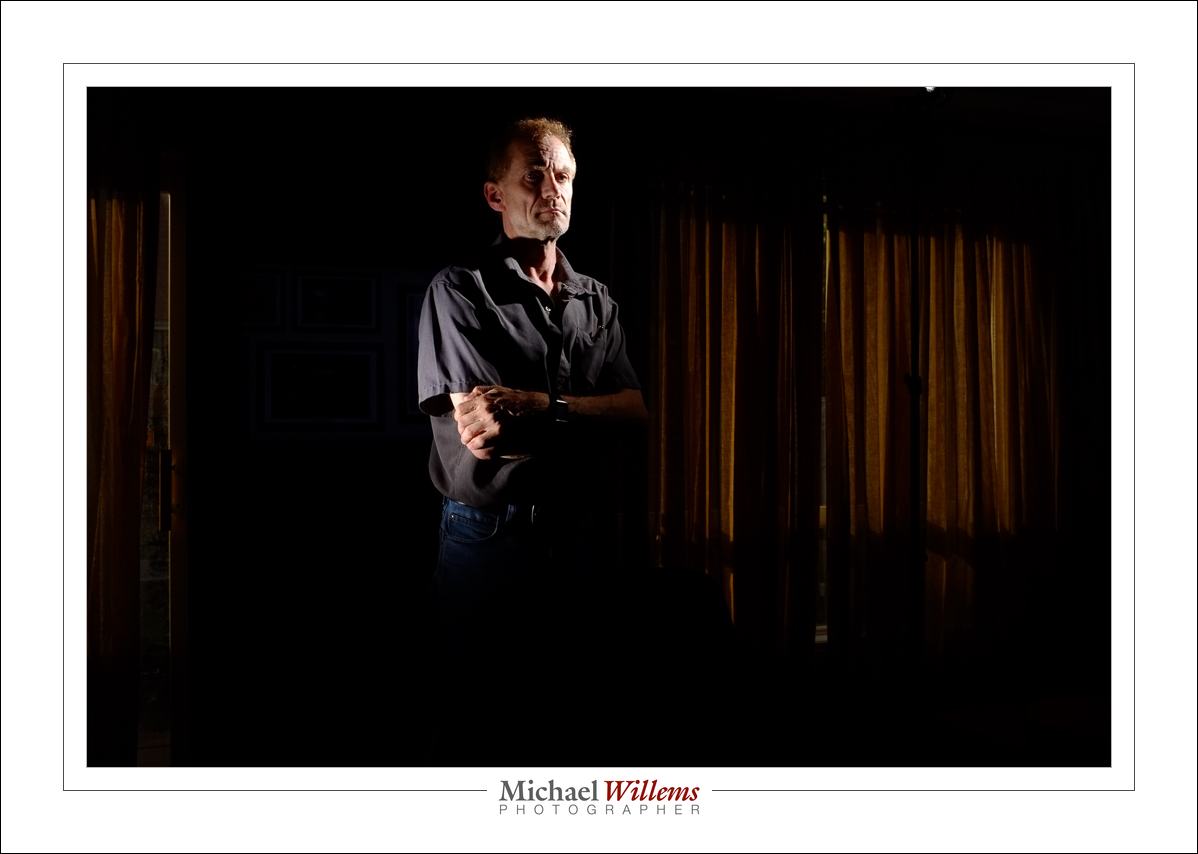
But when I set my camera to 1/250 sec, f/8, 200ISO, I get:

Dark. Even the TV is almost entirely dark.

Why? Because that is what I want. I do not care that the room is pretty well lit; I want it to be dark. So what do I do? High f-number, fast shutter, low ISO. And that gives me not what there is, but what I want.

And when I crop that, decrease saturation, and increase clarity, then I have a low-key portrait.

…which is of course what I wanted all along.

Note that I use two flashes to light me. They are set to manual at 1/4 power, my standard flash setting. I also have a grid mounted on each flash (a Honlphoto grid). These stop the light from spreading through the room. If it did, the room would be visible.

You can have serious fun with one or two flashes and a few radio triggers, and this is how. Make ambient go away , then use flash to light where you want the photo to be lit.


Direct Flash: Can It Be Used?

Unmodified flash? Without umbrella, softbox, or bounce? Can I use that and still get good results?

In a word: yes. You do not always need flash to be modified.

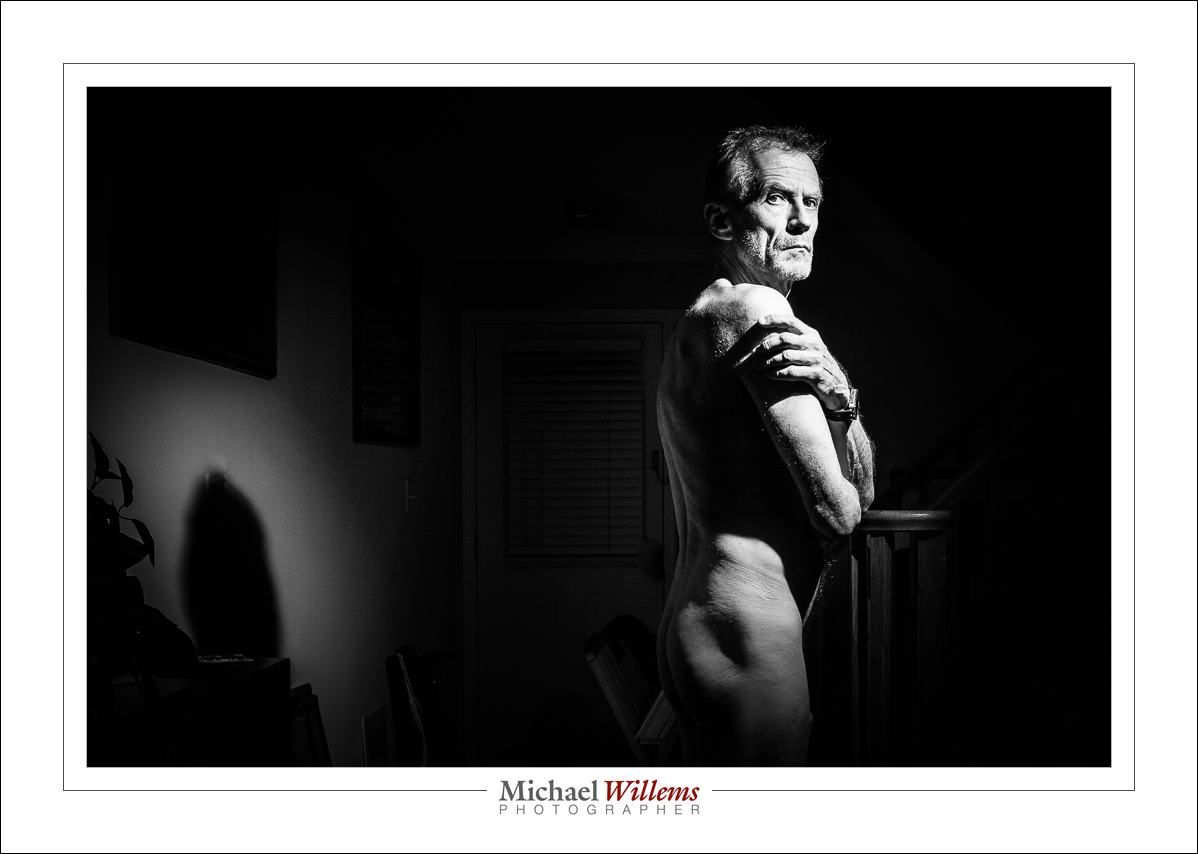
For instance, you may intend the look. One single, unmodified flash can give you a hard look, and that may be exactly what you are after, like in this high contrast B/W self portrait:

So sometimes you can use it to deliberately accentuate the hard look of a photo. So this is the intentional hard look.

At other times, you are mixing in ambient light to take away some or all of the hardness. That, in other words, is the minimized hard look. One way to do this is to use another flash; another way is to mix in ambient light, like here:

That was made with one flash; see it on the right here:

The key in all examples here is that the flash may be direct, i.e. unmodified; but it is not where the camera is. In other words, it is off-camera flash (OCF).

Whenever you want to try a new look or technique, my advice: yes, try it and see. You may be surprised by the results.

Colour

Again, let me point out today the effect a bit of colour can have. A splash and a dash here and there can make all the difference.

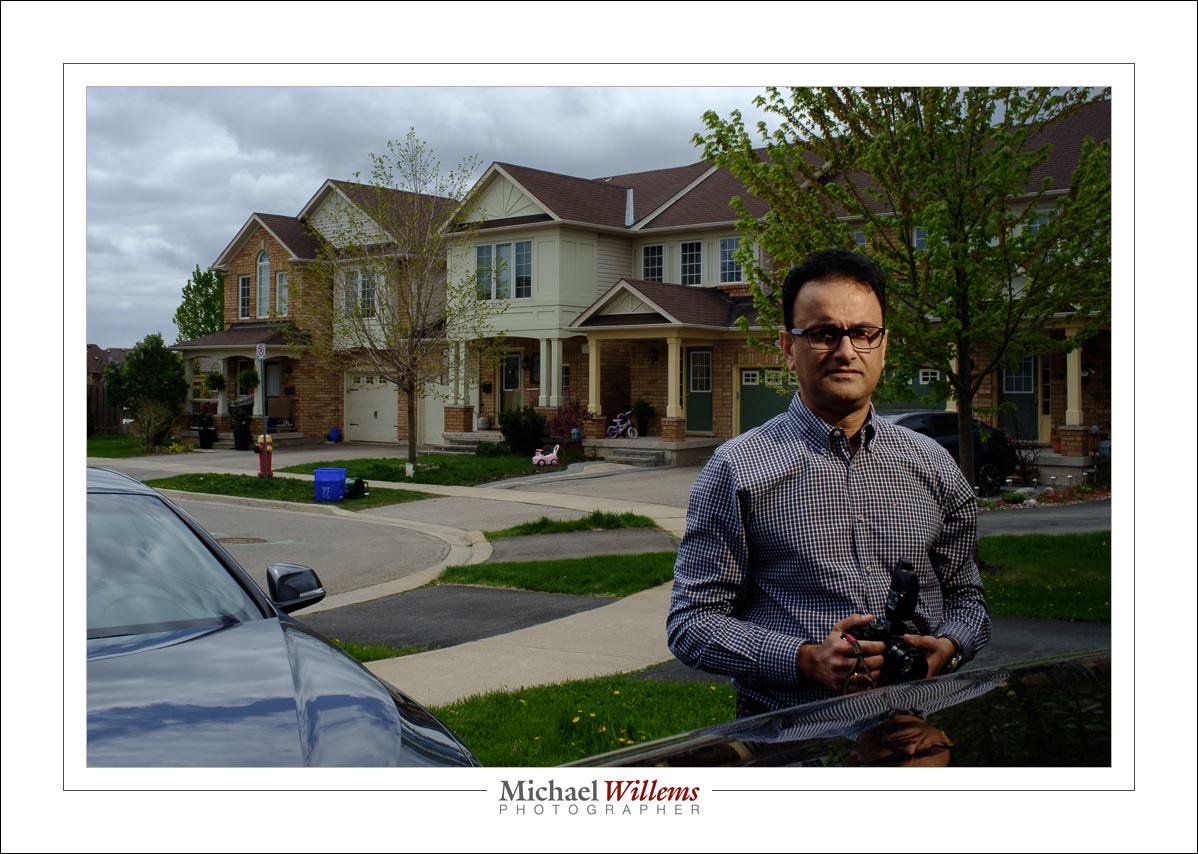
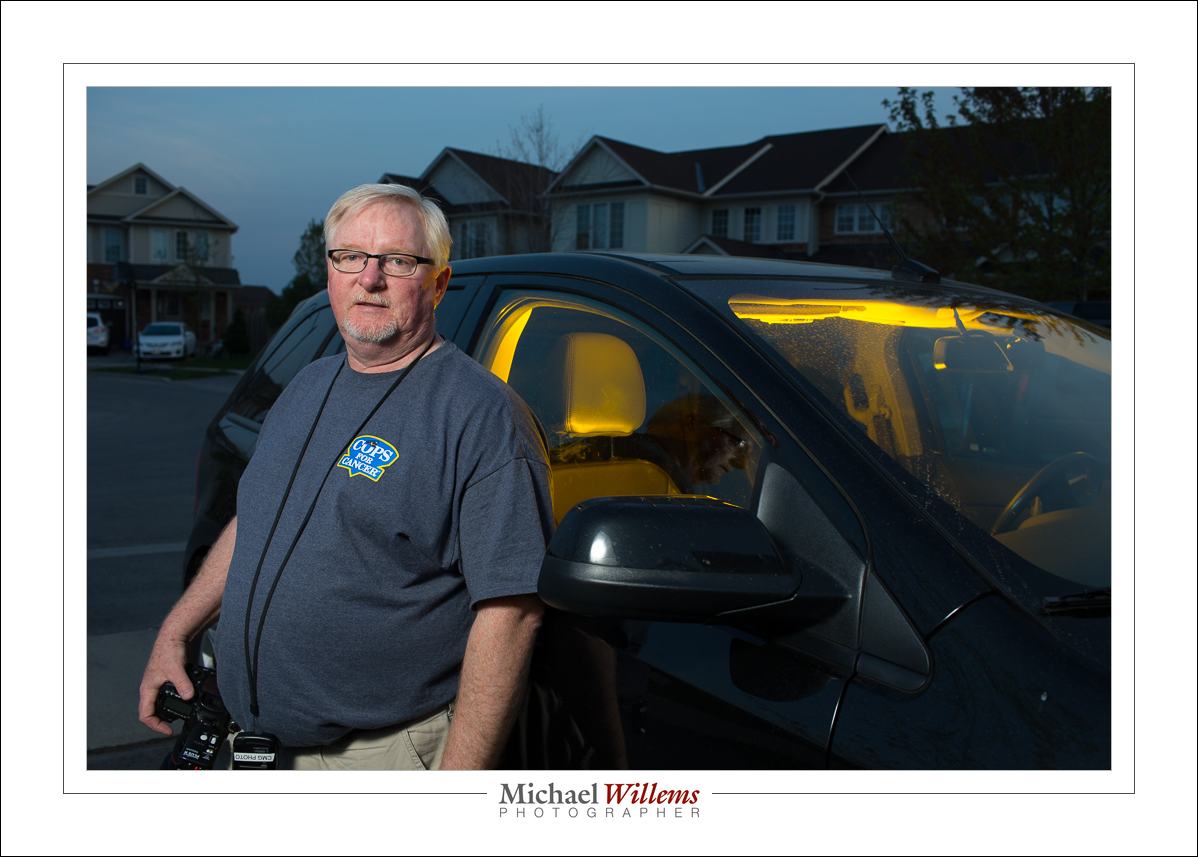
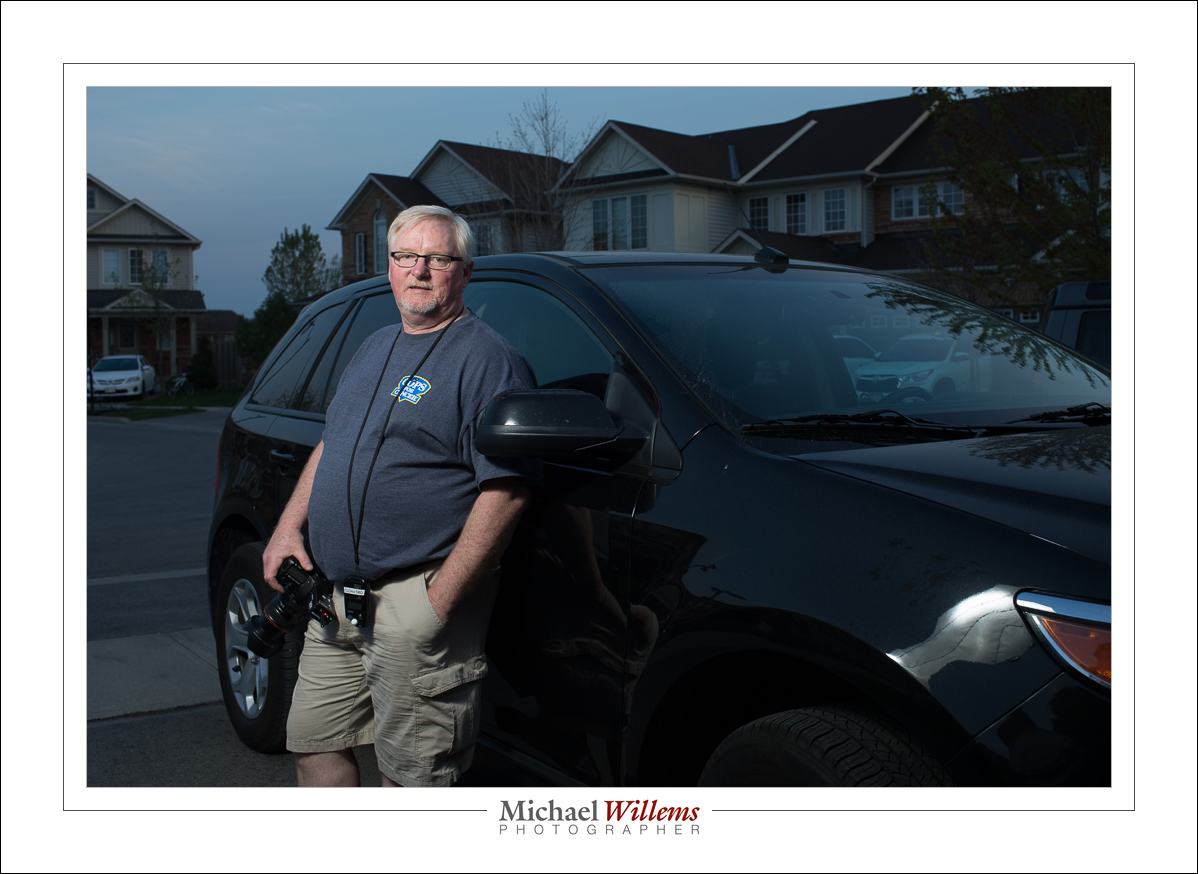
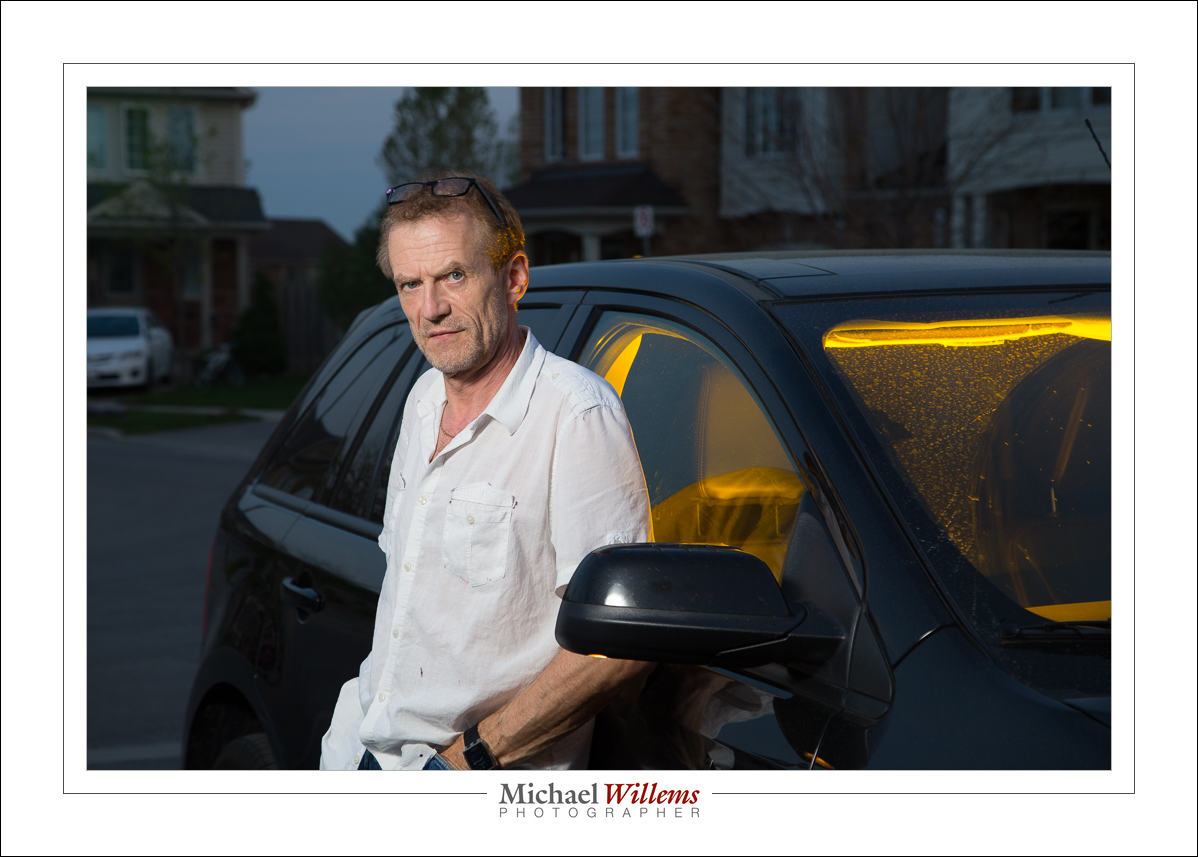
Take this picture, of yesterday’s student by his car:

Without that gelled flash inside the car, the picture would miss something. It just does not look the same:

So I always have a flash standing by just in case. To be precise:

  • Flash, like a 430EX (Canon) or SB-610 (Nikon)
  • Light stand
  • Bracket, for mounting flash onto light stand
  • Clamp, for when I want to clamp the flash to something
  • Pocketwizard radio trigger
  • Hotshoe cable between Pocketwizard and flash
  • Set of Honl photo gels (use discount code “willems” upon checkout, for 10% off)

The gels are important: over time you will get a good sense of what colour suits what occasion. The Honl gels I use are very sturdy, easy to use, and are chosen very well: I have all the colour sets and use them extensively.

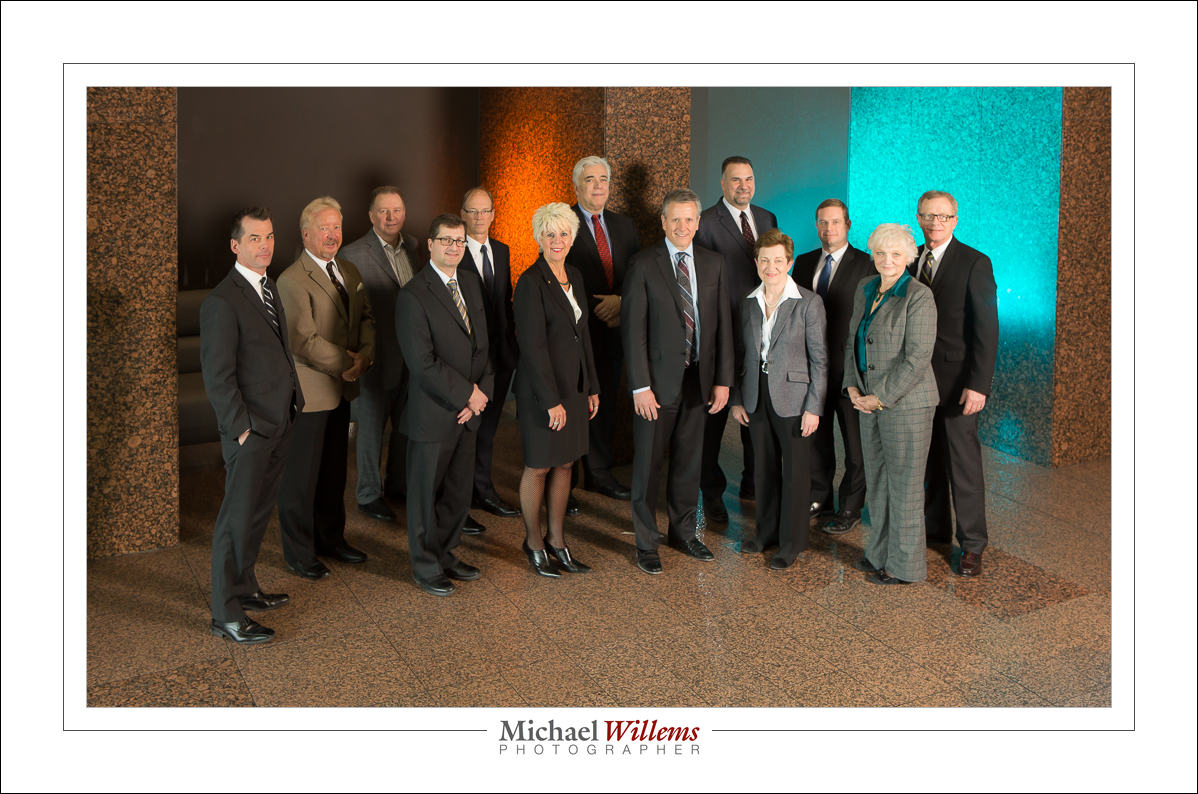
Another recent example, where I used two extra little flashes with gels to liven up a board of directors:

That, too, would have been dull without the colours. And you should never allow a board to look dull.

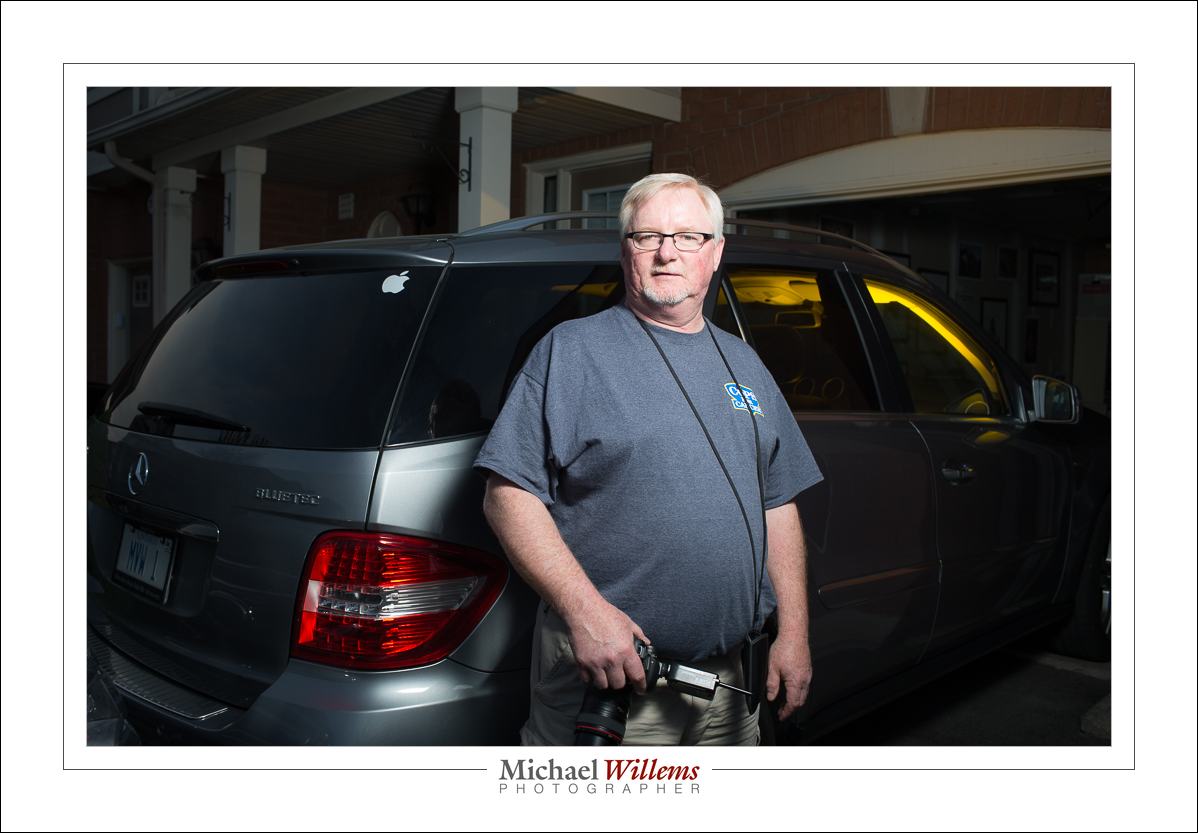
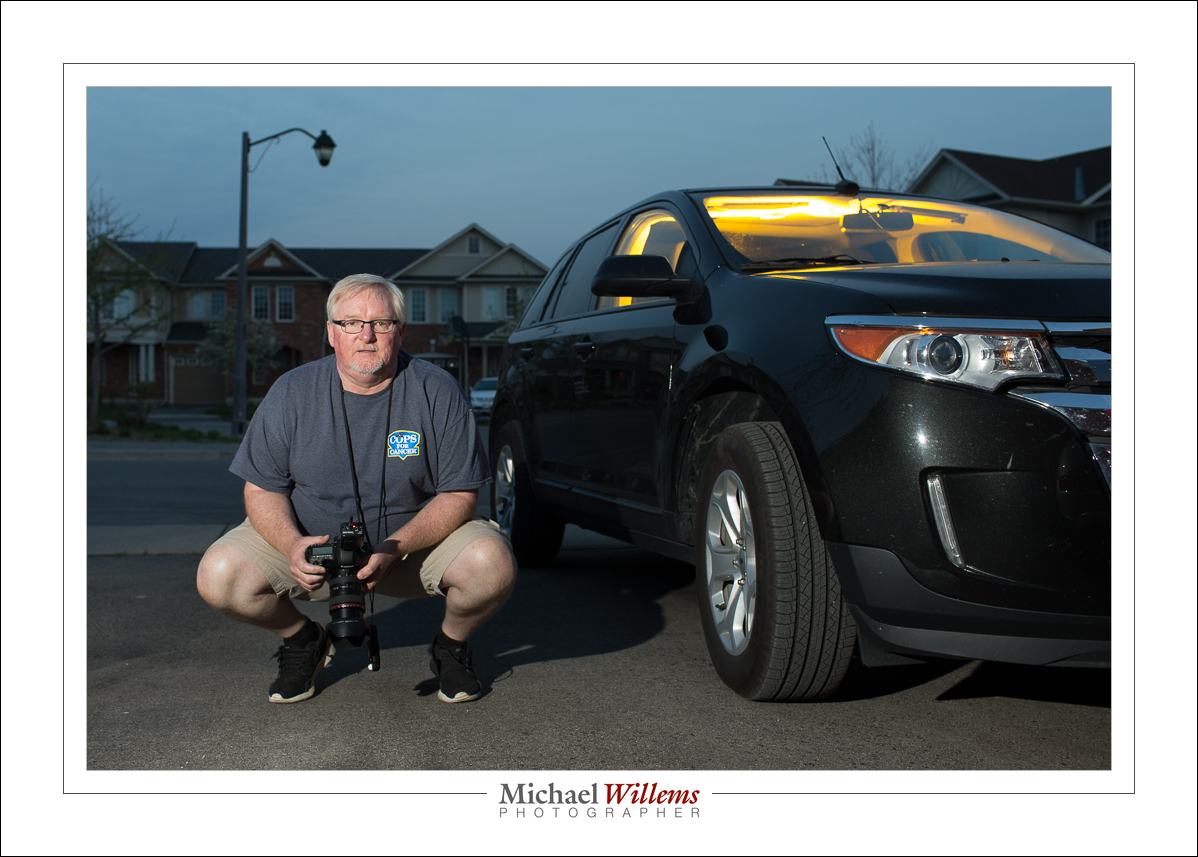
Here’s me, followed by a few more of my student:

You should know, it was not dark when we took those. As you know, your camera is a light shifter. As you know if you have taken my lessons, you start with the background. Set your A/S/ISO to whatever it takes to get that the way you want. Not the way it is. Then, and only then, add flash.

___

If all this is mystery to you, do what my student above did and take a private lesson. In person, or worldwide via Google Hangouts. And start with the books: have those ready during and after the lesson to ensure it all sticks. You too can make artistic professional pictures, and quickly, and without major investments in gear.


“My first… etc”

I very often hear people who are a little ahead of themselves. They do paid portrait shoots before learning how to focus, that sort of thing. They do not want to learn formally, for instance from a course, or books, or seminars; and yet they expect the knowledge to come to them for free, somehow.

Wishful thinking, and you know it. So let me grab a few of these things by the horns. Starting with portraits. You are doing a studio portrait; you have a backdrop; but the rest is mystery. So your images end up:

  • Badly lit.
  • Under- or overexposed.
  • With a background that is sharp instead of blurred.
  • With the subject not separated from that background.
  • Out of focus.
  • With the background white, not coloured even though you use gels.

That is because you never learned the basics. But there is good news: studio portraits are simple. All you need to learn is:

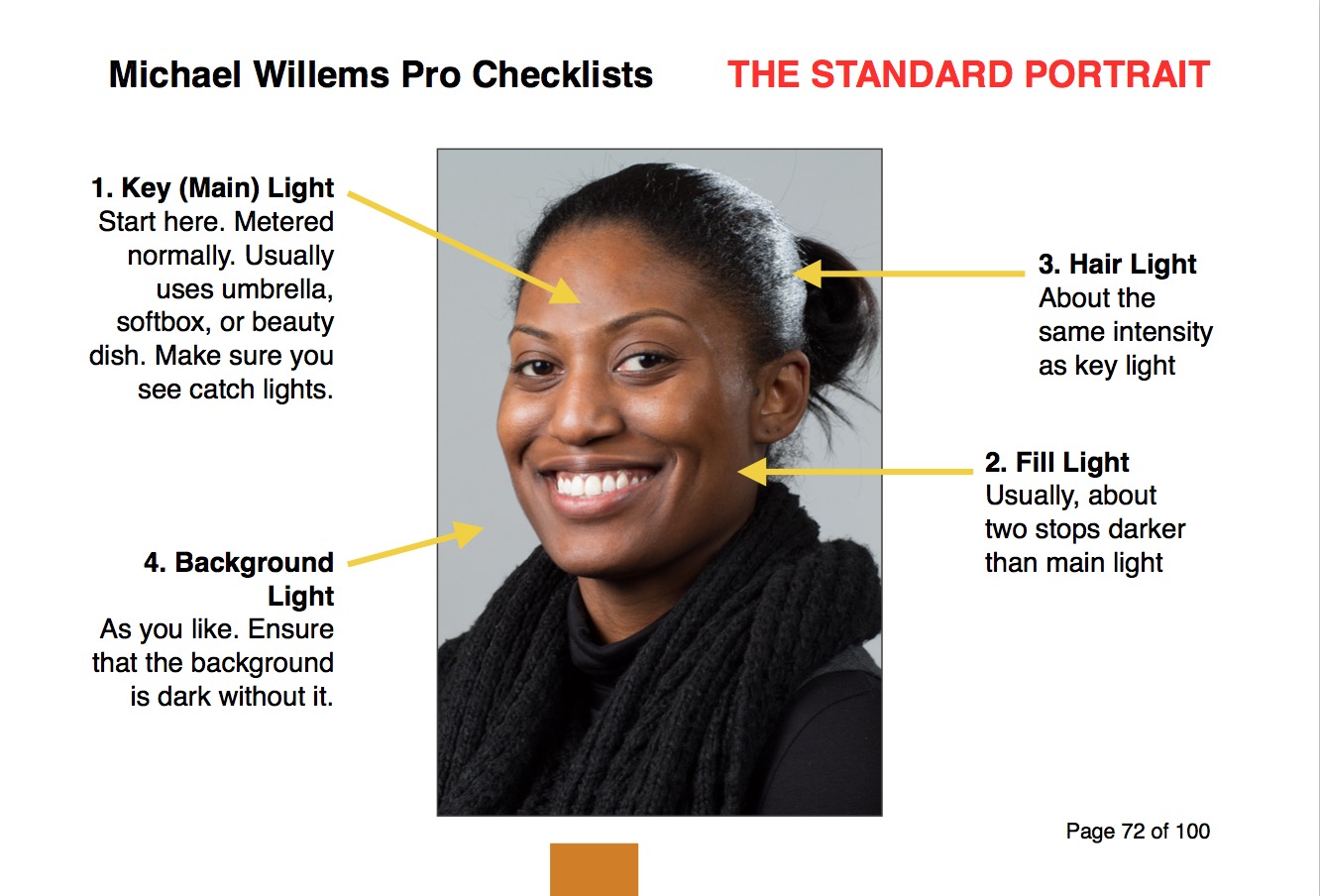
  • Lighting. A main light, 45 degrees away from subject. A fill light, same on other side. Hair light, opposite main light. See diagram, from my new book:

  • Exposure. Set your camera to manual mode, 1/125 sec, f/8, 100 ISO.
  • Turn the flashes to half way (obviously  the flashes are on MANUAL too).
  • Now meter the main flash. Adjust main light until it reads f/8.
  • Same for hair light.
  • Fill light: meter this to f/4 (i.e. adjust this light until meter reads f/4 when it flashes).
  • Background light: same as main light, again.
  • White balance to “Flash”.
  • Focus using one focus spot. Focus on the eye using that one spot.
  • Use a lens longer than 50mm. I prefer my 70-200 or my 85mm prime.
  • Move subject from background as much as you can. Then you can gel the background light. If, whoever, much of the normal light falls on the background, you cannot gel. Test this by turning OFF the background light: the background should be dark.
  • Turn subject toward main light, then head slightly to you.

Like this:

That really is all. Click., You have a competent portrait.

What you must not do is pretend that no learning is necessary. Go find a course, go buy my e-books; read this free resource www.speedlighter.ca; take private training; sign up at Sheridan College; : whatever you can do, do it now.

It really is simple. But not as simple as “I just bought a camera and next week I am shooting a wedding”—and believe me, I have heard that very statement more than once.


Manual power

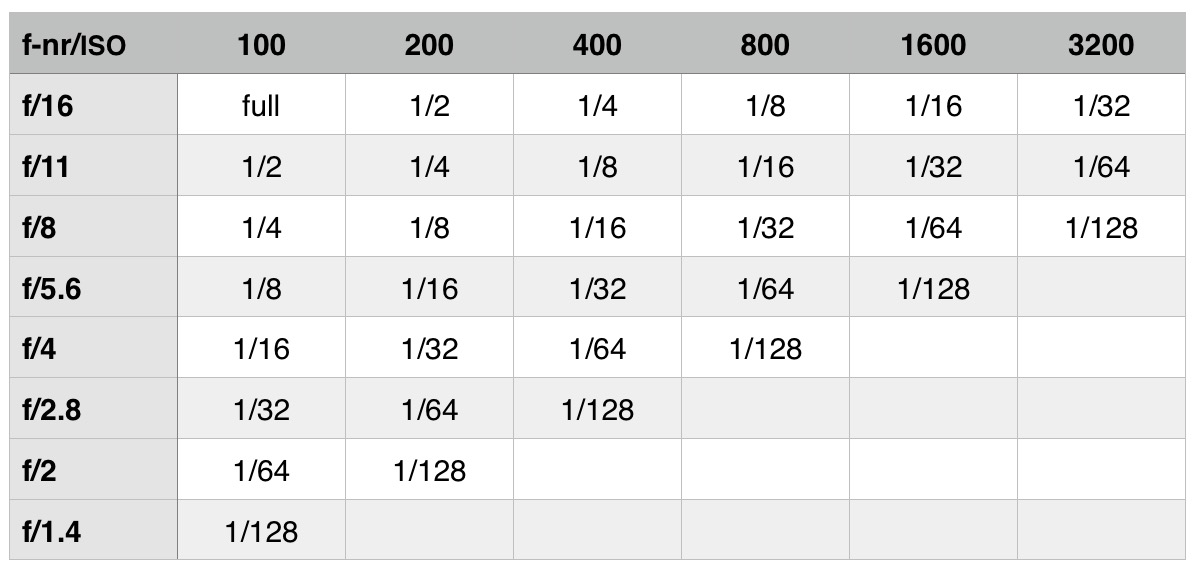
The nice thing about setting flash power manually is that it responds to very simple math. Like the inverse square law. Andthat the common shutter speed, aperture and ISO numbers we know are all a stop apart. They lead to tables like this:

SB910/900 or 600/580EX flash. Zoom set to 35mm. Flash held at 2m (6.5’) from subject. Flash not modified.

So if you have a high-end Canon or Nikon flash and you set the Zoom setting to 35mm, when you set your camera to f/16 and ISO value to 100, you get a well exposed picture at about 2 metres (6.5 ft) distance.

A modifier like an umbrella generally takes around 2 stops, so the same table will hold at one metre (half the distance is 4x more light, i.e. two stops more, which would cancel the umbrella’s 2 stops less).

Simple math. And the rest follows simple math, too: increase ISO and you need less power, and open the aperture and you also need less power. As per the table above. A table that can save you a lot of time.


Talking of Which…

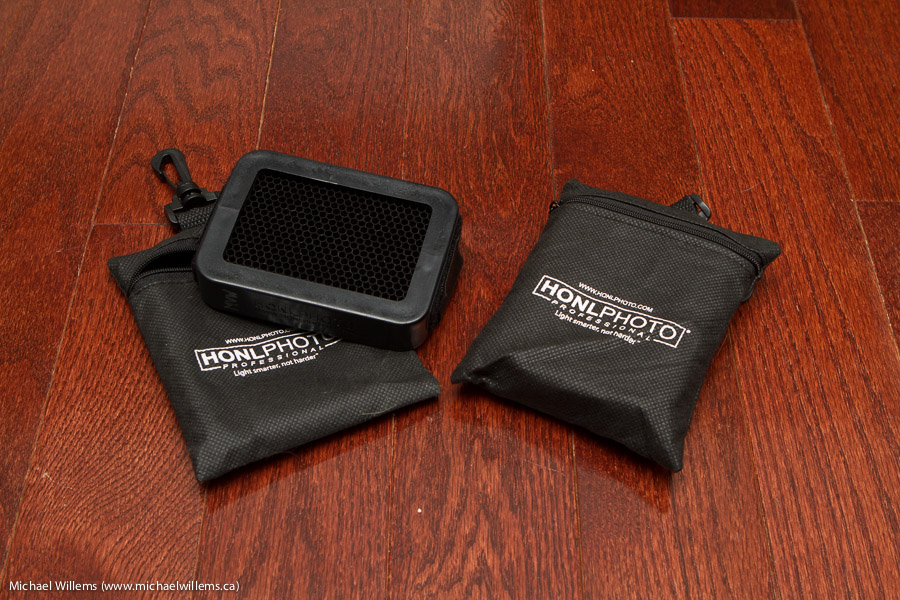
As an aside to my appearance as guest host of TWIP in this week’s Episode 406 (thisweekinphoto.com/twip-406-i-villain-i-photographer/), I chose Honlphoto’s Speed Grid as my product of the week. Today, an update.

First, I notice that the grid comes with its own little pouch now:

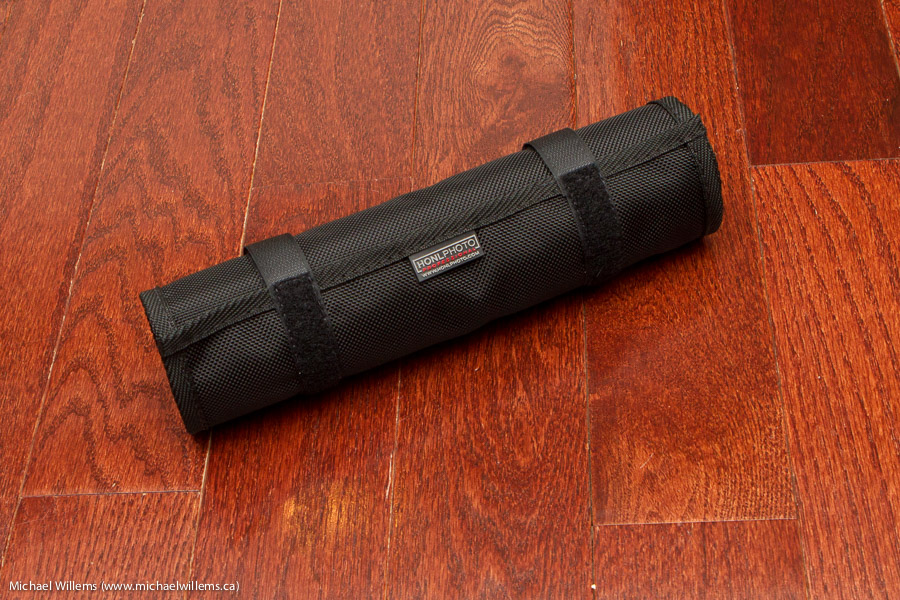
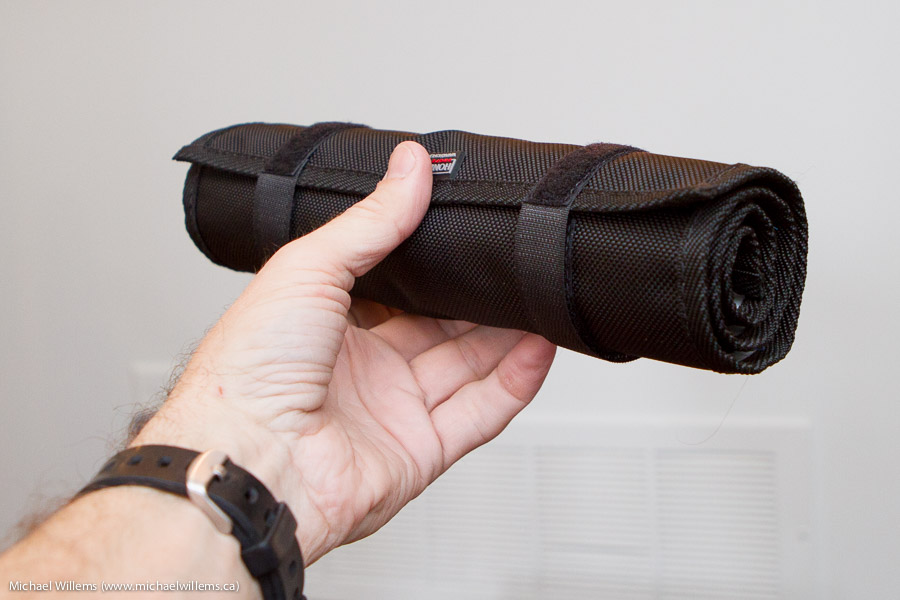
Now, I see that David Honl also has new products. One is a double rollup for the gels:

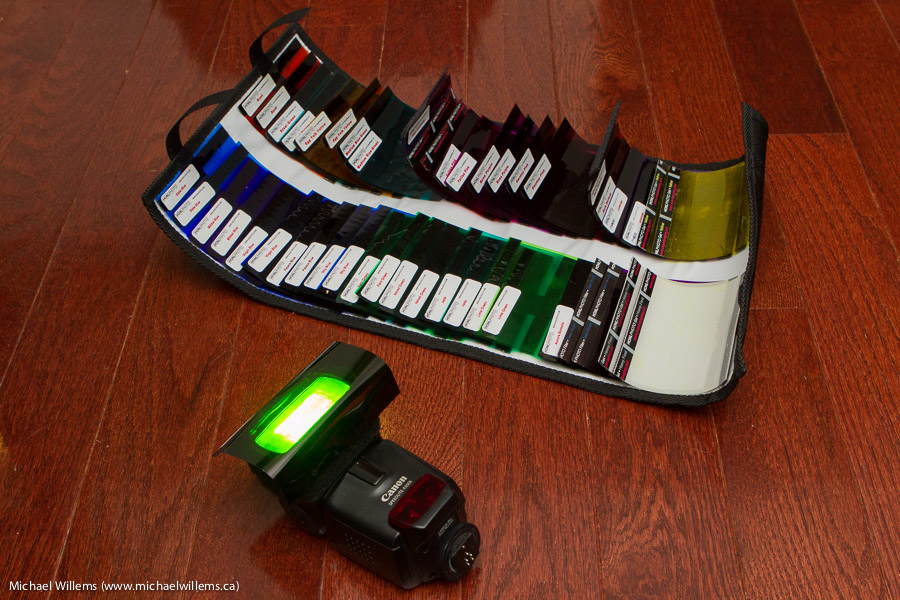
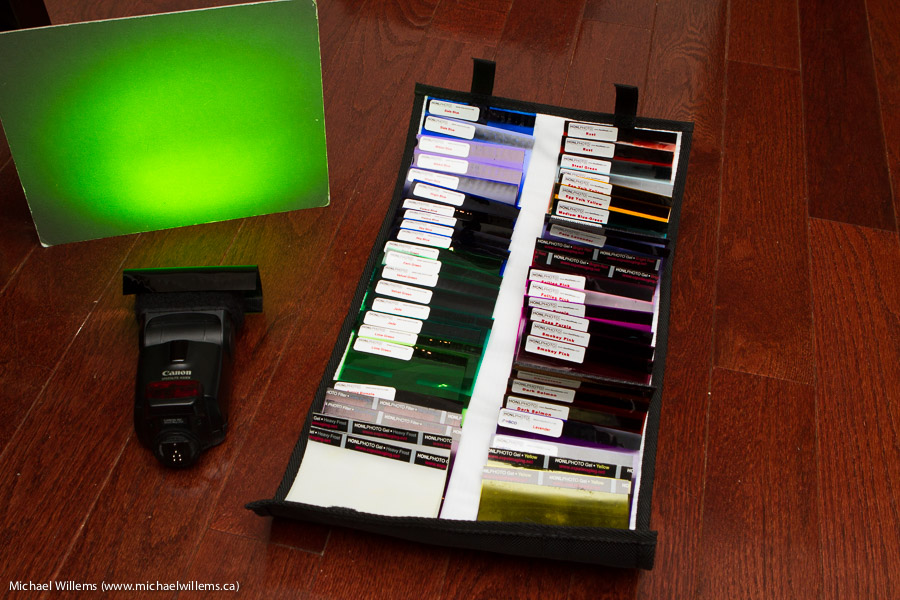
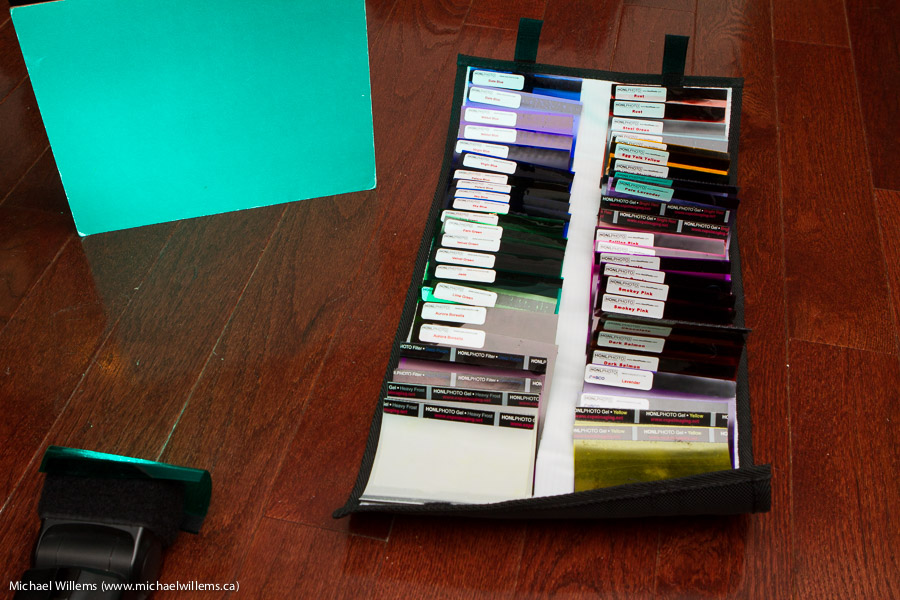
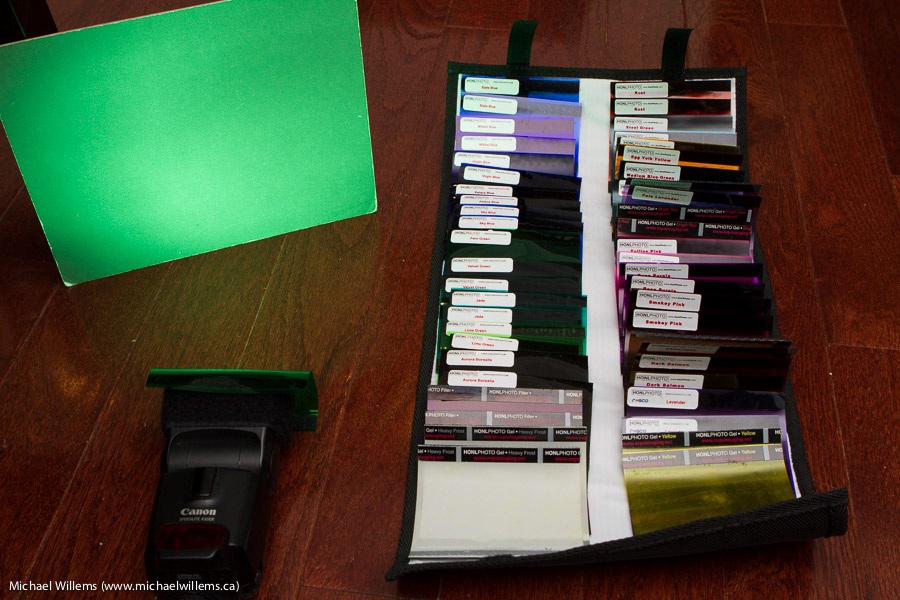
Which, when you open it, has space for lots of gels at once. I have over 50 of them in one rollup:

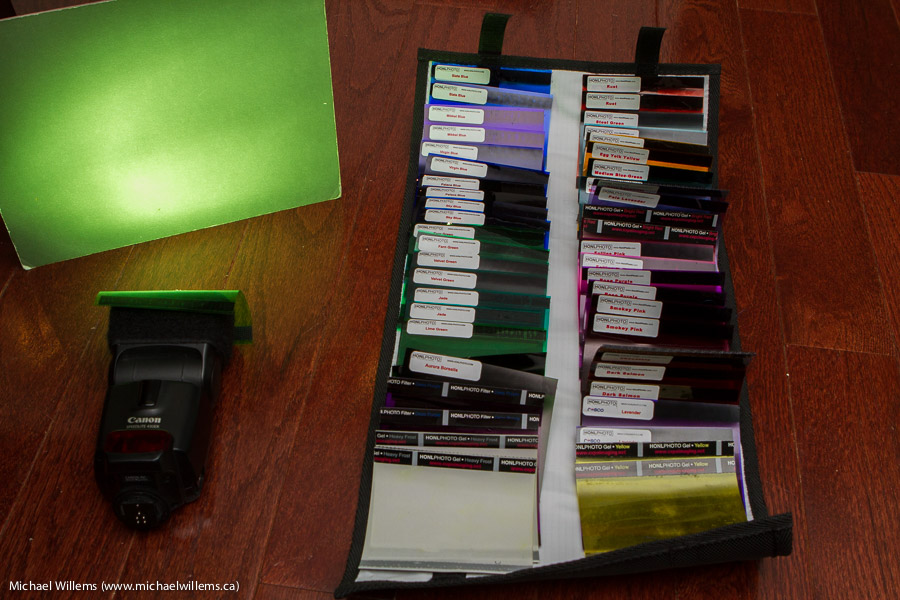
Another development is two new sets of gels: one with 5 different blues, and one with 5 different sets of greens; to wit, these amazing colours:

Aurora Borealis:

Lime Green:

Jade:

Velvet Green:

Fern Green:

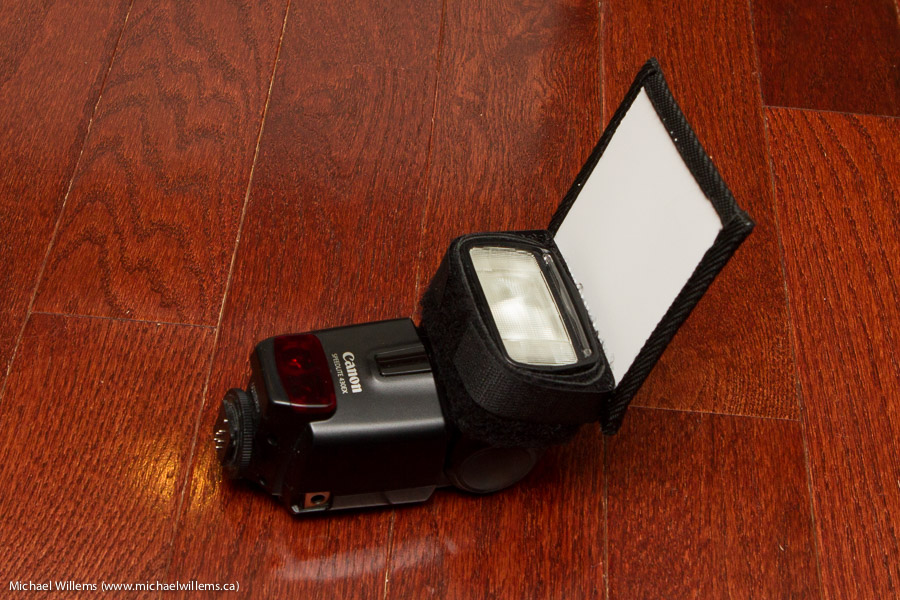
And then there’s a new little bounce card/gobo::

Cool new products. If you are interested in them, go to your local quality high street photography store or get them via this link: http://www.honlphoto.com/?Click=2032 and enter “Willems” on the checkout page for an extra 10% discount off the published prices.