Colour

Again, let me point out today the effect a bit of colour can have. A splash and a dash here and there can make all the difference.

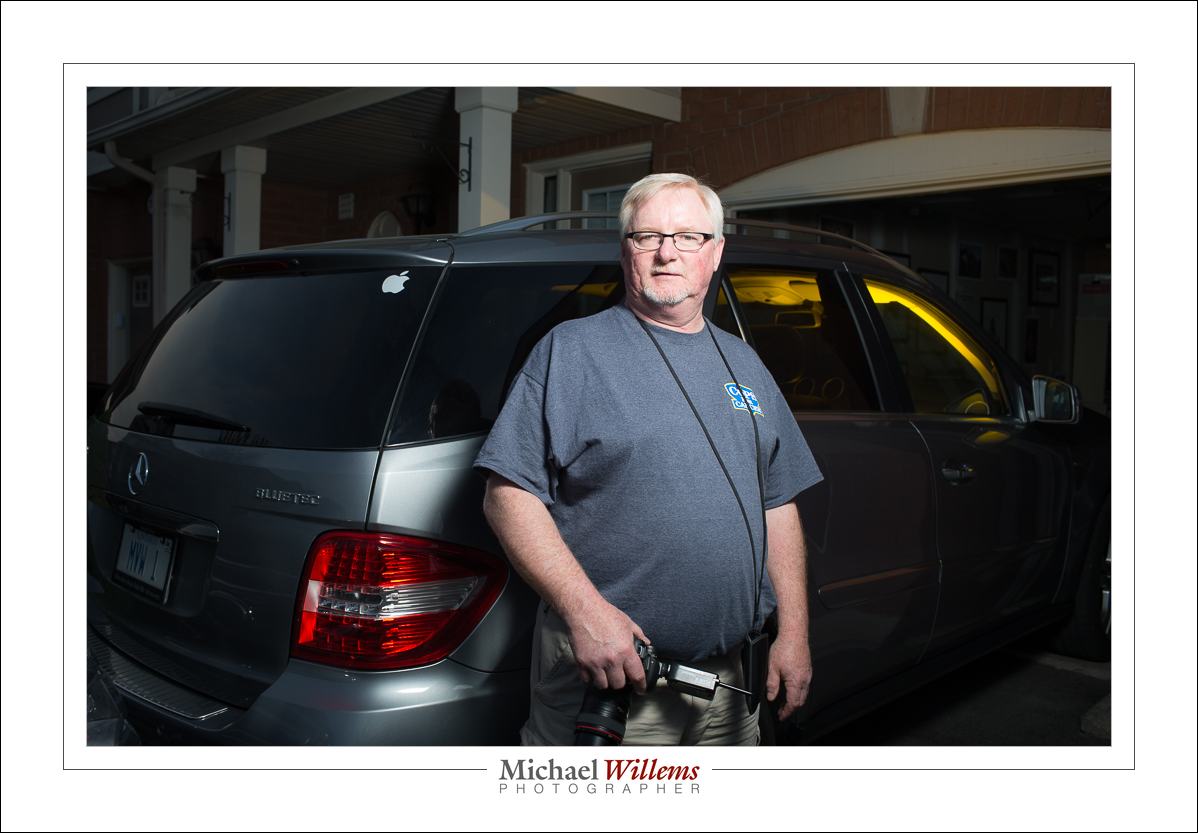
Take this picture, of yesterday’s student by his car:
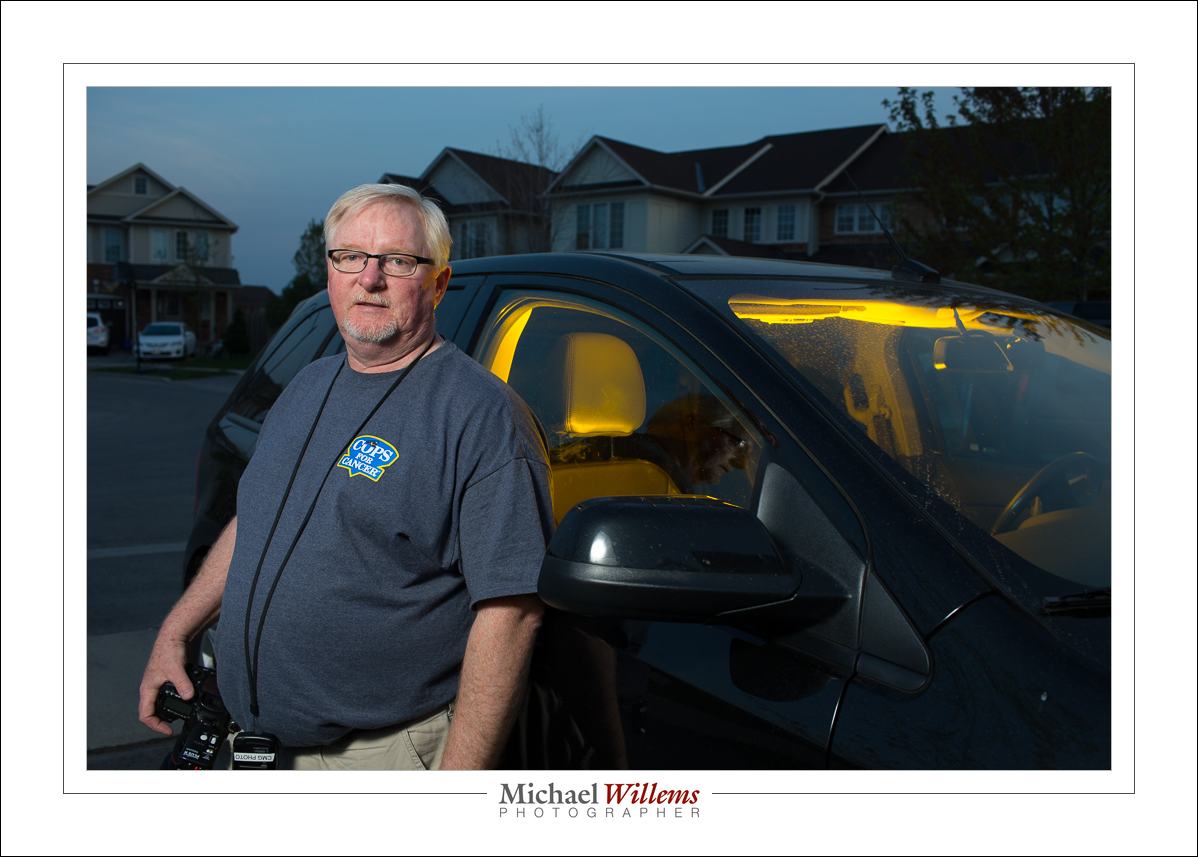
Without that gelled flash inside the car, the picture would miss something. It just does not look the same:
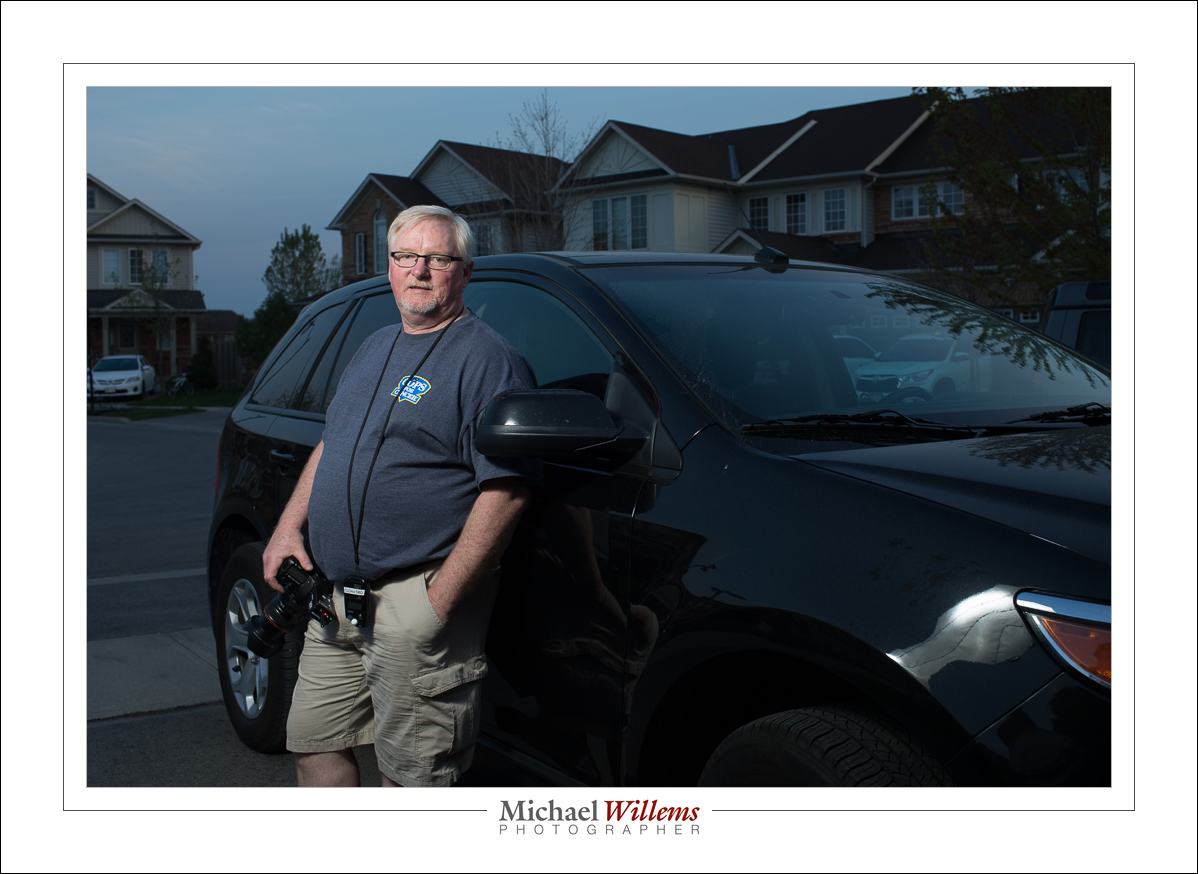
So I always have a flash standing by just in case. To be precise:

  • Flash, like a 430EX (Canon) or SB-610 (Nikon)
  • Light stand
  • Bracket, for mounting flash onto light stand
  • Clamp, for when I want to clamp the flash to something
  • Pocketwizard radio trigger
  • Hotshoe cable between Pocketwizard and flash
  • Set of Honl photo gels (use discount code “willems” upon checkout, for 10% off)

The gels are important: over time you will get a good sense of what colour suits what occasion. The Honl gels I use are very sturdy, easy to use, and are chosen very well: I have all the colour sets and use them extensively.

Another recent example, where I used two extra little flashes with gels to liven up a board of directors:
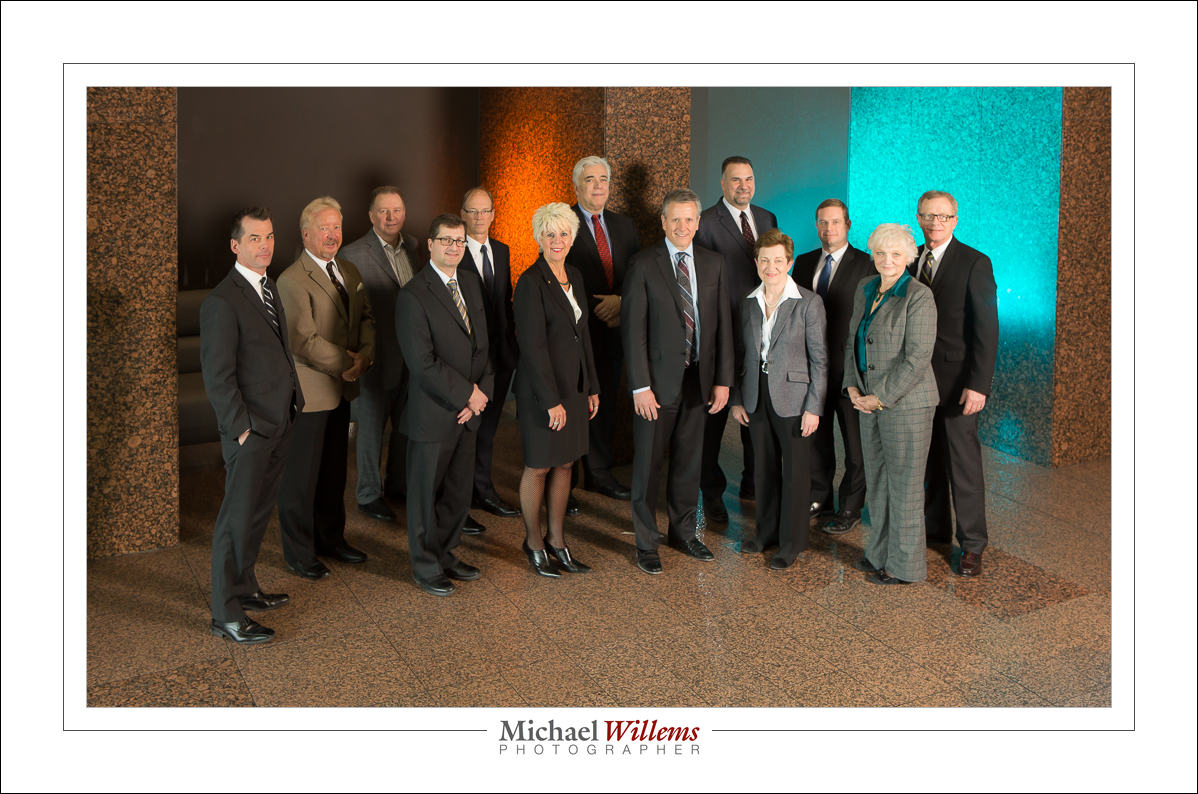
That, too, would have been dull without the colours. And you should never allow a board to look dull.

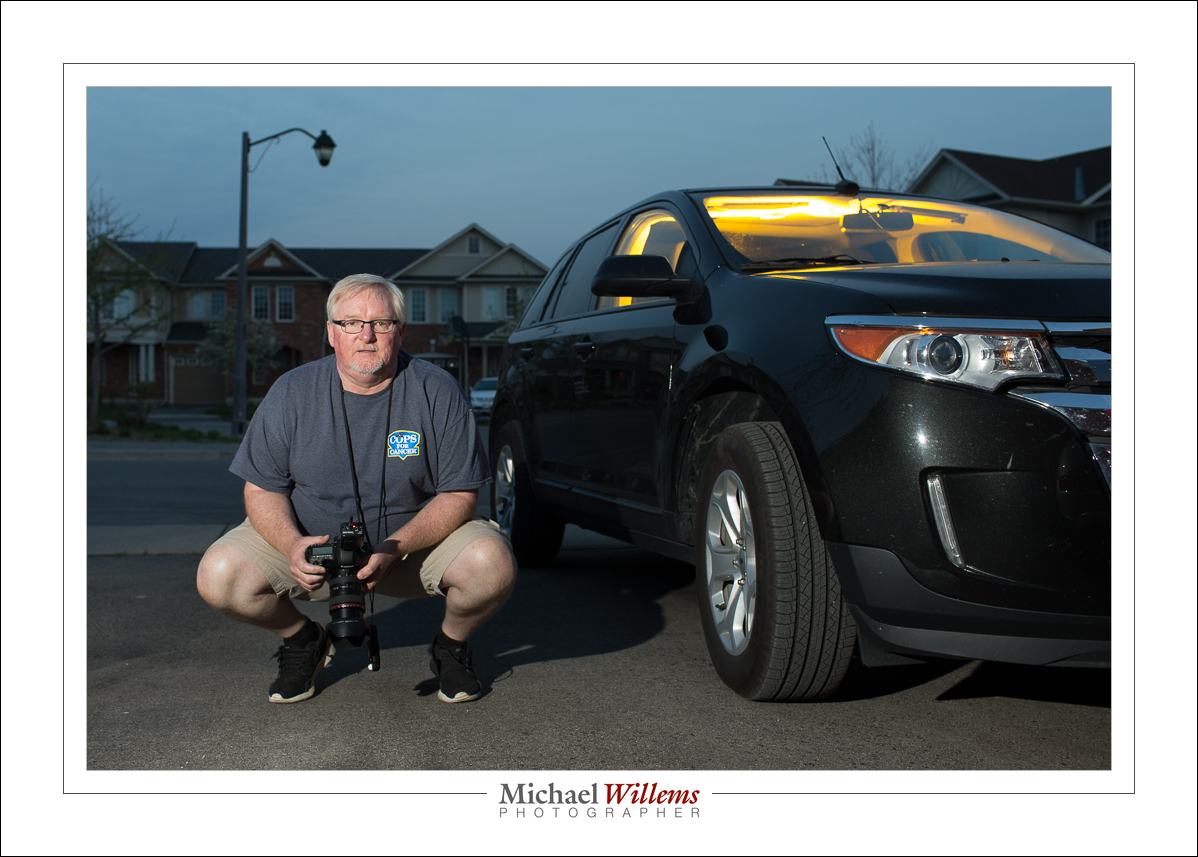
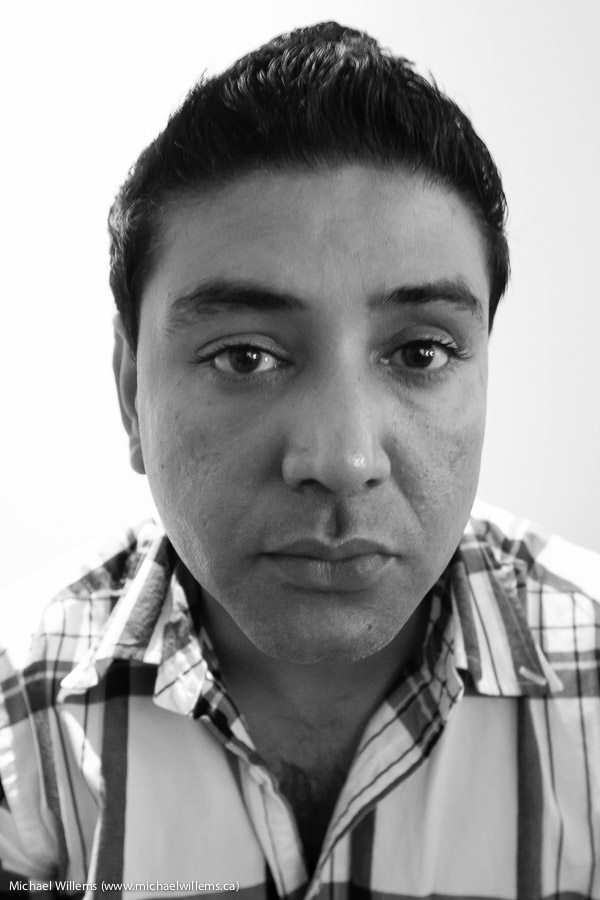
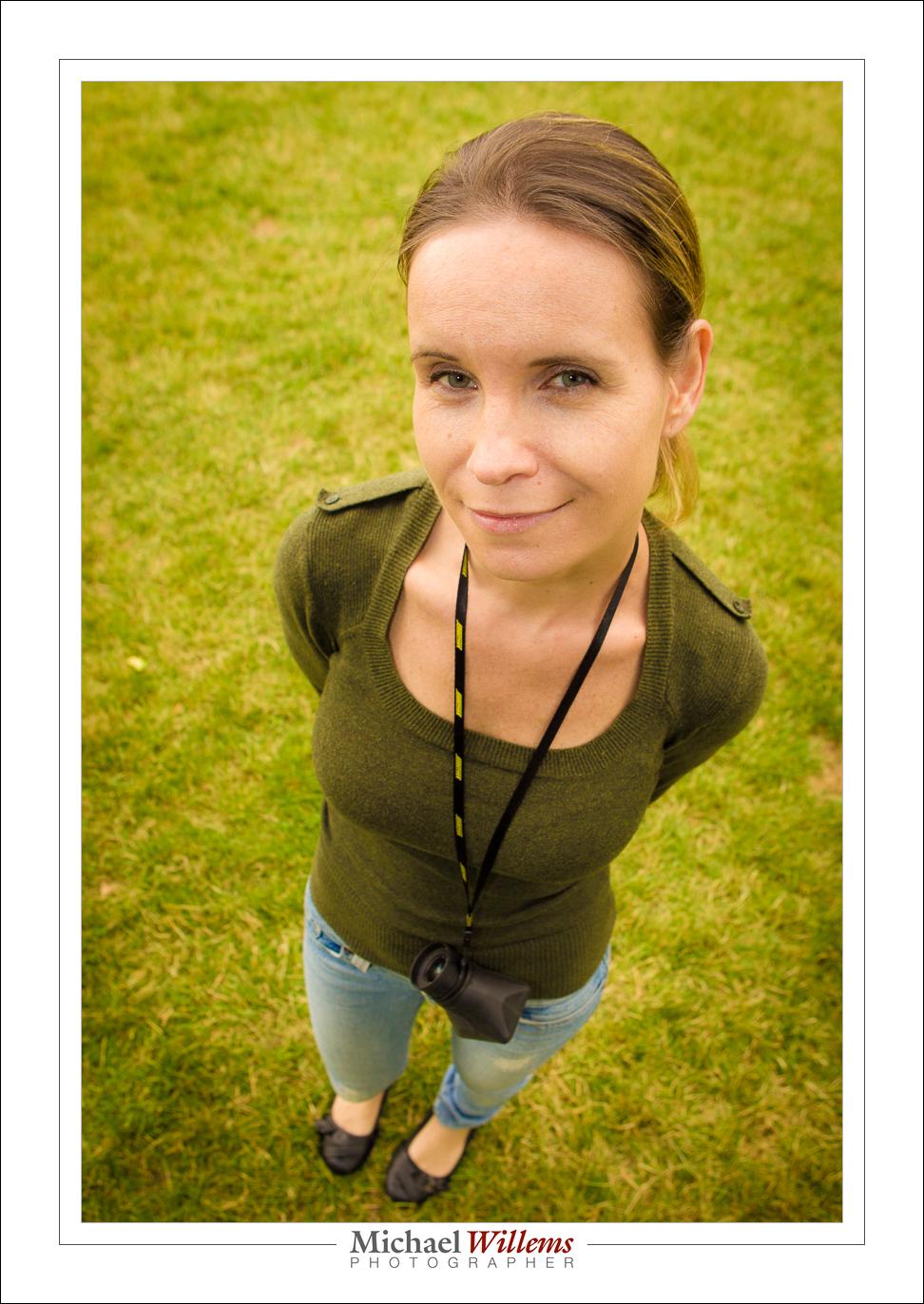
Here’s me, followed by a few more of my student:
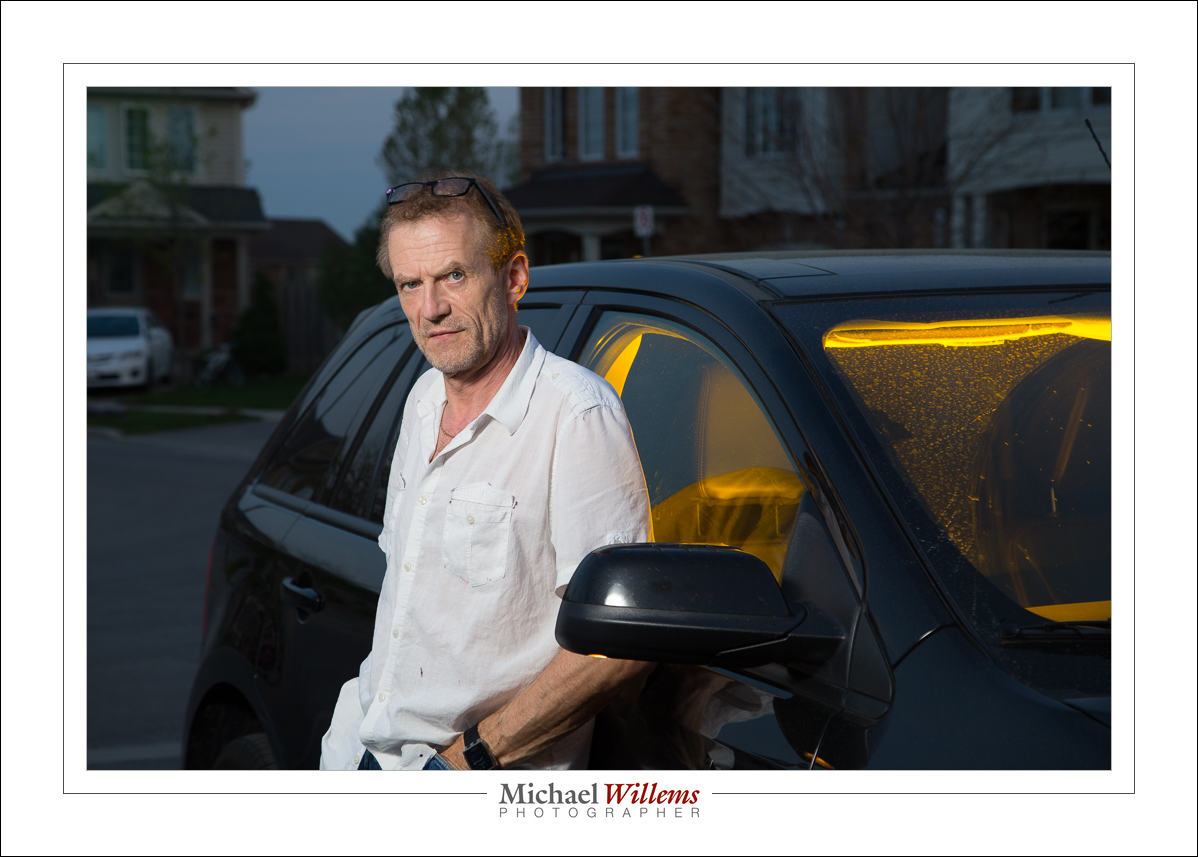
You should know, it was not dark when we took those. As you know, your camera is a light shifter. As you know if you have taken my lessons, you start with the background. Set your A/S/ISO to whatever it takes to get that the way you want. Not the way it is. Then, and only then, add flash.

___

If all this is mystery to you, do what my student above did and take a private lesson. In person, or worldwide via Google Hangouts. And start with the books: have those ready during and after the lesson to ensure it all sticks. You too can make artistic professional pictures, and quickly, and without major investments in gear.

 

CEO

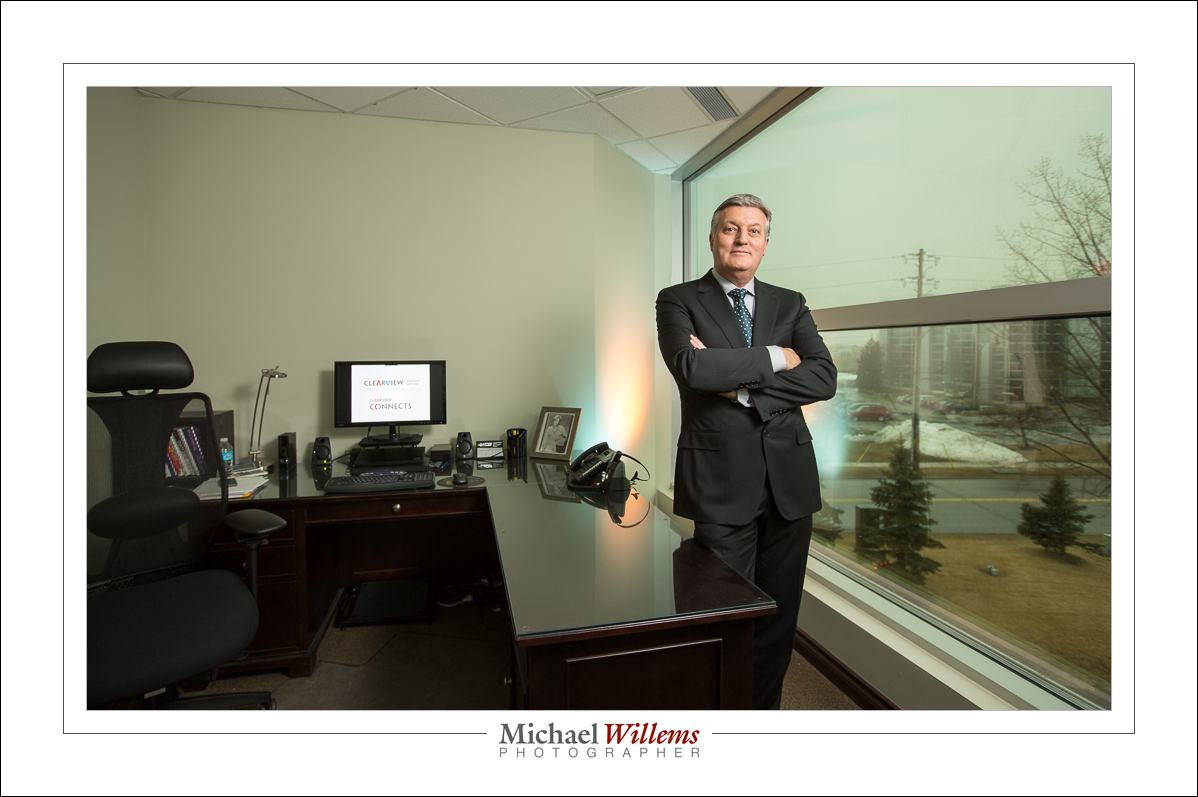
So today I did yet another CEO shoot. I do love environmental portraits.

So what do I look for in such a portrait? How do I make one? I thought it might be interesting for you to follow along, so to speak, with my process.

It starts with the lens. I start with a wide angle lens, because I will probably want the person “surrounded” by the rest of the shot. By their environment, in other words. Probably, not necessarily: so I also bring lots of other lenses. If I do use the wide lens, I am careful not to get too close to my subject: distortion is always a possibility.

Then the light. I will usually start with one off camera flash in an umbrella. So, since it is a flash picture, I start with the ambient light. 400/40/4 is a common start point. Whatever it is, I continue until I am happy with the ambient light, that I typically want at –2 stops, and only then go on to flash. For the flash, I ensure it is aimed at the subject’s face from the right direction, at the right angle (e.g. 45 degrees off-centre, 45 degrees up).

Then the location. I look for something that is typical for the person I am shooting. An office, for instance. But I also look for good composition. The rule of third, for instance. Leading lines, diagonals converging where the subject is, leading the eye there, are good.

I watch carefully for reflections in glass, and position lights and subject accordingly. I check that the subject’s clothing and hair are all OK.

An extra flash or two, with gels, are always ready to be used. A dash of colour here and there is great.

And now: in practice. Can you see how I applied all these techniques to today’s CEO portrait shoot?

Of course I also use all other standard composition and portrait and technical rules. But it’s not about those; it’s about showing something of the subject’s world, and of his or her personality.


Tell stories

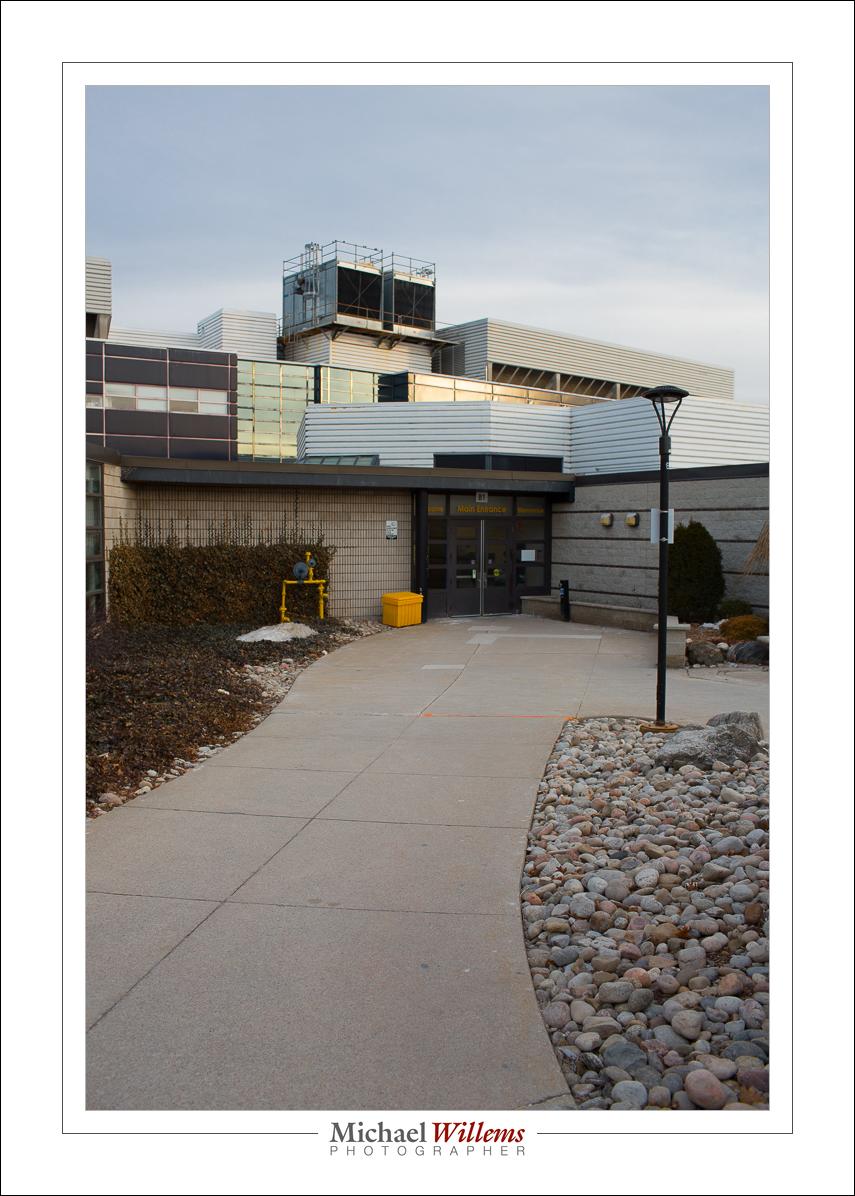
Even in the smallest ways, you can tell stories, and even in snapshots there is thought, Like tonight, as I walked to class. I shot a little four-image story.

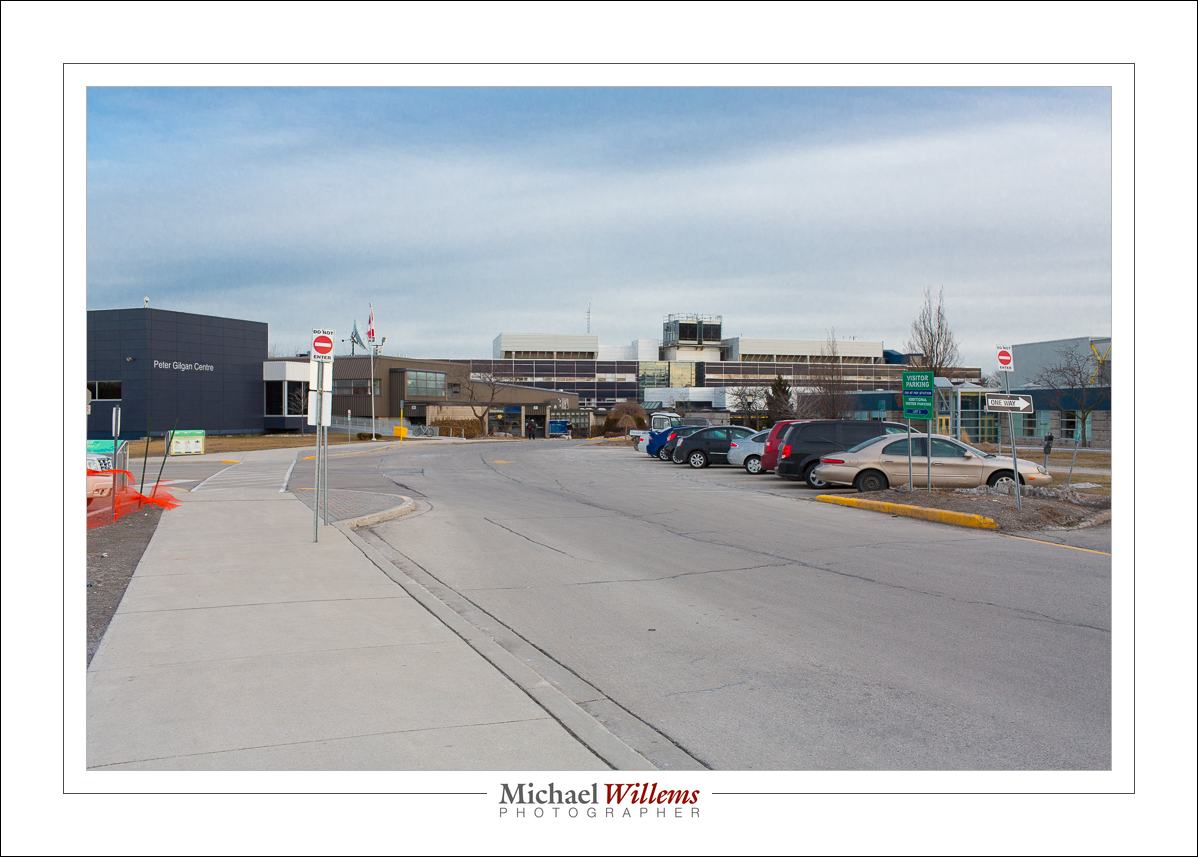
First, the all-important overview “establishing shot”:

Shows where we are going. Namely Sheridan College, where I teach several photography courses. I used the “Sunny Sixteen Rule” to set the camera without using the light meter. Partely overcast at 7pm, that is about 3 stops down from sunny at noon. So, 400 ISO, 1/400 sec, f/5.6 (5.6 being three stops down from “sunny” 16).

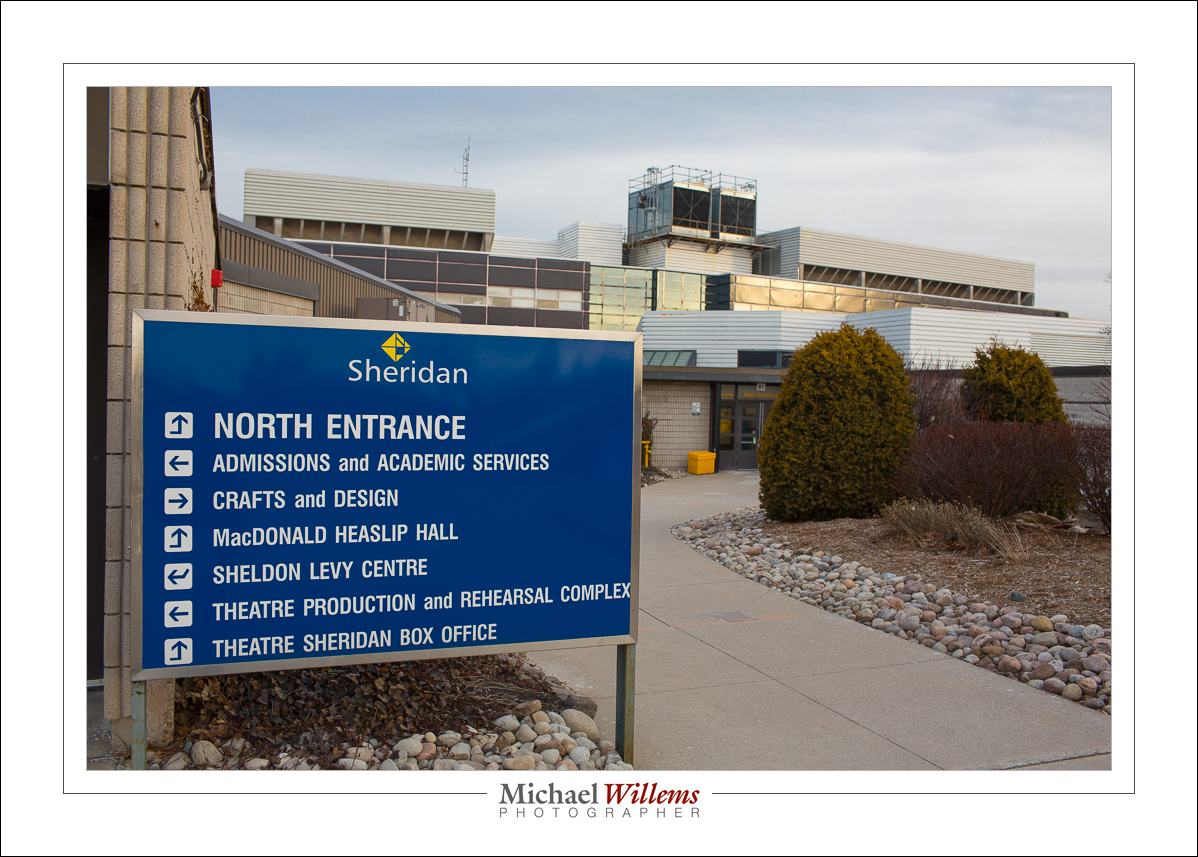
Then, let’s add some depth, some 3D, and at the same time let’s tell the viewer where we are:

Showing depth? That’s done by using “close-far”. A close-by object very close to you, with the background showing far away. That shows us there is depth in the photo; that it is not flat, in other words.

That being done, now let’s use a nice curve, a converging one at that, to imply that we are going in, by showing “the path”:

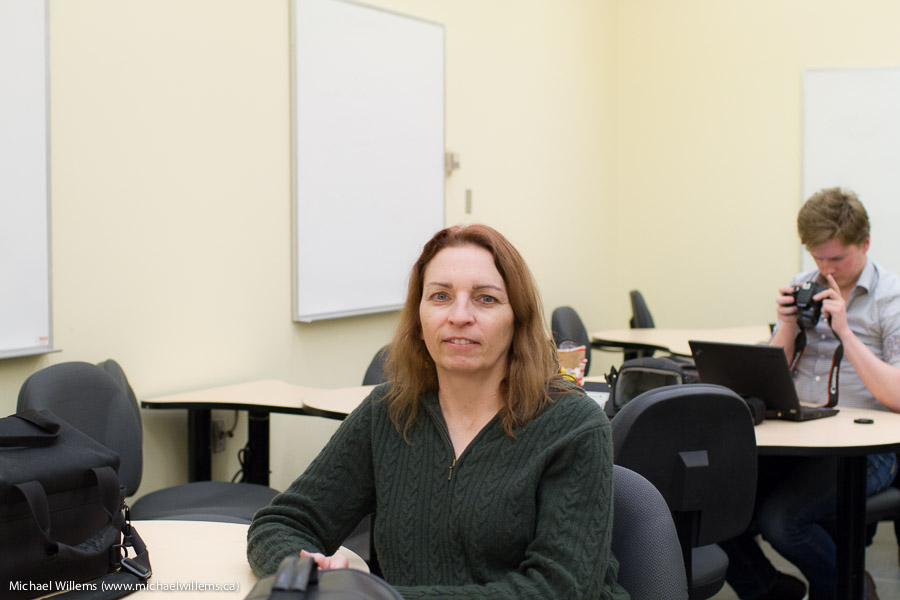
And now that we are there, let’s see the class, during a break:

Again, nice S-curves lead the viewer’s eye into the photo. Focused on the person closest to us. Using the Rule of Thirds.

The point? The point is that you can, and should, apply “high rules” to “low snaps”; and that this makes them better. Enjoy!


Launch

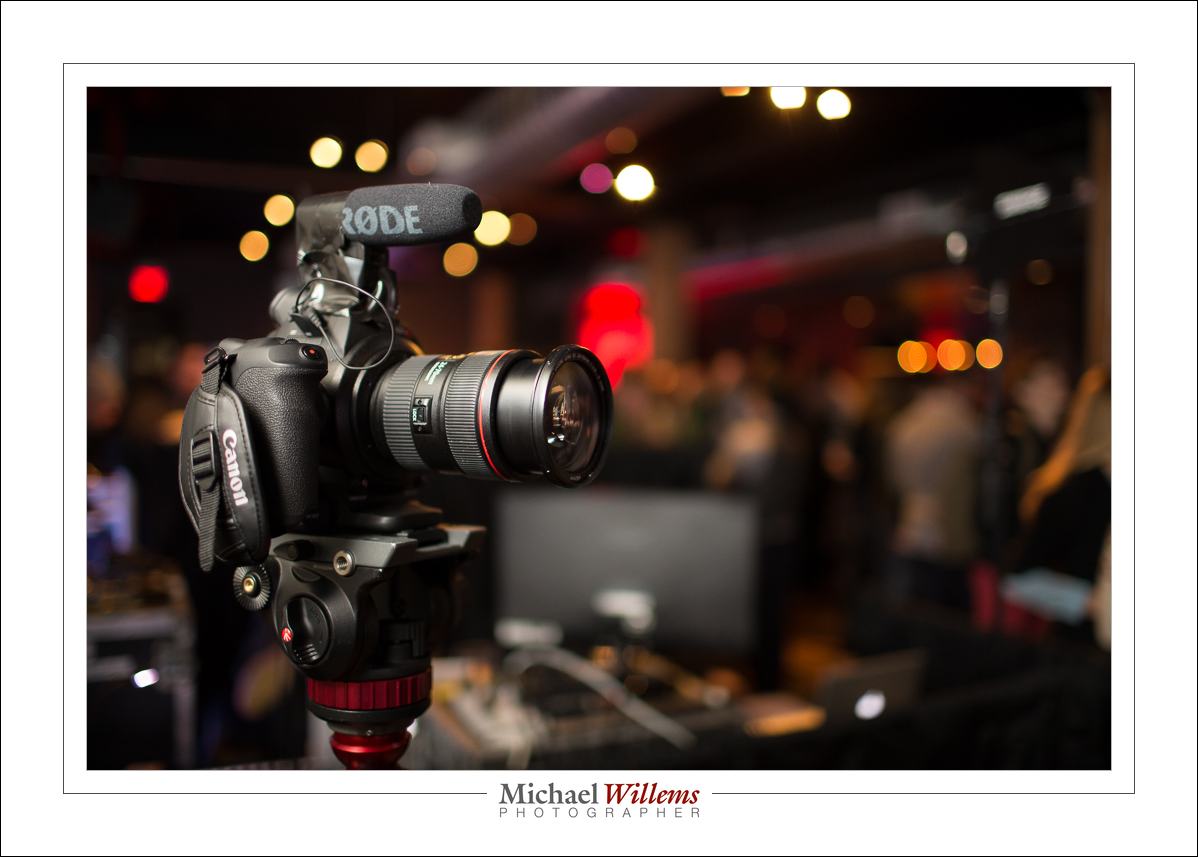
I attended a Canon Canada industry event today: launch of the C100 MkII video camera. Here it is:

(1600 ISO, 1/60 sec, f/1.4, bounced flash).

Hey. Wait. Let’s talk about this shot. Why those particular settings?

  1. It was dark, and bouncing was tough, so the lens will need to be open at f/1.4 to let in enough light. Also, this creates round bokeh background lights, not hexagons. So, aperture done.
  2. I wanted a handheld sharpness guaranteed shutter speed. Say twice the lens focal length. And with a 35mm lens, that means 1/60 second. So, shutter done.
  3. So now I wanted the background to read around -3 stops, or something thereabouts: dark, but not pitch dark; a nice warm glow. My first guess was that 1600 ISO would get me there. If it had not been, I would gave tried other ISO values until done.
  4. White balance to zero. Flash compensation to minus one (the camera is black and the flash is metering off the camera).

That wasn’t so difficult now, was it? And note, I am not saying that my way is the only way. If you have another way of getting to good settings, good for you. But this works for me and you should think about what works for you. And then, and you are probably starting to recognize a theme: practice. practice. practice.


Do it now

A note to those of you who want to learn things—some time soon.

My advice is to do it now. Often, that’s the only way to get things done: do them right now. Not “some other time”, since that never arrives. Tomorrow is always just out of reach.

Learning photography is easy. There are many ways to do it. They involve books and training (see http://learning.photography), but they all also involve doing it.

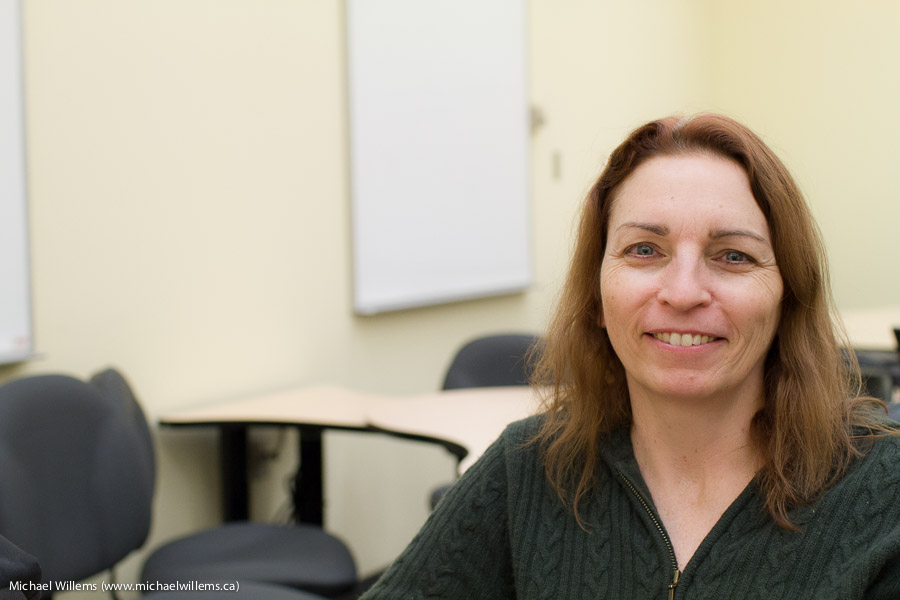
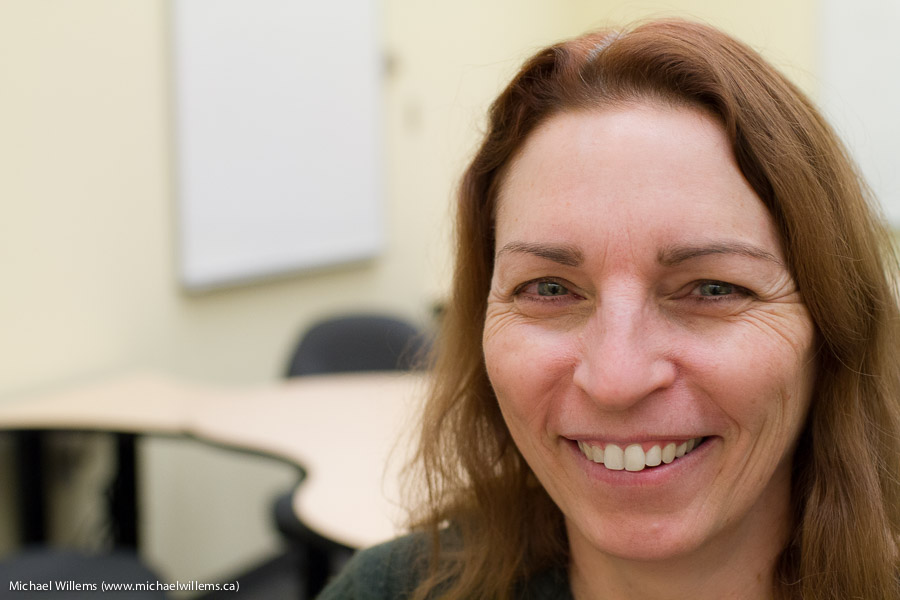
Like the relationship between depth of field (“how blurry is the background) and distance to your object. The essence is to try it without varying anything else. For example, look at the background. Is the whiteboard fuzzy or sharp?

35mm lens, f/2.8:

35mm lens, f/2.8:

35mm lens, f/2.8:

All I did was vary the distance. The board gets blurrier as I move forward. (The smile gets bigger, as well, did you notice? Nothing like poking a camera into someone’s face to get a smile—or to get beaten up).

So f/2.8 can give you a very blurry background, or a blurry background, or a sharp background, as long as you change the distance. You could also try leaving the distance the same but varying the lens focal length (by zooming in) or the aperture (remembering to adjust ISO to keep exposure the same).

The key is: do it. Don’t just think about it. Grab your camera (now!) and learn the relationship between aperture, ISO, shutter, focal length, and distance.

The same is true of the learning thing. If you had been thinking of booking some private learning time, or of buying my books, do it now, so your next shoot (even if it is for March Break) will be better. You know my number.

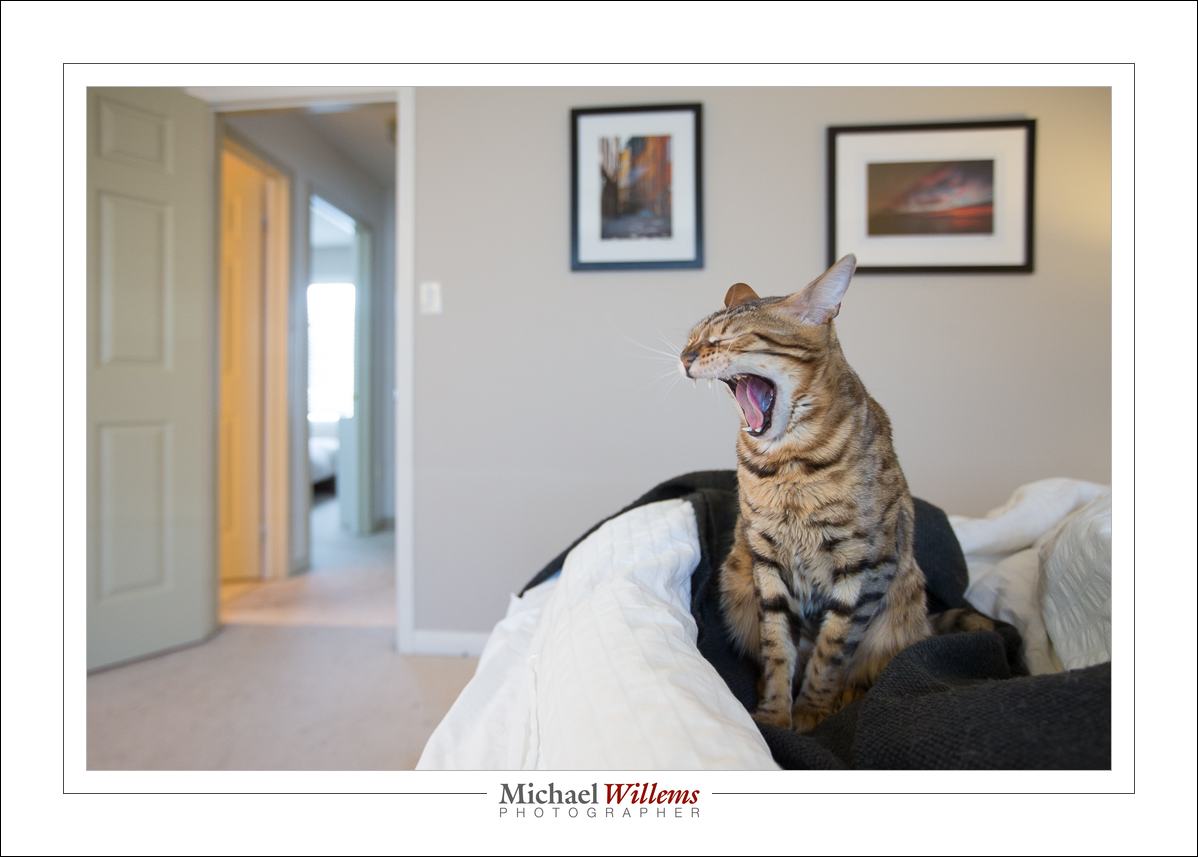
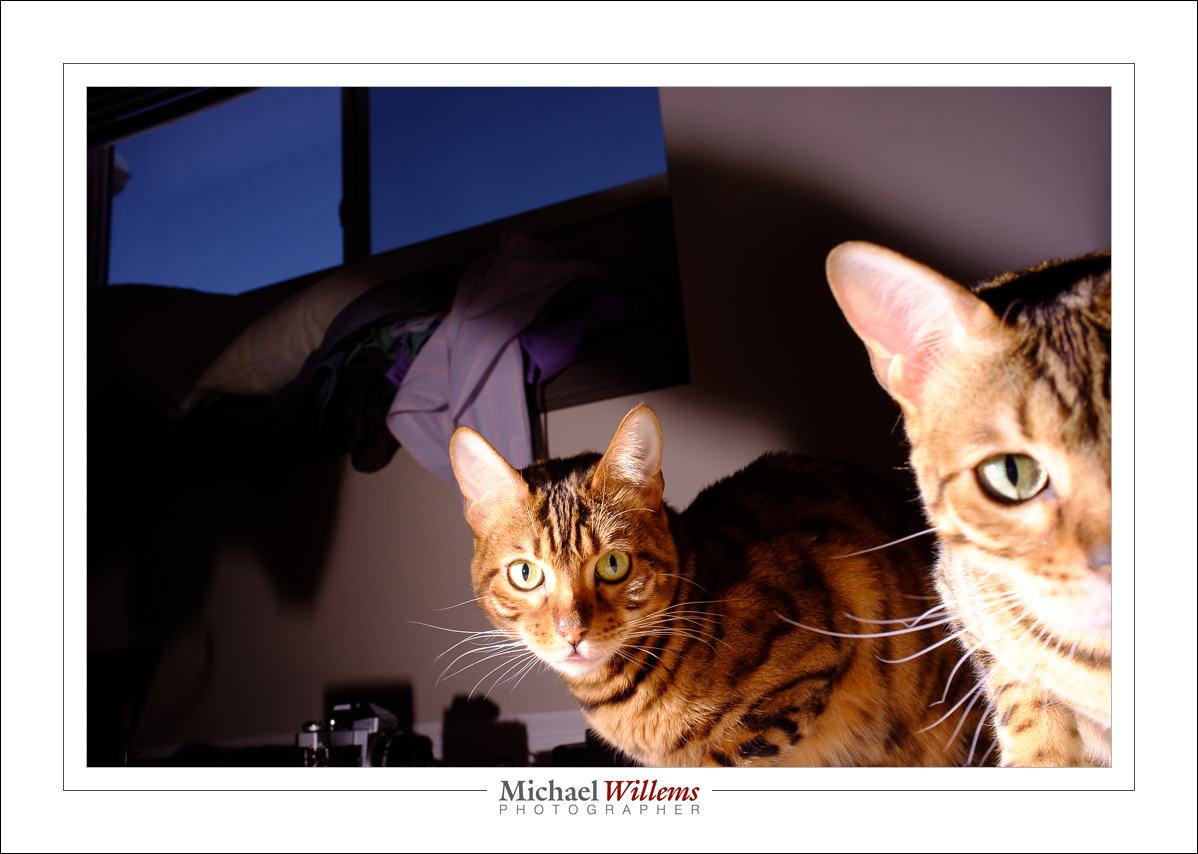
And to finish: one more tip. If you always have your camera at hand, you lose nothing. Like the cat yawning, this morning:


Challenges in a

I shot portraits yesterday. Some were headshots. These are sometimes challenging because you want to get great expressions out of people who are not professional models. Saying “smile” doesn’t do it.

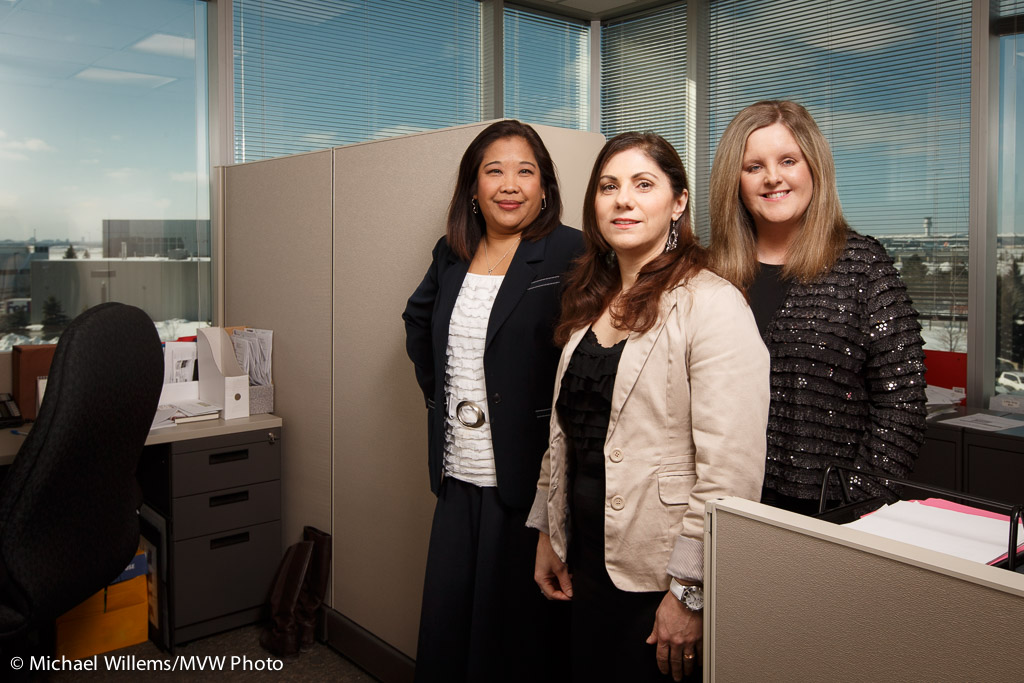
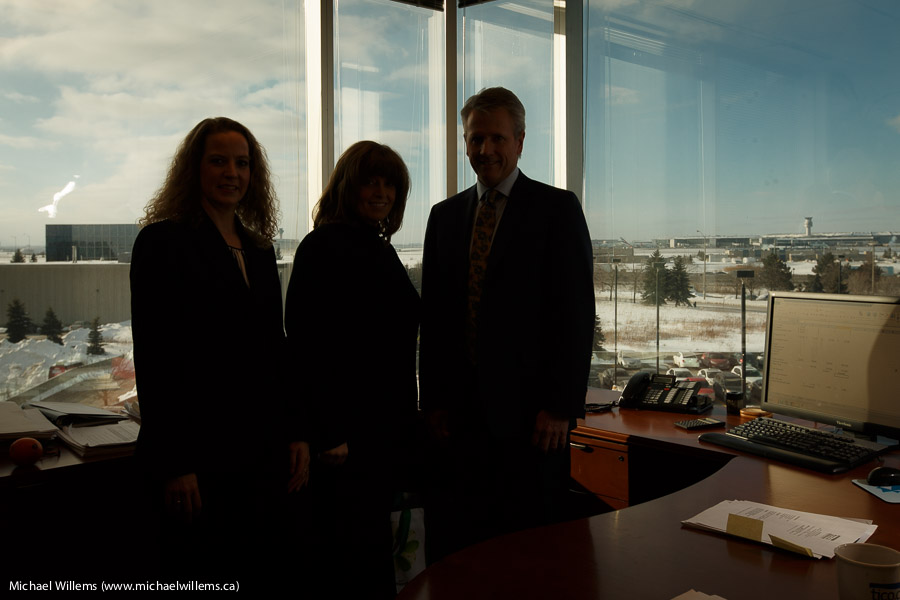
But then, even more fun, the environmental portraits. And these should be storytelling pictures. With good group composition.  Three colleagues:

In these, as you see I like drama, so I expose for the outside. 100 ISO, 1/100 sec, f/8. Why not the usual 1/250 sec? Because that would have meant f/5, and in this case I wanted f/8 for DOF.

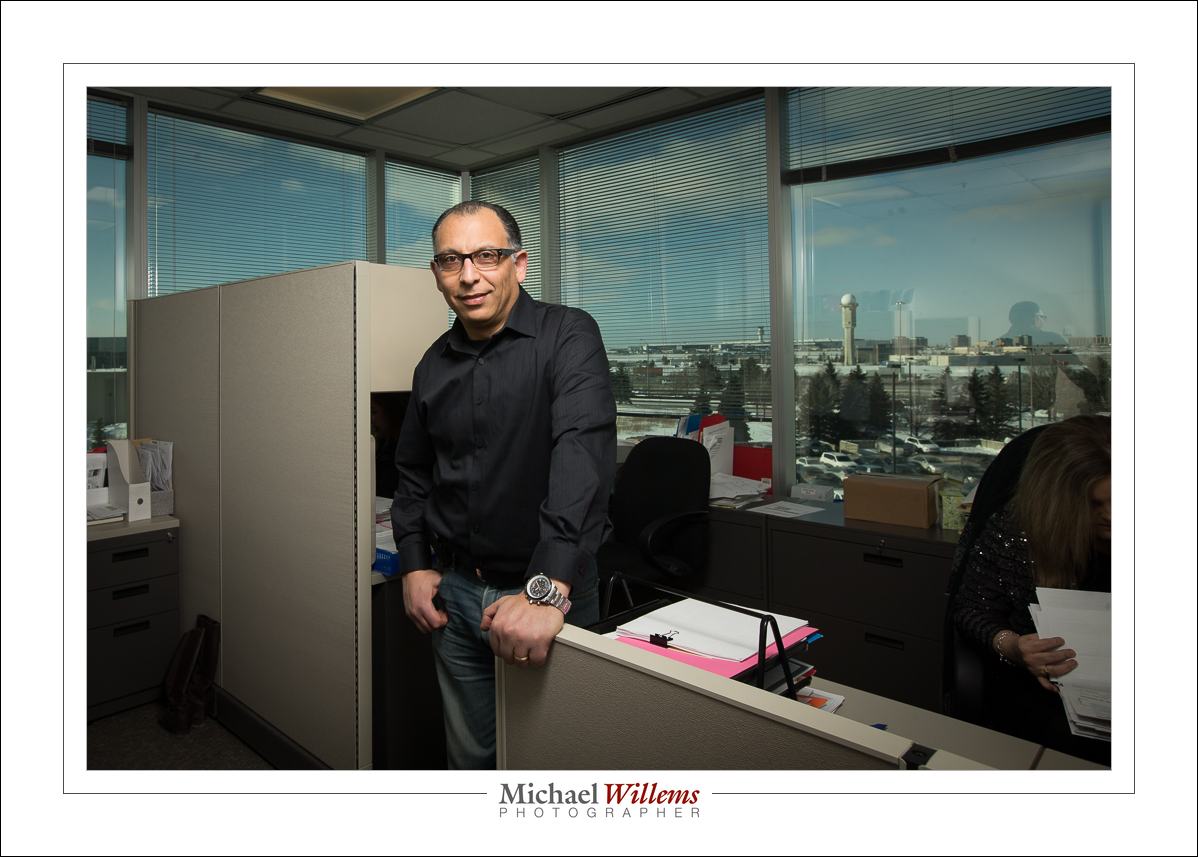
The story is to do with the airport, of course. And individual shots are easier: see my friend and assistant Maged yesterday as I was setting up for the shot.

Nice wrap-around light from an off-camera umbrella.

Here, another one:

The biggest challenge? The flash has a big umbrella. This is visible in almost every picture as a window reflection. And it lights up the ceiling: ditto. And I needed an angle that shows the radar tower. So in the event, I moved left and right, up and down, back and forth, and I made the light and the subject do the same, until I finally had one angle that had sufficient light in the subject and that had no umbrella showing, and only acceptable ceiling reflection. It’s always possible: I learned that long ago. But I also learned that it’s always a challenge. So: persevere.

Why not do without an umbrella?

That’s why!


x100: Can you see a theme?

Regular readers will see that the last few days, I have been shooting with, and talking about, the Fujicolor x100 camera that I carry:

Fuji X100 (Photo: Michael Willems)

The theme has been: given the right light (e.g. flash!) and the right techniques, you can take professional pictures with it that are as good as those taken with an SLR. This is almost straight out of camera (a crop and a few dust spots removed):

Now while I am not recommending product shoots with the x100, this goes to show it can be as good as an SLR.

But now let’s take it a step farther. It can be better.

Yes, better. And here’s how:

I just took that picture at 200 ISO, f/8, 1/1000 sec. That makes for that nice, dark sky.

Wait. Did he just say 1/1000 sec, one thousandth of a second? That is impossible since the flash sync speed of 1/250 second limits the shutter speed you can set the camera to when using a flash. Right??

Wrong. The x100 has a leaf shutter. And it allows flash up to 1/1000 second. And as said, that is why that sky is so wonderfully dark. It is in fact noon and it looks bright to my eyes. But 1/1000 sec makes it dark. Two stops darker than my other cameras could have done!

But he could have done that with aperture, with a higher f-number. Or with an ND filter.

Nope. If I had, I would have run out of flash power. The flash needs to get through that filter, or through  that small aperture, and it is not bright enough at higher apertures, especially when a modifier is being used.

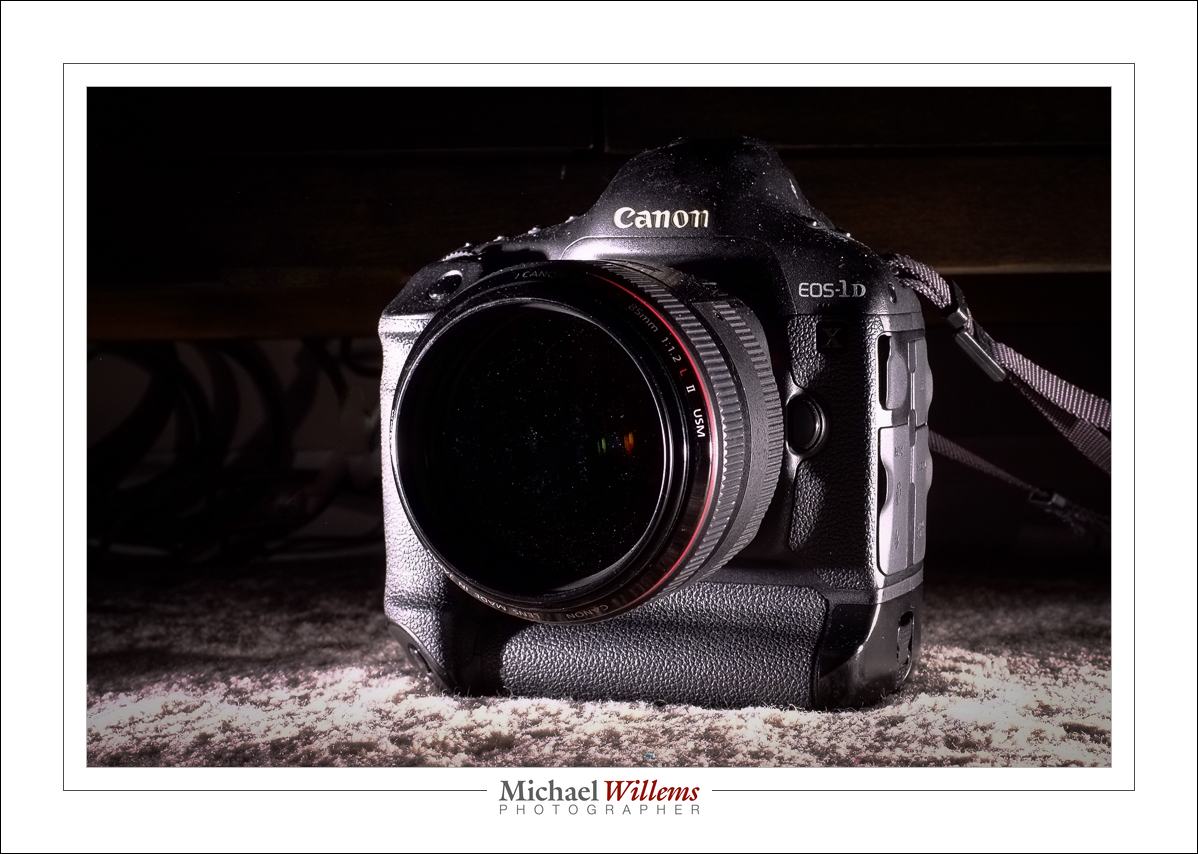
So the x100 may be small, but it can do things my $8,000 1Dx cannot do. Just saying!


Ad lucem

…or “to the light”.

But contrary to that Latin phrase, a little tip today for when you don’t want light. Like when you want to hide something.

Hide something? Example, please?

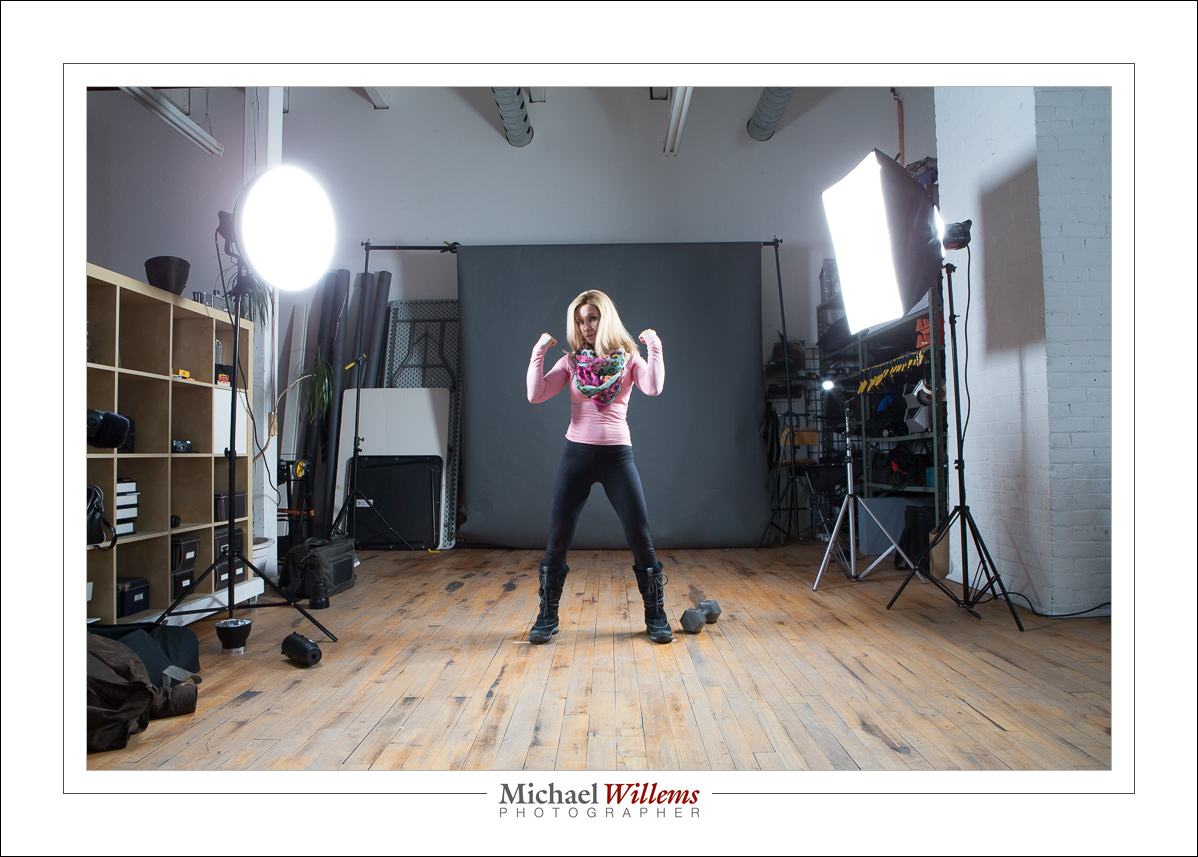
OK. Say you have a roll of paper in your studio. and you want to shoot a full length portrait. Normally you would pull the roll all the way forward so the subject stands on it. No transition can be seen at their feet because there is no transition.

But if the roll is too short? Then you will see a clear (and ugly) transition from “floor” to “roll”:

But this is solvable. It is in fact simple: keep the transition in the dark. Then you will not see it. Like this:

To keep it in the dark, you must do two things:

  1. Set the camera so that ambient light plays no role (i.e. without flash, the picture is all dark), Standard settings like 1/125 sec, 100 ISO, f/8 will take care of that. This means all light in the photo will be from your flashes.
  2. Ensure your flash light does not reach the transition. By definition, that will result in the area being dark. So you need to point away from the area and have enoughdistance from the background.

That is it. So if I use two softboxes as above, and feather them away from the background, I will not throw any light on the background. That means it will be dark. And since the floor is light when you are, it will be a gradual darkening.

Simple. Two softboxes and a too-short-really paper roll, and that’s the result. Things do not always need to be complicated.


Jane and hats

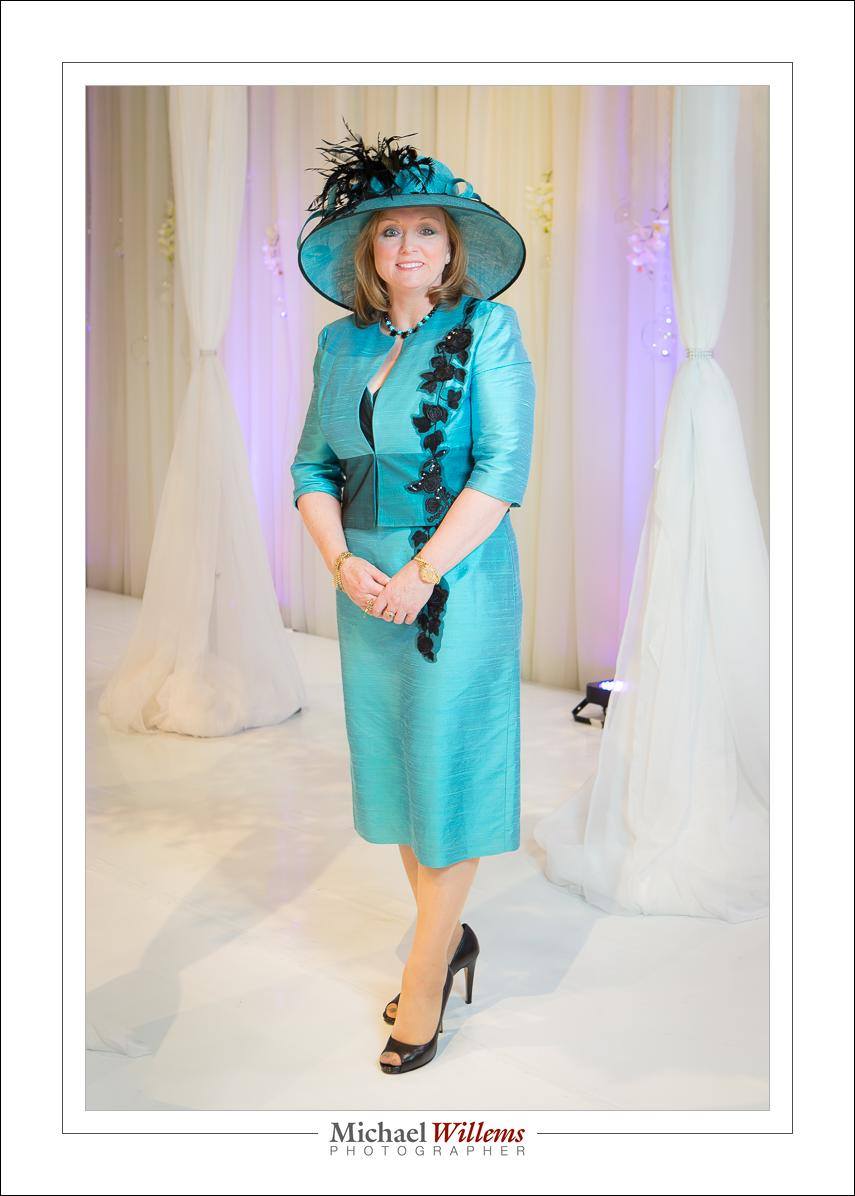
This is Jane Dayus-Hinch at today’s Bridal Show in Toronto:

As you see, Jane wears hats. Large hats. And these are extremely challenging, photographically. You will get very dark eyes.

What you can do:

  • If using flash, lower your lights a little, and perhaps move them a little farther away.
  • Tip the hat up a little.
  • Add a reflector underneath.
  • Use a white floor with a lot of ambient light mixed in (as I did here).
  • Do some post work.

Even with these, the conditions will still not be perfect, so you may have to live with slightly darker eyes. But at least the photos will be acceptable, as this one is. And as Jane’s photographer, I have to be able to handle hats!


The Camera Puts On Ten Pounds

…or so it is said, in the case of TV, where the camera does really put on ten pounds. Why? Because TV is made with wide angle lenses.

To illustrate this, let’s make a portrait using a 200mm lens:

An undistorted view of the subject. Now let’s zoom out to 35mm. But then, wait….  the subject will be small, very small. So we will have to get closer to keep the subject the same size. It is that closeness that causes the subsequent distortion:

All distorted, and again, this is not because of the wide angle; it is because of the closeness that the wide angle necessitates. That is why we say:

“Do not use a wide angle lens for portraits”.

What we really mean is:

“Do not use a wide angle lens for portraits where the subject is large, because then you’ll have to be too close and you’ll get distortion as a result of that closeness.”

That does not sound quite so punchy though, does it?

Sometimes we can use that distortion for a deliberate comical effect:

I suppose the one thing you may want ti take away from all this is: know your lenses and when to use which one. Pay attention in particular to:

  1. Depth of field.
  2. Perspective distortion.
  3. Susceptibility to (or resistance to) motion blur.

All three of these have something to do with focal length. When you are learning photography, it is your job to figure out in which way.