As Standard As It Gets… or?

As you will have read, I spent the last few weeks having enormous fun with the kids and their parents shooting mall pictures with Santa.

Usually, these are normal “pictures for grandma”. Standard smiles. Nothing wrong with those, but why not shake them up a little?

Like a scarily fast sleigh:

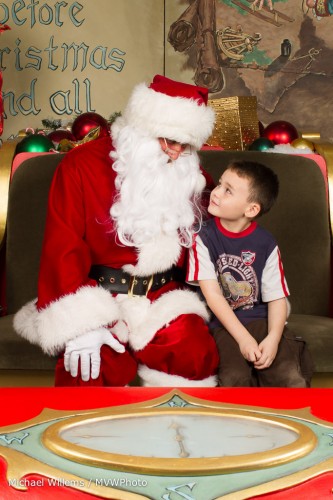
Or real emotion:
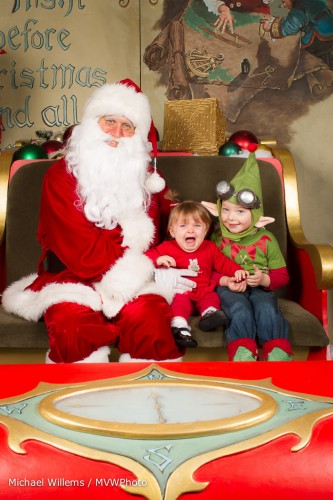
Or personality:
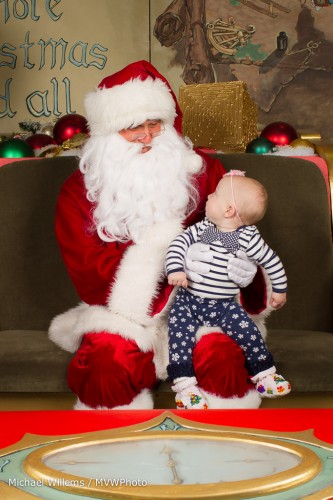
Or interaction:
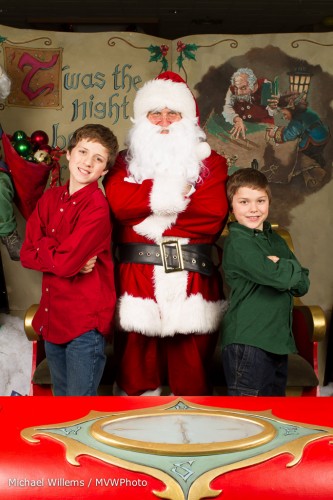
A Back-to-back pose:
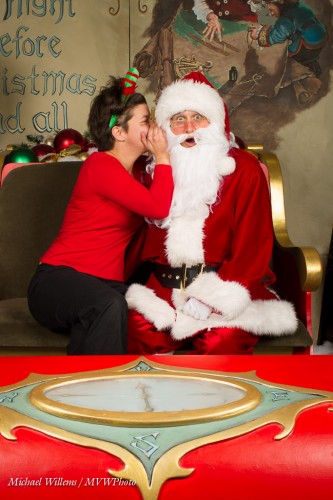
And here’s me (without the beard), giving Santa Props:
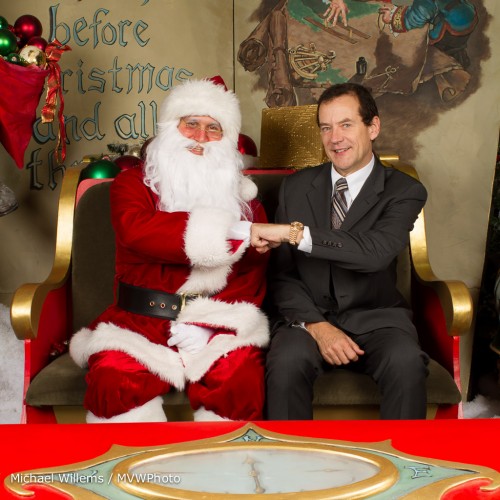
There’s so much you can do with a simple, simple setup.

And if you want smiles, then here are my tips of the day:

  • Avoid telling boys (and some shy girls) to smile! Rather, try to make them laugh. Anything fun is good.
  • Alternately, tell them to laugh. This often gets you smiles.
  • Have parents stand behind you, so the child looks at you when looking at the parents.
  • After a few smile pictures, do something else – anything. Ask for grumpy faces. Ask for silly faces. Say that smiling is forbidden. Anything to relax them a little. Then go back to regular smiles.
  • For little ones, do a game of peek-a-boo behind the camera. This sometimes works quite well to raise a smile.
  • Try  toys – Trish, my co-shooter, brought a colourful rattling toy and a cookie monster, and these worked well.

Out of the hundreds of kids I photographed, only one or two were devoid of any expression or personality. Most came out of their shell – some with some effort, but all except a couple worked.

I prefer “fun” and “real” portraits to standard shots, but I shoot both. And I had great fun coming up with some great poses for the parents. They may not buy them, but often do – and at least they get a choice.

Merry Christmas!

 

Shake It Up

A quick pic of the day, taken today:

Yes, you can have fun and shake it up!

Of course I used studio lights for this photo (I am shooting Santa pics at Hopedale Place Mall, every day until Christmas Eve). And I am working all day and sending emails out part of the night.

So tonight, because it has been very busy, let me just share a little reminder with you of camera settings:

Studio:

  • Manual exposure mode
  • f/8
  • 1/125th sec
  • 100 ISO
  • Manual flash

Indoors flash, as in parties and malls:

  • Manual exposure mode
  • The Willems 444 rule: 400 ISO, 1/40th second, f/4
  • Flash on the camera aimed backward (or pop-up activated).
  • TTL flash

Those will get you going. For the rest, ask me about the still abaiable Christmas Training Gift Certificates.

Back to regular programming soon!


Studio and more

I often shoot on location – many of my shoots do not require a studio, and I generally find studio environments too clinical.

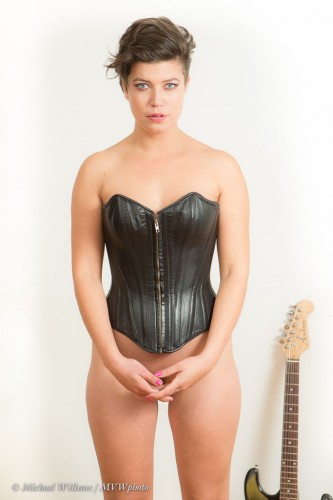
But now I have found a new studio I like, really like… in an old factory building full of photographers and other artists. I shot there today. Using my speedlights (of course!), I did studio shots like this:

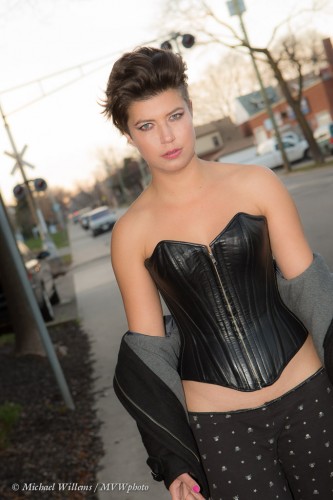
The great thing about this studio, though, is that it is entirely suitable for cool environmental shots too. Even outside the studio:

Cool buildings.. train tracks… trees, privacy.. amazing.

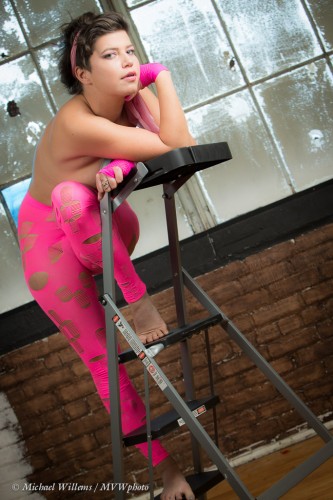
As is shooting inside not using backdrops. Look at this cool window and brick wall:

And inside using the wooden floor:

All this may help you in several ways.

First, you can do a lot using just simple equipment: three small flashes on two light stands, and one on my camera, all using a simple 24-70 f/2.8 lens.

Second, you can go to www.hamiltonstudio.ca and talk to Sam about studio rental per half day or day.

Third, even better: whatever your level of experience, you can have a private (or group) lesson from me in this studio on this type of studio shooting, either with speedlights or with strobes! Contact me for details – soon, before Sam fills up his studio!

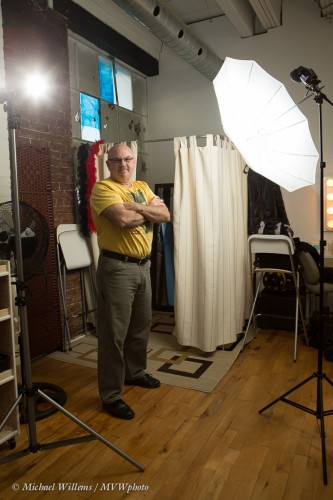
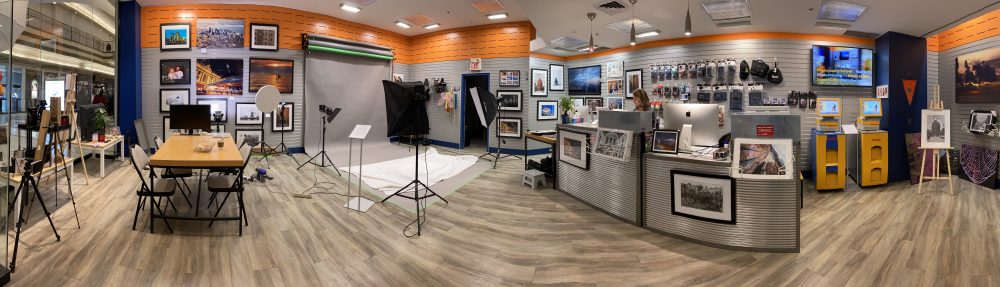
Here’s Sam in his well equipped studio, in Hamilton, Ontario, a short drive from Toronto:

If you call him, mention my name. He’ll see you right with a special offer for speedlighter.ca readers.


Mood in a portrait.

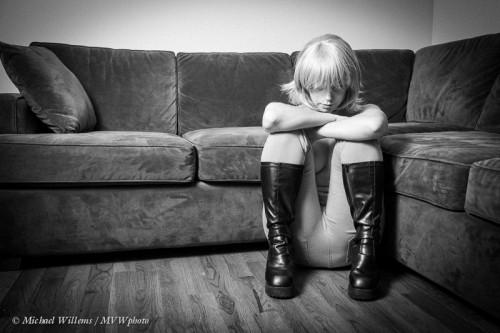
Here’s a portrait I made a few days ago. A portrait I am very proud of; very proud indeed:

This portrait shows a young woman apparently reflecting. It raises questions – and as I have said many times, raising questions, in stead of spoon-feeding the answer, is what makes an image effective and interesting.

Here, the questions include: “On what is she reflecting? Why is she sitting there? Why is she looking at the floor? Is she sad? Is she waiting? For what?” Those questions are what matter, more than the answers, which you have to come up with. Her apparent loneliness is emphasized by the empty space around her, the bare couch, her guarded pose: existential loneliness, or just a break?

We do not know. But we can all identify. An image like this makes us think about our own lives, and the experiences we have had. The human condition is deliciously complex, sad, and wonderful; and sharing it with others is what art is about.

The composition also helps. I am not sure analyzing art is all that productive, but if you asked me I would say the following are effective technical elements in this image:

  • Bare couch. Simplifying any image is key!
  • Simple setting; negative space.
  • The use of the rule of thirds.
  • Simple black and white.
  • A slight vignette.
  • The subject’s face is not looking at us and is mainly hidden.

In a technical sense, this is easy. The use of off-camera flash is effective in creating just enough shadows. I used a Canon 1Dx, with an off-camera 430EX through an umbrella. Camera in manual mode, 1/200th sec, f/5.6, 400 ISO; with the flash in remote TTL mode. I used a prime 35mm f/1.4 lens.

You really can take images like this using a very simple setup, so think about subject, story and composition, not about the technical settings.


Show without showing

As I pointed out in a recent post, you can often show without showing.

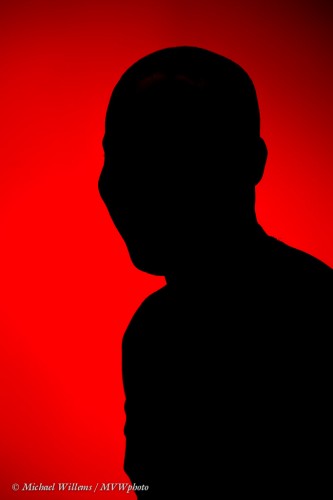
In the following image, we know that the subject is smiling:

Odd, since we did not show the one thing we are trying to show: the smile.

The same is true of many other photos. You can show expressions with eyes. A car’s speed without showing the car. An accident without showing the wreck. Disease with showing wounds. War without depicting the victims. The list is infinite.

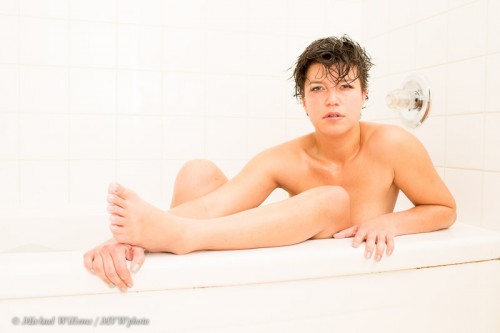
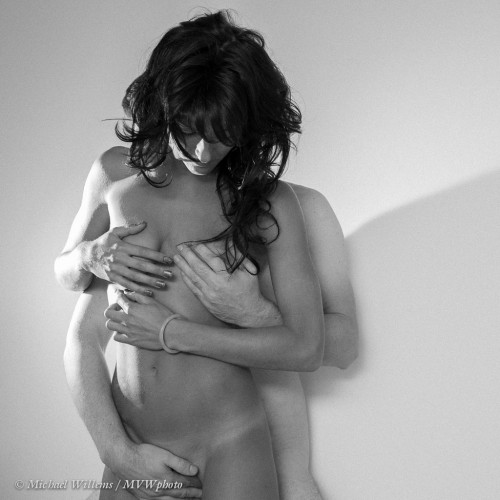
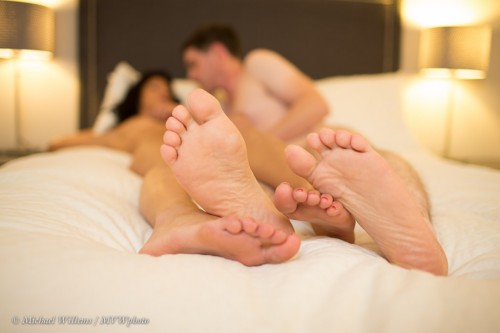
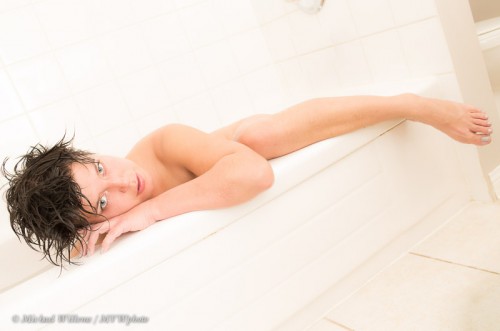
One assignment you might set yourself is to show something without showing the actual thing itself.  Like I did in the following recent examples, which show nudity and sex without actually showing nudity or sex. As in so many forms of art, implying, making the viewer work it out, is the art of it.

No-one reasonable could object to these images – the Vatican contains a lot more graphic detail in its artworks – but more importantly, all of these make the viewer do at least some the work of working out what is happening.

A side note: all these were shot the way you see them, not made in Photoshop.

Model in bath, using speedlights and high-key exposure:

Lovers holding on – two speedlights, in black and white:

Man and woman in bed:

The last shot, by the way, is a good example of why we use fast prime lenses. All of the last three were shot with a prime 35mm lens on a full frame camera – I love that lens, and in the last example I also needed that lens: blurring out with an aperture of f/1.4 is often the best way to not show something.

 
(For those interested: more of this and subsequent shoots on my tumblr art feed (nsfw): http://mvwphoto.tumblr.com).
 

Shapes

One thing I often hear is “but it’s been done before”. Whether a landscape, a portrait, or any other subject it can be hard to do it in an original way.

My advice: find your own perspective. It has not been done before: the photons you capture have never been emitted in exactly the same way before.

The Hoover dam has been shot many times, but never with this red car:

Hoover Dam (Photo: © Michael Willems Photographer)

Hoover Dam (Photo: © Michael Willems Photographer)

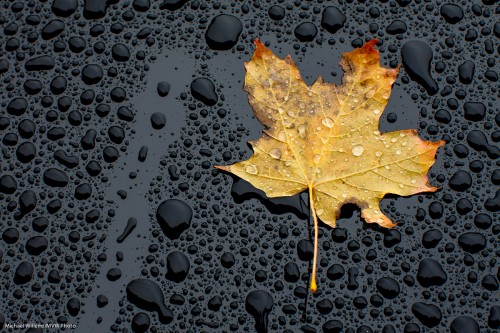
The drops on this car hood have never happened before, and never will again.

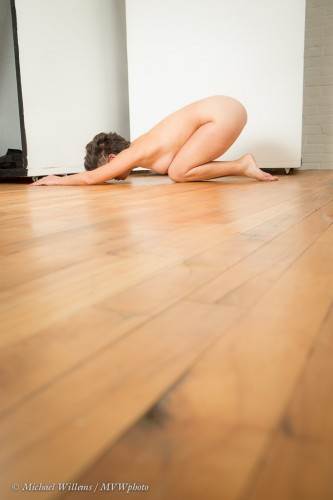
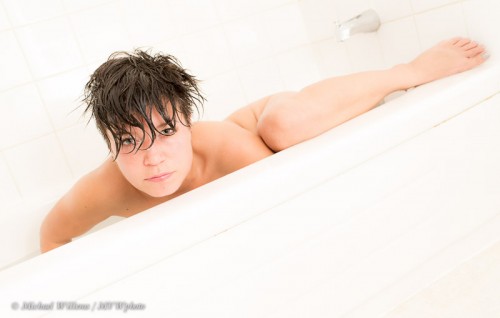
This even applies to the most basic subjects: people have been painted and photographed in many ways, but this particular pose I shot a few hours ago is unique and has never happened before in exactly the same way:

As is this pose: a slight shift makes all the difference…

Or these dying flowers:

Tired Flowers, by Michael Willems

Tired Flowers

So before you give up before trying, I say: try basic subjects in your own way. Ask yourself what is unique in how you are depicting your subject. The subject itself? Or the Shape? Light? Orientation? Setting? Colour? Technique?

There’s so much you can do to put a new spin on an age-old subject, and it all starts with you asking yourself “what do I want to show the world, and in what way will it be unique?”. Once you know that, things kind of fall into place.


Party time

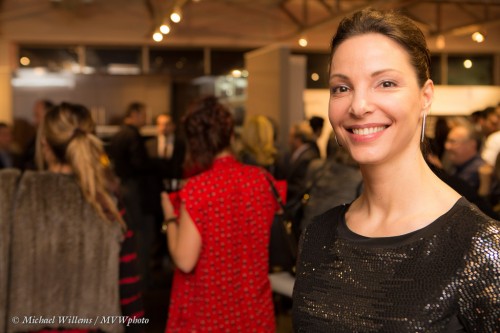
I just shot an event. With a single camera, and a 24-70 lens only. Bouncing my flash, of course, as in this image of incredibly-beautiful-as-well-as-incredibly-intelligent Tatiana:

If you have a camera and a flash, you will have plenty of opportunity this season to do this kind of shooting as well and to get it right. Christmas, Hannukah, New Years’ Day: whatever your favourite celebration is: make great pictures.

I’ll get you started. My settings were:

  1. Camera in manual exposure mode; flash on TTL.
  2. The Willems 400-40-4 rule: but modified to use 800 ISO instead of 400, at the usual 1/40th second at f/4.
  3. White Balance on Flash, with slight adjustment in post every time I bounced off a brown ceiling instead of a white wall. (Brown is just dark yellow, so move the White Balance slider to “Blue” (cold) when adjusting these.)
  4. Flash aimed behind me, straight or at an angle.

To keep in mind, a few notes:

  1. Focus carefully, and yes, in the dark that is difficult and slow. Life’s tough.
  2. Move people to where there is a nice background and you can bounce off a white wall.
  3. In darker rooms, or where the ceiling and wall are higher or less reflective, go to 800 ISO – or higher when you need to! Better to do it in the camera than to underexpose and push in post.
  4. Use the Rule of Thirds.
  5. Think about your light direction. In every shot.
  6. Change flash batteries before they run out, not after they do.
  7. 35mm is a great focal length for people shots (24mm if you are using a crop camera).

More about all this later this month. I took around 300 pictures – fewer than usual because I was a little more selective. We evolve as photographers, and I go up and down in regard to the number of images I make. I like to get them right, rather than fire away randomly.

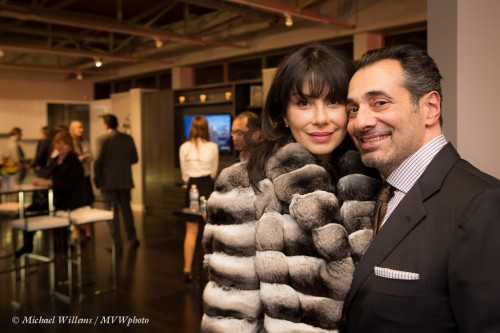
A couple more samples. Couples in posed shots are great:

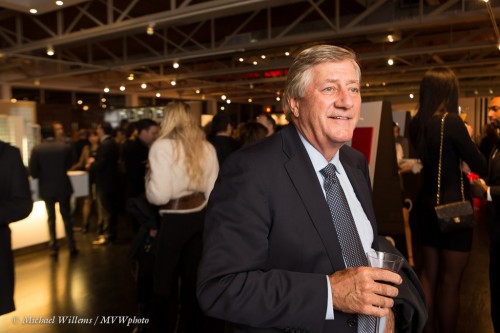
Movers and shakers, celebrities, politicians like Mike Harris are used to being photographed:

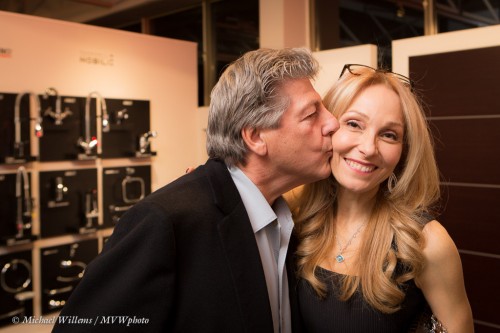
You can ask people to do things (like “Go on – kiss your wife!”):

Shooting events is fun; people will listen to your suggestions and do what you ask; and if your  technique is good, your clients (or family!) will love your shots. Go have some fun this December!


Faceless faces

Here’s an exercise for you. Capture expressions without visible faces.

Huh? How? Is that even possible?

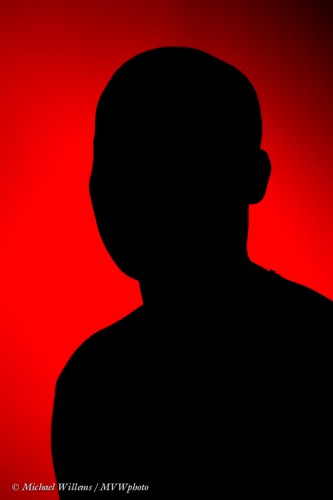
Yes. Look at this silhouette from Monday’s class at Sheridan College:

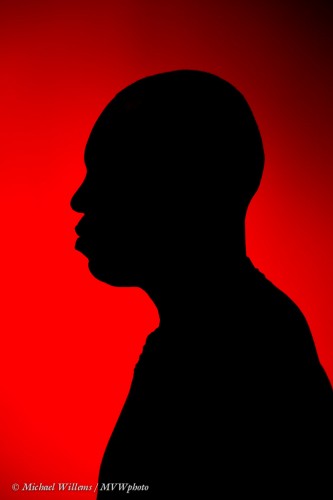
Now let’s make it slightly different:

Now let’s make him into a sad Homer Simpson:

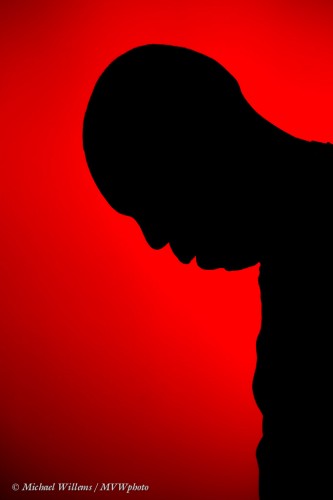
Now.. can you tell what he is doing in this one?

That’s right.. he is smiling. You can tell he is smiling from this image without anything else. Amazing. No eyes, mouth, nose – but you can tell he is smiling.

An exercise like this is fun and can be very instructive in seeing how expressive faces can be. Go take some pictures like this – your exercise for the day.

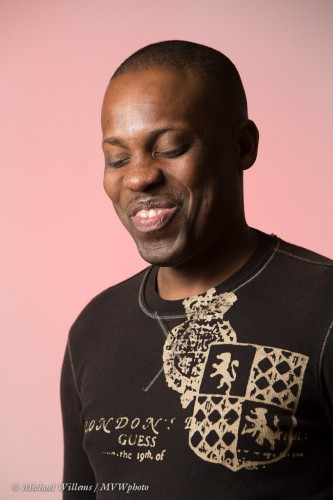
Oh, and and as in yesterday’s post: here’s what Kingsley looks like with his the face lit.

A very expressive and personable person – easy to shoot.