Peripheral People

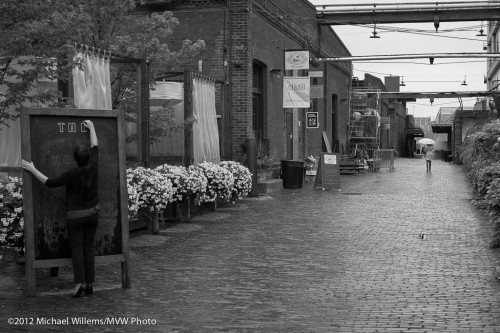
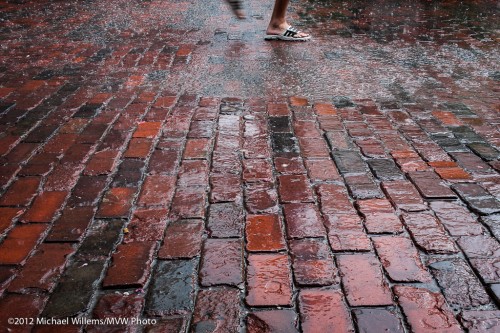
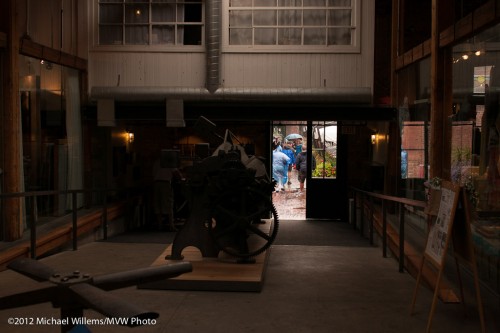
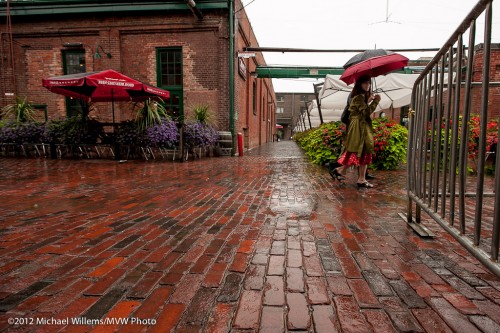
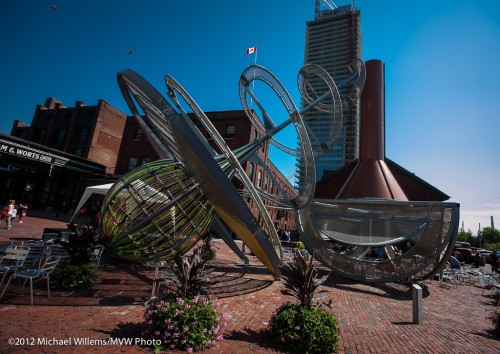
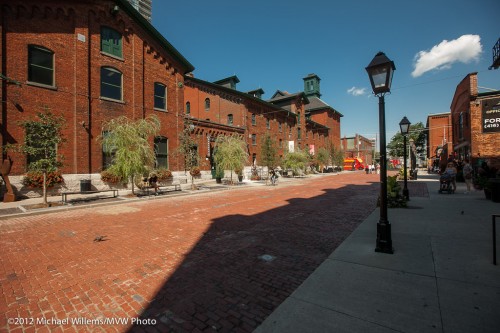
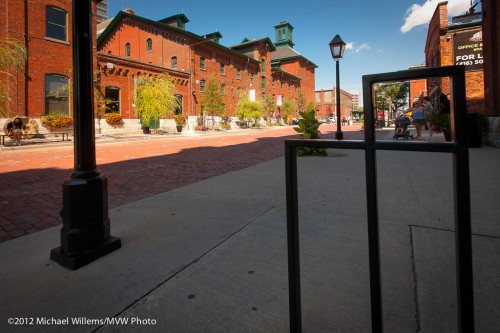
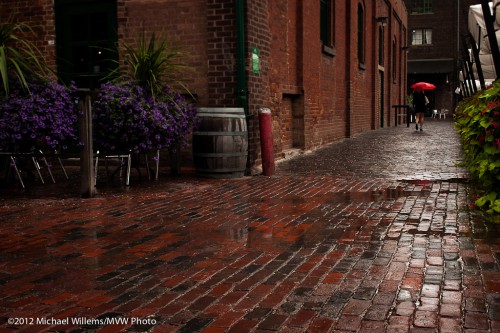
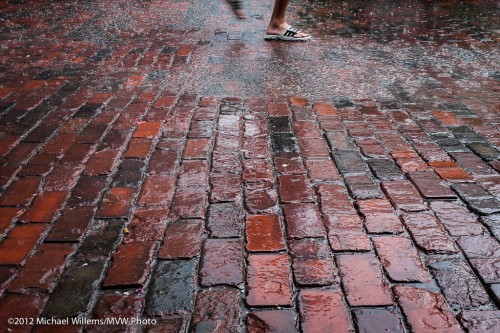
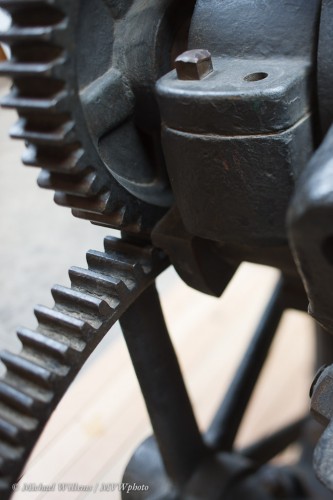
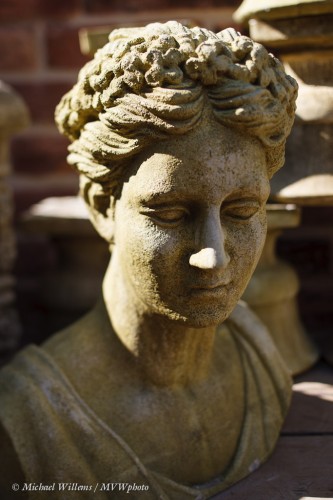
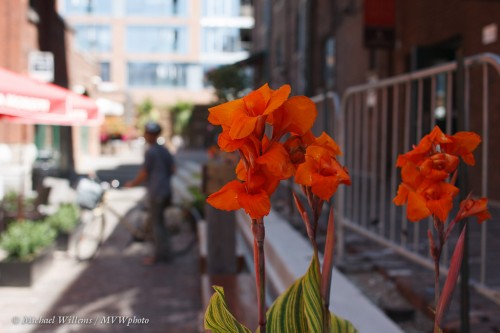
Today, a few more recent shots from The Distillery in Toronto.

This time, showing the interaction between people and The Distillery. But in a way where the people have only a “sideline” kind of importance. They are almost peripheral to the streets and buildings, and rather than masters, they seem to be merely tolerated by the eternal.

When shooting, it pays to think “what am I shooting”. If you can answer that, you will be able to produce photos that depict what you are trying to say.

As Yogi Berra said” if you don’t know where you;re going you sure won’t get there” (everything witty and true in America was said by either Yogi Berra or Mark Twain).

So decide where you are going, and get there.


Roller Derby II

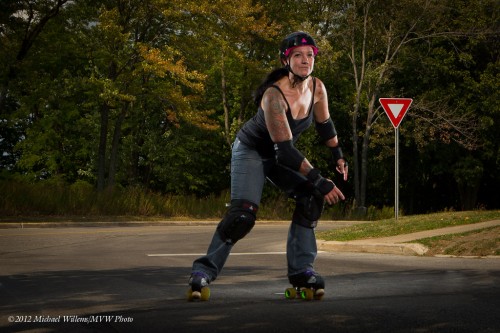
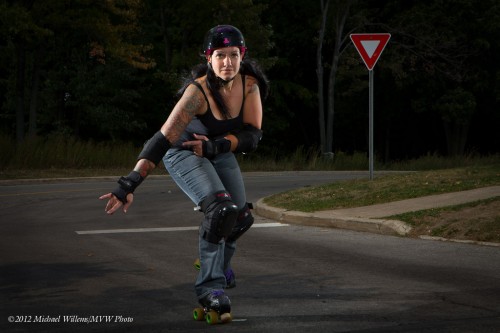
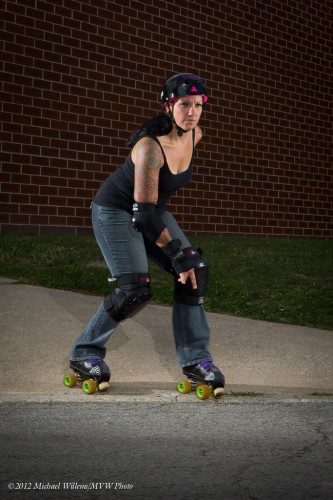
Here’s the Roller Derby Chick again, from the Niagara School of Imaging course i taught:

To give you specifics: those were taken at 200 ISO, 1/250th sec, f/16, with the flashes about 6ft away on each side, set to quarter/half power.

  • Q: Why is the second one darker? Because the sun disappeared.
  • What could I have done to get the background brightness back? Reduce the shutter speed. Not the aperture and ISO – those would also affect foreground.
  • How do I focus? I prefocus, then set to manual focus.
  • How? By aiming at the “X marks the spot” piece of masking tape.

Simple, once you realize how it is done.


Are you in the Netherlands or nearby? Sign up for my flash course in Rotterdam on sept. 1: seee www.cameratraining.ca!

Fun with lights

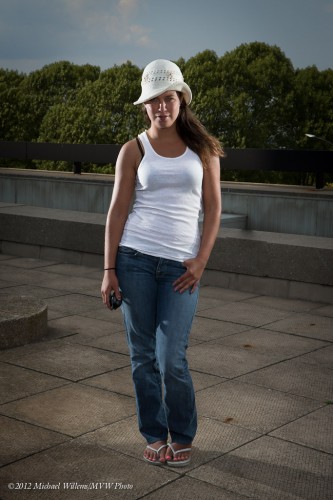
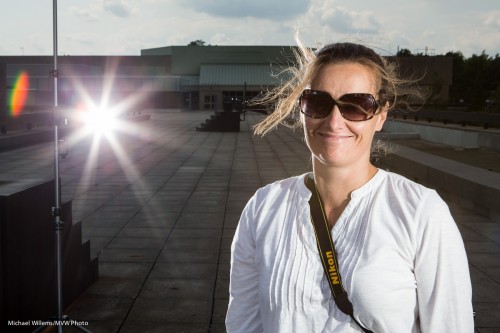
As regular readers here know, you can use speedlights for cool edgy shots that look photoshopped. Like these, taken today at my 5-day course at the Niagara School of Imaging at Brock University:

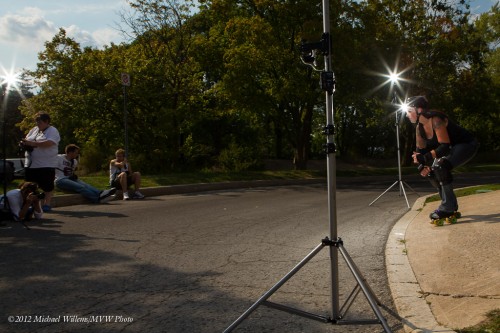
Those shots need you to take your time setting up, because you need equipment. But it can be simple equipment. like:

  1. Two lightstands with four speedlights driven by Pocketwizards: one right, one left, slightly behind the model. No modifiers.
  2. A lightstand with one speedlight, driven by Pocketwizard, behind the photographer. No modifiers.
  3. A pocketwizard on the camera to drive it all.
  4. You set your camera to ambient minus 1-2 stops, eg 200 ISO, 1/250th second, f/16.
  5. You set the speedlights to whatever power level you need to achieve f/16.

Like this:

Of course you need the brackets and cables and ball heads that are needed to connect the equipment together. But that is not rocket science.

Have a go – or come take one of my courses. Flash is wonderful light!


Technique and Simplicity in a shot

This is one of my students in today’s class at Niagara School of Imaging (held at Brock University).

Awesome, no?

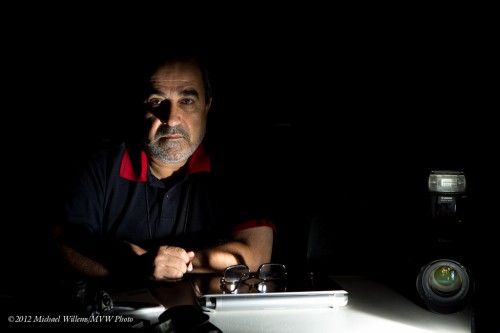
How did I shoot that? Simple.

  1. A camera set to manual; 200 ISO, 1/200th sec, f/8. This makes the background go away, and 200 ISO and f/8 is enough to make the background look dark (it was a normal classroom).
  2. My 24-70mm lens.
  3. A Pocketwizard II Plus (Tx) on the camera.
  4. A second Pocketwizard II Plus (Rx); connected via a Flashzebra cable to a Canon 580EX II flash (any flash will do).
  5. The flash set to manual power, 1/16th.
  6. This flash is on the table, on our right; with no modifiers at all, aimed straight at the subject’s face.

Once you know, it’s simple. 1/16th power was my first guess, and it happened to be right. If it had not been, I would have adjusted.

Simple can be good enough – it can be great!


Snapping Away…

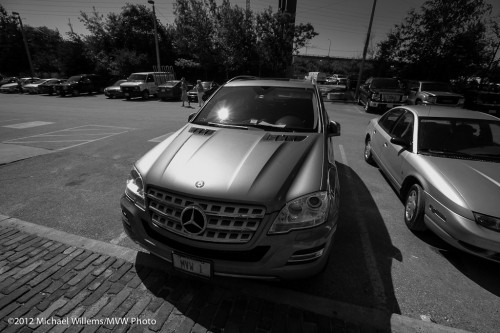
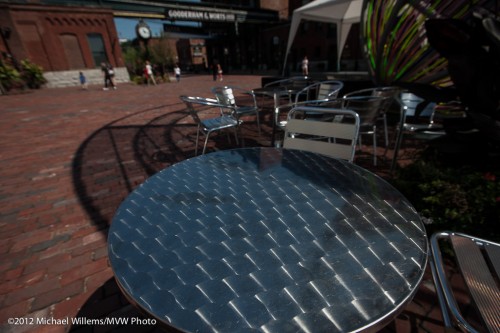
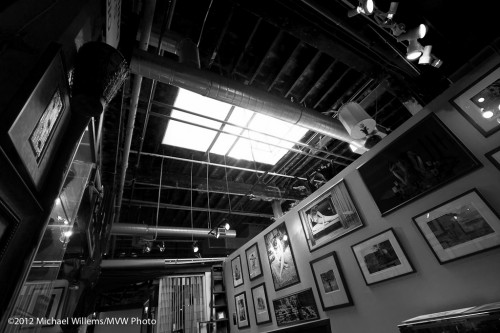
…at The Distillery. Today, on the short walk from my car to the gallery, I used my wide angle lens, the 16-35 mm lens, set to 16mm.

Close to a car, that leads to distortion:

When faced with a large area, when not close to anything, you do not get that, but you can get it all in. I preferred the Distillery without that huge new skyscraper next to it, by the way.

And “wide” allows you to get “into” a scene. Like in this shot: if it had a coffee on this table, I would imagine myself sitting there:

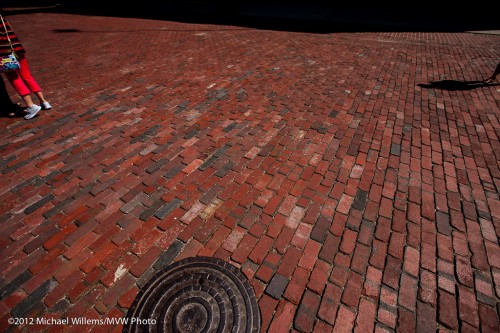
And when I aim close to the ground, and shoot from close to the ground, the ground seems to come up at me:

…and you can see the depth in a street (and the “rule of thirds” in the composition):

…and get an appreciation of the high gallery ceilings:

(yes, my works are still for sale at The Kodiak Gallery – I shall be there noon-6pm every day this week).

None of those shots could have been done in quite the same way without that wide a wide angle lens. 16mm on a full-frame camera means 10mm on a “crop” camera, which you are most likely to have.  So a 10mm lens will give you the ability to:

  1. Get it all in
  2. Show depth
  3. Show people or items “surrounded by their environment”
  4. Shoot at slow shutter speeds (lke 1/10th sec) without blur
  5. Get great depth of field (“sharp-o-matic” even at f/5.6 or f/4!)

That is why if you do not yet have a wide angle lens, a 10-20 (or if you have a full-frame camera a 16-35),  you might consider adding one. I shall not stop saying it!


Trixie….

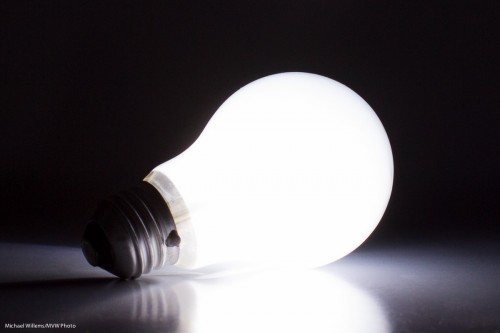
Okay, here’s a simple trick shot for you.

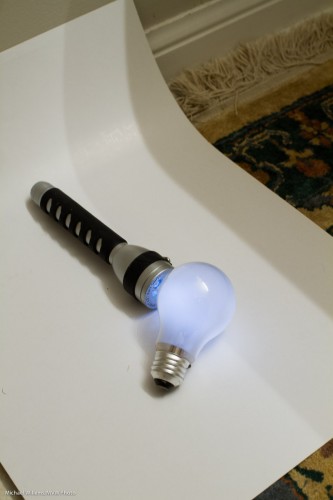
How did I get the bulb to light up without it being connected?

Simple. Like this:

I used an LED flashlight behind the (frosted) bulb. That makes it look like the bulb itself is lit. 6 second exposure, 200 ISO, f/5.6.

Sometimes “simple” is all it takes.


Look for.. umbrellas

One of the things I learned in shooting for newspapers, is this: rainy days are good for “weather pictures”, like this (which incidentally is my assignment photo, as per yesterday’s assignment):

"Red Umbrella", The Distillery District, Toronto, 8/2012 (Photo: Michael Willems)

My tip of the day for you: on rainy days, look for wet reflections and colourful umbrellas.

(Shot with manual focus 45mm prime TS-E lens, 1Ds MkIII full-frame camera).

Sometimes these daily posts can be very short and still be very beneficial, don’t you think?)

OK, here’s one more shot, a “decisive moment”.

Running in the rain (Photo: Michael Willems)


Time Travel

It is rare that I feature photos not by me here, but today I will. And for a reason. As you know, I have been talking about photographing your environment. And you should, for many reasons: I just found a great example of why.

At the art gallery where I am having my show, I was yesterday afternoon reading “Photography Year 1977”, a Time-Life book with truly amazing photos. Beautiful.

One caught my eye – a Hopper, almost, I immediately thought (and Hopper is my favourite 20th century painter). The photo was by American photographer Stephen Shore. A photographer I had heard of in passing – but now that I looked at his work in detail, I am amazed and impressed, and reinvigorated as a photographer.

The image in the Time-Life book shows the terrifying (and terrifyingly moving) starkness of a small Saskatchewan town’s Main Street.  This photo, it turns out, was recognised not just by Time-Life and me, but also by New York’s Metropolitan Museum of Art, on whose web site it is displayed:
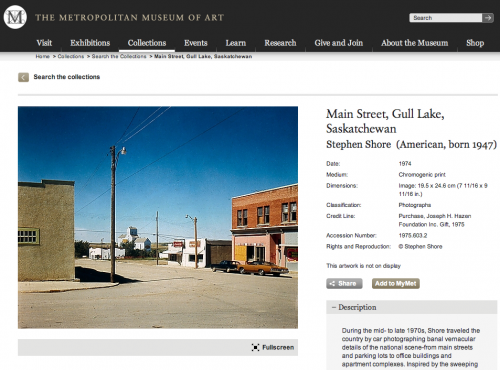
Here’s the photo: click the link.

And then I had the idea of looking up this street on StreetView. And yes, there it is:

Here from Google is the same view as in the original, just about:
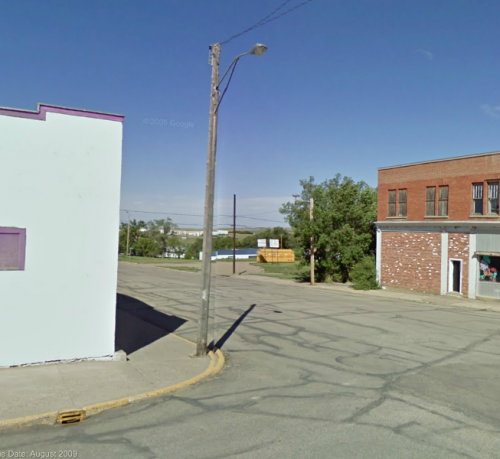
Wow. That street has become more stark, if anything. I wonder of the people living there and running their businesses there know about their street’s fame? If I were them I would buy a print, cost what it may.

Anyway – this is why it is great to photograph your environment. And yourself. And your loved ones. And your muse. And your relatives. And the rest of your life. So you can go back later to compare, do time and space travel, feel intimately how strange and moving and mysterious life is.  Art’s most important need is that it moves you.

 

Another snap tip!

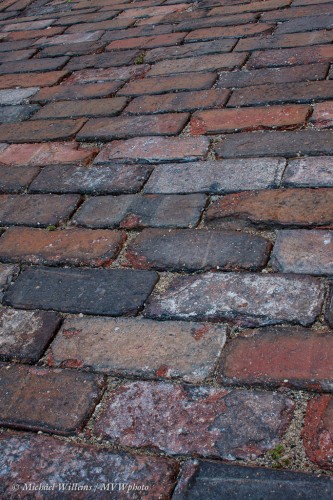
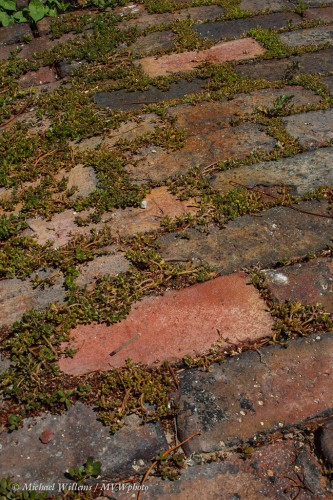
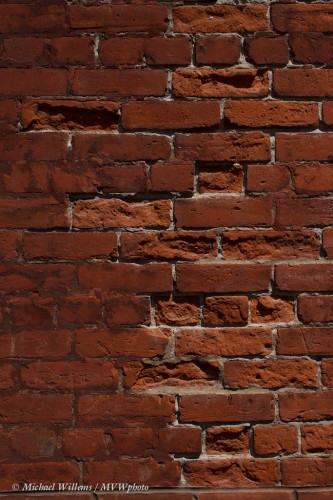
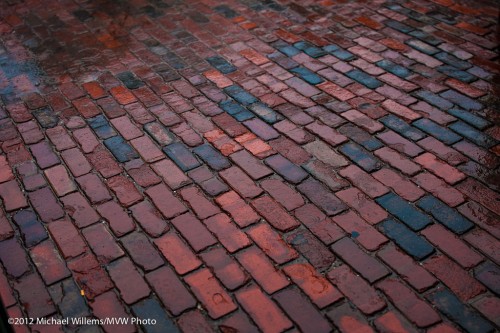
Another Summer Snap tip: shoot detail. Even detail that you are not sure you will be using, like the shots below. I took those yesterday while walking from my car to the Kodiak Gallery, where my exhibit is on (see www.michaelsmuse.com) until the end of the month.

You take detail shots to add back story but also to get phootd of patterns, textures, etc that you may want to use for something later. I bet I;ll use some of these.

All were taken with the 45mm tilt-shift lens on the 1Ds Mark III body. That’s much like a “nifty fifty”, a 50mm lens on a full frame (or a 35mm on your crop cameras).

I could go on (and I did). The point is clear, not just snaps of smiley people. And also – I used manual exposure and manual focus for all these. Just saying: the simplest camera/lens can be just fine!


Rain

A rainy day means you can take no photos.

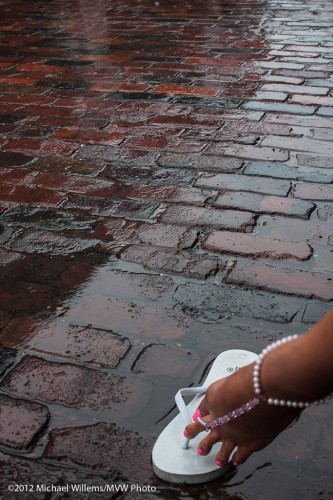
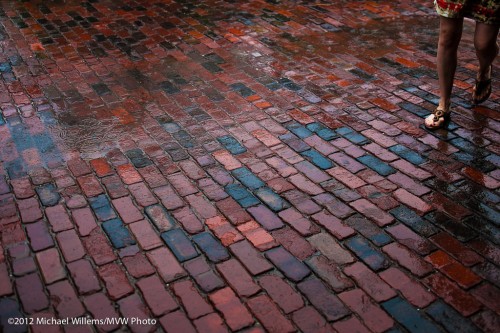
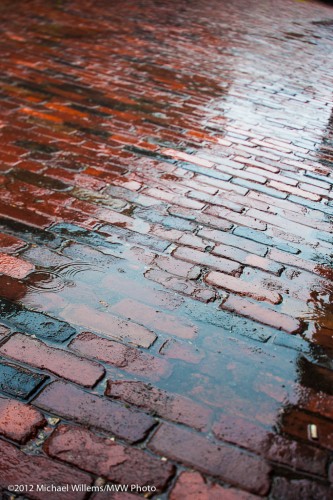
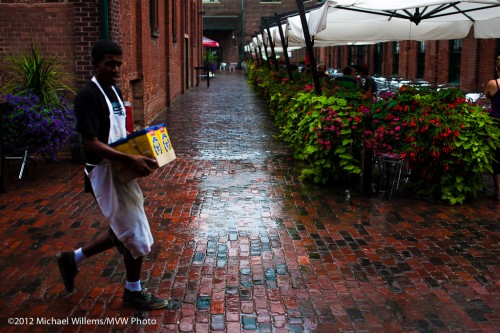
Scrap that. A rainy day is great. A few examples, from a few hours ago in Toronto:

That was at Torontos Distillery District, where the “To Find A Muser” exhibit is on this month (www.michaelsmuse.com).

  • Underexpose, make it look as dark as it is. Colours will look saturated. A rain scene si dark, so make it look dark.
  • White balance may want to be “Cloudy”. Or do it afterward, as long as you shoot RAW.
  • Or “expose to the right” and underexpose in postproduction (which is what I do, to decrease noise even further).
  • Kee the pics simple.
  • Look for reflections.
  • Wipe your camera with a cloth when it gets wet.
  • Look for nice reflections, nice surfaces, raindrops.

When you do that, you will get wonderful photos even in “bad”weather – which is really good weather for photographers.

These were from today. I got wet, but my camera was fine and the pictures make a very nice change.

I used the TS-E 45 tilt-shift lens to be able to shoot at f/2.8 an still keep the pictures sharp from foreground to background. Else you may have to go to a higher ISO or use a tripod.

I recommend you always try to shoot them. You may be surprised by the evocative images you get: rain moves us and its mood is good to get down into an image.