More travel tips in the next few days – as soon as I get a chance to finish some photos. Also, a review of a Tamron 18-270mm lens, and more. Here’s a starter:
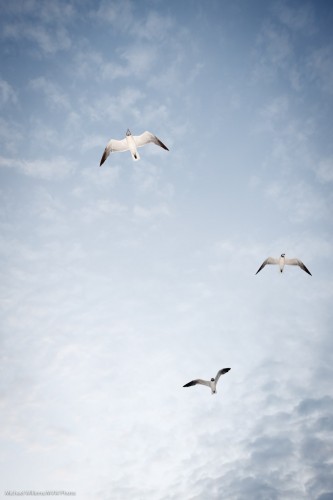
Yes, I used my flash.
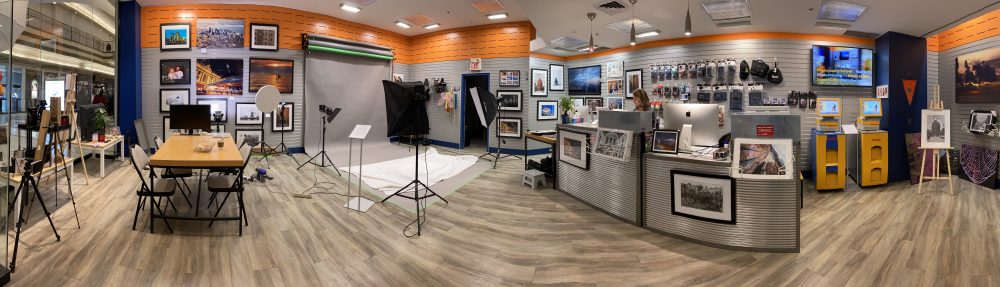
More travel tips in the next few days – as soon as I get a chance to finish some photos. Also, a review of a Tamron 18-270mm lens, and more. Here’s a starter:
Yes, I used my flash.
Tell stories when making travel snaps – and that includes “background” shots. Shot sthat put the rest of your images into context.
These are often close-up, “fill the frame”, even macto-type shots. Background. The “B-roll”.
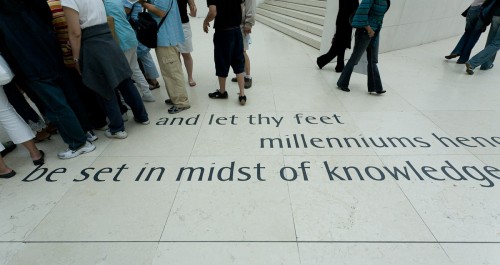
Tennyson's Advice being put into practice (London)
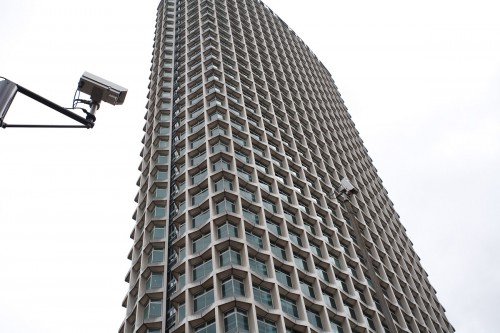
Big Brother is Watching You (London)

Chelsea Hotel, NYC
You’ll be amazed at how much more eagerly your neighbours look at your pictures after your return. Not that your kids aren’t cute and the hotel wasn’t good, but after three or four images you get that point!
One more travel photography tip: include culture.
And you do that though people, very often.
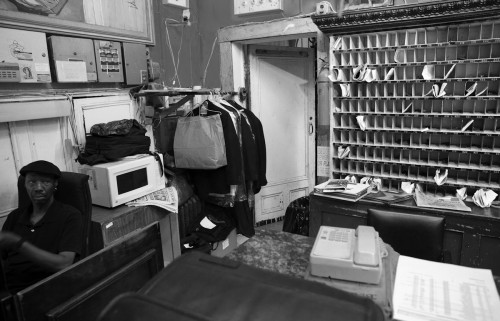
Chelsea Hotel Lobby, NYC

Swedish guards (Stockholm)

Shanghai
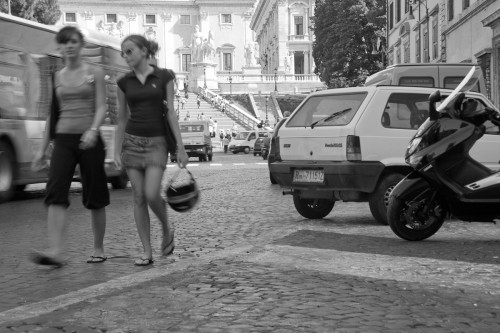
Roman Chicks
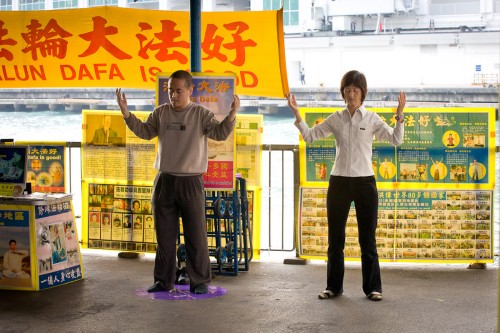
Falun Gong, Hong Kong
Get the picture?
As of today, I plan to be traveling for a week, so if posts are repeats, or delayed, you will know why.


Of course upon my return I hope to be able to show you some nice pictures.
In the mean time, a travel tip – and there will be a few more I should think.
TIP: when skies are blue, and you want contrast, use a polarizer. This is a filter that, when you turn it just the right way, removes non-metallic reflections and does this to the sky (especially at right angles to the sun):

Meaning a super-contrasty look between sky and clouds (even when shooting B&W).
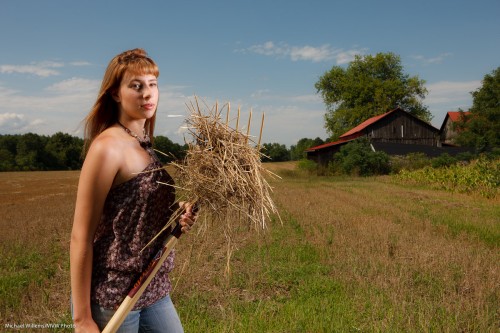
Here is model Jenna Fawcett, as I photographed her in yesterday’s Creative lighting workshop:
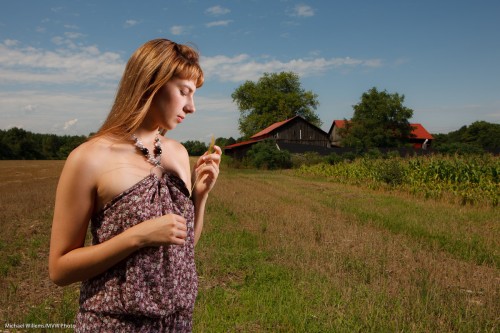
To make a picture like this, several things must come together.
Namely:
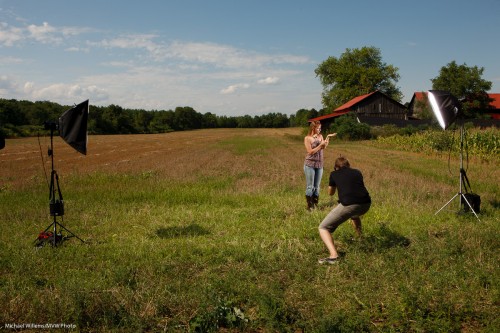
And that’s the story. This setup looks like this:
Is a sunny day better for these shots? No – a sunny day is much more difficult. Nasty shadows, and you need very high power to be able to “nuke the sun”. So for a sunny day you need strobes, and power.
Why did I call this post “Hay there”? Here’s why:
Can I learn this? Yes. Easy – follow the rules above.
Yes, you need to learn lots of finicky stuff about aperture, shutter, and ISO – but it’s worth it. Read this blog daily. Try. Take a course. And take one of the workshops Joseph and I do – they are quite the experience, and include beer and wine and portfolio shots – and great images to take home!
Every time I have dinner, I try to use that as an excuse to do some food photography, before I eat it.
And often I can. In those cases, as on the evening of August 10, I do the following:
If I do this right, I now get this:
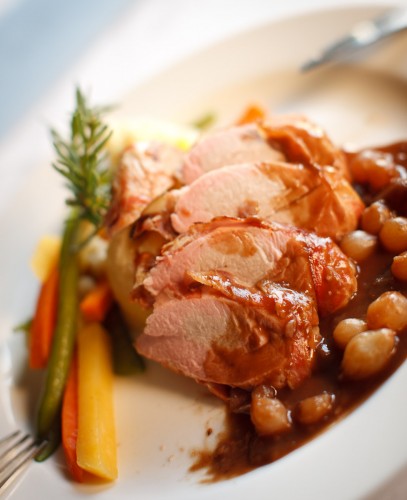
And then I eat (Pork Tenderloin – yum).
And while the food lasts mere minutes (knowing me, seconds), the image lasts forever. I thus see restaurant food as an investment. I eat, and I get a stock photo into the bargain.
Fuji – I love your X100 camera.
I also love Fuji’s Canadian outfit. Who just sent me a certificate for a free 13×20″ mounted art canvas print, just for buying the X100!
And who iterated their service level: it is free, and better than Canon Canada’s CPS (which I no longer use because it costs money). Fuji promises two hour email/phone support. Two business day repairs. Free shipping. Loaners if repairs take time. Wow!
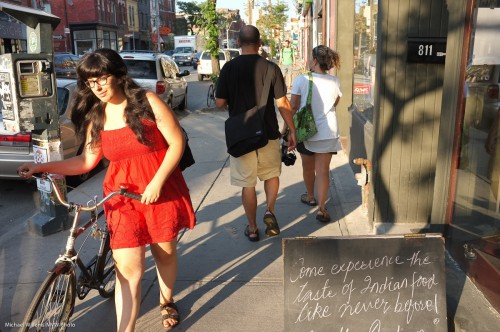
Here’s a few more snaps taken with this little camera recently in Toronto and Niagara, respectively:

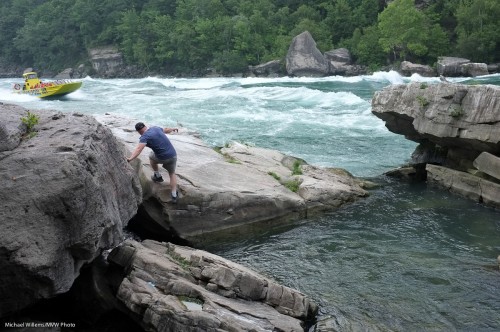

Tip of the day: For an entire day, shoot with one focal length, namely 35mm on a full frame camera or 24mm on a “crop” camera. You will see this enforces a certain discipline of compositional thought.
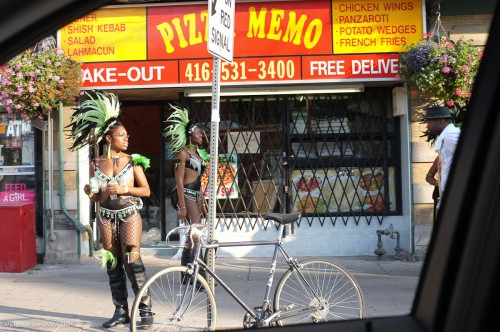
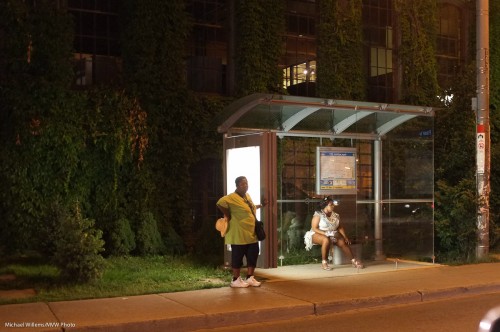
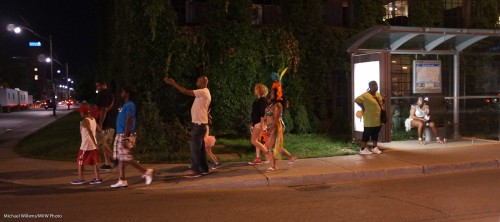
A few snaps I took after the Caribbean Carnival:
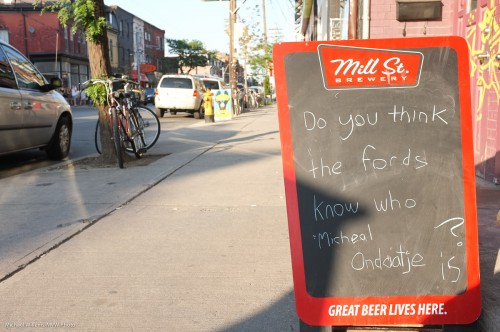
(And if they do, do they know how to spell “Michael”?)
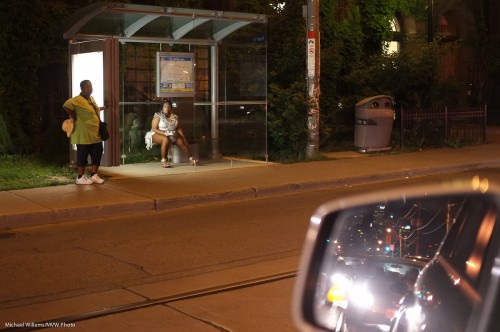
Loneliness is one of those subjects photographers like.
So when you see a lonely flower sticking its head out of a fence, isolate it by focusing carefully and using a narrow depth of field (selective focus is a great way to isolate a subject); then surround it with “negative space” if you like, and shoot:
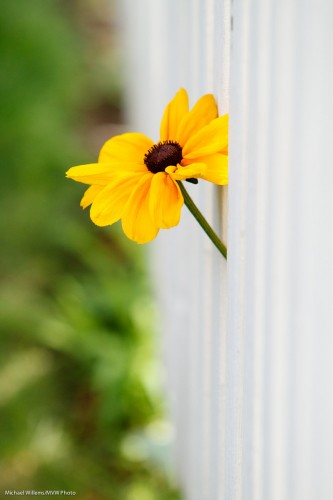
We like pictures to say something. A sense of isolation is something we can all identify with – we are all, after all, alone, for better or for worse.
A second advantage of this technique is that it simplifies your pictures, and simplicity is so often the hallmark of a great image, that aiming for a simple picture is a good thing.
When walking through Toronto recently, I noticed this picture you saw a few days ago:

Tip One of the day: when you see an interesting colour, take a shot (which is why you always have a camera handy – right?).
Tip Two: And as said in a post a few days ago, please do not automatically shoot it from 5 feet above the ground. See if tilting, or getting down on the ground (as here), or standing on a chair gives you a more interesting picture.
Tip Three. Use a little fill flash (as I mentioned the past few days). The Fuji X100 and its tiny fill flash did all this.
Let me share how boring this shot is when shot from higher up and without fill flash:
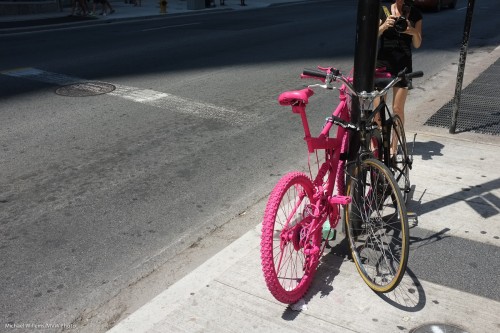
Point proven.