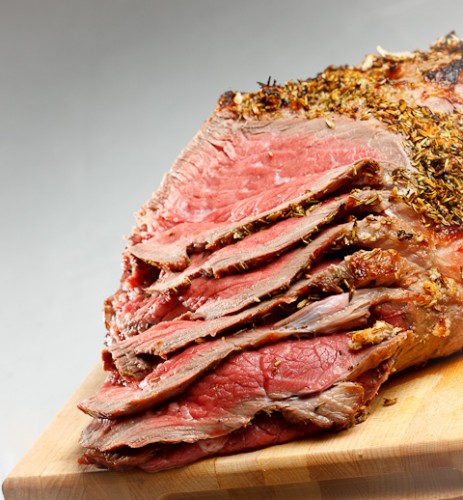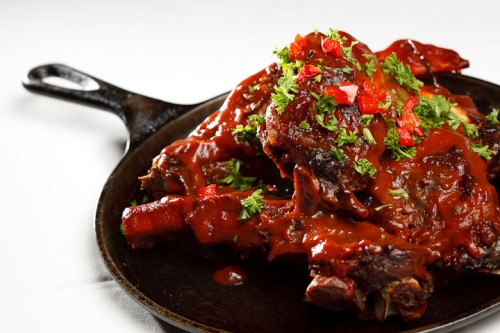
Yum.

I am glad that I always carry everything in the car. Lights, light stands, umbrellas, pocketwizards, cables, lenses, and so on.  So that when a restaurant shoot yesterday involved food instead of interiors, there was no problem.

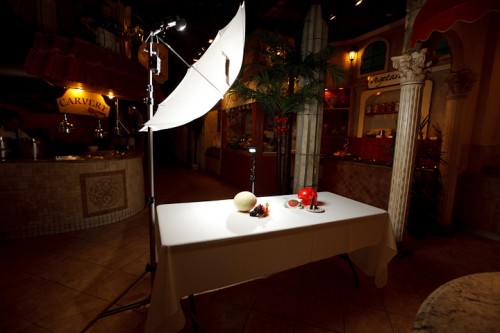
As the restaurant set up a table for the food (which was long enough so I would not need a backdrop), I prepared the following:

  • My Canon 1Ds Mk3 camera with 100mm macro lens;
  • A tripod;
  • One stand-mounted 480EX flash fired by pocketwizard, with an umbrella above the food.
  • One stand-mounted480EX flash, also fired by Pocketwizard, behind the food, firing forward;
  • On the second flash a Honl Photo speed strap and a 1/4″ grid;
  • I set the flashes to half power and quarter power, respectively. This is convenience and experience.
  • I set the camera to 200 ISO and f/8.  (and 1/125th second, but this was almost irrelevant).
  • I slightly adjusted the umbrella position.
  • I checked an image’s histogram: great. Highlights in white table blowing out slightly, none of the food blowing out: perfect. This is experience – I could have used a light meter but this was a hurried, high-presure shoot (the restaurant was about to open).

All that looked like this:
Food (Photo: Michael Willems)

And it got me shots like this:

Food (Photo: Michael Willems)

Food (Photo: Michael Willems)

Food (Photo: Michael Willems)

Straight out of camera that is not bad, what?

Take the above recipe and copy it if you like – see how you do with food!
 

Document your life

Why do we take photos?

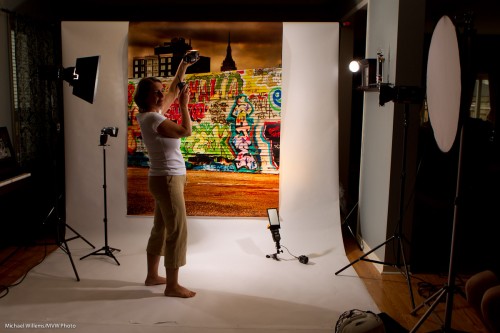
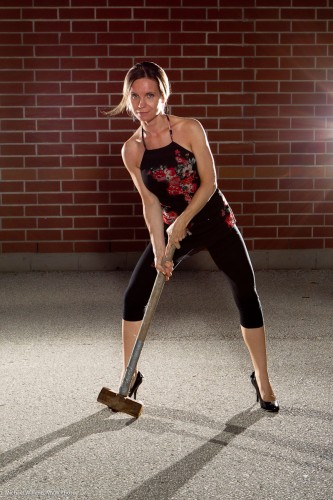
Do we just shoot posed relatives with pyramids in the background? Or perhaps we are artistic photographers who shoot carefully lit set-up shots like this (three speedlights, using Pocketwizards)?

Yes, that too – of course. Sure, as a photographer you have a preference. Travel. Your kids. Portraits. Parties. Weddings. All great stuff. Do it.

But I urge you all to also shoot “your ordinary life”.

The Beatles became famous in spite of (or because of?) the fact that they wrote about the ordinary lives of ordinary Englishmen. I urge you all to shoot your own life.

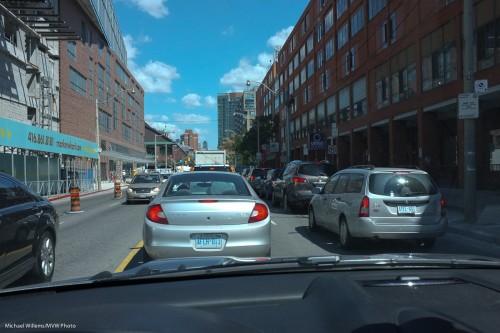
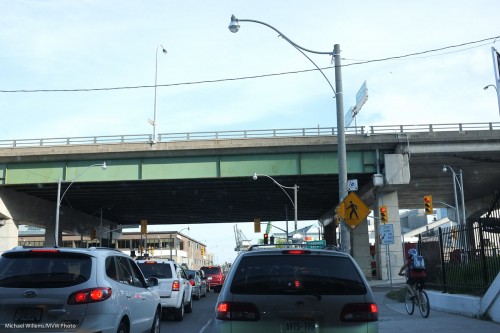
Like the traffic jam you find yourself in on your way to a class that reduces your progress to less than walking speed. Grab your camera!

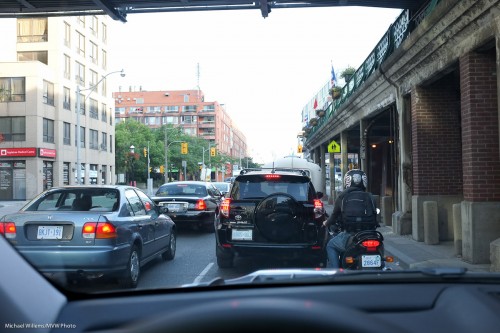
Or the jam you find yourself in eight hours later leaving the class, even though it is almost 8pm (Toronto’s rush hour now lasts from 7am until 8pm):

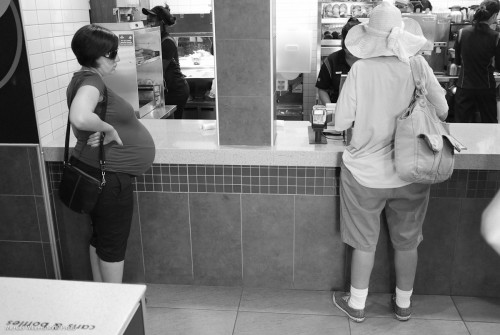
Or the McDonalds where you buy lunch, wondering when the lady on the left will give birth – she looks ten months pregnant – or why the lady on the right is talking loudly to herself and Jesus (this is downtown Toronto, in an area with many, shall we say needy people):

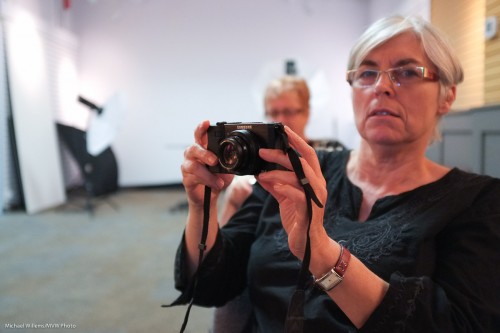
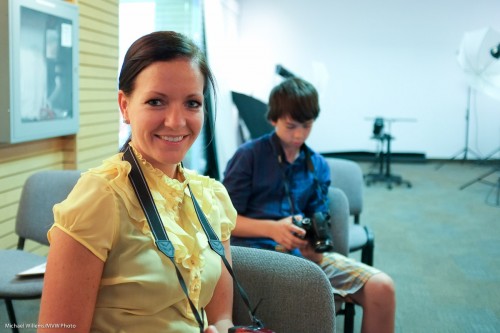
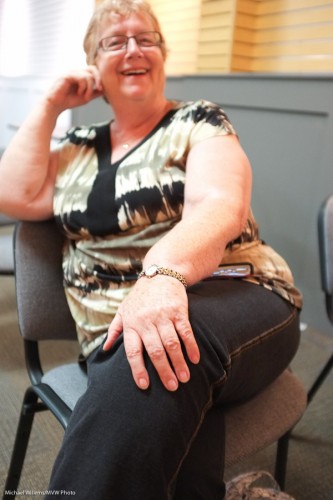
Or the nice ladies in the class who have great cameras and are learning more about them than they thought possible:

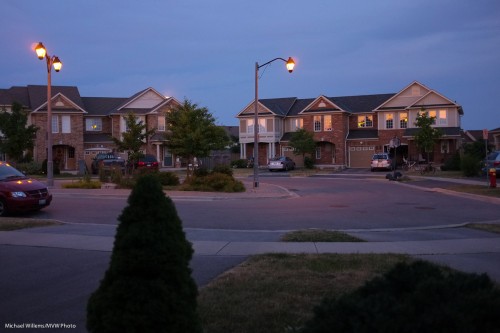
Or indeed the view – and the light – from the front porch at the end of the day, when you are unwinding with a nice glass of Californian Syrah:

The point is – your ordinary life is very much worth documenting. I wish today that I had pictures like this of my life ten years ago, or 20 years ago, or indeed 30 years ago when I was in Baghdad. If you document a day in your life today, ten years from now it’ll be “those were the days”. Invaluable for you, and for your kids, and for your great-grandchildren.

So the tip of the day: document an ordinary day in your ordinary life.

Boot notes: I used the Fuji X100 today, still shooting in JPG mode, for all these images except the first. And I am still amazed at how well it works. The indoors and evening shots were taken at 1600 and 3200 ISO. You can’t tell. 3200 is the new 800! Secondly: as before, I hasten to assure you that I would never take images from a moving vehicle – that is illegal and unsafe.


Kid hauler

Snap of the day, five minutes ago:

Kid Hauler (Photo: Michael Willems)

Kid Hauler (Photo: Michael Willems)

Or “Mom of size crossing in front of van whose owner has four kids, a dog and a soccer ball, and who thinks that buying foreign puts you out of a job”. I wonder if he ever considers how much of a job he would have if Americans stopped buying his Oakville-built Fords. Or how Walmart mom would pay for things if Walmart and China did not exist, and everything would be five times the price.

When you get a new camera…

…you need to learn to use it. Its instructions. Its strong points and weaker points. Its do’s and dont’s. Its quirks, even.

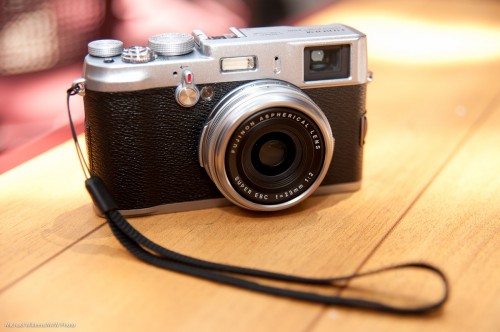
I am learning to use my Fuji X100:

Fuji X100 (Photo: Michael Willems)

It will take me a few days of use until I fully “get” it – its instructions (cannot use the optical viewfinder for close focus); when it does not accurately focus; when exposure is off; how it displays pre- and post-shot; how best to focus (in manual, I can use the AE-L/AF-L button to focus, which I only just discovered!), and so on.

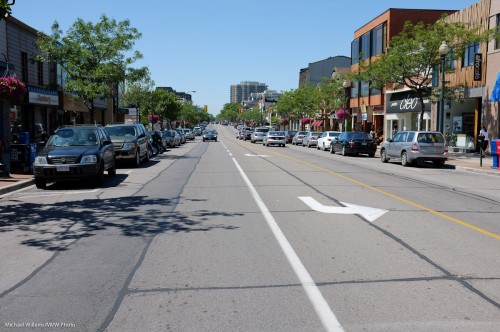
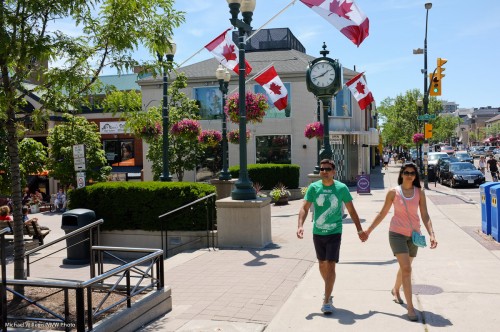
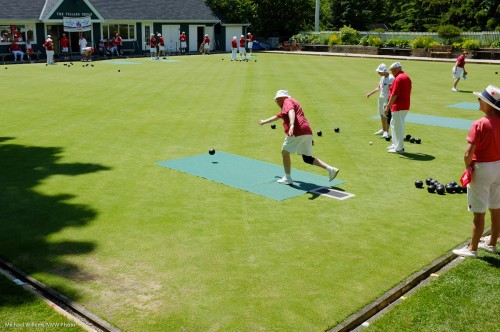
Let’s start with a few snaps taken during a nice downtown Oakville “getting to know the camera” walk today. All these were shot as JPGs, and post-editing in Lightroom was minimal – a little cropping, perhaps a slight exposure tweak, that sort of thing.

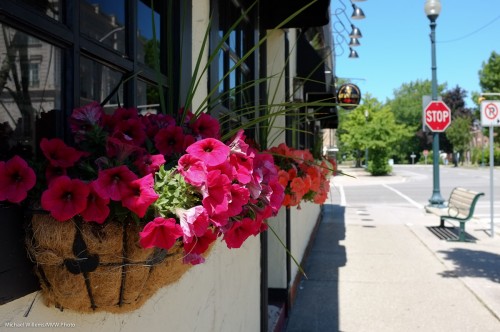
Oakville Scene (Photo: Michael Willems)

Oakville Scene (Photo: Michael Willems)

Oakville Scene (Photo: Michael Willems)

Oakville Scene (Photo: Michael Willems)

Oakville Scene (Photo: Michael Willems)

Oakville Scene (Photo: Michael Willems)

Oakville Scene (Photo: Michael Willems)

Oakville Scene (Photo: Michael Willems)

Quality is excellent. Results are good.

In using the camera today, I found a few issues I have to work on. Namely:

    1. I have to get quicker at the “switch to EVF (electronic viewfinder) if you want to focus closely” thing.
    2. Switching focus points. I switched to “let camera select focus points” half way, since I was not quick enough switching. Next time, manual focus plus the AE-L/AF-L button to pre-focus!
    3. When does the camera refuse to focus? And when does it miss, and focus on the background instead of on the object I am clearly pointing the focus spot at?  I am not 100% clear yet, so this needs a little more work too.
    4. I have to get more familiar with shutter speed limitations: at what ISO is it limited to what shutter speed? This needs to be second nature to me.
    5. Exposure is sometimes unpredictable, or at least seems so when looking pre- and past-shot. In fact looking at the results, they seem good, if somewhat hot in the highlights – forgiveable on a bright sunny day at 2pm. So maybe on a crazy bright day like today I just shoot and ignore the previews and post-views.

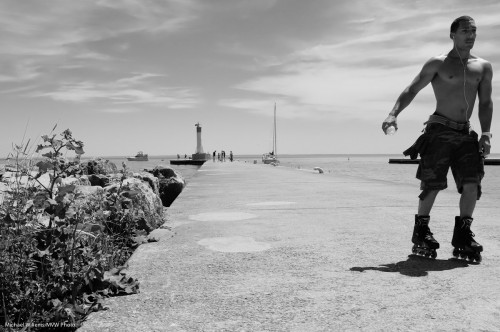
      And here is my favourite of the day, because it shows clearly what you can do with a little camera: people do not even notice you. Not even Mr Muscles here:

      Oakville Scene (Photo: Michael Willems)

      (Click and see it at large, original size to see the full effect.)

      The Degas-like composition is due less to my artistic input than to the fact that the camera was just fast enough for me to capture him before he skated out of the frame.

      The pedagogical point of this post: when you get a new piece of equipment, whether it is a camera, a set of lights, a flash, or a lens, do not be discouraged too quickly. Learn its quirks and benefits and how to best use it.


      One Thousand

      This is my one thousandth post here in speedlighter.ca!

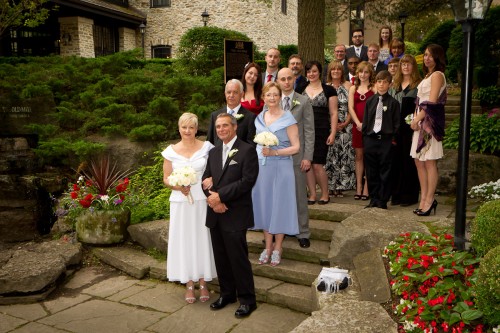
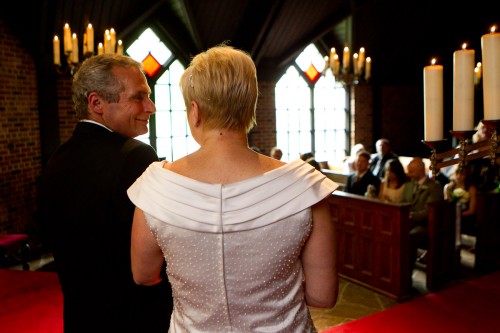
      Tonight, I and my second shooter shot a wedding. We came back with nice shots like this:

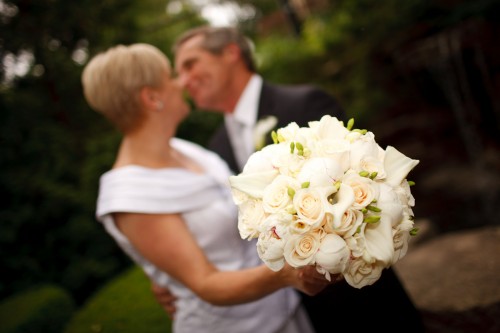
      And this next one, inspired by Mel. Remember, as I have said here many times, an out-of-focus background can make the viewer look and work out what is happening – and this makes the picture better. “Telling the story by not spelling it out“:

      But the chapel.. oh boy.  It was dark. And I mean… dark. As in “1600 ISO, f/2.0, 1/30th second” kind of dark. Except the couple had a pair of very bright lights shining straight down onto their heads from the ceiling. Oh, and yes, bright light from one side’s windows. A very challenging environment – but we still came back with nice shots:

      More about this in future days. Let’s just say for now that:

      1. You should not be afraid to use a high enough ISO.
      2. You ought to try several options. There’s seldom “just one”.
      3. Slow shutter is needed? The use it. even if some images may not be sharp.
      4. Use a fast lens. Faster.
      5. Flash not an option? Then use aperture, ISO and shutter to get there.

      And now off to sleep for a few hours before going back to another shoot. And tomorrow, 1001 – leaving me feeling a little like Scheherazade.


      Not the obvious

      “Hold your glasses”, I asked the two ladies at the corporate event I shot yesterday, as I aimed my 1D Mark IV at them.

      It took a bit of persuading, because they were surprised to find out I wanted to shoot their glasses, not them.

      But in the end, they did, and it was, I think, worth it:

      Glasses (Photo: Michael Willems)

      It seems to me there are two lessons in this:

      1. People will follow commands, if the photographer takes charge. Do not be afraid to ask people to do things!
      2. Sometimes – no, often – pictures that do not tell the whole story, pictures that make you work out what is happening, are the best way to tell a story (you tell by not telling; by having the viewer do part of the work: isn’t that odd?)

      Even a standard corporate event can give rise to some interesting shots.


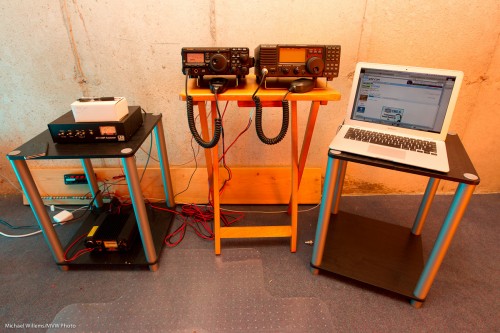
      CQ CQ CQ

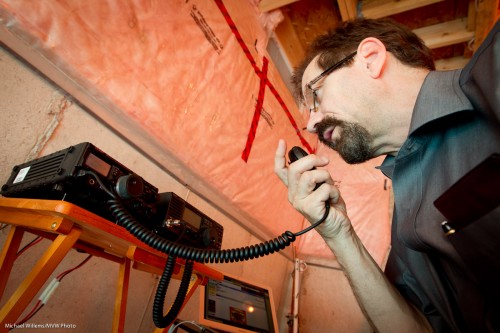
      Yes, I have hobbies, too. Like this:

      Michael Willems VA3MVW (Photo: Michael Willems)

      Yup, I am a licensed radio amateur, VA3MVW. That’s me a little while ago this evening, on a QSO (a call) with another amateur or two elsewhere in the world.

      I used a wide angle lens (see yesterday’s post), and I lit this self-portrait with a flash. Bounced, using TTL. Wide angle to get those wonderful diagonals. I was holding the camera in my other hand, and had the camera select a focus point – I seldom do that but in this case it makes sense, since no-one is looking through the camera.

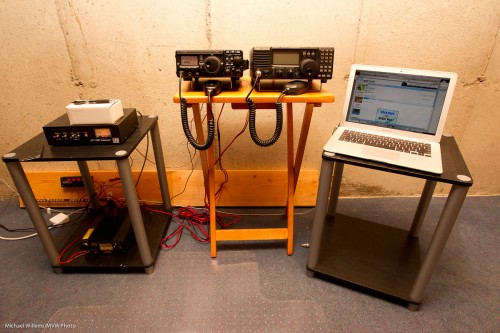
      But I did not use just one flash. That would give me this:

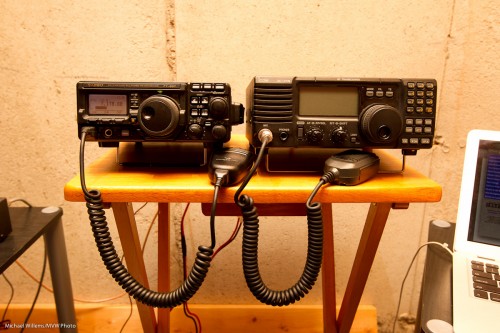
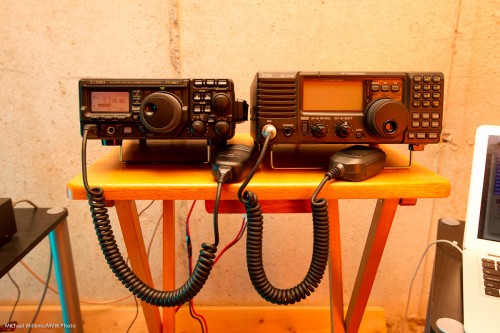
      Station VA3MVW (Photo: Michael Willems)

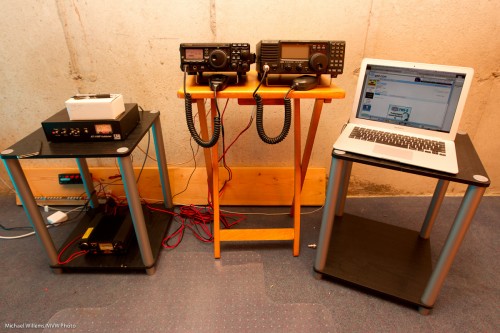
      Nothing wrong with that. But I wanted to give the picture more dimension, more modelling, more of a live feel. Like this – compare the tables’ legs:

      Station VA3MVW (Photo: Michael Willems)

      Or even more:

      Station VA3MVW (Photo: Michael Willems)

      I used a 580EX flash on the camera, bounced behind me, and two off-camera  430EX flashes, each equipped with a Honl Gel (one greenish and one yellowish – some of the artistic colours I really like) attached to a Honl Photo speed strap.

      I often add a splash of colour. Instead of this:

      I happen to like this:

      Now look again at the image on the top, and you will see the same orange-like colour (left) and blue-like colour (right) – subtle but it is there.

      A little colour adds a lot, methinks. And with small speedlights, a little knowledge, and simple flash modifiers, this takes mere seconds to shoot.


      Keepin’ it fresh

      During a recent event shoot, which I greatly enjoyed doing, I thought a little about how to stay fresh.

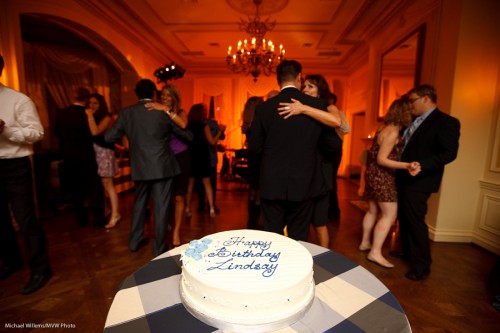
      Event shoots do not naturally lend themselves to setting up creative lighting. But you can still do things like this:

      How? Using a wide angle lens, close to the cake.

      Or like this:

      How? By setting shutter speed to 1/15th second, and zooming while shooting.

      Or even this:

      How? Essentially like before, but without flash.

      The point: when you are shooting a routine thing, try to step outside the box a little. I do this by thinking “what would I normally do”, and then varying lens, aperture, shutter, composition, and so on, and just seeing what happens.

      That way your shoot is more fun, and you might stumble upon new ideas or develop new techniques.


      Lights

      Sometimes, light can be simple.

      Like here: One TTL flash, bounced to my right (in order to ensure that light goes onto the subject’s face, not onto the back of her head):

      But sometime, for creative reasons you want more lights.Look at the following studio setup from a course the other day:

      1. Backdrop from www.backdropoutlet.com
      2. Main light is a speedlight with a softbox
      3. Right fill is a reflector
      4. Back fill, a flash bounced off the ceiling
      5. Edge light, two strobes
      6. Tow background lights: one white, one yellow (flagged with  Honl gobo)

      Camera on typical “mixed light indoor flash” settings: 1/30th second at f/5.6, ISO 400.

      Like this, demonstrated by my student, photographer Laura Wichman, the other day:

      Camera on typical “Studio flash” settings: 1/125th second at f/8, ISO 100.

      Because all that gets you light like this:

      Both good, but both very different. And as a shooter you need to know how to handle both types of setup. Which is why I strongly recommend training. Because the good news: this is simple, once you know how.


      Let there be…

      To those of you who are new on speedlighter.ca – this daily blog (yes, I write every day) is your resource for photography knowledge – and very often, speedlight knowledge. Speedlights, as you know, are small flashes, and as you may or may not know, they are wonderful.

      When used well.

      That implies that you can use them badly. And yes, you can, and that is easy. So here’s how not to do it:

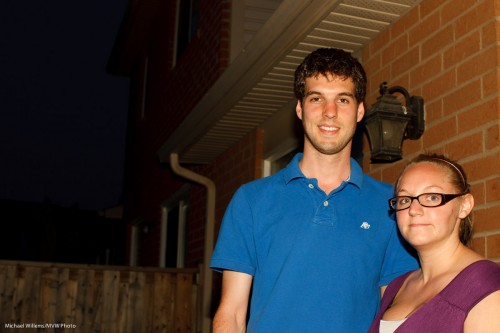
      Typical “this is why I hate flash” snap. Of two kind student volunteers yesterday. Shot at f/8 at 400 ISO at 1/125th second. Ouch. Thanks, guys!

      To improve this – nay, to have fun and make it good – I would do the following:

      • Set my camera to a better exposure setting for the background. In my case, this was  f/4.0 and 1/30th second, which made the light meter show “-2 stops”.
      • Set my white balance to “tungsten” to make the background blue.
      • But at the same time, add a Honl Photo Full CTO gel to my main flash, to keep the subjects neutral.
      • Now add a second flash to light up the wall.
      • Add a Honl Photo red gel to this second flash.

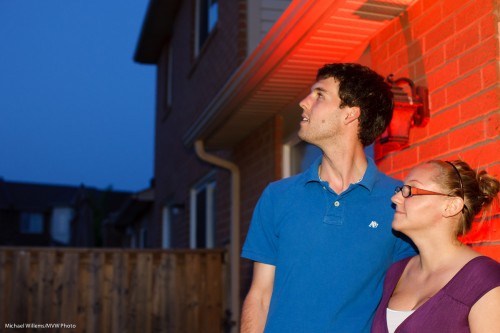
      Then I would get this:

      Looking Skyward (Photo: Michael Willems)

      How long does that take? Mere seconds. And it results in a great picture, that belies the idea that you cannot use direct flash. When you are mixing light, you can.

      What if I had had more time?

      Then I would have added one more flash with a gel: a green one.In the bottom left corner. Red-Green-Blue, the three primary colours in one image, adds visual interest.