Safe shots

Those of you who ever shoot events (indoors or outdoors, from weddings to parties, from sports to graduations) will be glad that I have developed a special course in “Event Photography”. You will see this marketed in various places soon (check out Henrys: link soon).

One quick tip from that course here: Develop your own “safe shots” and always include those.

Here is one of mine.
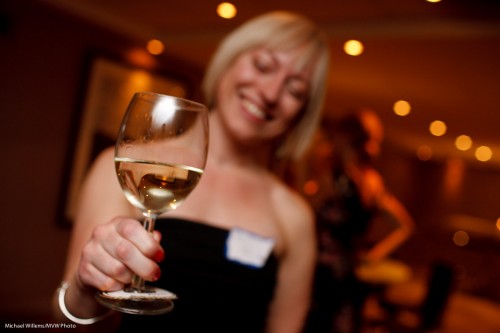
Cheers! (Safe party shot, photo Michael Willems)
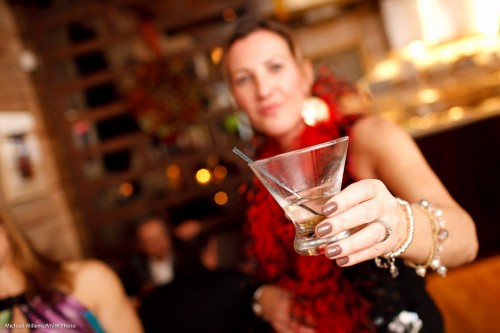
Cheers! (Safe party shot, photo Michael Willems)
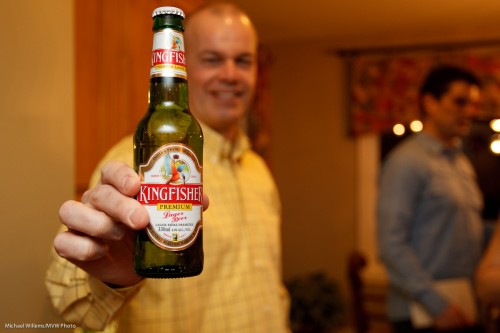
Cheers! (Safe party shot, photo Michael Willems)

Cheers! (Safe party shot, photo Michael Willems)

Cheers! (Safe party shot, photo Michael Willems)

Cheers! (Safe party shot, photo Michael Willems)

Why is that a cool shot?

  • It shows depth.
  • It blurs faces  -ladies especially love this.
  • It is fun and everyone lives that fun.

Develop your own, and always get that. There, you’re on your way to developing a style!
Slowlighter?

Well, you do not always have to use additional lighting, of course.

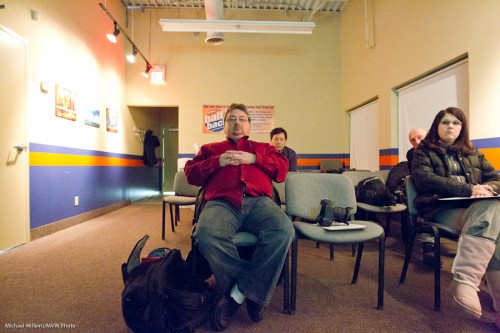
Remember that image yesterday?

That was shot in the dark – yes, in a room where I had turned the lights down to almost zero visibility. Just to show it could be done.

If you use “auto ISO”, when using a wide angle lens that will lead to something like 12800 ISO at 1/15th second. As it did in my case. It looked like this:

Yeah, nice and stuff. And perfectly usable; do not be afraid to do this.

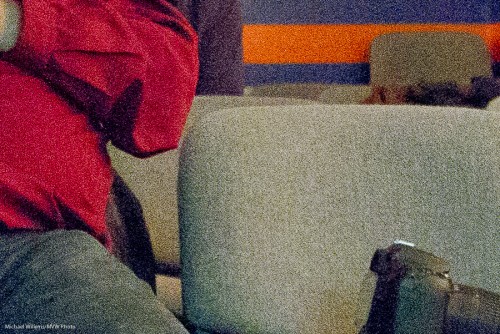
But when you zoom in, you see the drawback of those high ISO values (click to see real size):

See what I mean? Not bad, but not great, with all that grainy noise.

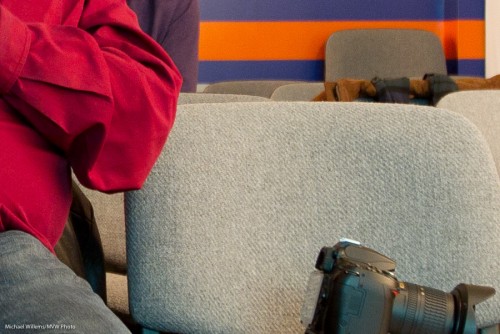
So then I turned the ISO down to just 400. This of course got me an exposure time of 5 seconds, so everyone sat still. Result:

I promised yesterday I would explain why I shot with this composition instead of aiming down a little? Simple: because I did not have a tripod, so I needed to use the desk to hold the camera still for 5 seconds.

If you feel like another exercise: here you go. Go shoot a night image that looks like day.

You will need a tripod. You will need patience. You will want to use a low ISO value to avoid noise. Cold northern hemisphere nights are best to reduce noise. Go try it yourself tonight. And do not forget to make your image a nice composition.

It’s all about viewpoint

One trick to make your images more interesting is to avoid shooting them from the “Uncle Fred” 5.5-feet-above-the-ground position.

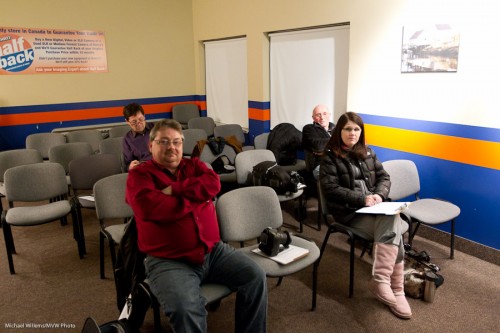
I demonstrated this the other day to a group of students during a “Composition” class I taught at Henrys School of Imaging in Mississauga.

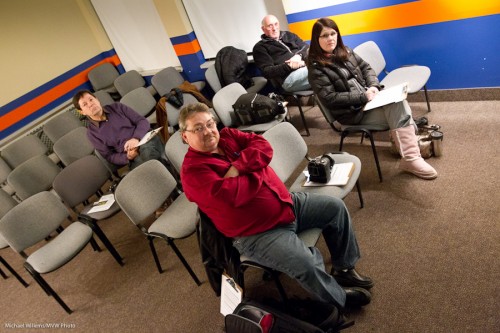
First, here’s an “Uncle Fred” snap:

Ouch. Brrrr…. bad composition, people in the middle, legs cut off: lots of room for improvement.

So let’s get on a chair:

Note how I also tilted the picture. Why? Well… mainly “to get it all in”. Never be afraid to do this: it helps you compose, but it can also often lead to better pictures, more interesting, more dynamic – and of course you can simplify, this way (get rid of stuff you do not want).

Another viewpoint, finally. This one is also much more interesting than just “from 5.5 ft above the ground”: in this case we get down low. A very different effect:

That one could benefit from a slight repositioning, but I shall explain tomorrow why I shot it the way I shot it.In any case – much better, no?

The first thing I do when I am to shoot a standard event (someone handing over a cheque, say, or cutting a ribbon) is to find a good viewpoint. Uncle Fred’s is not necessarily the one you want.

Your exercise for today: shoot a creative shot (of anything you like) from right-by-the-ground level.

One fifteenth

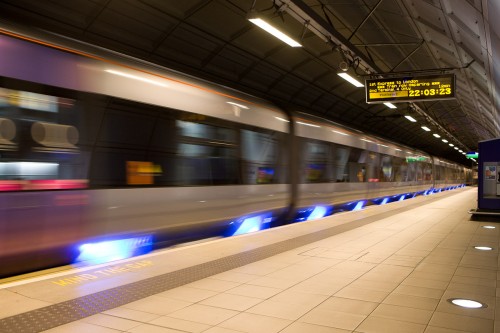
When you want to show motion, one fifteenth of a second is the kind of time you need to think about.

Of course this depends on:

  • focal length of the lens
  • how fast the subject is moving
  • how close you are
  • how steady you are

..but in general, 1/15th is a good time to use.

Why?

To show movement, rather than to freeze it. Like in this snap of the London Heathrow Express:

Heathrow Express Train

Heathrow Express Train

Not showing movement (shooting at a fast shutter speed) would show a “stationary” train – which here would be a big mistake.

Flash Outdoors?

Another quick travel photography tip for you all today. My cold is still getting ever so slightly better every day – soon, longer posts. Until then I concentrate on useful!

Flash. Use it outdoors. When it’s sunny.

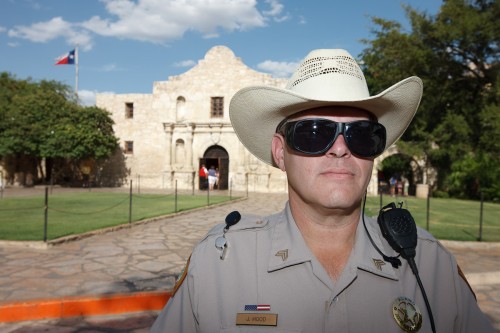
Yes, you need flash when it is bright and sunny! Like here:

Officer Hood at the Alamo

Without flash, his face would have been dark.

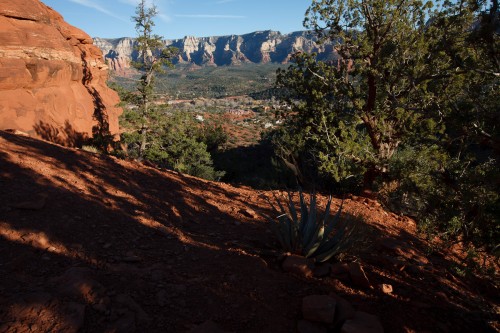
And look at this no-flash shot. Can you see what’s wrong?

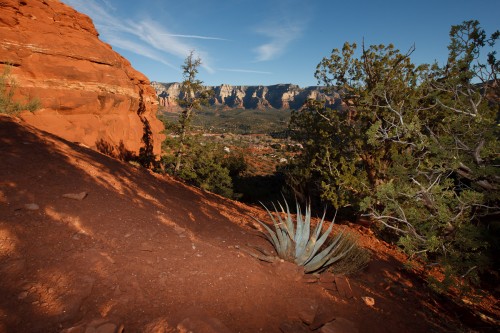
Sedona Sunset

Right, so now we light up the foreground with our speedlight:

Sedona Sunset

Sedona Sunset - with flash

See how much difference that makes? In that last picture, I used a flash exposure compensation setting of -1 stop, to avoid the flashed part of the image becoming too bright. All I wanted is some fill.

Low contrast – now what?

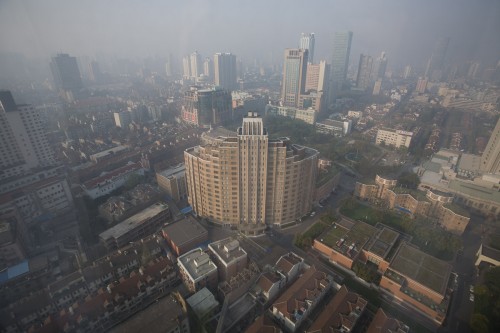
So you have a low-contrast, hazy image like this.

Shanghai Morning 1

Yup, it is a hazy morning in Shanghai. Now what?

You have several options.

  • Live with it. Haze is not always bad! Sometimes (“foggy mornings” come to mind) you want this sort of low contrast.
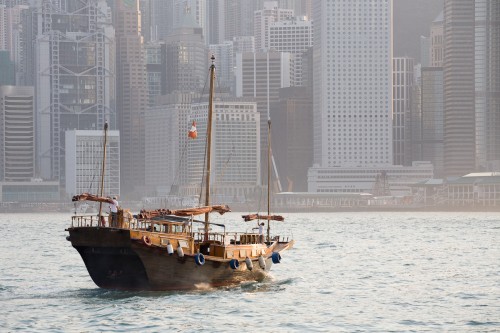
  • Put a sharp object in front. This is a very powerful technique: it makes the haze into a benefit, as in the boat image below.
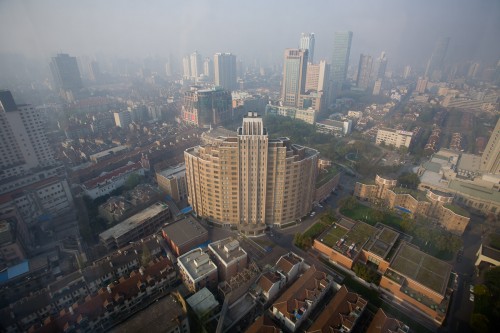
  • Finish in post-production. In the last image below, I increased exposure until the histogram hit the right side of its box; then I pulled down “blacks” in Lightroom to make the blacks black – i.e. until the histogram hit the left. You can use “Levels” in Photoshop to achieve the same result.

Like this:

Hong Kong Harbour

Shanghai Morning 2

And.. you are shooting RAW, right?

Summer sports

So on warm sunny days, when you shoot summer outdoor sports…. hey wait. It is -23.5 C outside, here in Mono, Ontario.

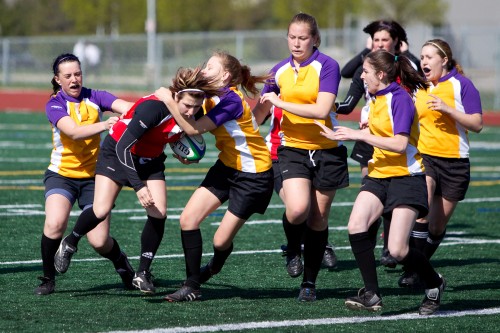
But yes, I thought this would be a nice time to give you a walk-through of an outside summer sports picture, like this Rugby shot from July 4, 2010:

Rugby game

So how do you shoot outdoors sports?

  • Perhaps S/Tv mode with a fast shutter speed, or A/Av mode with a wide open aperture. I prefer Av mode, wide open, so that I can be sure that the fastest possible speed will be selected. Manual is also possible of course. In the shot above, I used Aperture mode at f/3.2.
  • I used an ISO setting of 200 – just a little faster than 100.
  • This gave me a shutter speed of 1/3200 second.
  • The lens was a 200mm lens – namely the 70-200 f/2.8 at 200mm on the 1D, meaning 260 effective mm.
  • Use AI Focus/AF-C focusing mode!
  • And use one focus point.
  • Look closely at the background: looks like turbulent air is making the background look, well, a little turbulent. This is normal on artificial turf, and this will limit what you can do in terms of distance.
  • As a wide aperture I try to shoot groups of people in the same plane of focus, as in this image – either that or single players.
  • Obviously you will be using continuous shutter: click click click click click.
  • To enable this, use a fast memory card.
  • Position yourself so that you catch players with the sun coming into their faces – not on the back of their heads!
  • Try to catch expression/emotion if you can. Quite a lot of that in there I think.
  • Sports like Rugby are also colorful – all good.
  • I shoot RAW, but sports is the one occasion when sometimes I shoot JPG – smaller files and faster clicks.

I thought a quick outdoor sports picture would be nice for today’s belated post – I remember sweating on that day.

A distant memory now that it is -23.5 C! Almost time to drive to Scarborough to teach “Travel Photography” at 1pm (there’s space!).

Checklist: Aye Aye

Back when I spent a lot of time flying airplanes, I would never have dreamt of leaving without going step by step through a detailed checklist. Much as you know, without the checklist you’ll forget that fuel tank selector once – and once is all it takes.

Photography is less critical – but not much. So I propose that you use a checklist much of the time.

This checklist depends on what you are shooting. I usually start from standard settings for snaps:

Focus:

  1. Lens (and camera if it has a setting) on AUTO
  2. Select one focus point
  3. Mode: One-Shot/AF-S

Exposure:

  1. Mode: Aperture, set to f/5.6
  2. ISO: 200 outdoors, 400 indoors and 800 in difficult light
  3. Exposure Compensation: Off (Zero)
  4. Flash compensation: Off (Zero)
  5. Meter: Evaluative/Matrix (“Smart”)

Other:

  1. White balance: Auto
  2. Shutter release: Single

Then I vary from there.

For indoors flash pictures, for instance, it would be as above, except:

  1. Mode: Manual
  2. ISO: 400
  3. Aperture: f/5.6
  4. Shutter: 1/30th second
  5. Flash: On, pointed 45 degrees behind me

You can make your own, and I encourage you to. One of my flight instructors once told me: every item on the checklist is there because that feature has killed several people. And for photography, every item is there because it has ruined someone’s wedding pictures.

Easy Portrait Tip

An easy portrait tip (or two) for you today.

Uncle Fred puts every subject dead in the centre. You, of course, will not do that, since it leads to an unbalanced image. You will use off-centre composition instead. In a portrait, you will put the centre point (the eyes) a third of the way from the top:

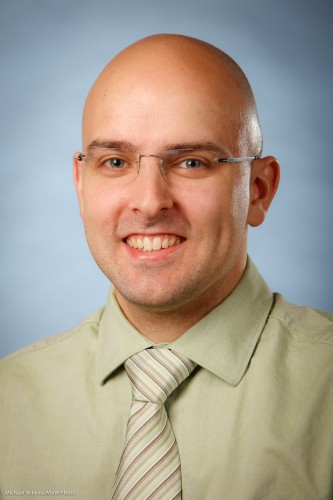
Able Assistant Matt

You will also:

  • Ensure there is a catchlight in the eyes.
  • Focus on those eyes.
  • In a formal portrait, use f/8 (or at least f/5.6 – f/11, in that range).
  • Light from one side, or straight on, but in any case from 45 degrees above.

Like I said, simple – but very effective. Try!

Warning: bodies here

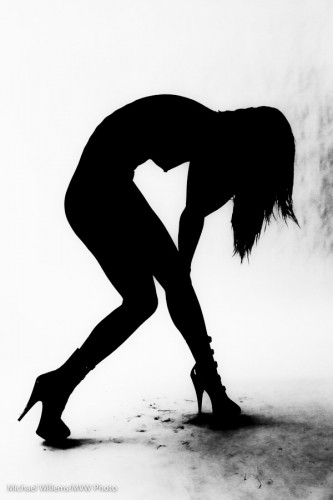
Today marked the first “The Art of Photographing Nudes” workshop that Joseph Marranca and I held in Mono, Ontario for photo enthusiasts.

Kassandra, grunge James Bond nude silhouette

In this workshop, students learned about such things as:

  • Background of the nude photograph
  • Types of nude shots
  • Challenges
  • Equipment/technical
  • Model: interaction, finding, putting at ease
  • Men vs Women
  • Light: how to keep it simple
  • Colour vs Black and White
  • Composition
  • Do’s and Dont’s

Many practical tips made this a very useful way to spend a Sunday, and everyone went back with lots of shots.

When you have a great model like Kassandra, your task shifts slightly from directing every shot to “setting up the shot, then taking lots of images, then selecting the ones you like best”.

We shall be holding another one in March – let me know if you think you might want to be one of the students. Two expert photographer instructors, one cook (thanks Michelle) and no more than ten students at the most.

After the click, another few shots.

Warning: those of you that are offended by the sight of the human body (I am sorry if in 2011 you are: we all have one – and  if you want to be a photographer you had better get used to that fact!) – that there will be unclothed human bodies after you click here:

Continue reading