Darkness

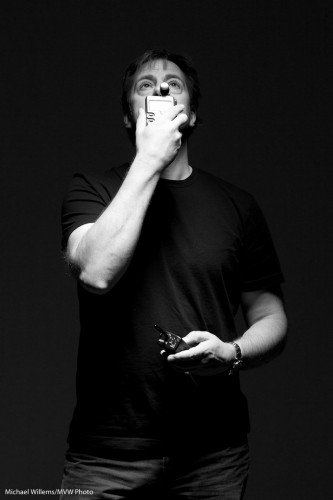
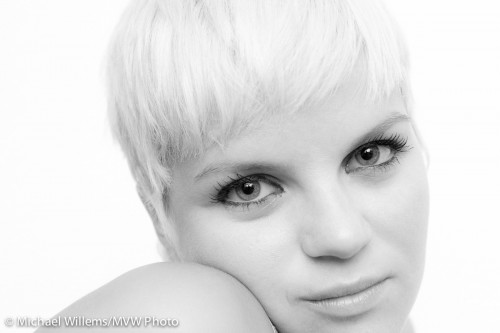
Can be good. As in this recent low key portrait of my friend and colleague photographer Joseph Marranca:

Joseph Marranca

Photographer Joseph Marranca

A low key portrait is a portrait where background and clothing are dark, and only a small part of the image is lit.

We used one small beauty dish. Straight above Joseph. And the white studio walls, because they got no light, turned dark. This is key: umbrellas would have spilled light onto the background. This small directional light allowed the background to remain dark.

(The dish failed to perform: it did not make Joseph beautiful).

Softly softly.

Much of what we do as photographers is to soften light. Meaning make the shadow less harsh.

You do that by making the area that emits the light larger with respect to the subject.

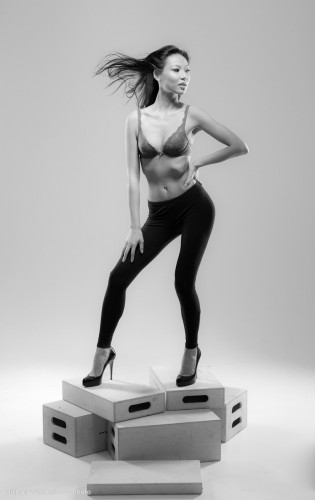
Look at this recent studio image:

Model on apple crates

Model on apple crates

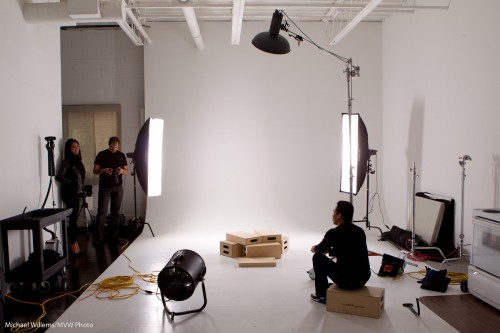
For a picture like this, straight out of the camera, you would (and we did) use studio lights like this:

Studio with lights

Studio with lights

A beauty disk and two strips. All designed to direct light, but especially to make the light source larger.

(Do you see how the two strip lights also throw a wonderful lit vignette onto the background?)

Joseph and I teach this kind of lighting (see www.cameratraining.ca).

I am also teaching for the next three days: pretty much all day Friday, Saturday and Sunday at the Henry’s Digital Imaging Show at the International Centre. Come see the show: worth every minute!

Sunburst

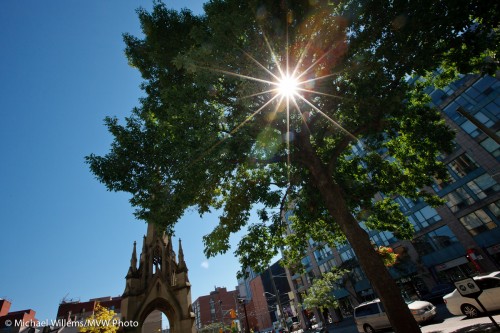
Look at this recent sunburst picture:

Sunburst

Sunburst, Toronto

For a picture like this, a few things may help:

  • You need a small(-ish) aperture to get the effect
  • Feeding the light through an object (like the tree) is essential for several reasons. One, to enhance the effect. Two, to protect your eyes, Three, to protect your camera.
  • Do it quickly. No sense burning the camera.
  • Remove filters. They can cause more flare.

Oh…. and can you see that I used a speedlight to light up the tree?

Wide and close

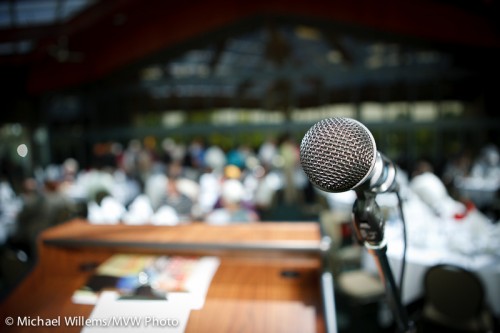
You have heard me say it before: go wide, get close, open up.

24mm f/2.8:

Microphone

Microphone

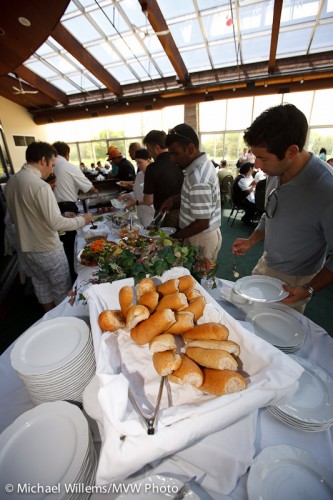
16mm (on a full frame camera, meaning 10mm for most SLRs):

Buffet

Buffet

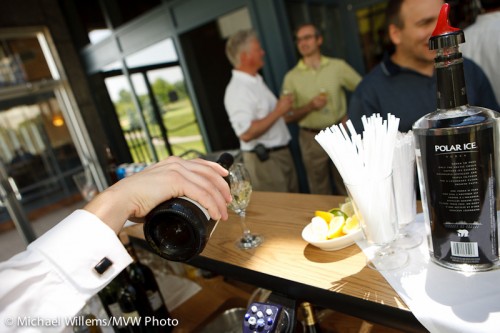
24mm:

Bartender

Bartender

None of these pictures are to be seen by them selves: they support the story. And they do it by showing detail and by maing the viewwer think.

So: Wide angle, Lens open to maximum aperture. Get close.

Portrait note

One more from Sunday’s course.

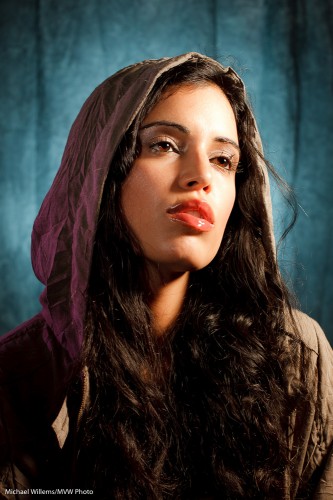
This time, a portrait of model Tara that I made to help explain multiple flash TTL. Straight out of the camera it is:

Multiple-flash TTL lighting

Multiple-flash TTL lighting

How was this made?

With a small Traveller 8 softbox on the main light, a gridded gelled flash for the background, a snooted flash for the fill light, and a gridded gelled flash for the edge light.

Four speedlights, and all using TTL.

A few things to remember in such portraits:

  • You need a catch light in the eyes.
  • Set your white balance to “flash”.
  • If you have space, longer lenses are good (in this case, though, I use a 50mm prime lens).
  • Avoid the ambient light doing any work: choose 1/125th second at f/5.6 or f/8, say; and be sure to disable “Auto ISO”.
  • Lighting is all about what you do not light: avoid bathing the room in photons. Think about what you light, and how.
  • With Canon’s e-TTL or Nikon’s CLS/iTTL, you only get two or three groups of light. So if you have four lights, some of them will have to be in the same group. My fill and edge light are thus both in group “B”.

Keep those in mind and your portraits will be well lit.

Yum

Today, I have a quick starting point for food photography for you.

Food Photography

Food Photography

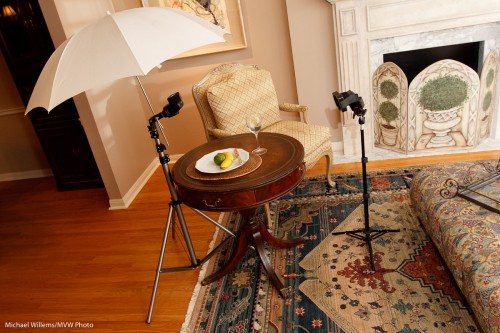
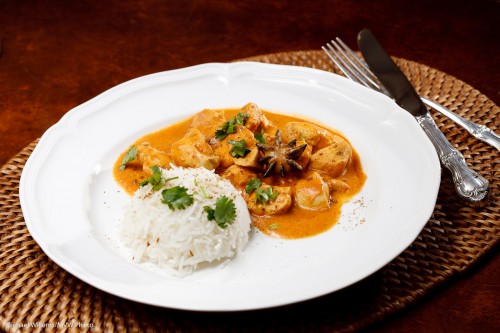
  • Lighting: small speedlights are good.
  • Use one umbrella on top, and one gridded light from behind to add accent (and to light the steam. If there is steam, try to use a dark background)
  • You may want to shoot from a low angle.
  • Blur out backgrounds.
  • These backgrounds can contain a cup or glass, cutlery, etc.
  • Prepare the food: If you have no food stylist, you are it. Every detail counts. Make it look great. Add some “green stuff”. Use a brush with oil to make surfaces shiny and yummy.

And do not forget to eat the food, afterward.

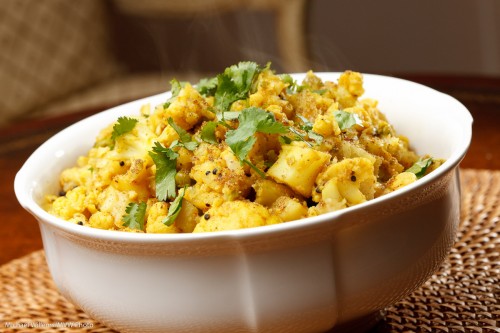
Indian Food Photography

Indian Food Photography

(Although you would be surprised how many food shoots use fake food. Ouch!)

One more, for good measure (I shot these for West of the City magazine early this year).

Indian Food Photography

Indian Food Photography

Dragging the shutter

A quick note for you today (and this is the kind of thing my students learn at length in my advanced courses, like the one tomorrow in Mono – there’s still some space).

Every had your camera react unpredictably when using flash? Yeah, I thought so. You flash and then the shutter stays open for a second and it’s all a blur. Or you flash and the background is dark black.

Why?

When you shoot indoors, say, and use your flash, your camera behaves differently in different modes – and this behaviour varies per camera.

Aperture mode (A/Av):

  • Canon: the shutter will be as slow as needed to expose the background too (caution: this may lead to very long shutter speeds if ambient light is low).
  • Nikon: the shutter is restricted to 1/60th of a second or faster (this can be set).  But… if you also engage “SLOW” mode, the shutter will be as slow as needed to expose the background too (caution: this may lead to very long shutter speeds if ambient light is low).

Program mode (P):

  • Canon: the shutter is restricted to 1/60th of a second or faster.
  • Nikon: the shutter is restricted to 1/60th of a second or faster (this can be set).  But… if you also engage “SLOW” mode, the shutter will be as slow as needed to expose the background too (caution: this may lead to very long shutter speeds if ambient light is low). .

So

  • Canon is simple: Av = long shutter speeds, P = 1/60th or faster.
  • On Nikon cameras, both modes are restricted to 1/60 or faster normally, but either mode can be freed from this by using the “SLOW” setting.

So what is the best mode when using flash indoors?

Ah, that would be Manual. That way the camera does exactly what you want. But we will get to this again another day.

TIP: if you want to try Manual indoors flash, start at 400 ISO, 1/30th second, f/4. And bounce your flash off the ceiling/wall behind you.

Guess what.

Two techniques today that I have pointed out before, and I will do it again until everyone uses them regularly.

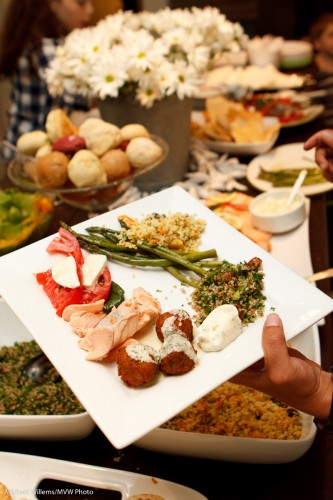
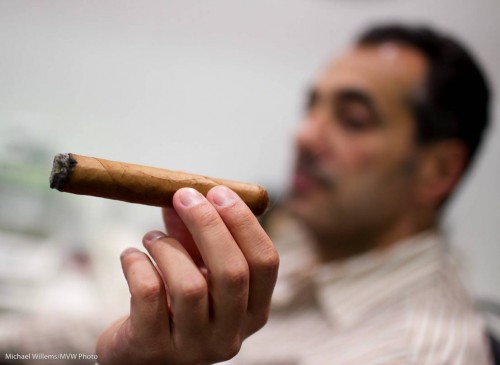
  1. Close-Far
  2. Selective focus with supporting background elements

Like here:

Food, and food

Food, and food

And here:

Cigar and person

Cigar and person

These pictures:

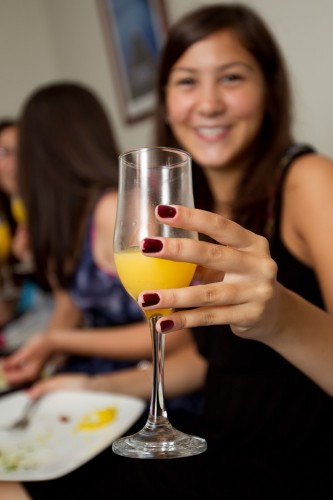
  • Make the foreground subject really stand out
  • Achieve perspective (close-far: get close to your close object!) and
  • Provide environment, or context, where theuser has to put two and two together to create the story. The eye goes to close object – background – back to close object.

One more example – then go out and shoot some!

Cheers (Teen with orange juice)

Cheers (Teen with orange juice)

Instuctions, should you need them:

  1. Wide lens, often the wider the better
  2. Get close!
  3. Focus on the close object.
  4. Use the largest aperture (smallest “f-number”).

Have fun!

Expose, experiment

As photographers, we sometimes get stuck in ruts. Like the rut that all exposures have to be “natural”, and show the world like it is.

And this is a misconception. When we use fl;ash, we are showing it in an unnatural way, aren’t we?

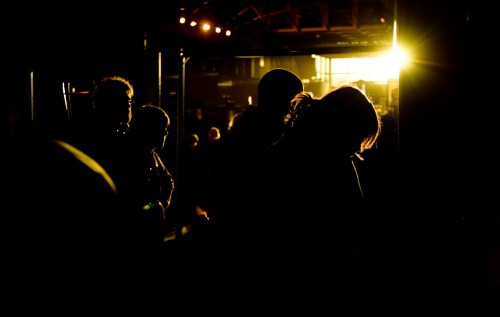
And even when not using flash, you can create interesting effects by exposing more, or less, than you normally would. Less, like in this shot:

Royal Show, Crowd

Royal Show, Crowd

Or more, like in in this high-key portrait of model Lyndsay:

Lyndsay Biernat, High Key portrait

Lyndsay Biernat, High Key portrait

To do this you simply either:

  • Use exposure compensation (+ is brighter, – is darker)
  • Spot meter off something bright (makes the picture dark) or dark (makes the picture bright)
  • Use Manual exposure mode and watch the meter: – is dark, + is bright

As an assignment, today, take a few pictures darker or lighter than your meter would normally make them.

Autumn tip

A quick tip for those of you who, like me, are in the part of the world where autumn is coming.

If you want beautiful fall colours, you need to keep two things in mind:

  1. Brightness. Expose properly, and when vegetation is concerned that means expose less than your meter wants. Foliage is dark and you need to tell your camera that. So use exposure compensation as needed – minus 1 stop is not uncommon.
  2. Colour. Be sure to set your camera to the correct white balance. This usually means “daylight” or “cloudy”: the default “auto” (AWB) setting may get rid of the beautiful radiant colours.

And the colours are starting. Here, a couple of shots I shot while on my way to Drumbo this past weekend, to shoot the Drumbo Country Fair. Those colours are on their way:
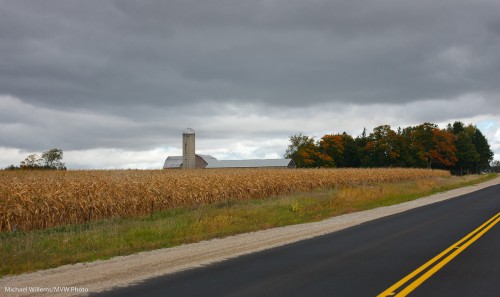
Fall is coming: Drumbo, Ontario, Sep 2010

Fall is coming: Drumbo, Ontario, Sep 2010

Of course I could not possibly have been shooting this handheld while driving: that would not be allowed in Ontario. Right?
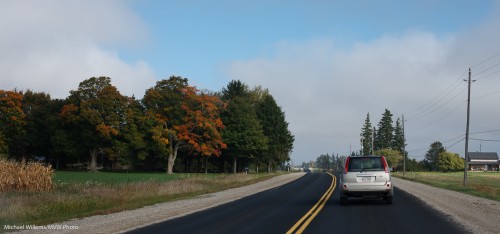
Fall is coming: Drumbo, Ontario, Sep 2010

Fall is coming: Drumbo, Ontario, Sep 2010

And here’s a snap from what I was shooting:
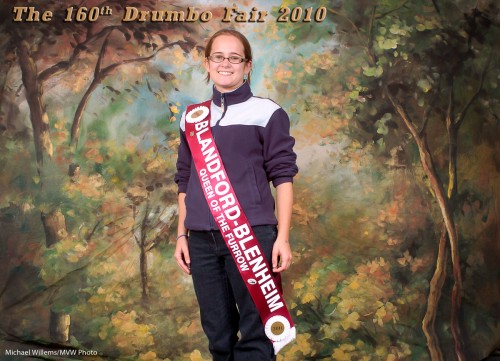
Drumbo, Queen of the Furrow

Drumbo, Queen of the Furrow

One more tip: for best fall colours, either shoot late in the day (the “golden hour”), or early in the morning (if you can get up, early morning light is just as beautiful, plus there is little wind). And know where the sun is!